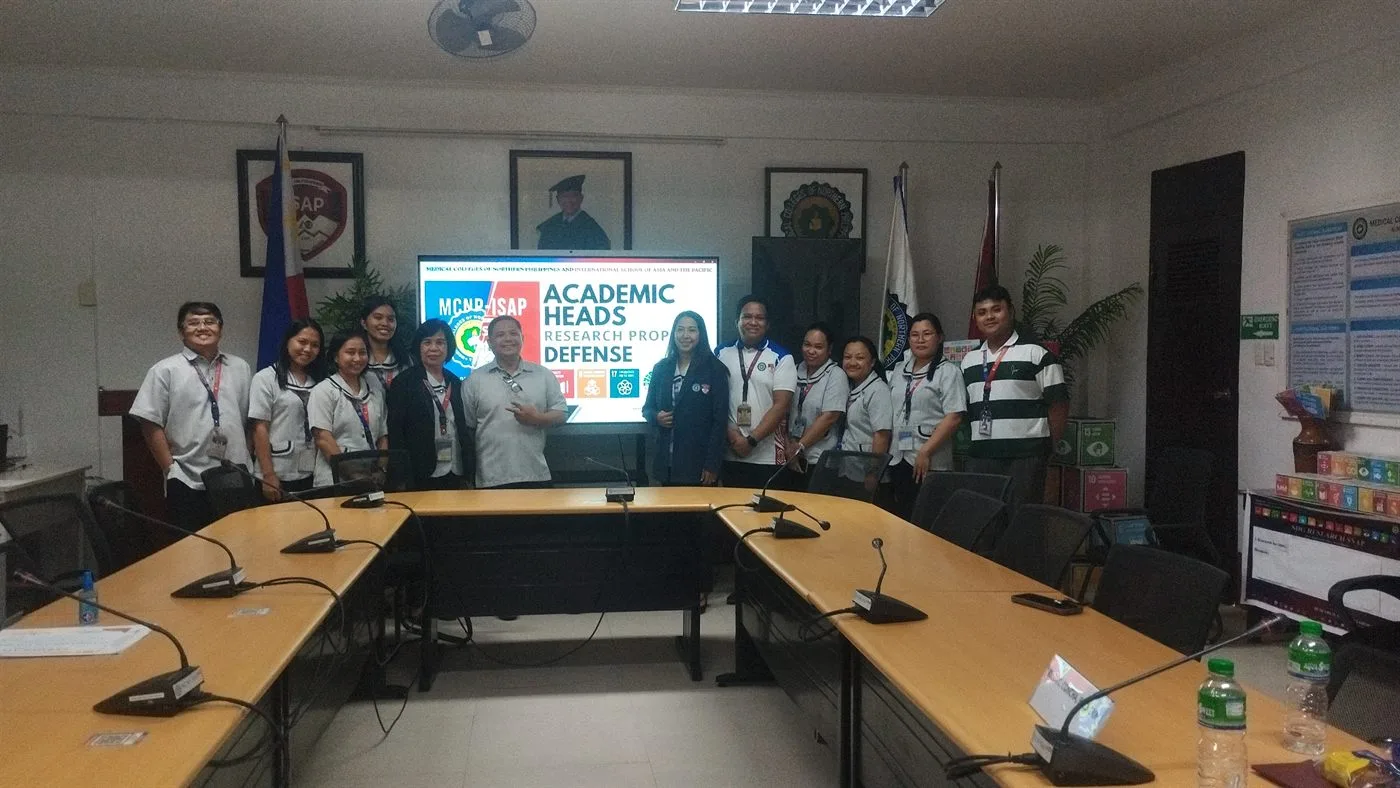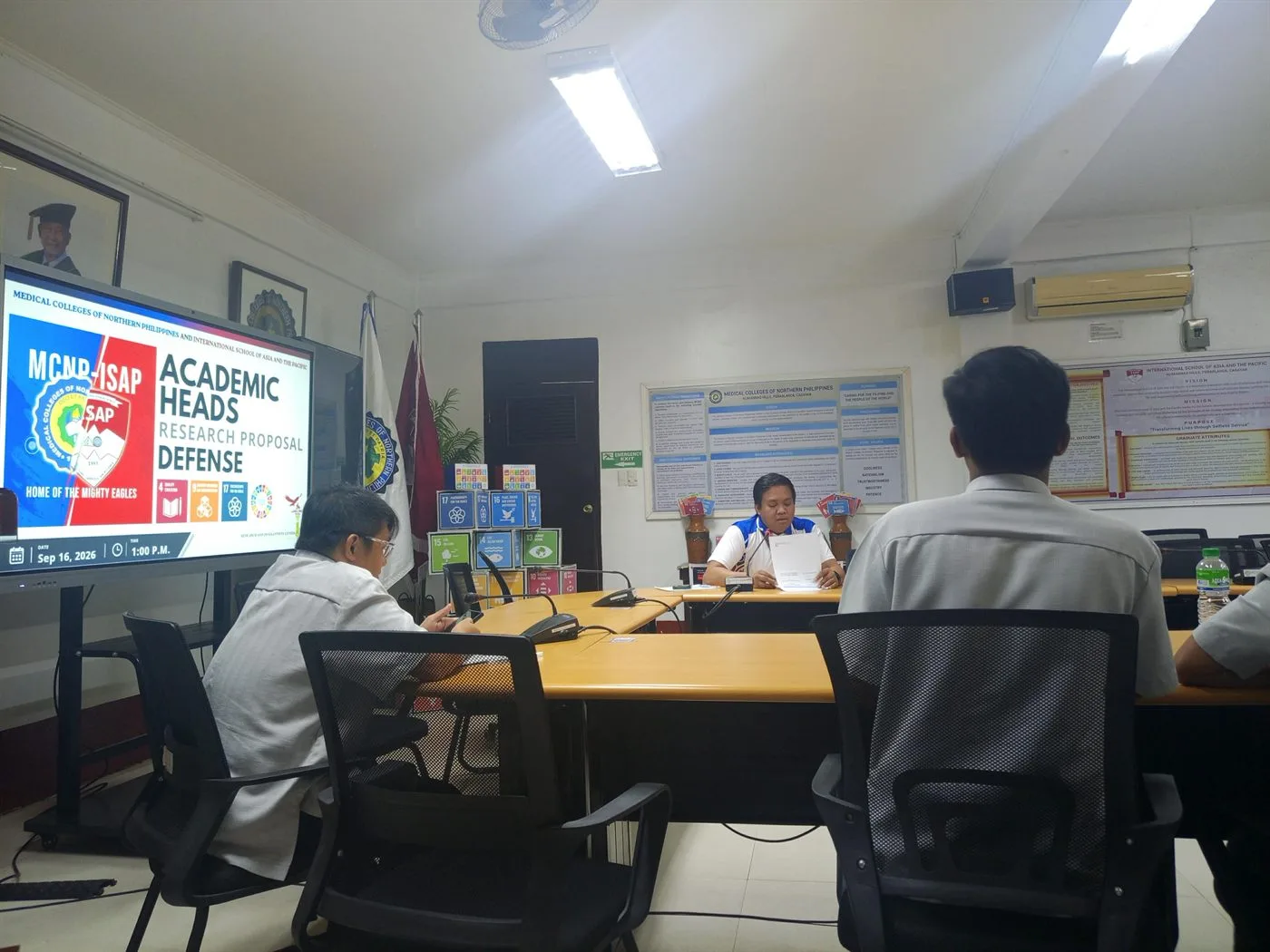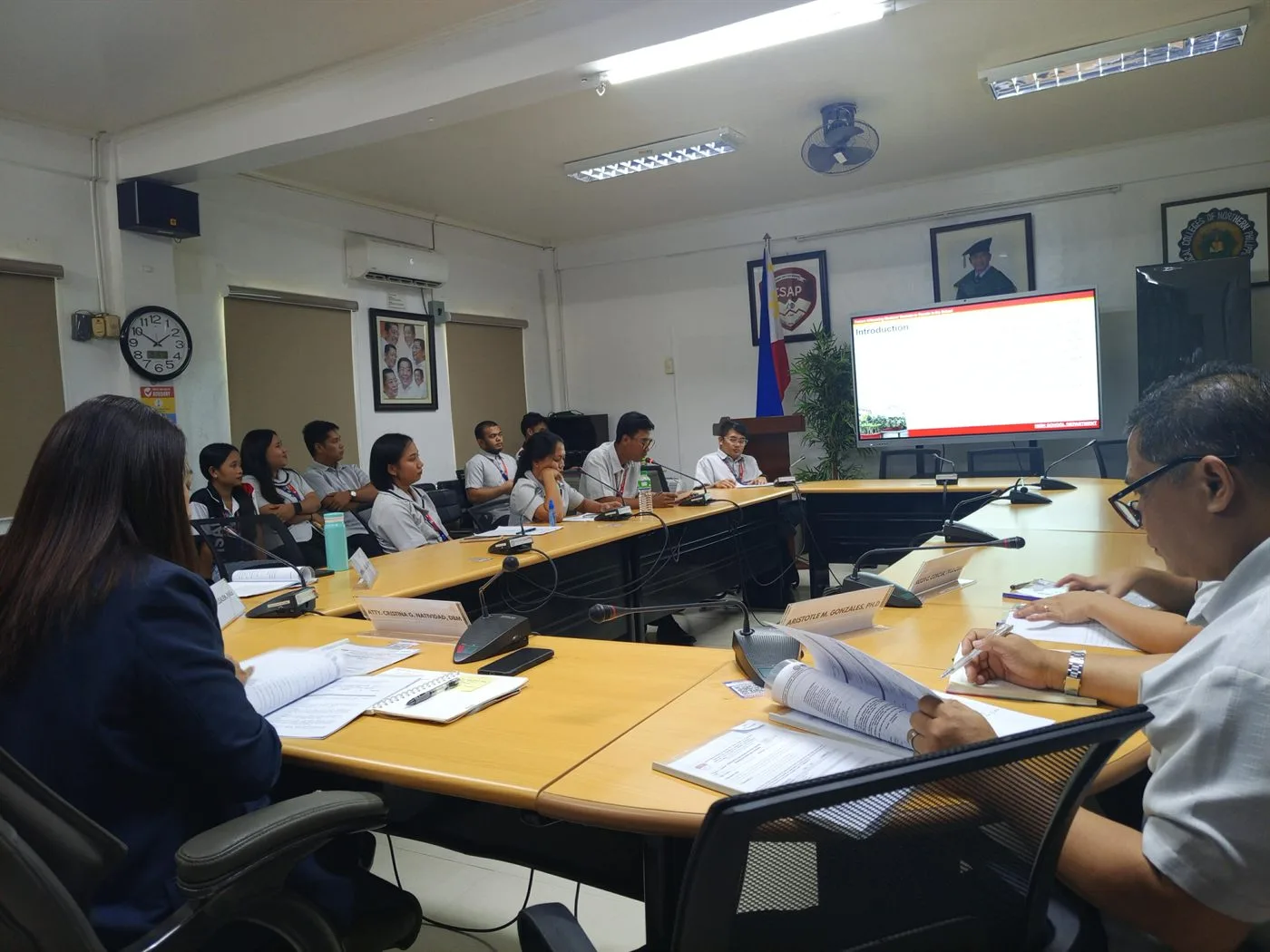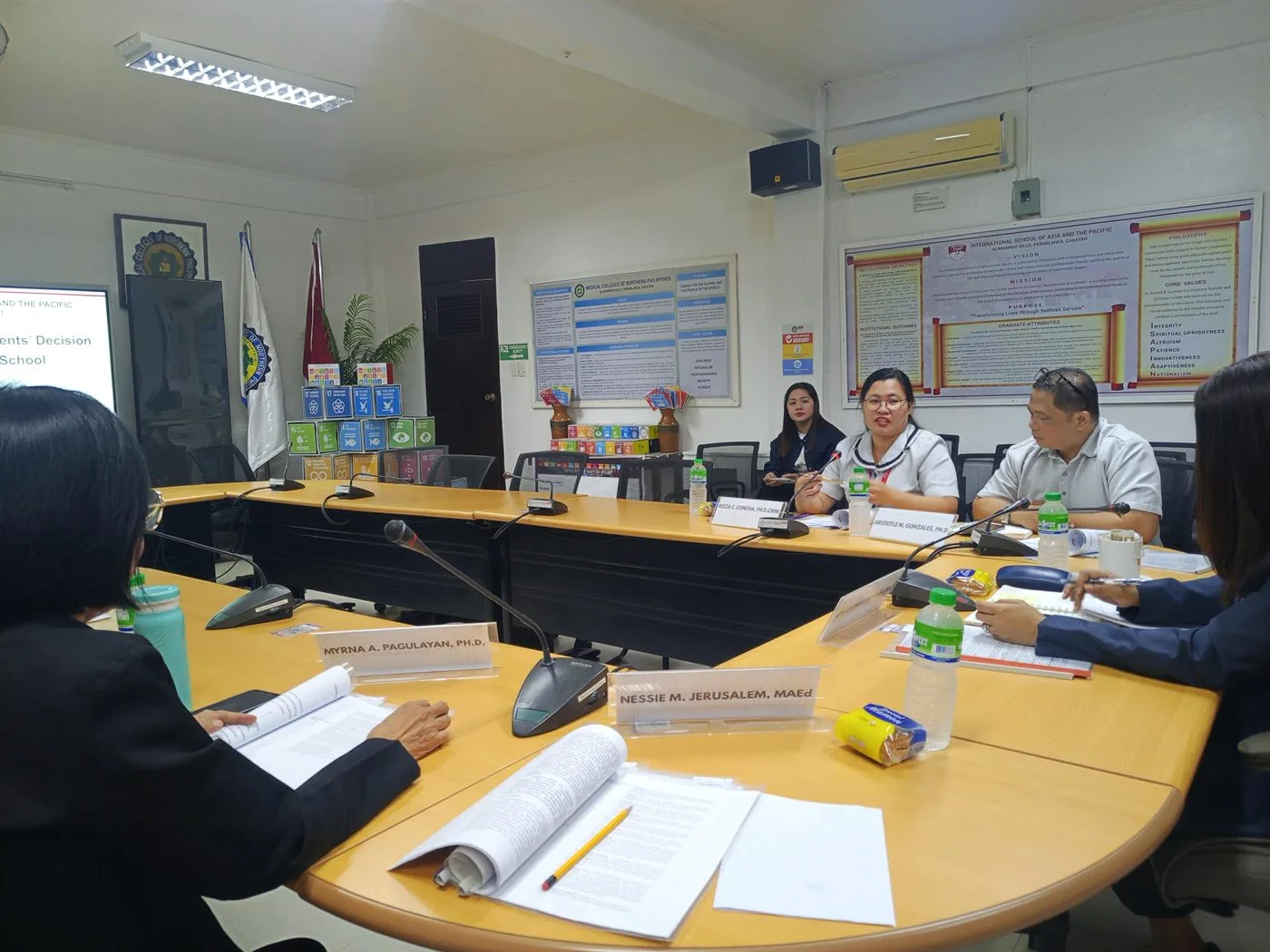
Alimannao Hills, Peñablanca, Cagayan, Philippines researchoffice@mcnp.edu.ph (+63) 998 984 7781

News & Events

Explore research breakthroughs, institutional updates, scholarly colloquiums, workshops, and milestones across MCNP & ISAP.

Dedicated Schedule Calendar Page Research FAQs

Articles & Event Highlights

Browse published research articles, proposal defenses, student competition breakthroughs, and institutional event schedules across MCNP & ISAP.

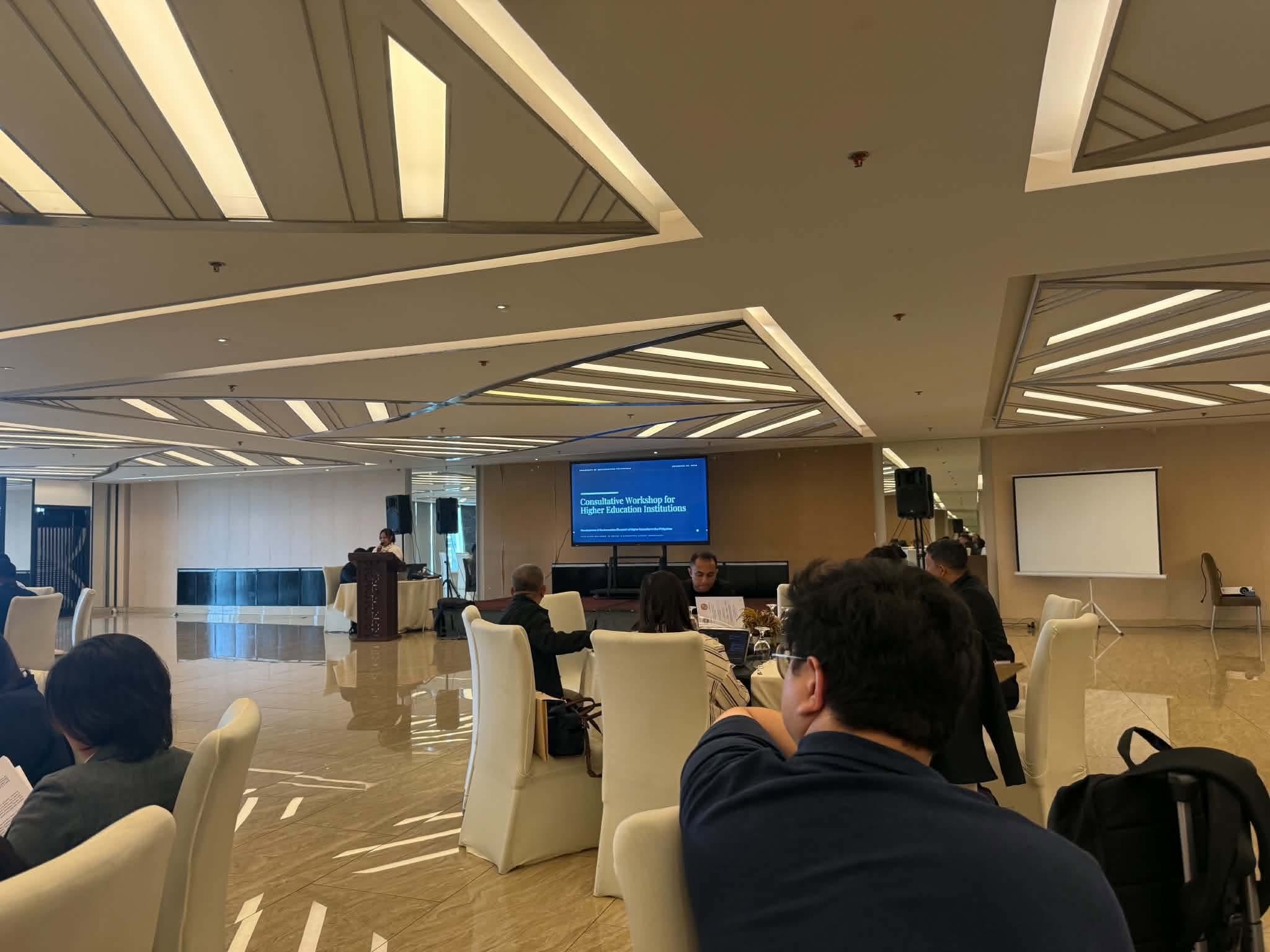
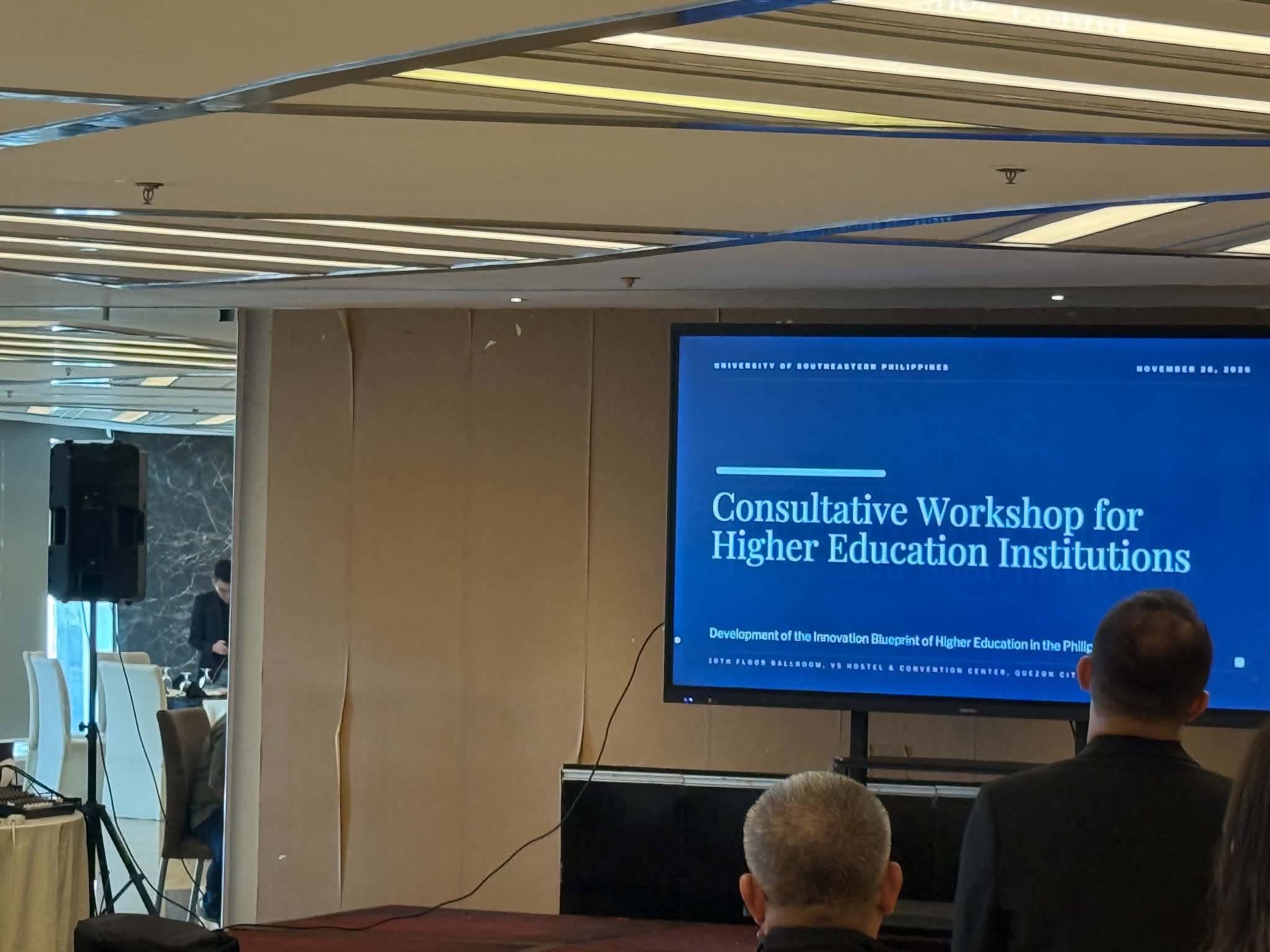
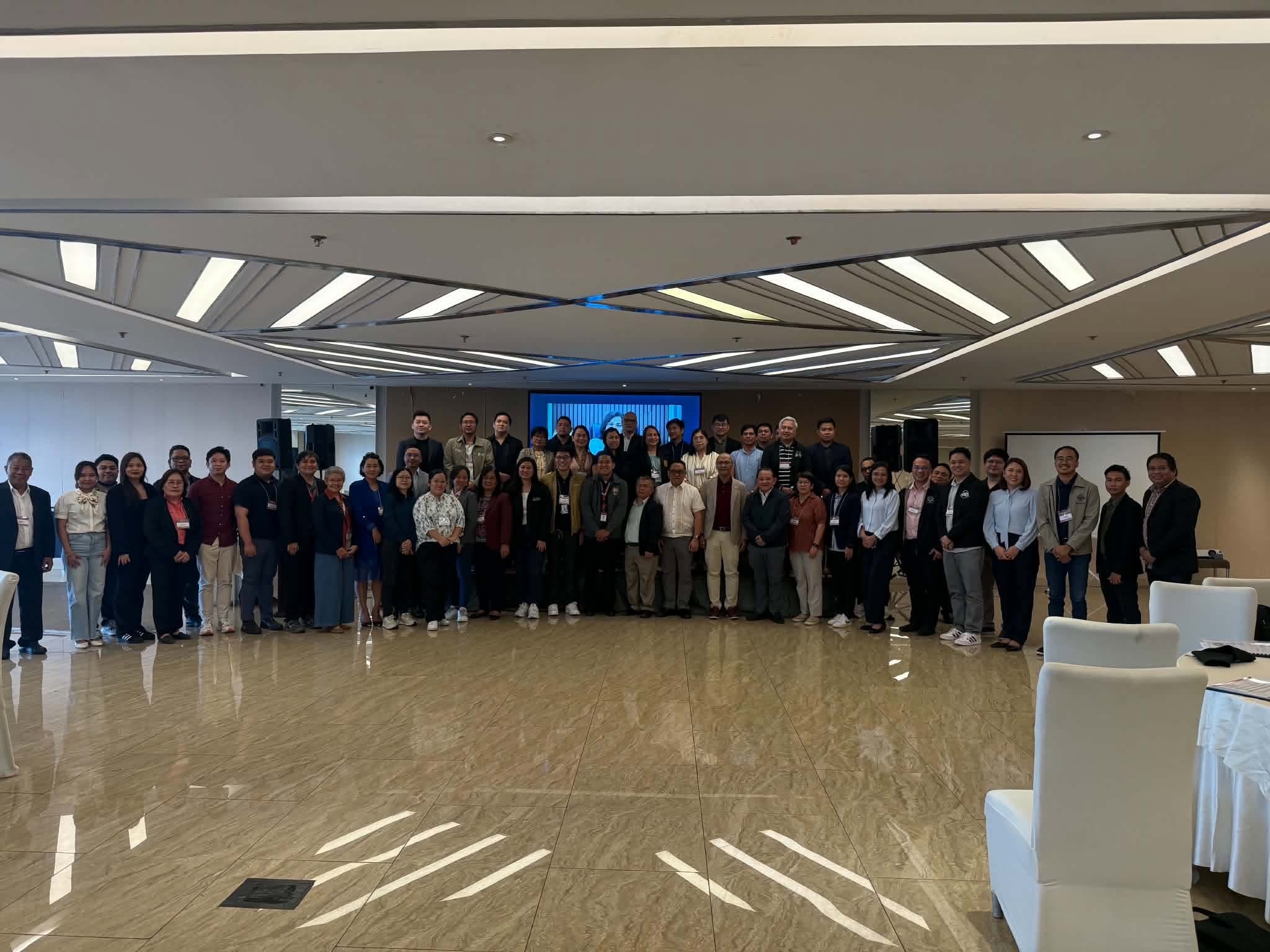
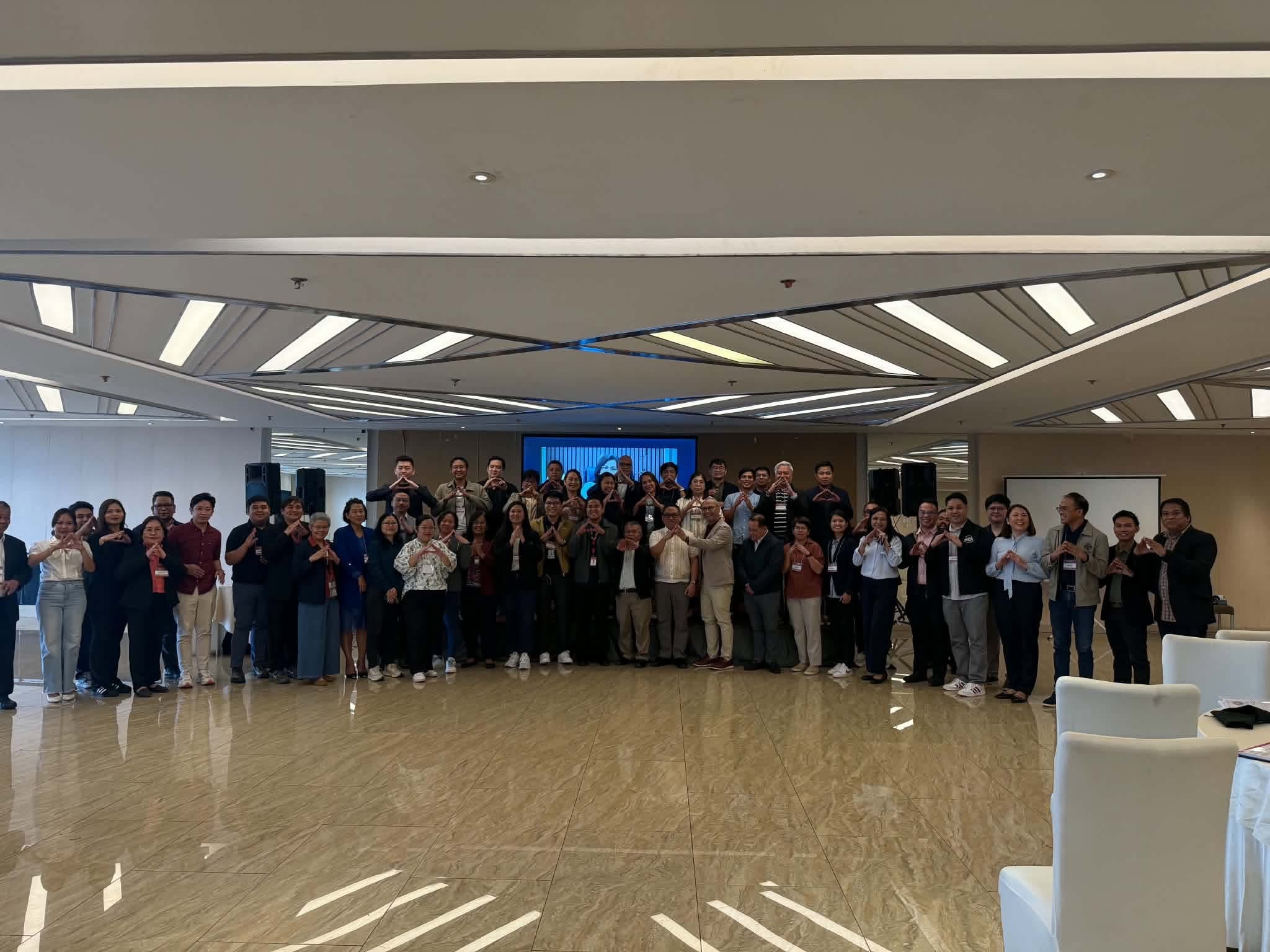
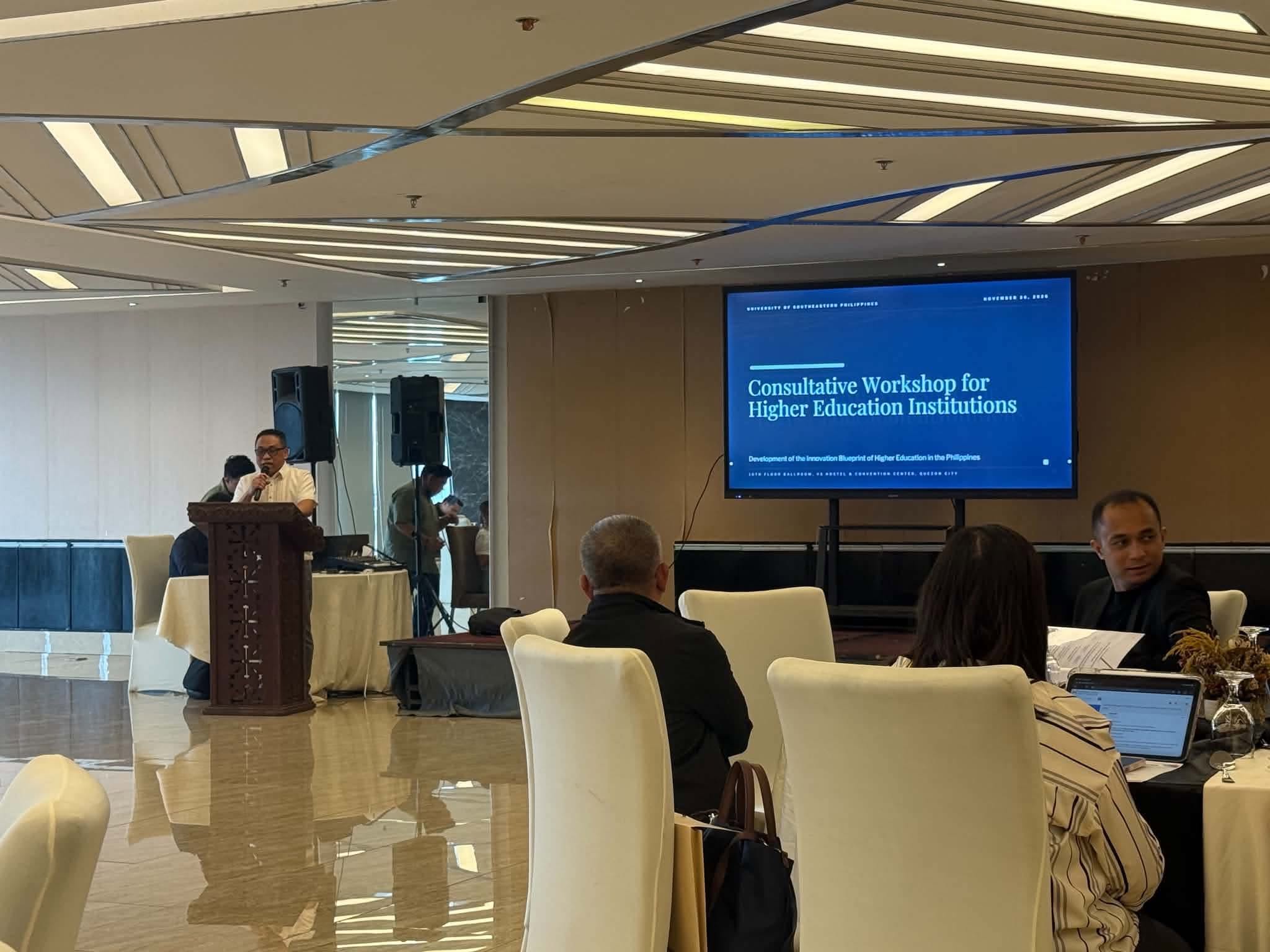
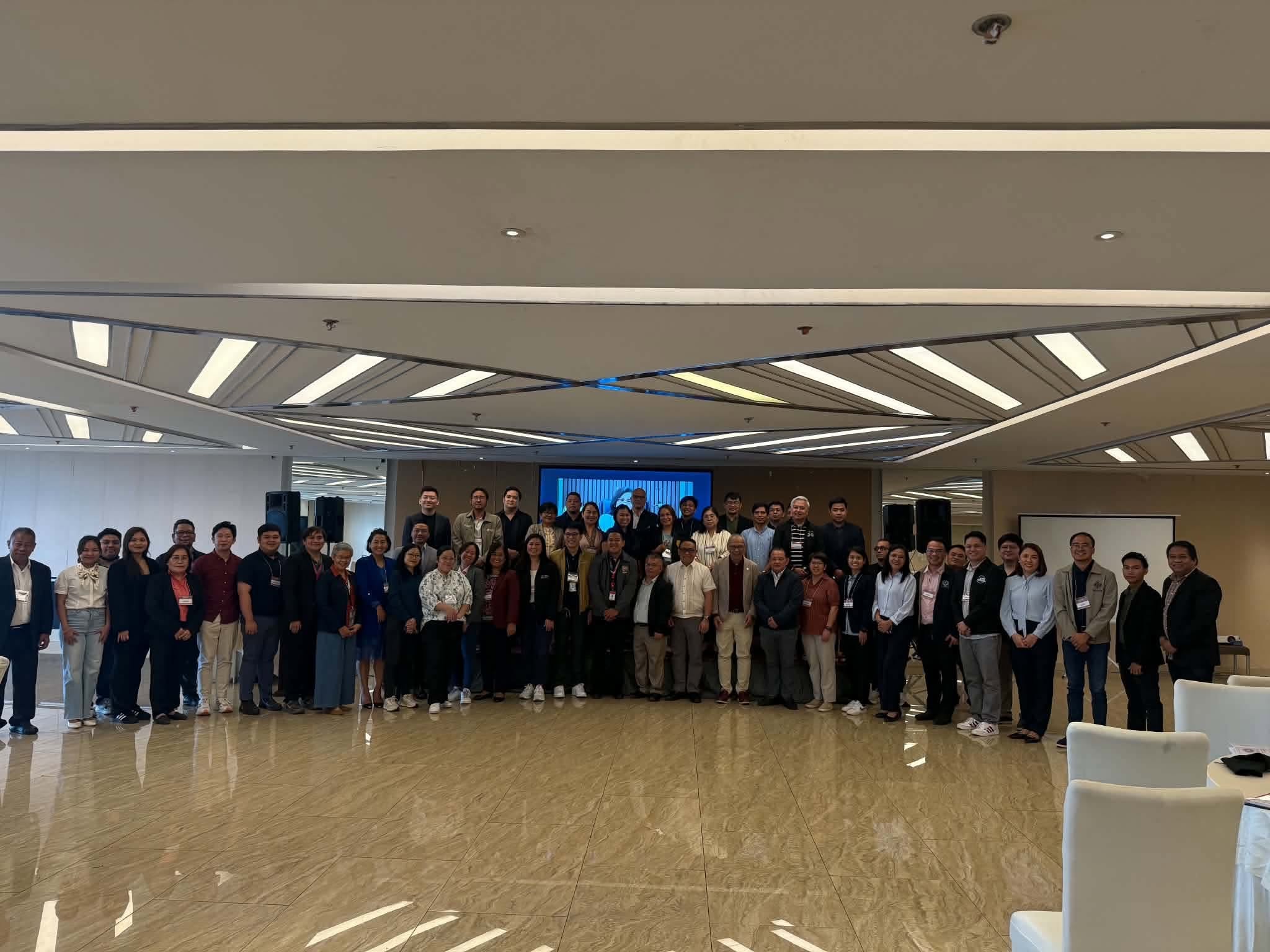
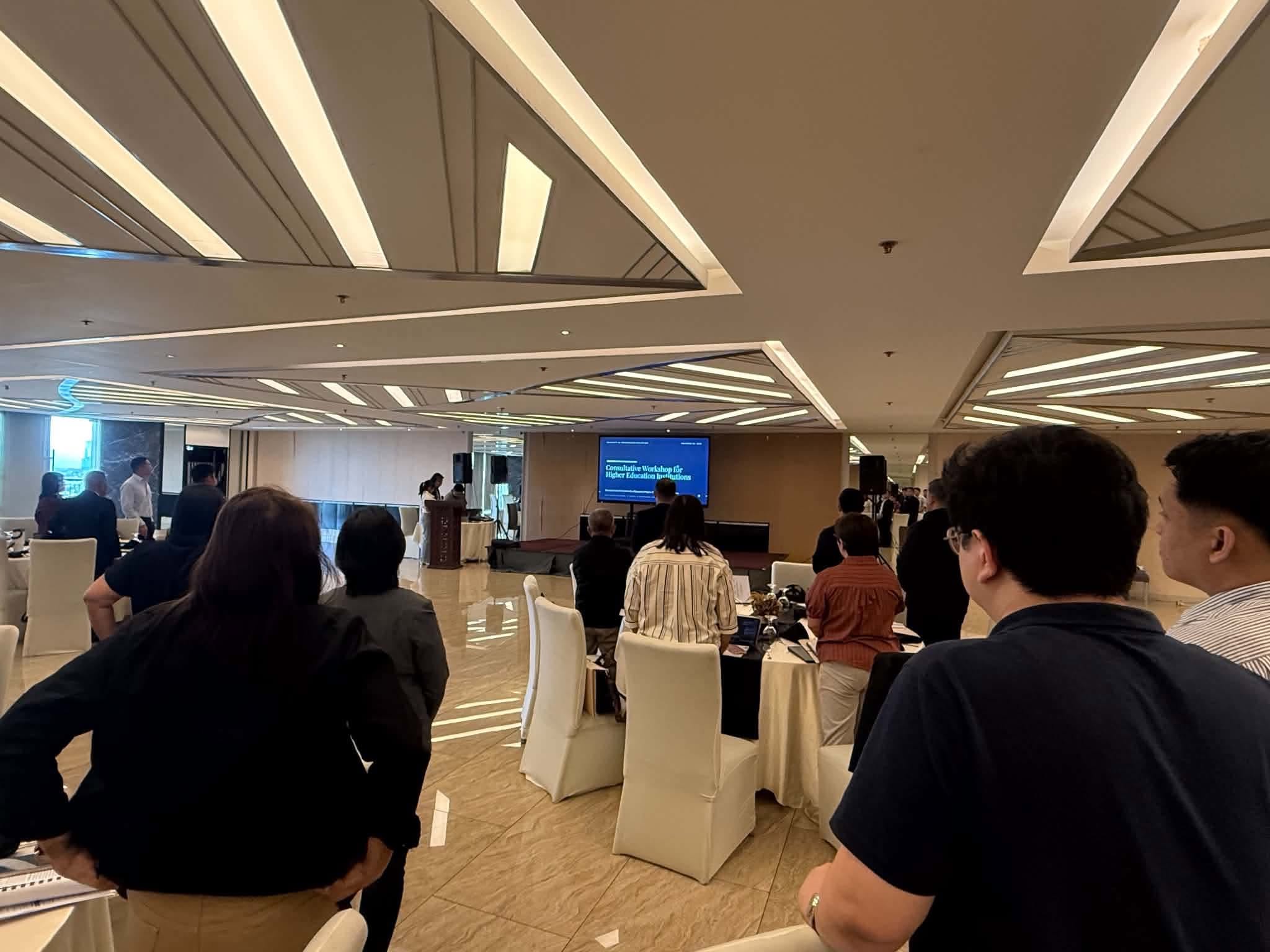
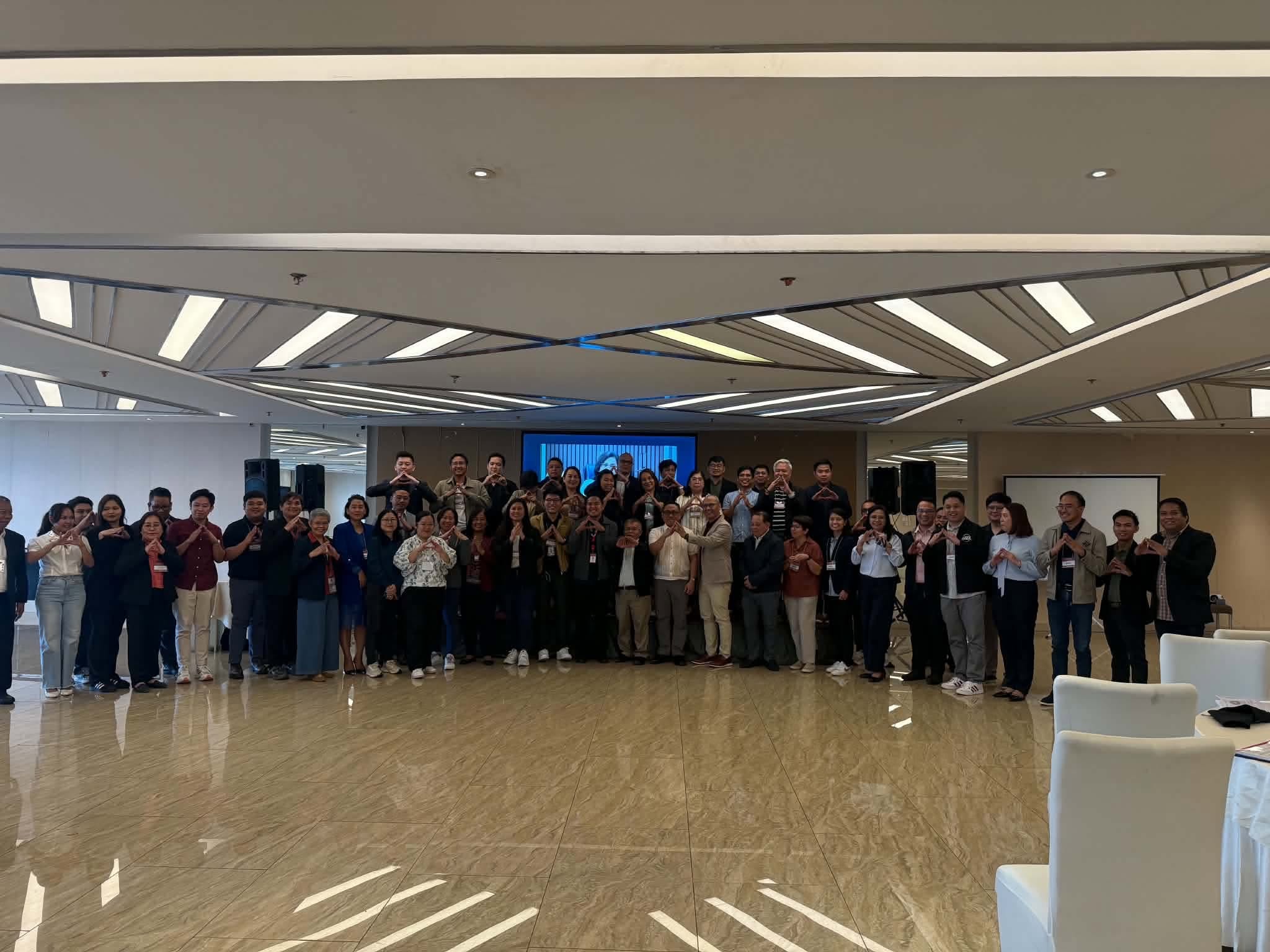
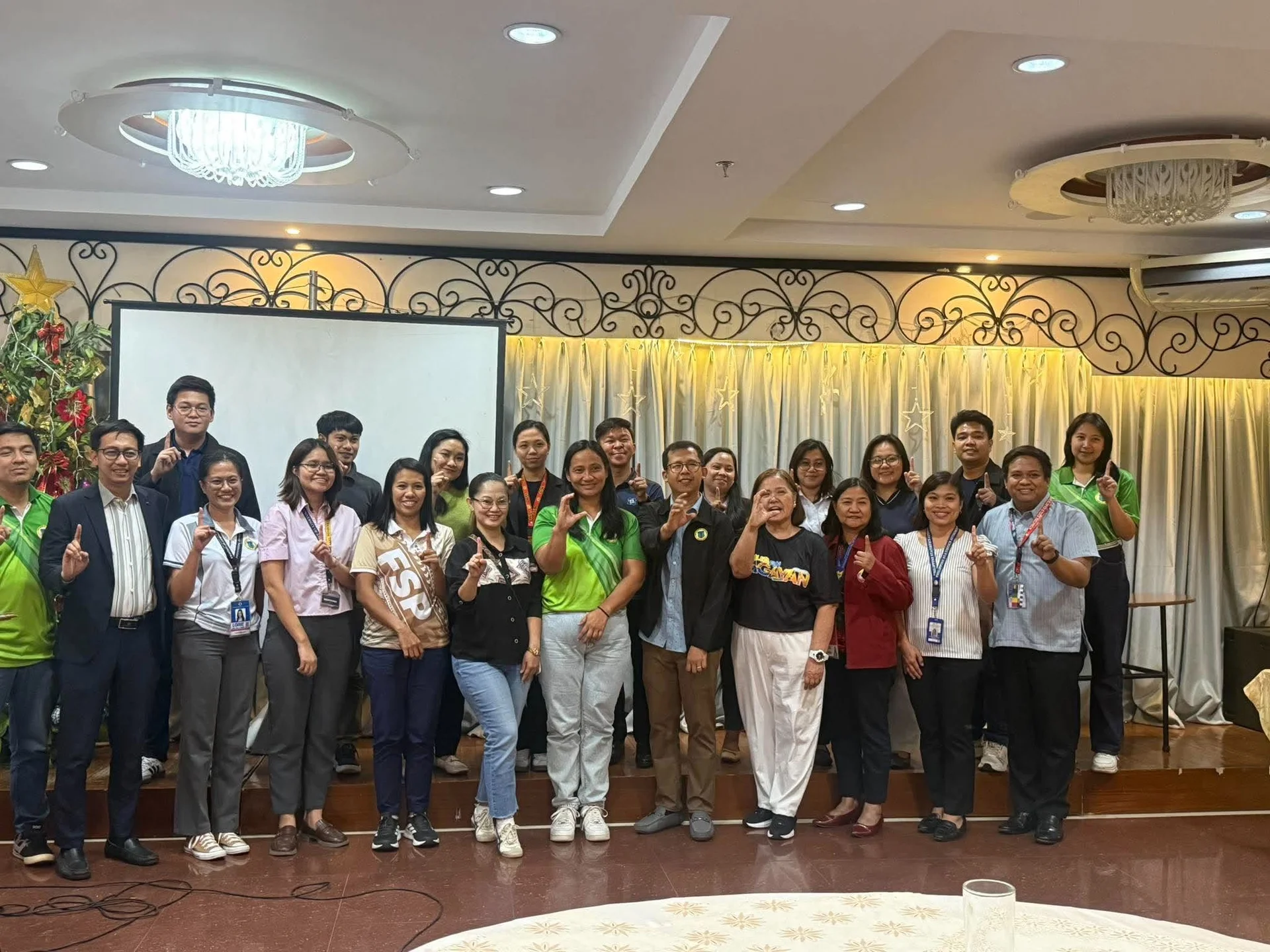
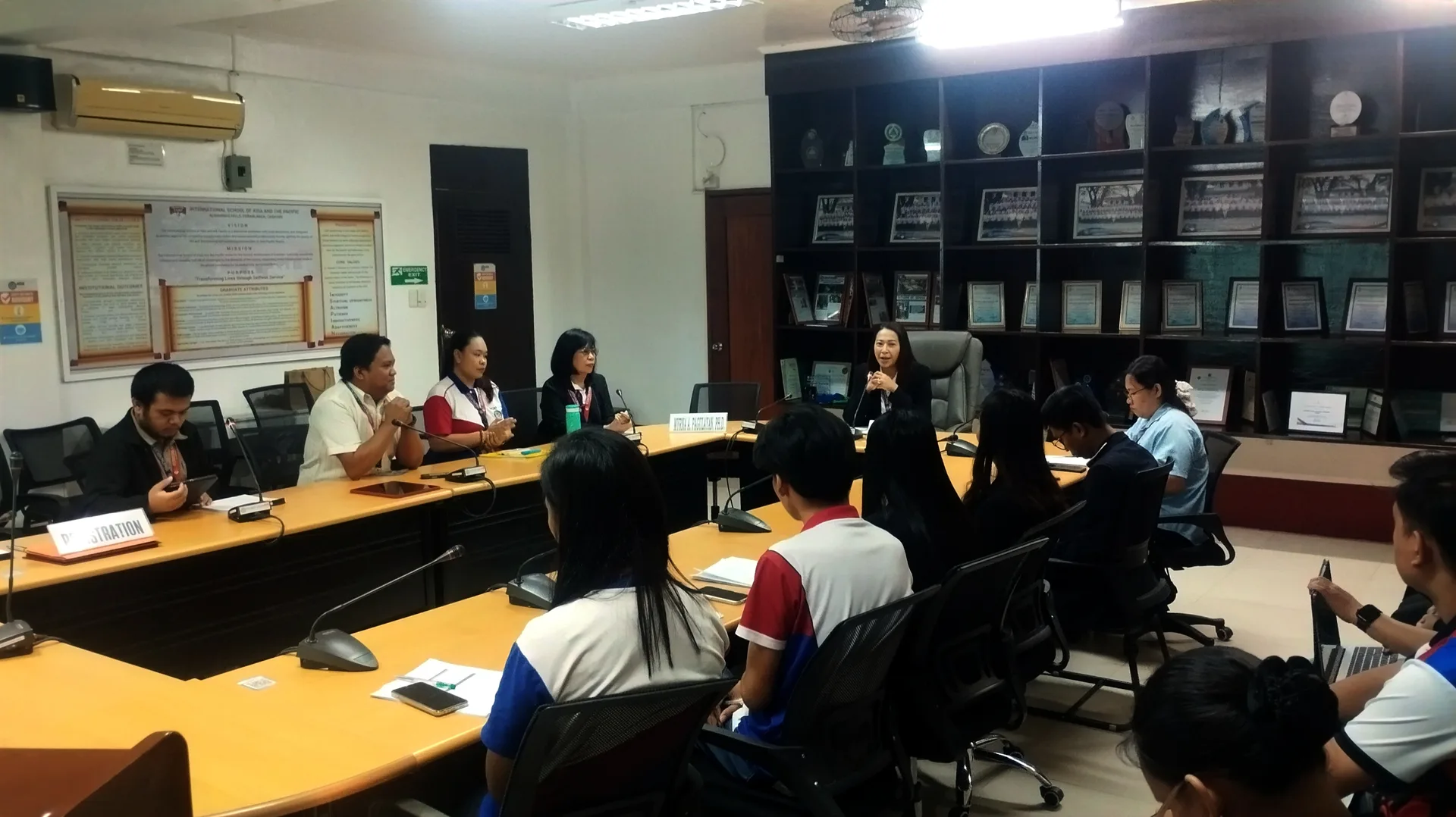
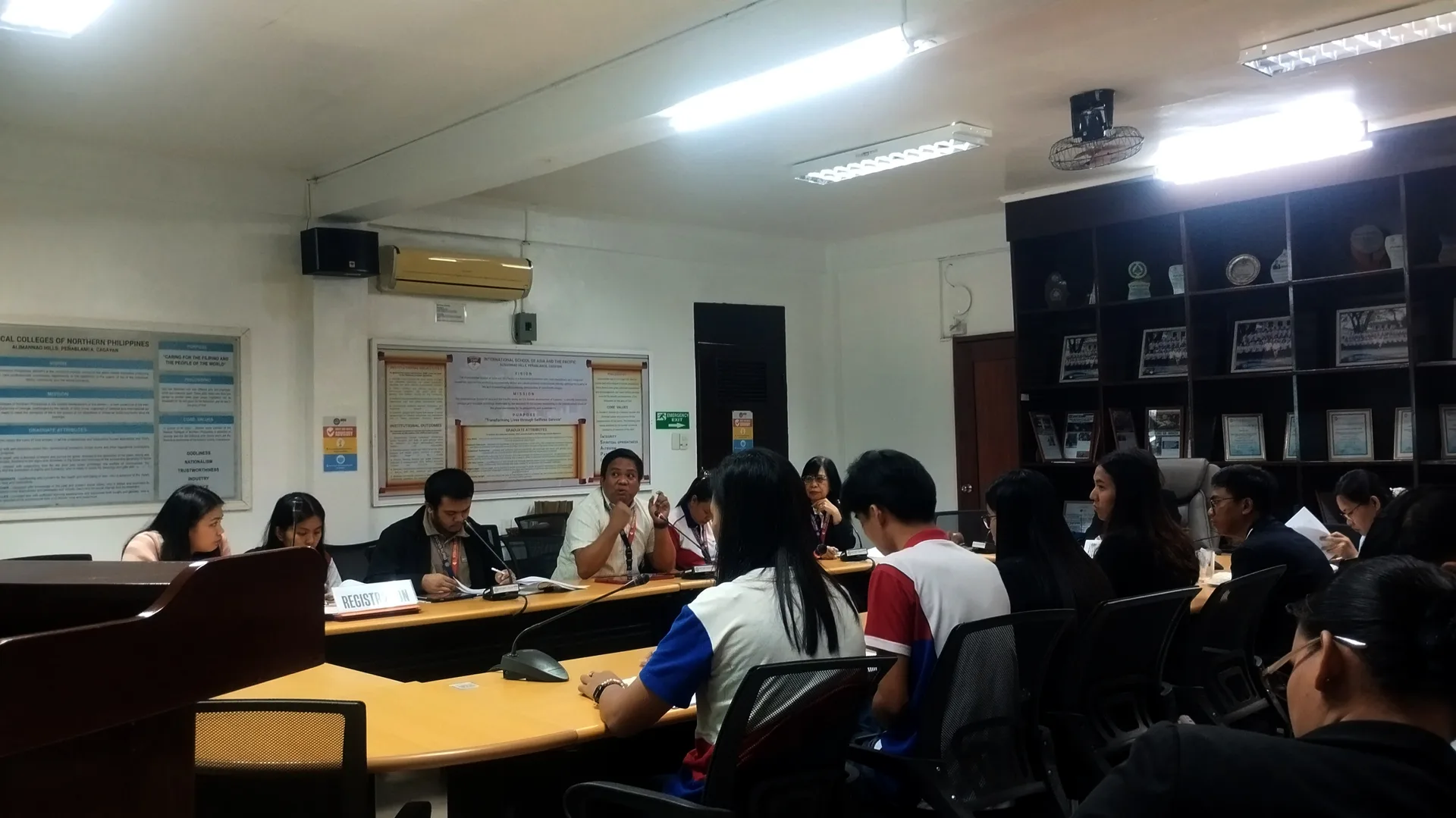
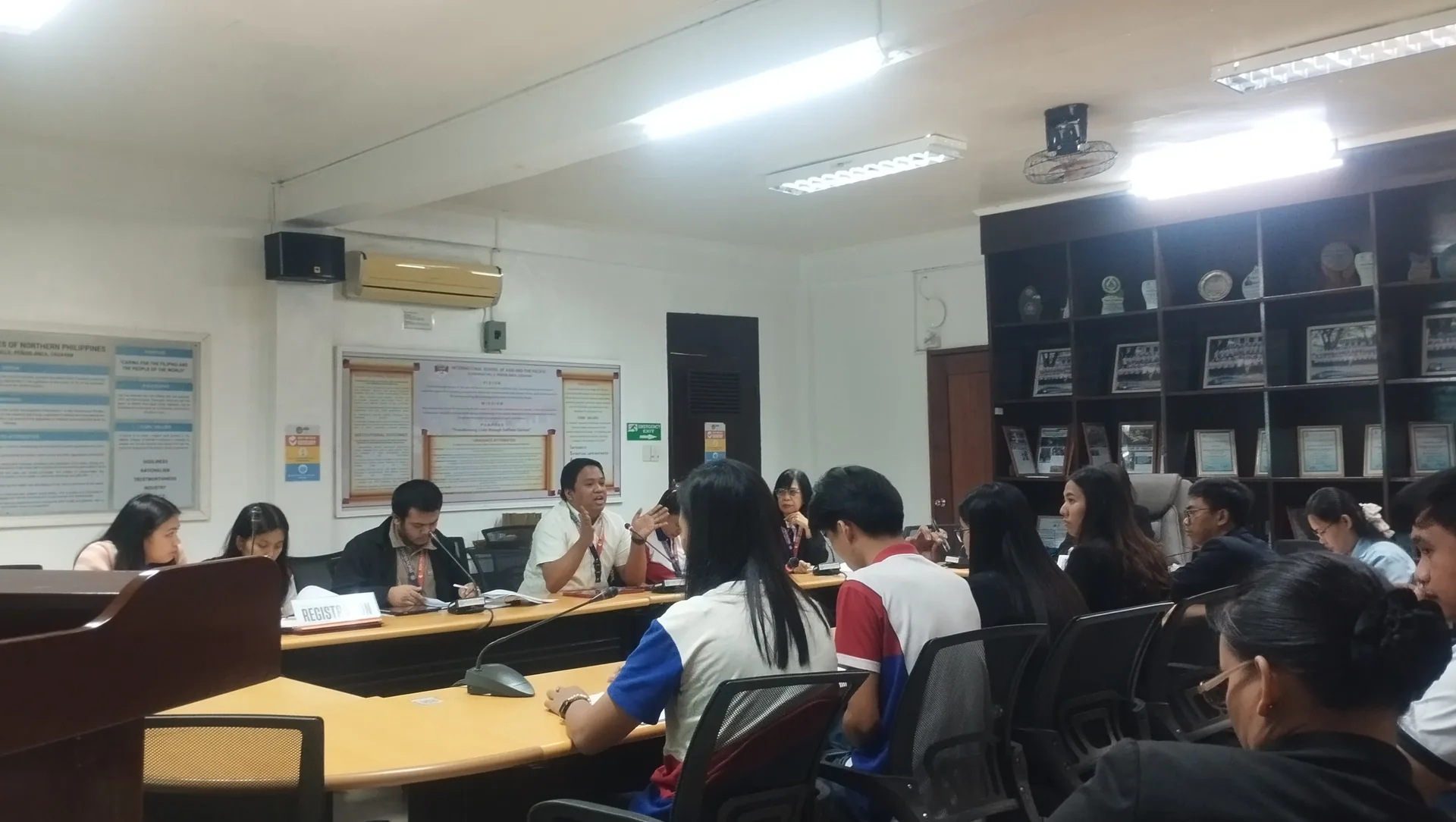
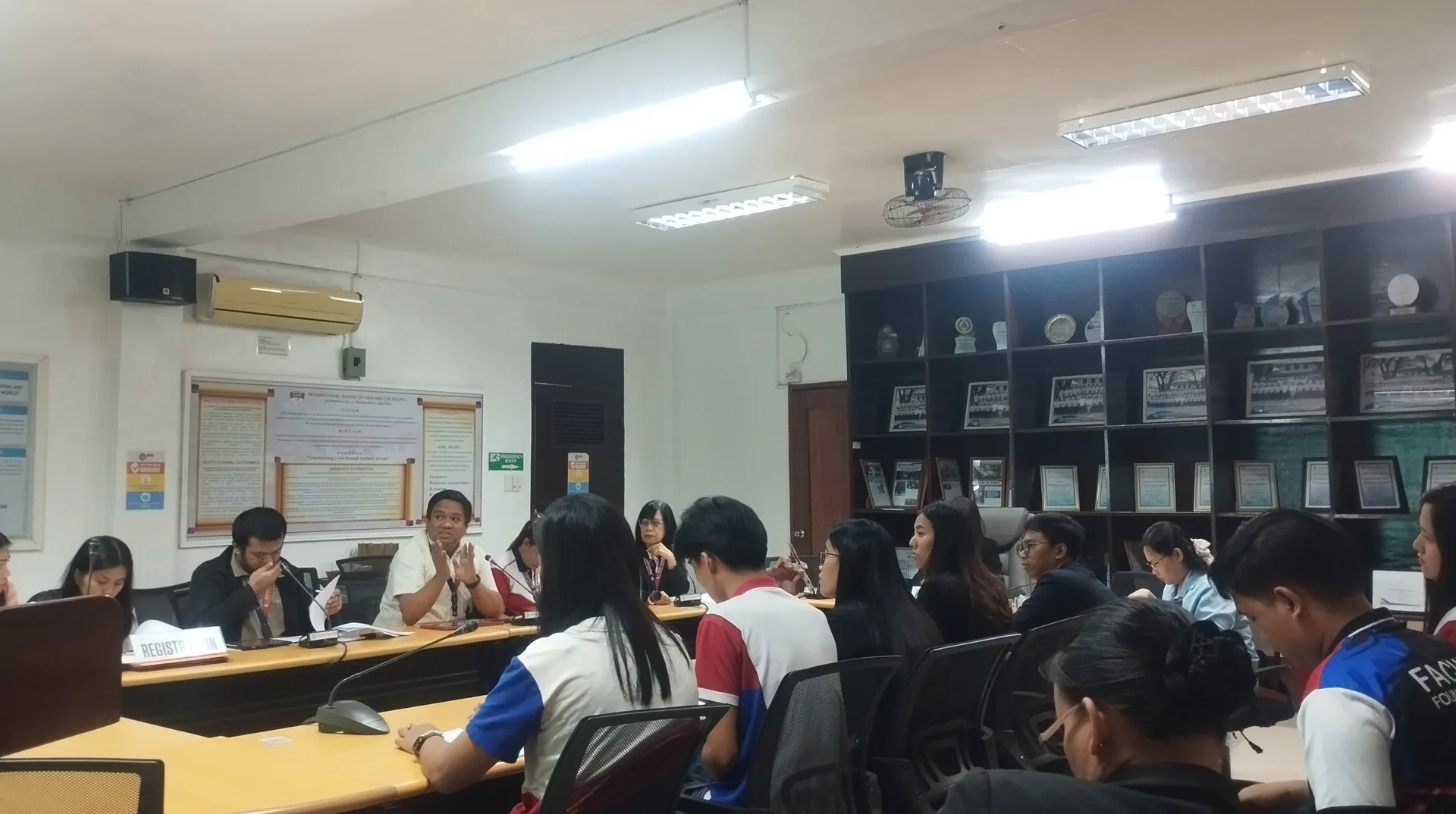
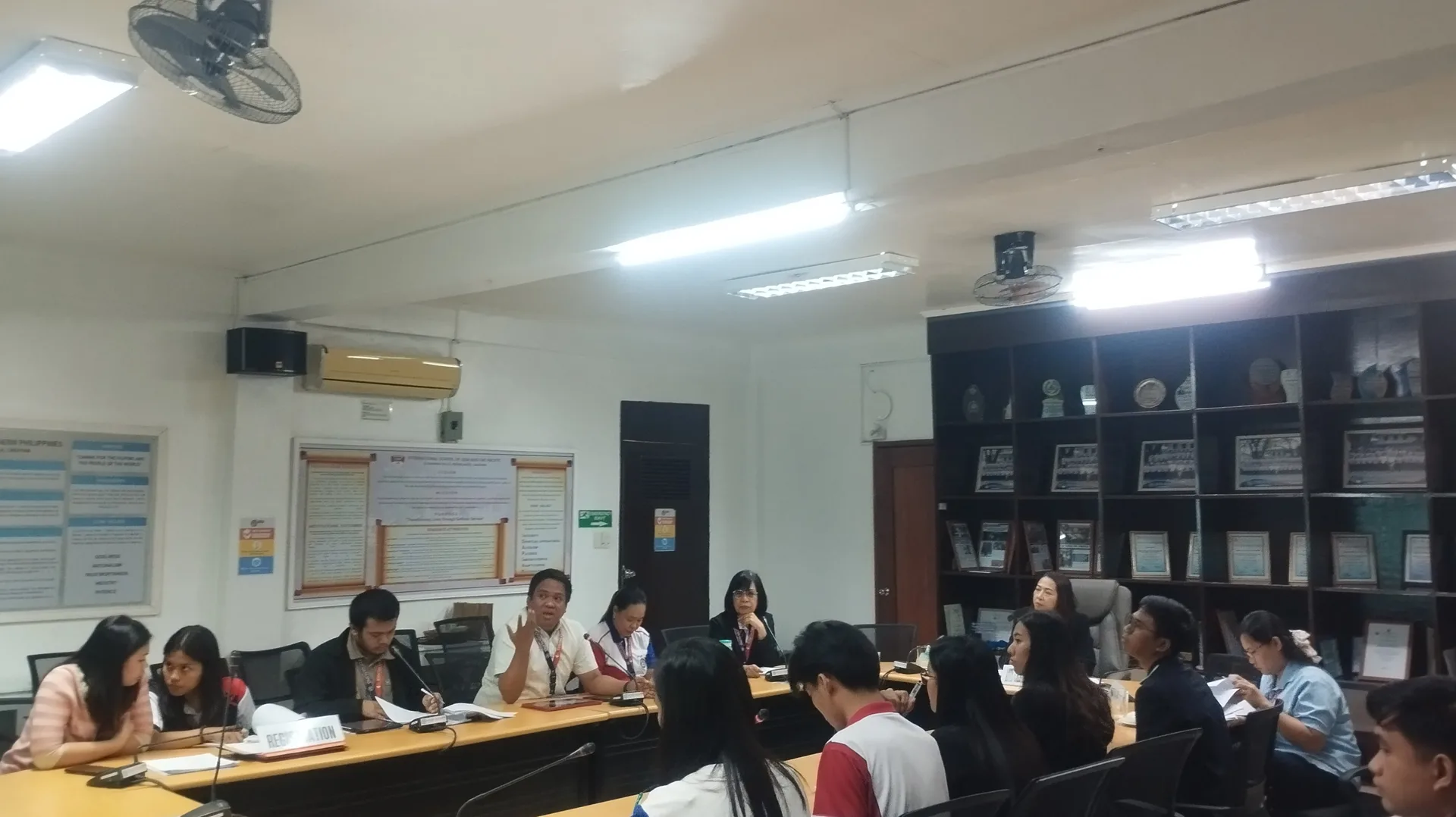
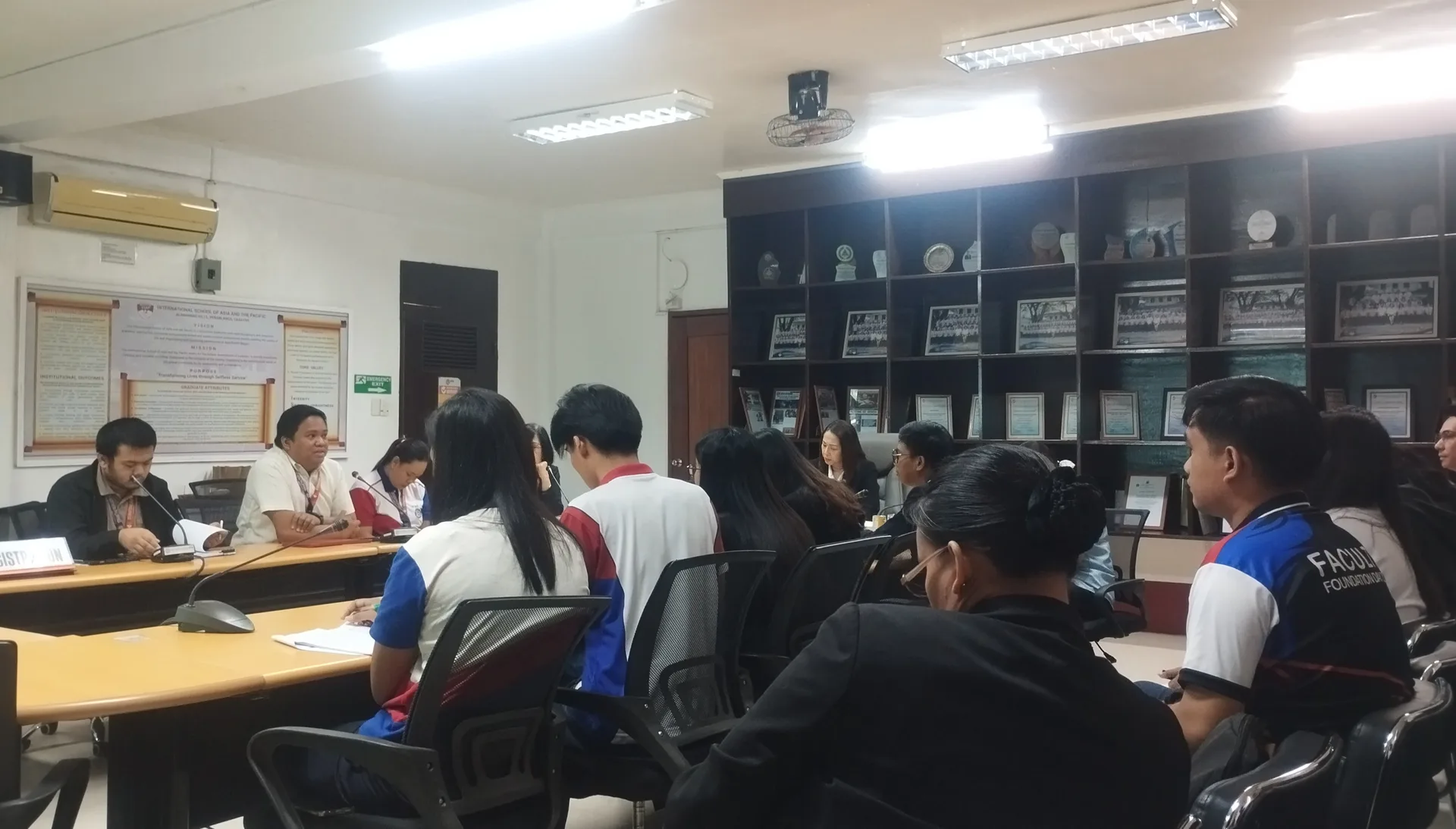
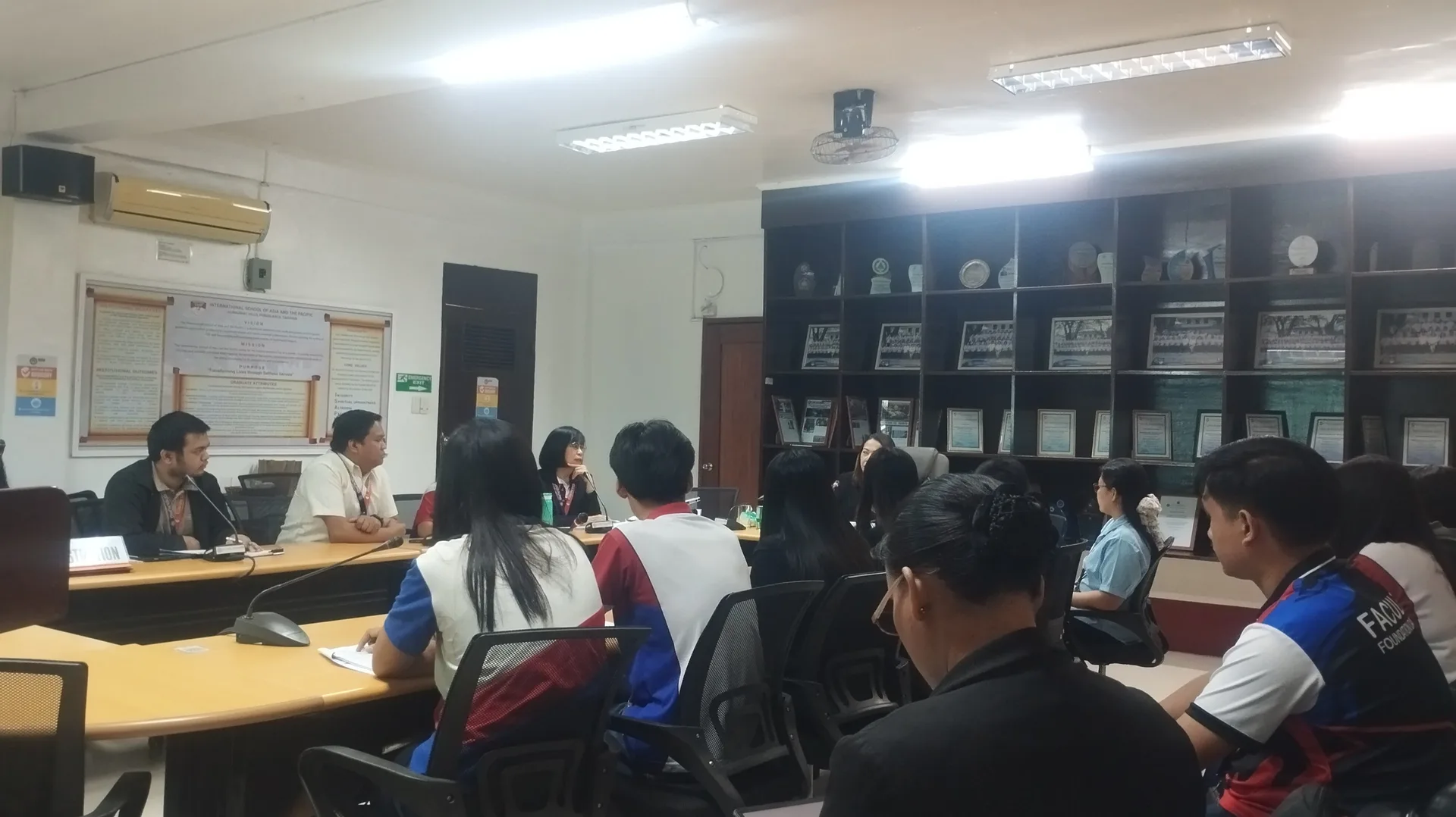
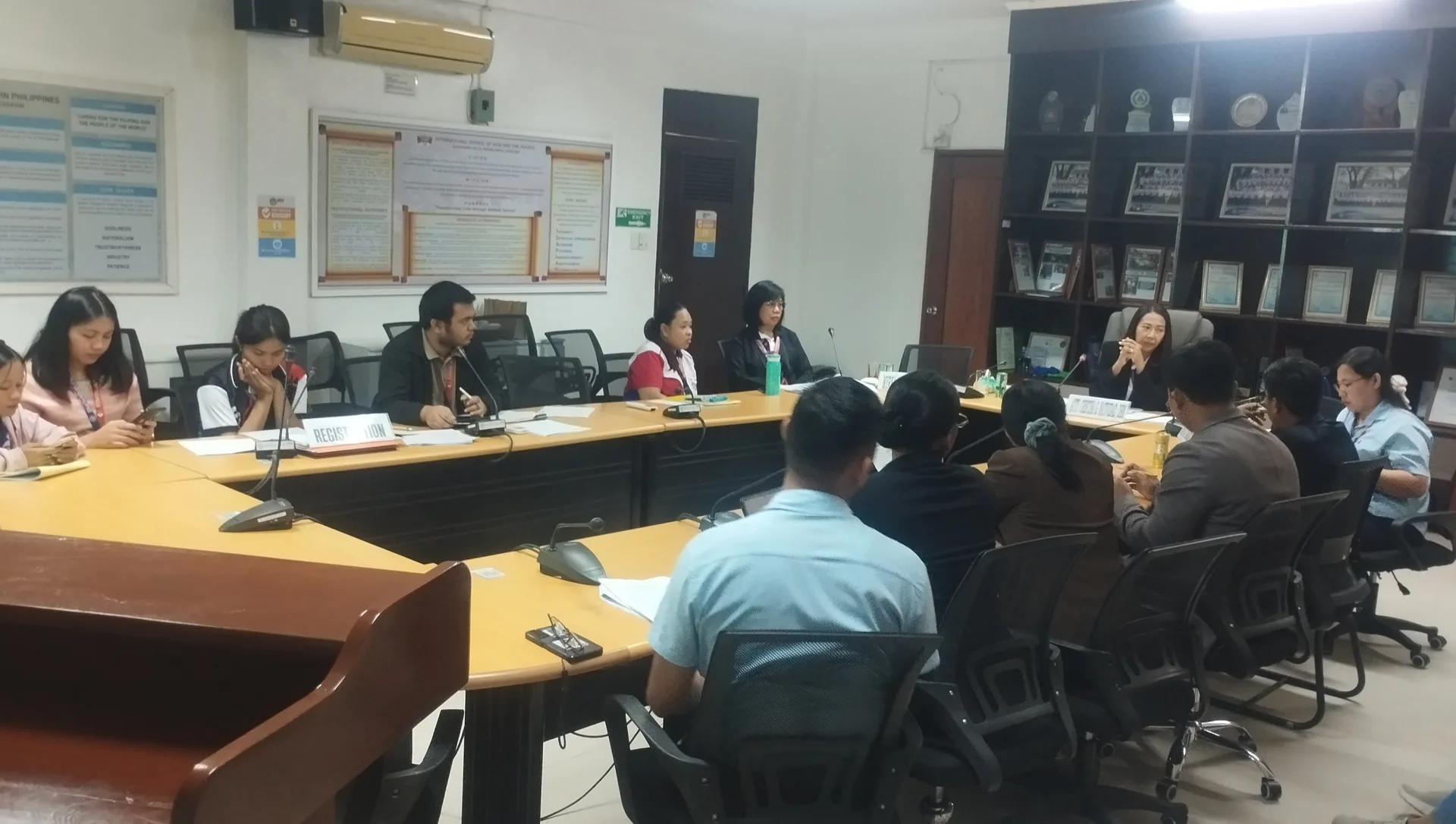
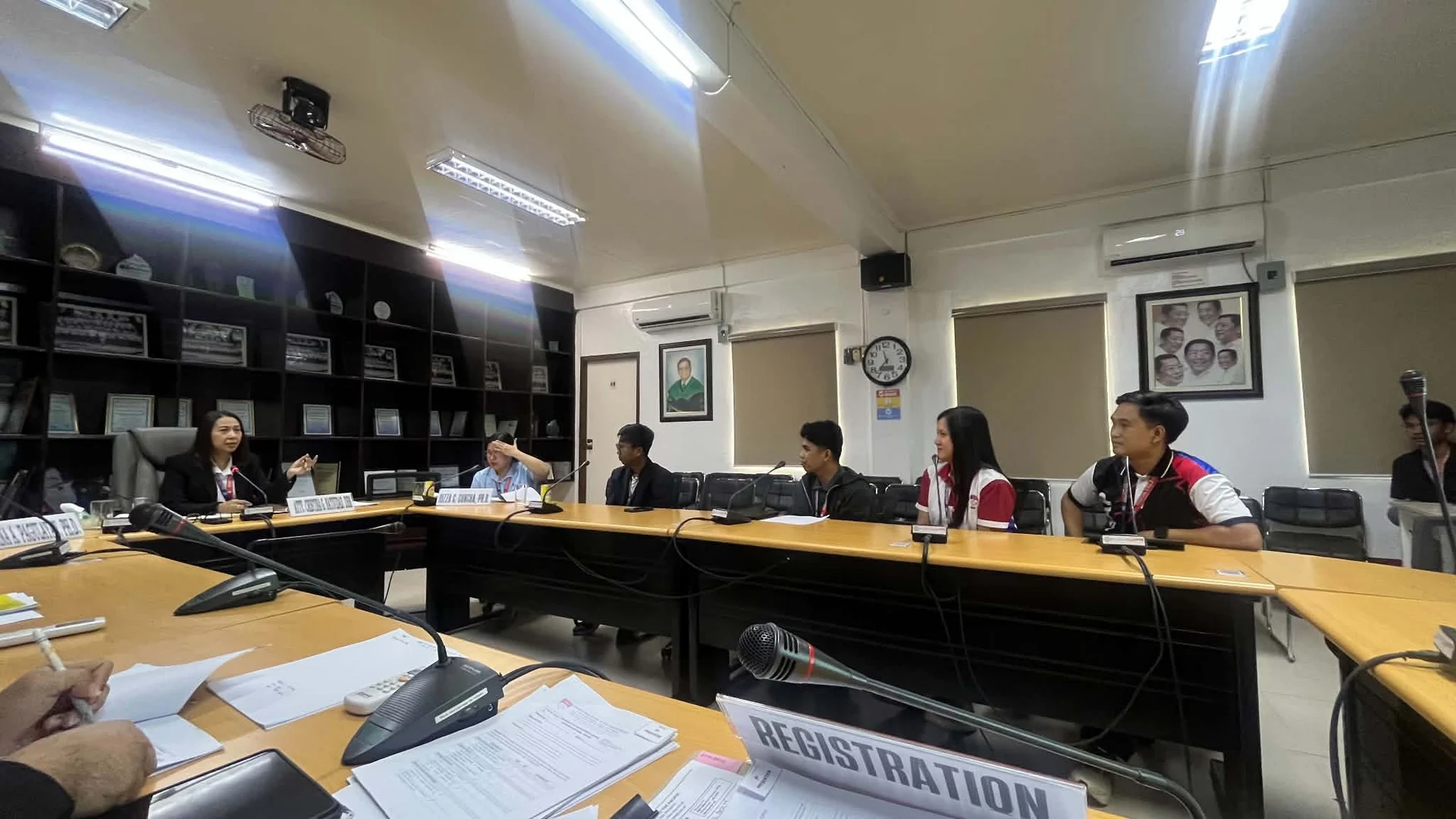
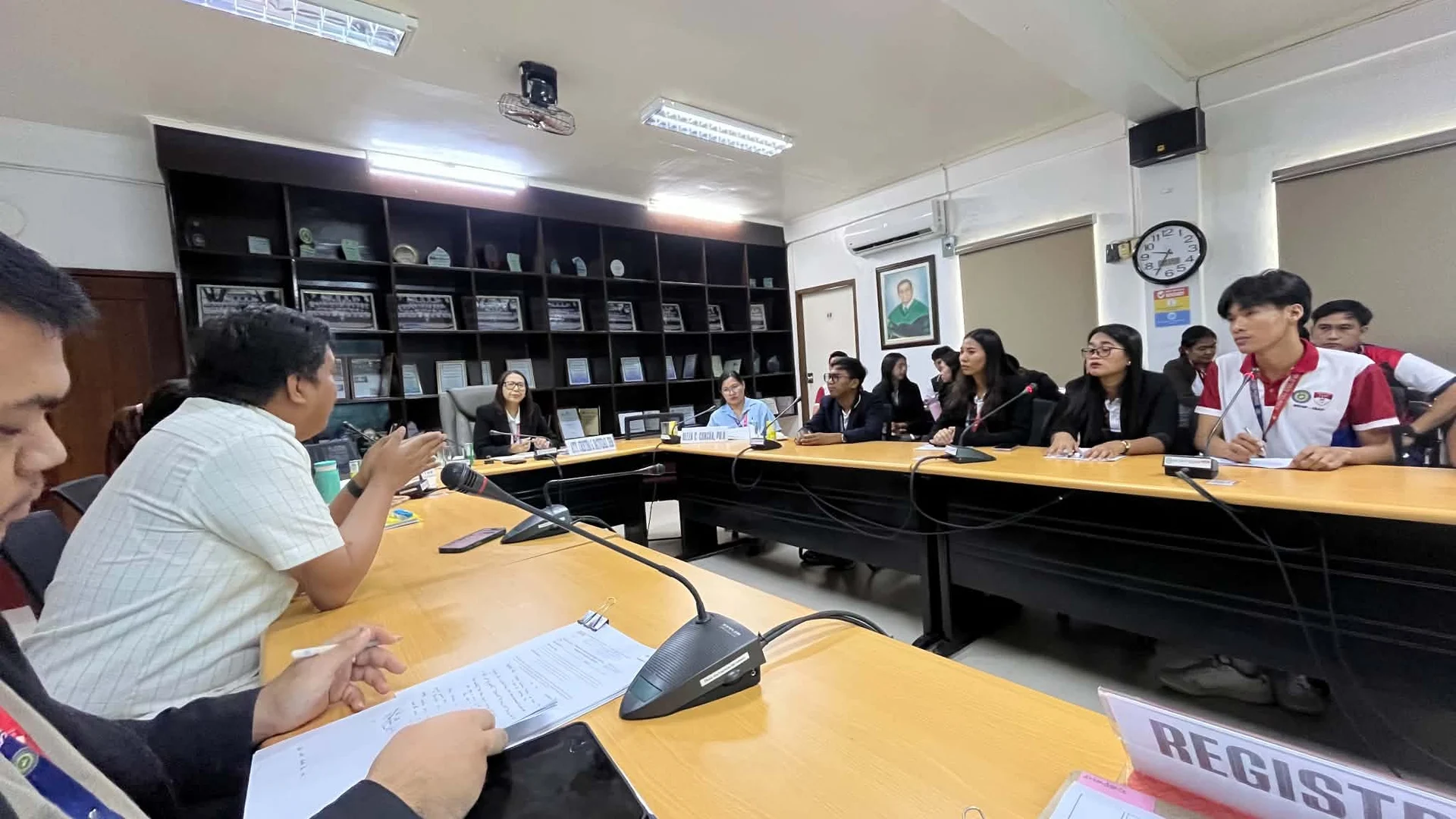
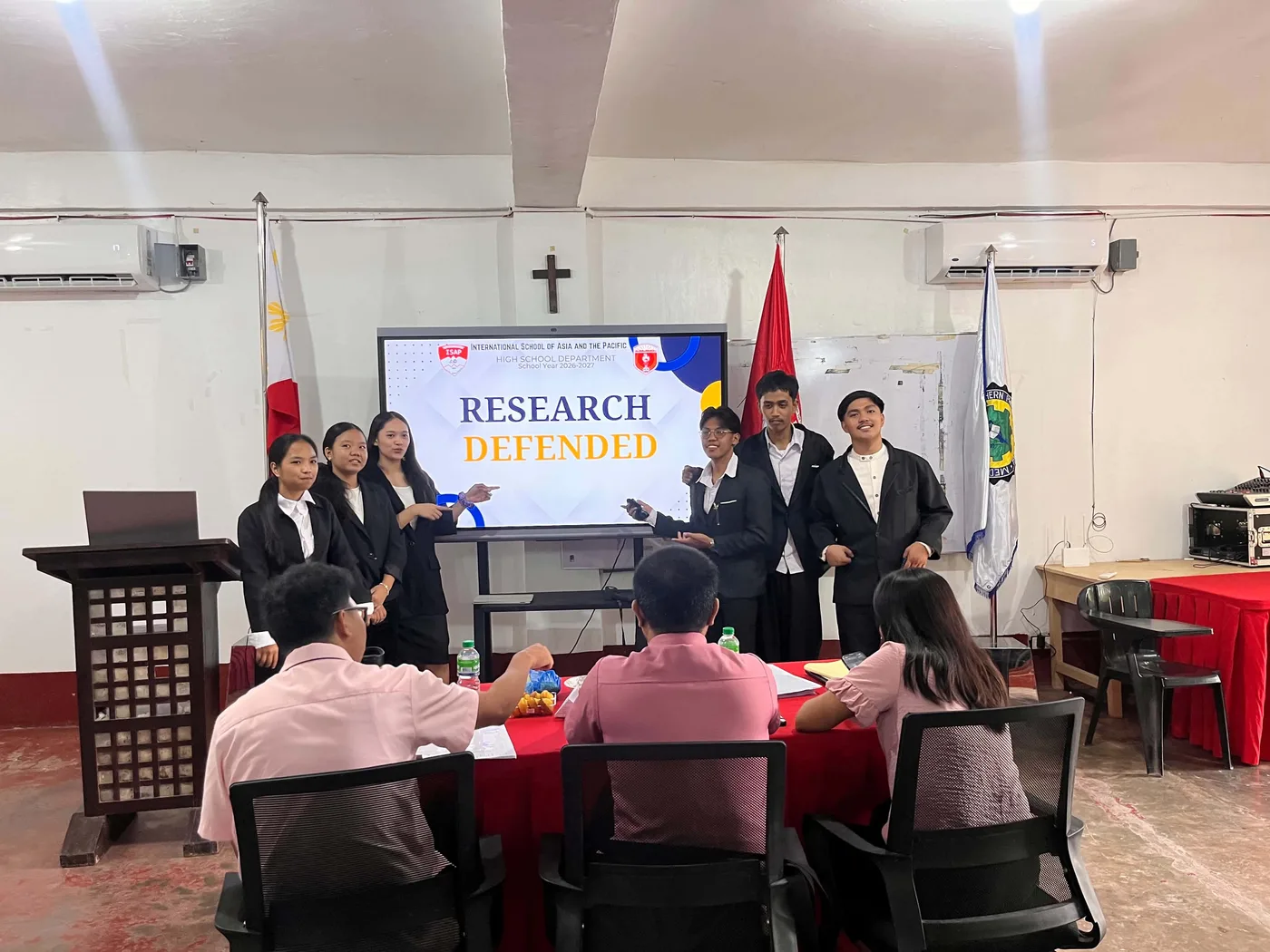
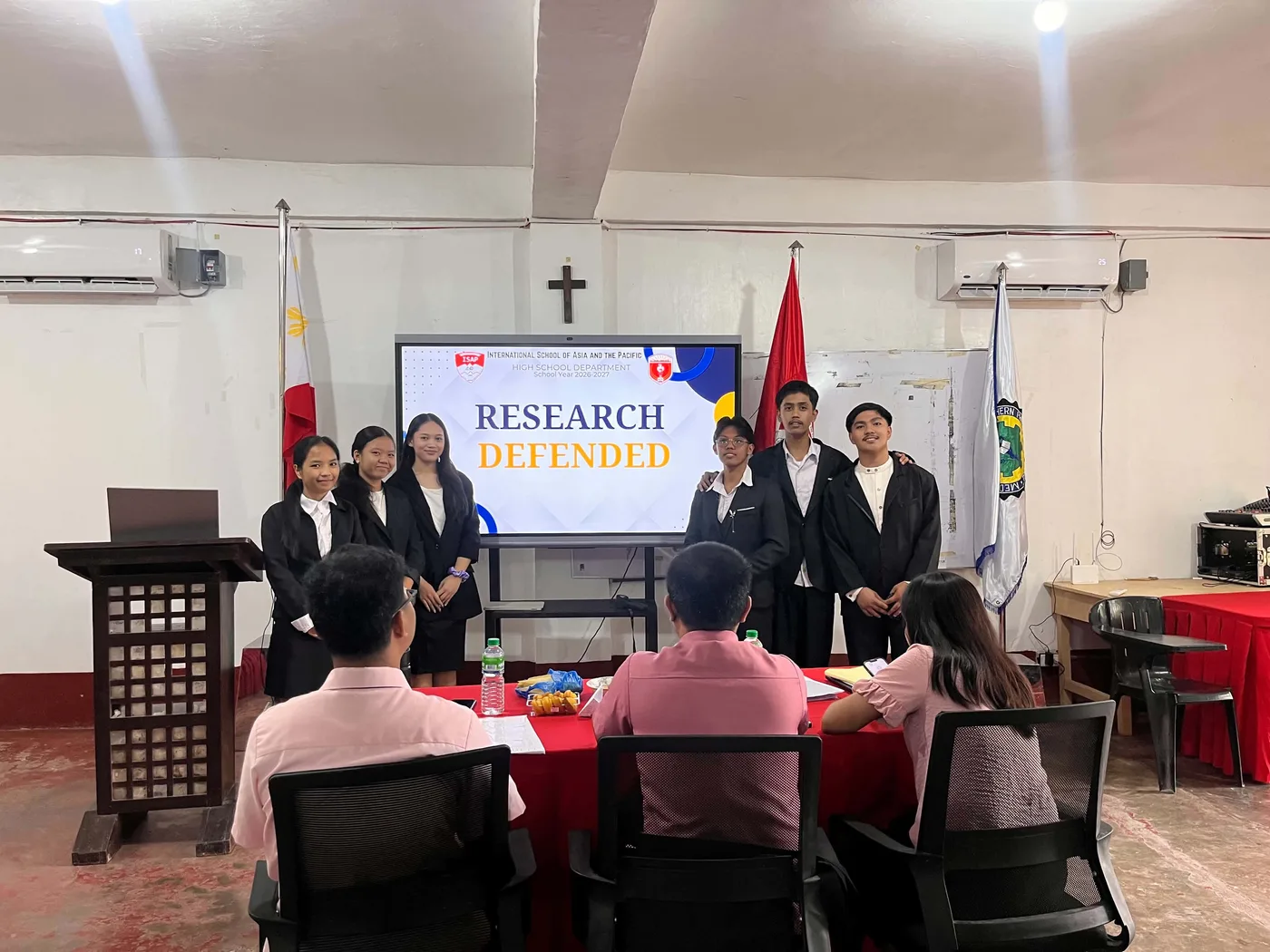
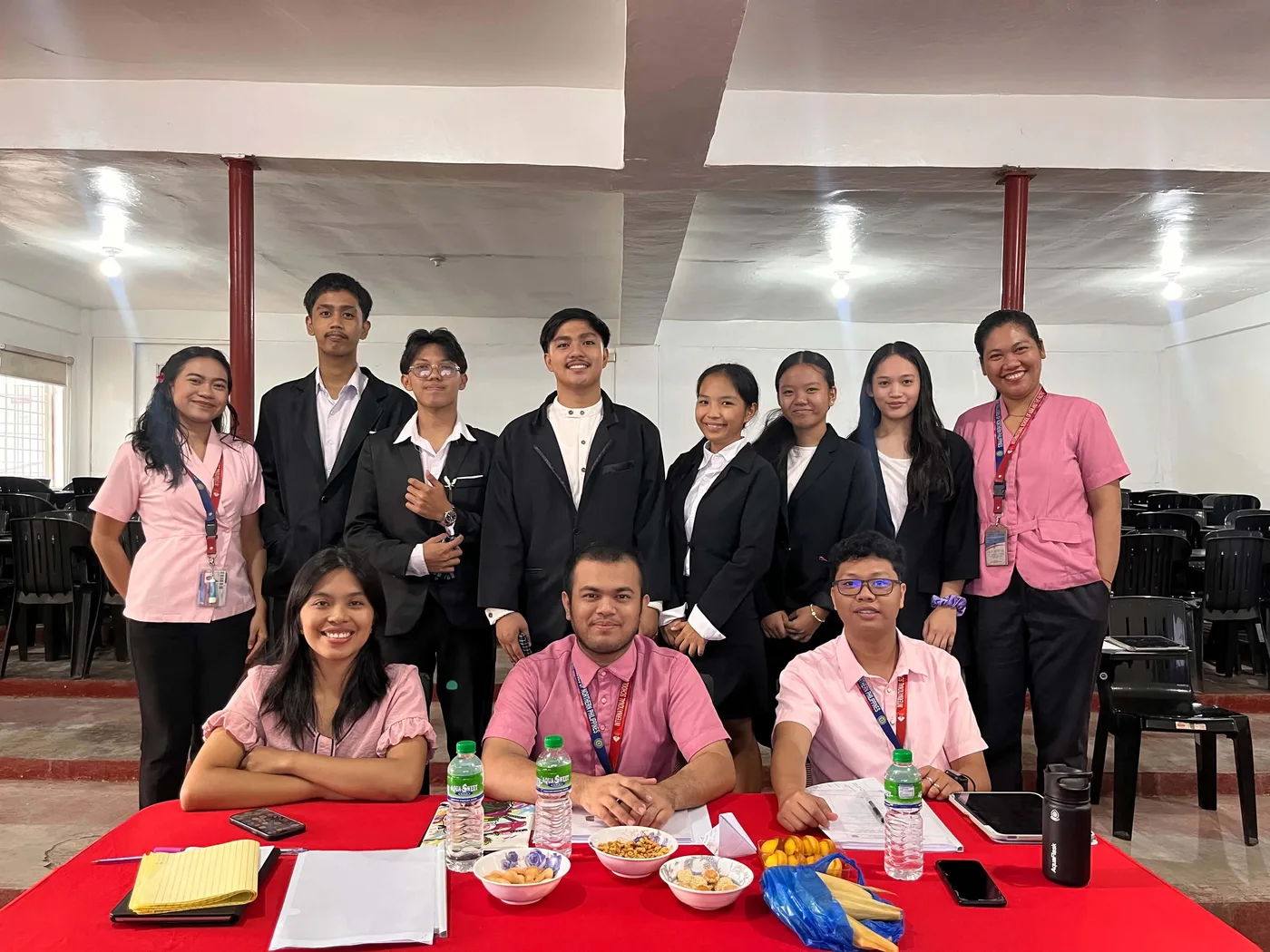
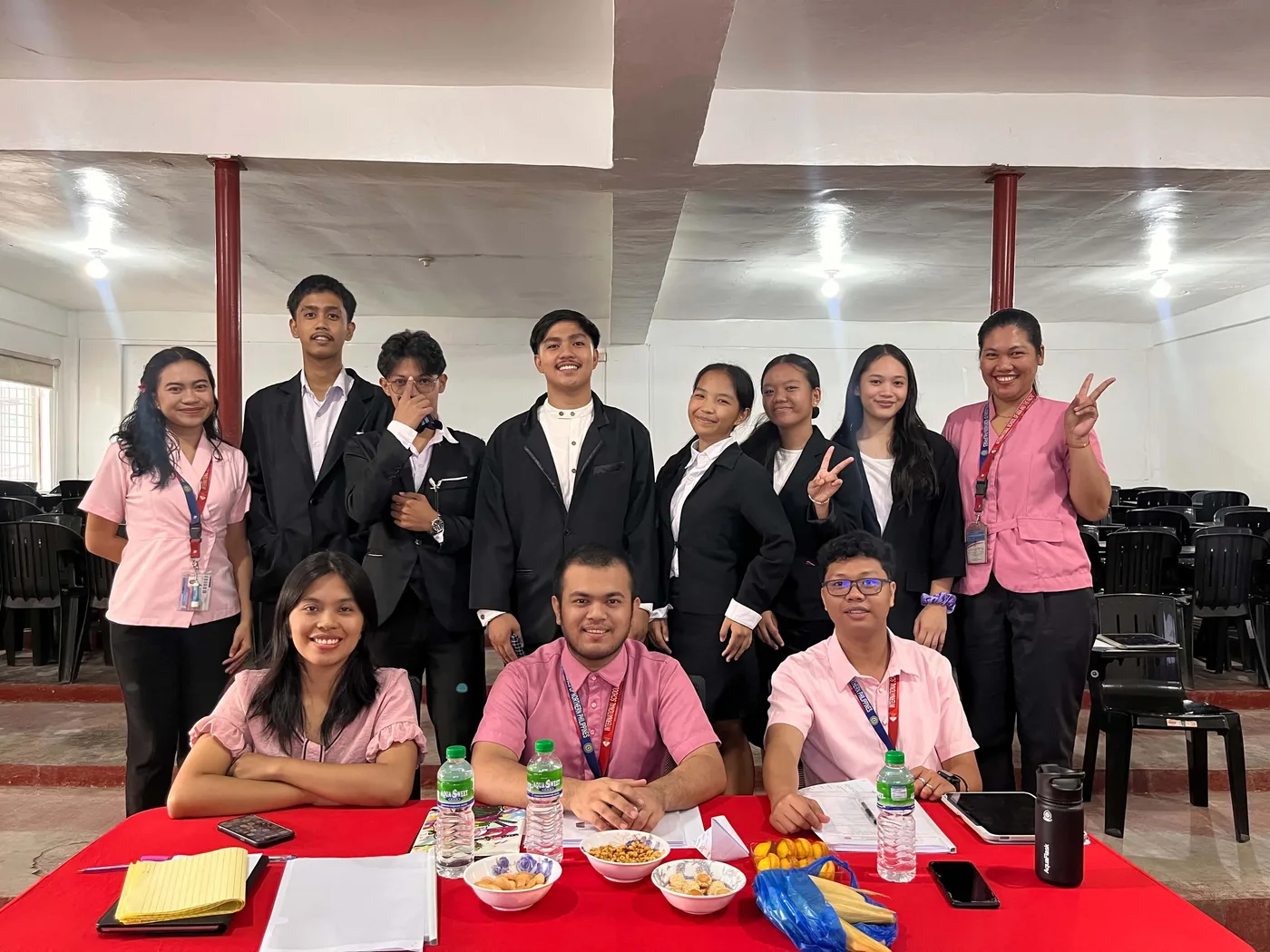
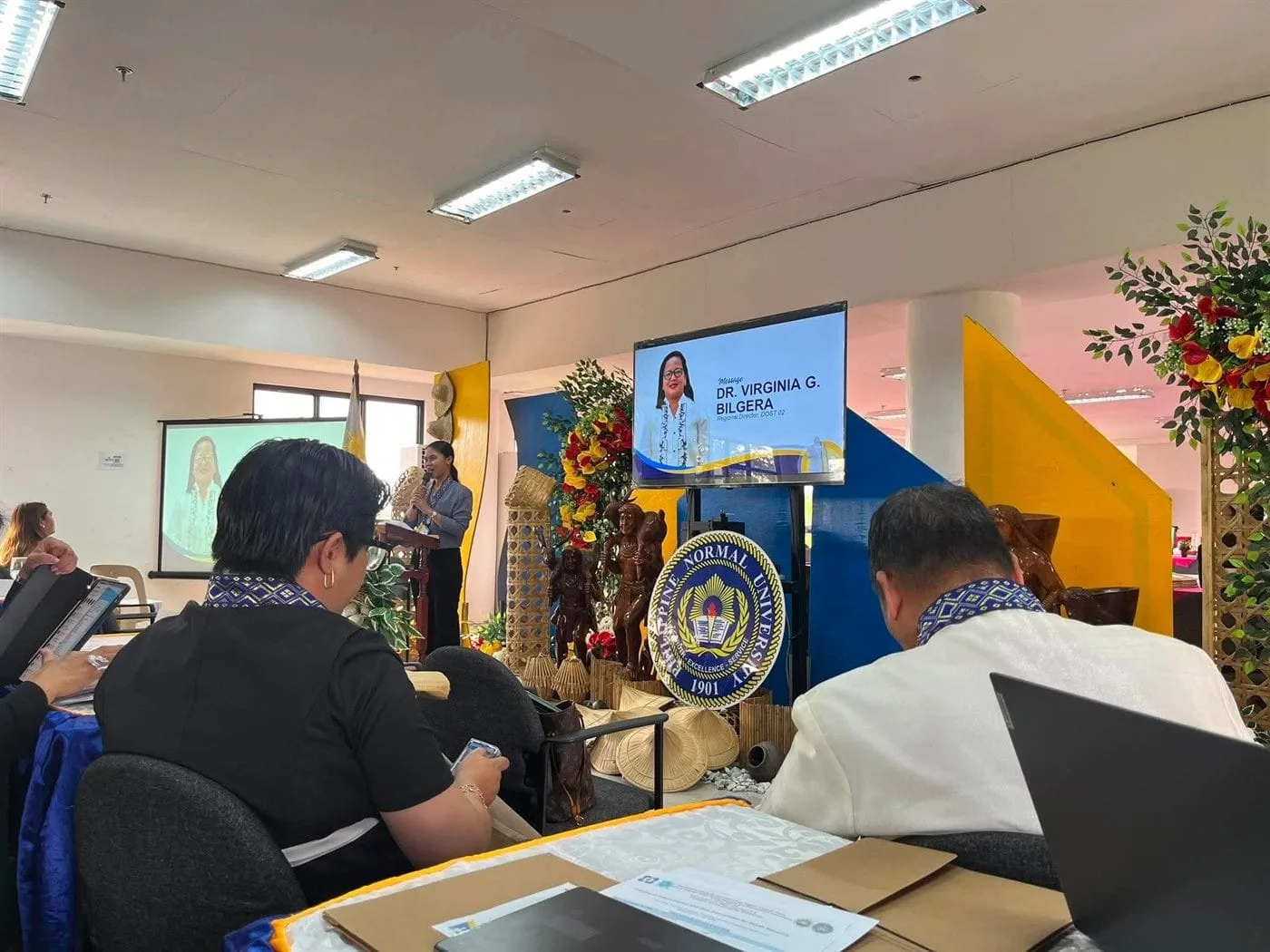
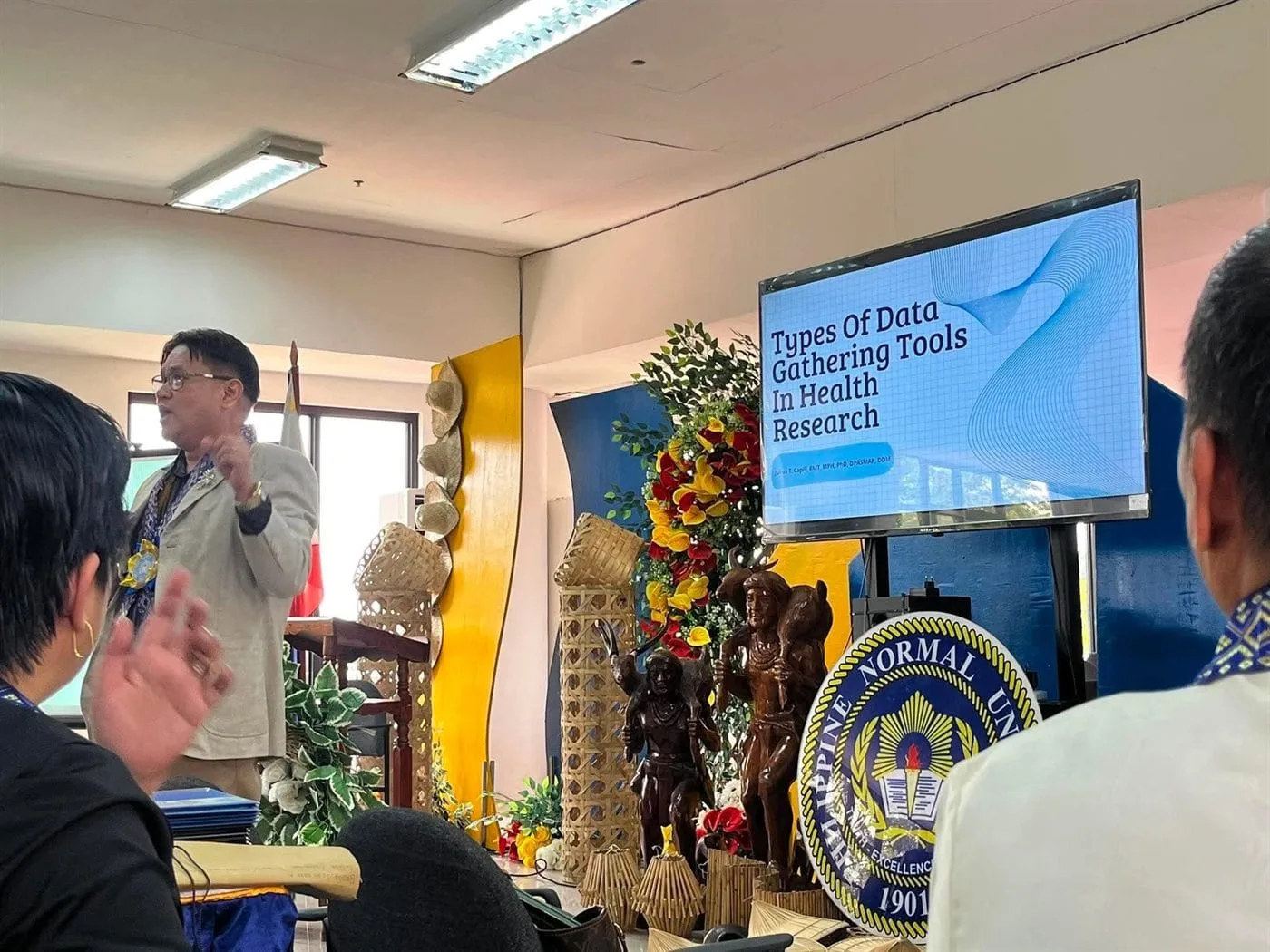
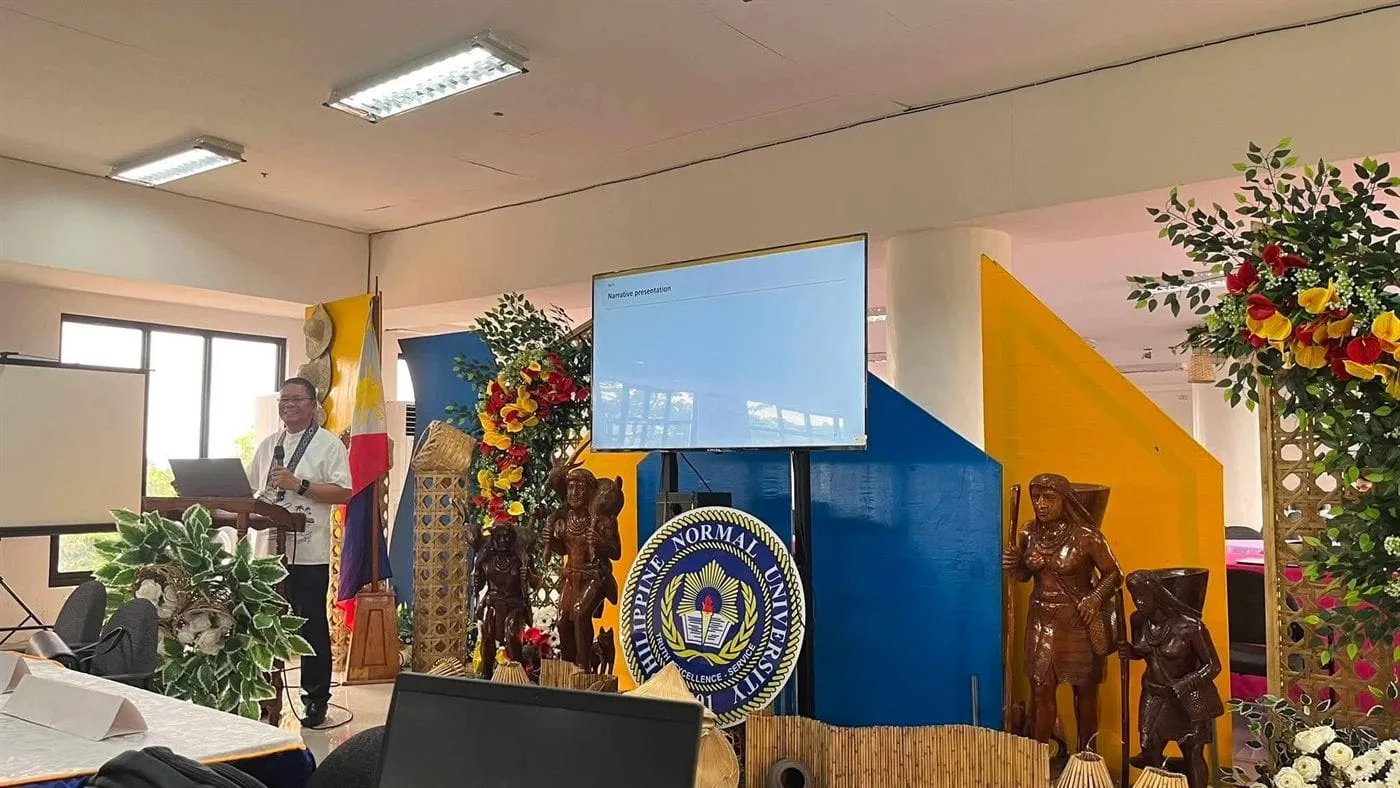
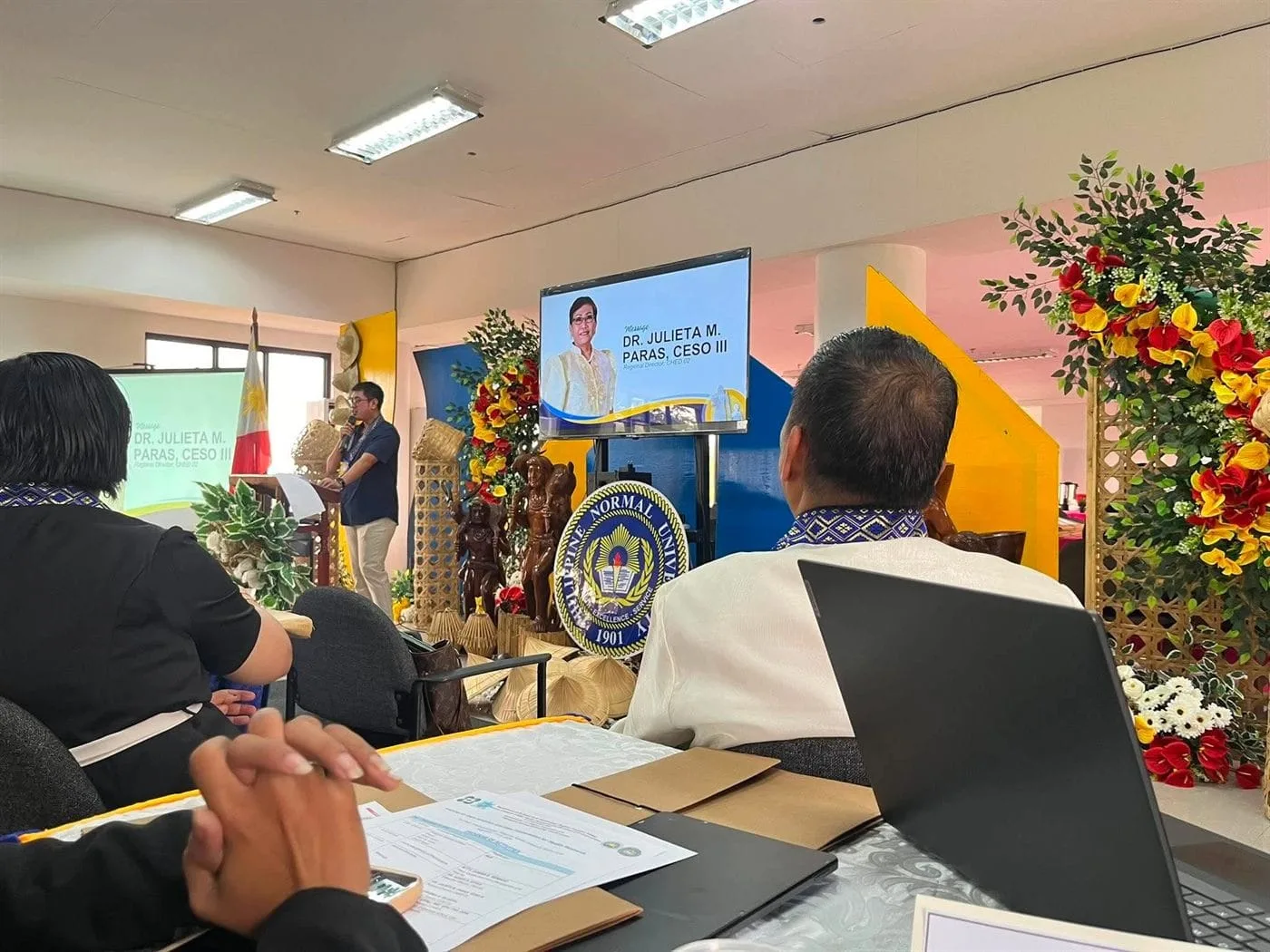
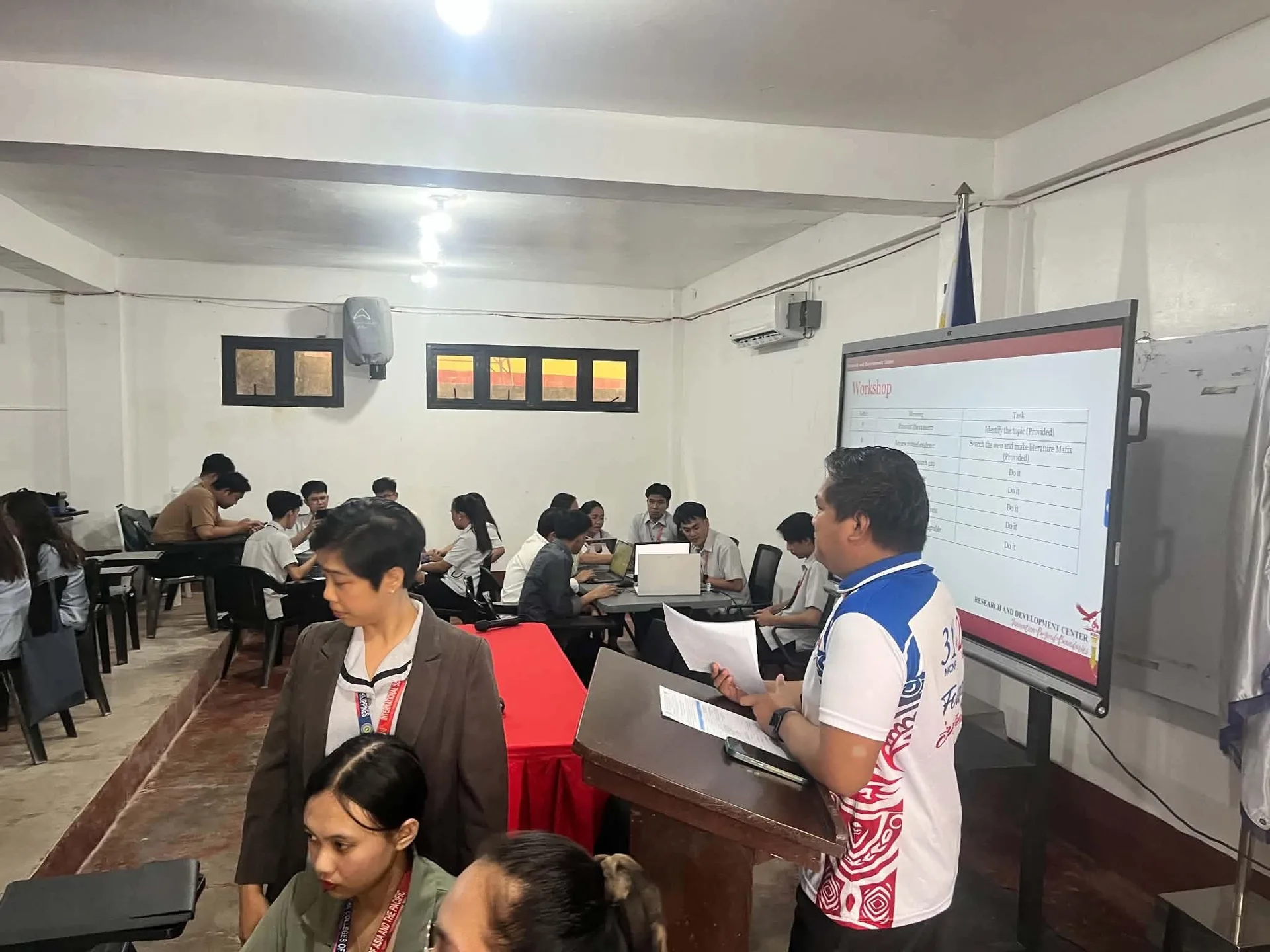
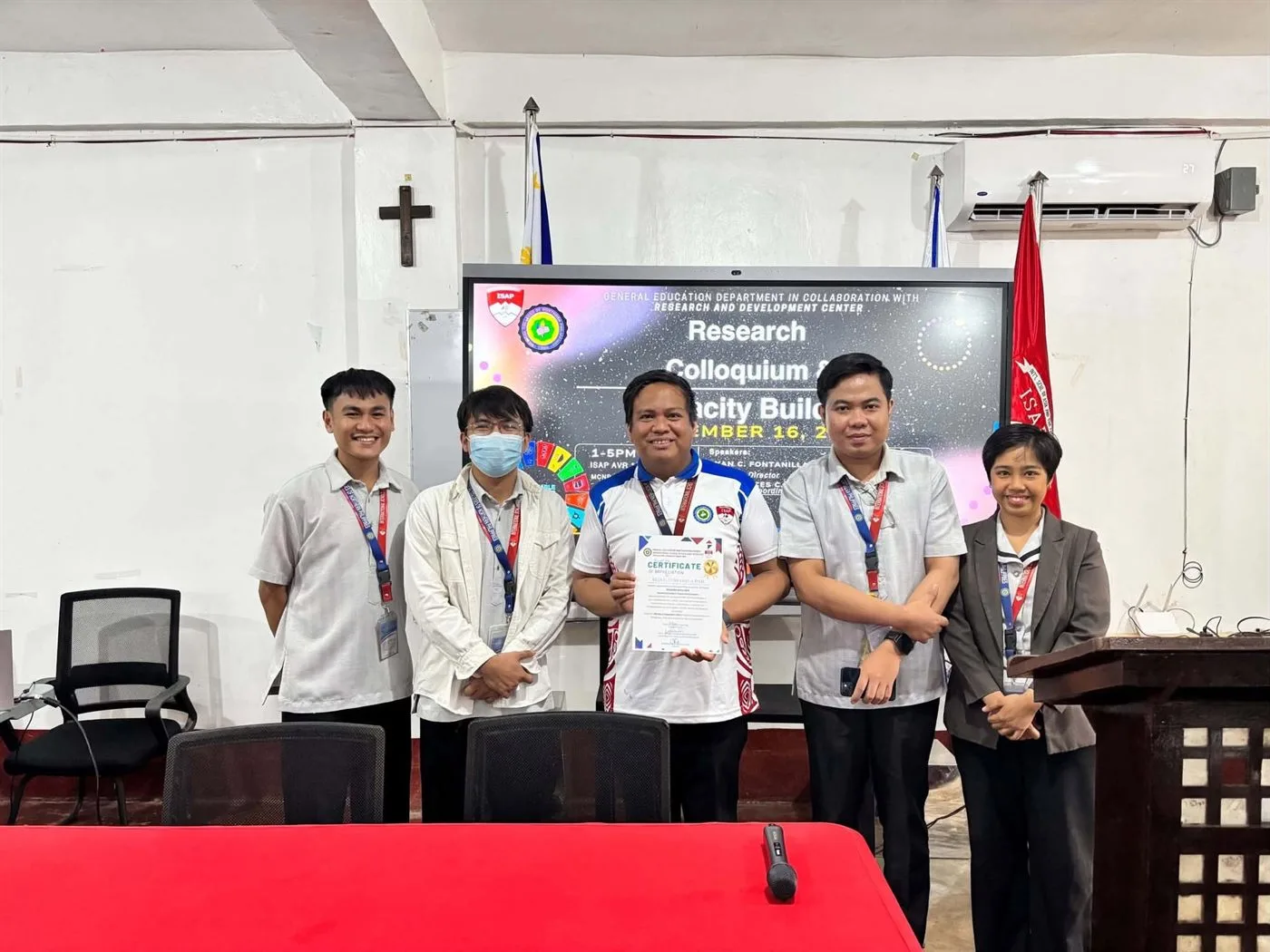
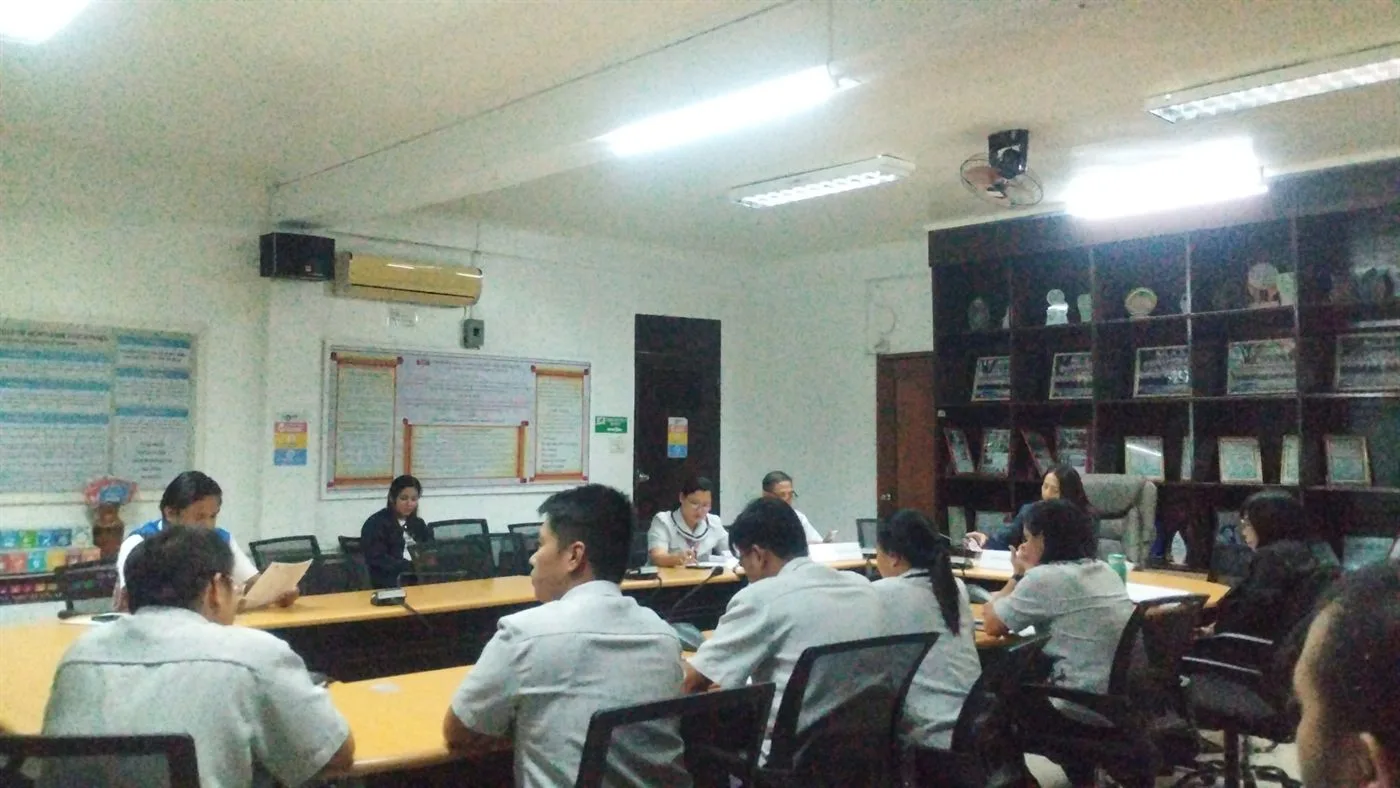
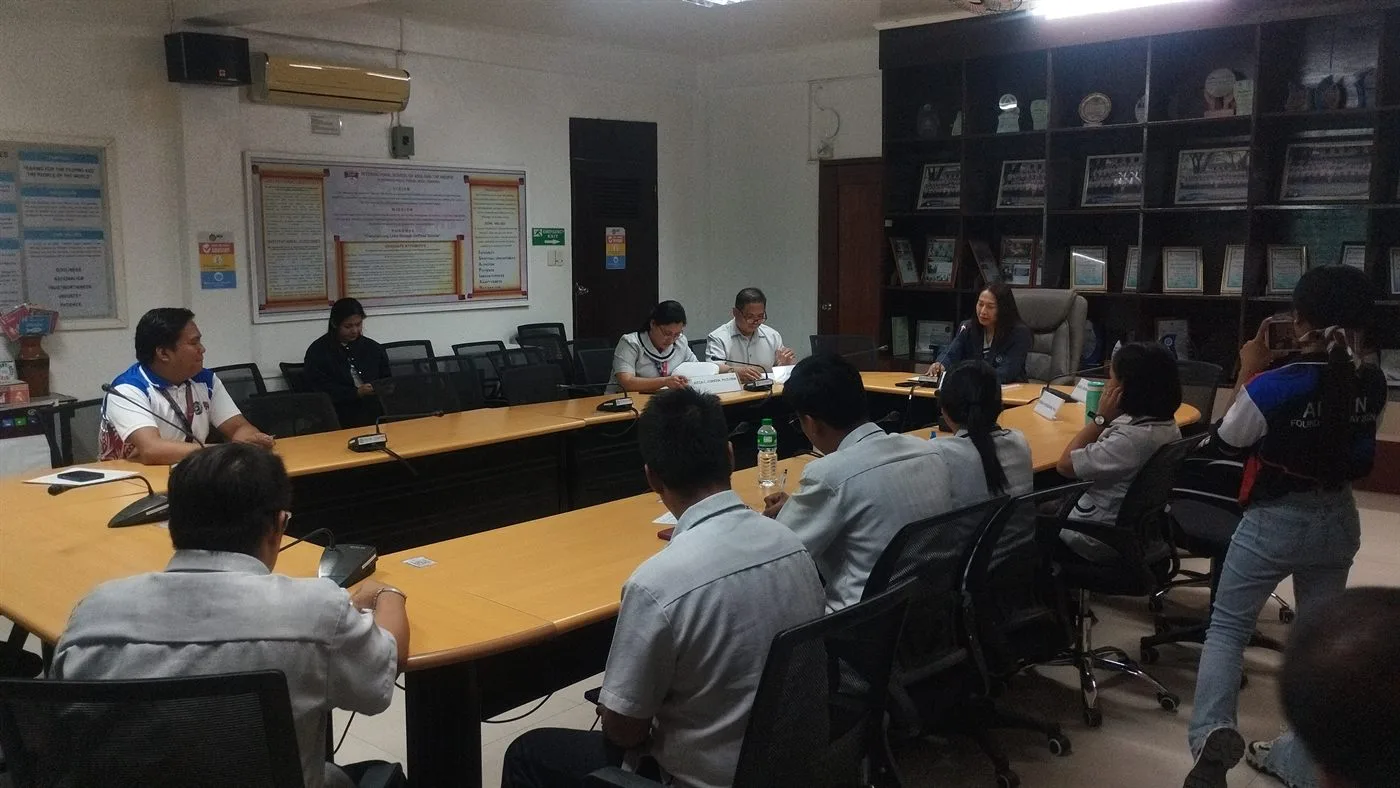
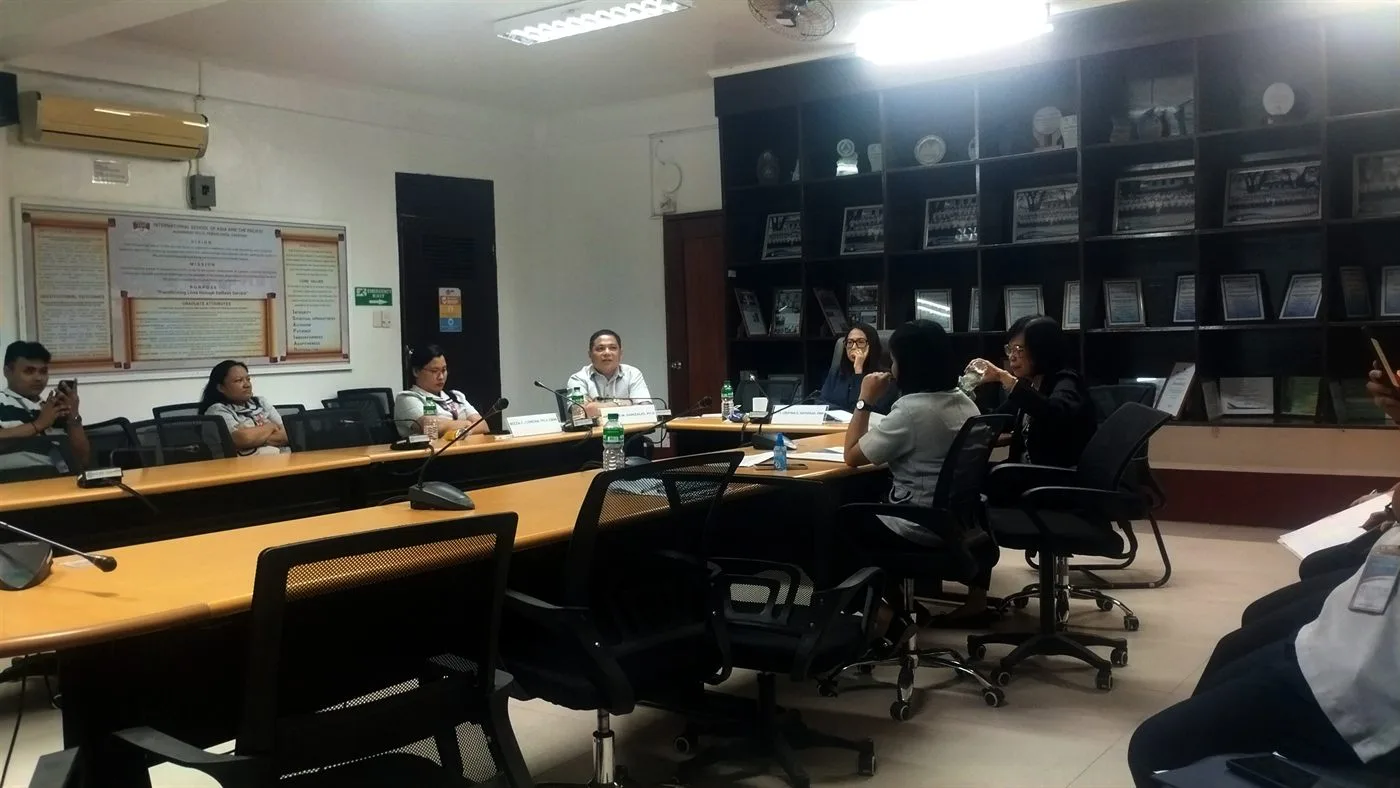
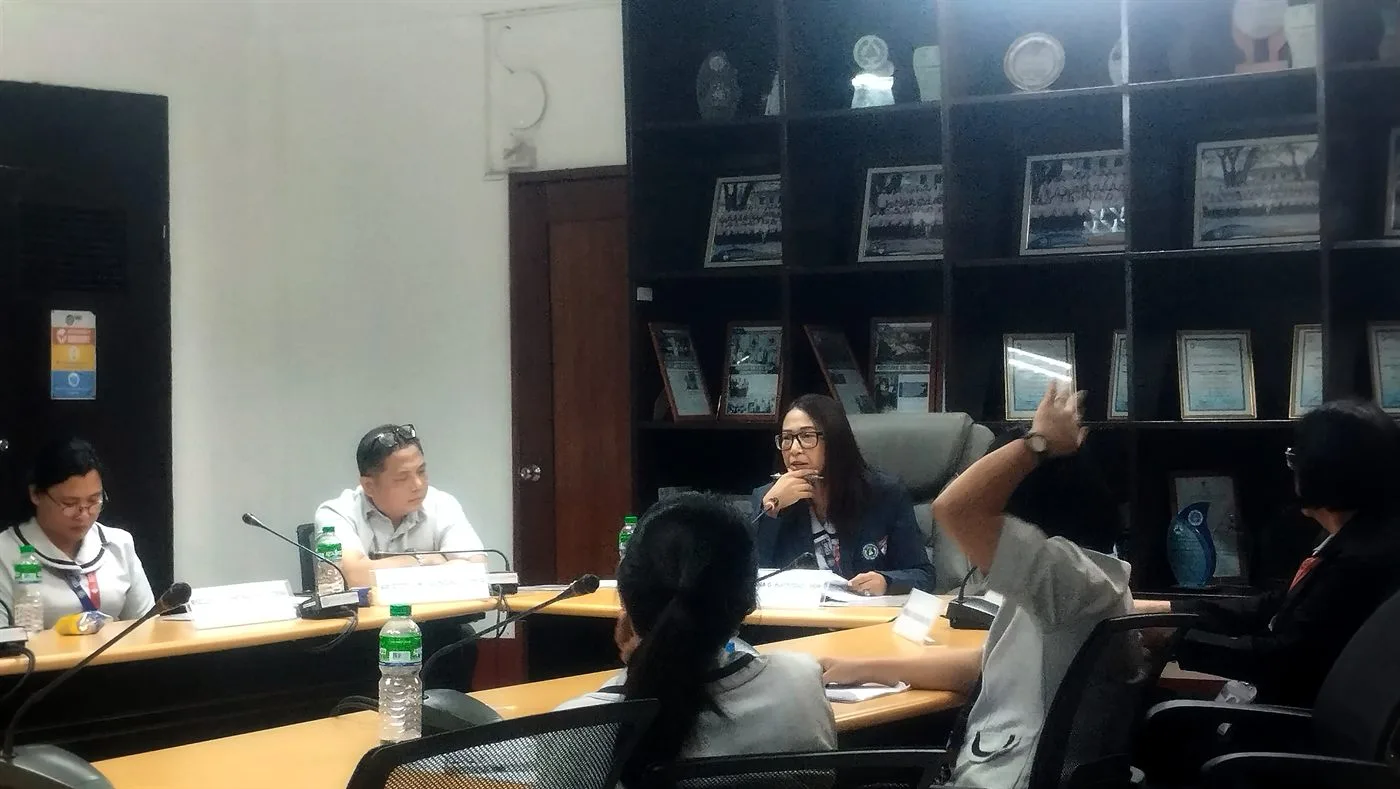
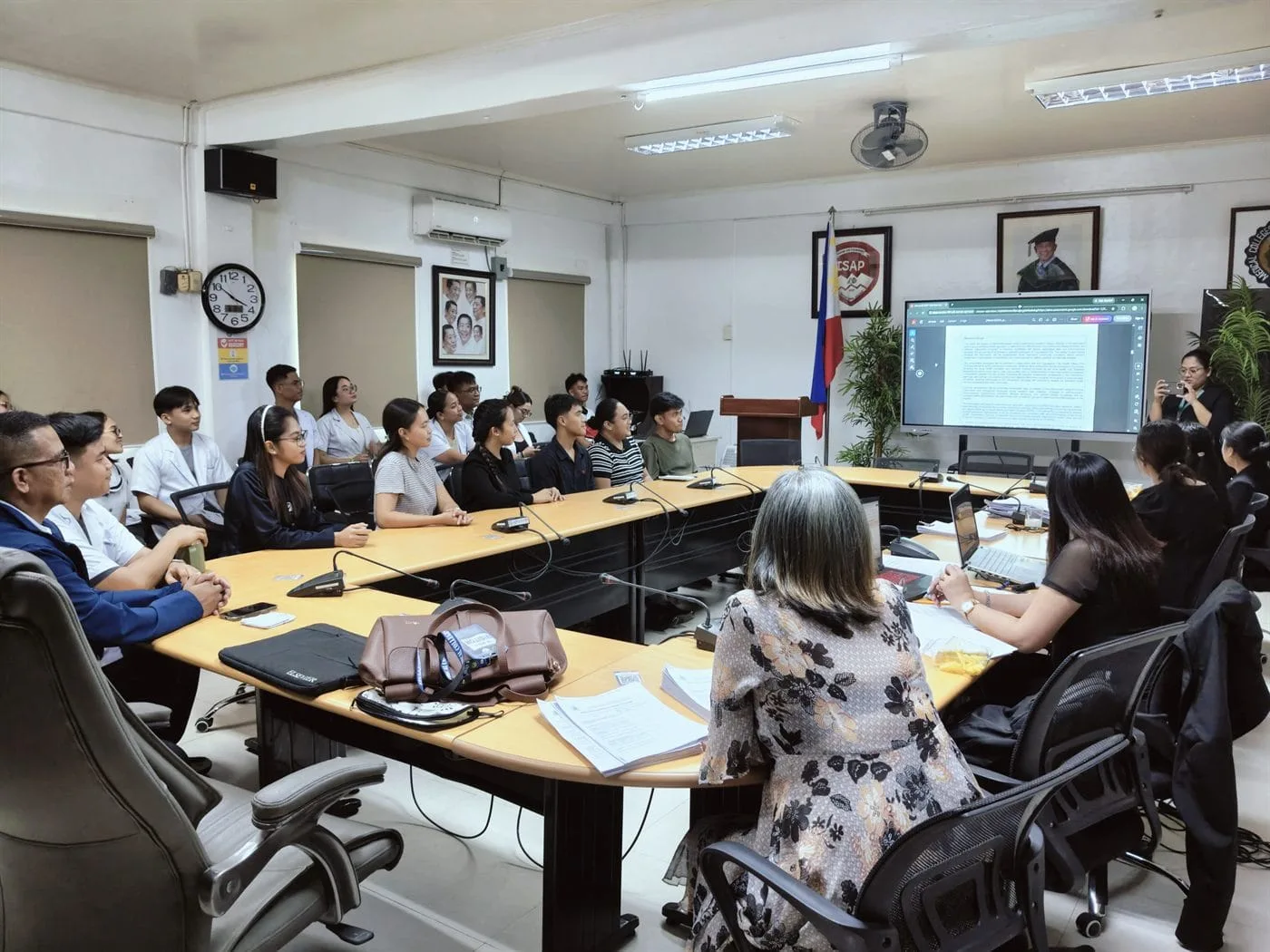
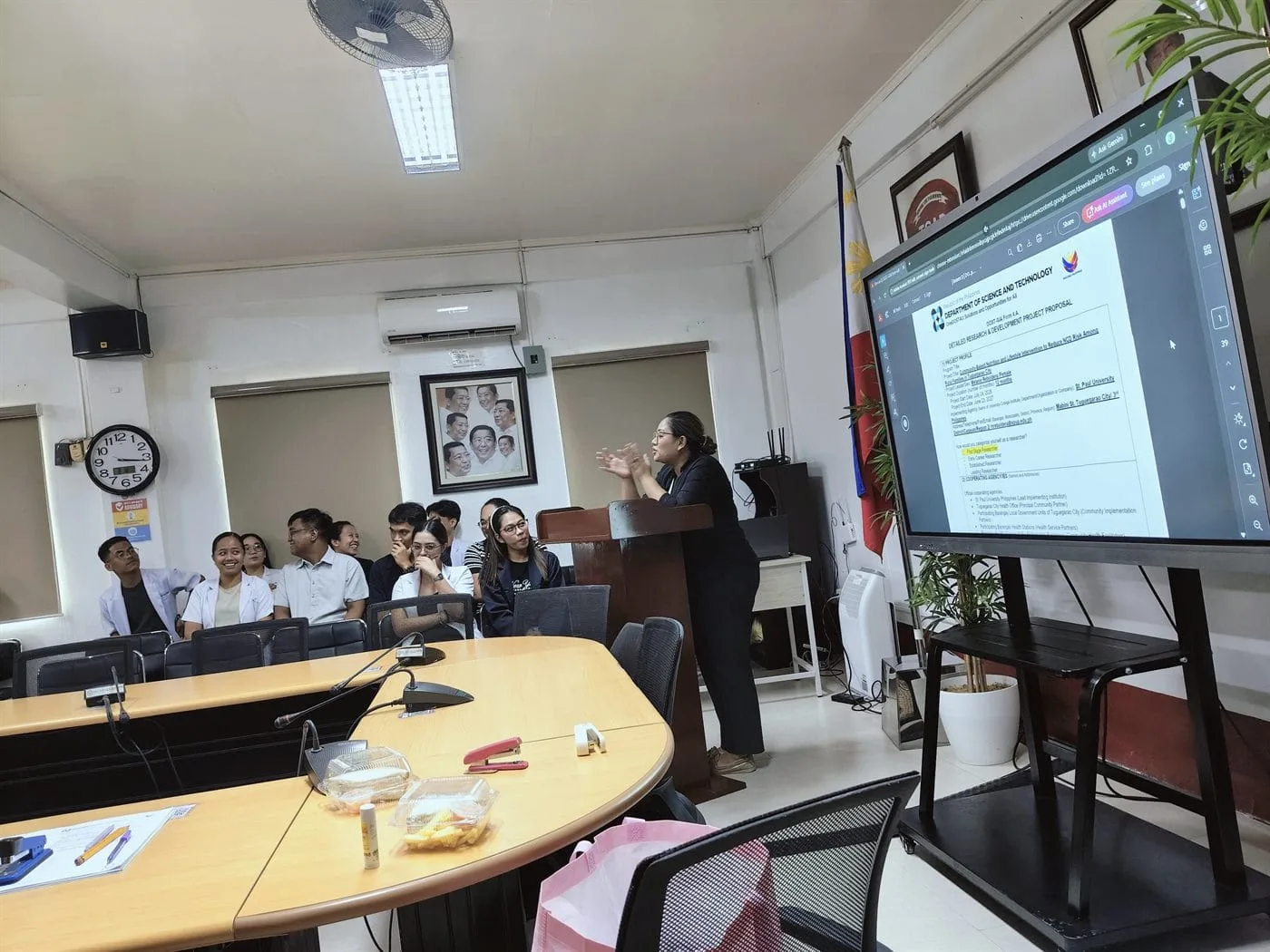
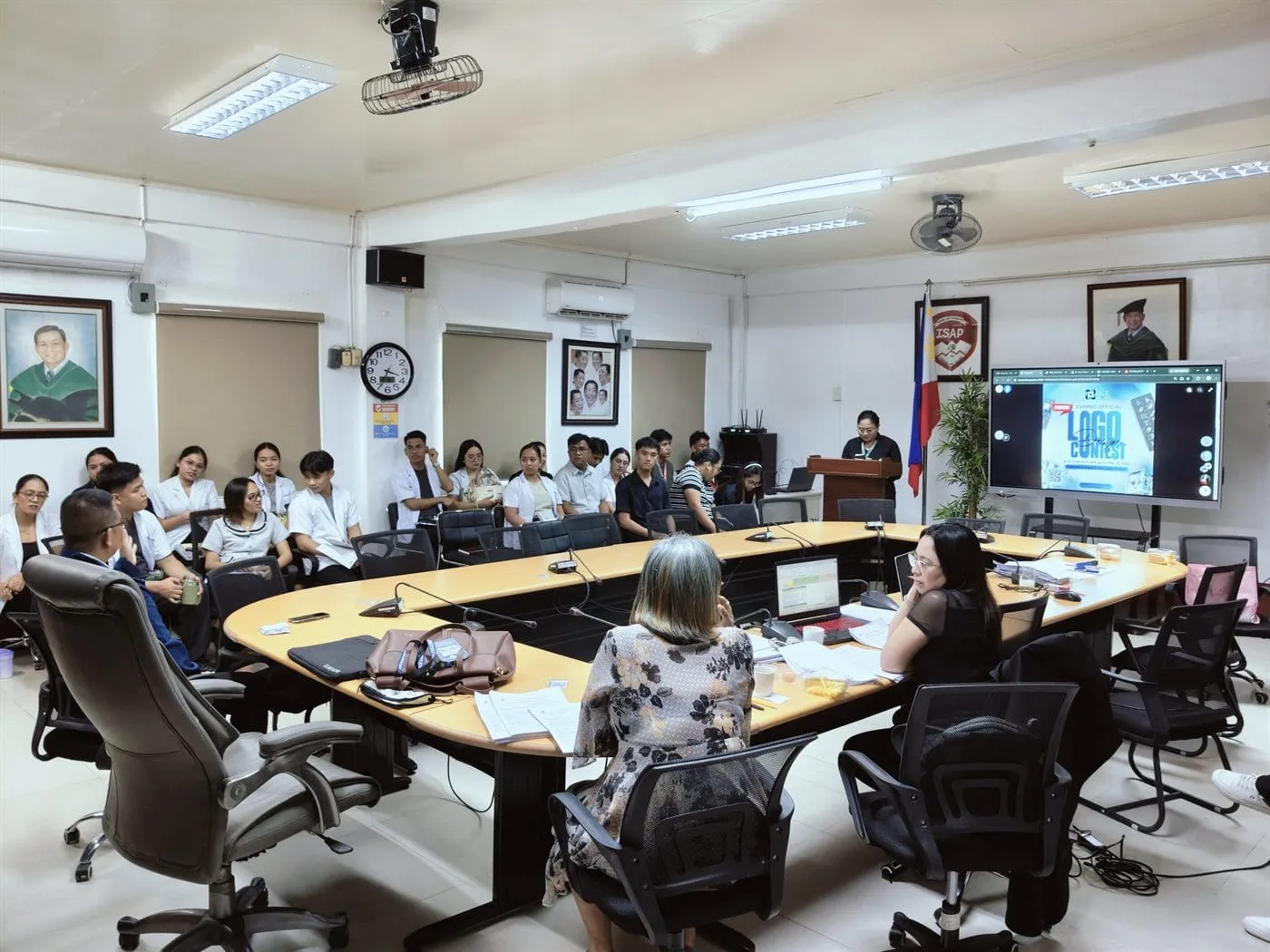
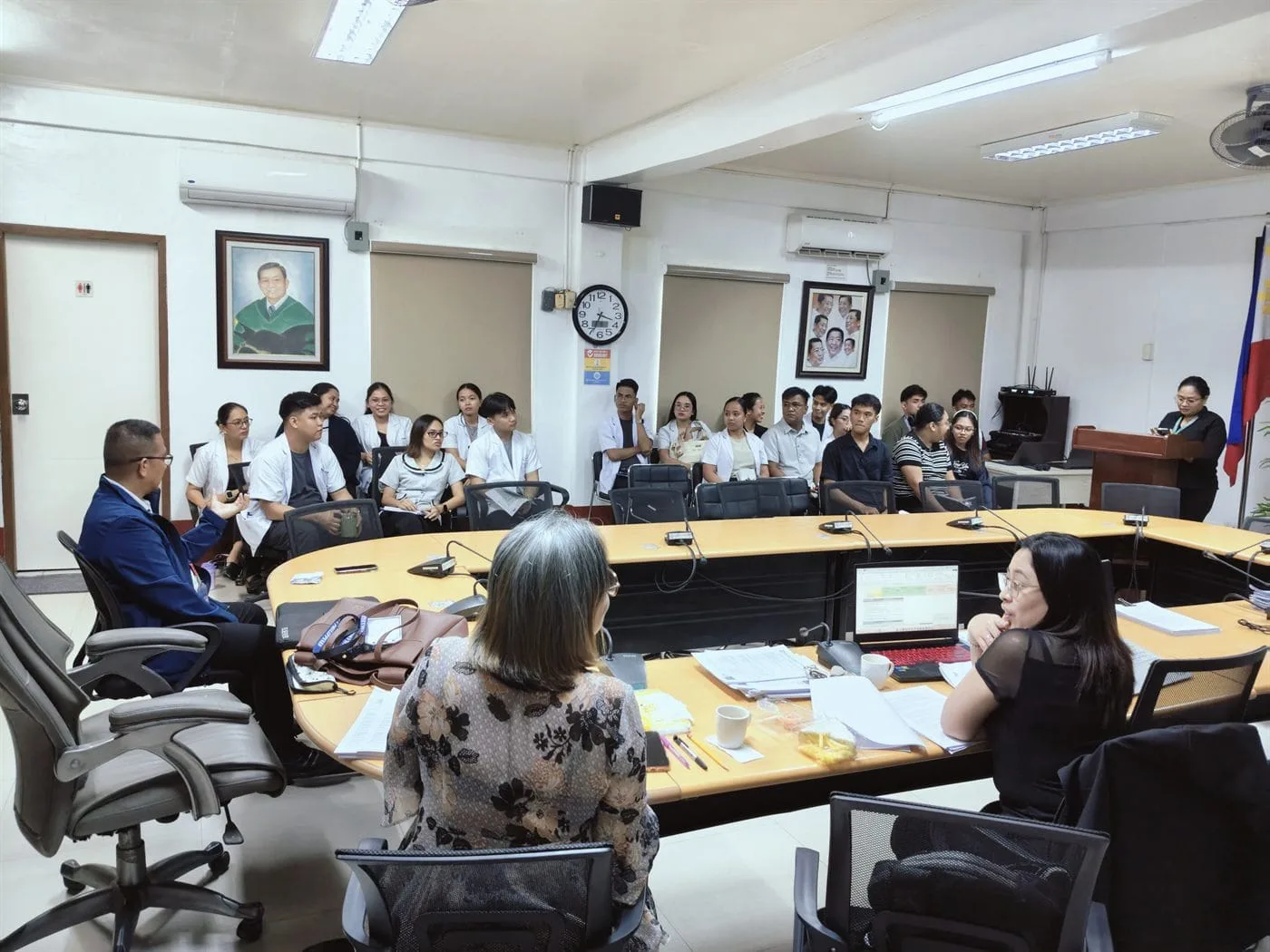
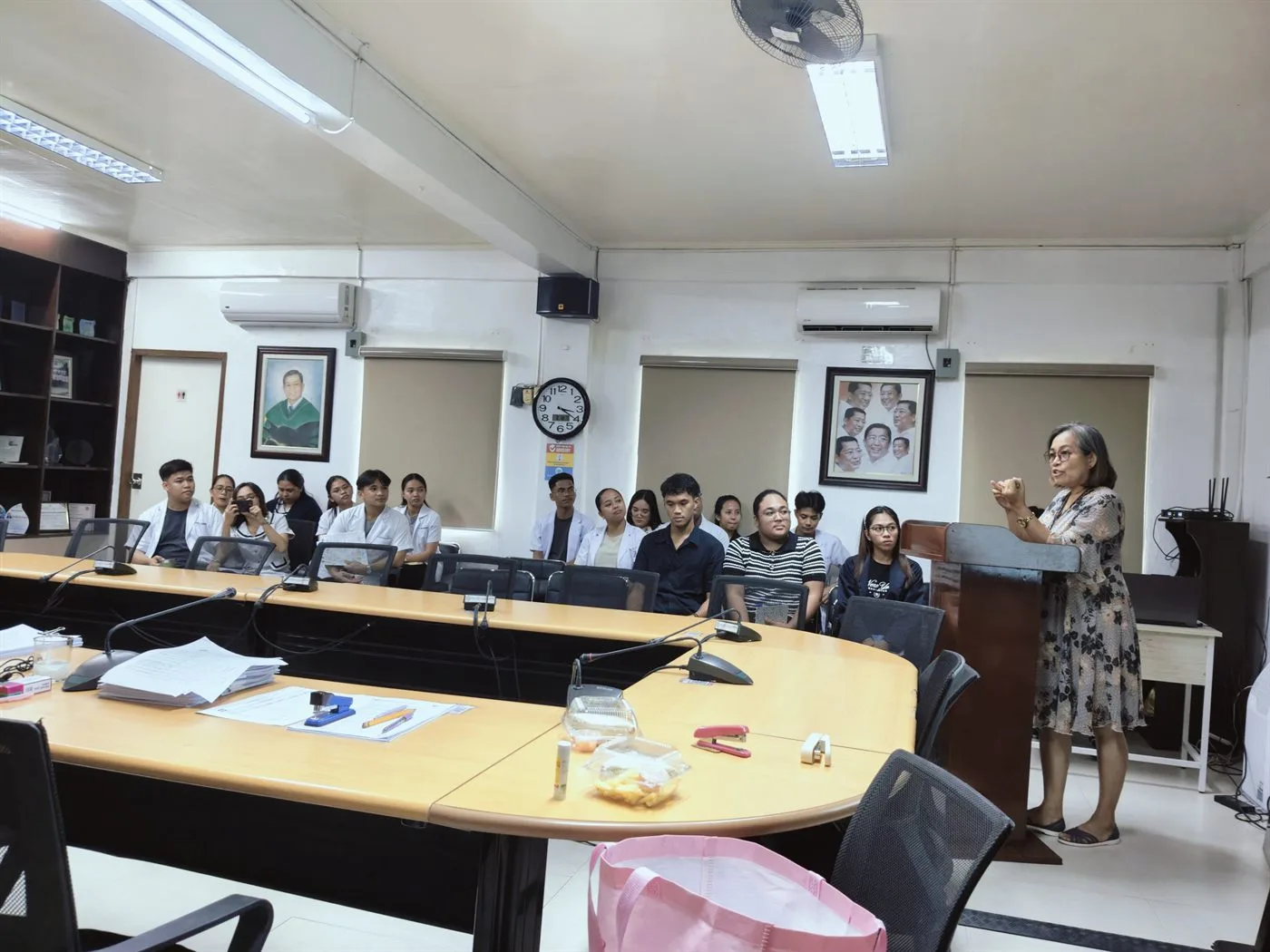
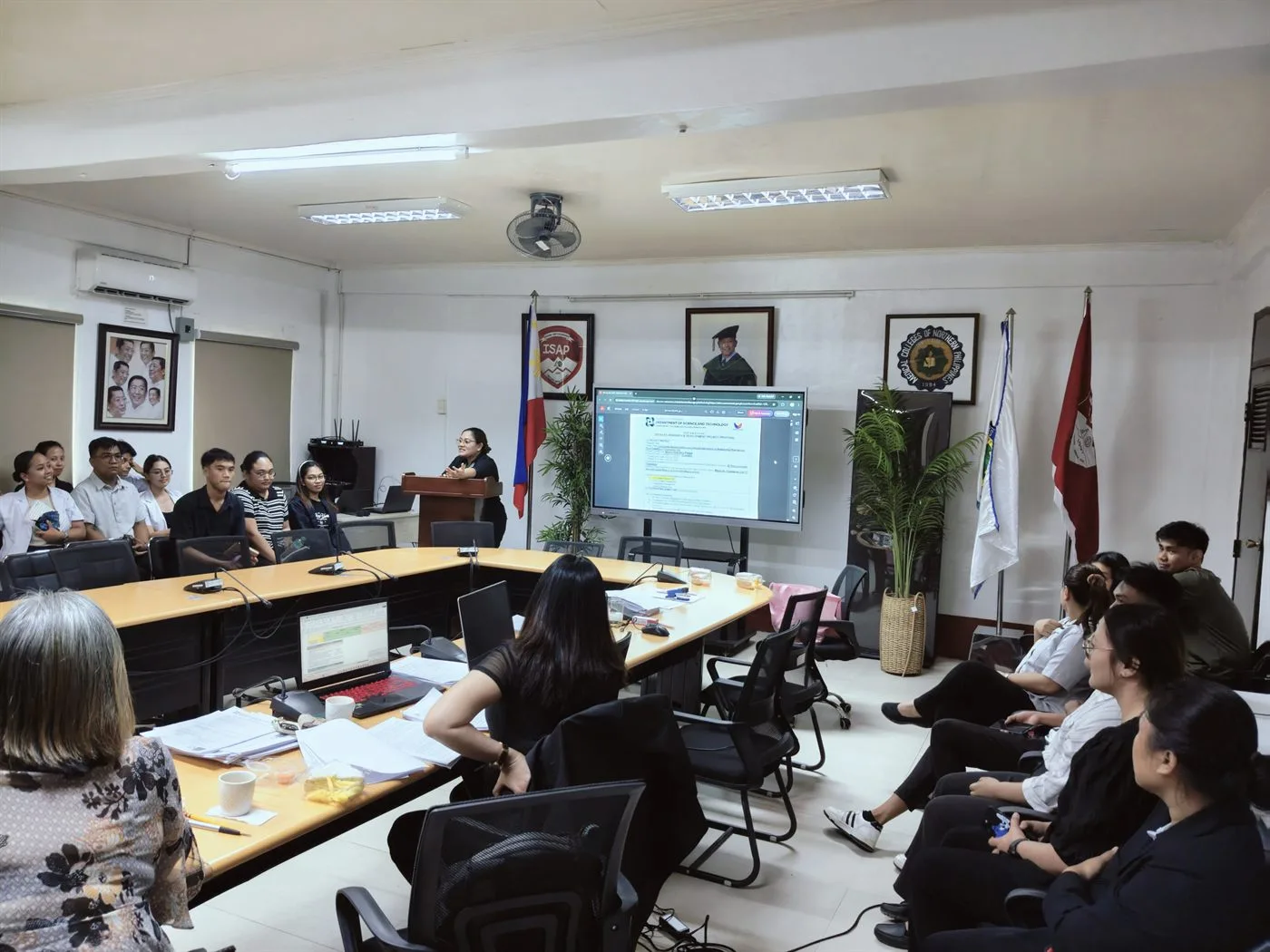
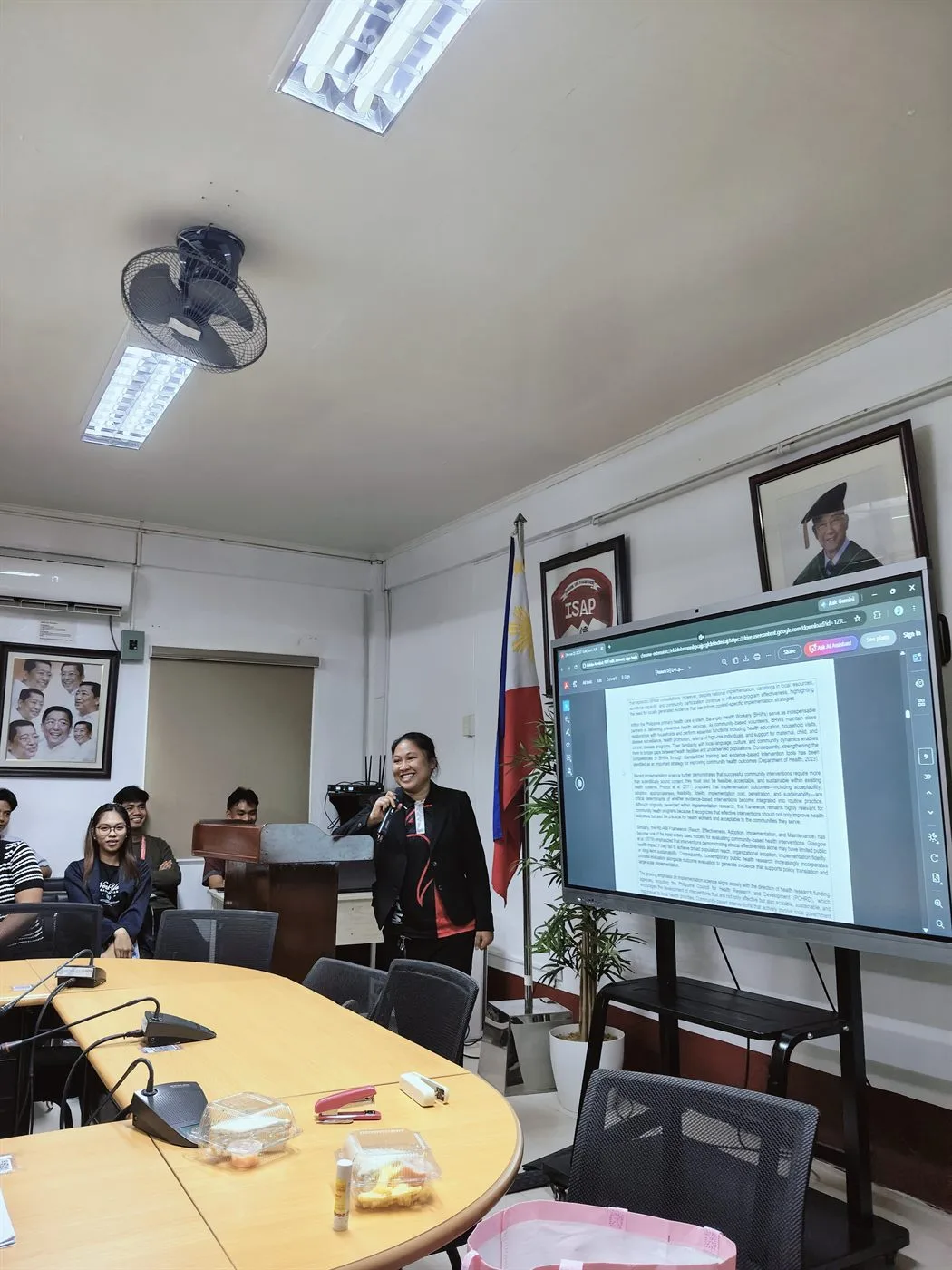
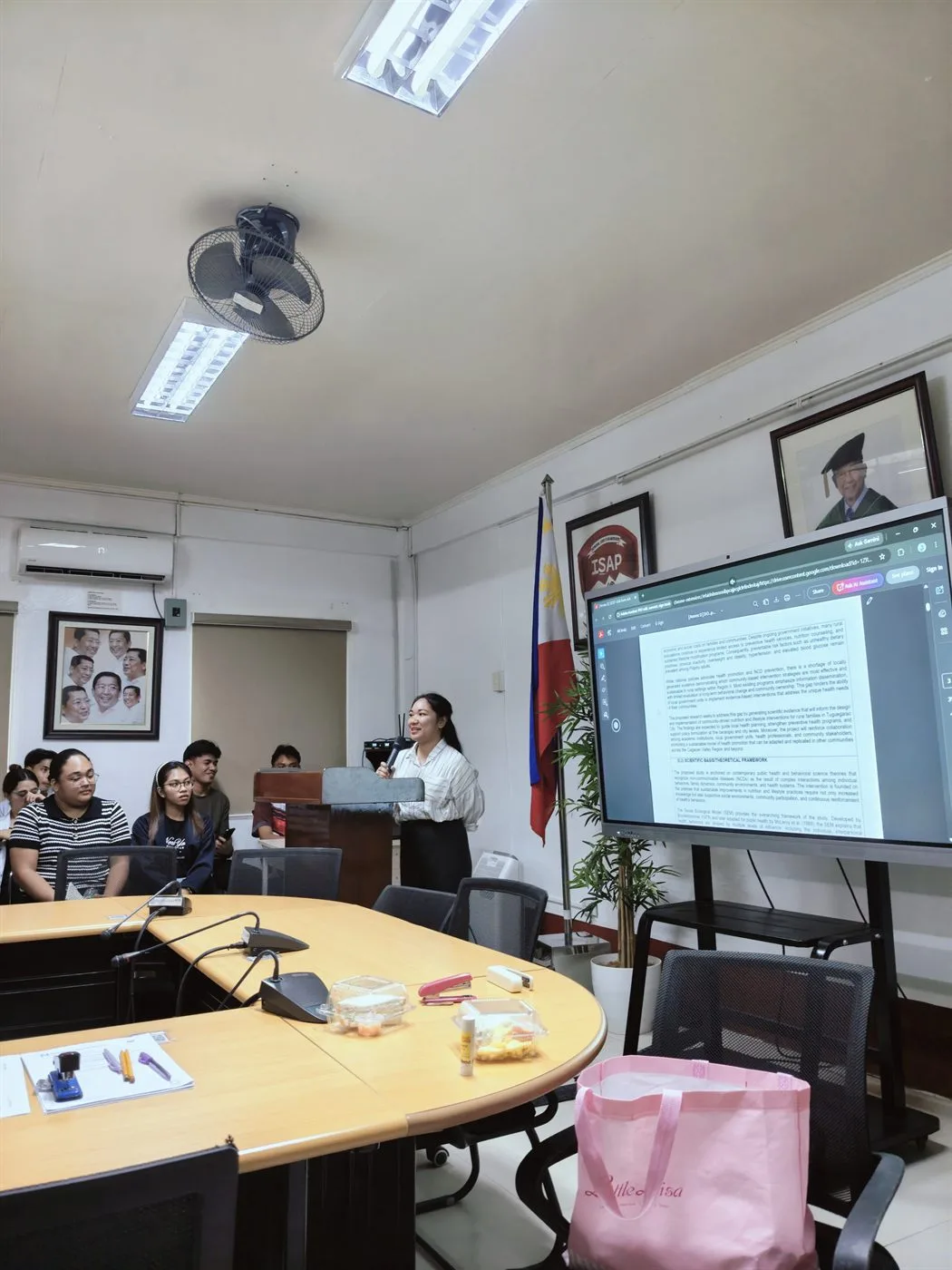
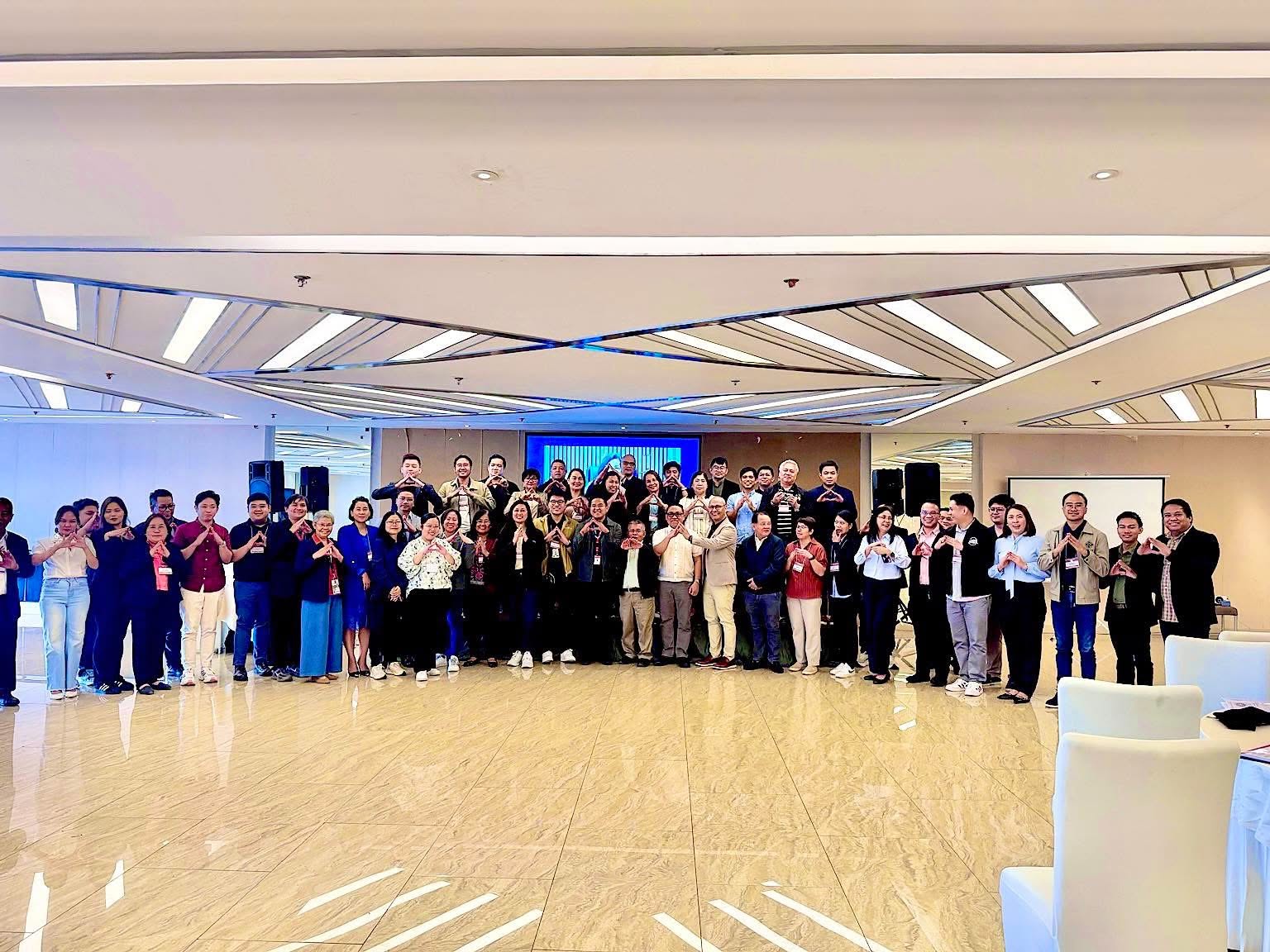
MCNP and ISAP representatives at the Luzon Cluster Consultative Workshop on the Innovation Blueprint for Philippine Higher Education
MCNP and ISAP representatives at the CHED consultative workshop in Quezon City · November 26, 2026

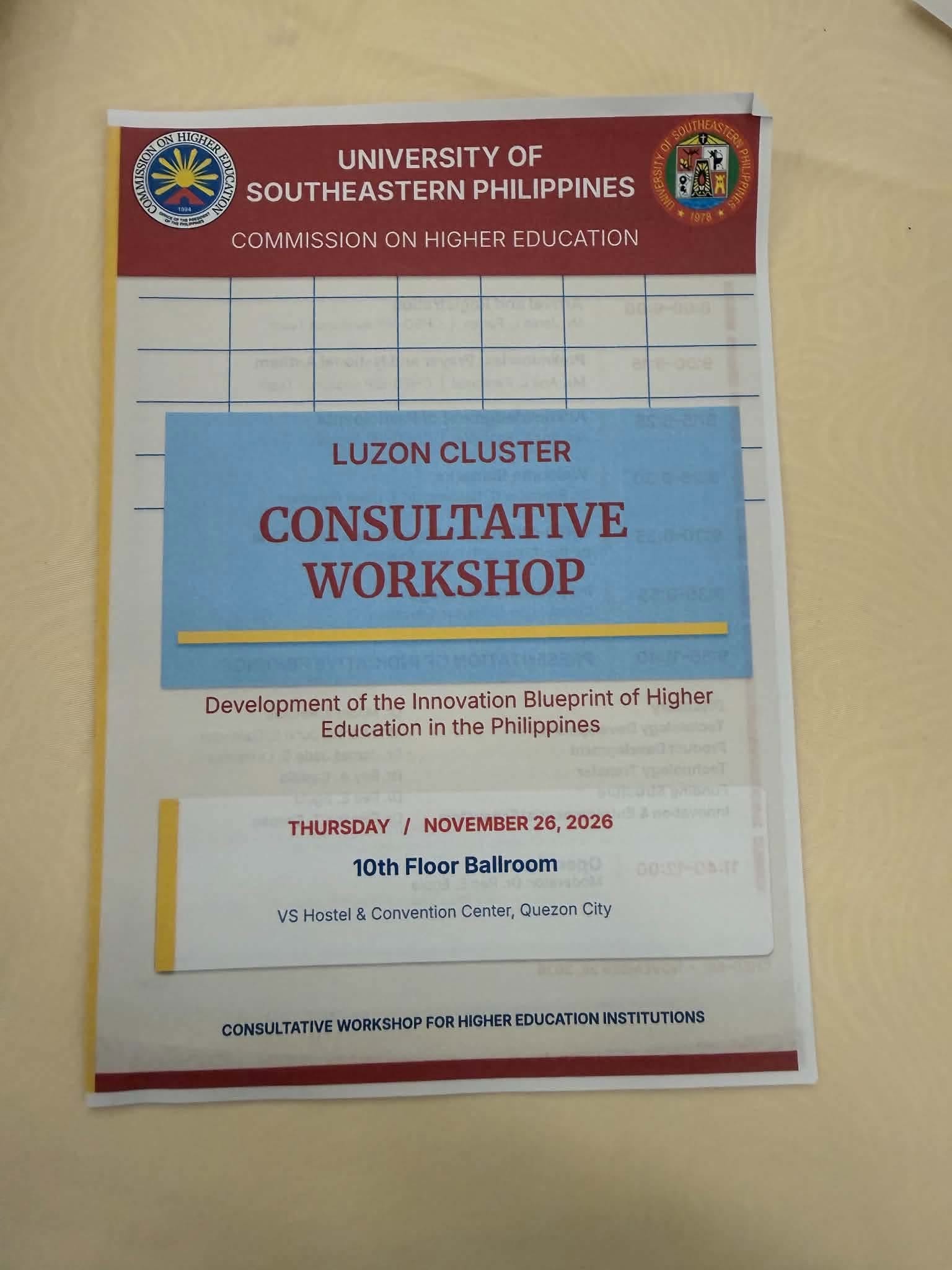
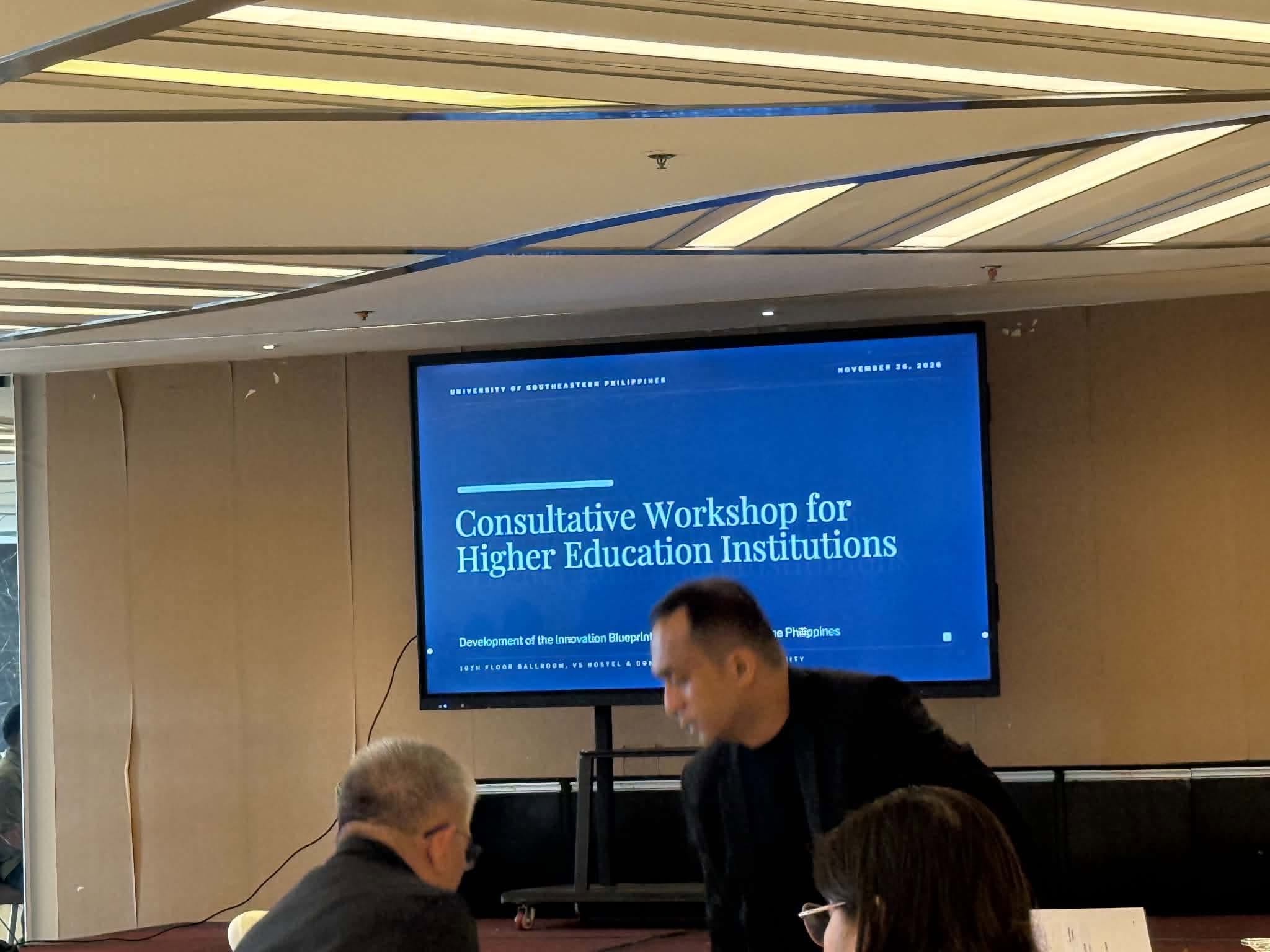
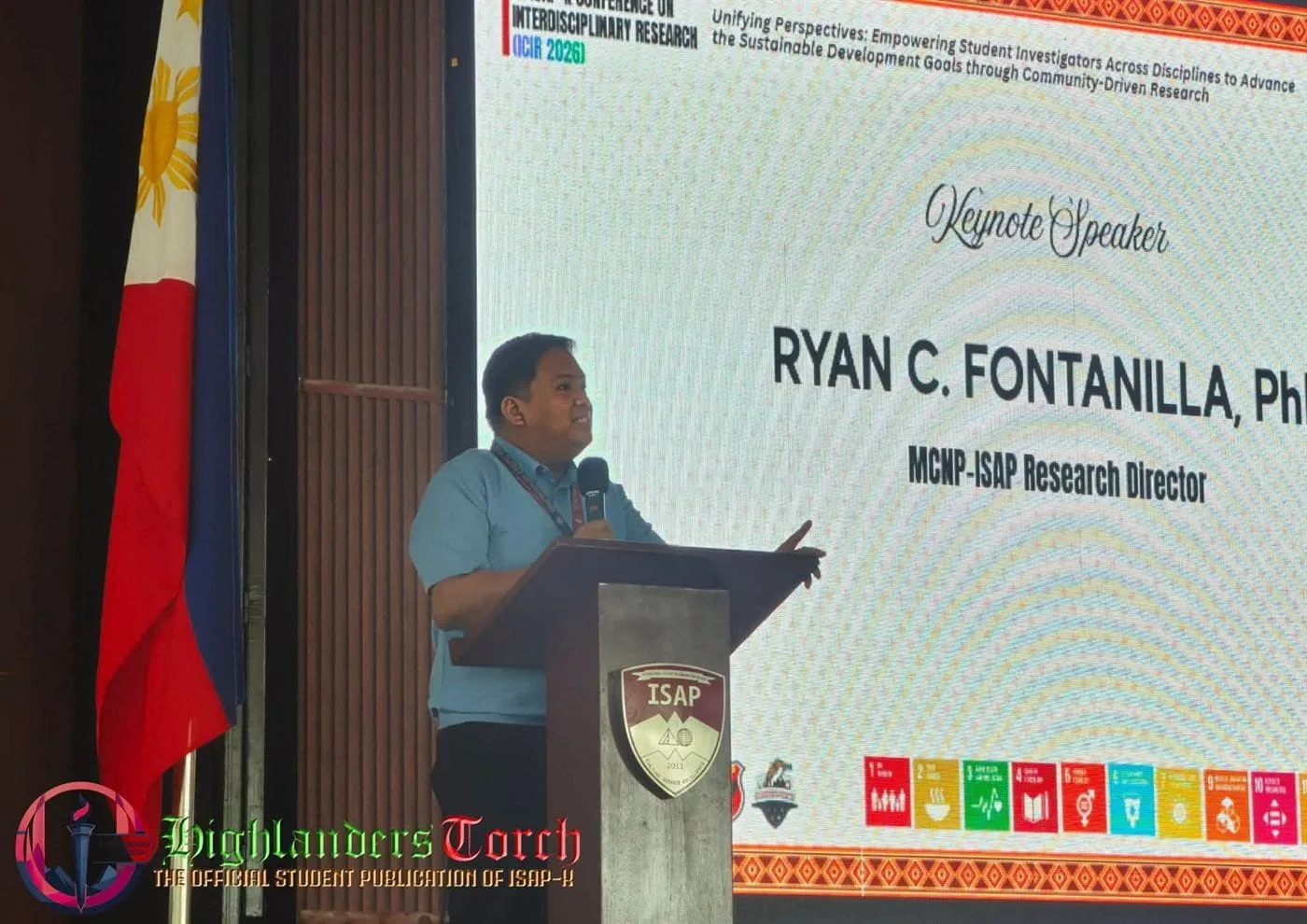
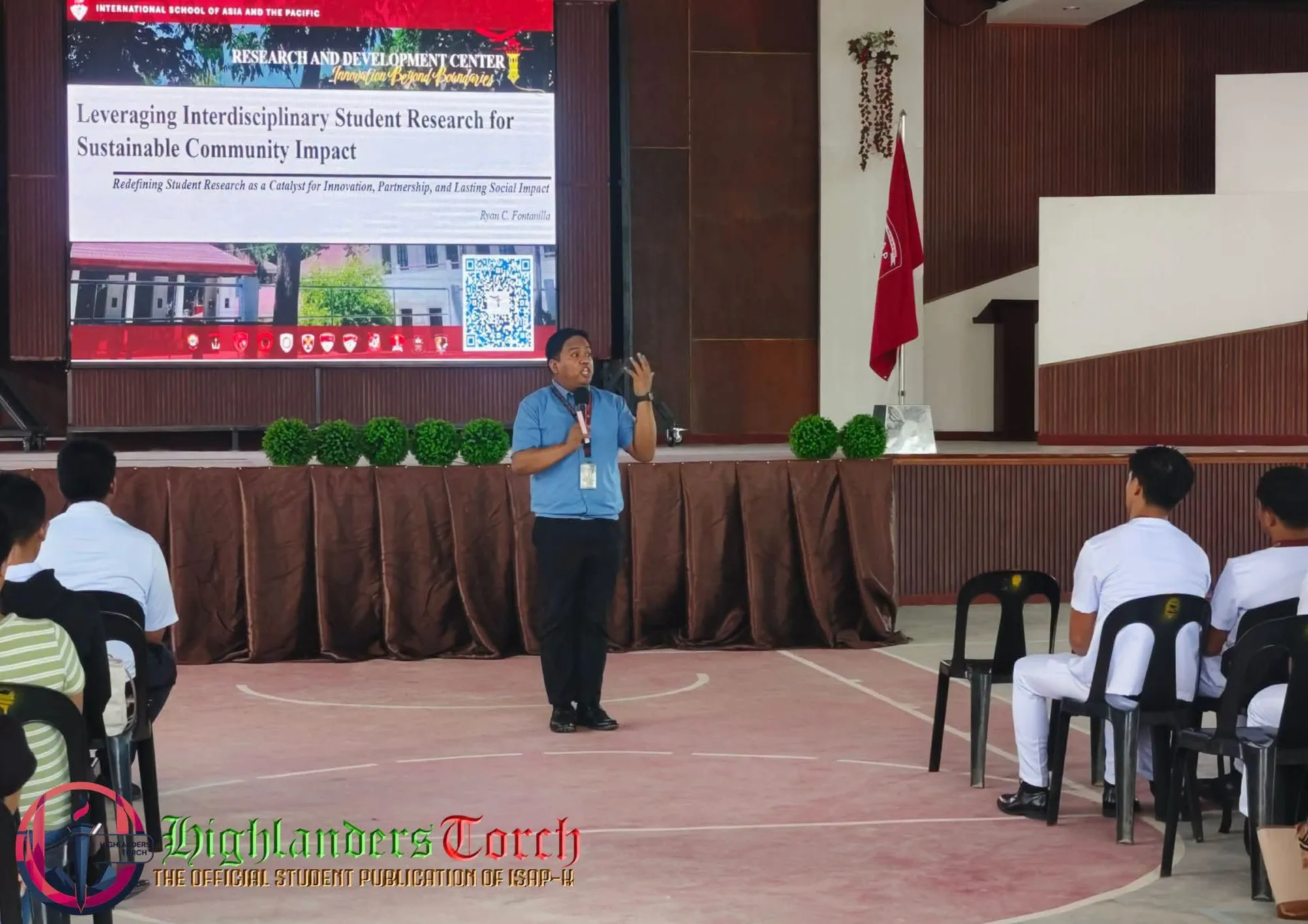
The Medical Colleges of Northern Philippines (MCNP) and the International School of Asia and the Pacific (ISAP) participated in the Luzon Cluster Consultative Workshop on the Development of the Innovation Blueprint of Higher Education in the Philippines on November 26, 2026, at the VS Hostel and Convention Center in Quezon City. The institutions were represented by Dr. Ryan C. Fontanilla, Research Director, and Mr. Heinrich Garin.

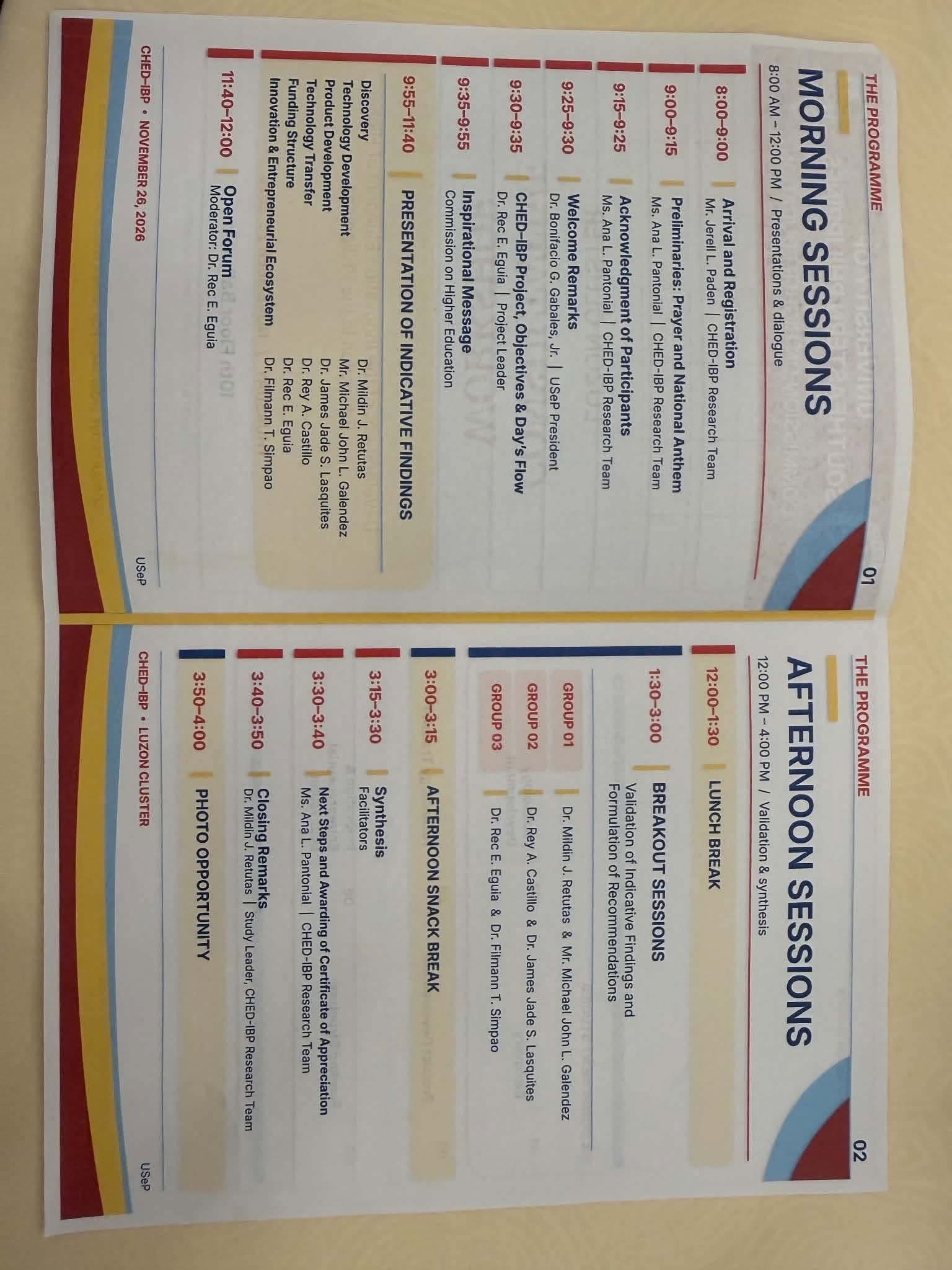
Organized by the Commission on Higher Education (CHED) in partnership with the University of Southeastern Philippines (USeP), the workshop brought together higher education stakeholders to discuss the future direction of research, development, and innovation in Philippine higher education.

Consultations focused on validating indicative research findings and formulating strategic recommendations across six areas: Discovery, Technology Development, Product Development, Technology Transfer, Funding Structure, and the Innovation and Entrepreneurial Ecosystem. Together, these areas span the innovation process, from generating knowledge and developing technologies to enabling their transfer and practical use.

MCNP and ISAP’s participation created an opportunity to exchange perspectives with other higher education institutions and contribute to conversations that may inform policies and strategies for a more responsive, innovation-driven sector. The workshop also underscored the role of collaboration among institutions and national agencies in supporting research excellence, knowledge utilization, and sustainable innovation.

The engagement aligns with Sustainable Development Goal 4 – Quality Education through participation in efforts to strengthen higher education. It also supports SDG 9 – Industry, Innovation and Infrastructure through its focus on research, technology development, transfer, and innovation systems, and SDG 17 – Partnerships for the Goals through collaboration among CHED, USeP, MCNP, ISAP, and other higher education stakeholders.

The activity also connects with the MCNP–ISAP RDC INNOVATES Research Agenda 2026–2030: INSPIRE – Culture, Capability, and Engagement, through institutional participation and collaboration; NAVIGATE – Digital Transformation and Infrastructure, through its relevance to technology development and innovation infrastructure; and OPERATIONALIZE – Knowledge Utilization, Innovation, and Improvement, through its attention to technology transfer, product development, and research application.

By taking part in this national consultative process, MCNP and ISAP affirm the value of collaboration, knowledge development, and innovation in shaping a dynamic and responsive higher education landscape.

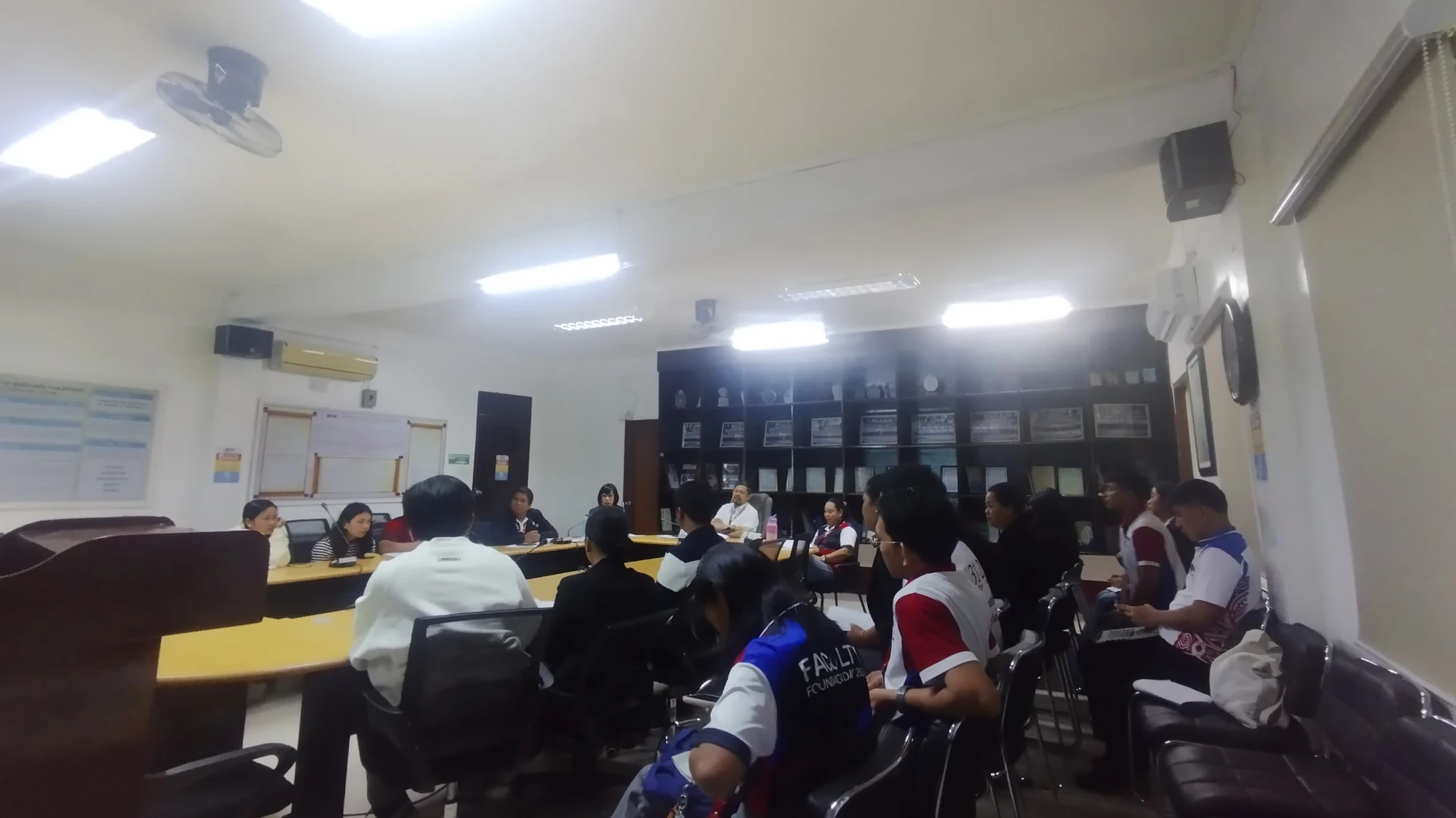
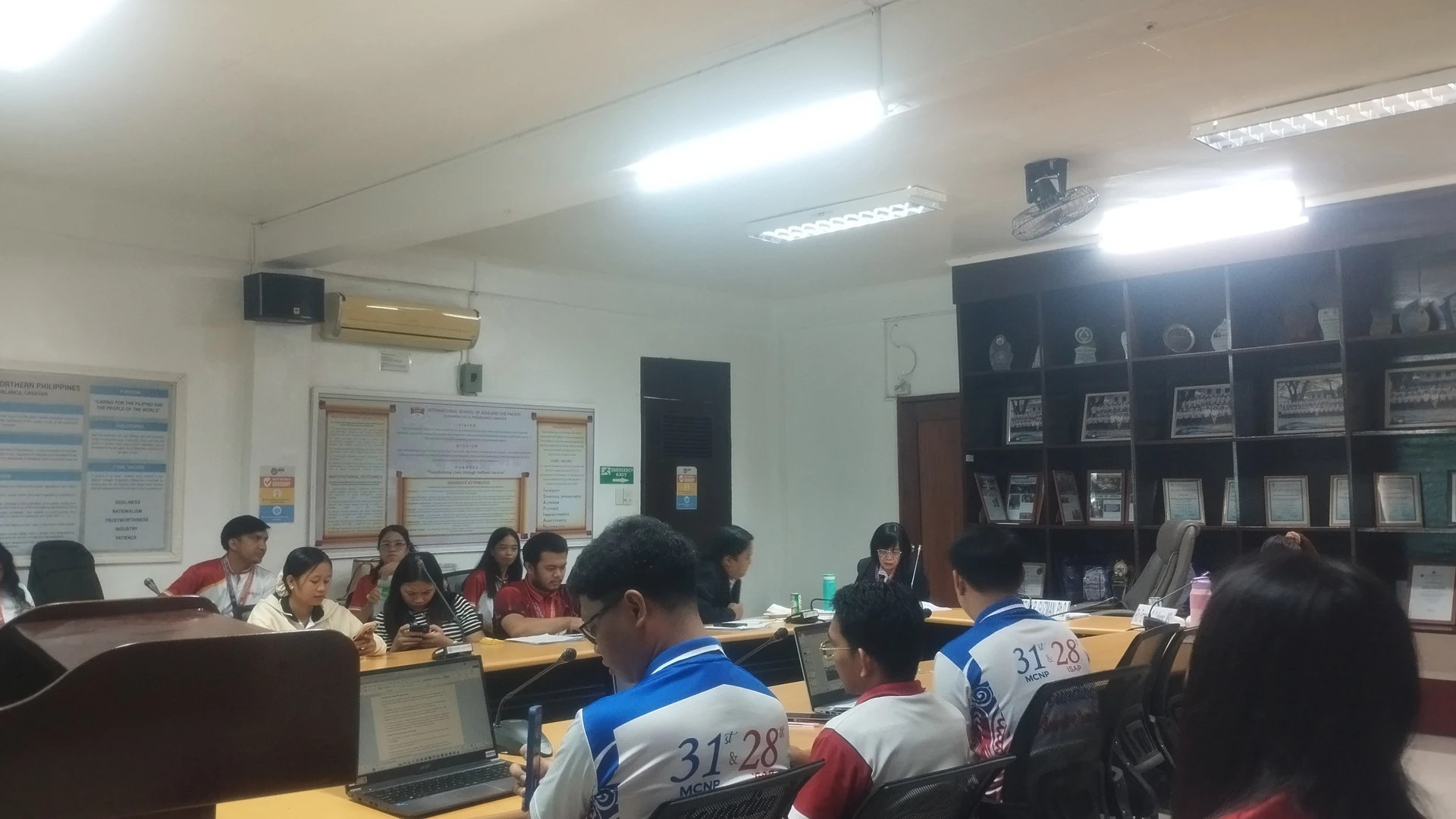
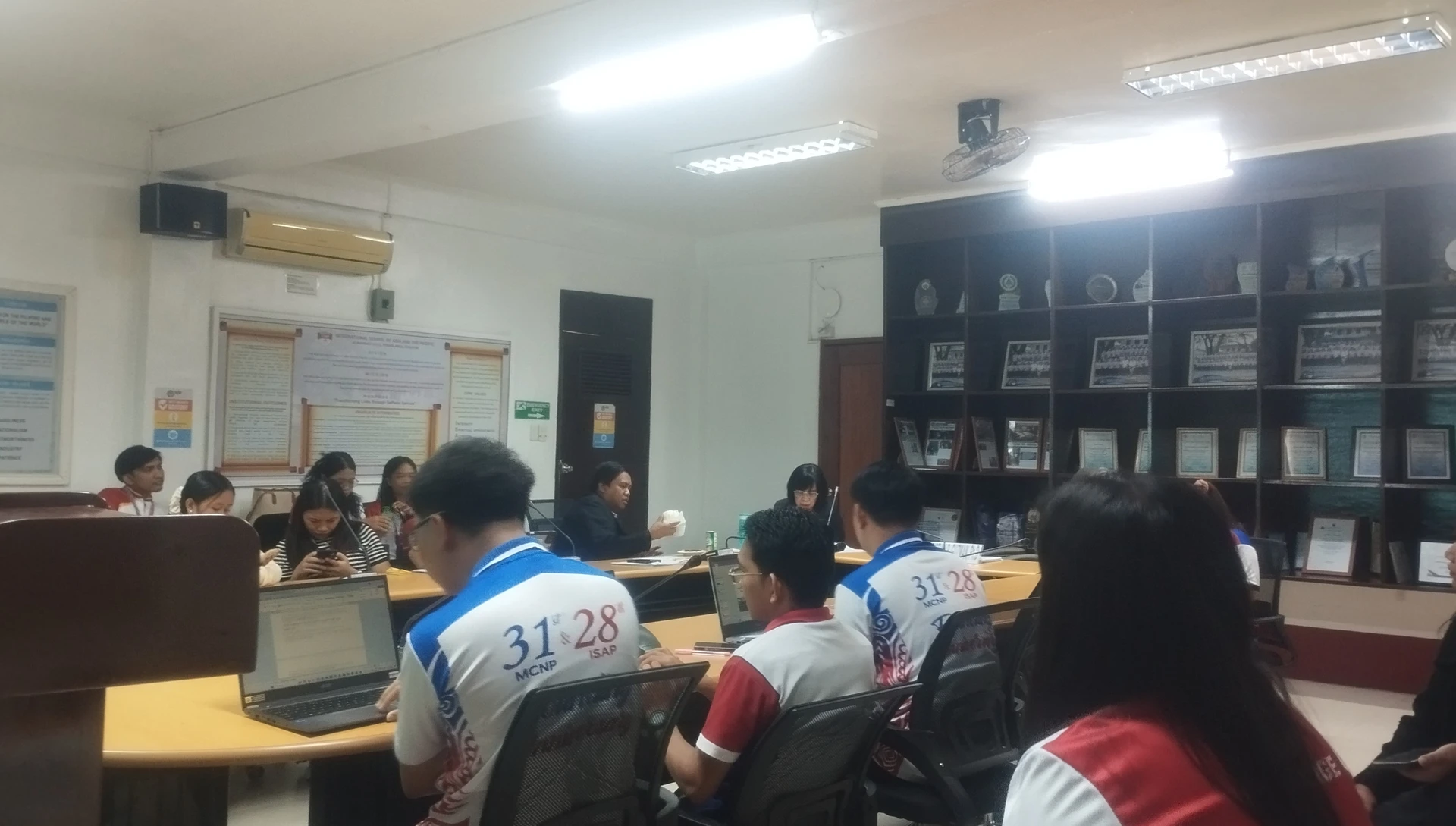
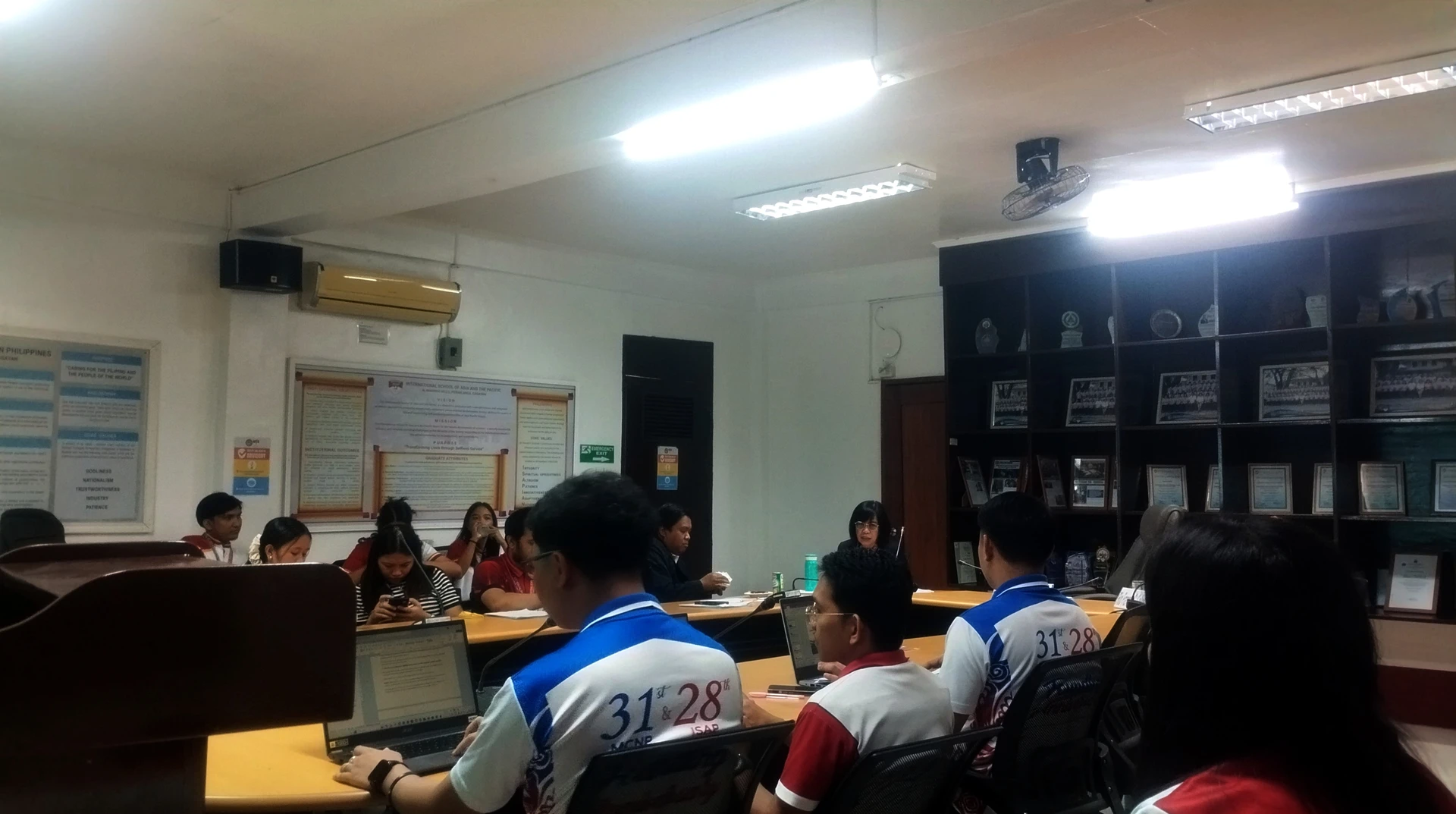
Photographic Documentation · CHED Innovation Blueprint Workshop
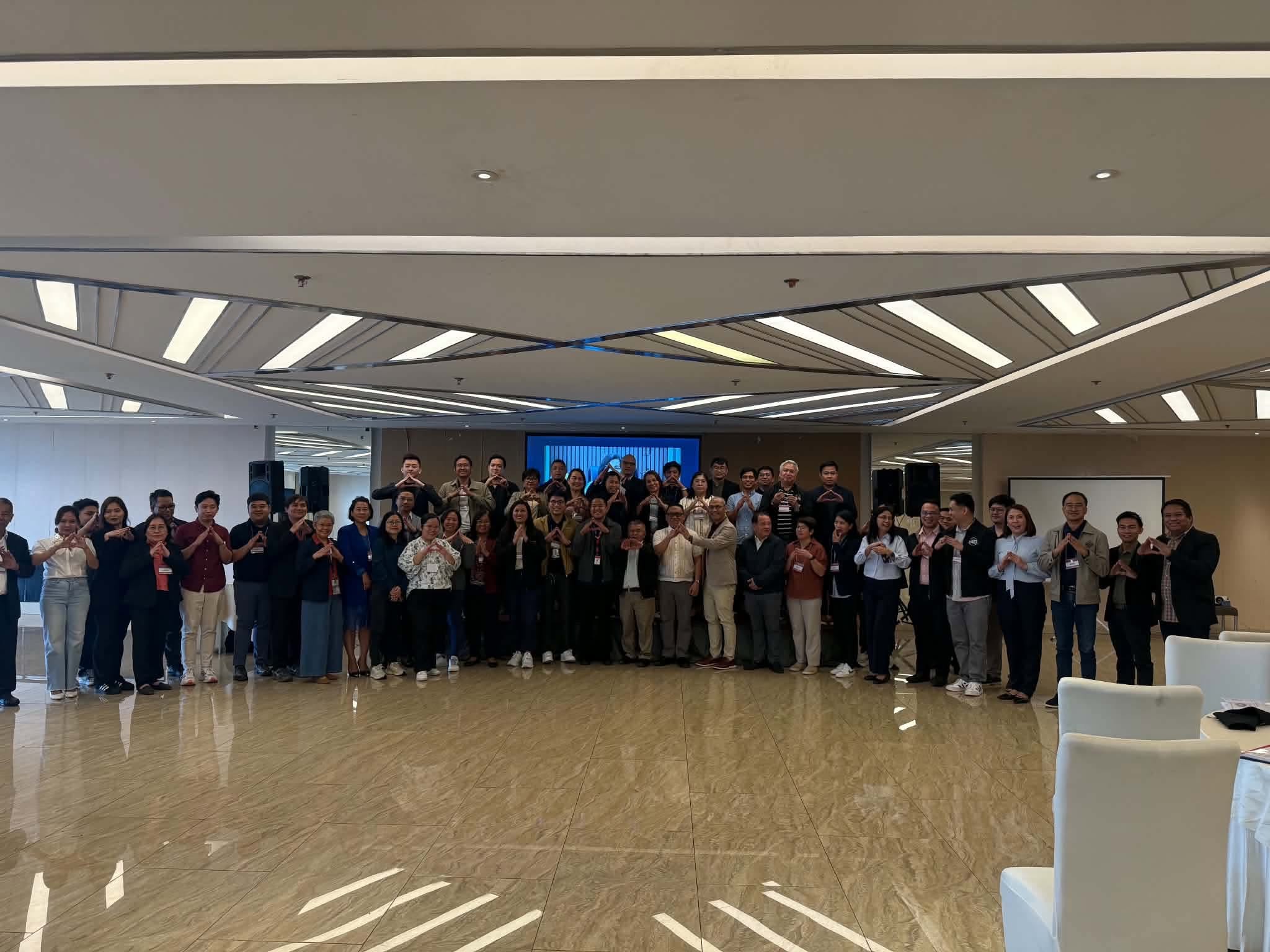
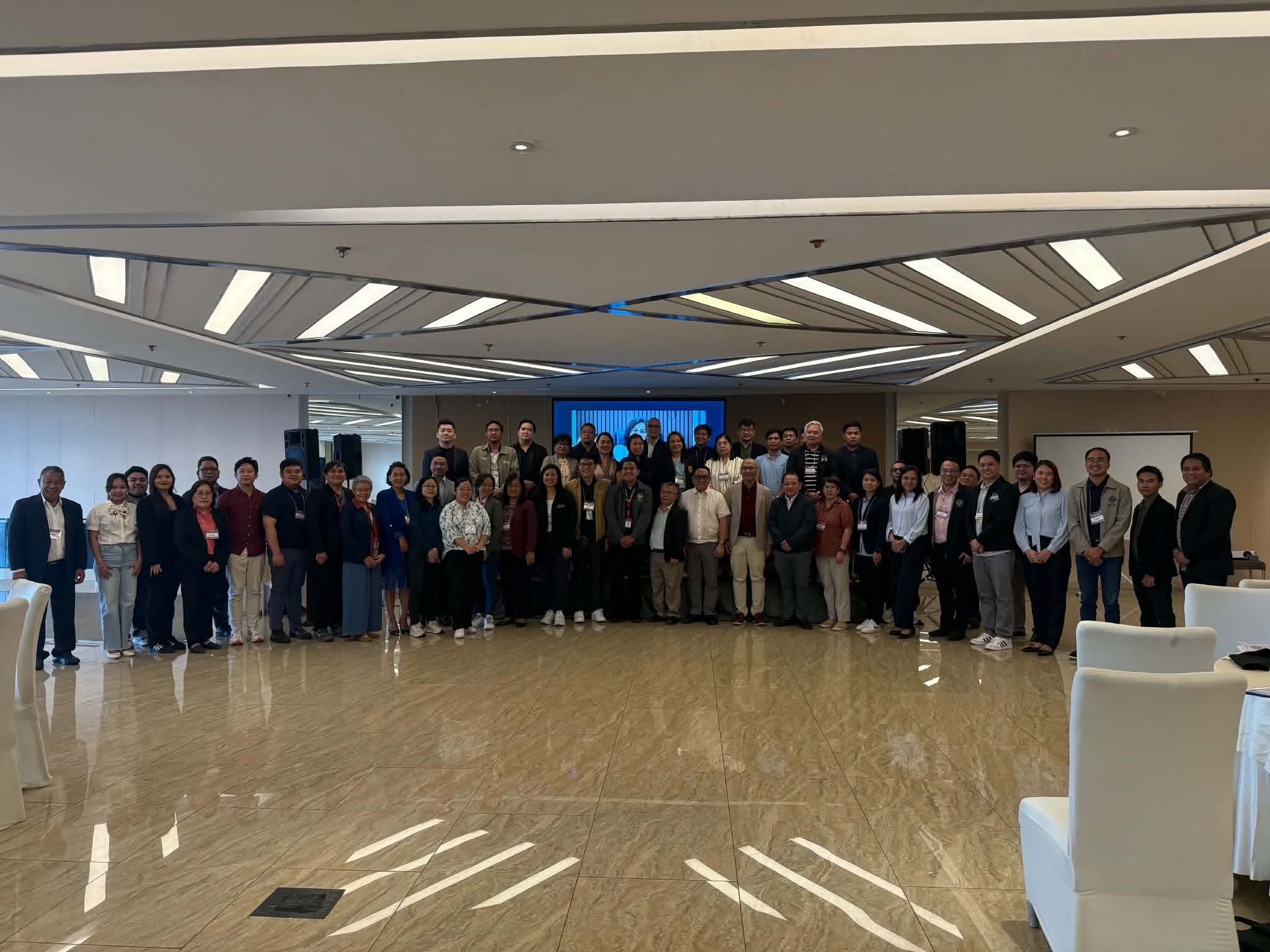
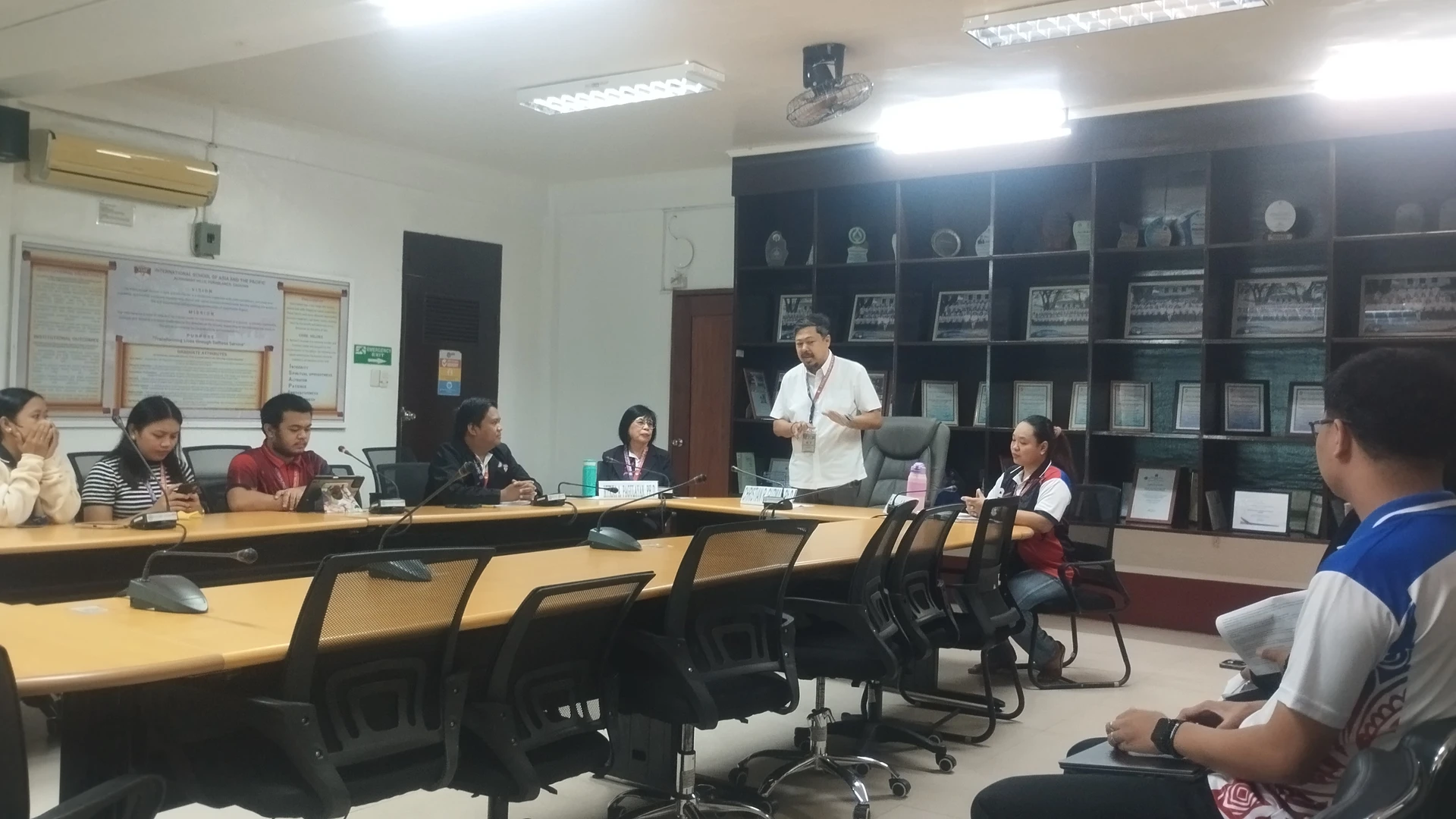
Participants at the CHED Luzon Cluster Consultative Workshop
Workshop documentation · Photo 2
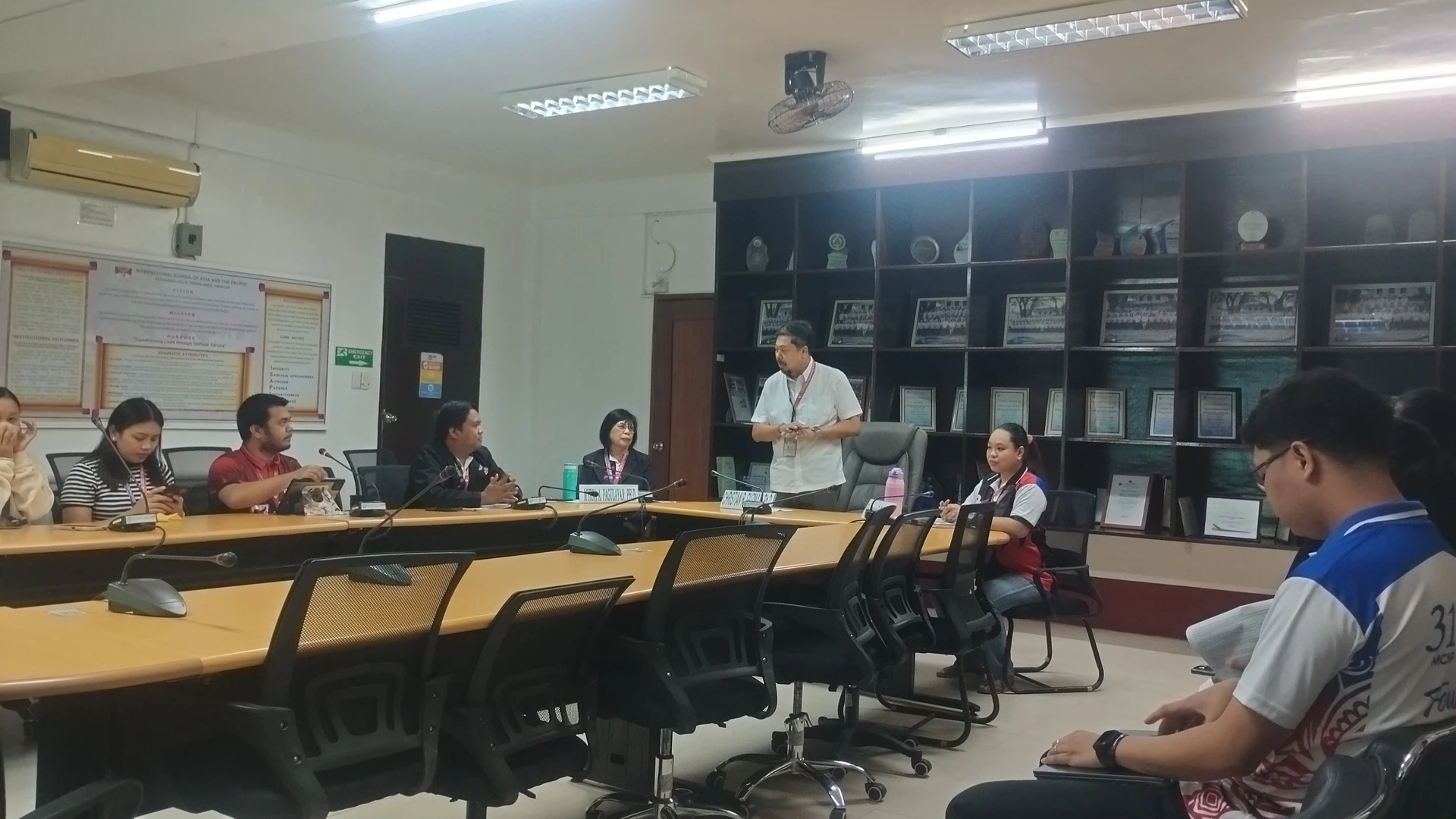
Participants at the CHED Luzon Cluster Consultative Workshop
Workshop documentation · Photo 3
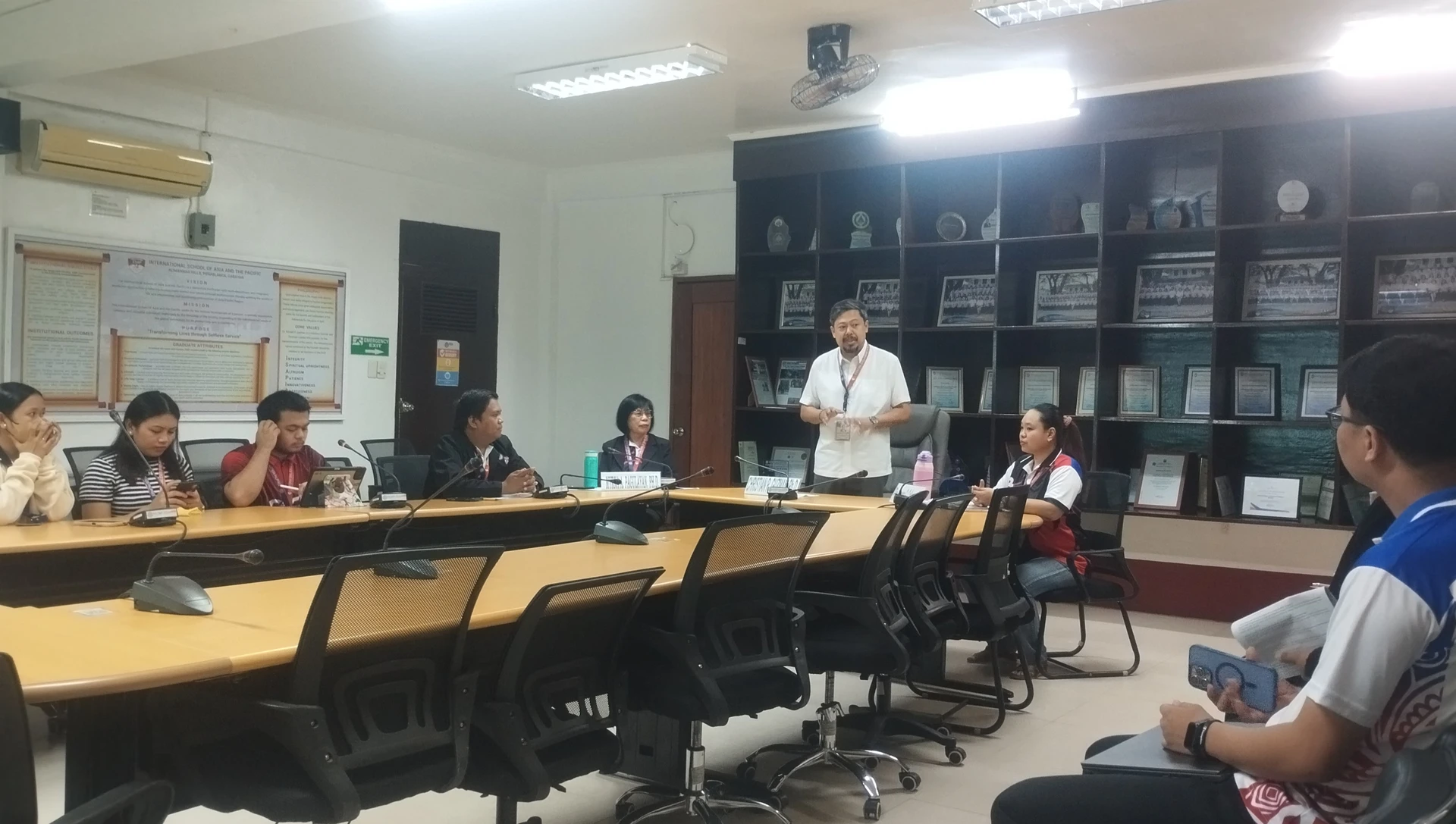
Participants at the CHED Luzon Cluster Consultative Workshop
Workshop documentation · Photo 4
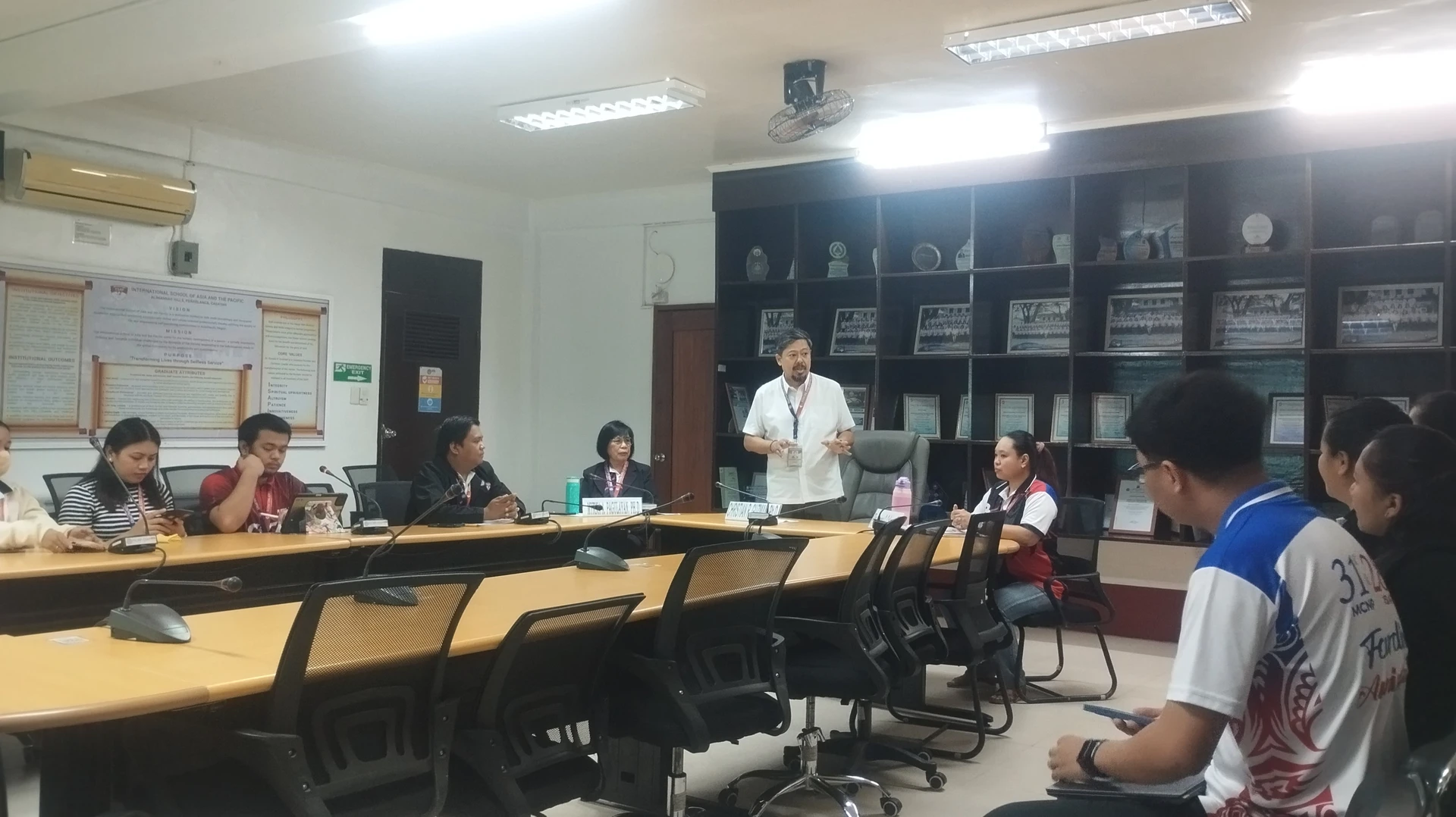
Participants at the CHED Luzon Cluster Consultative Workshop
Workshop documentation · Photo 5
Participants at the CHED Luzon Cluster Consultative Workshop
Workshop documentation · Photo 6
Participants at the CHED Luzon Cluster Consultative Workshop
Workshop documentation · Photo 7
Participants at the CHED Luzon Cluster Consultative Workshop
Workshop documentation · Photo 8
Participants at the CHED Luzon Cluster Consultative Workshop
Workshop documentation · Photo 9
Participants at the CHED Luzon Cluster Consultative Workshop
Workshop documentation · Photo 10
Participants at the CHED Luzon Cluster Consultative Workshop
Workshop documentation · Photo 11
Participants at the CHED Luzon Cluster Consultative Workshop
Workshop documentation · Photo 12
Participants at the CHED Luzon Cluster Consultative Workshop
Workshop documentation · Photo 13
Participants at the CHED Luzon Cluster Consultative Workshop
Workshop documentation · Photo 14

RDC SDG Alignment

SDG 4 – Quality Education (Primary Alignment)

Supports engagement in initiatives that strengthen higher education quality, institutional research capacity, and innovation-oriented development.
SDG 9 – Industry, Innovation and Infrastructure

Highlights research and development, technology transfer, and innovation ecosystems.
SDG 17 – Partnerships for the Goals

Demonstrates collaboration among CHED, USeP, MCNP, ISAP, and higher education stakeholders.

WURI Best Practices

The participation demonstrates potential relevance to the World University Rankings for Innovation (WURI) through engagement in a national innovation initiative, collaboration with higher education stakeholders, and discussion of research development, technology transfer, and innovation ecosystems.

RDC Agenda Alignment

INSPIRE – Culture, Capability, and Engagement

Strengthens institutional engagement and collaboration in research, development, and innovation.
NAVIGATE – Digital Transformation and Infrastructure

Connects with technology development and the infrastructure needed to support higher education innovation.
OPERATIONALIZE – Knowledge Utilization, Innovation, and Improvement

Relates to technology transfer, product development, and practical application of research outputs.

Published by the Research and Development Center (RDC) · MCNP & ISAP · Innovation Beyond Boundaries
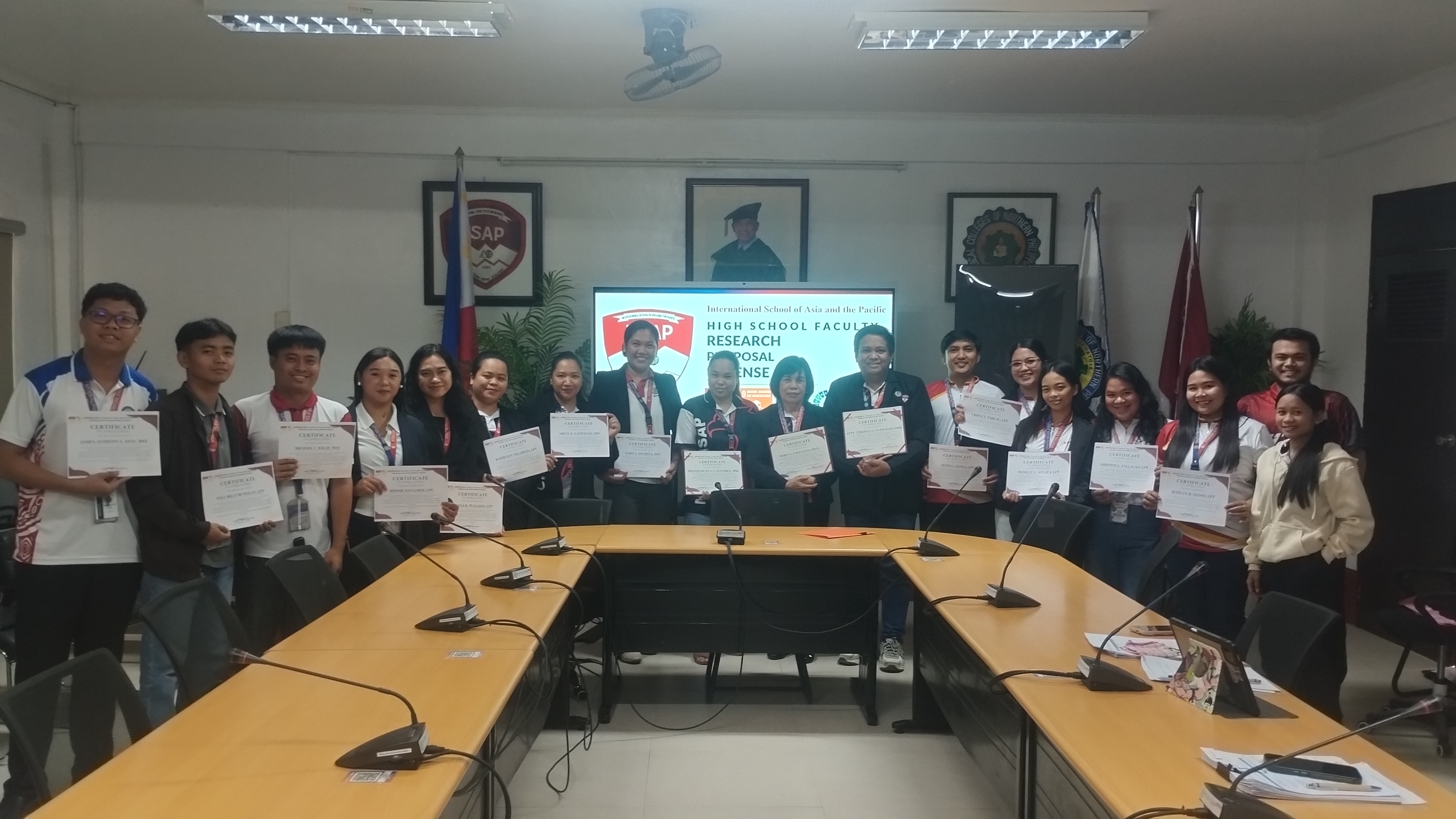
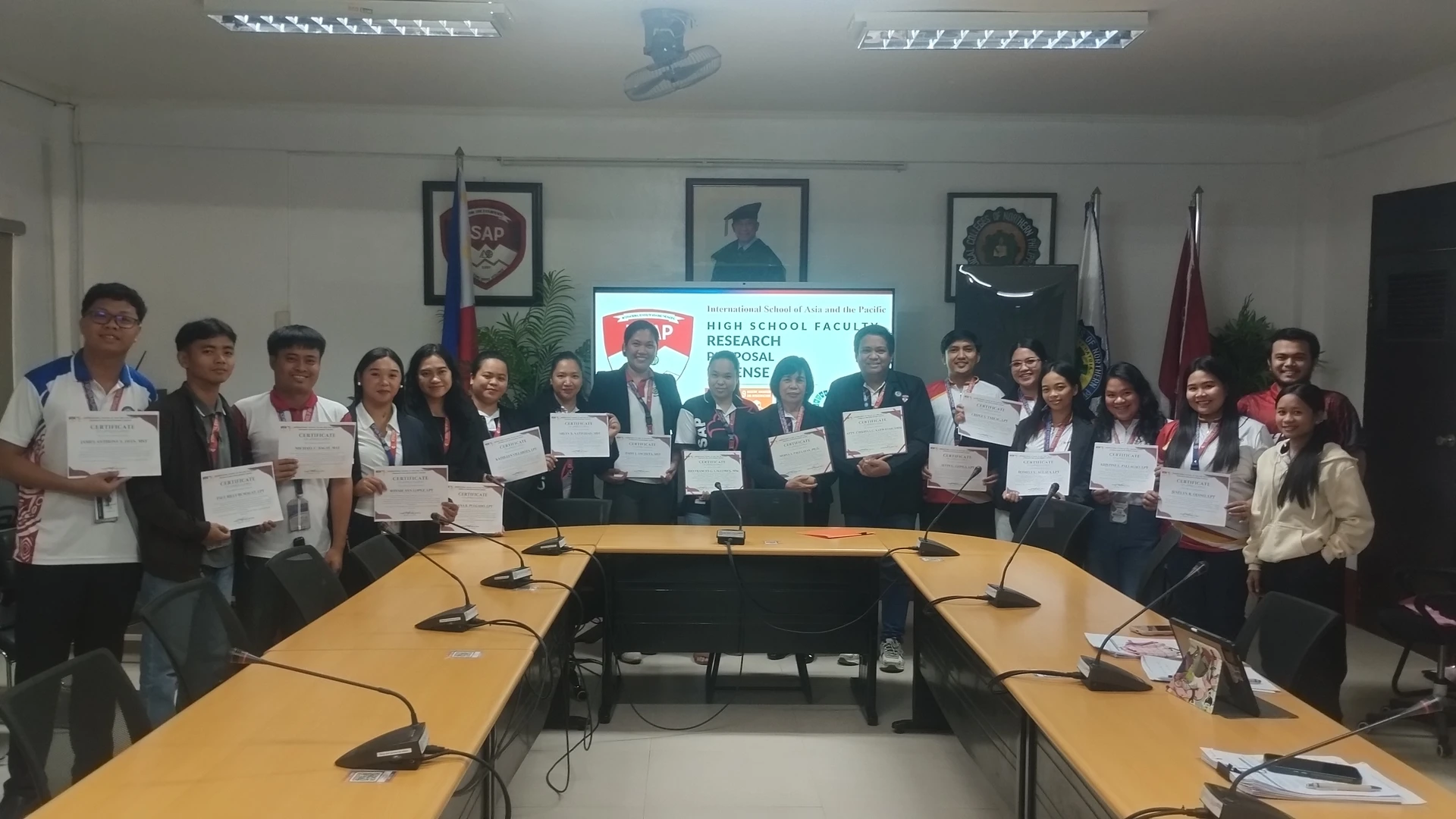
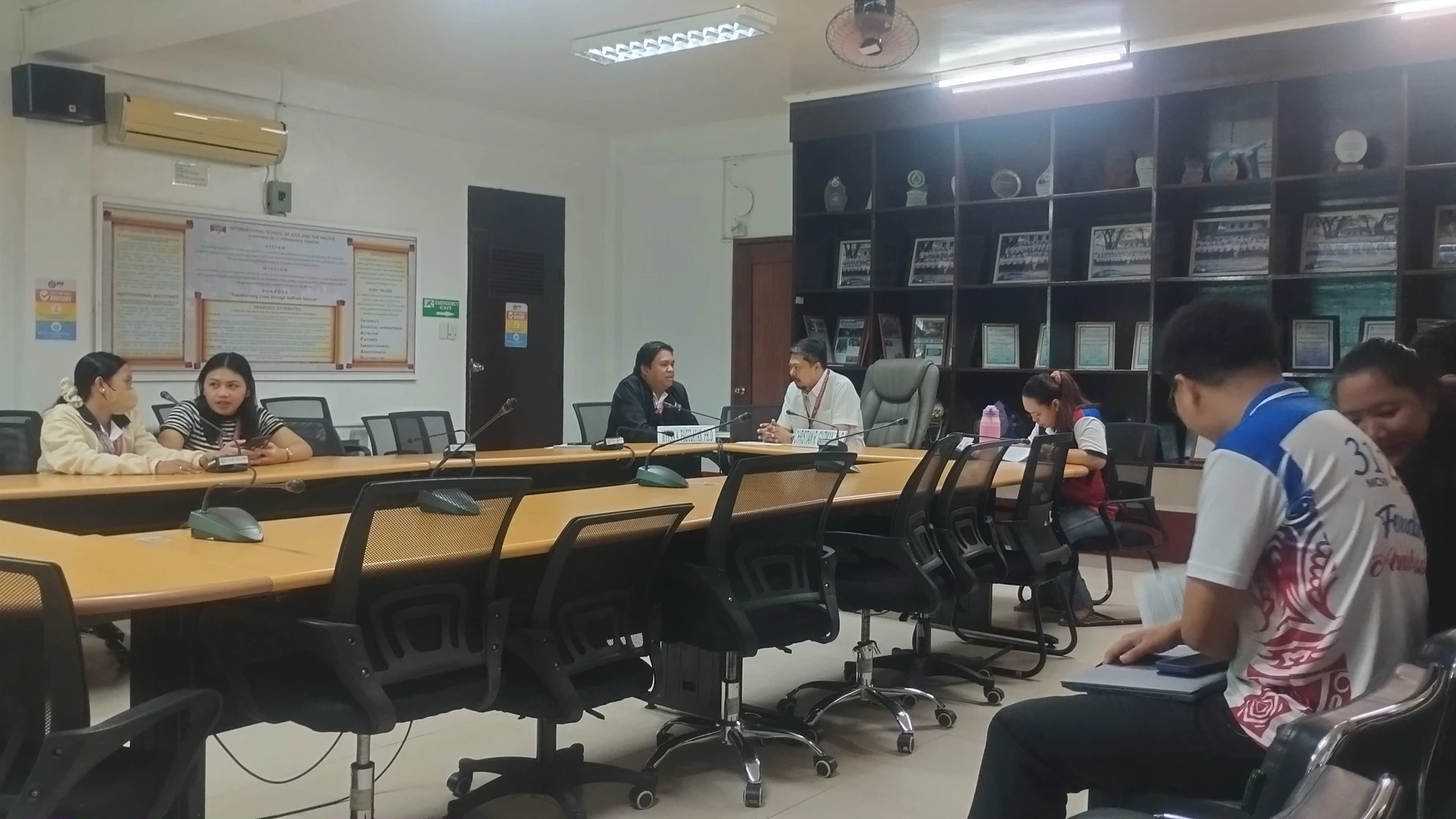
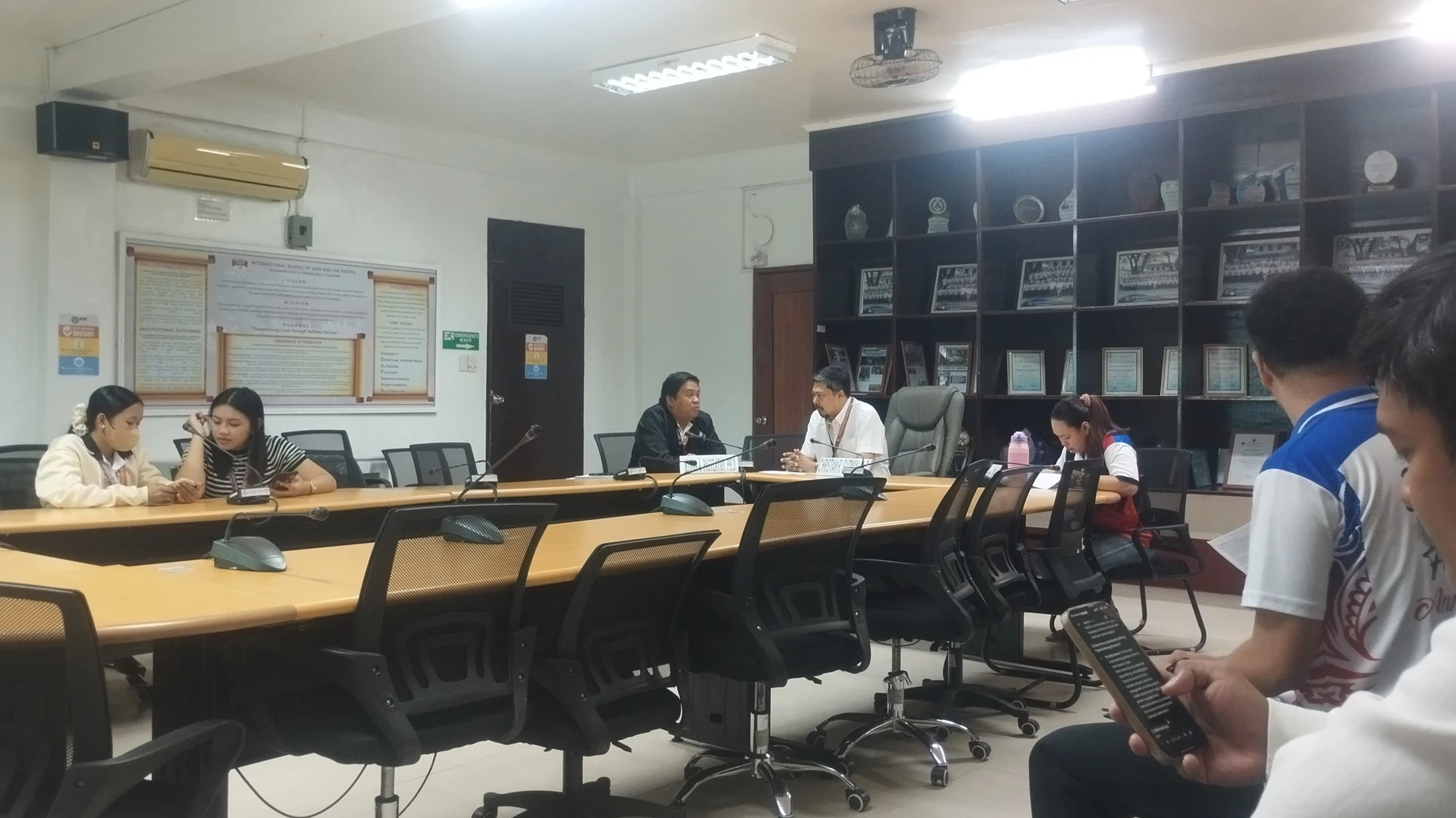
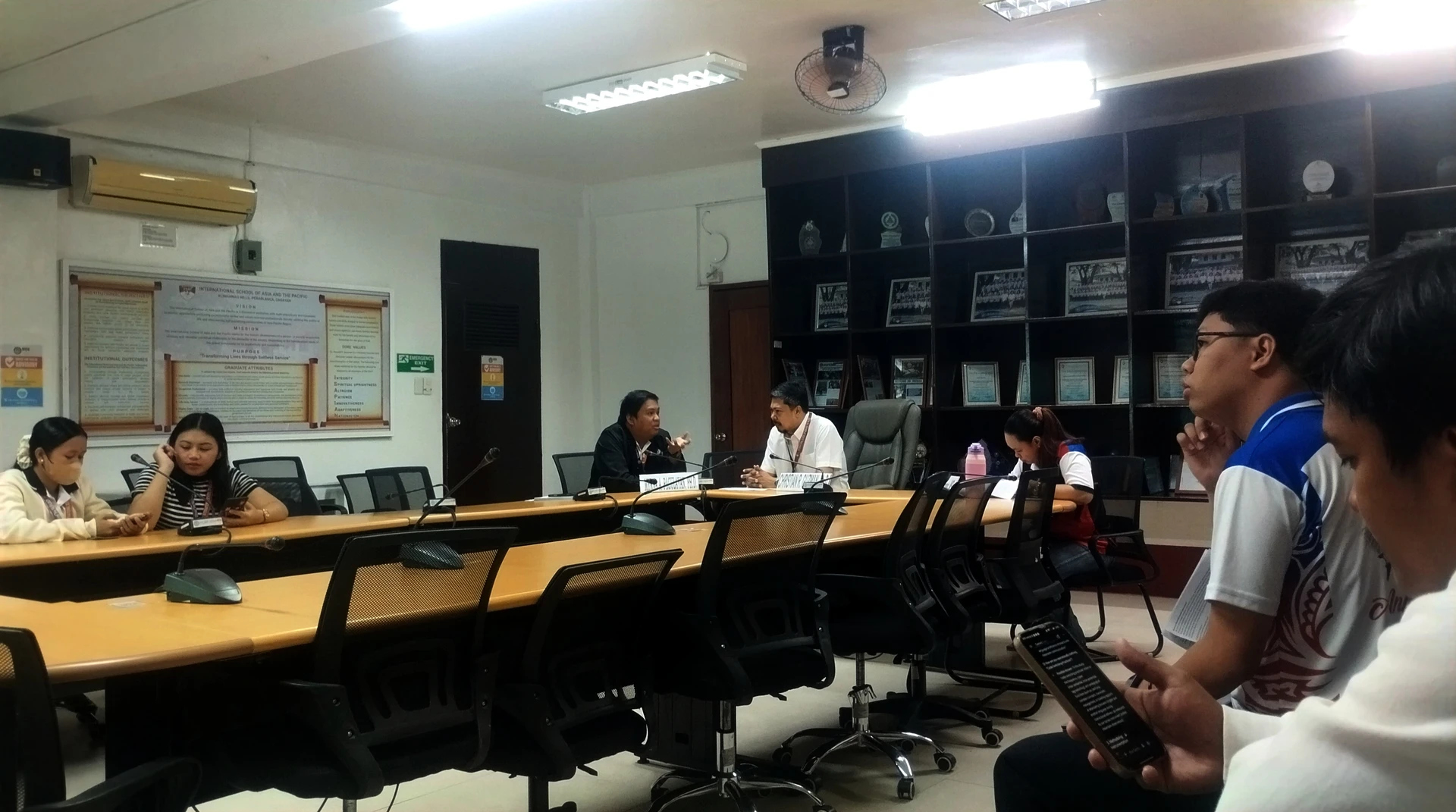
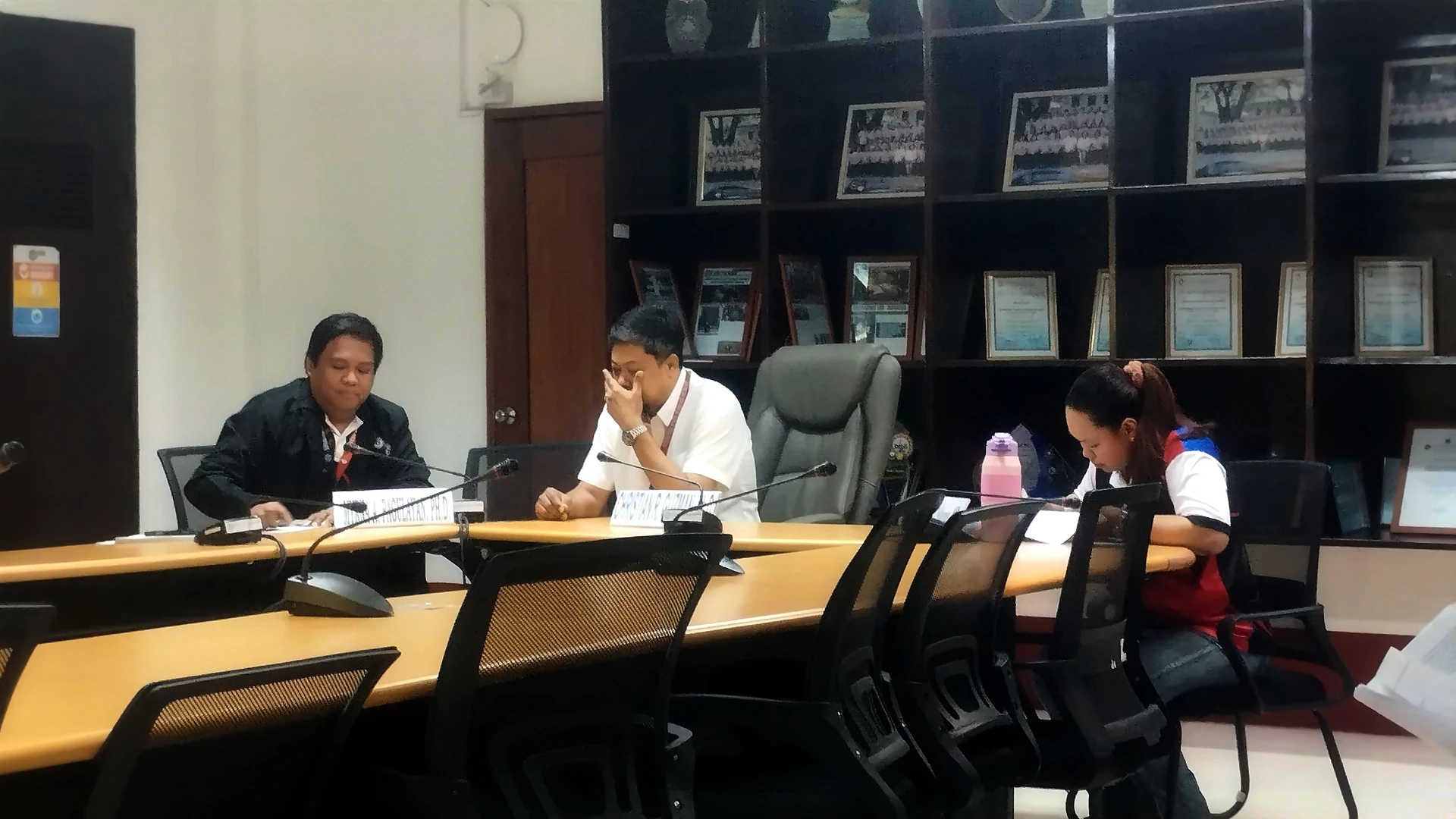
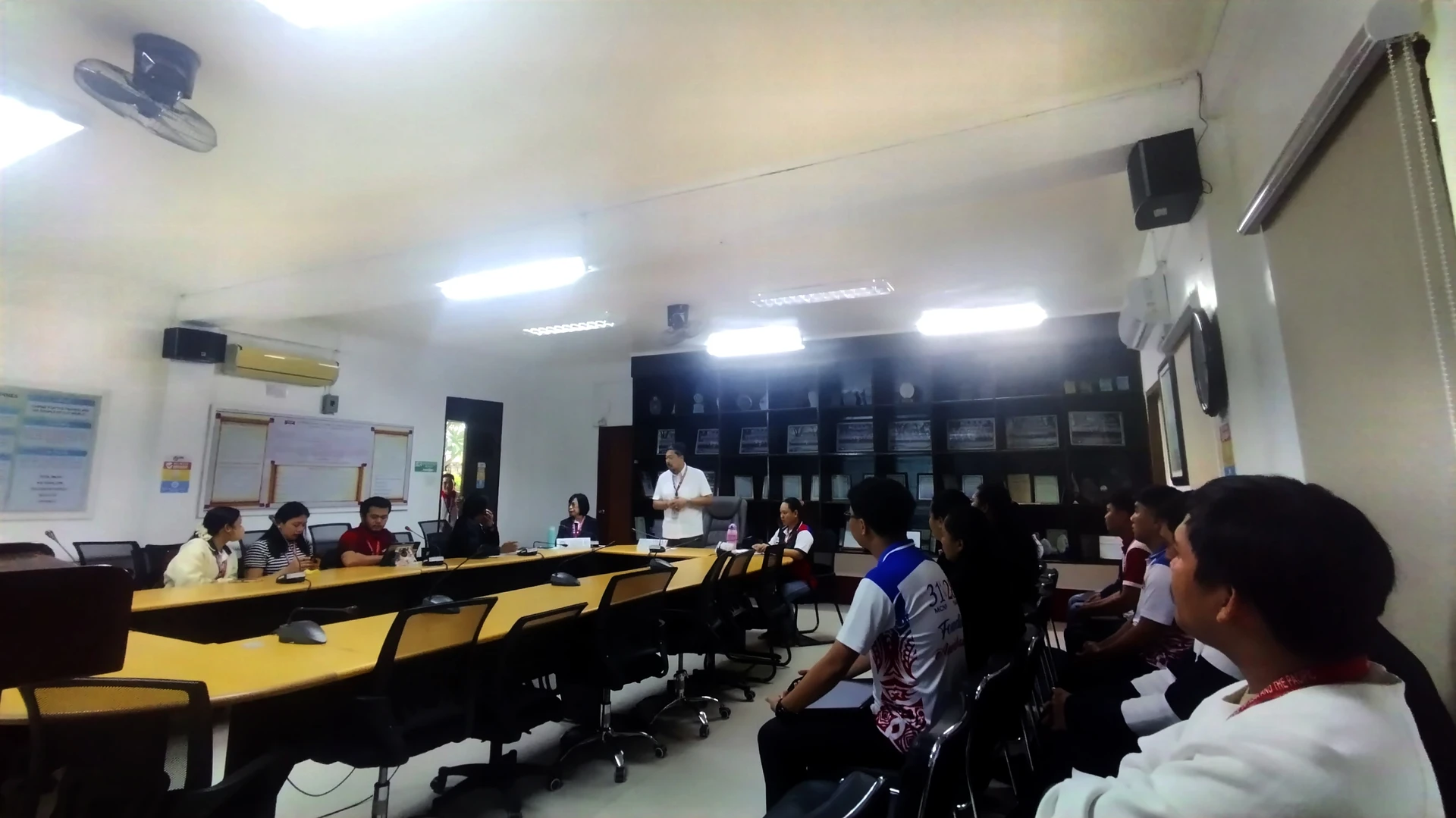
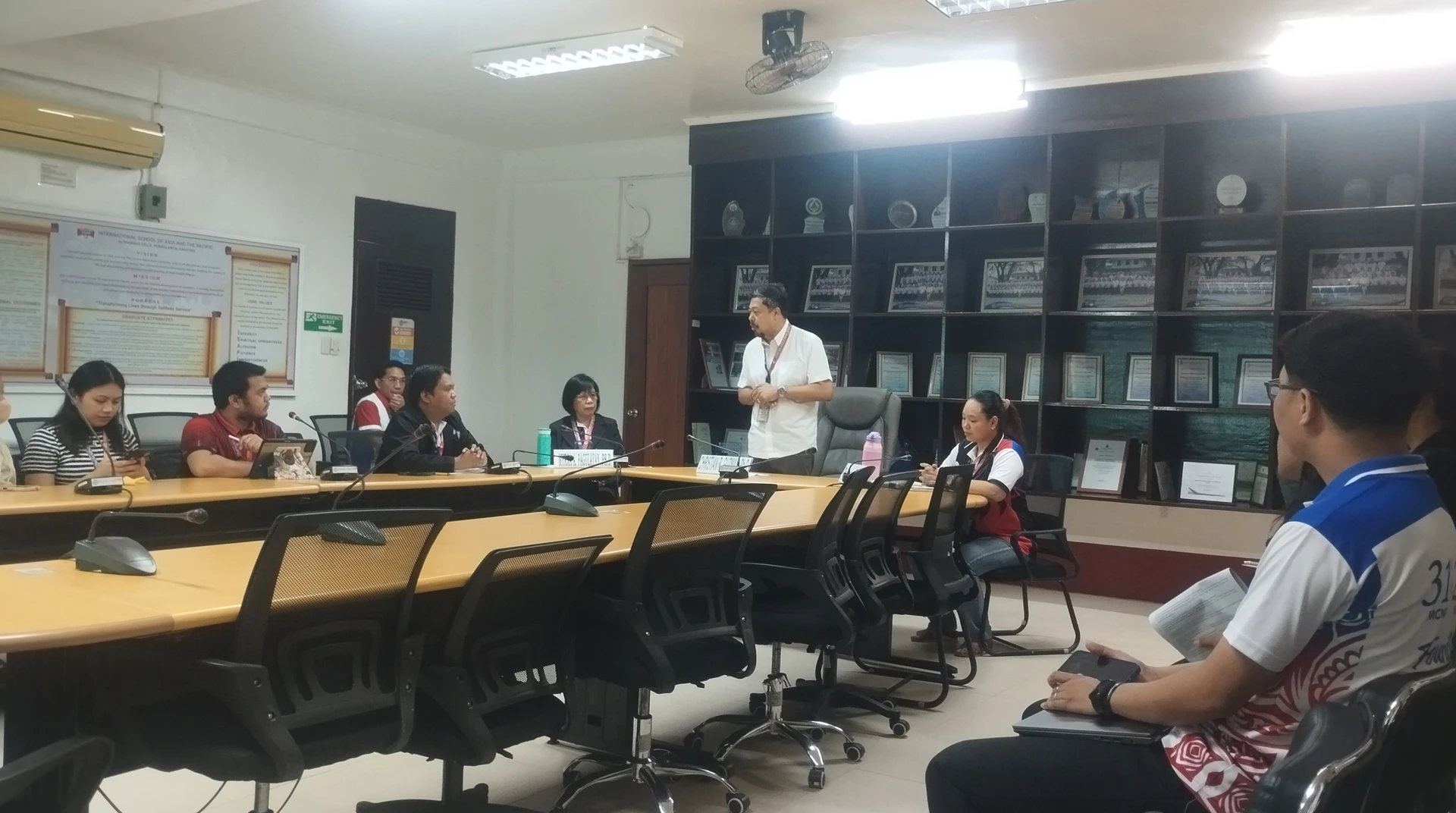
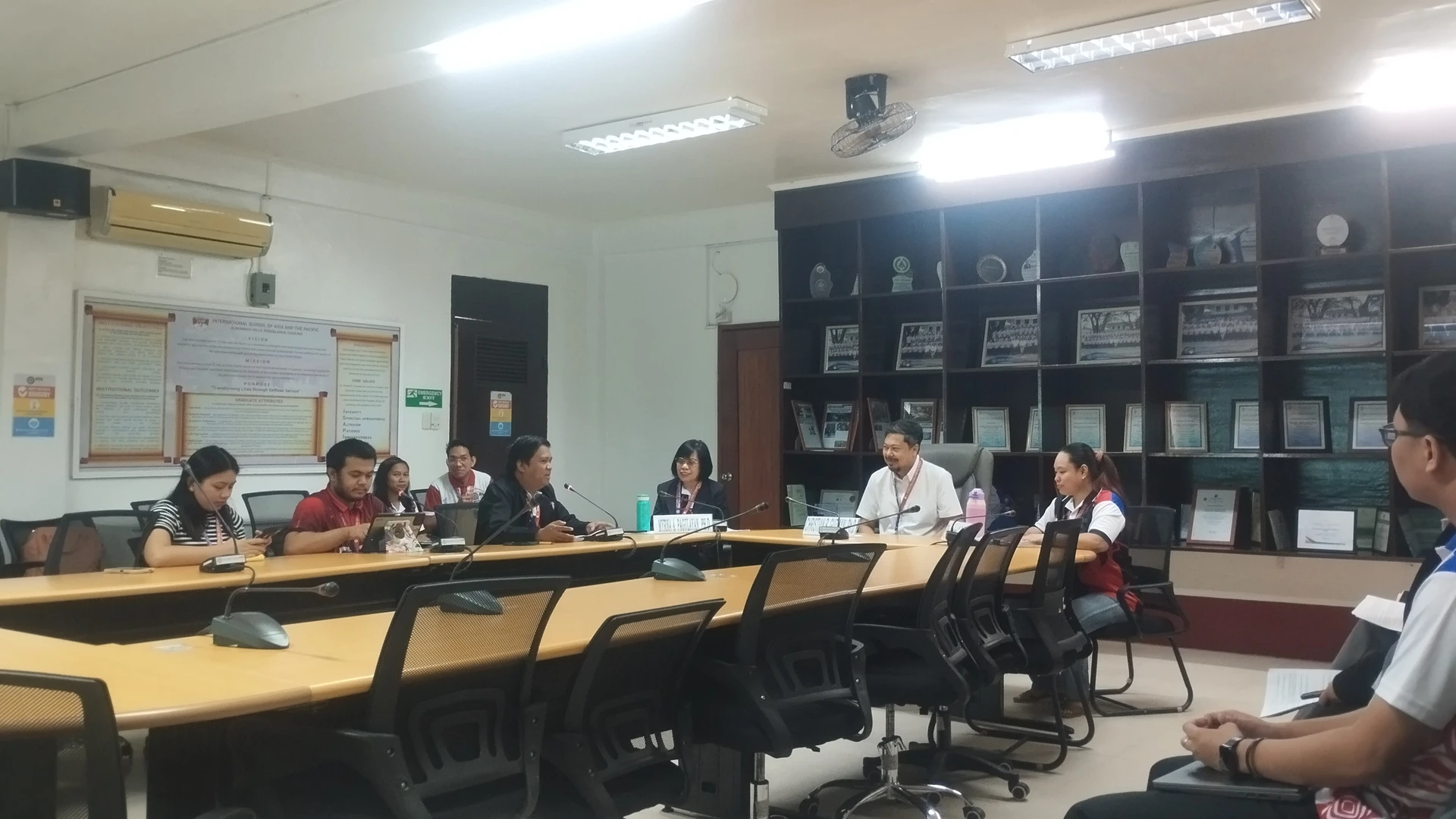
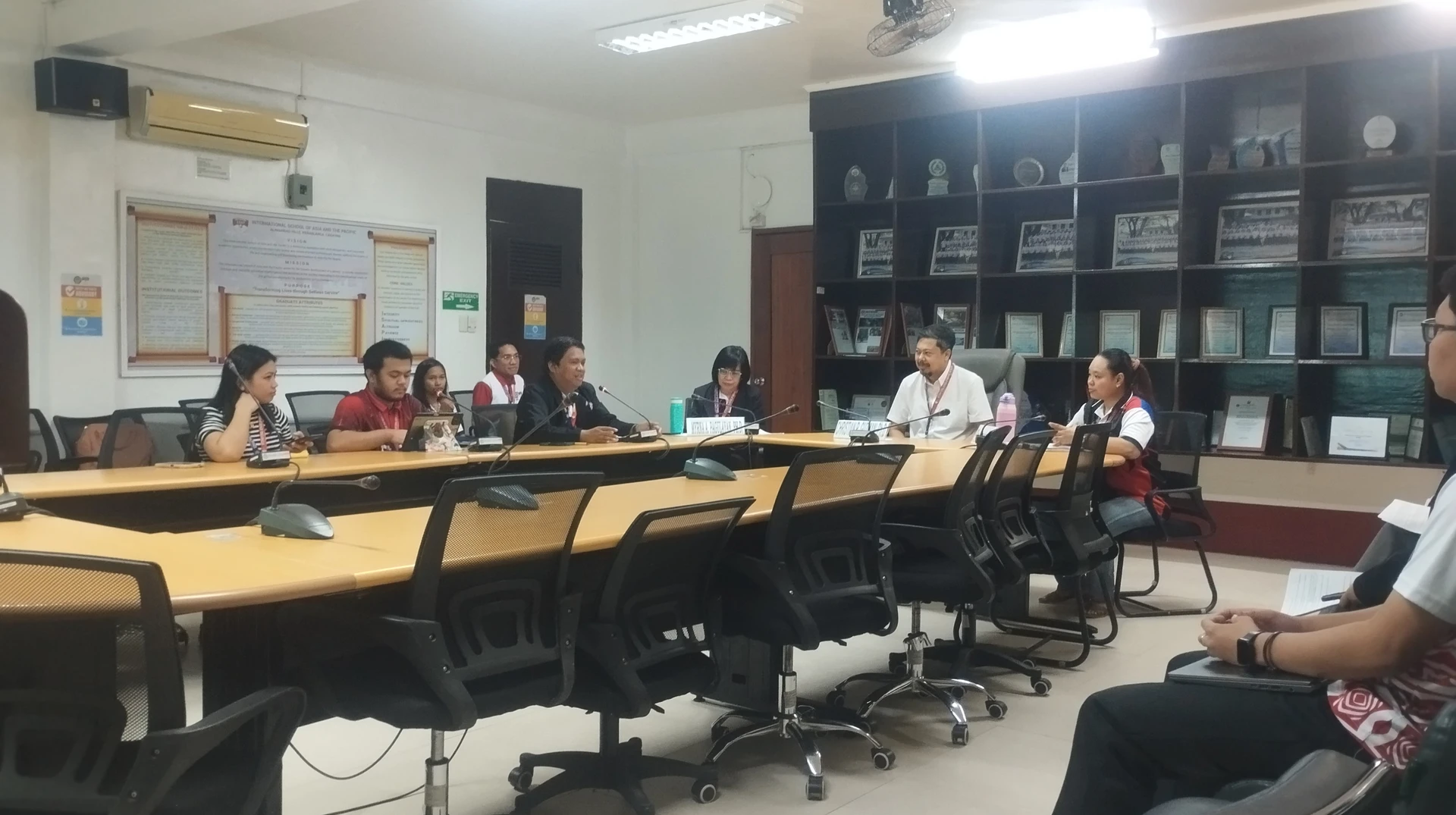
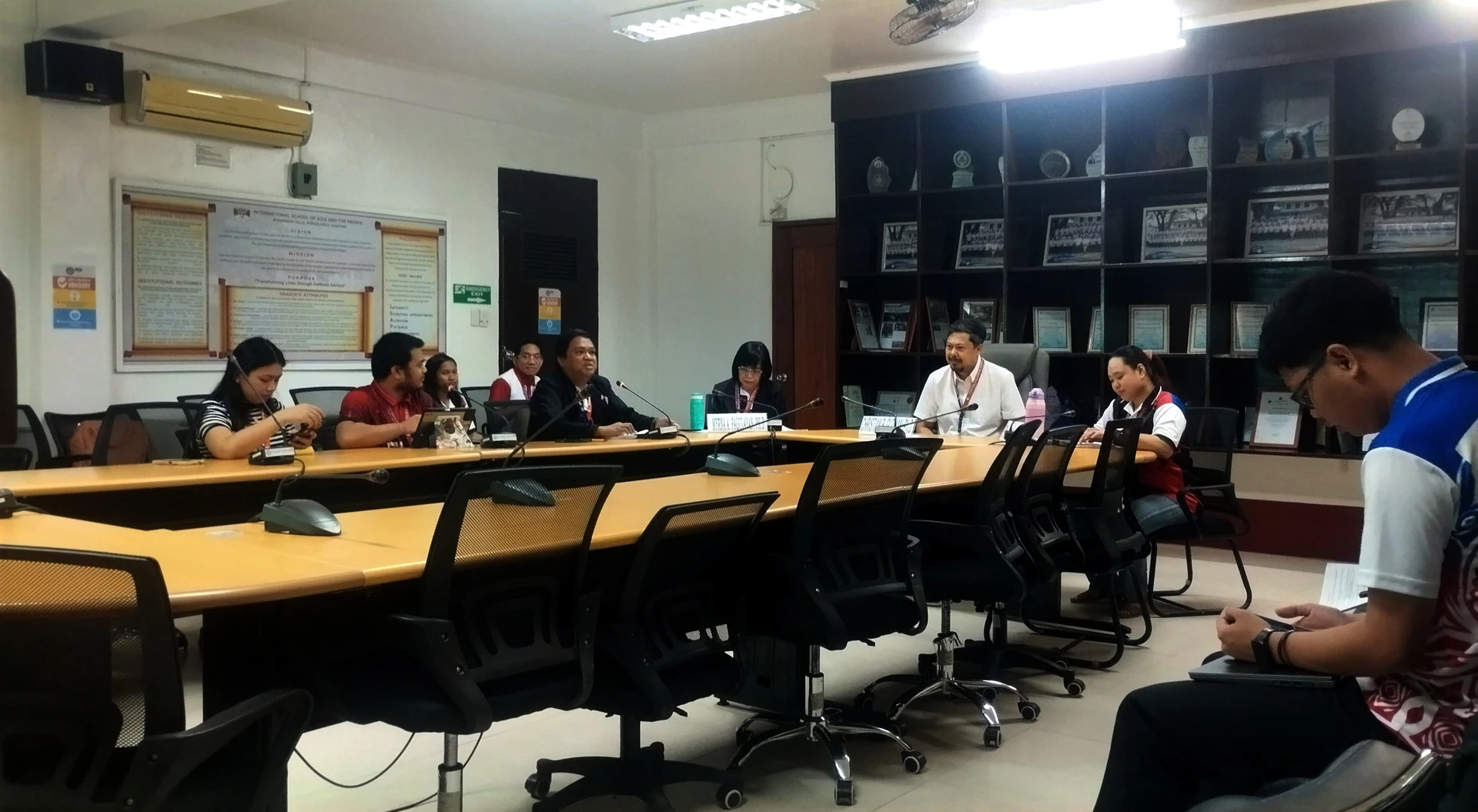
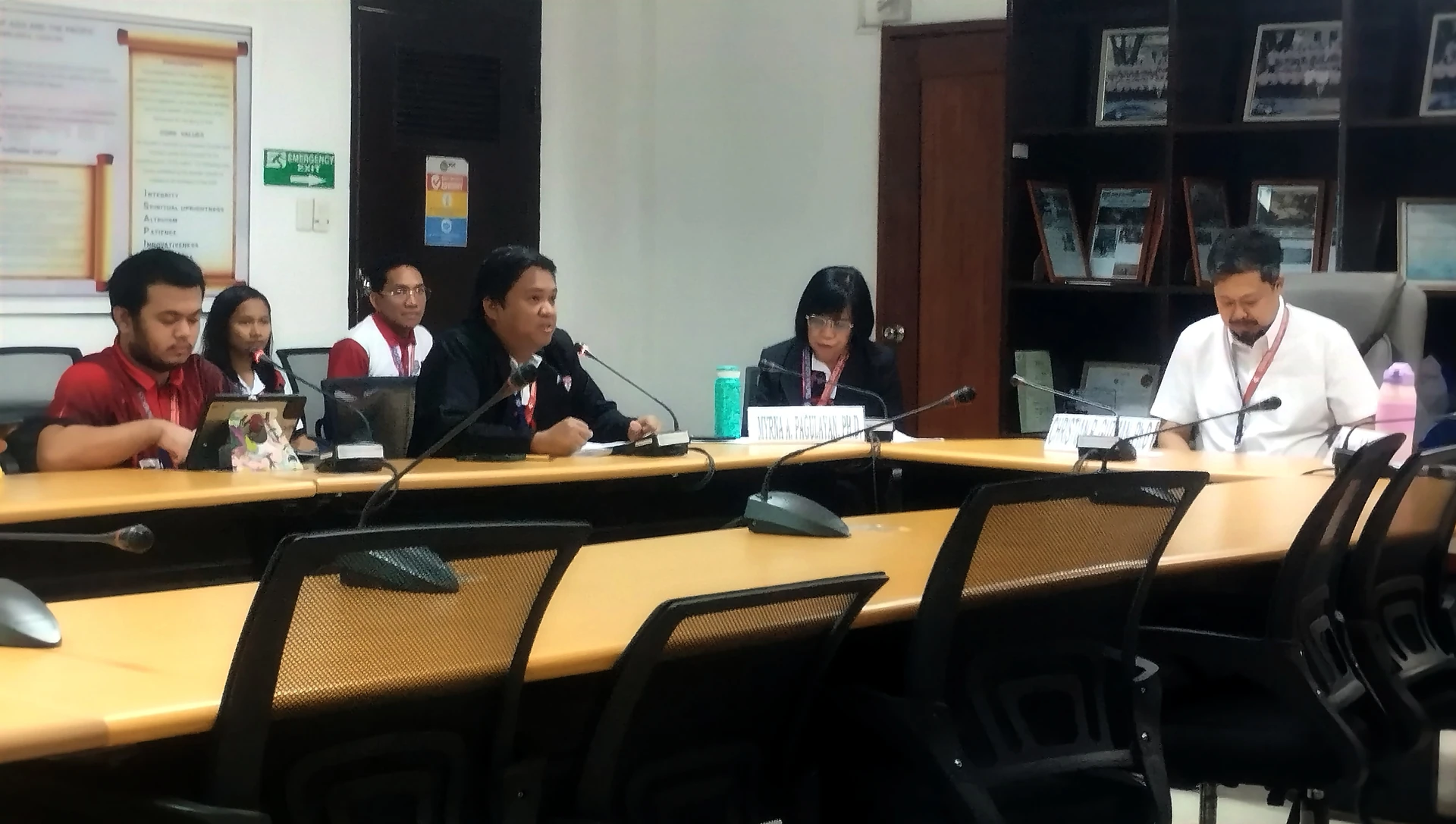
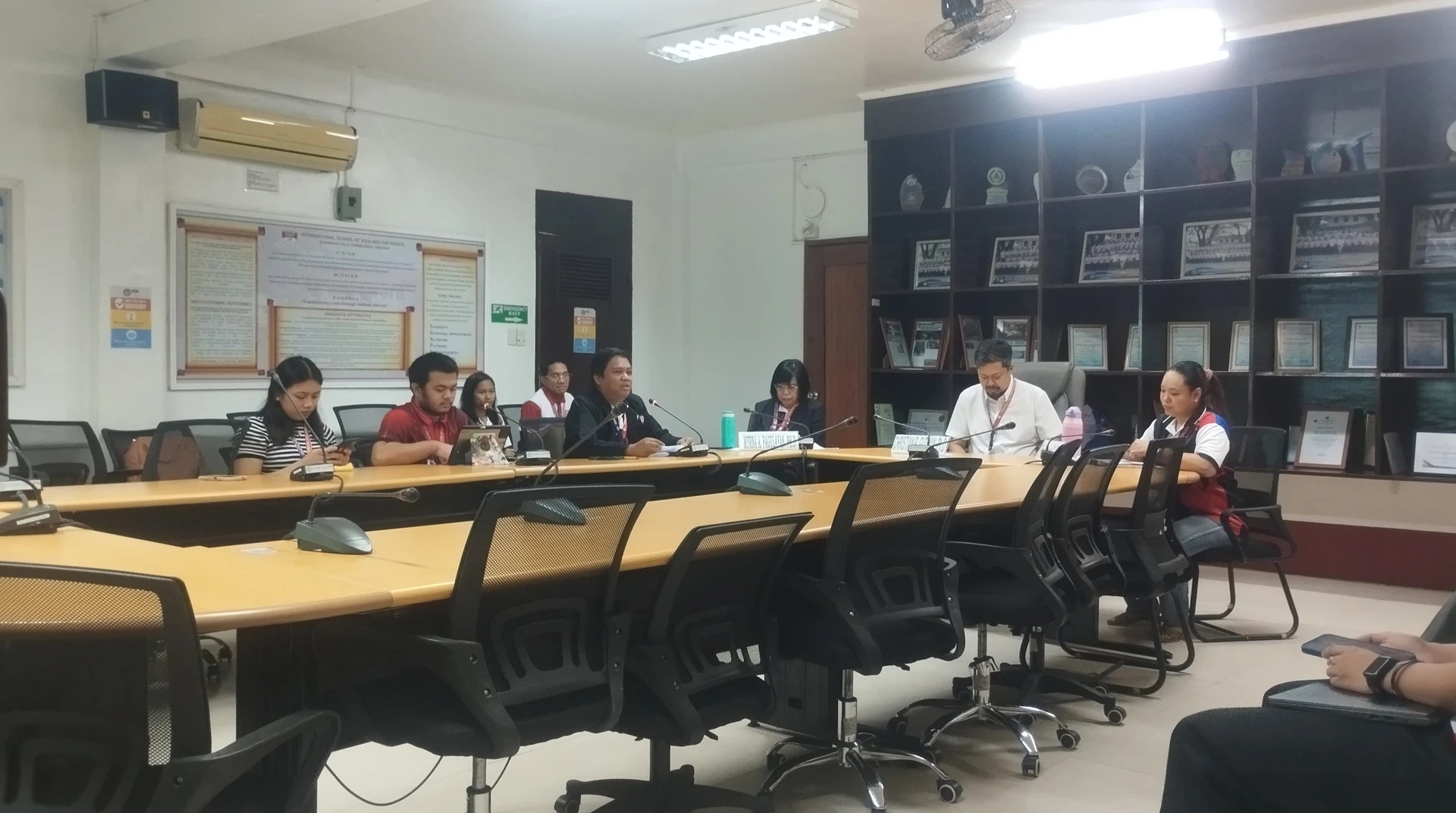
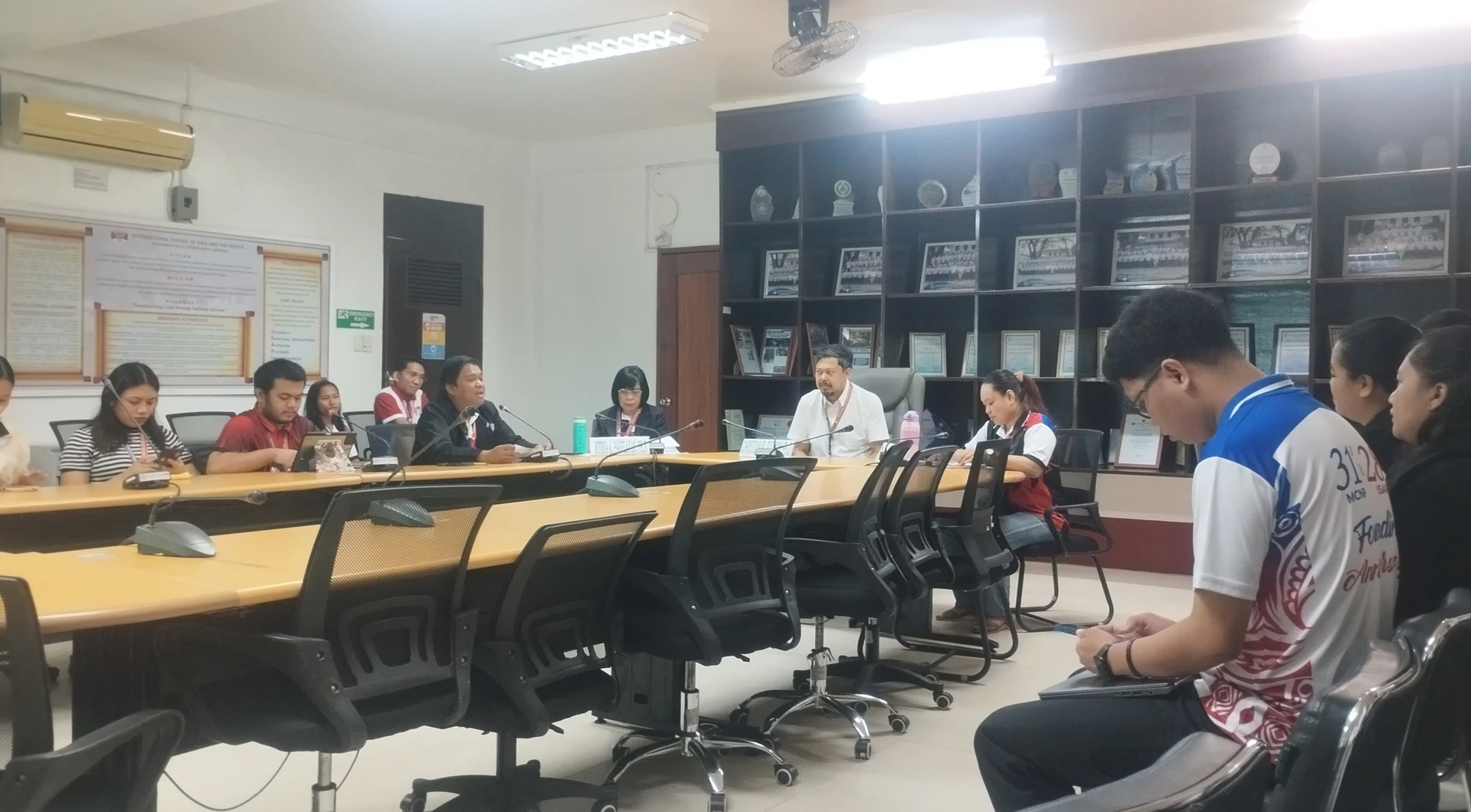
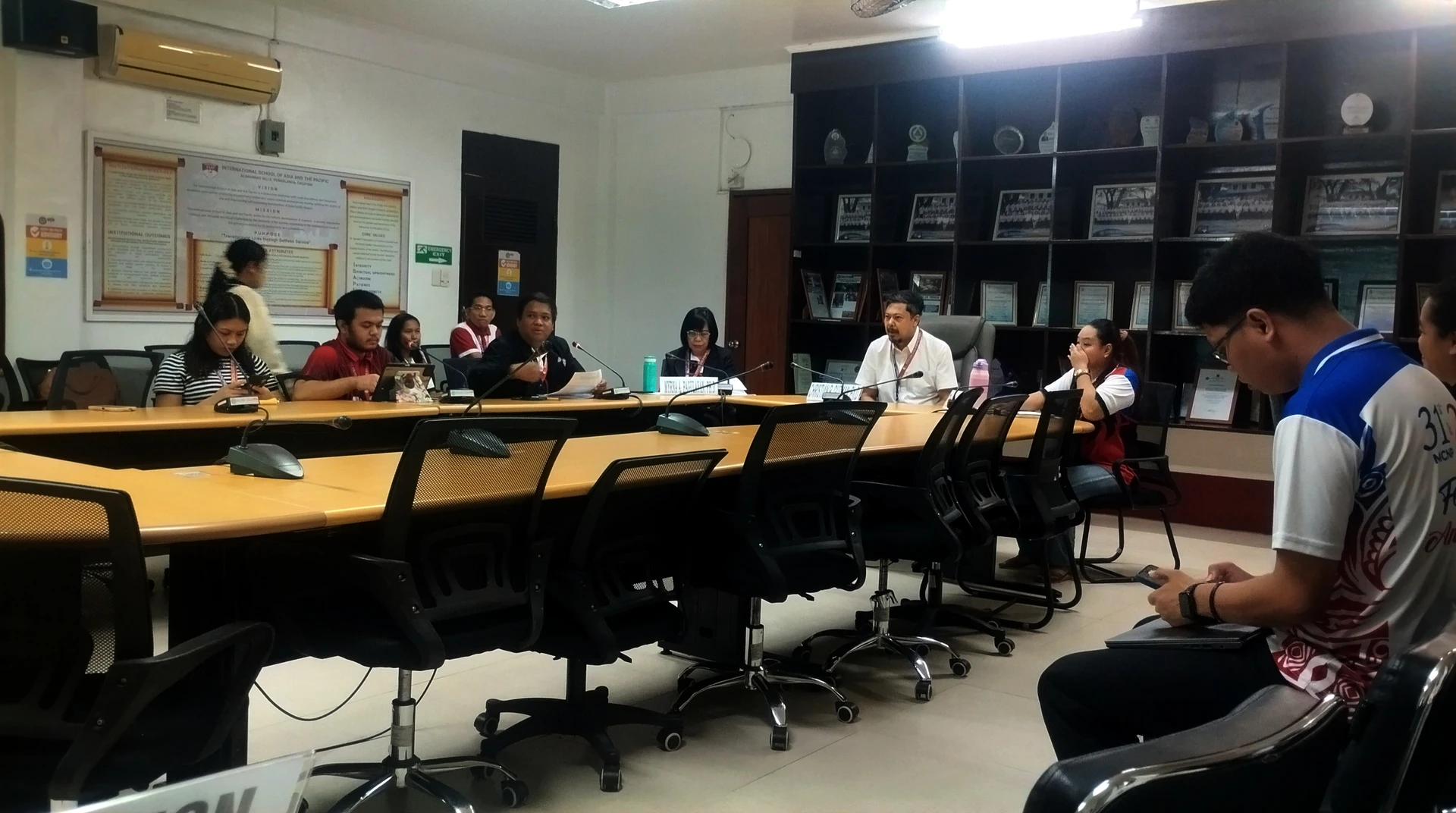
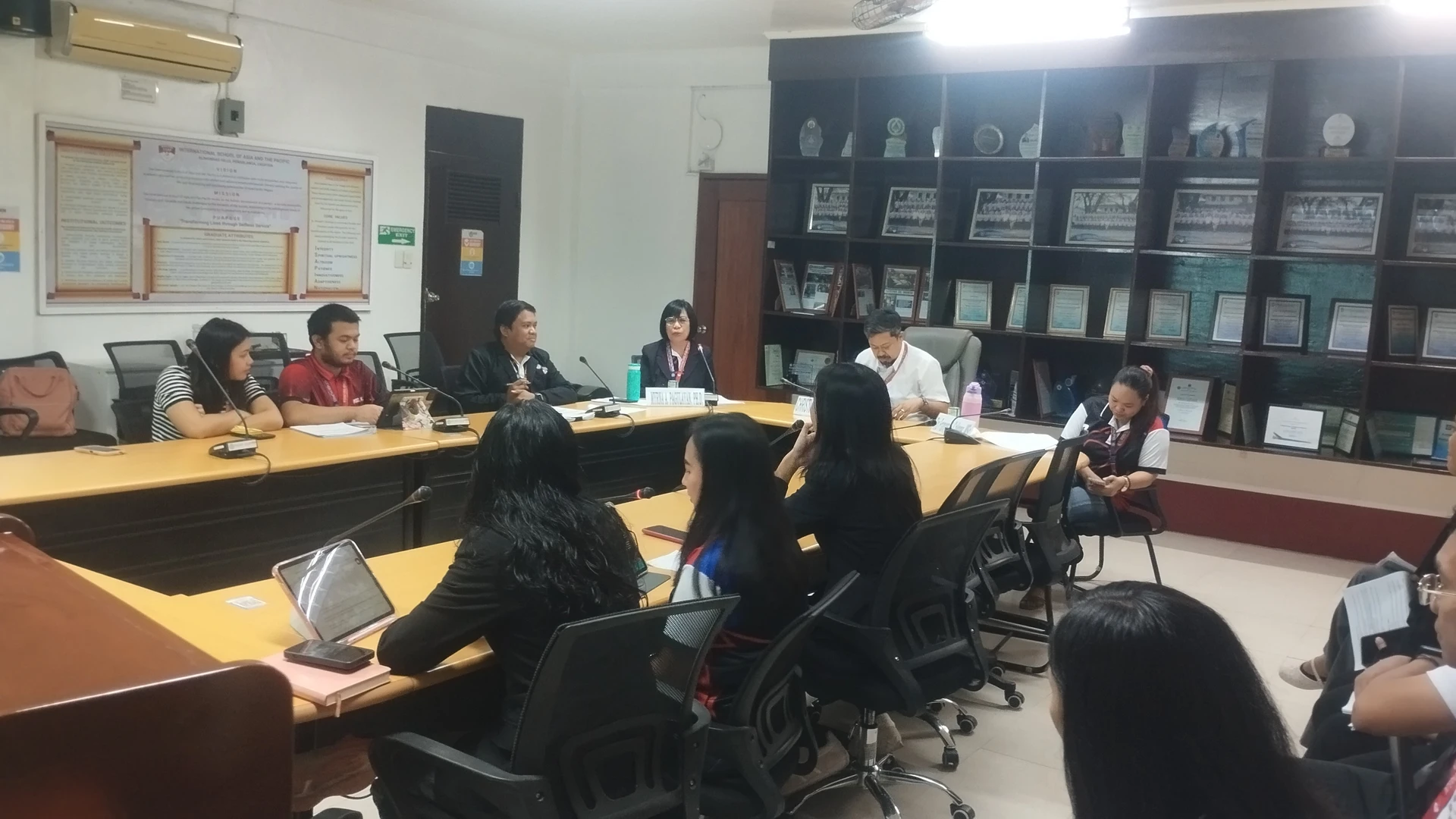
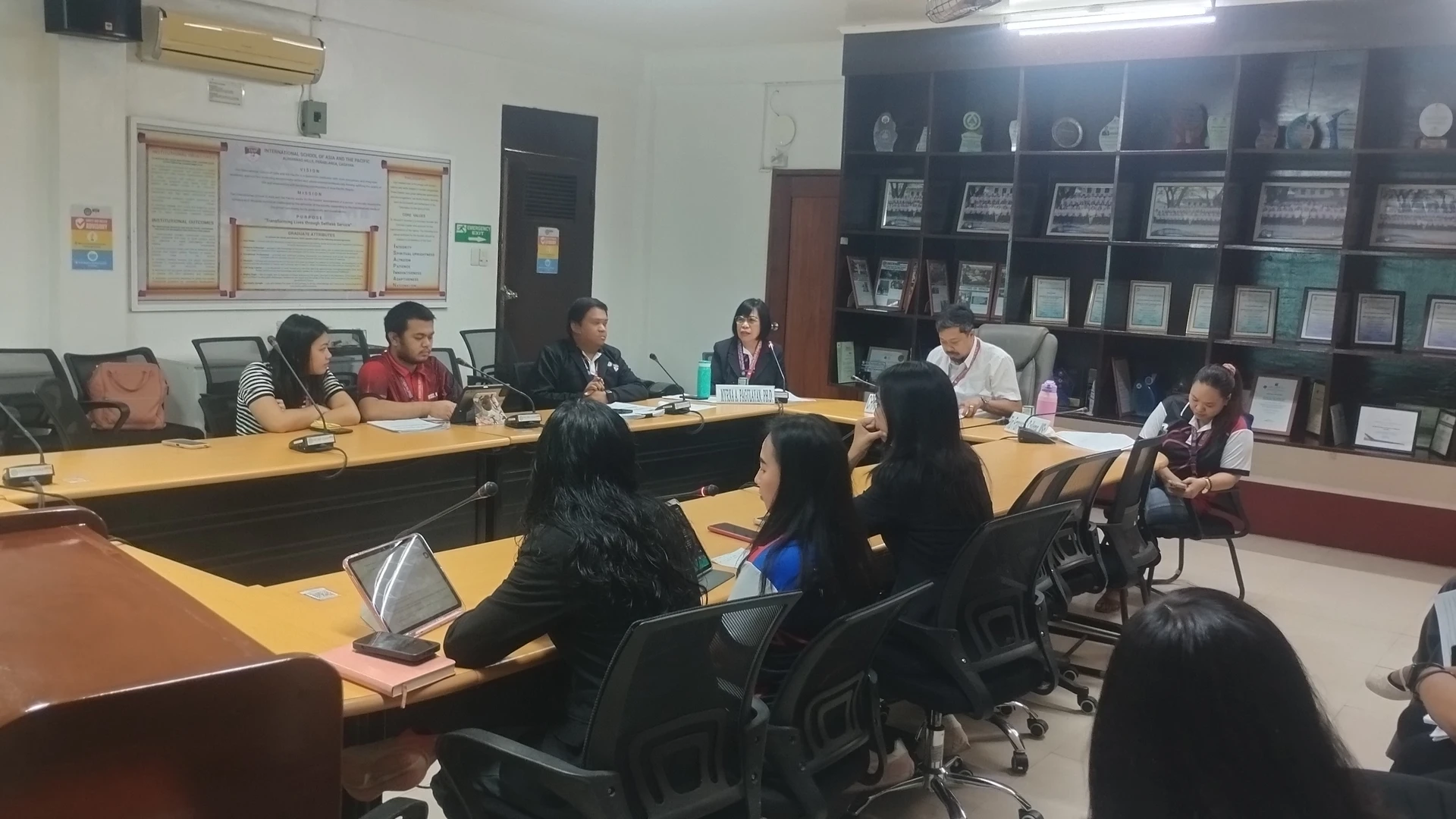
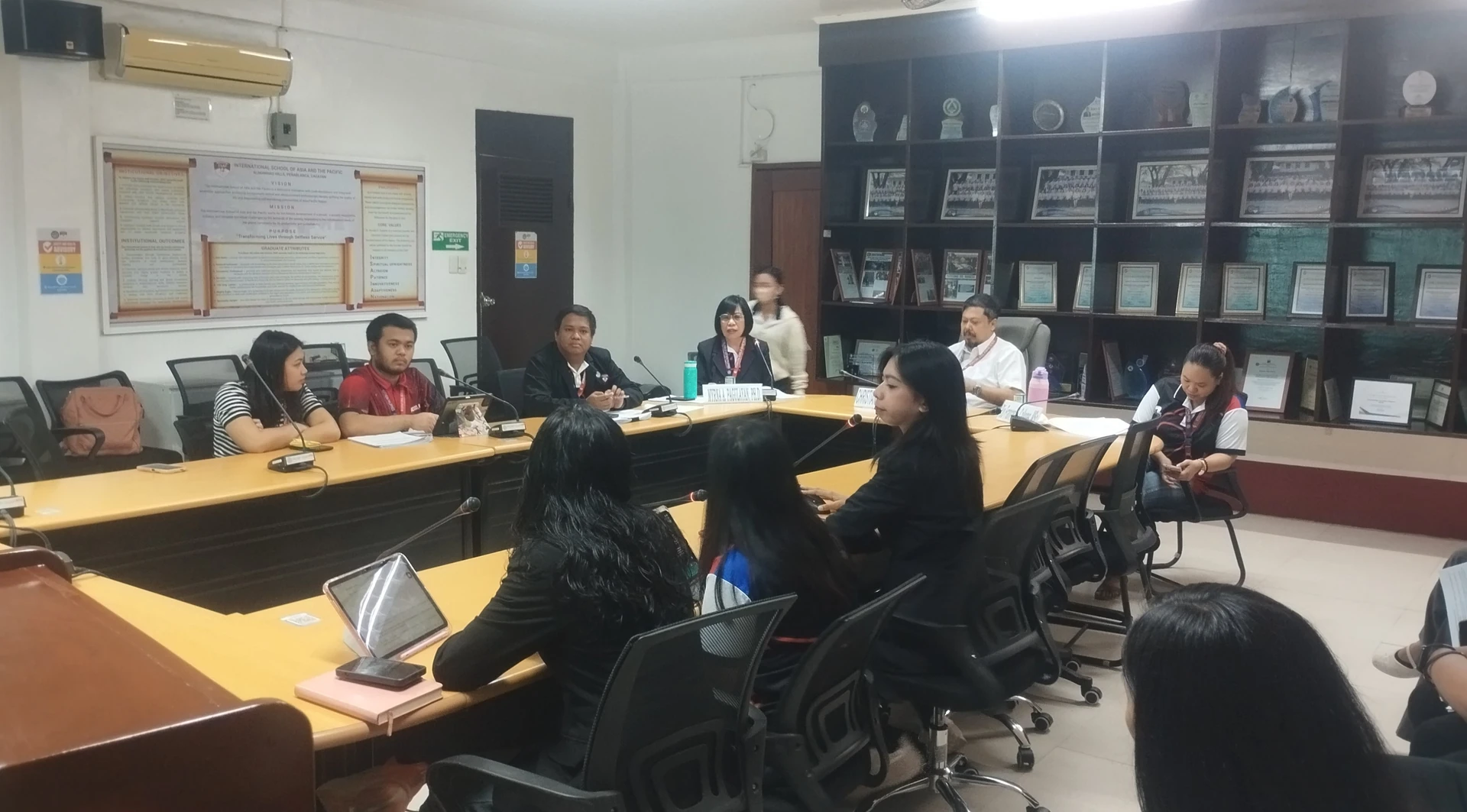
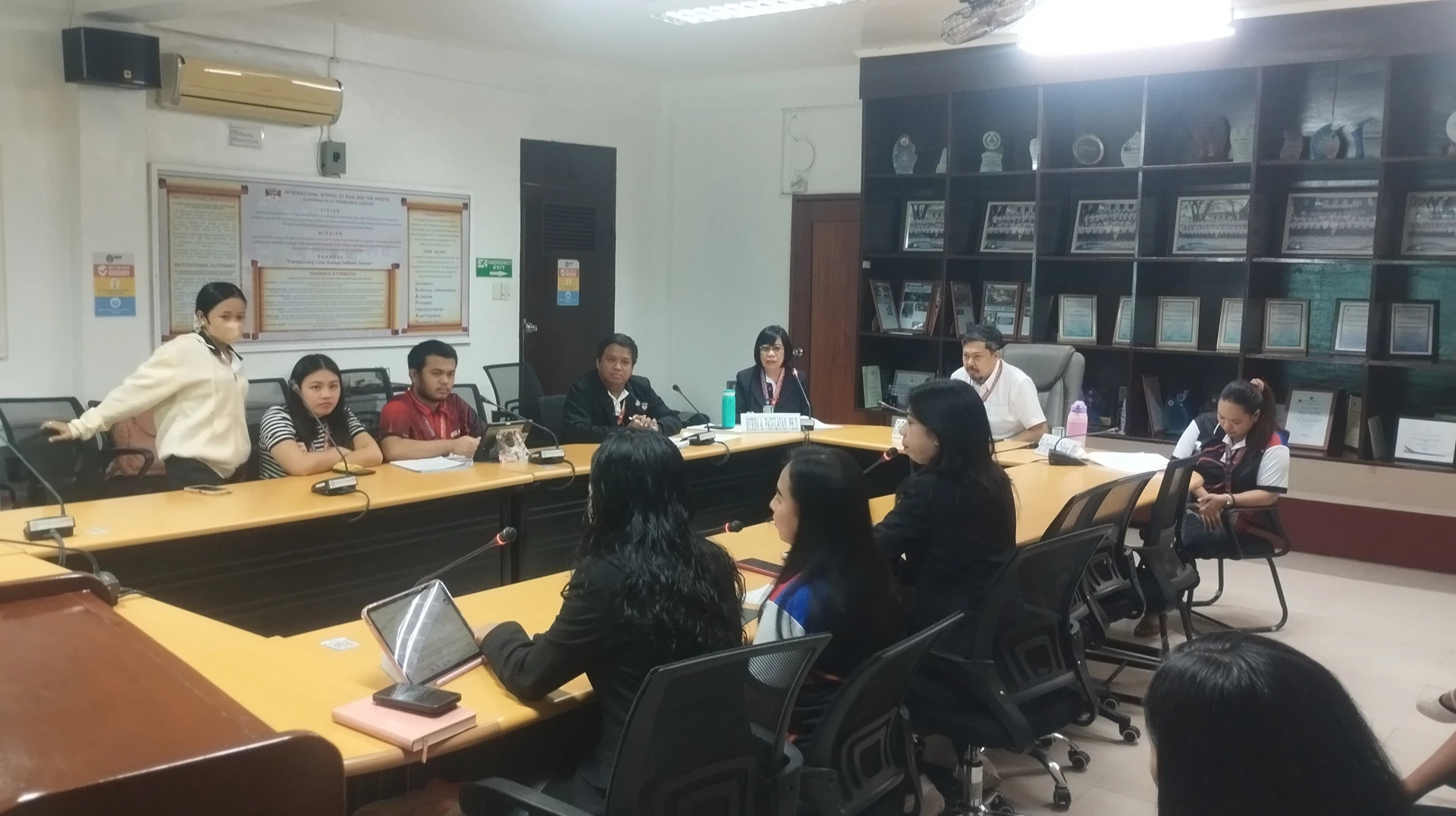
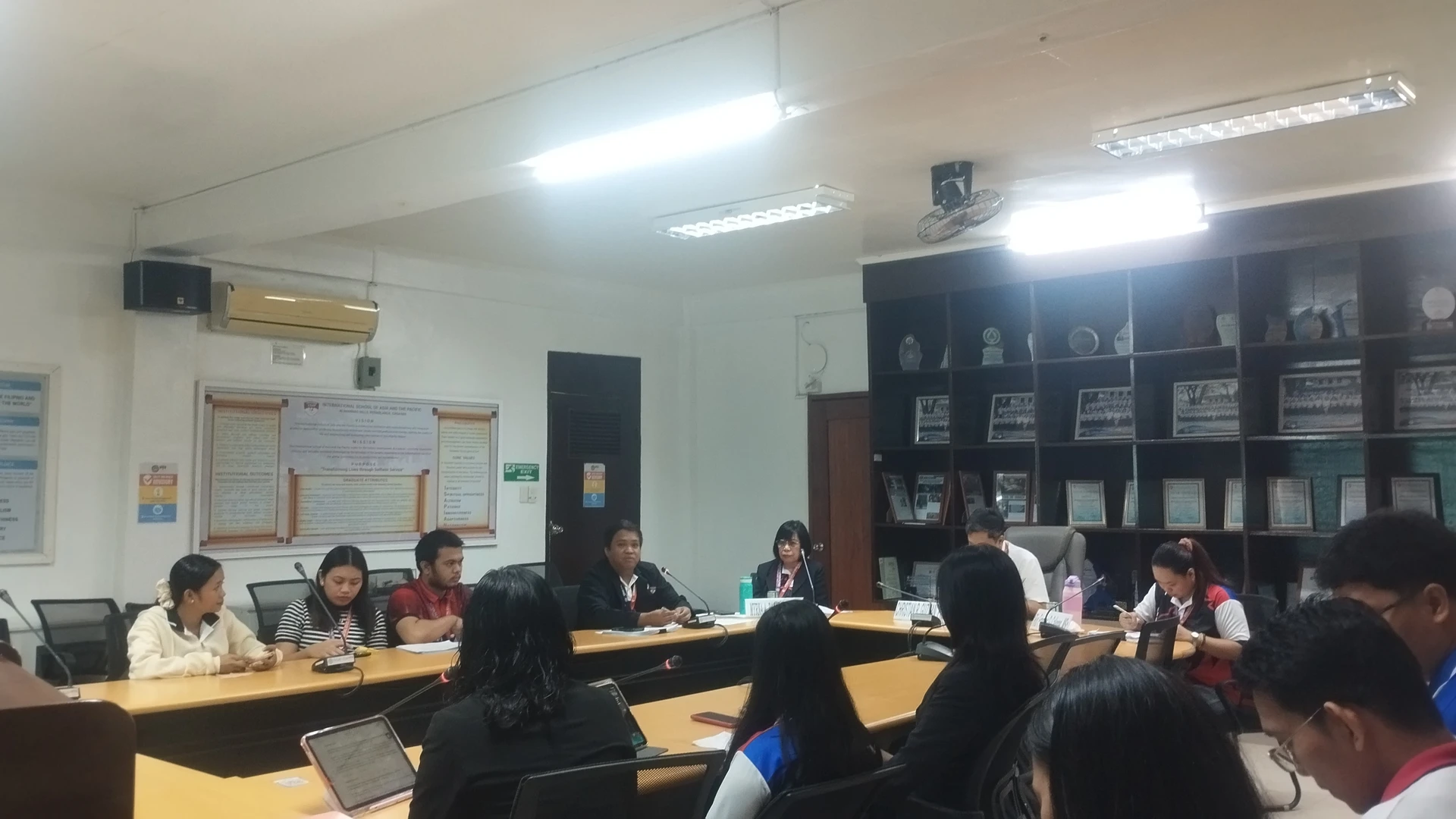
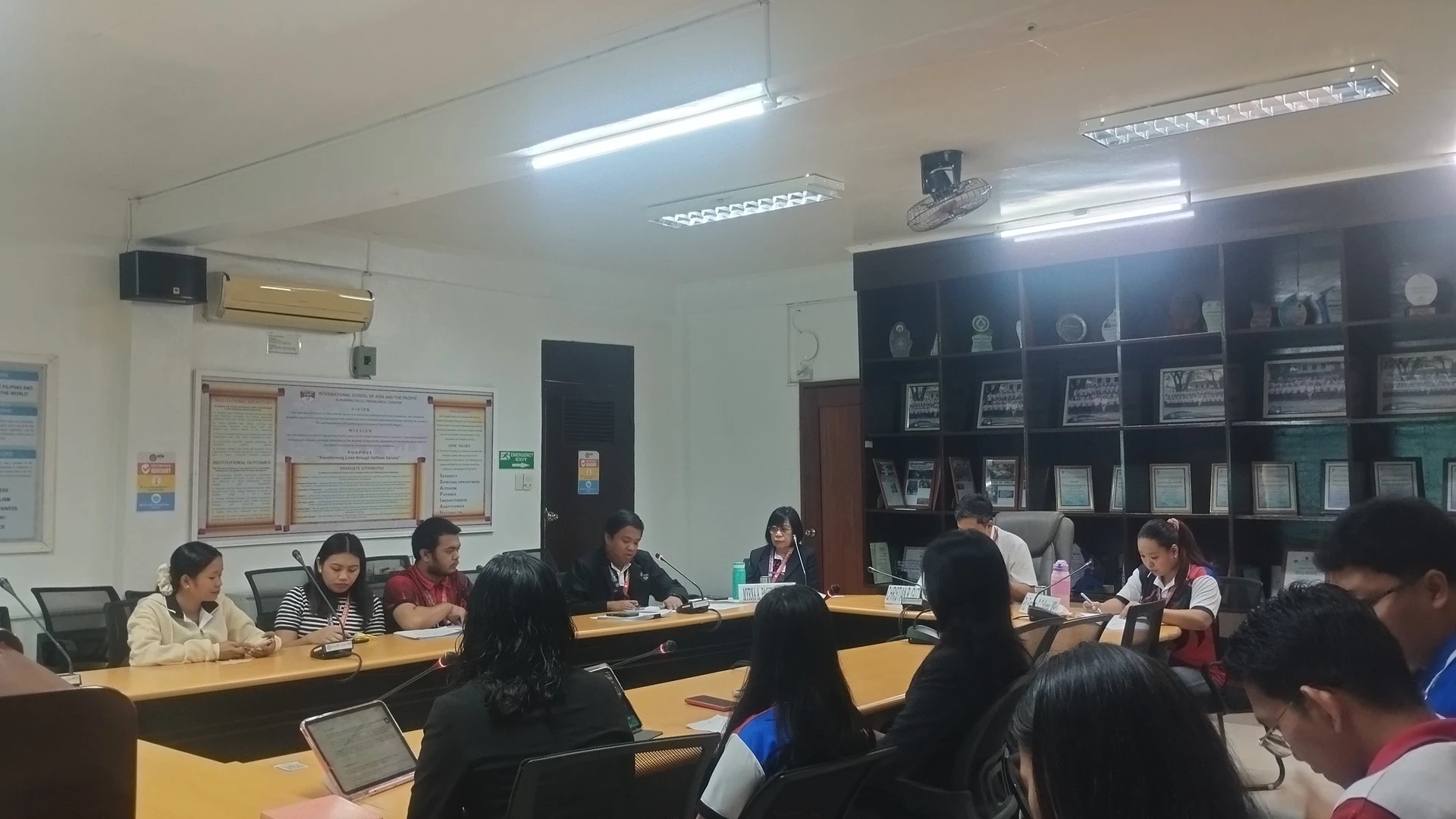
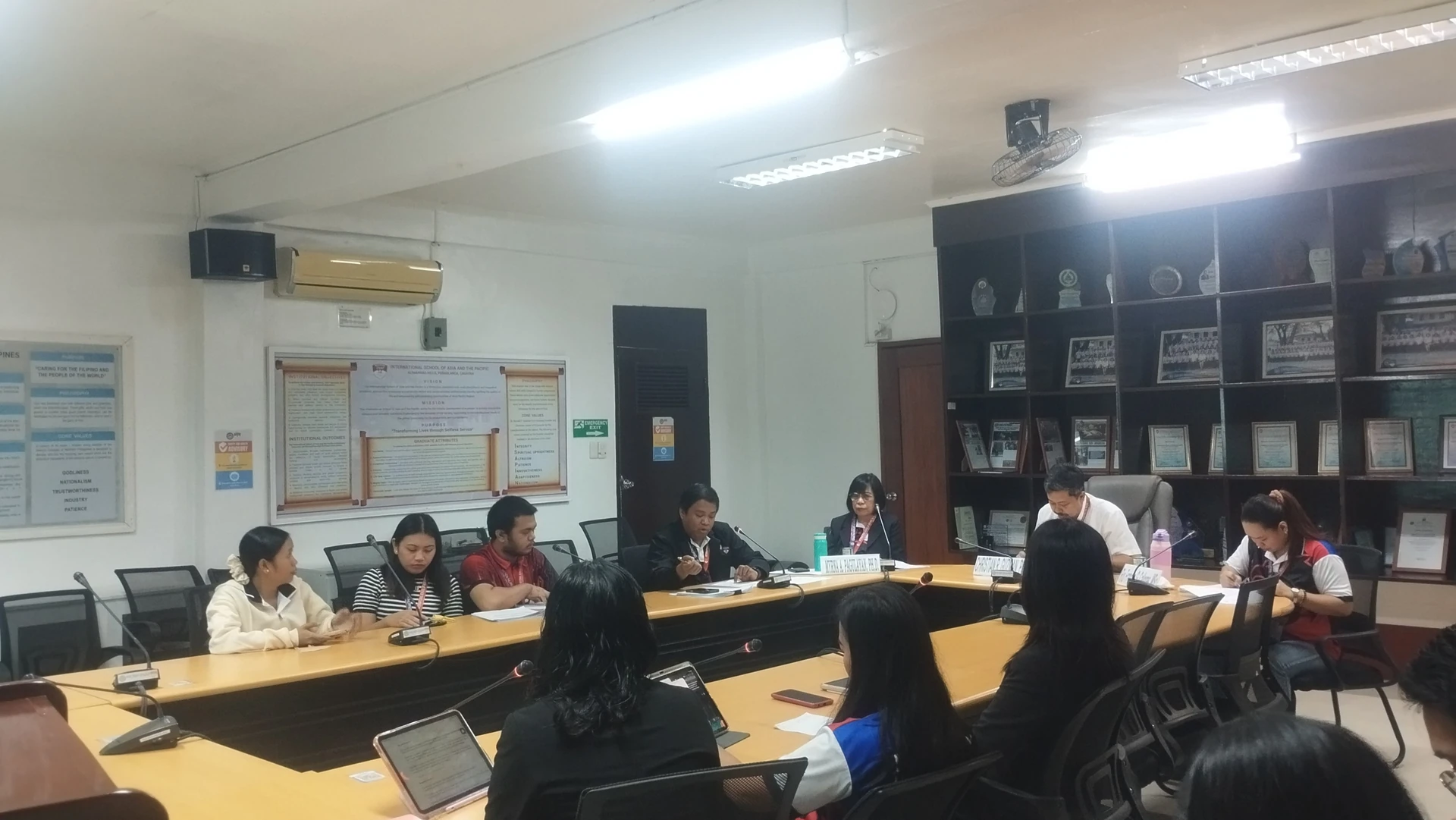
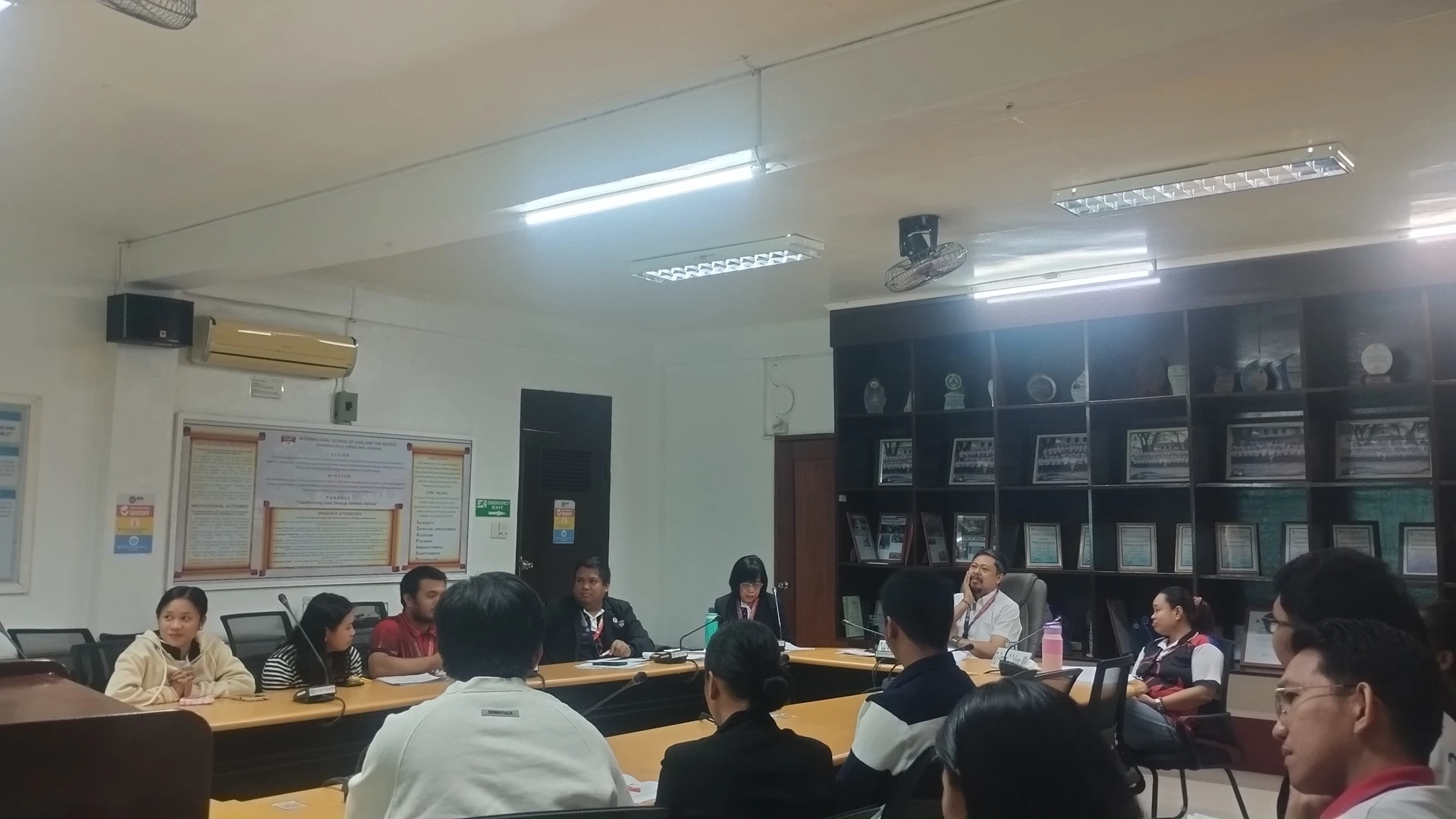
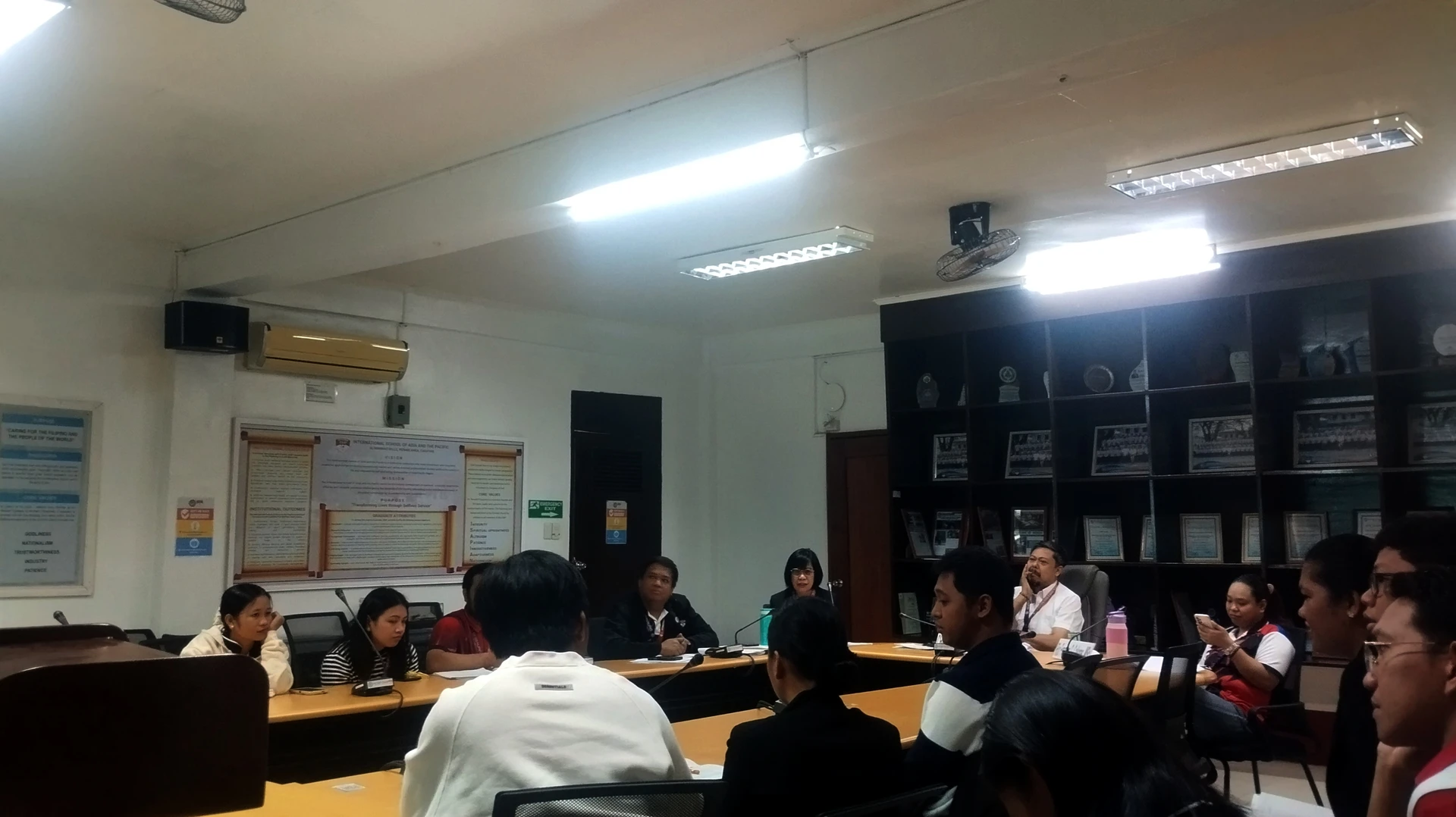
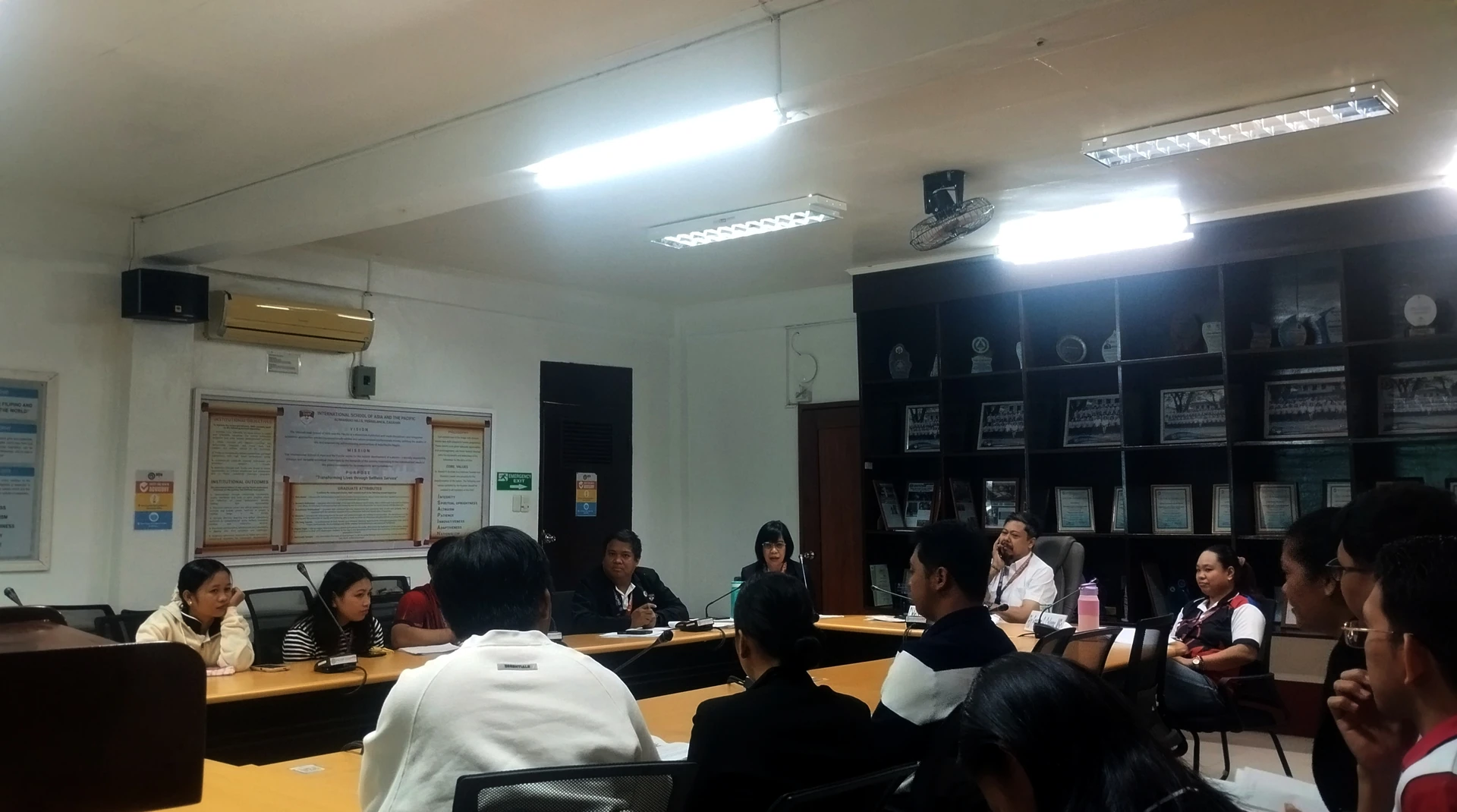
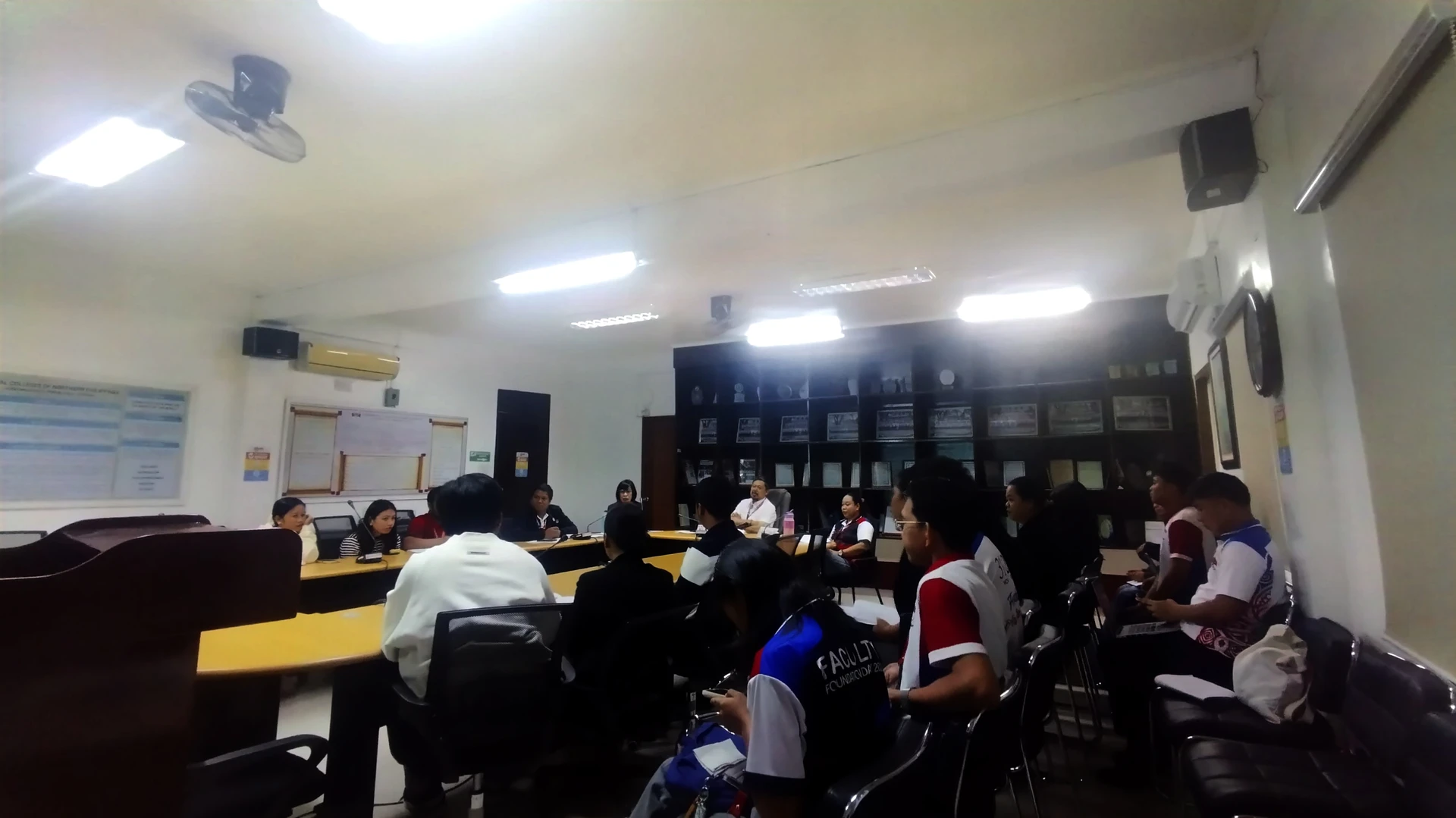
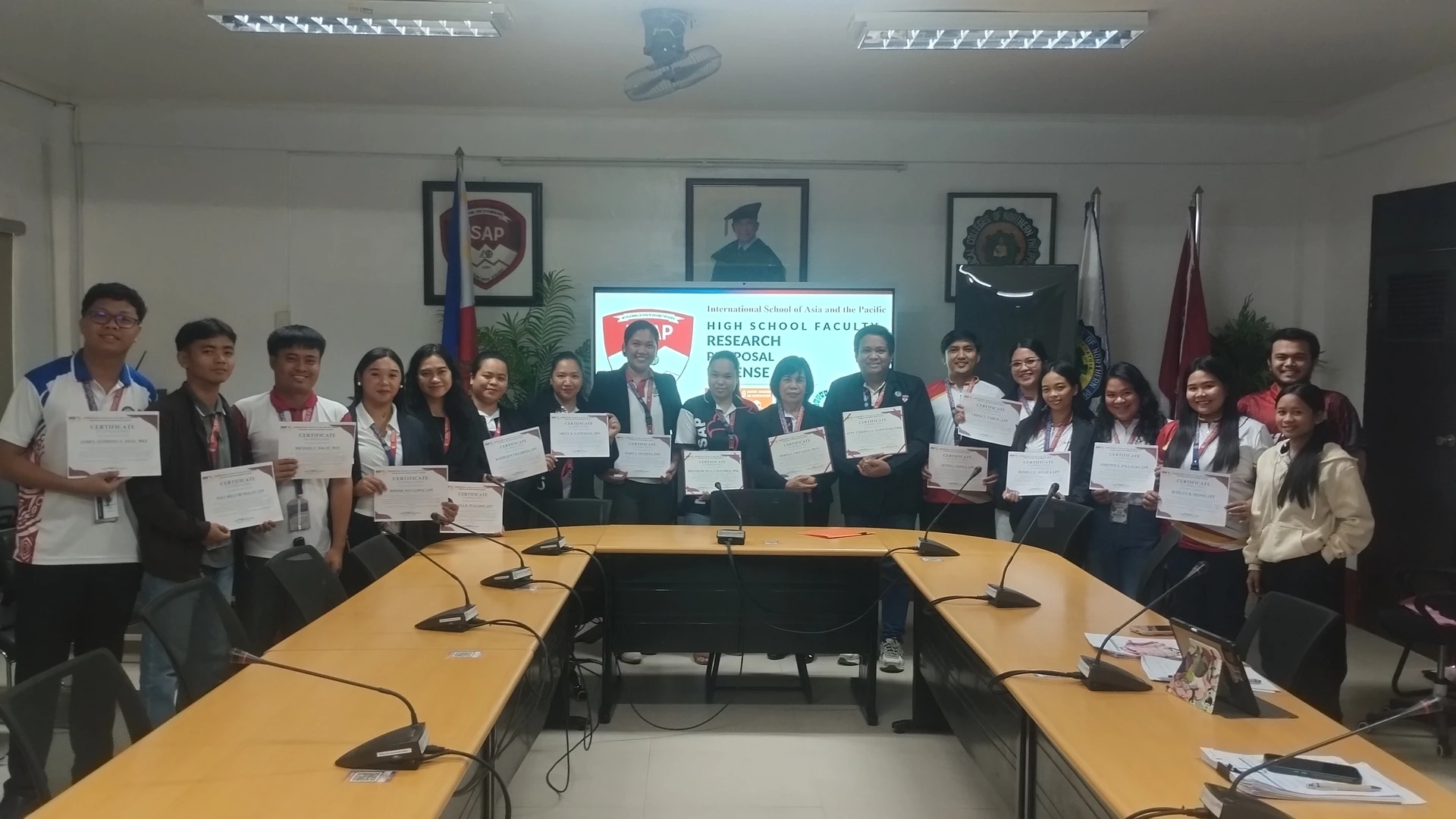
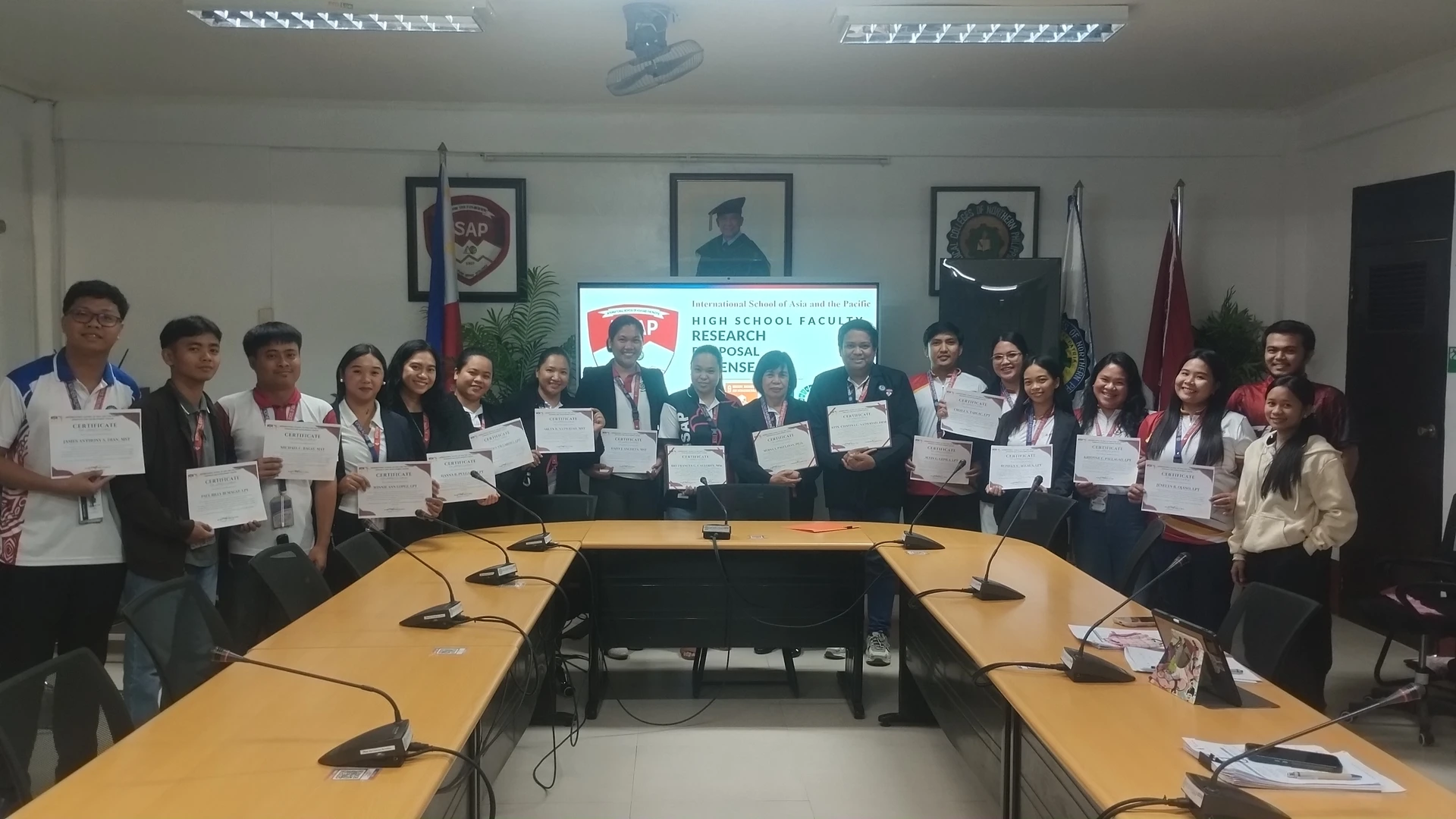
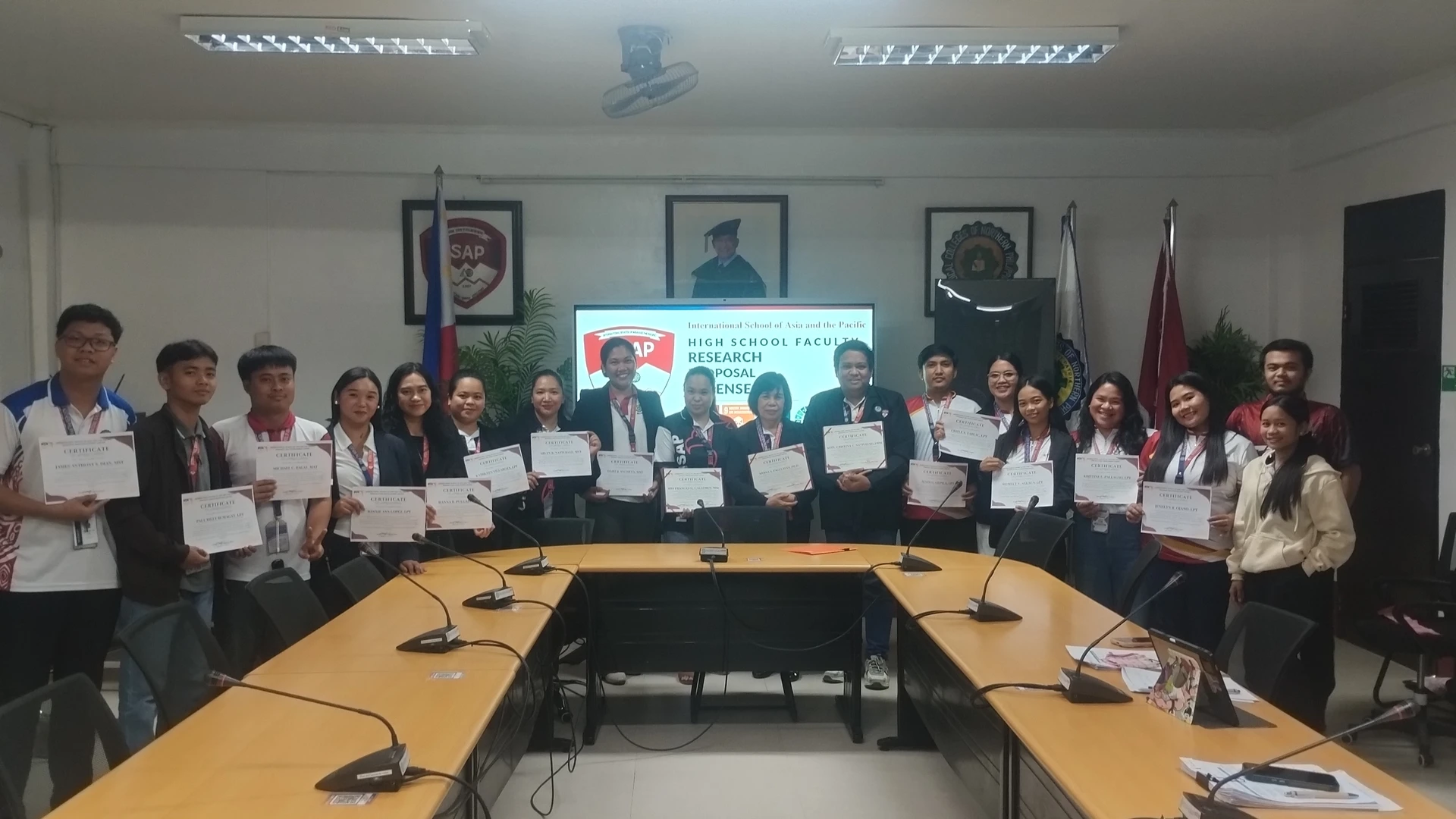
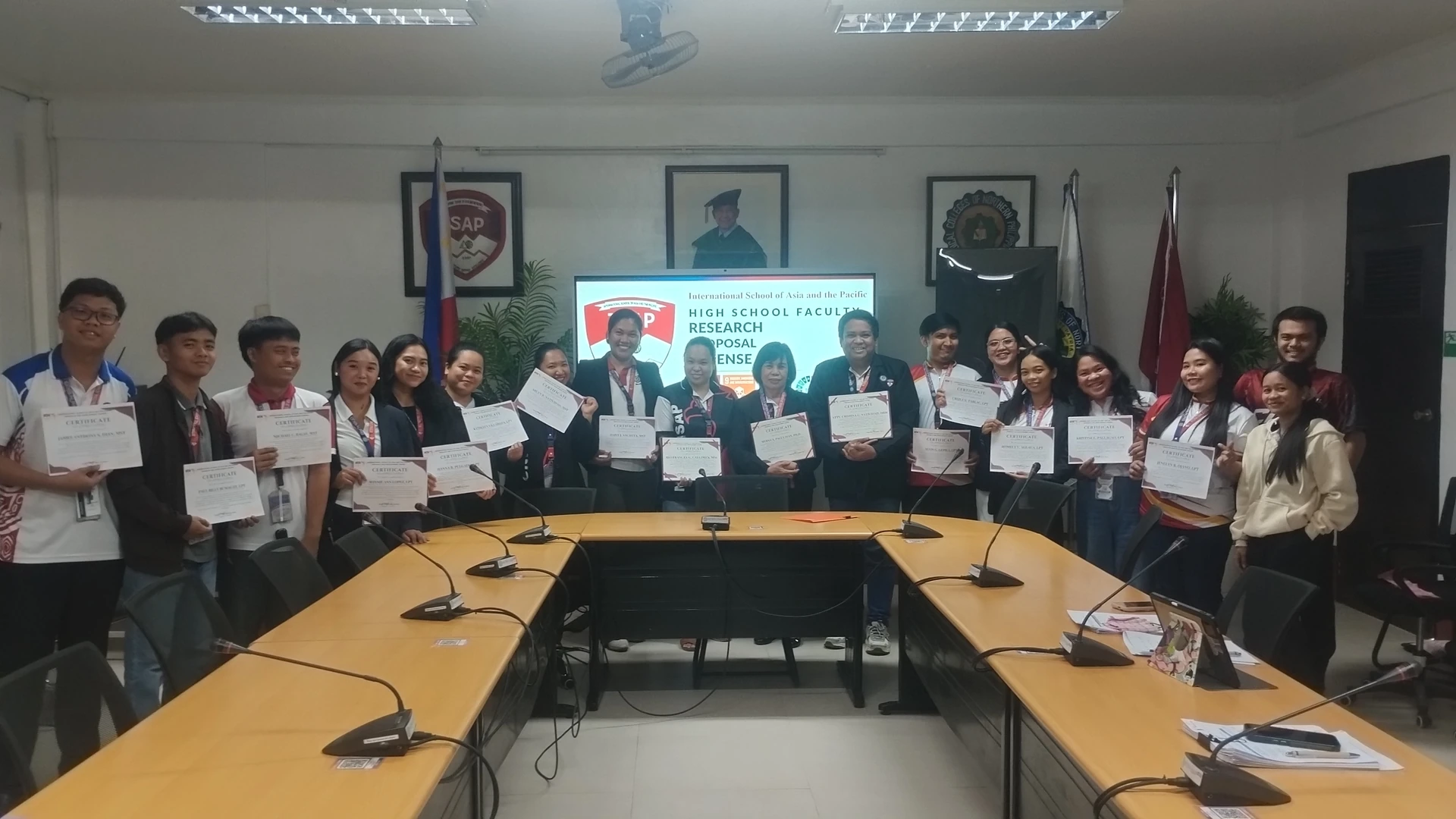
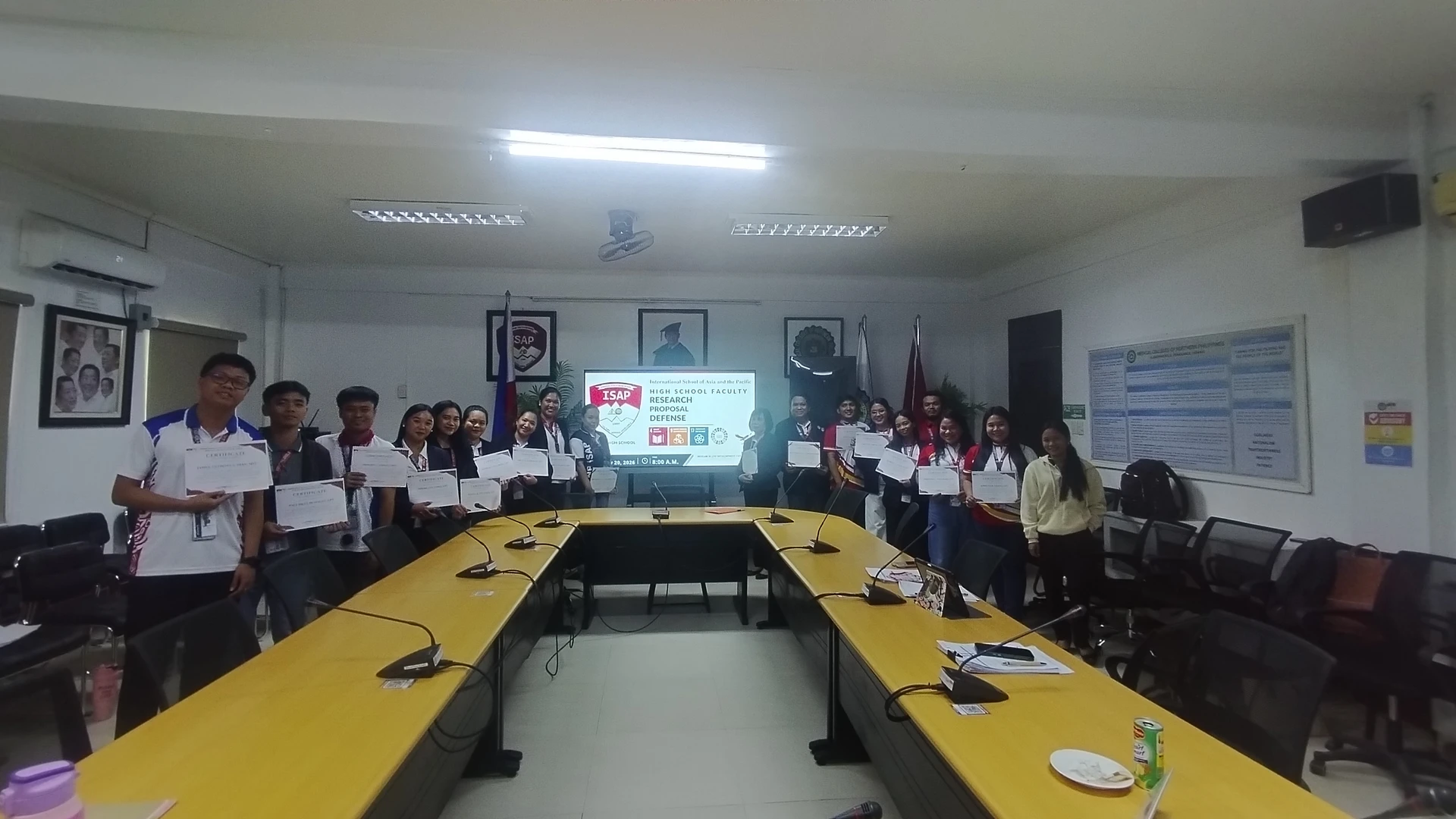
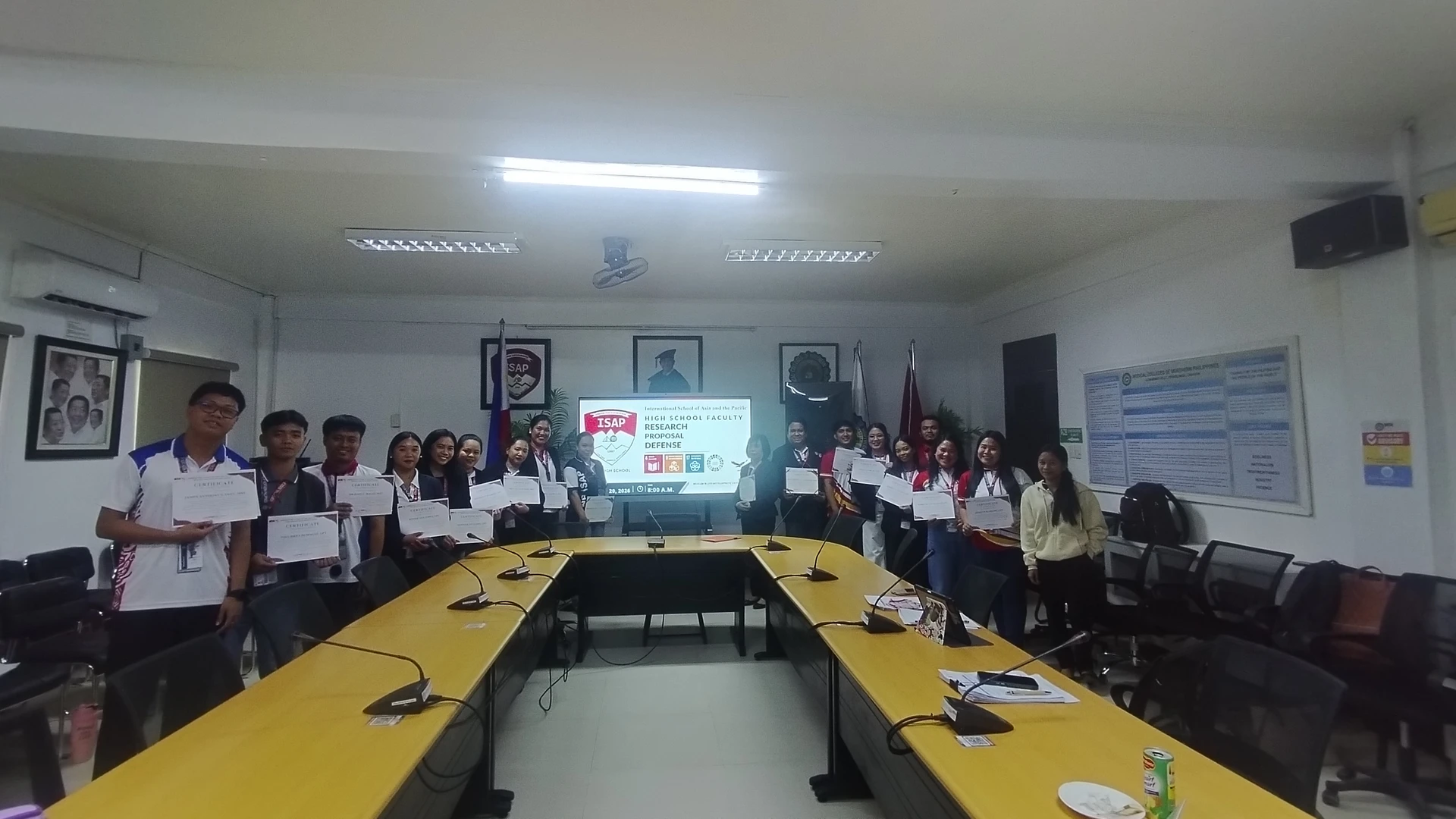
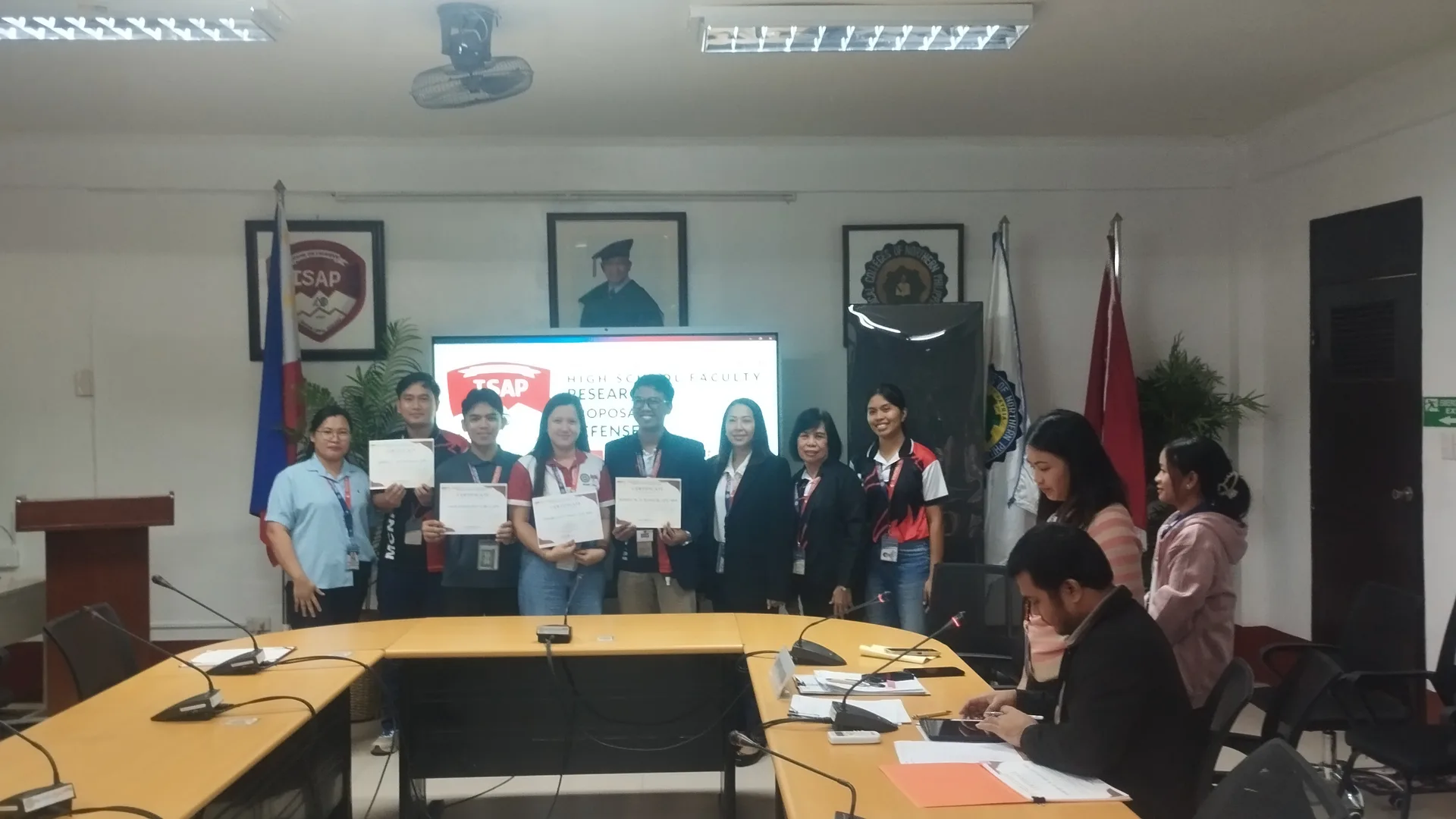
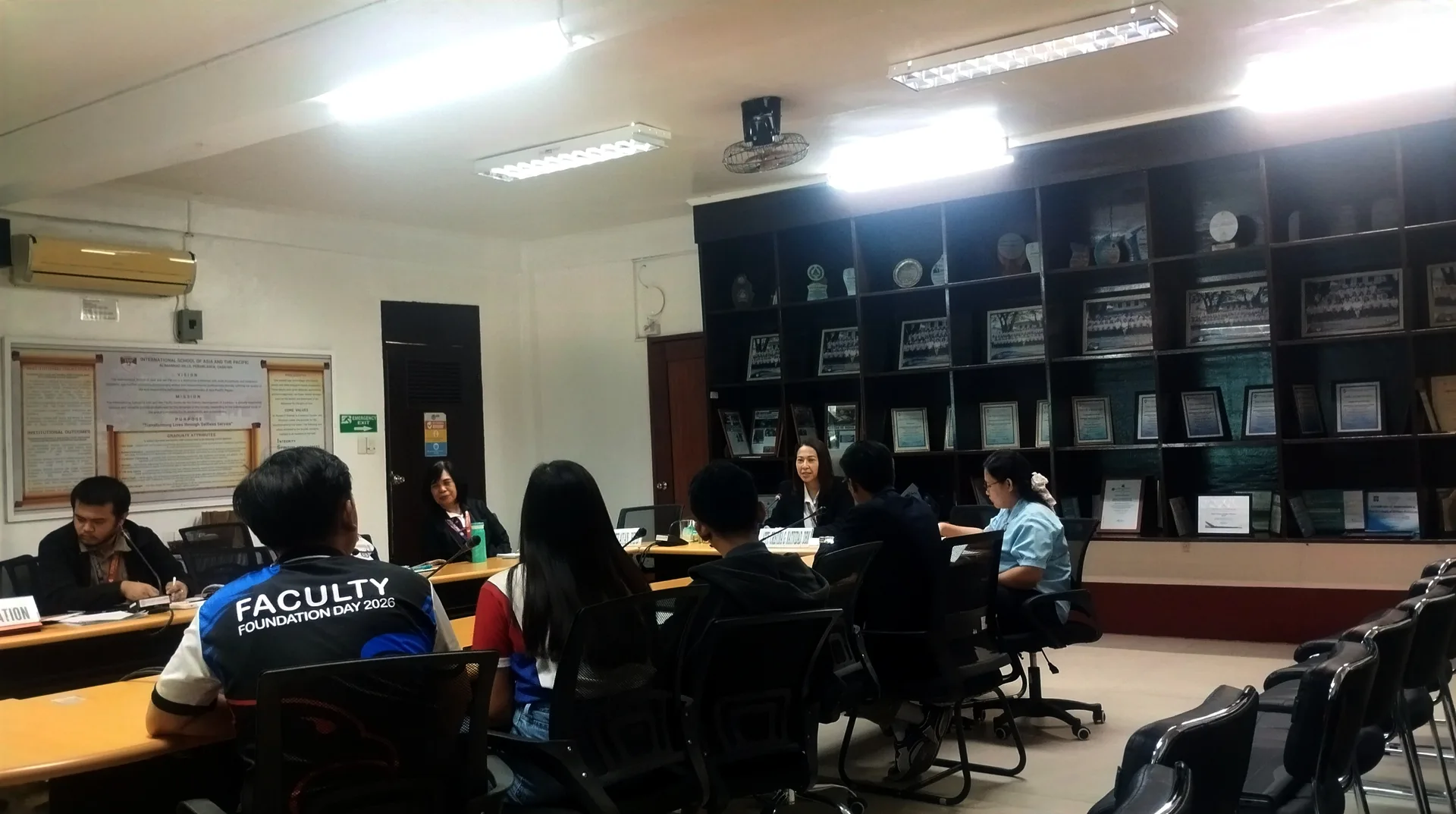
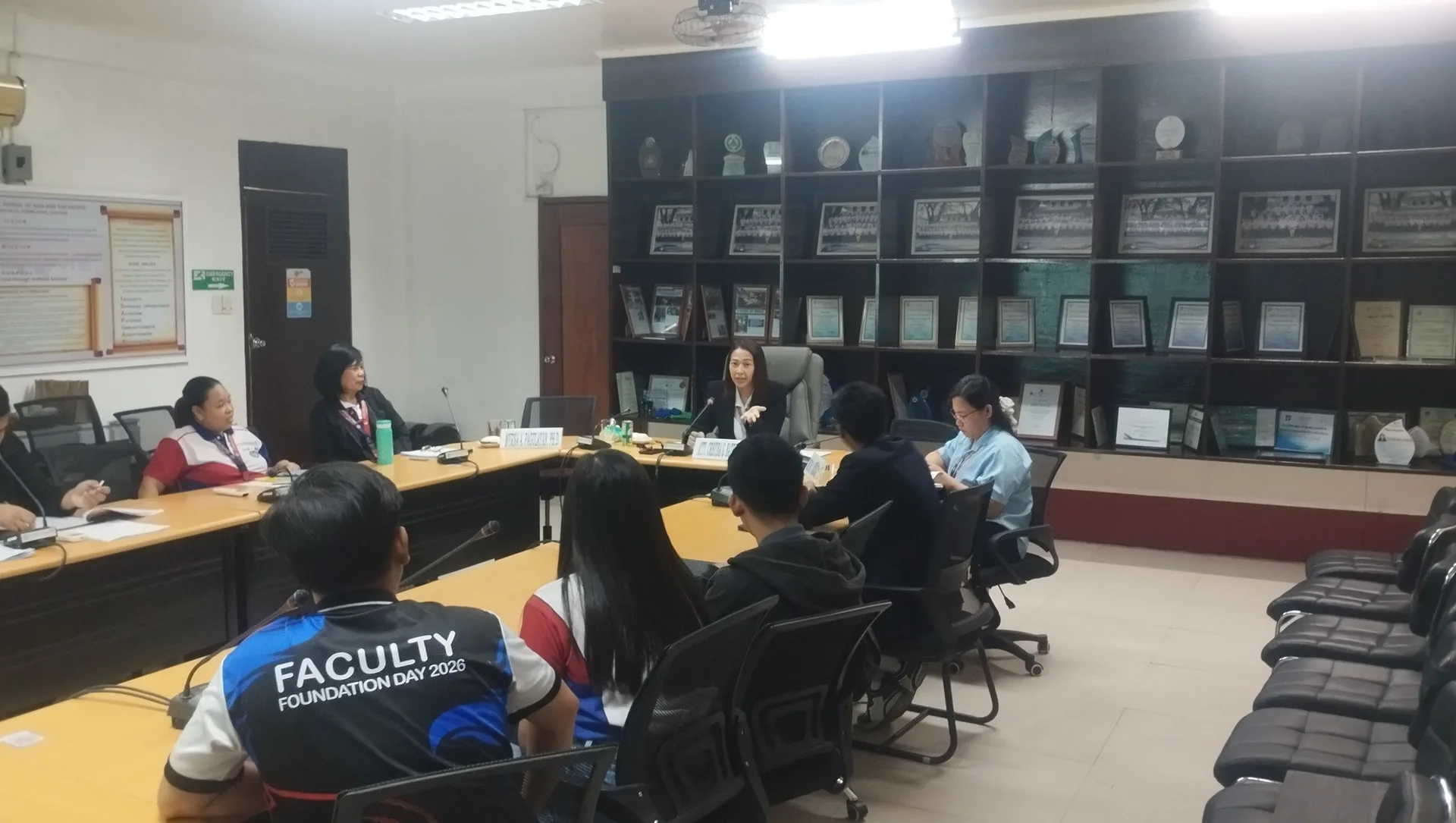
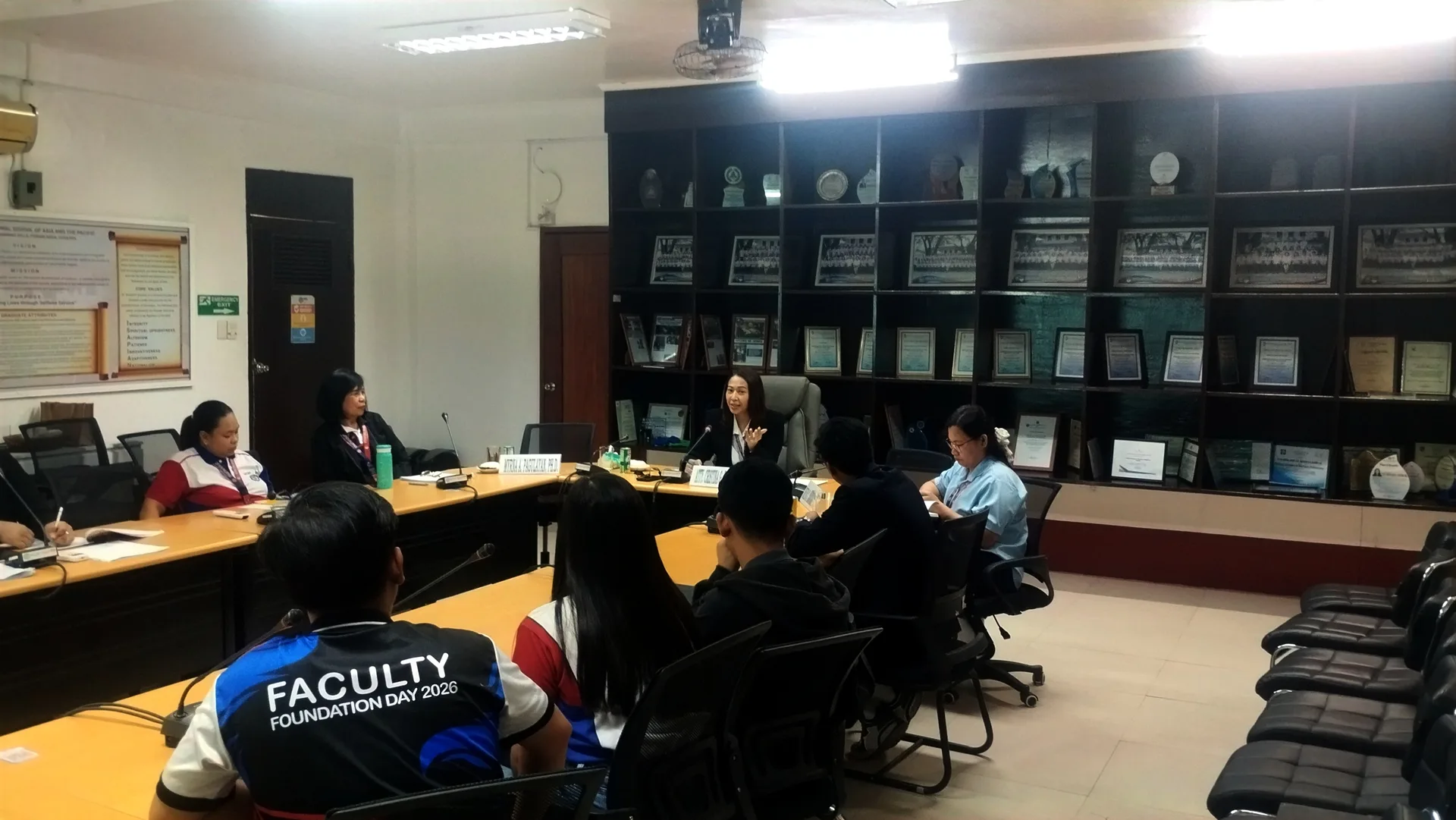
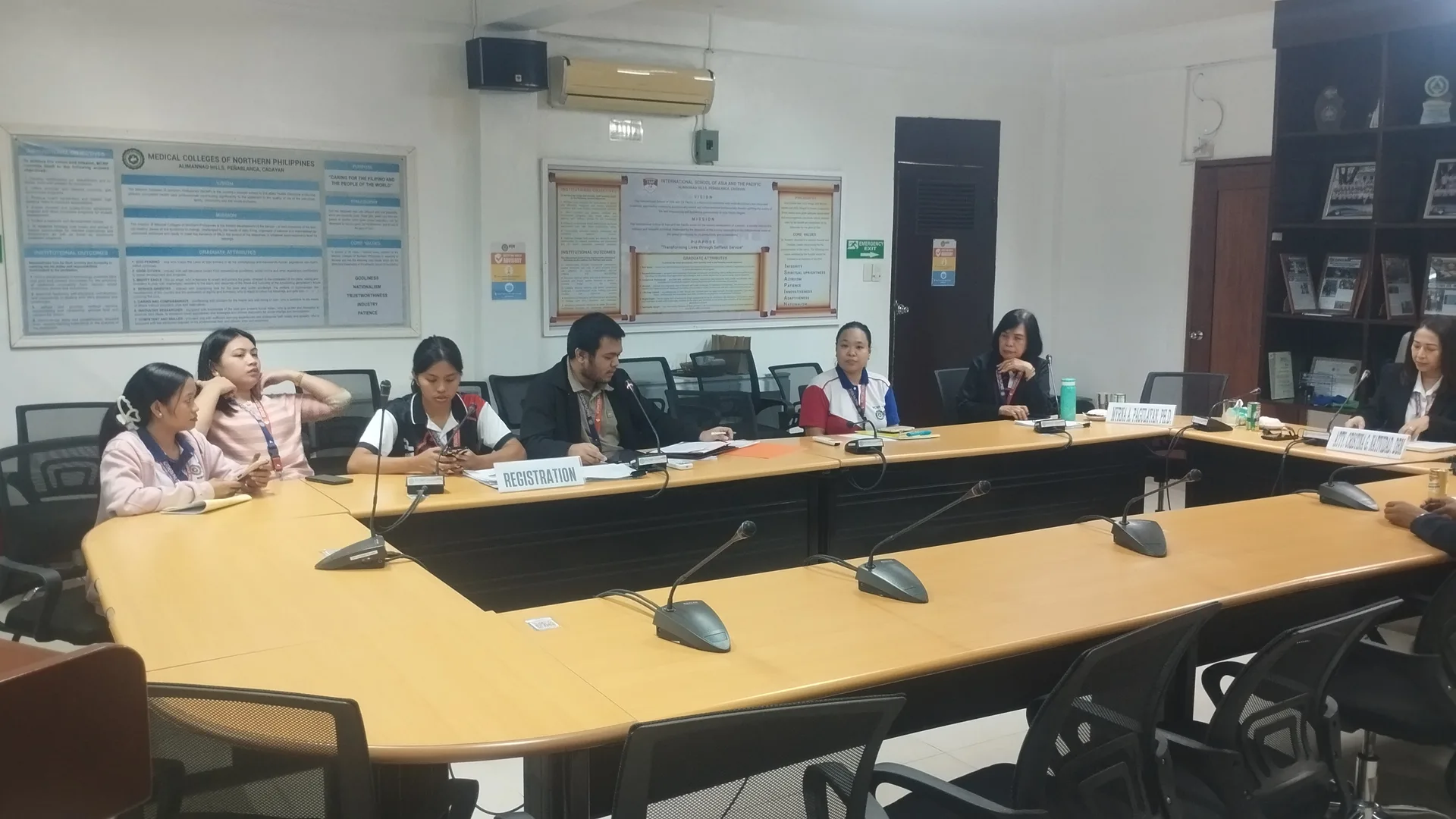
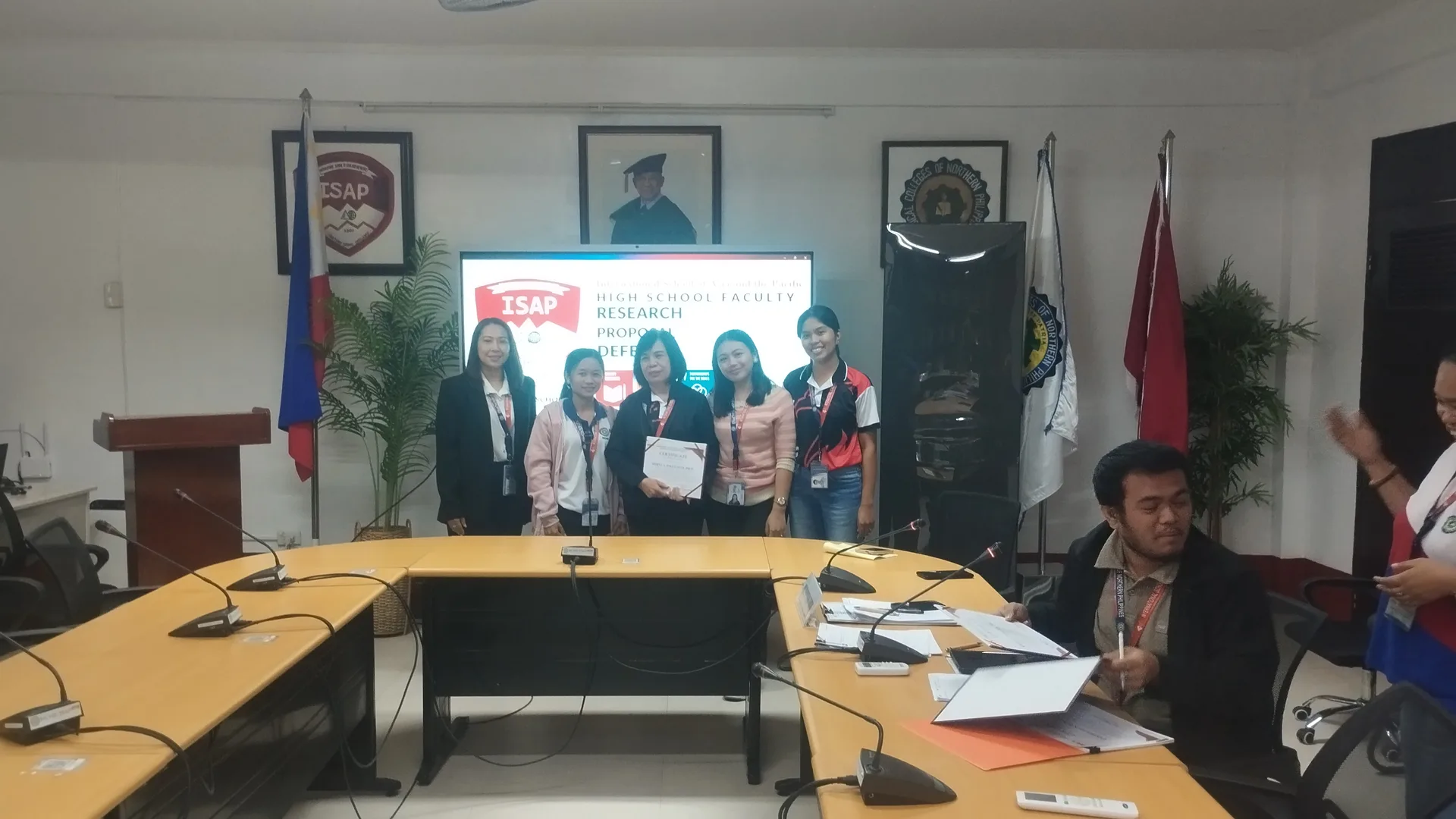
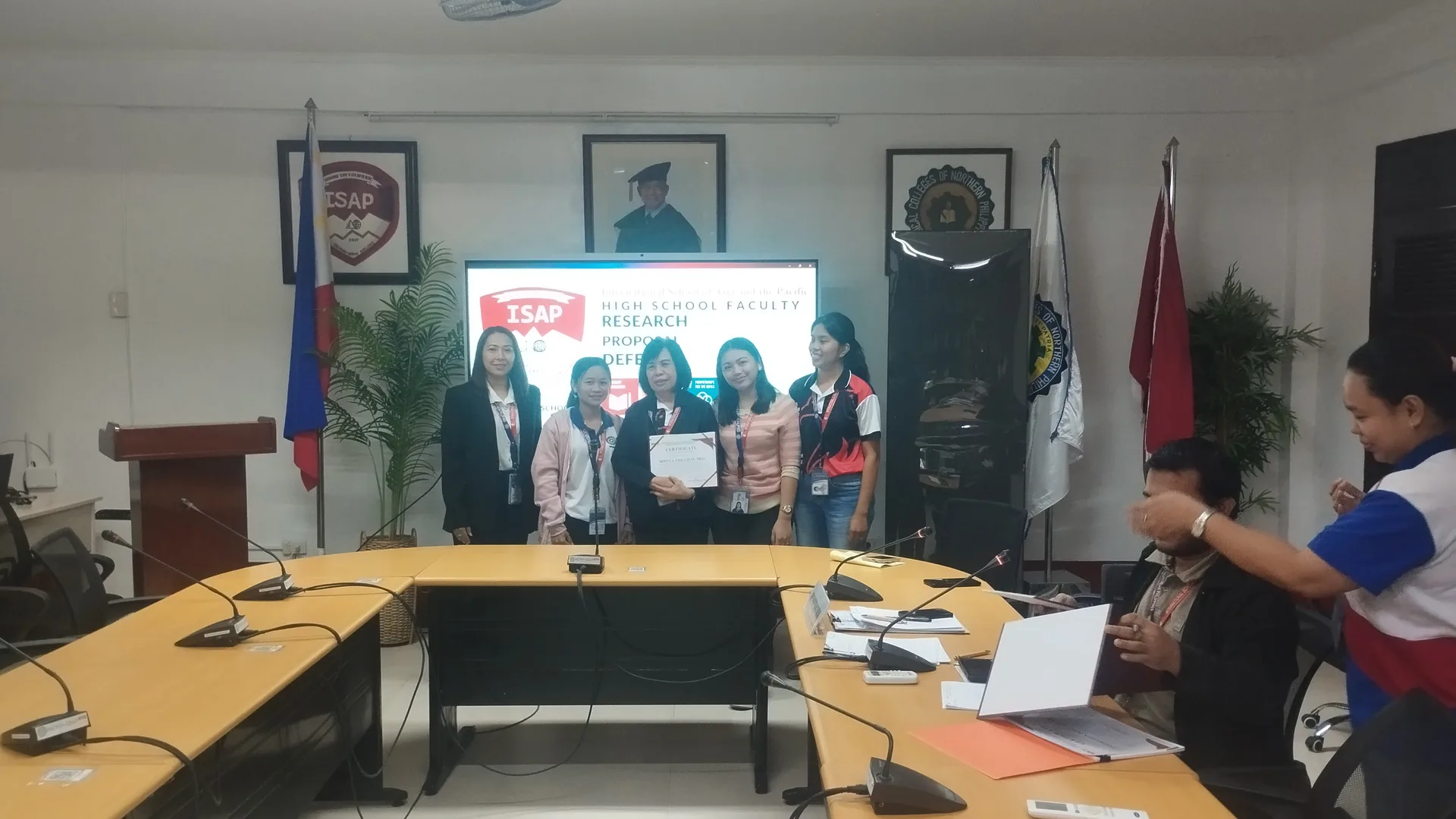
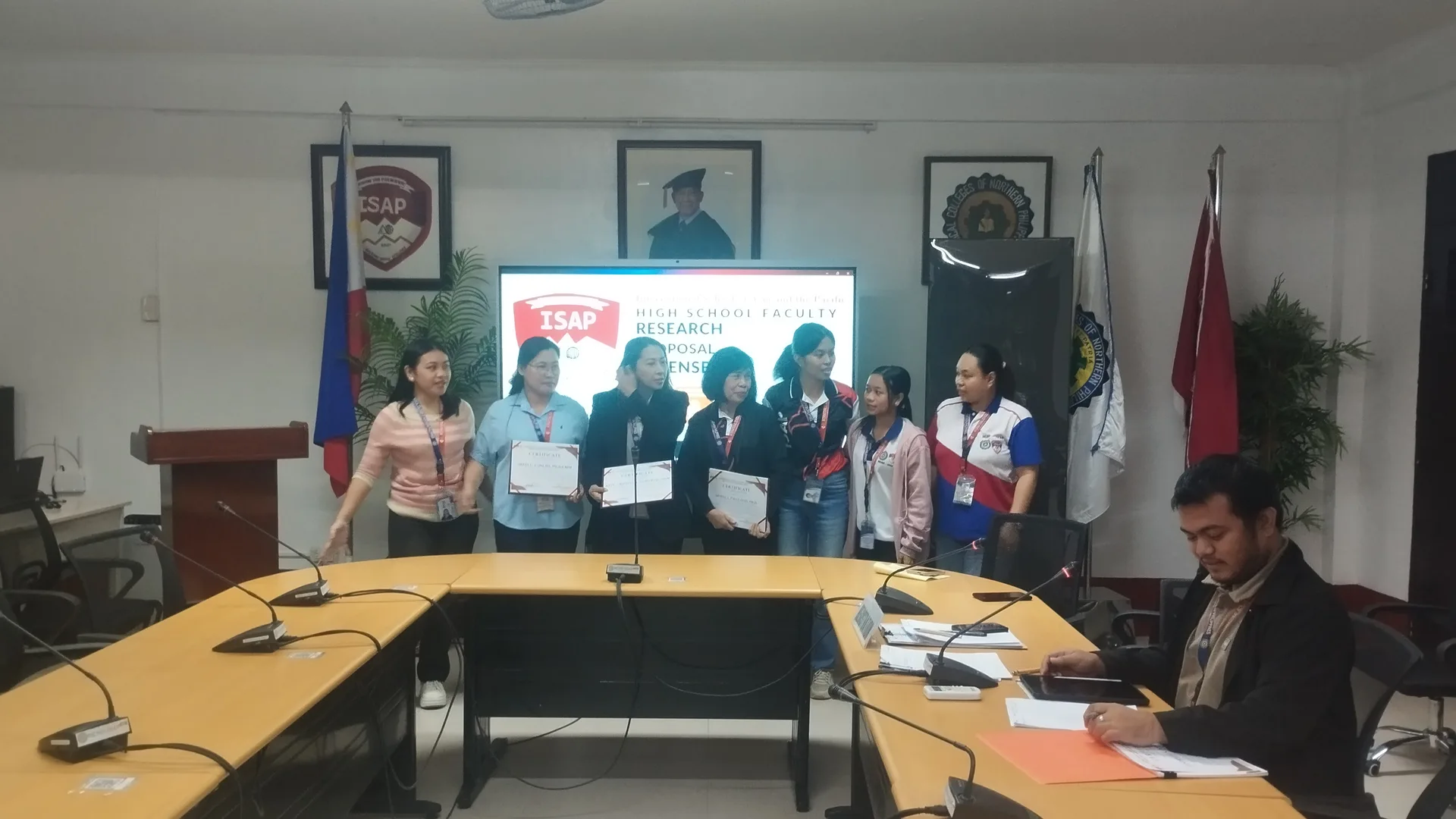
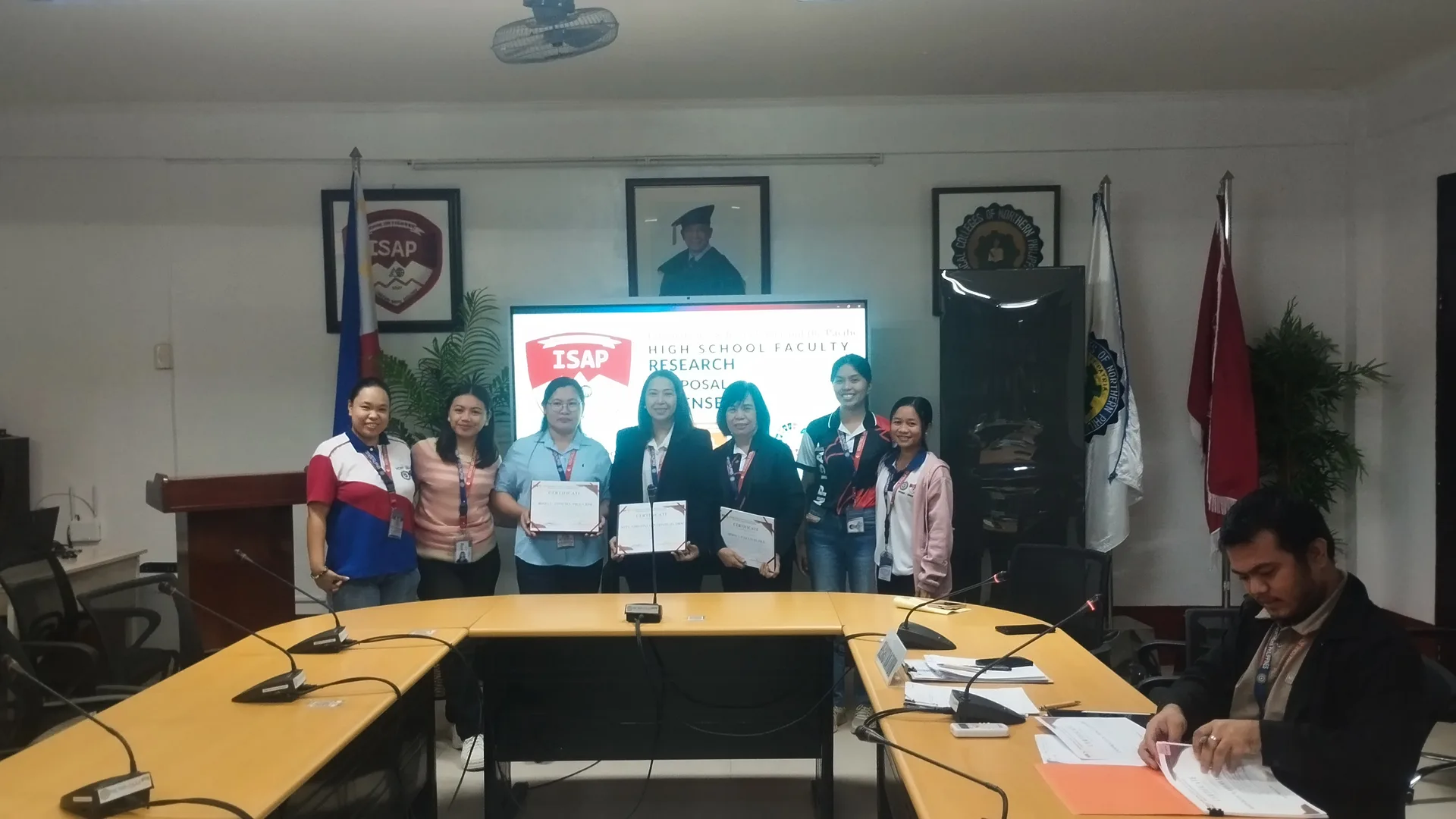
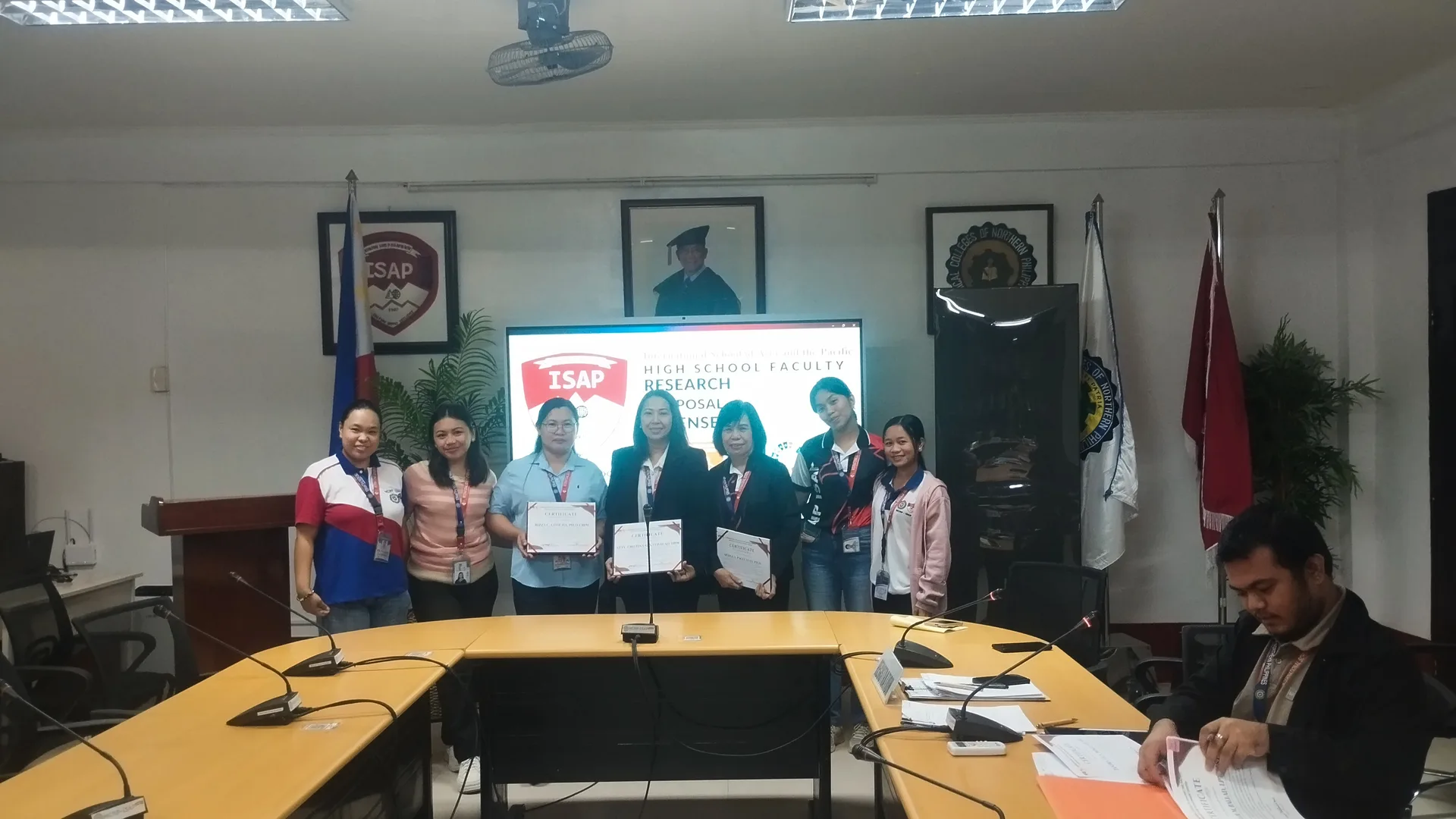
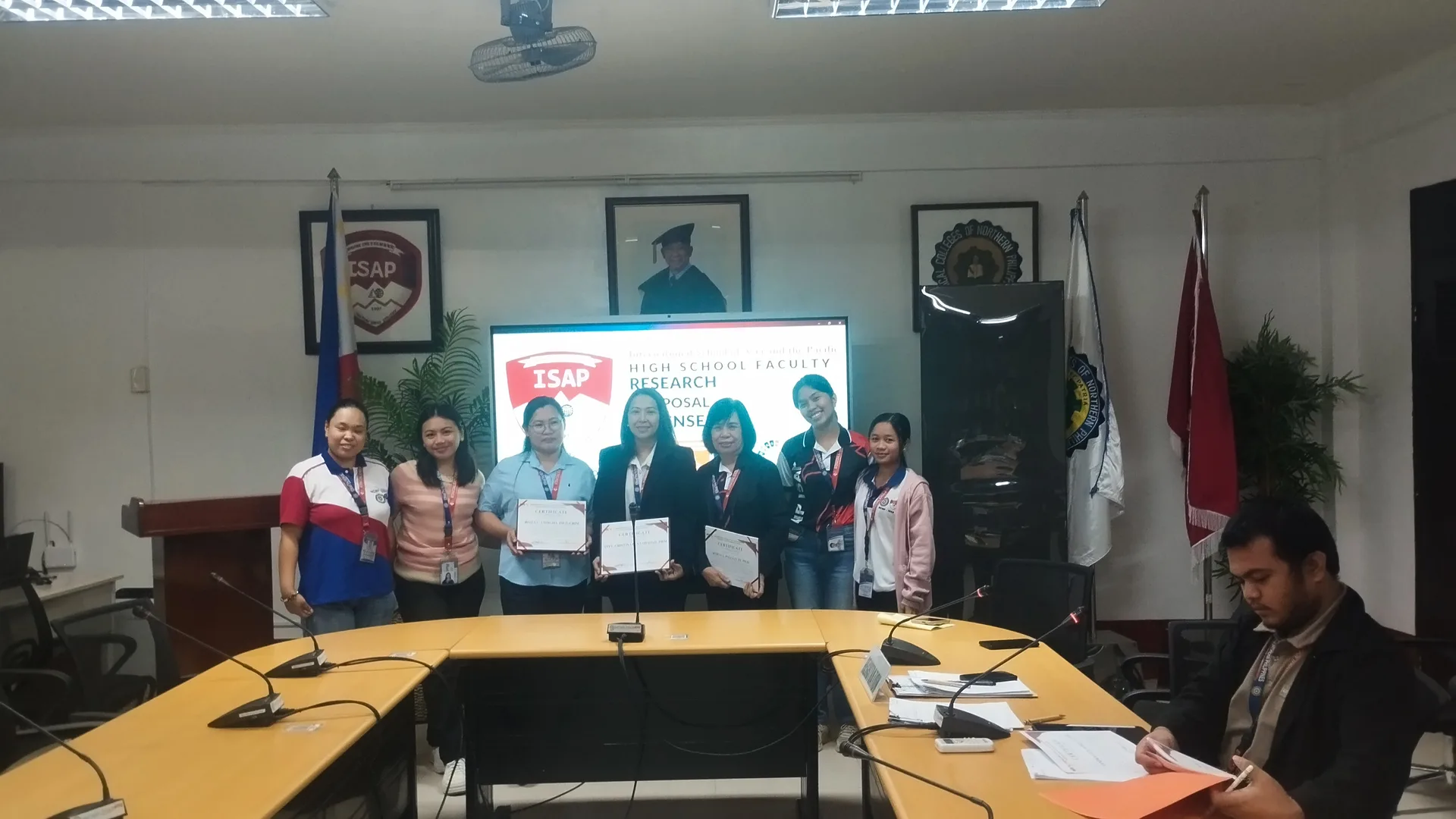
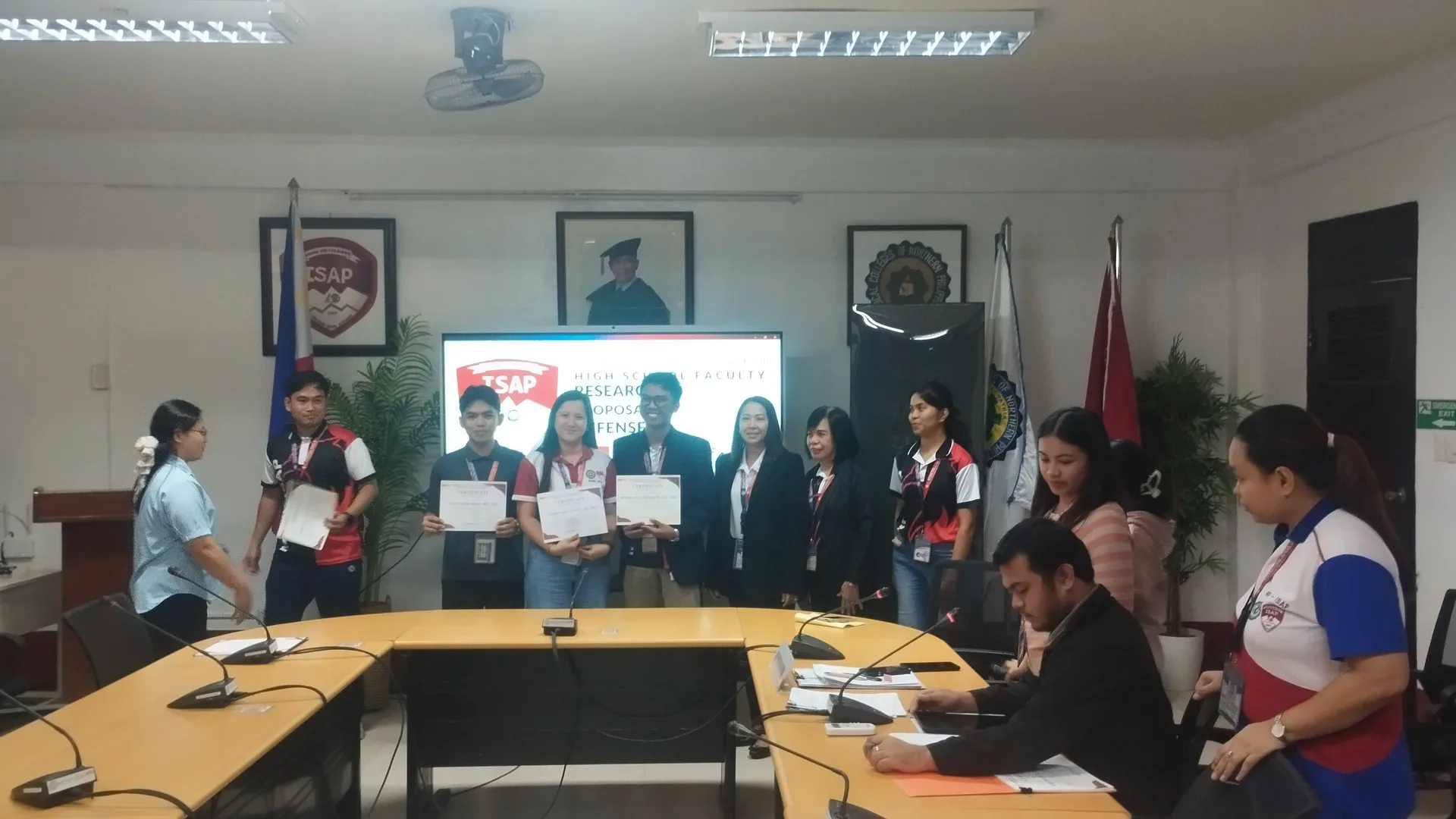
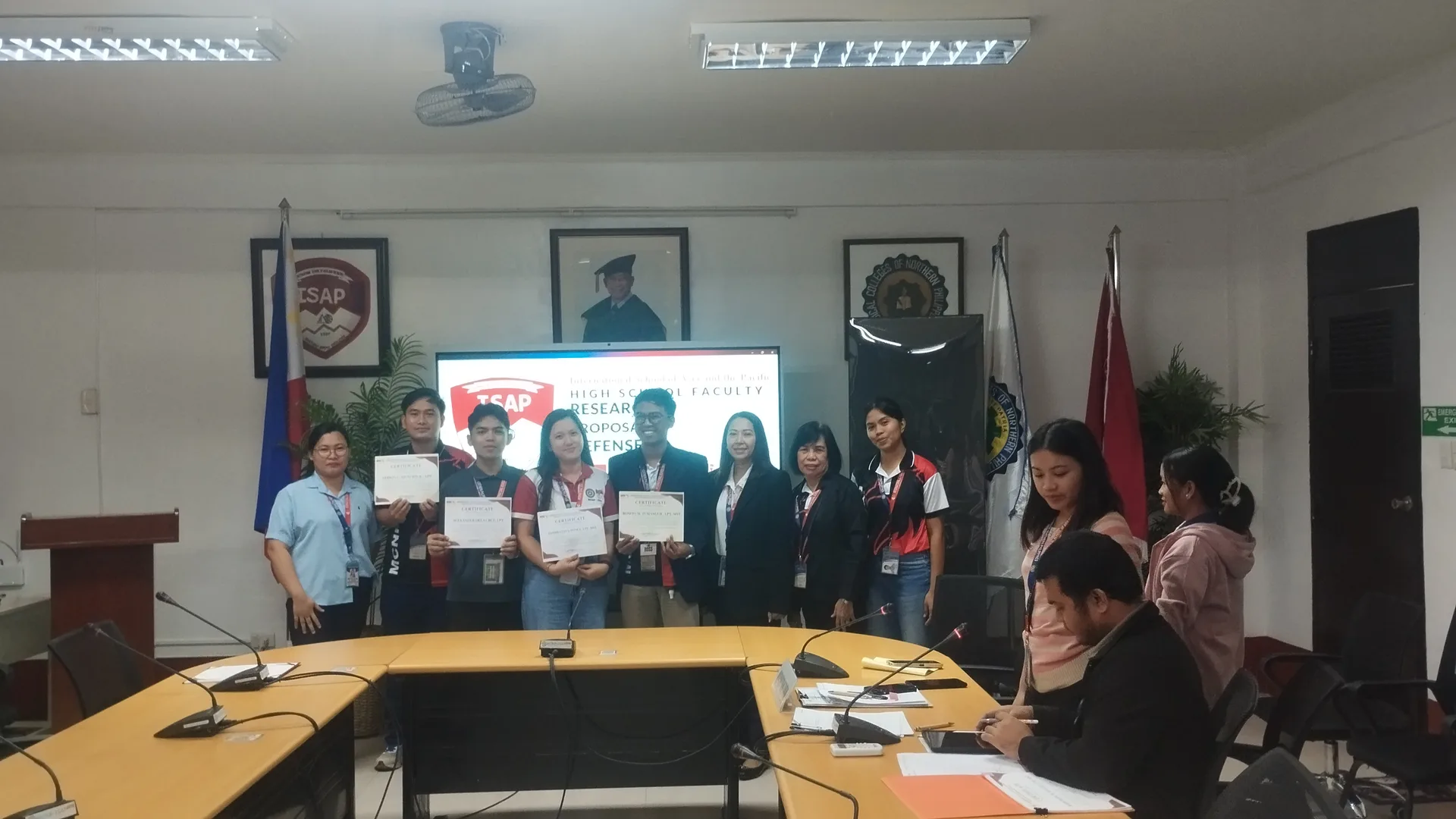
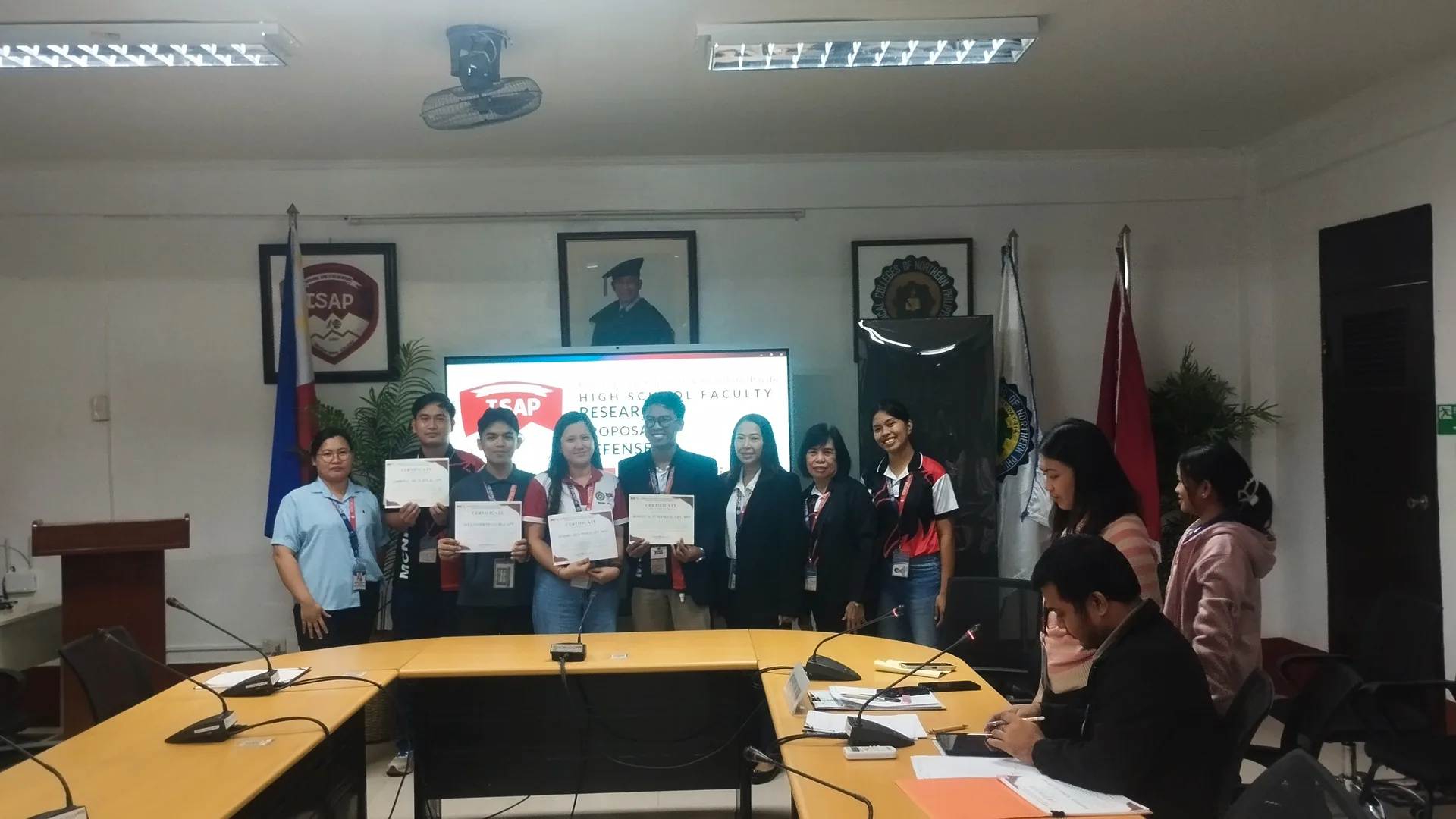
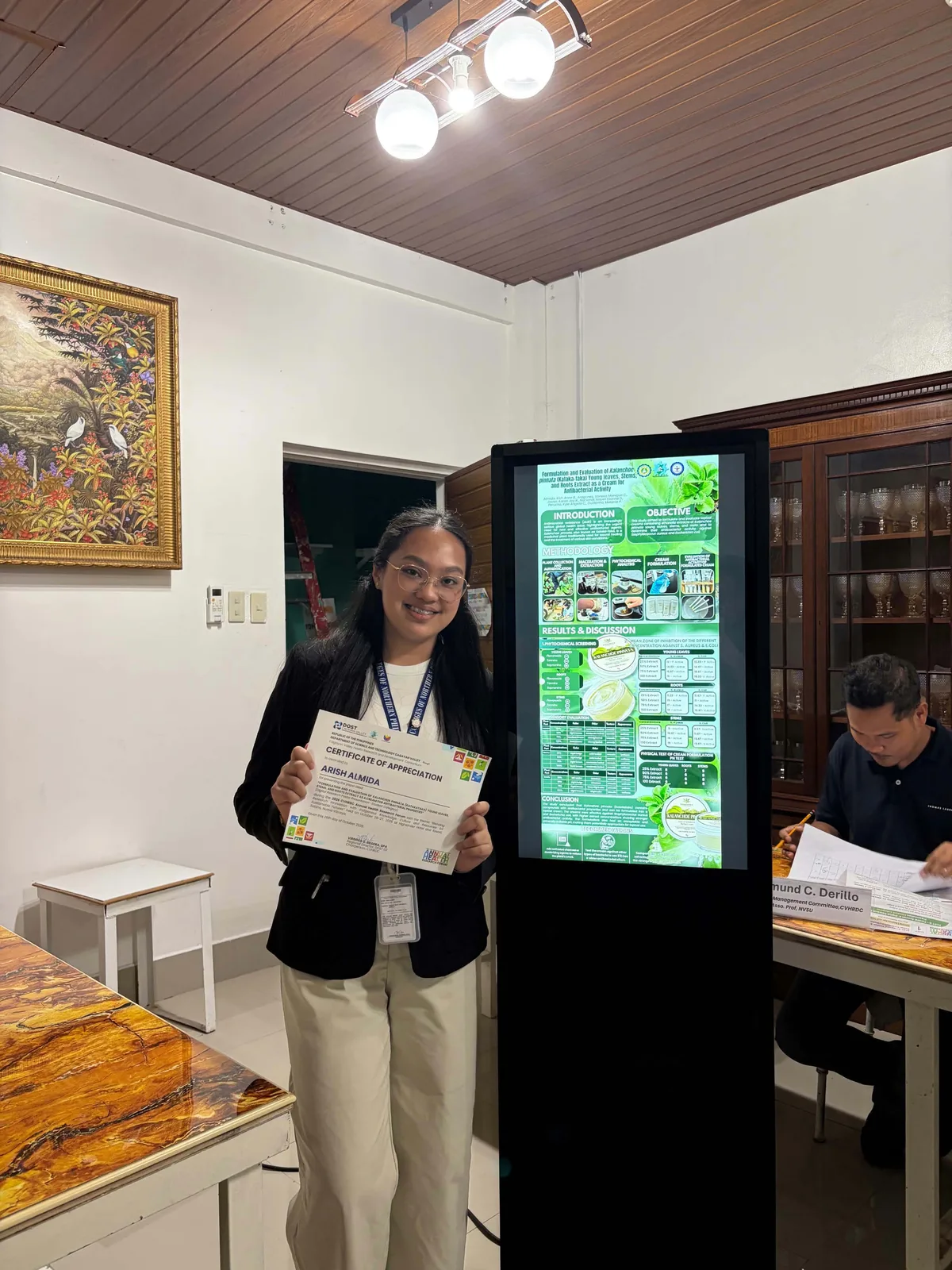
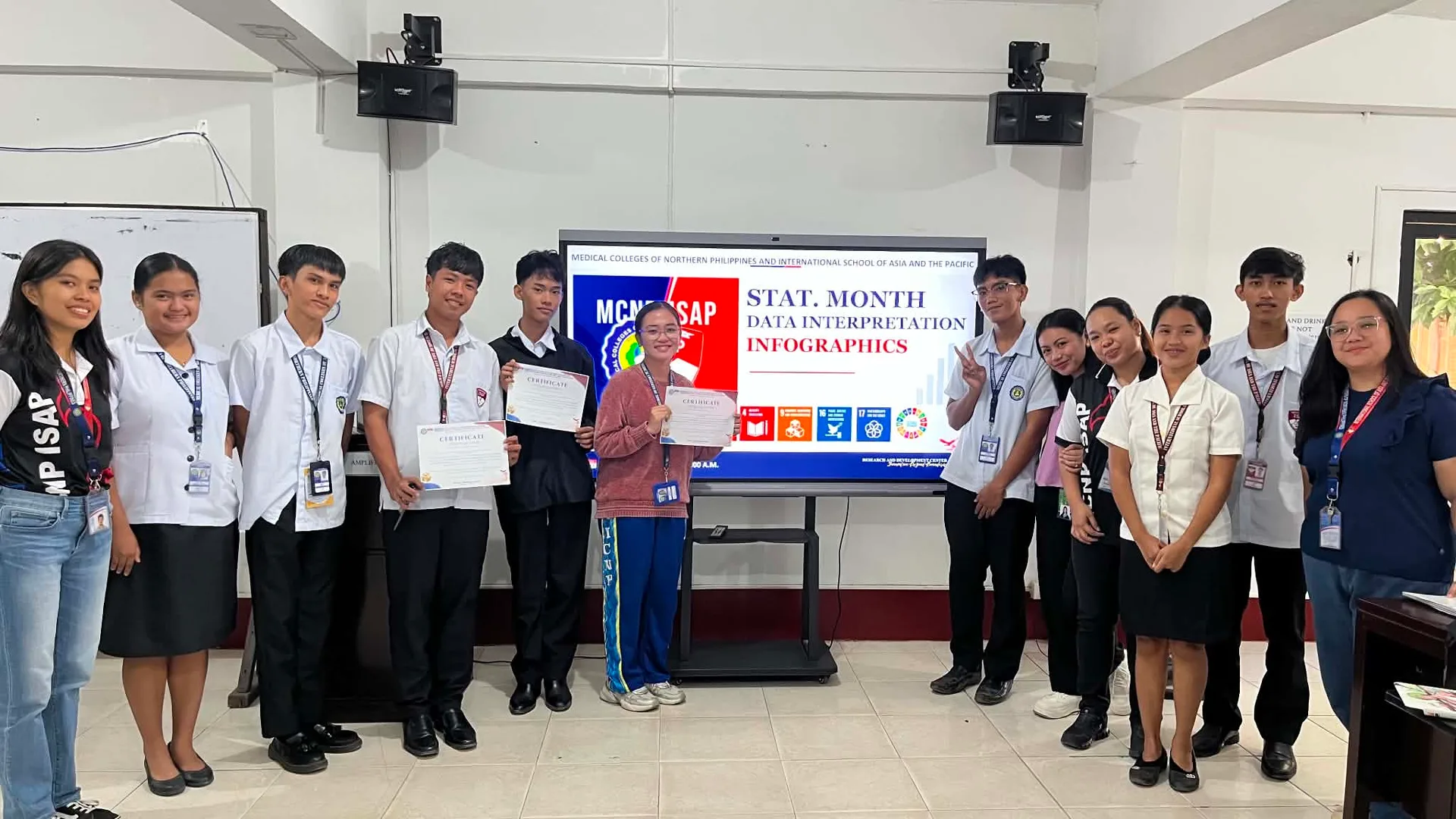
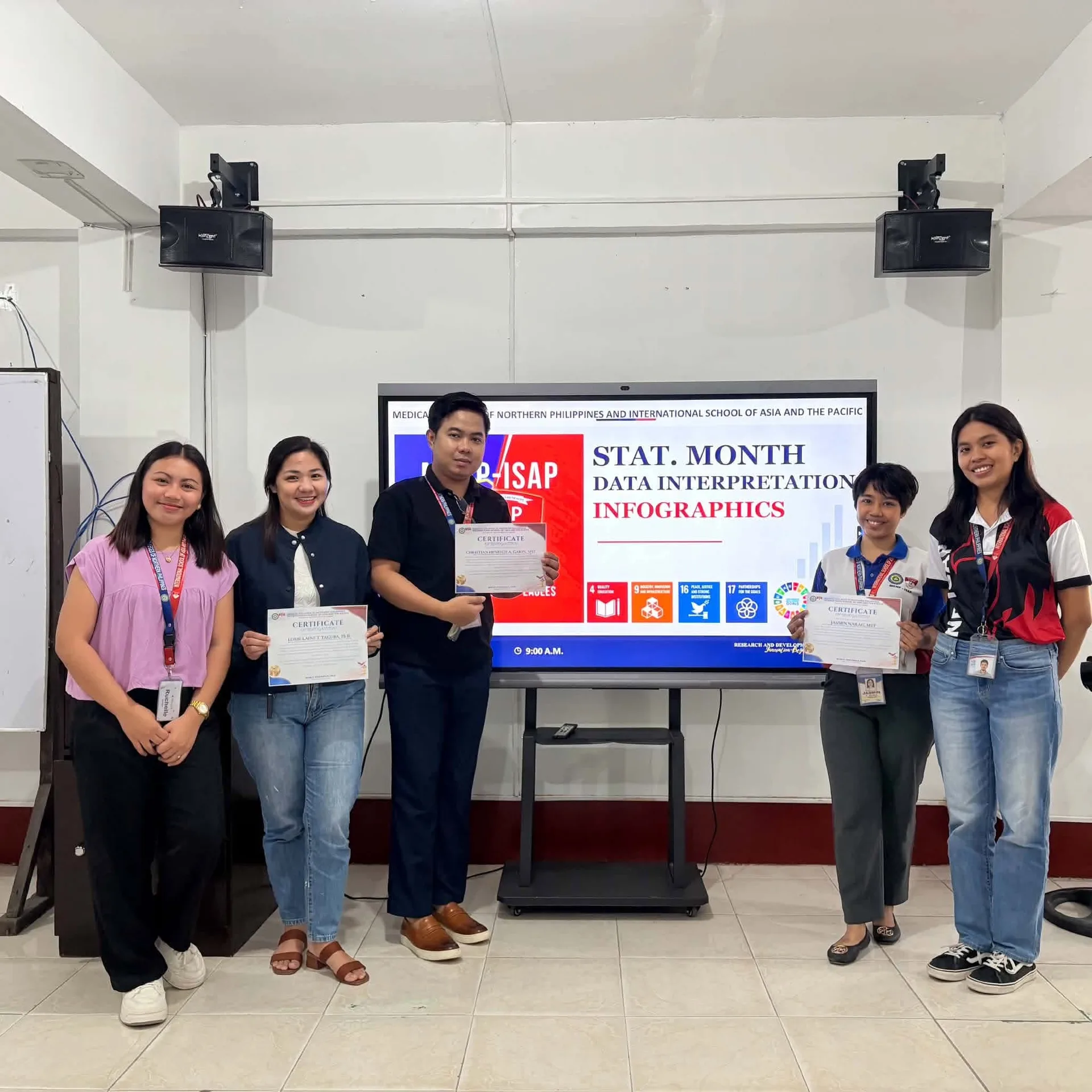
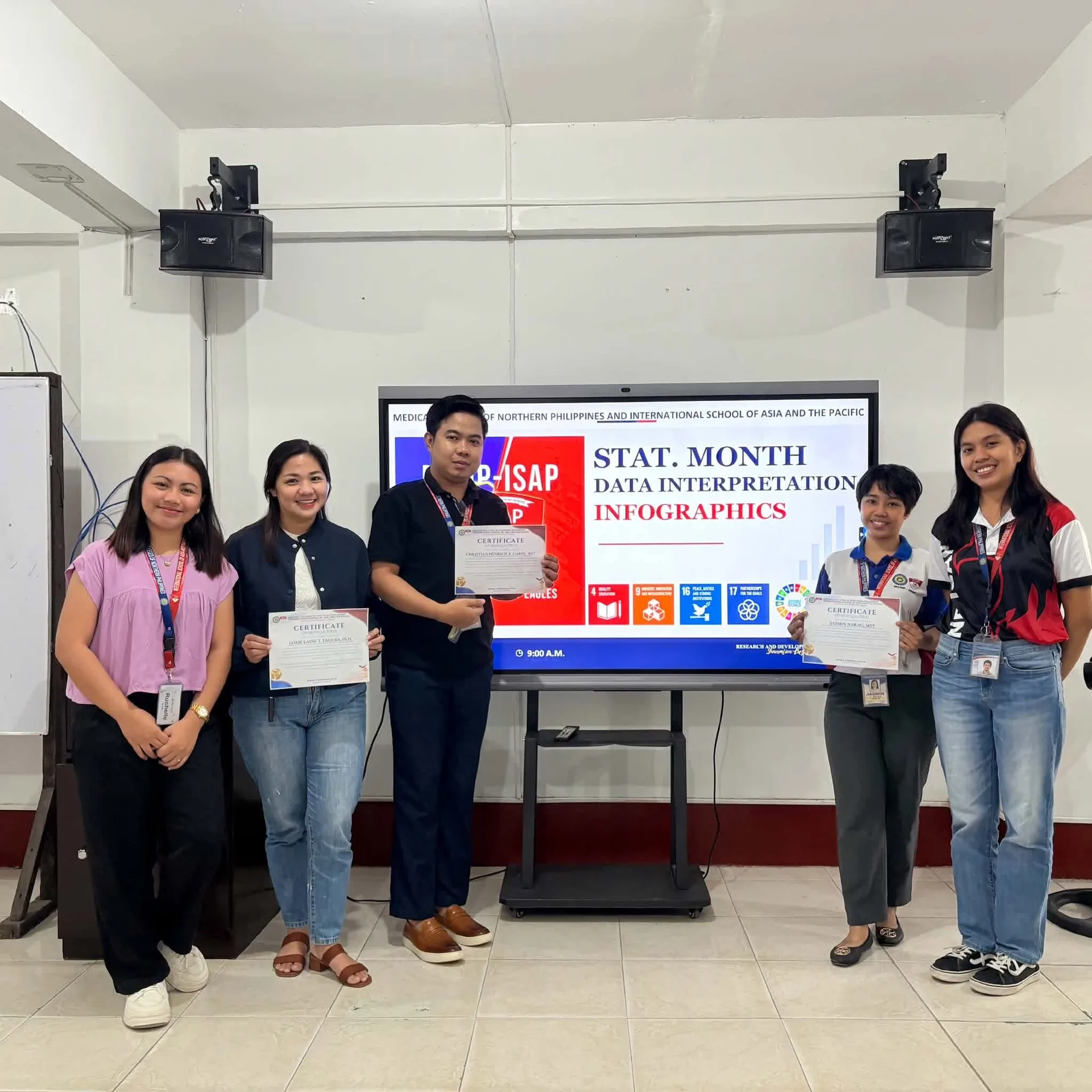
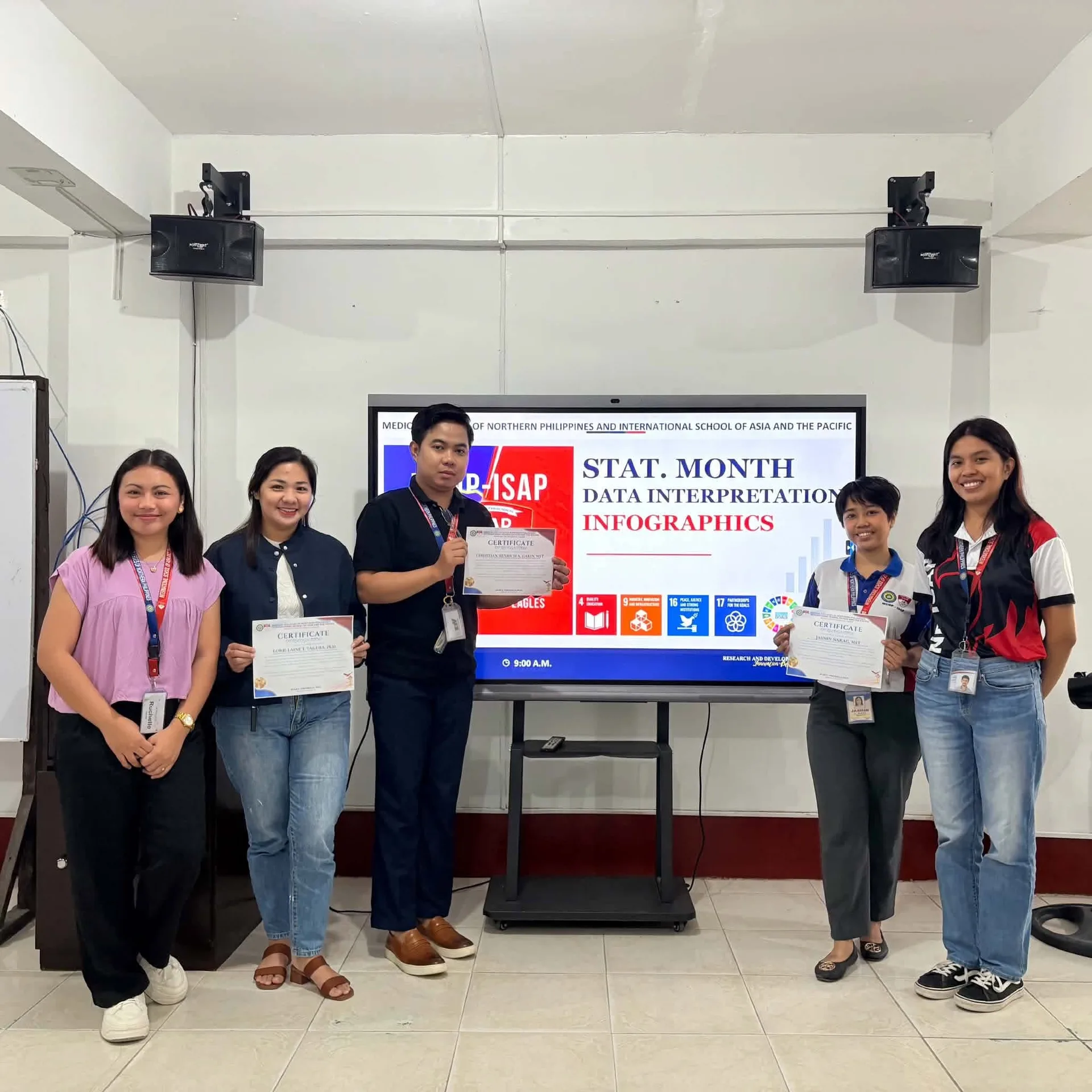
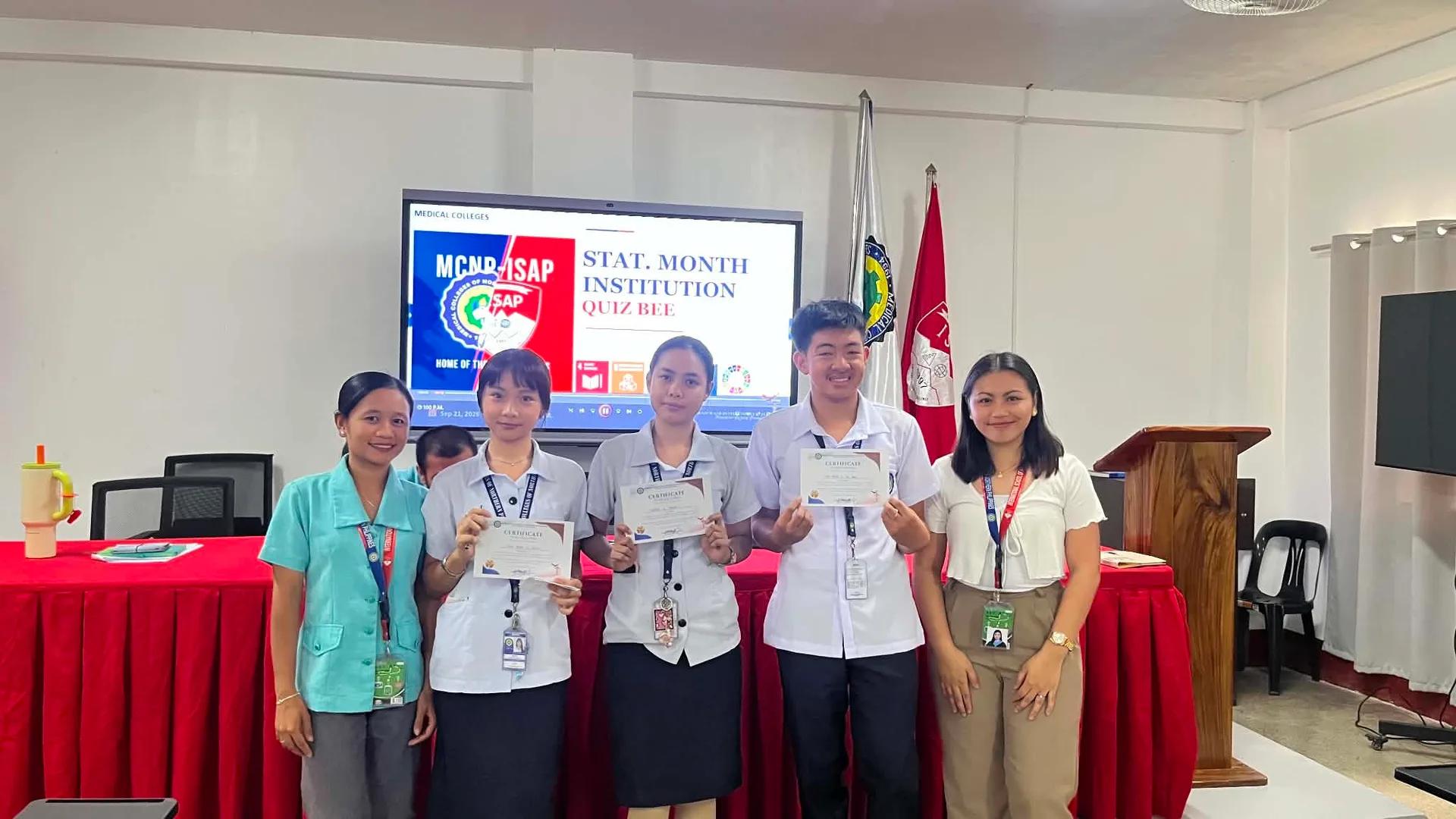
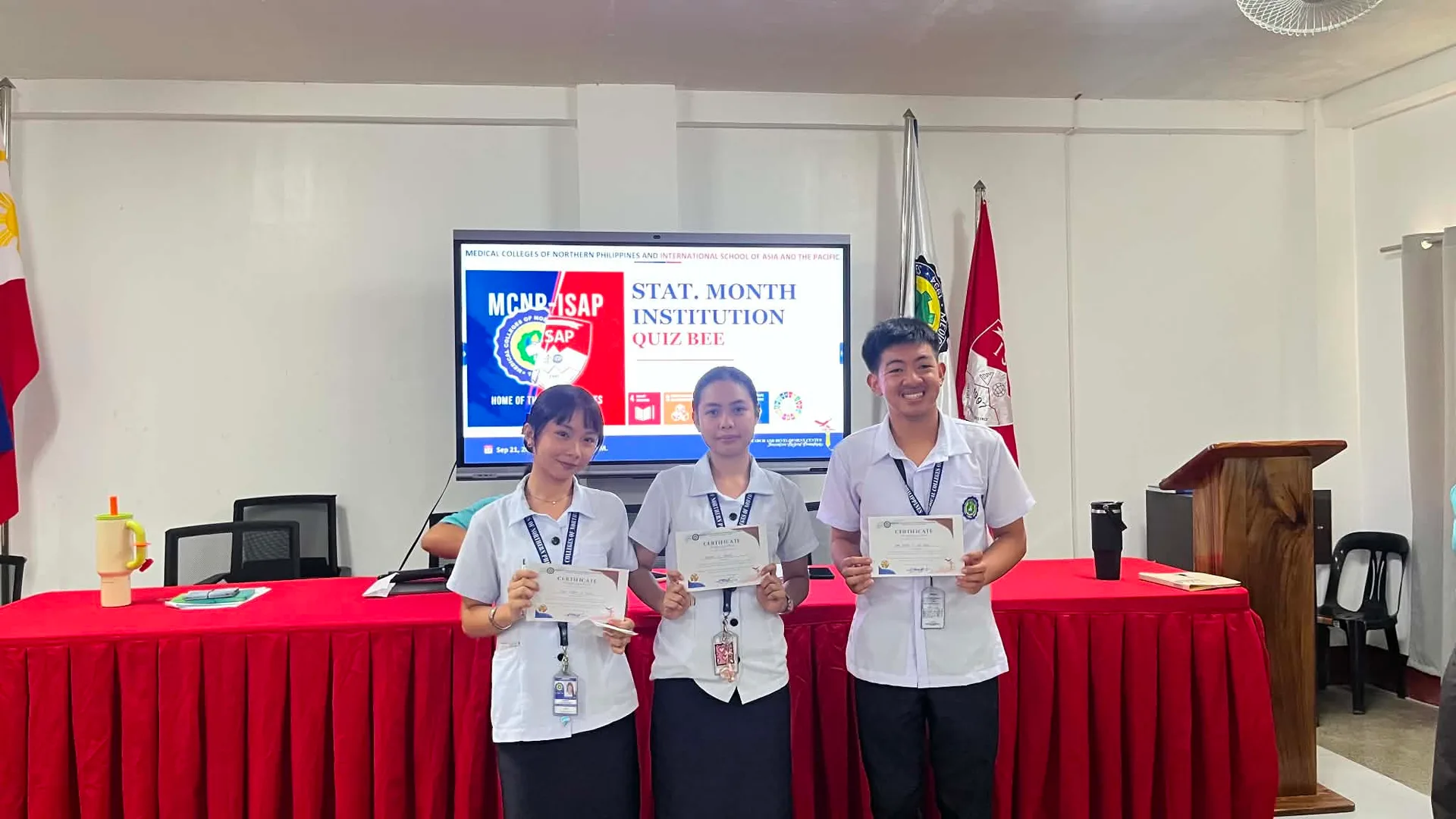
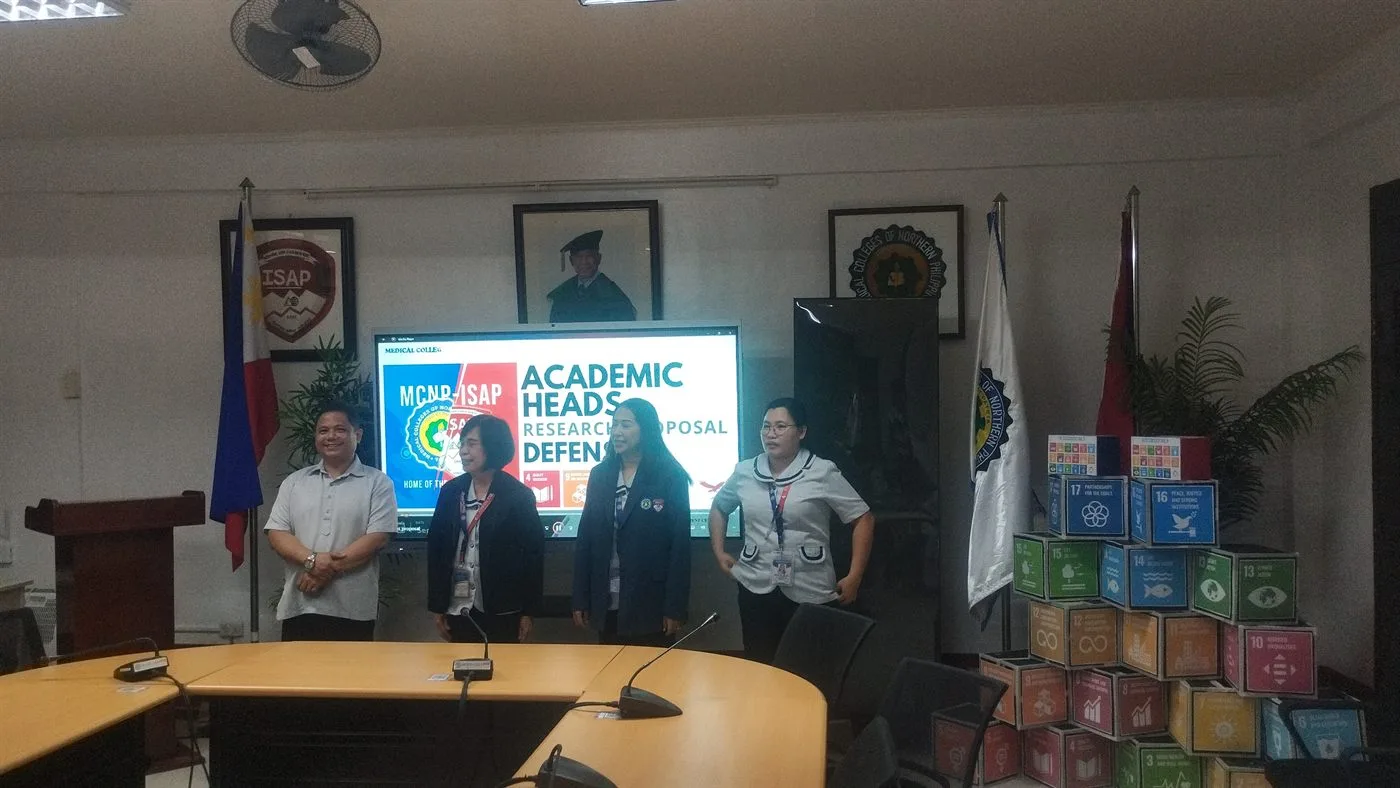
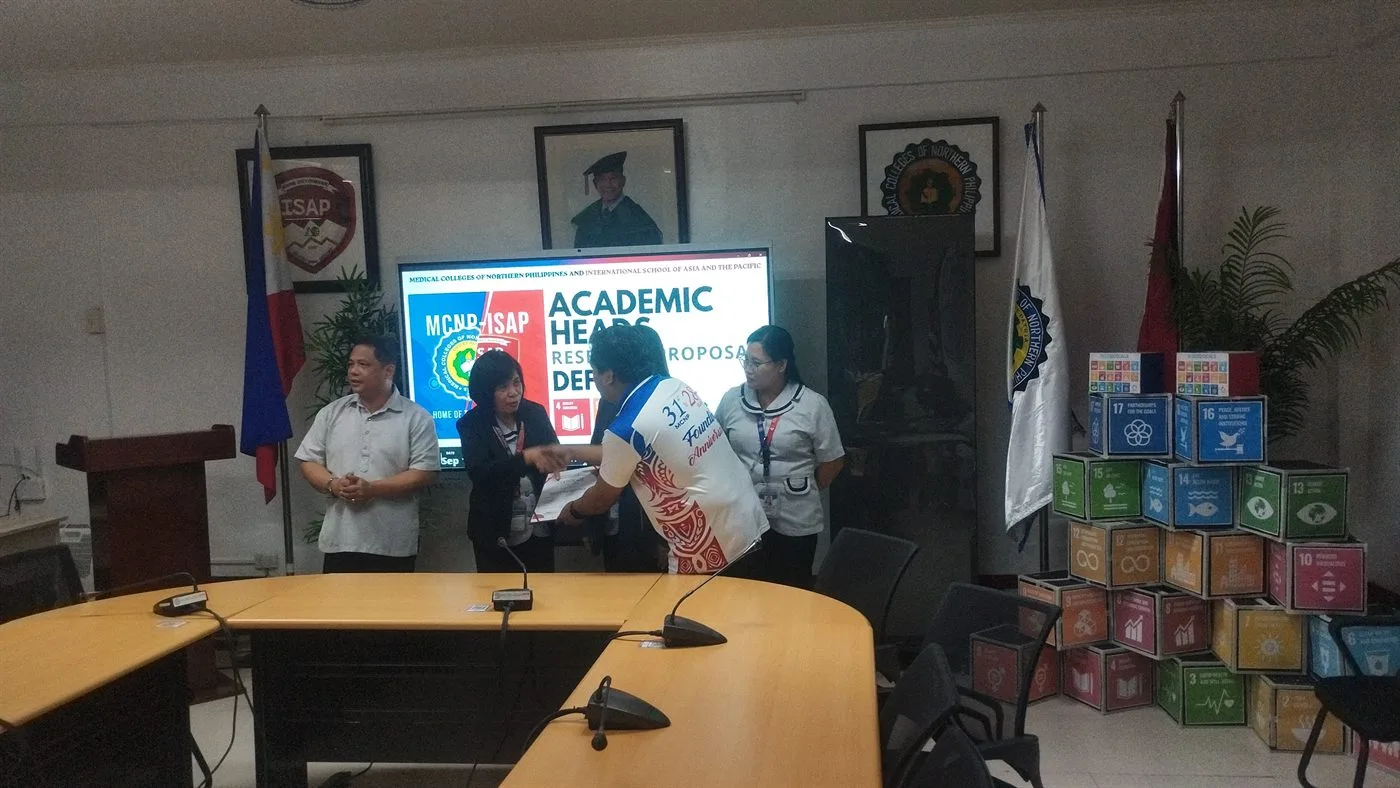
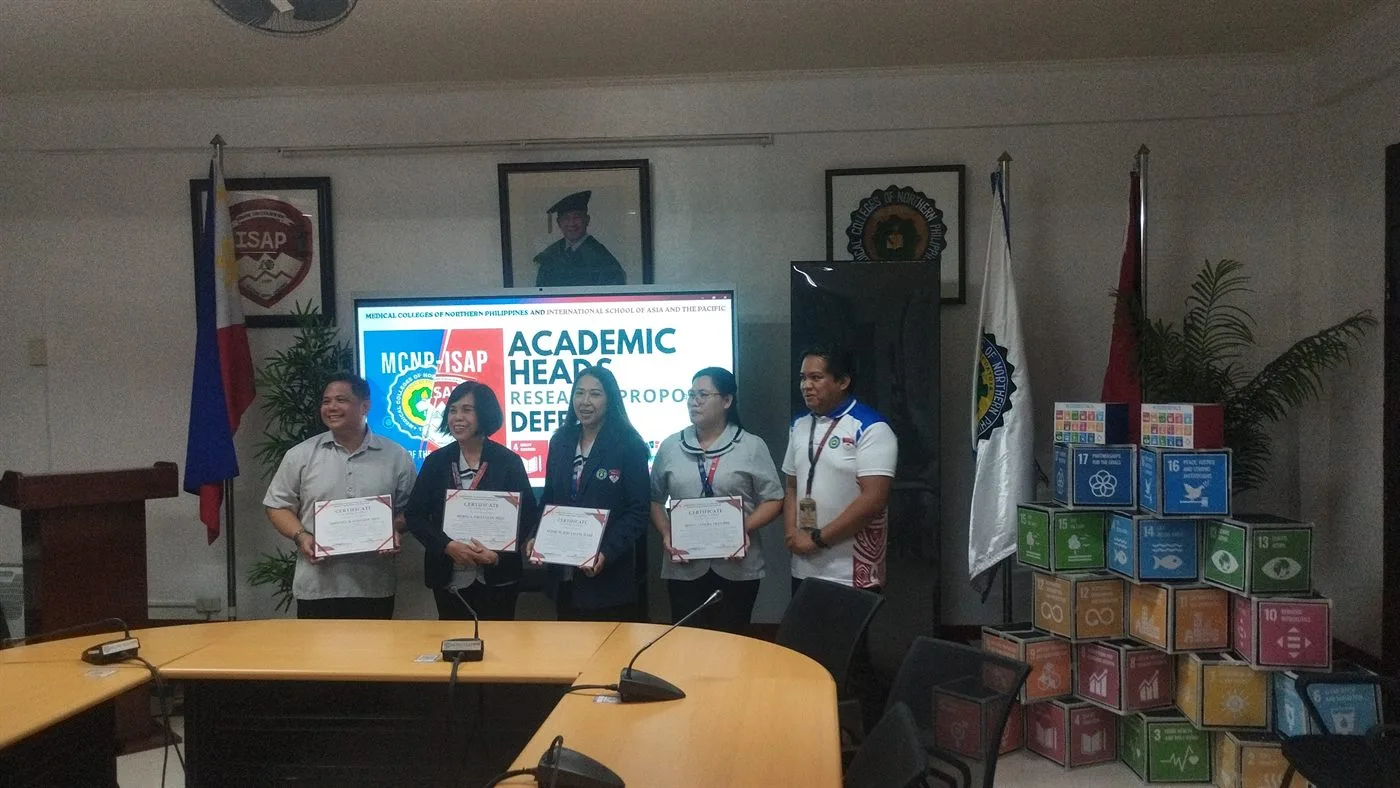
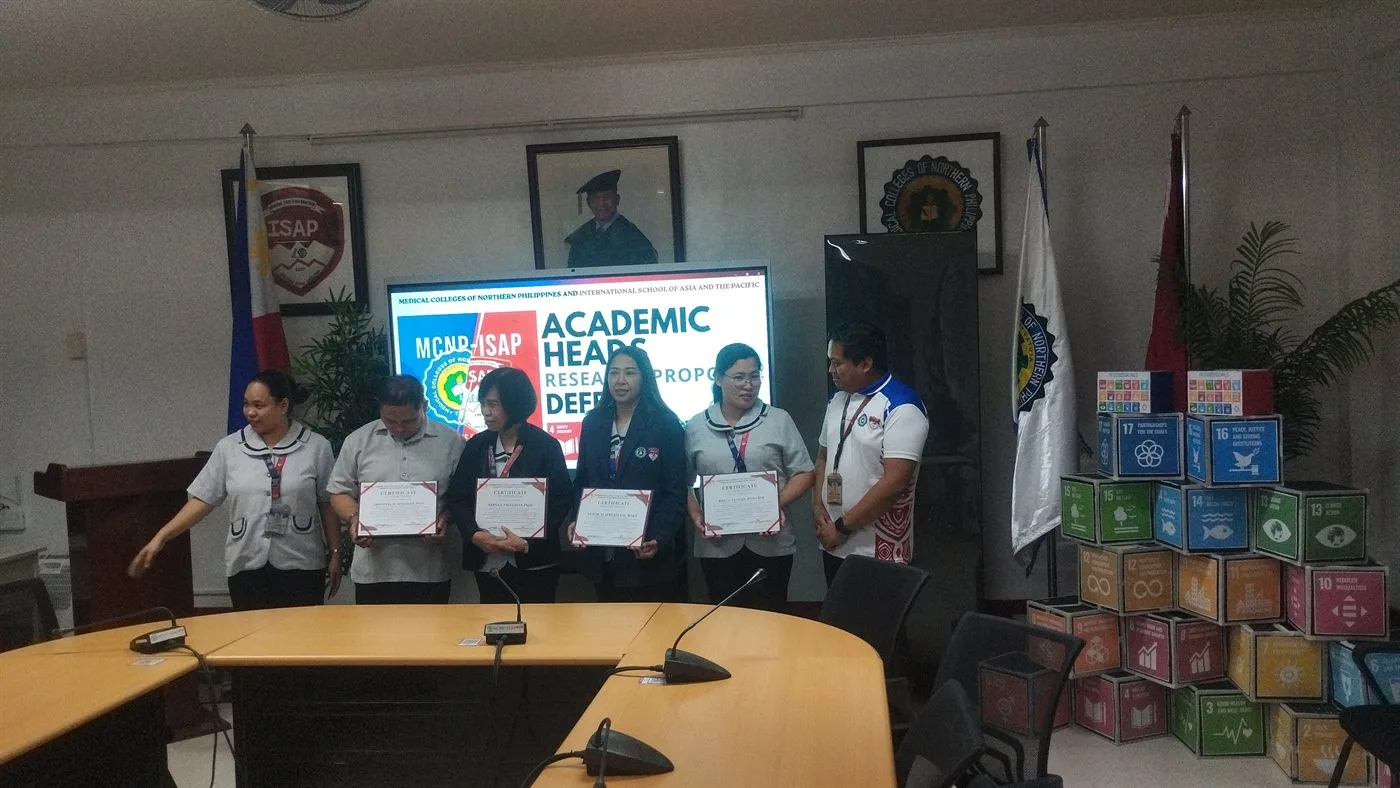
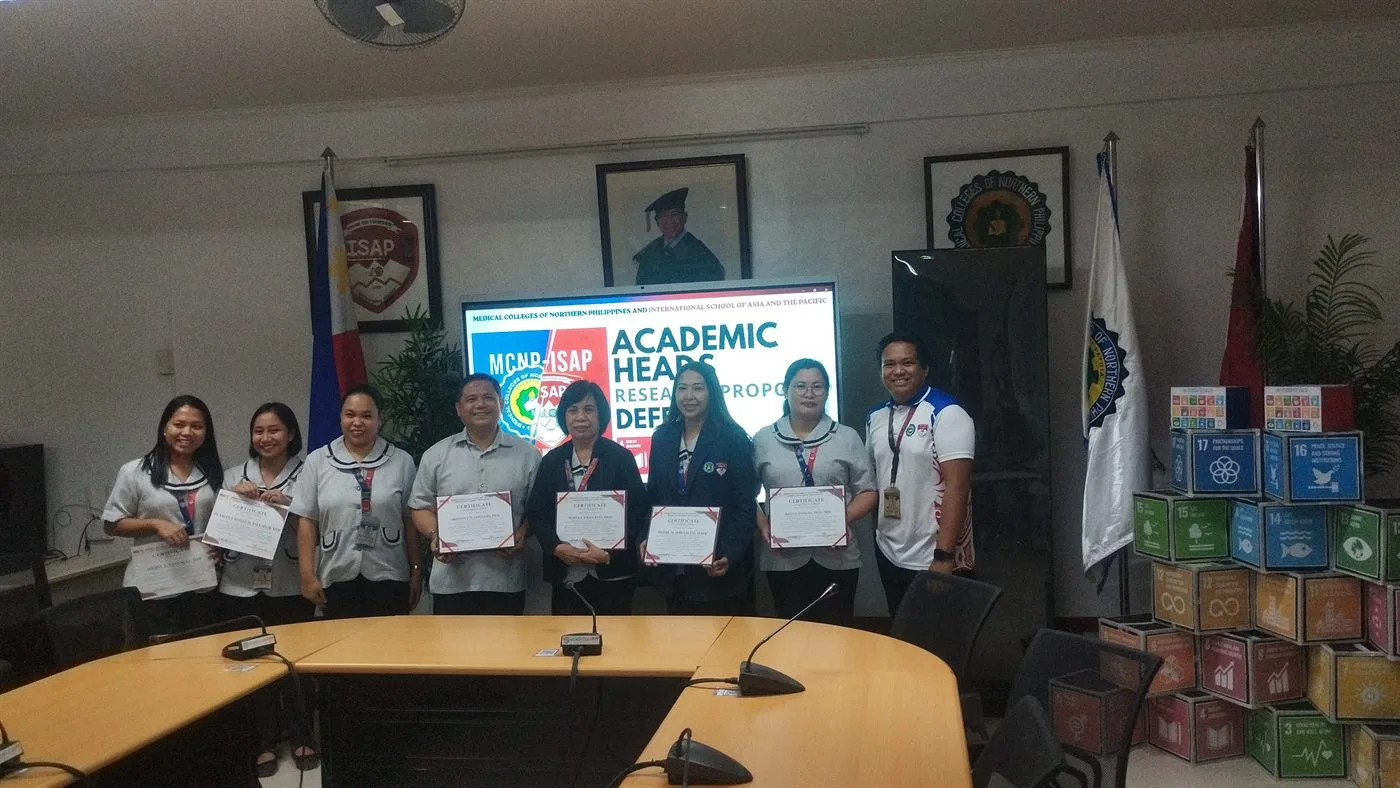
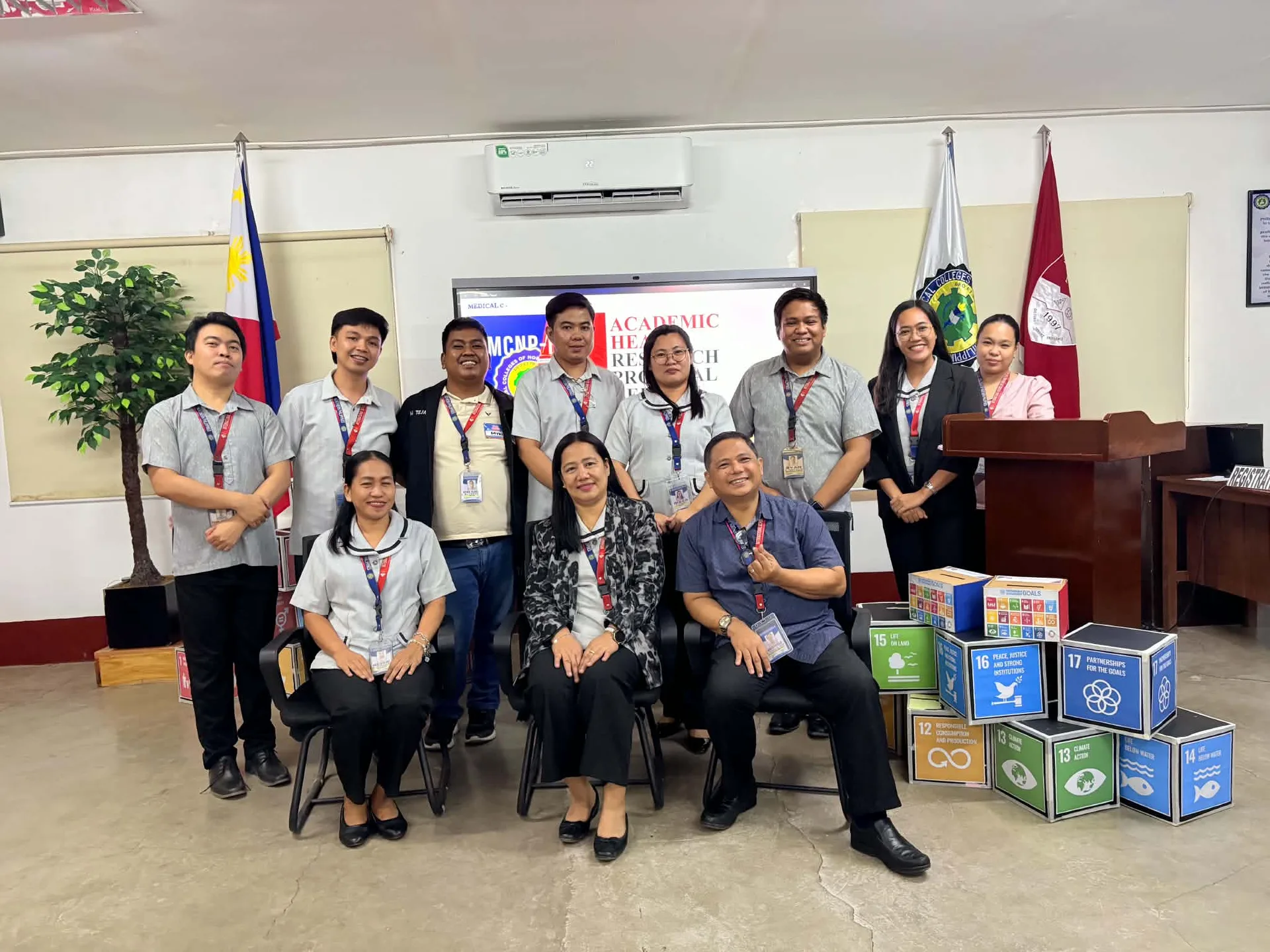
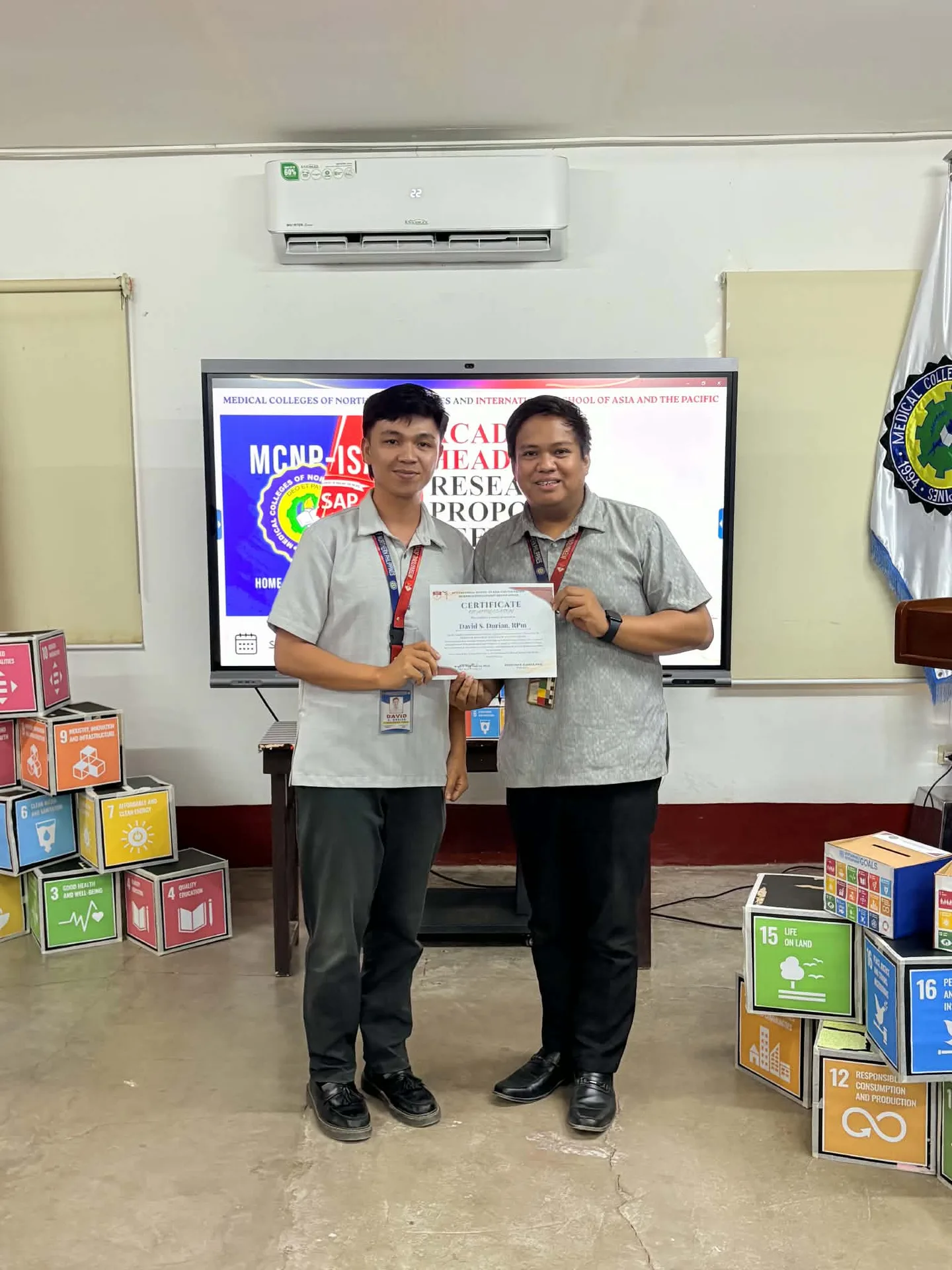
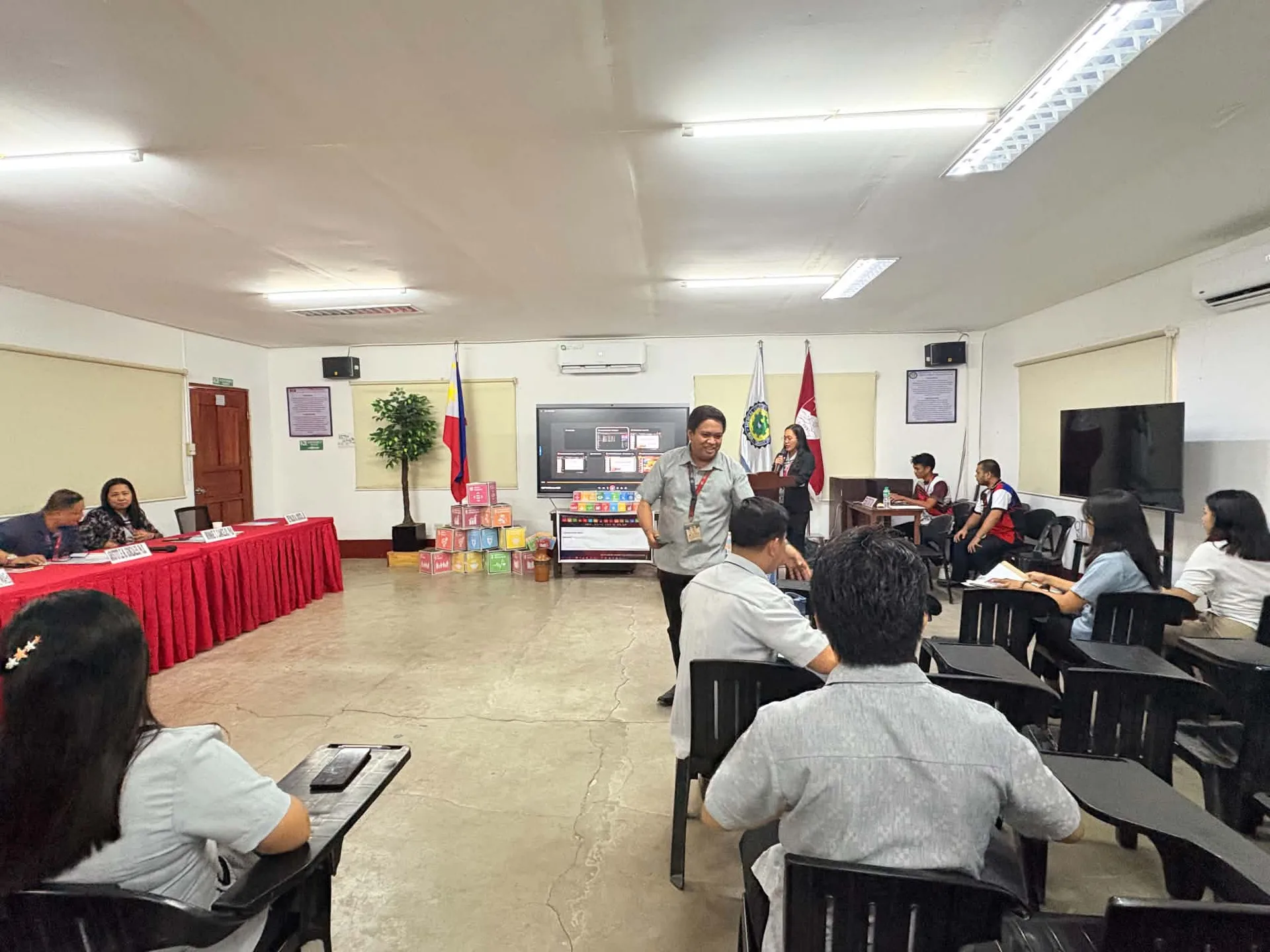
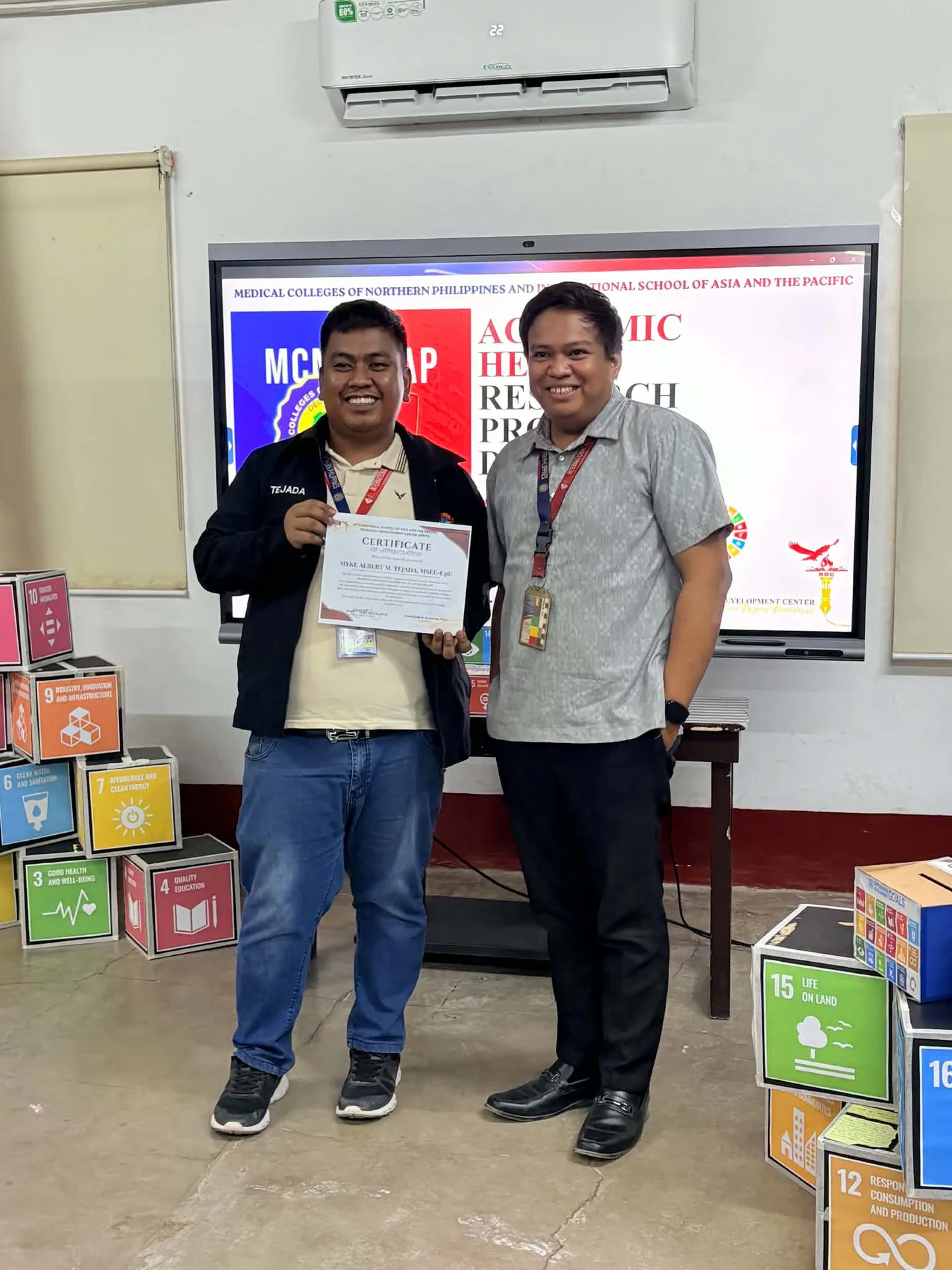
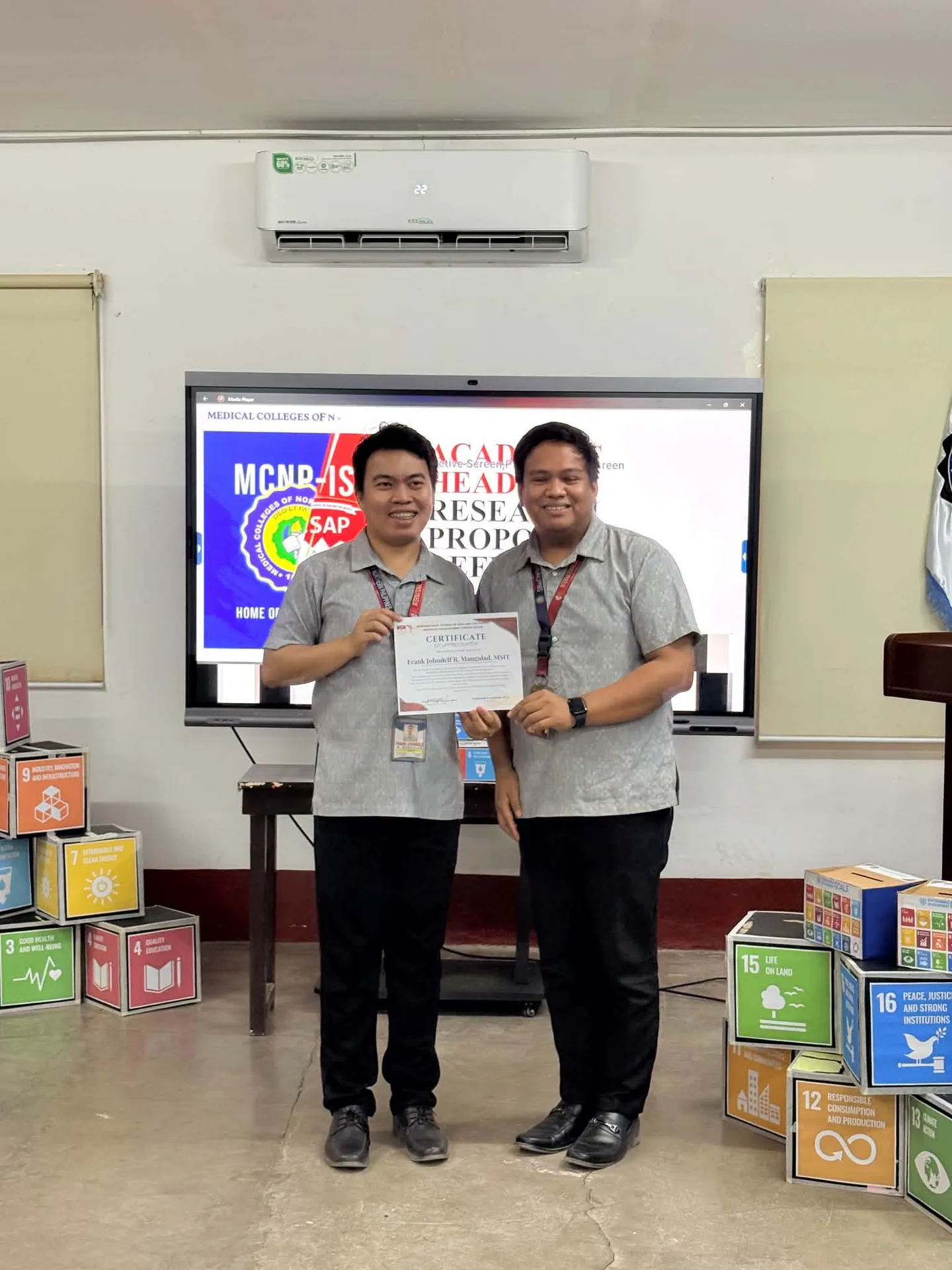
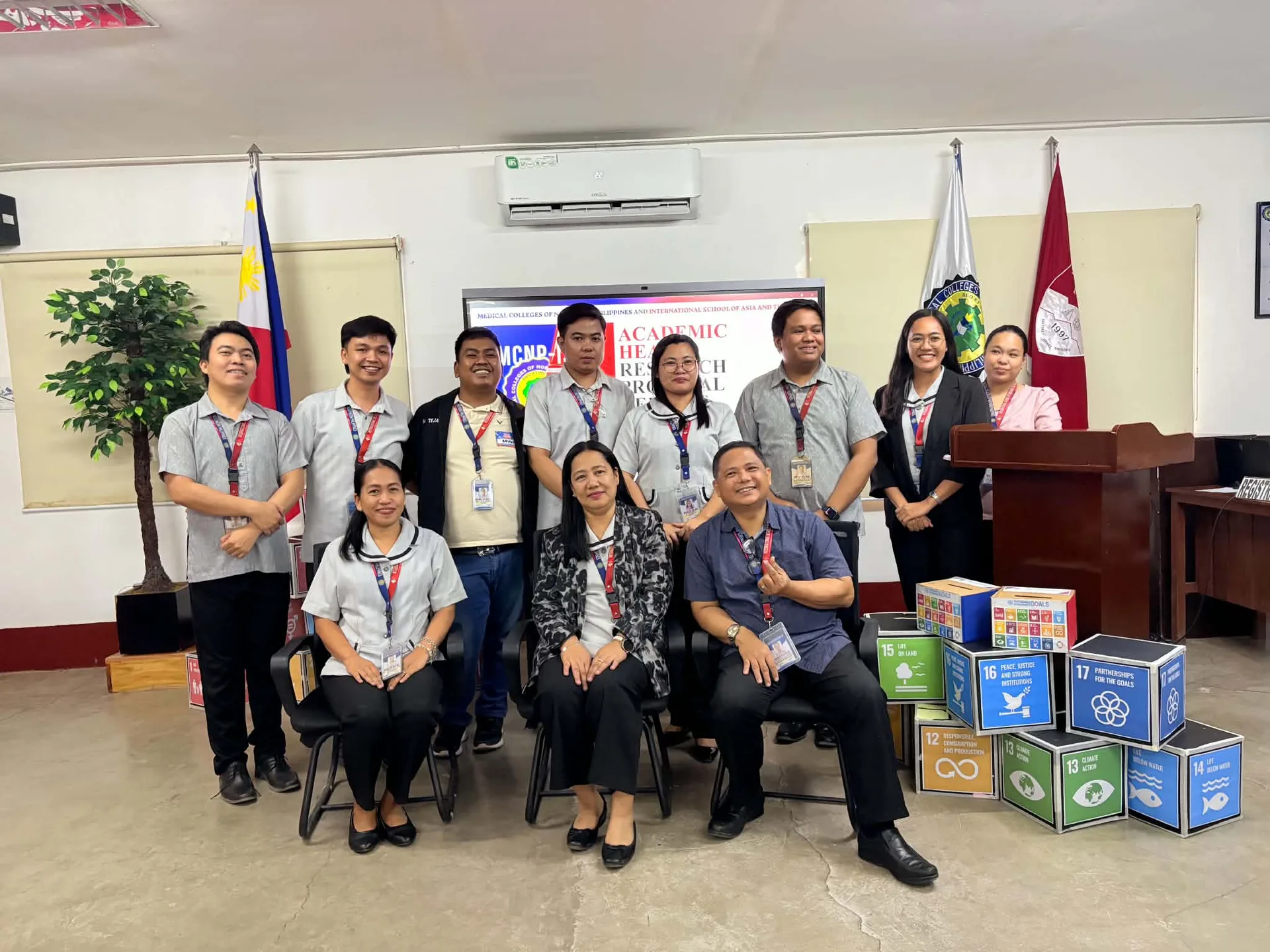
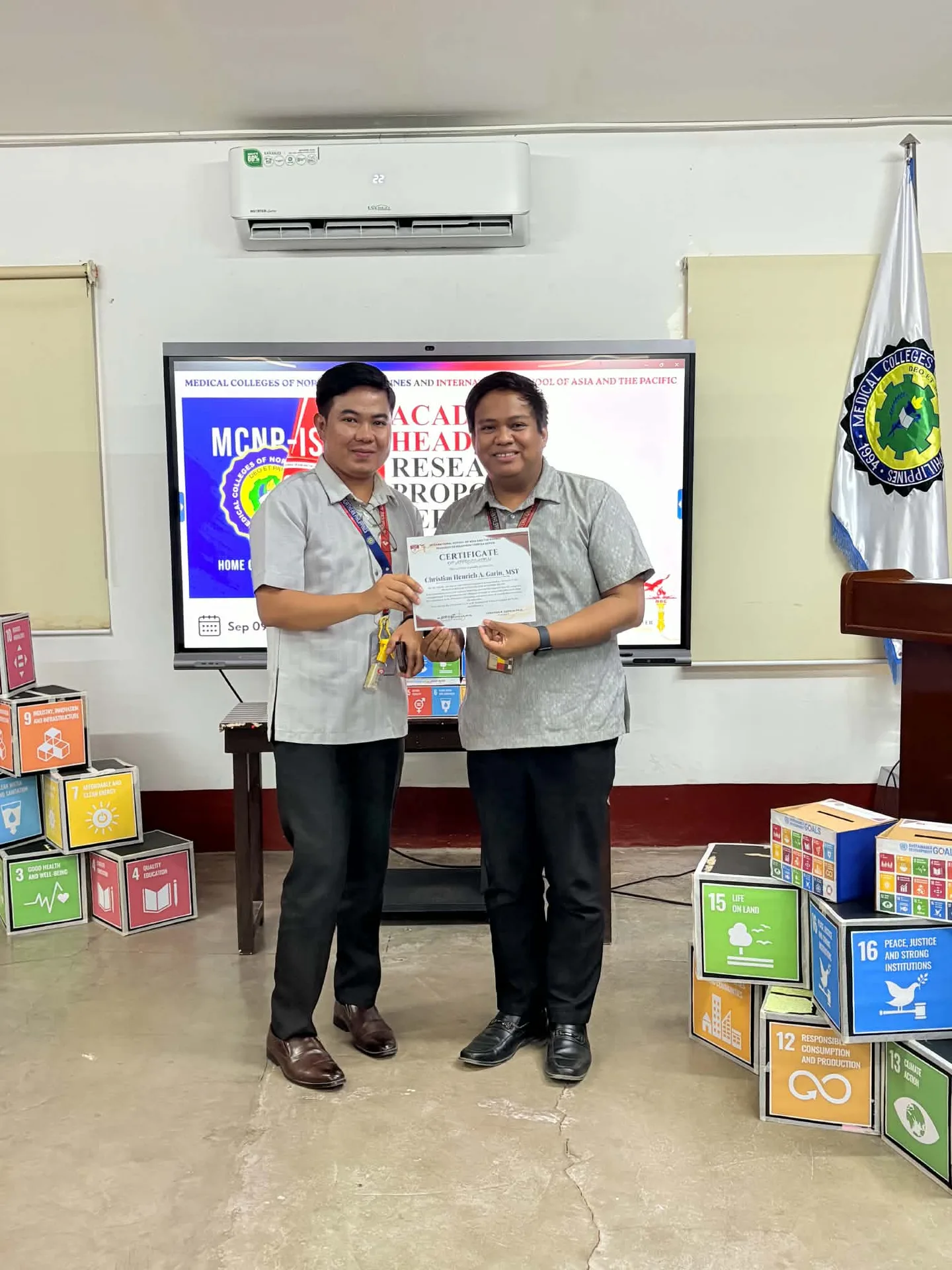
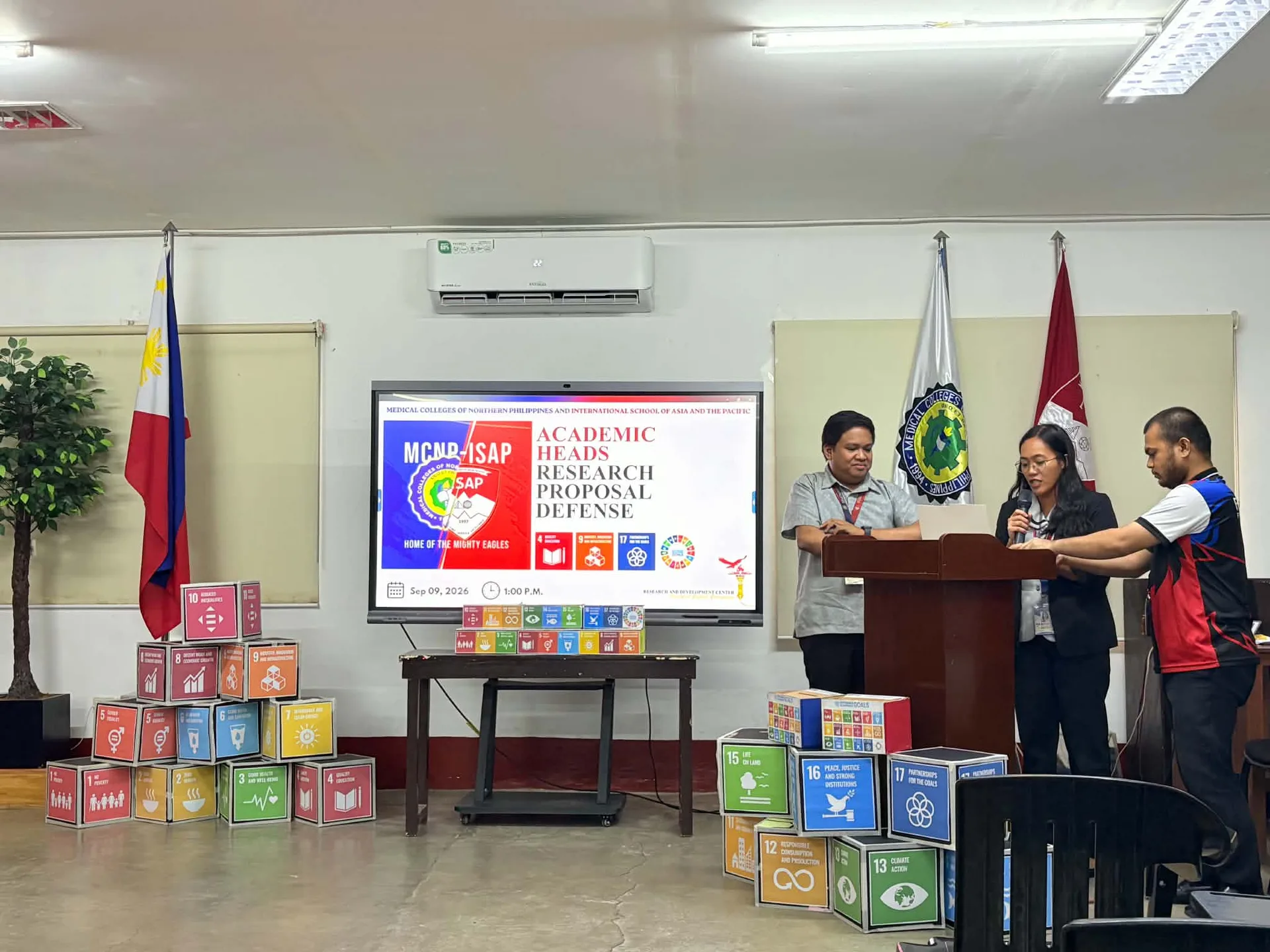
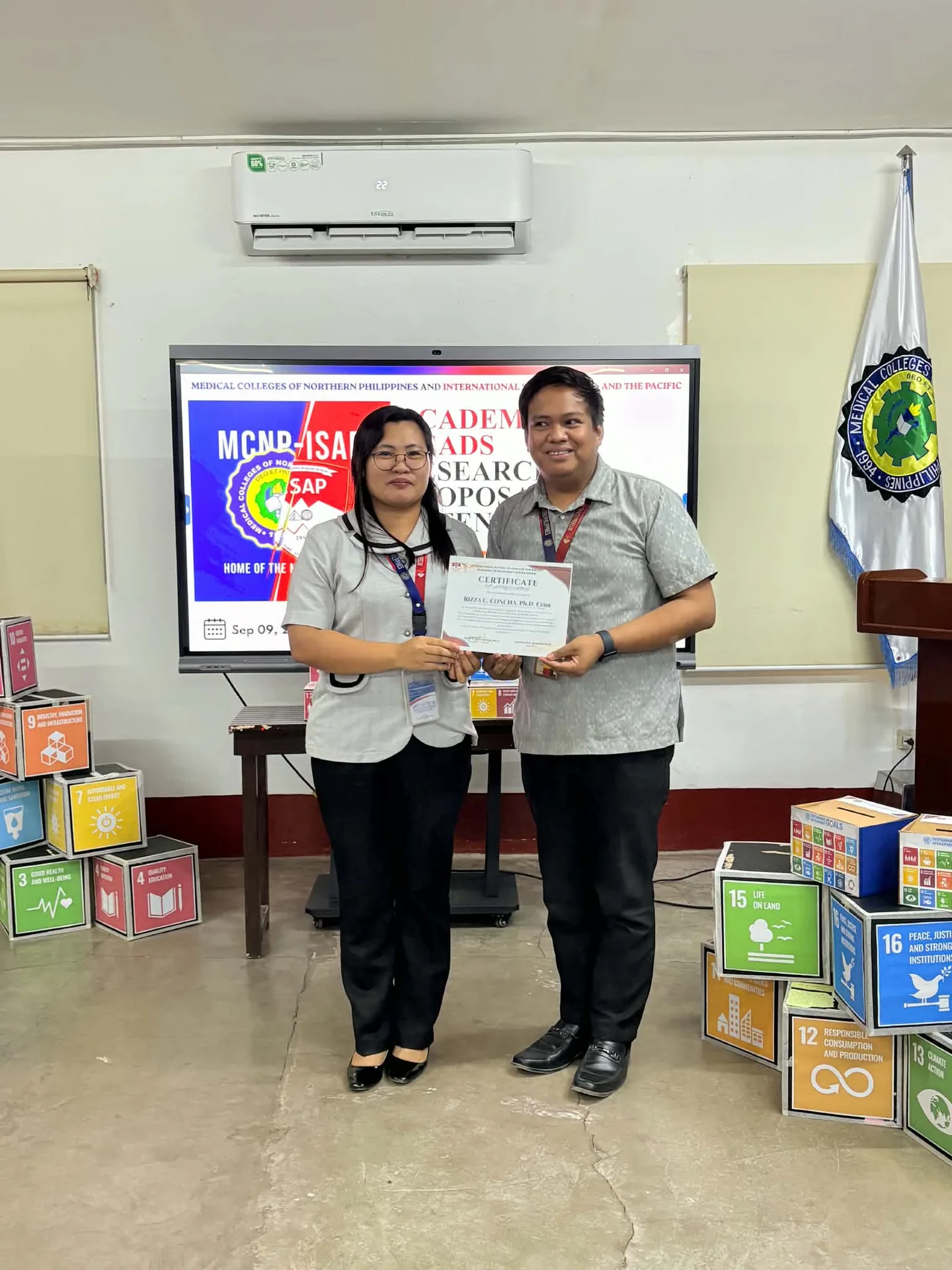
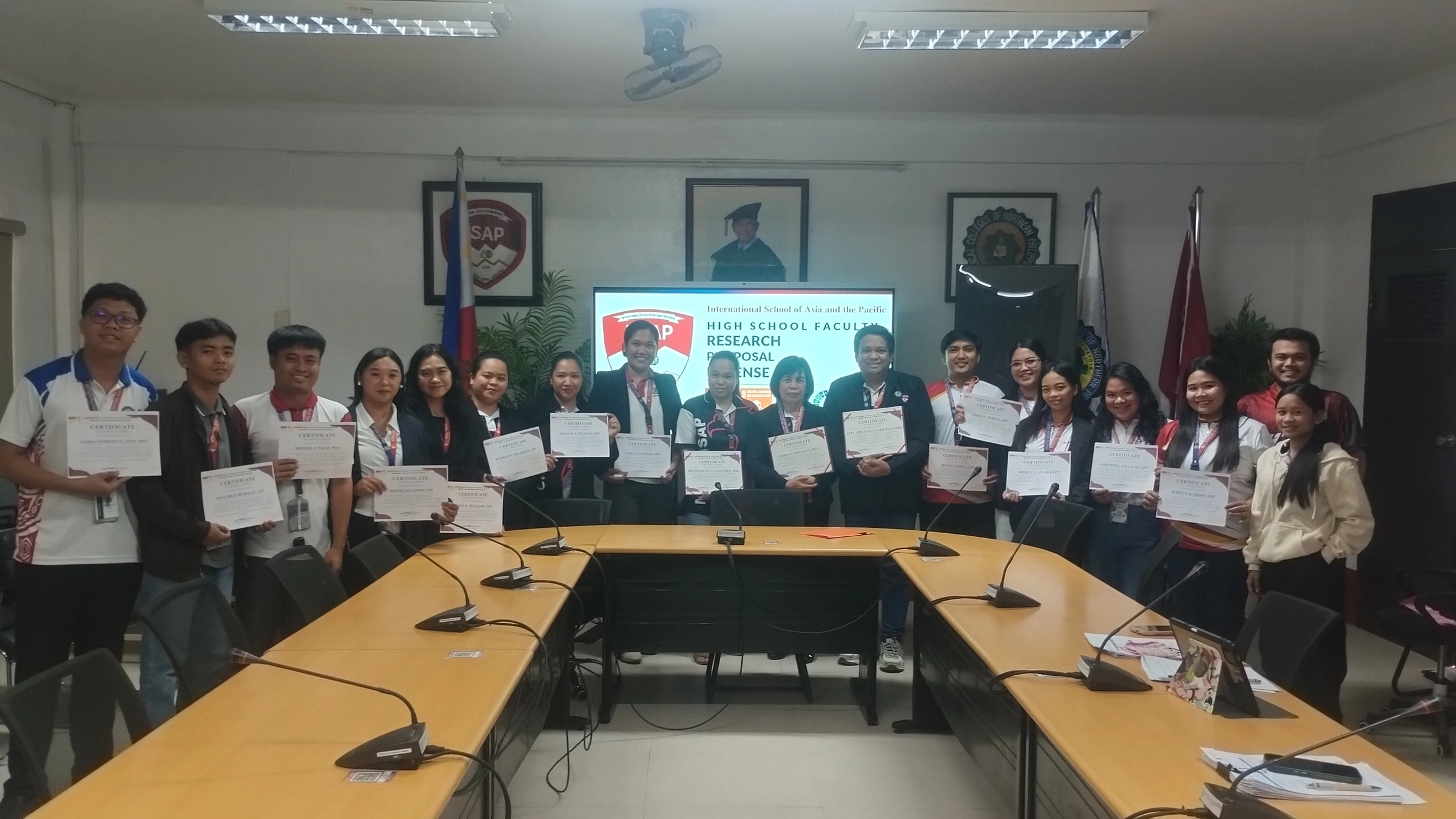
Faculty researchers and participants with their certificates at the November 20 proposal defense
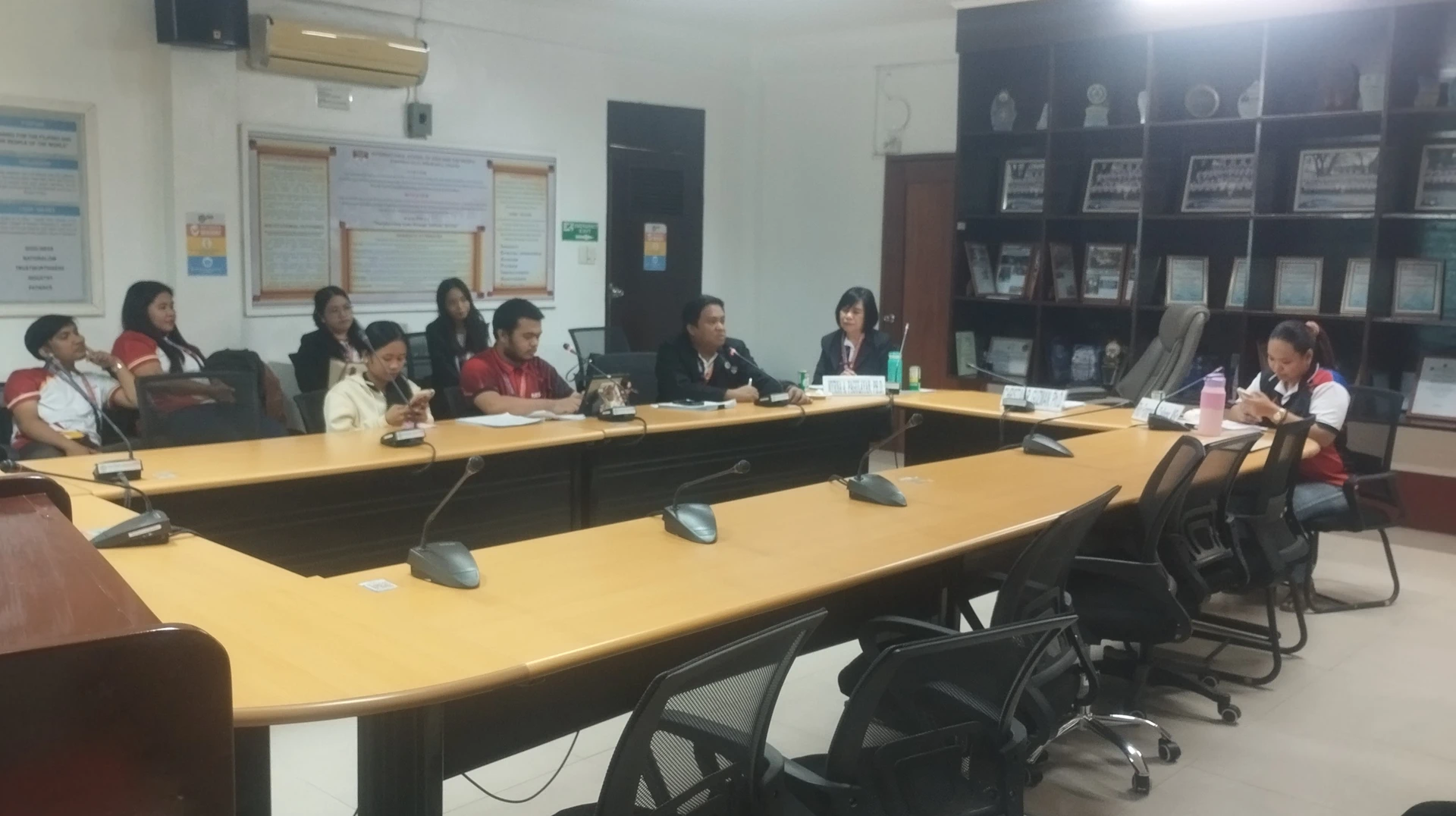
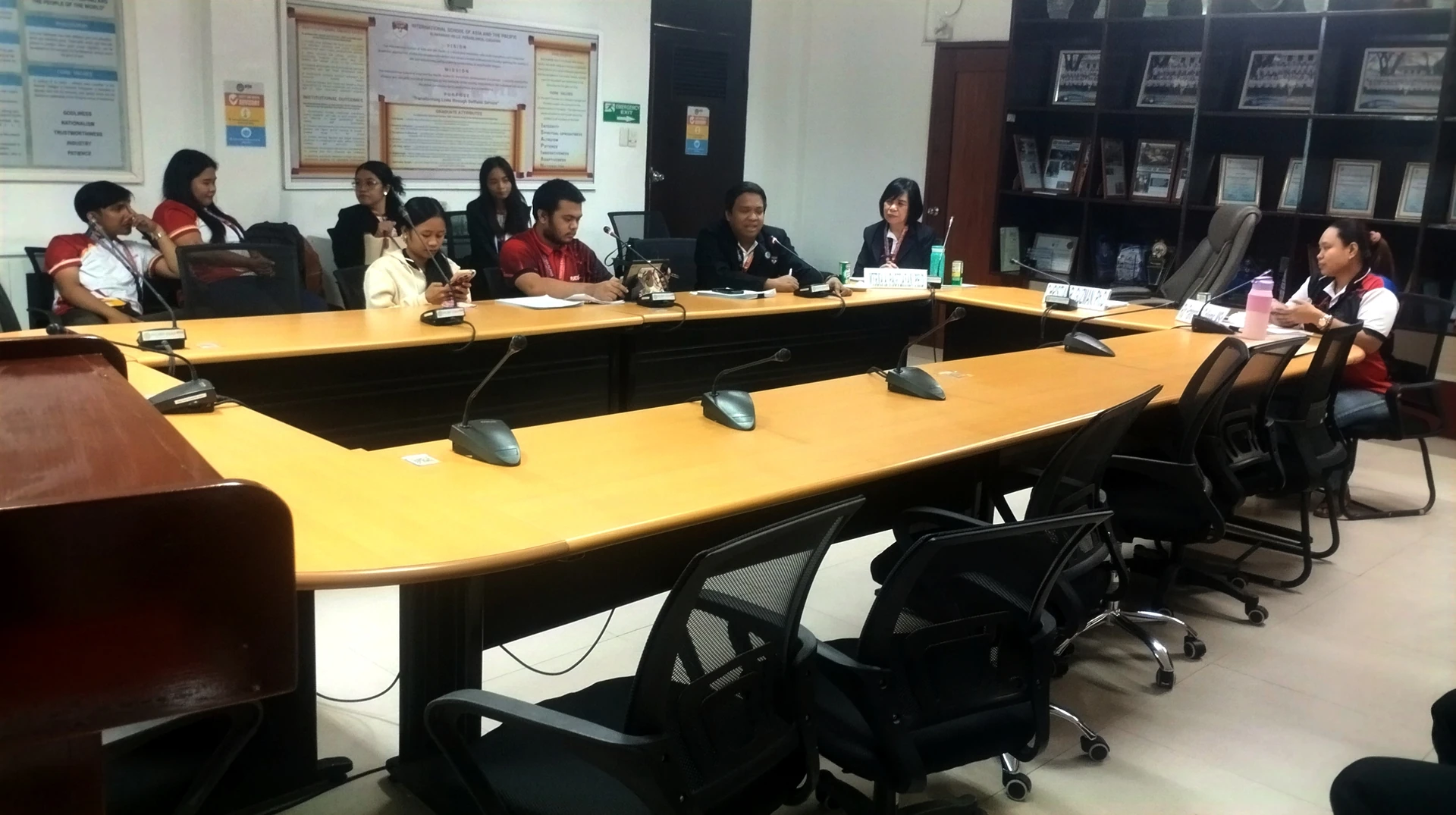
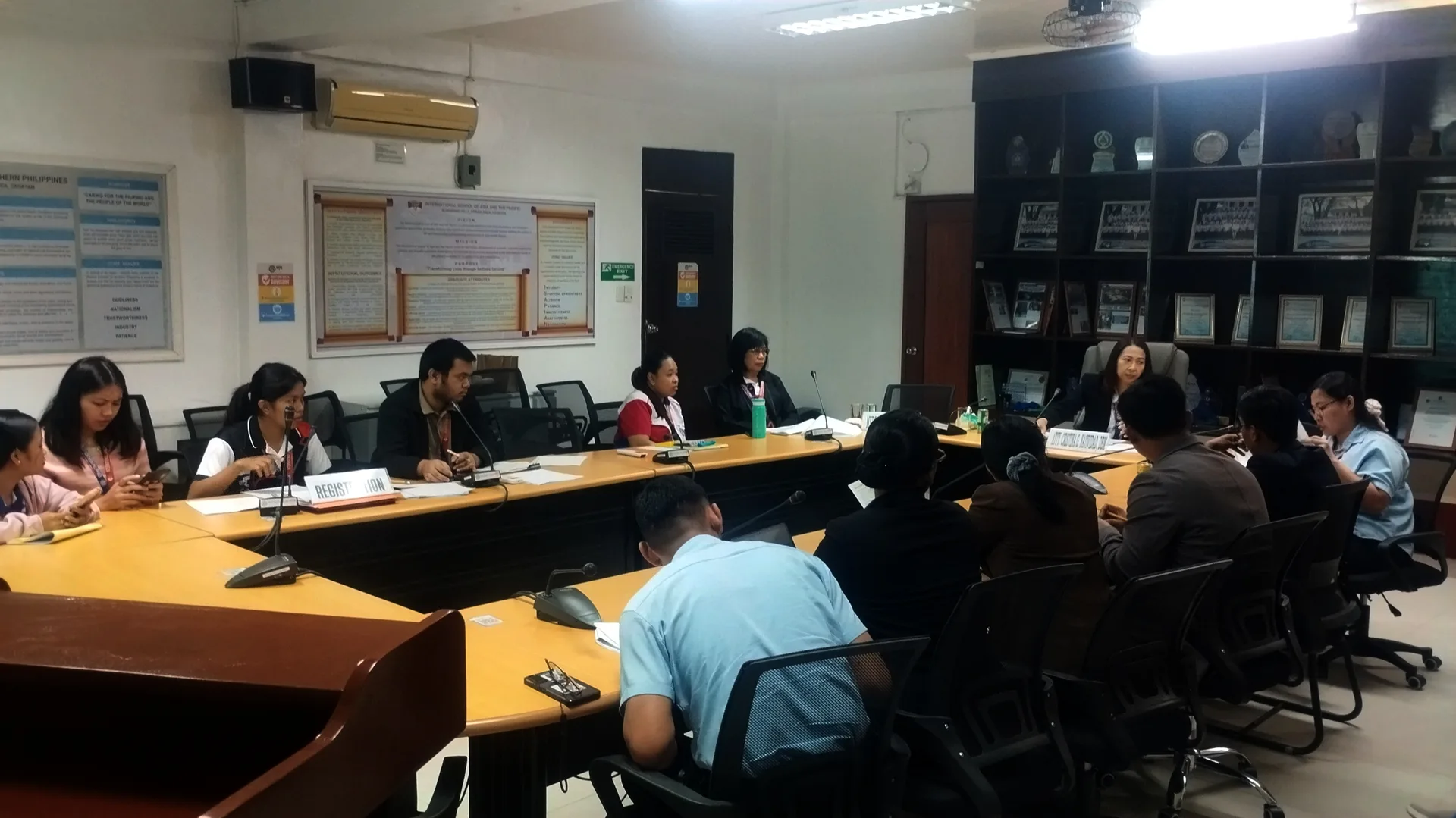
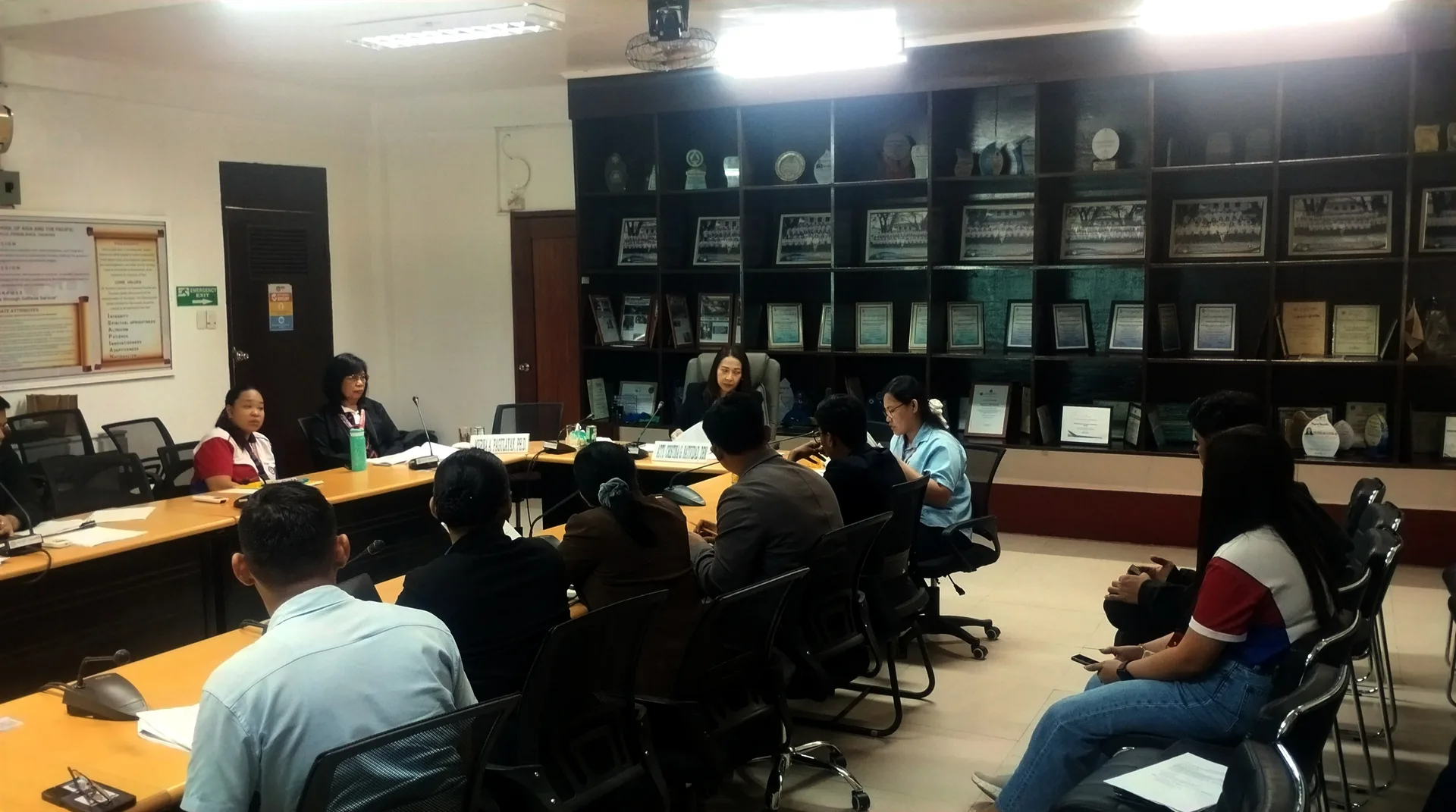
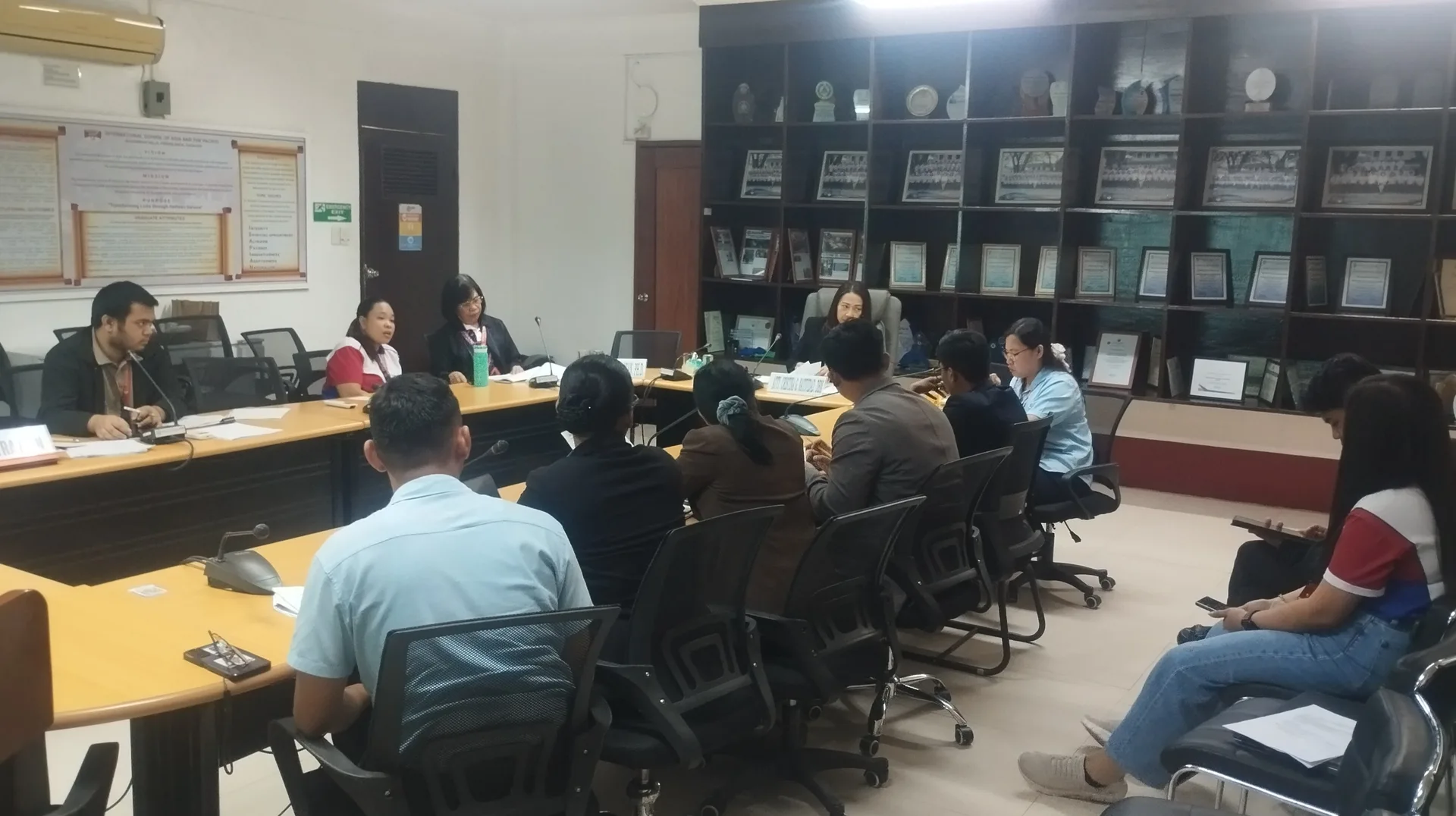
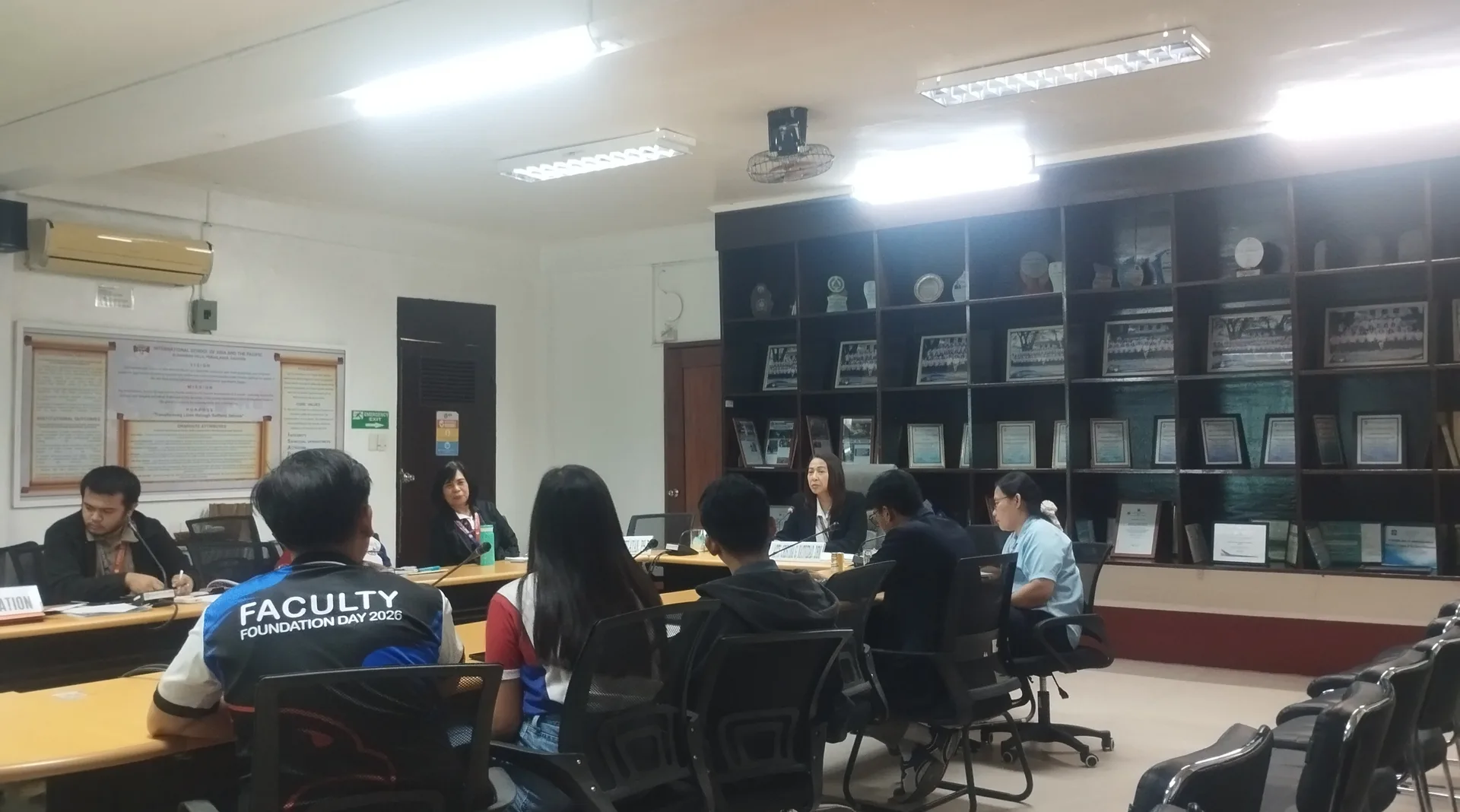
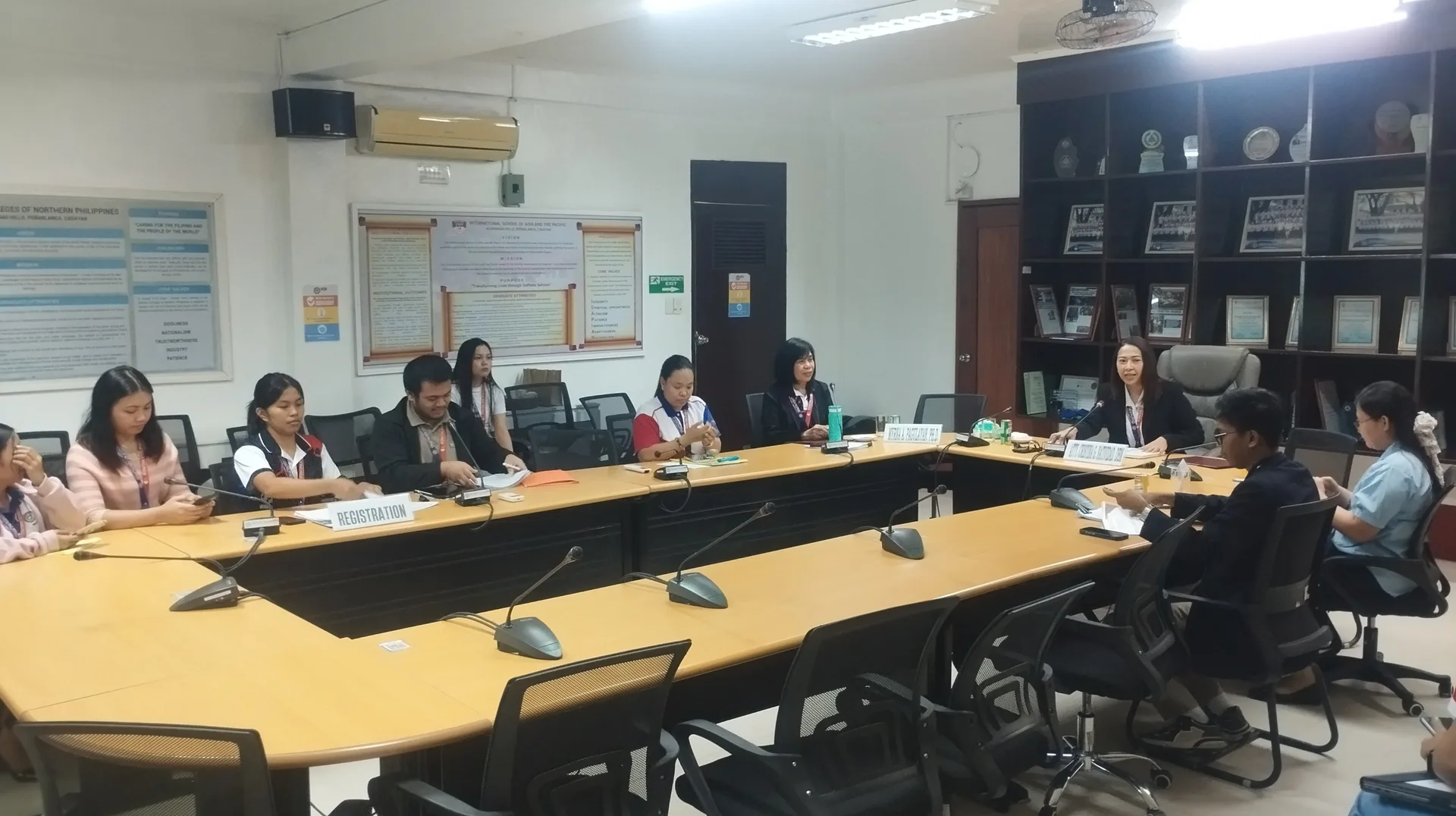
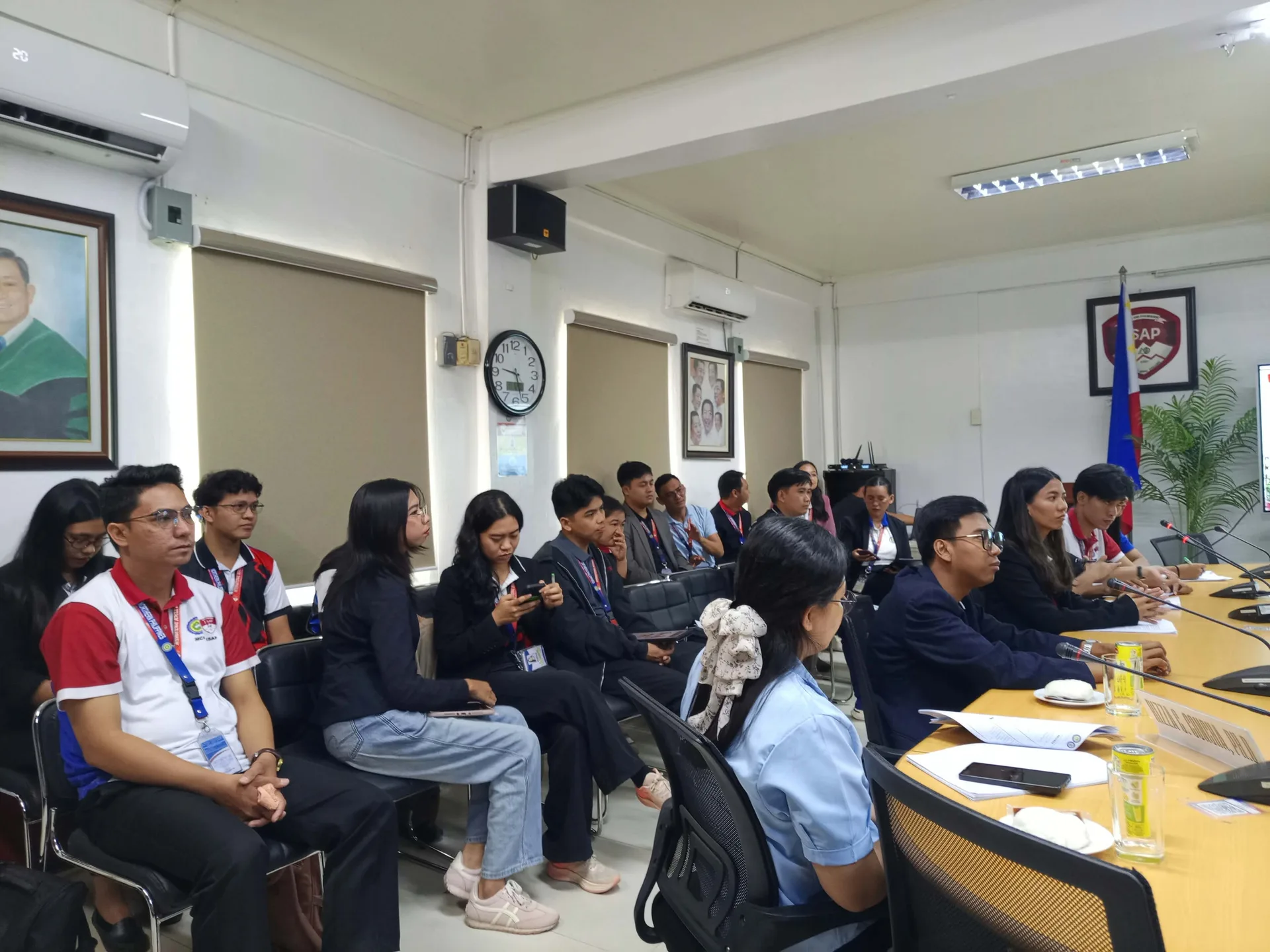
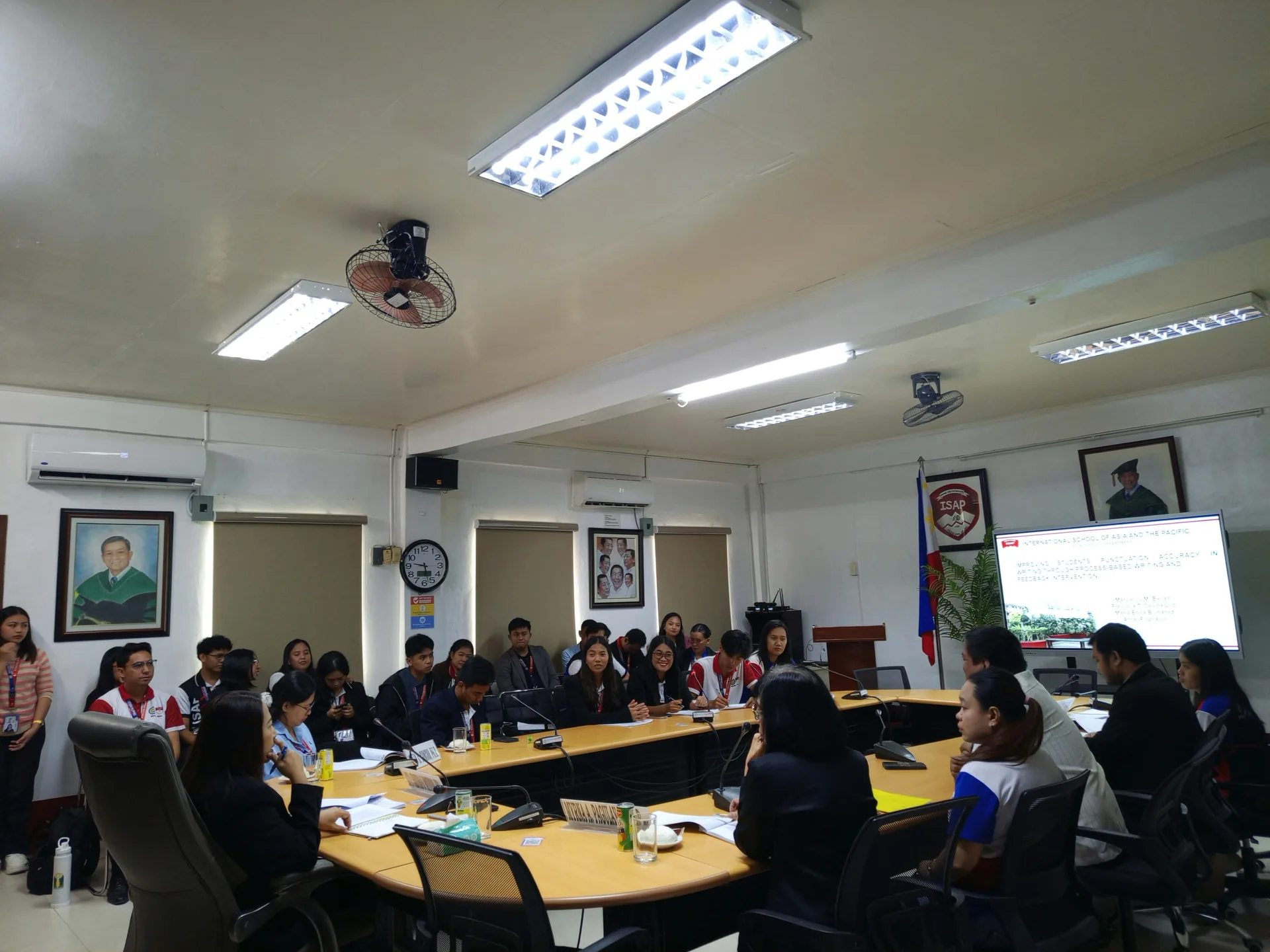
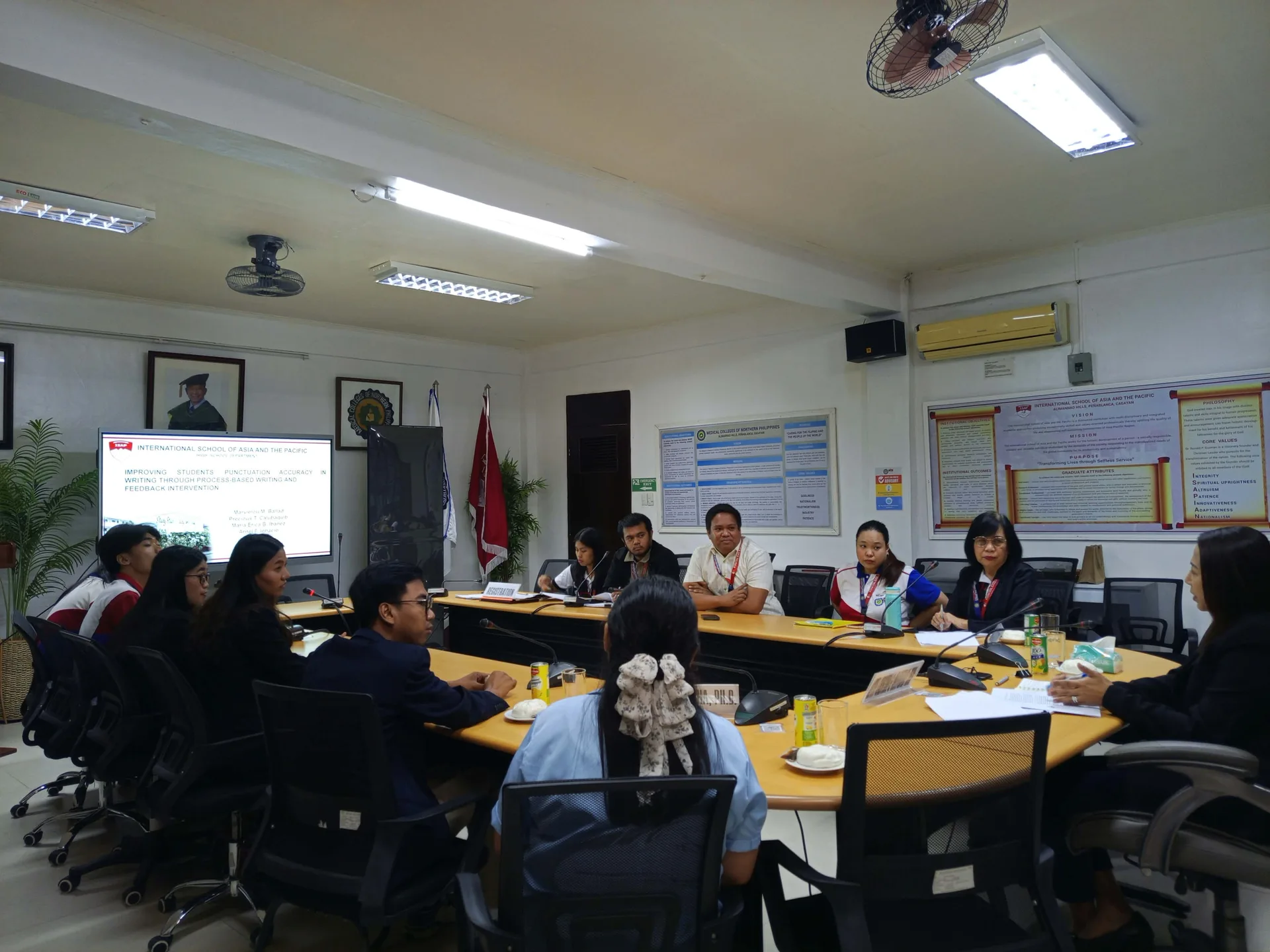
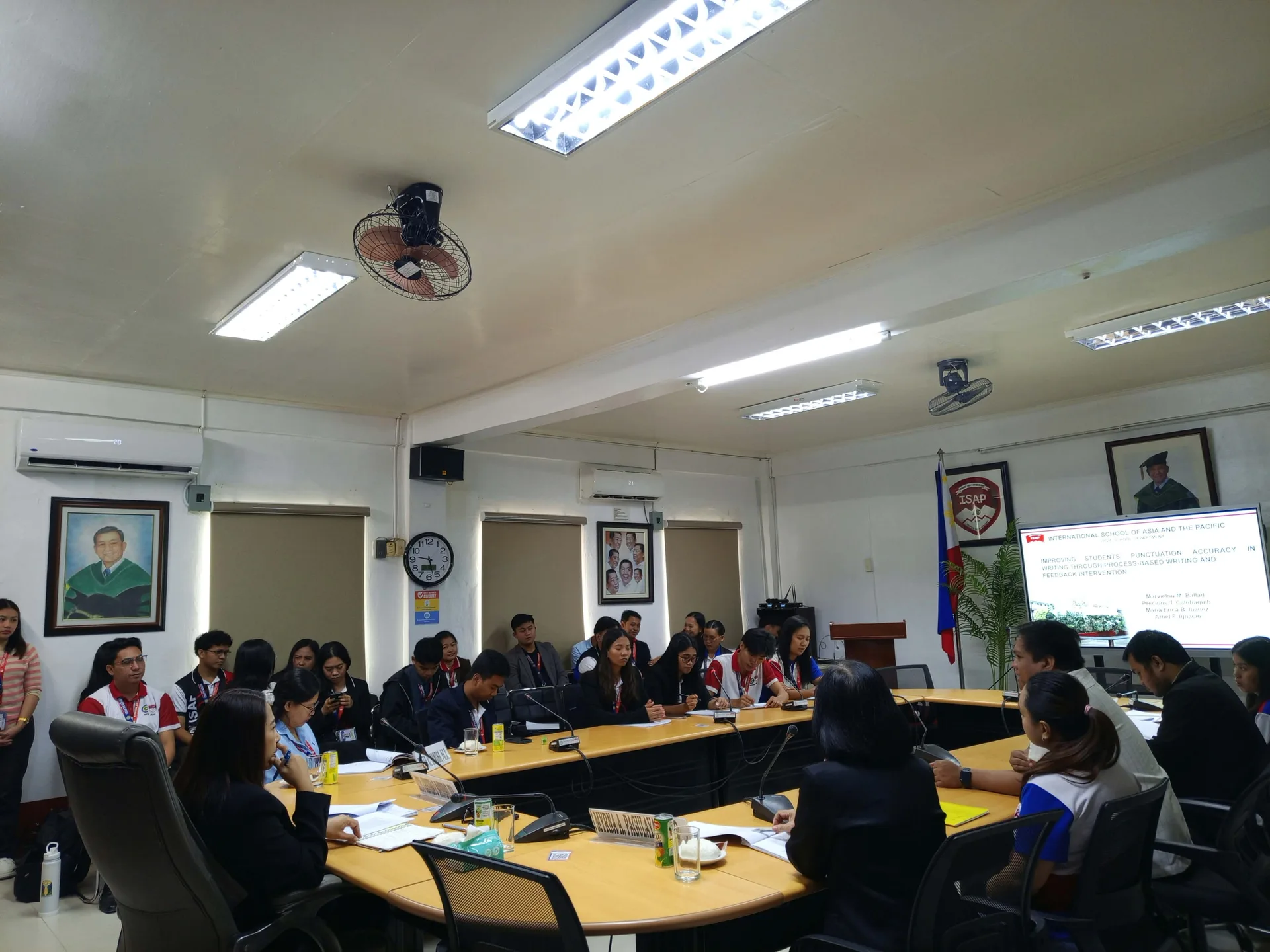
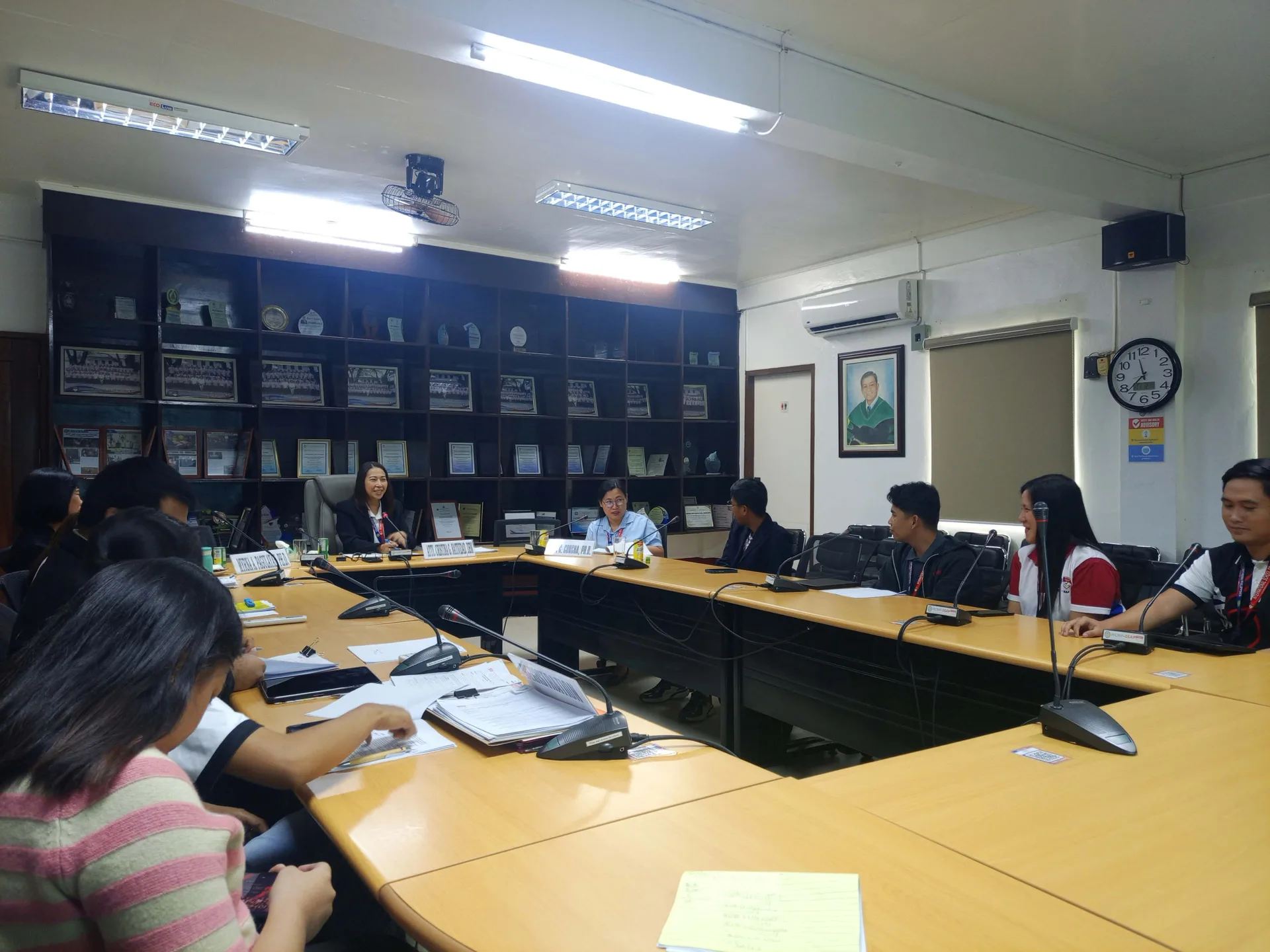
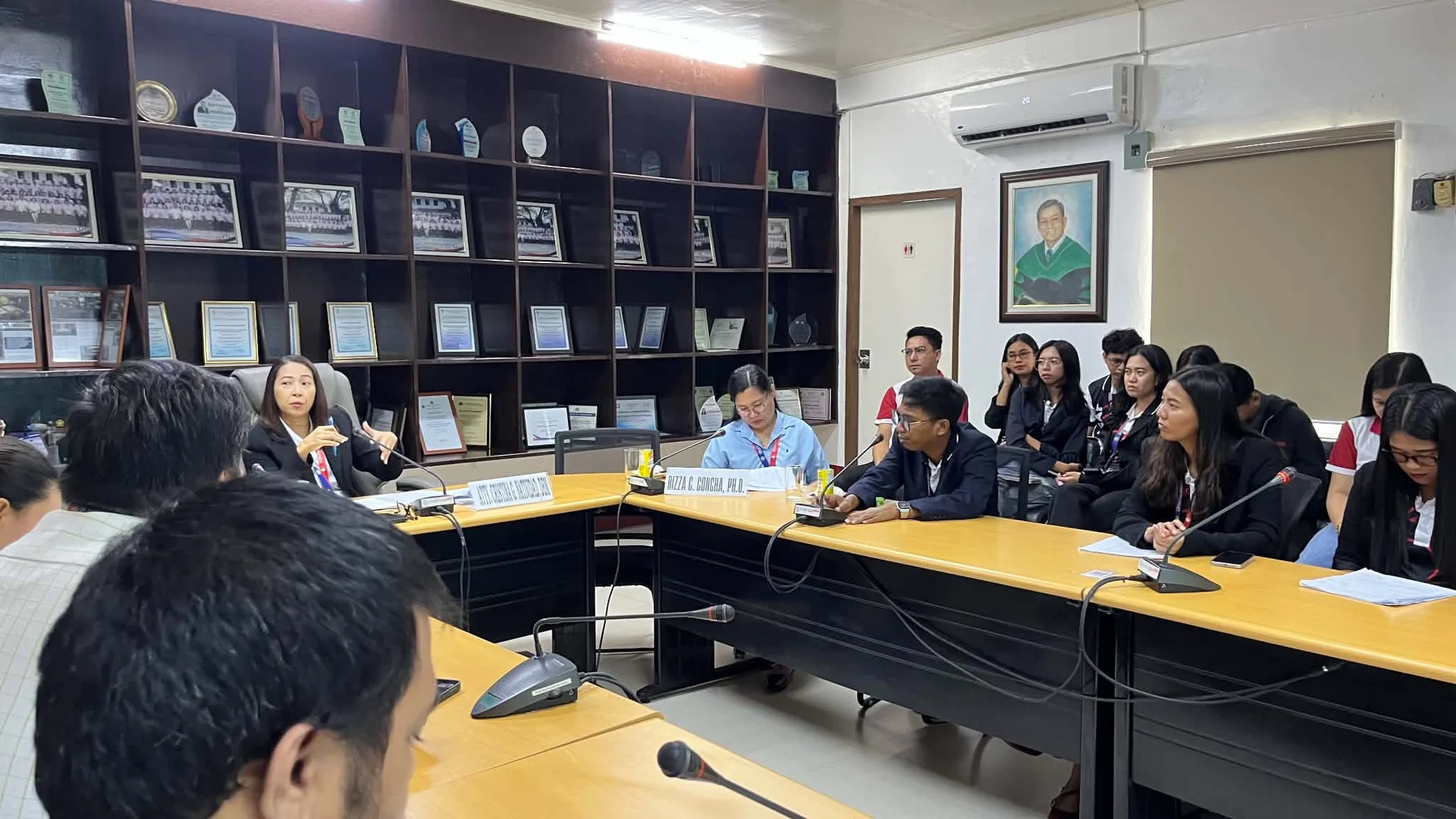
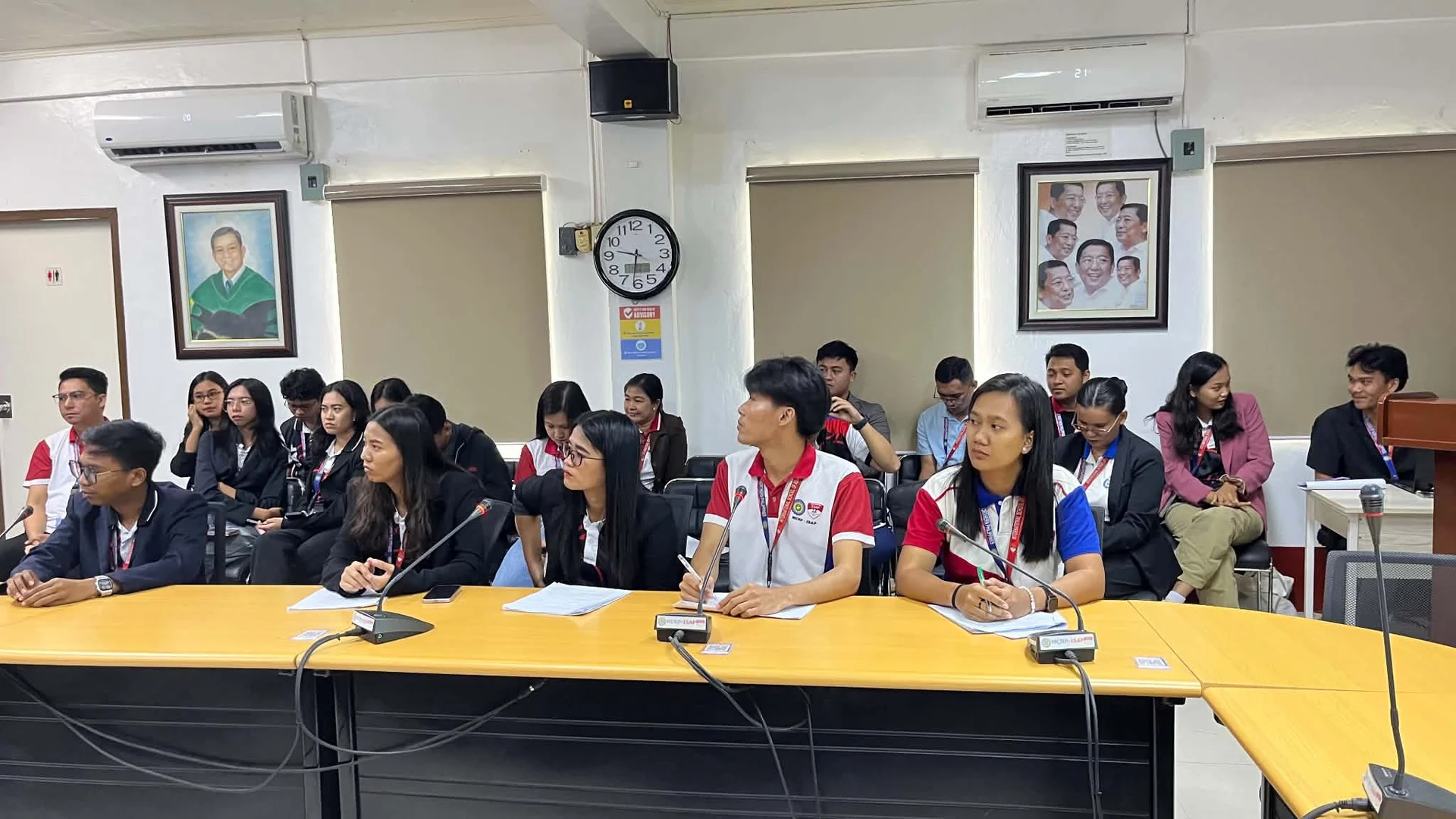
Faculty researchers and participants following the High School Faculty Research Proposal Defense on November 20, 2026.

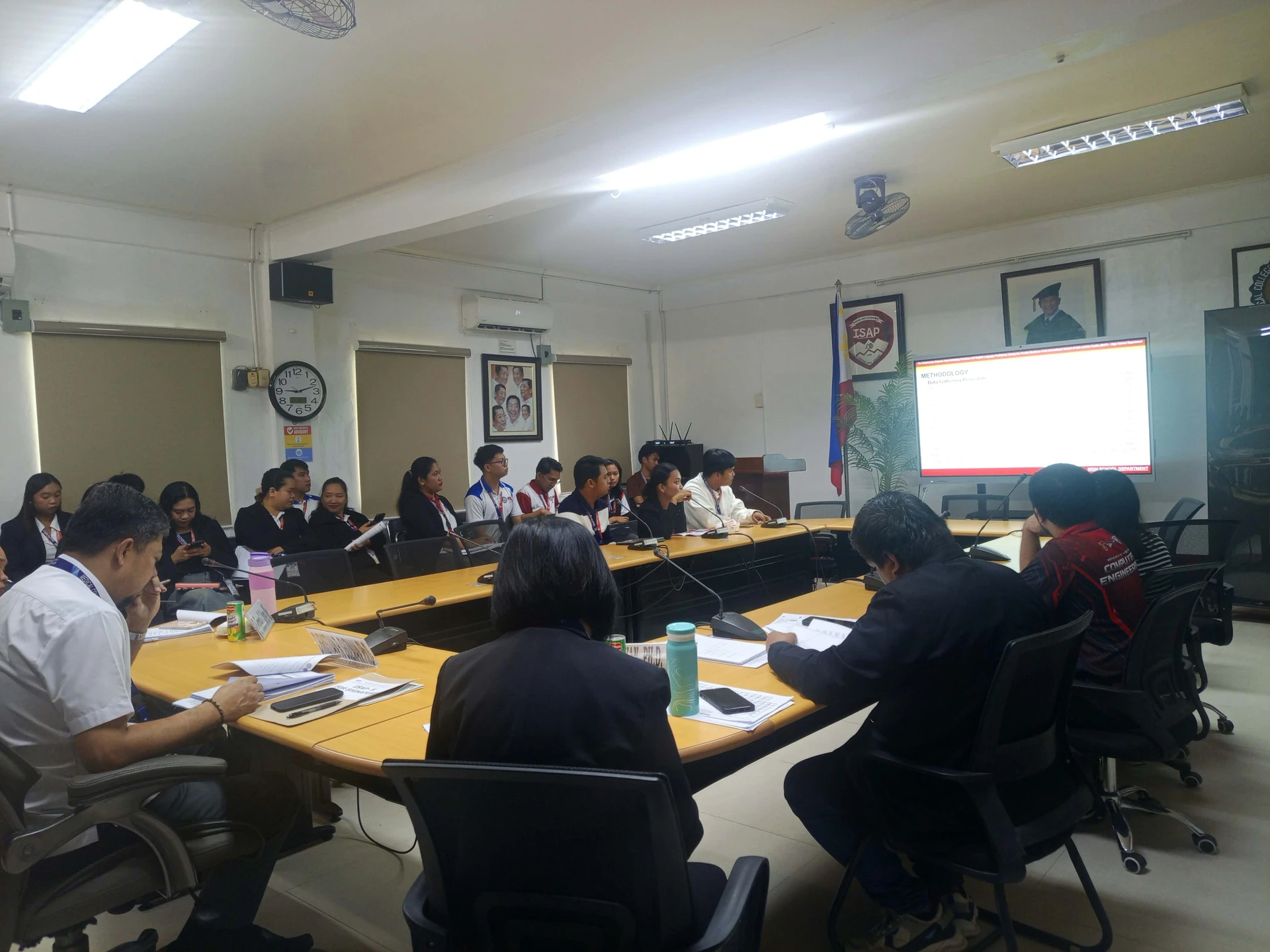
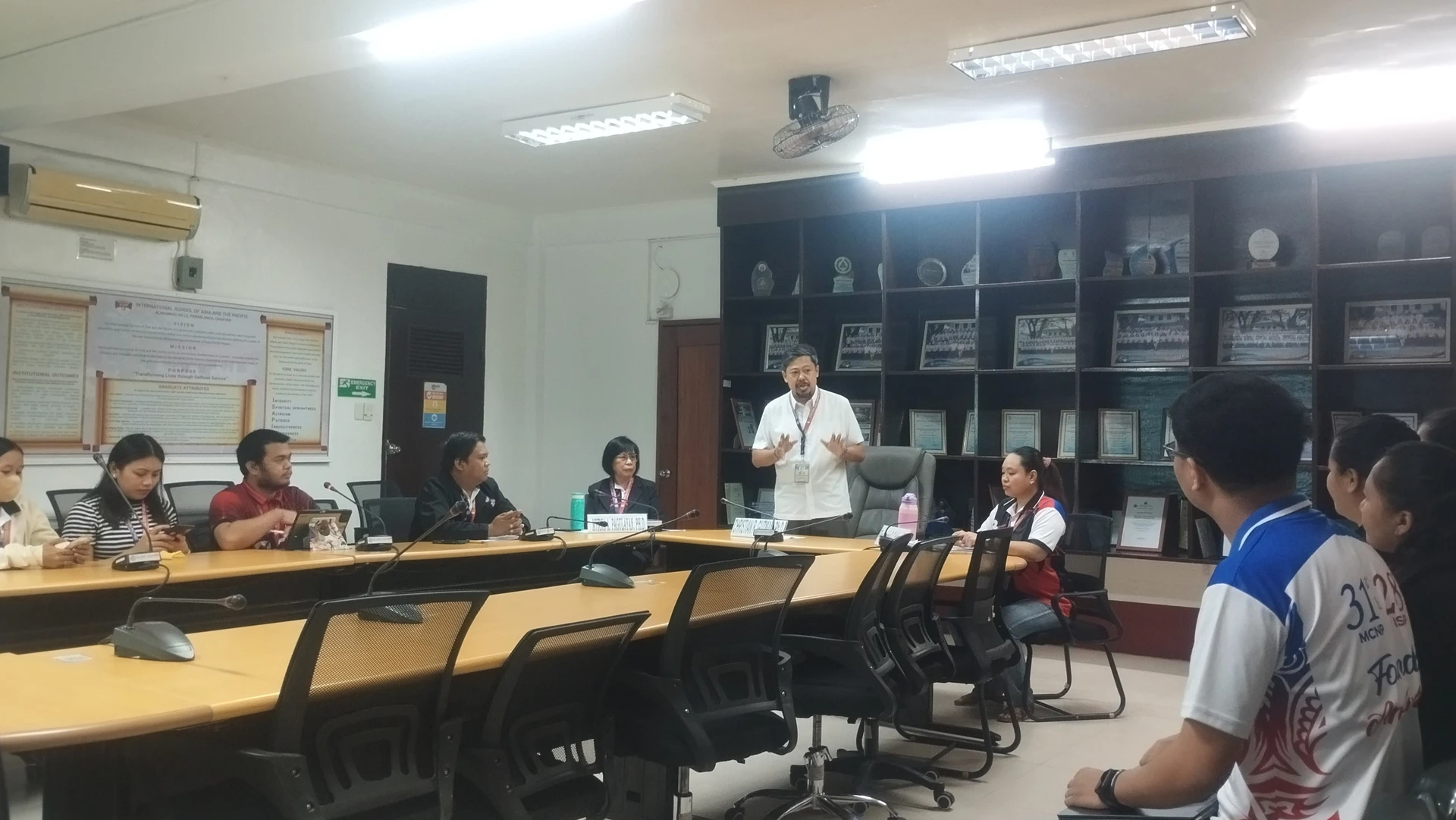
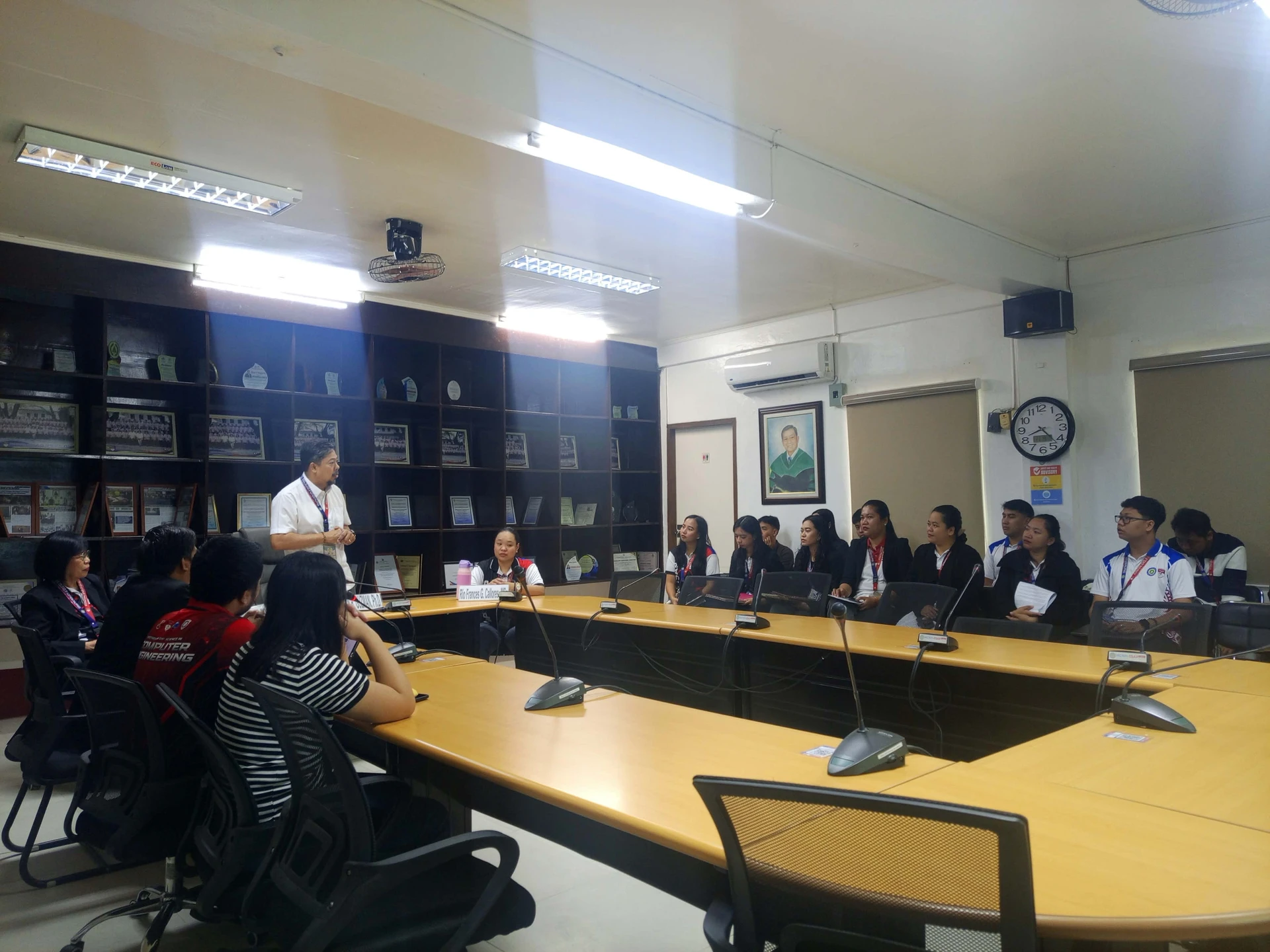
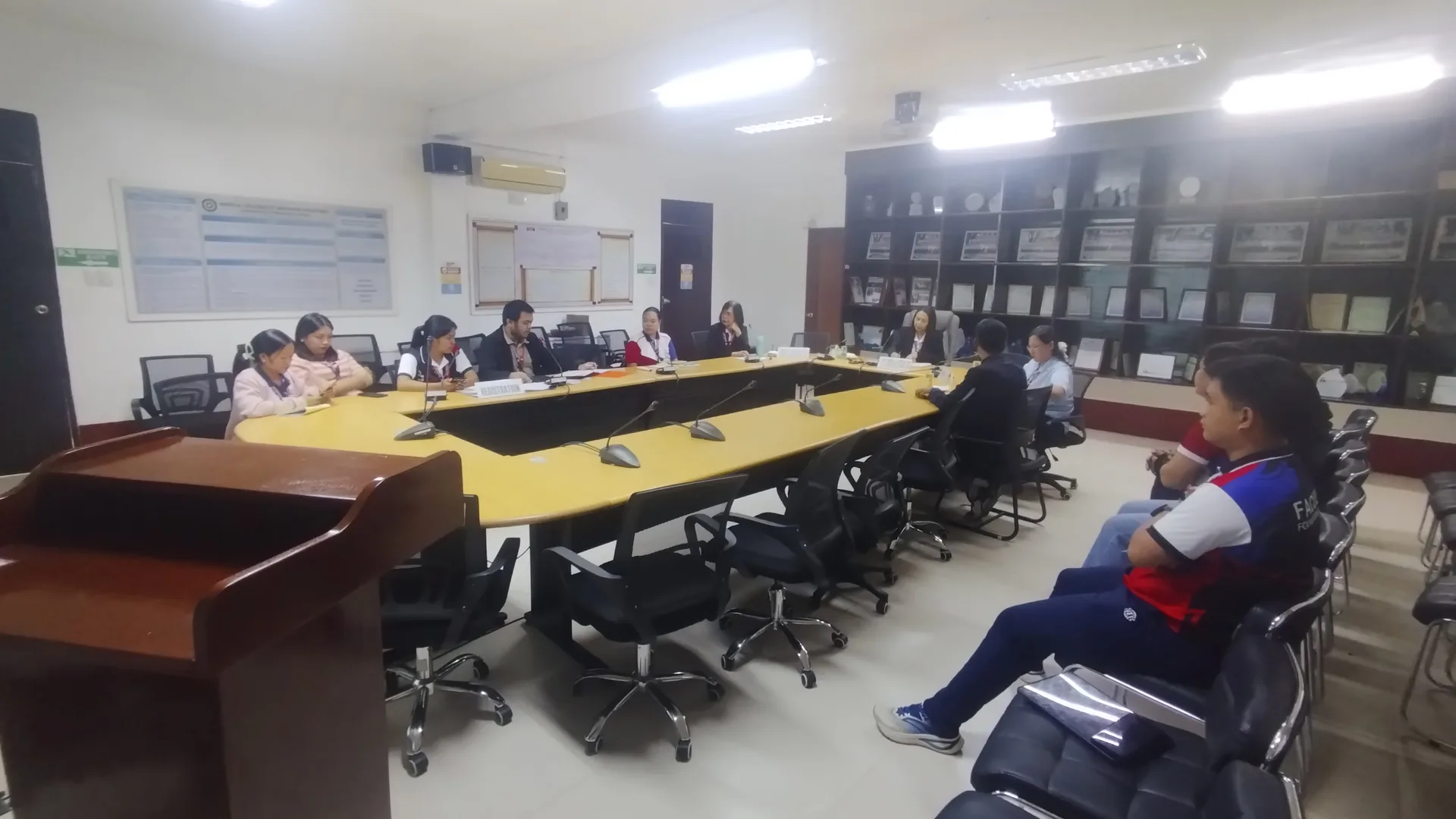
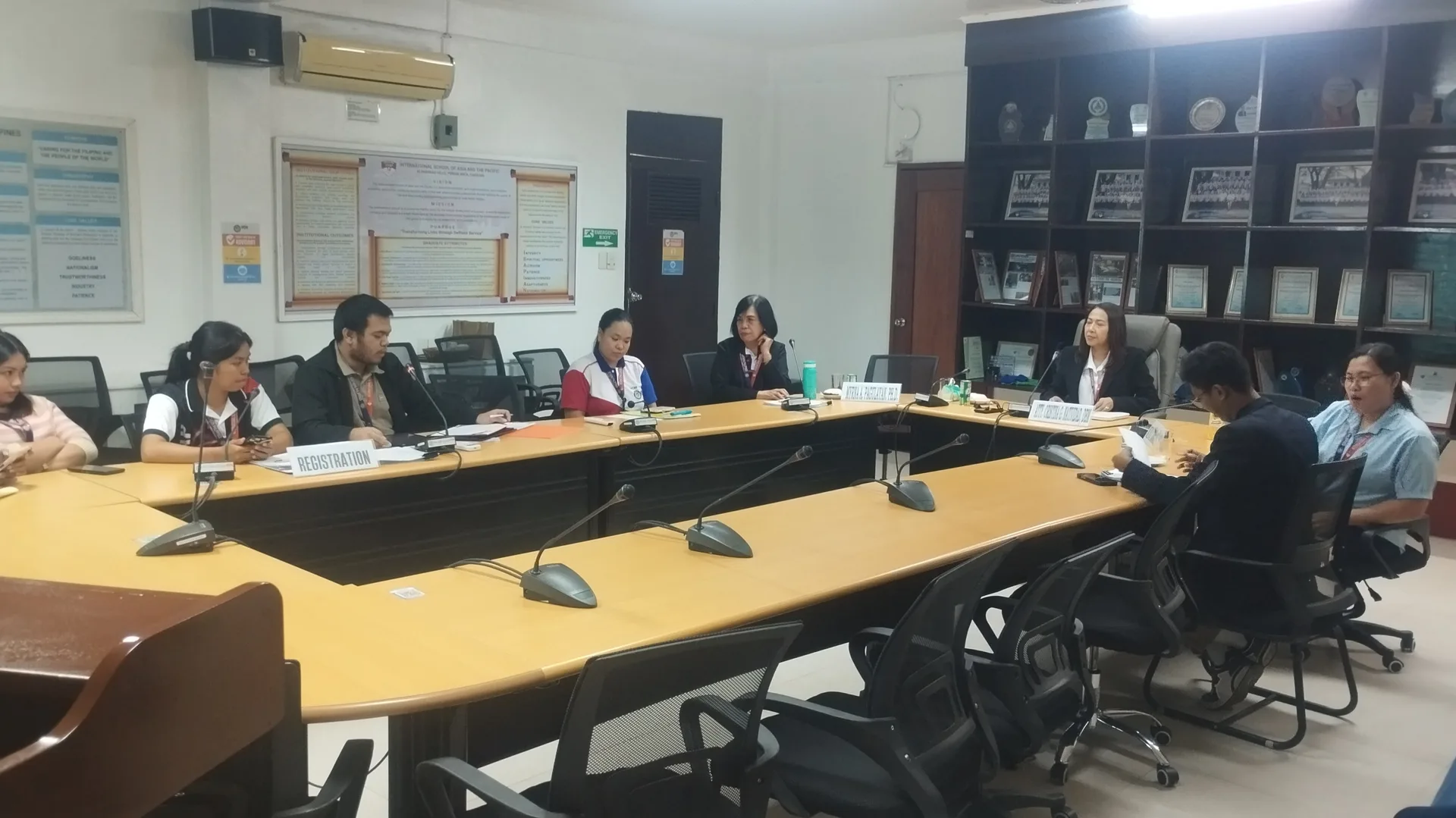
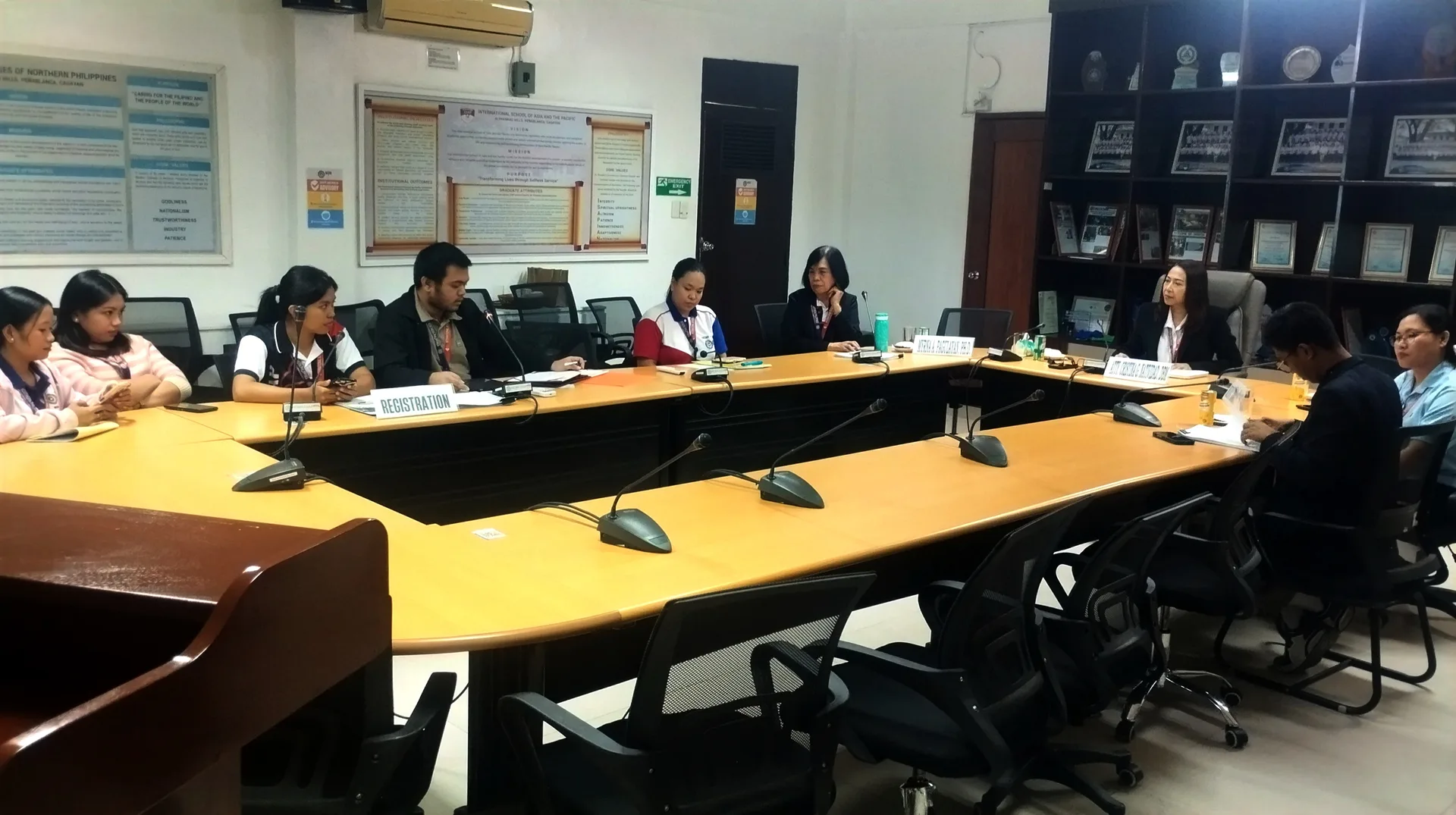
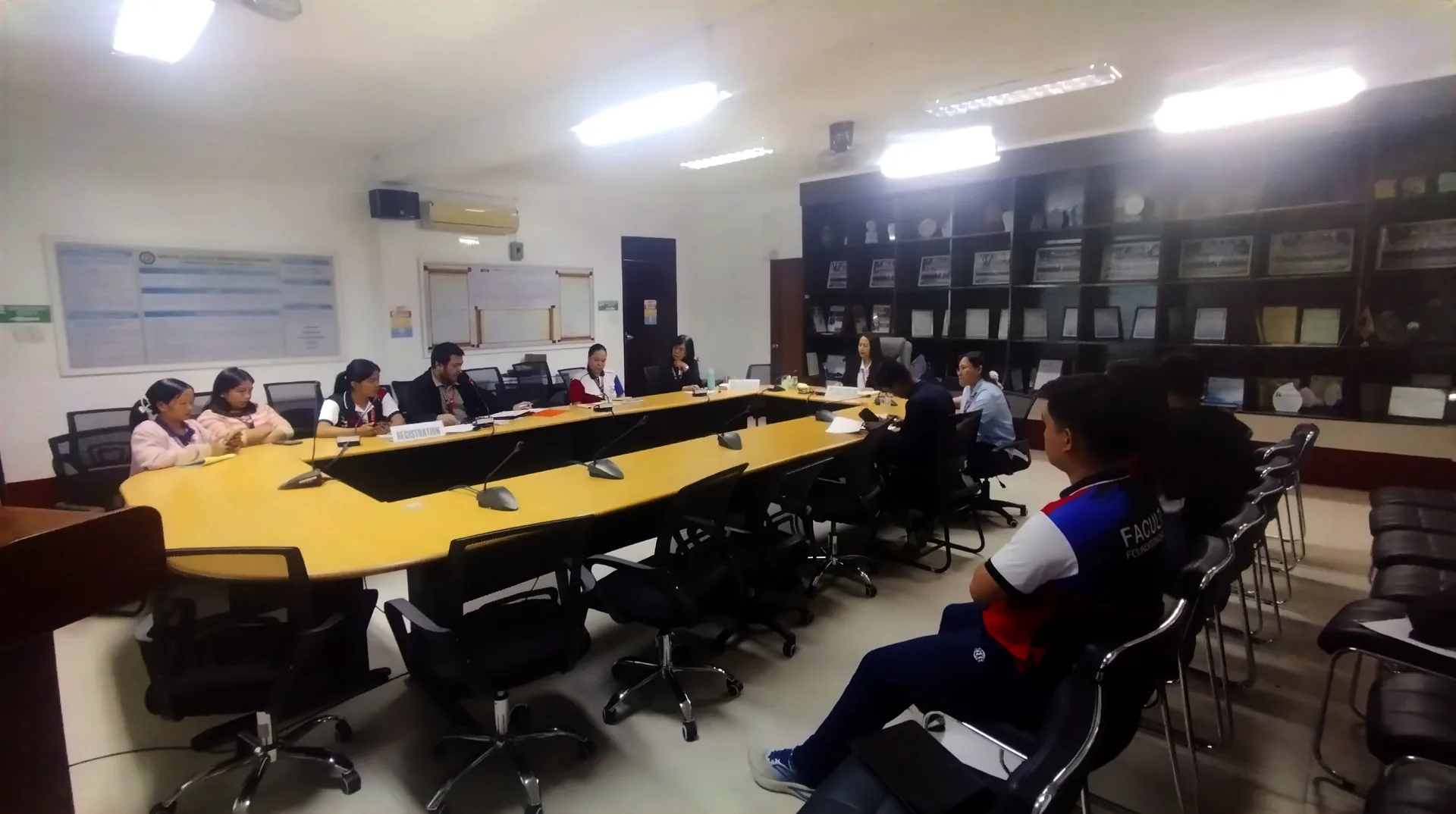
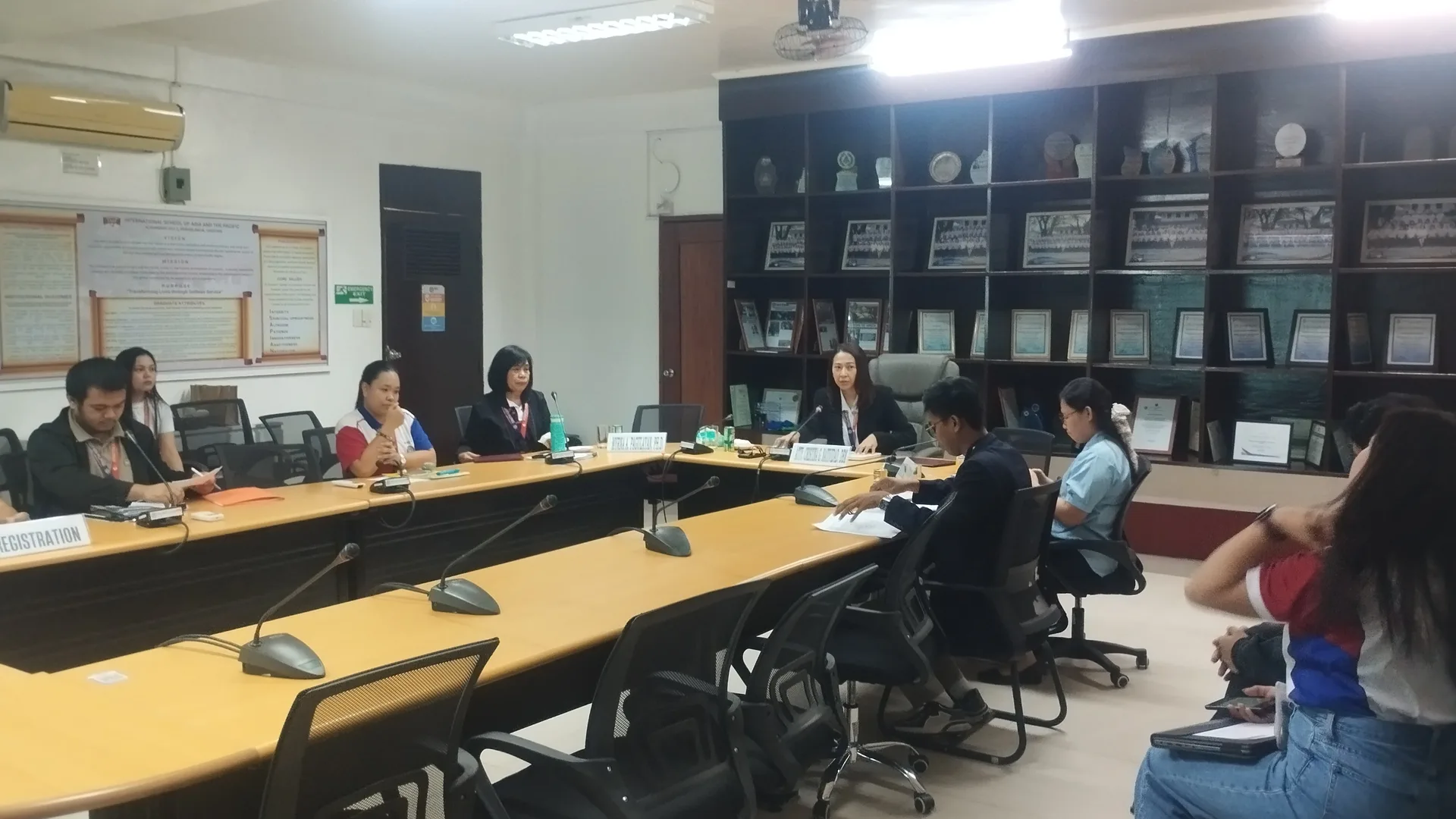
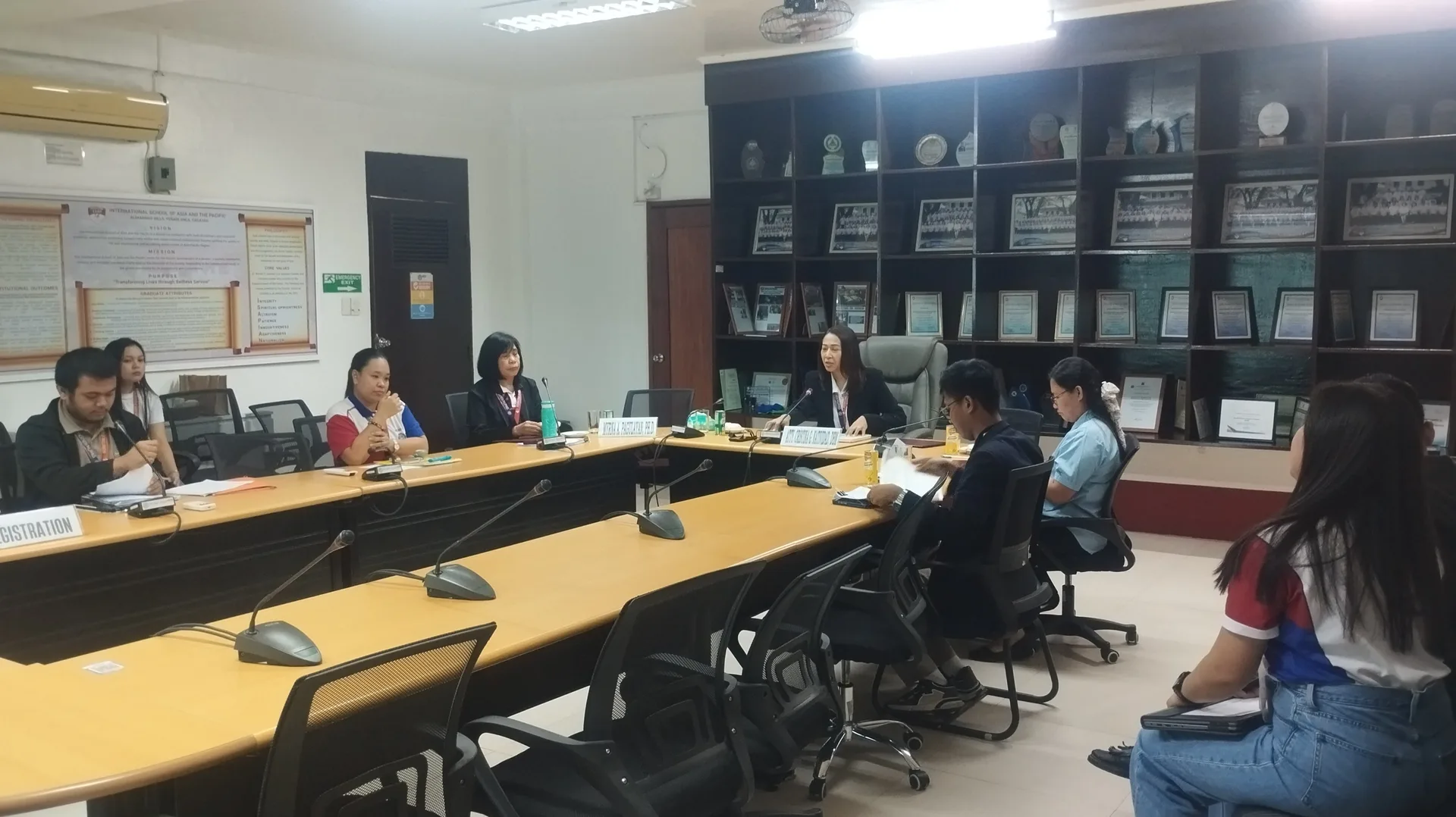
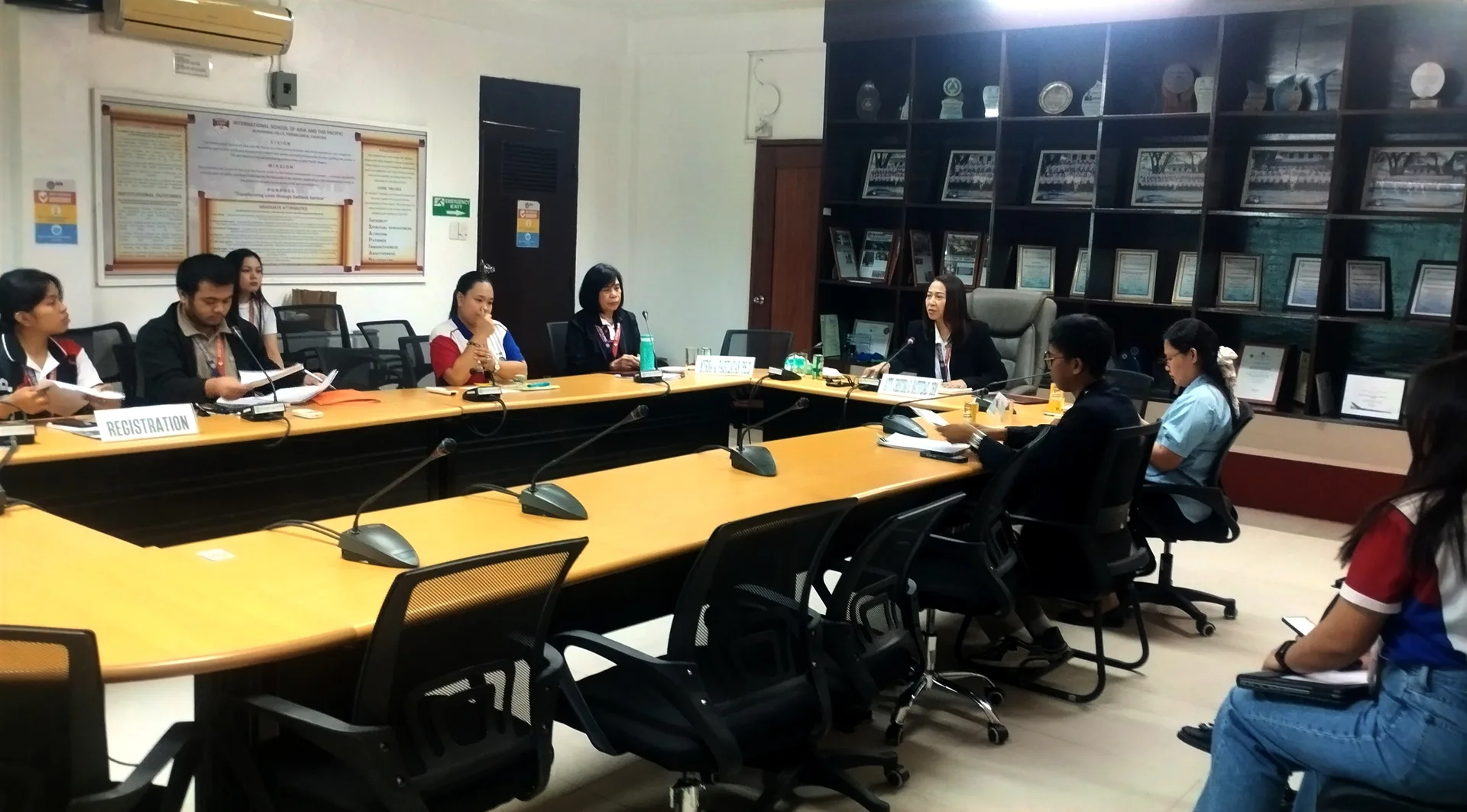
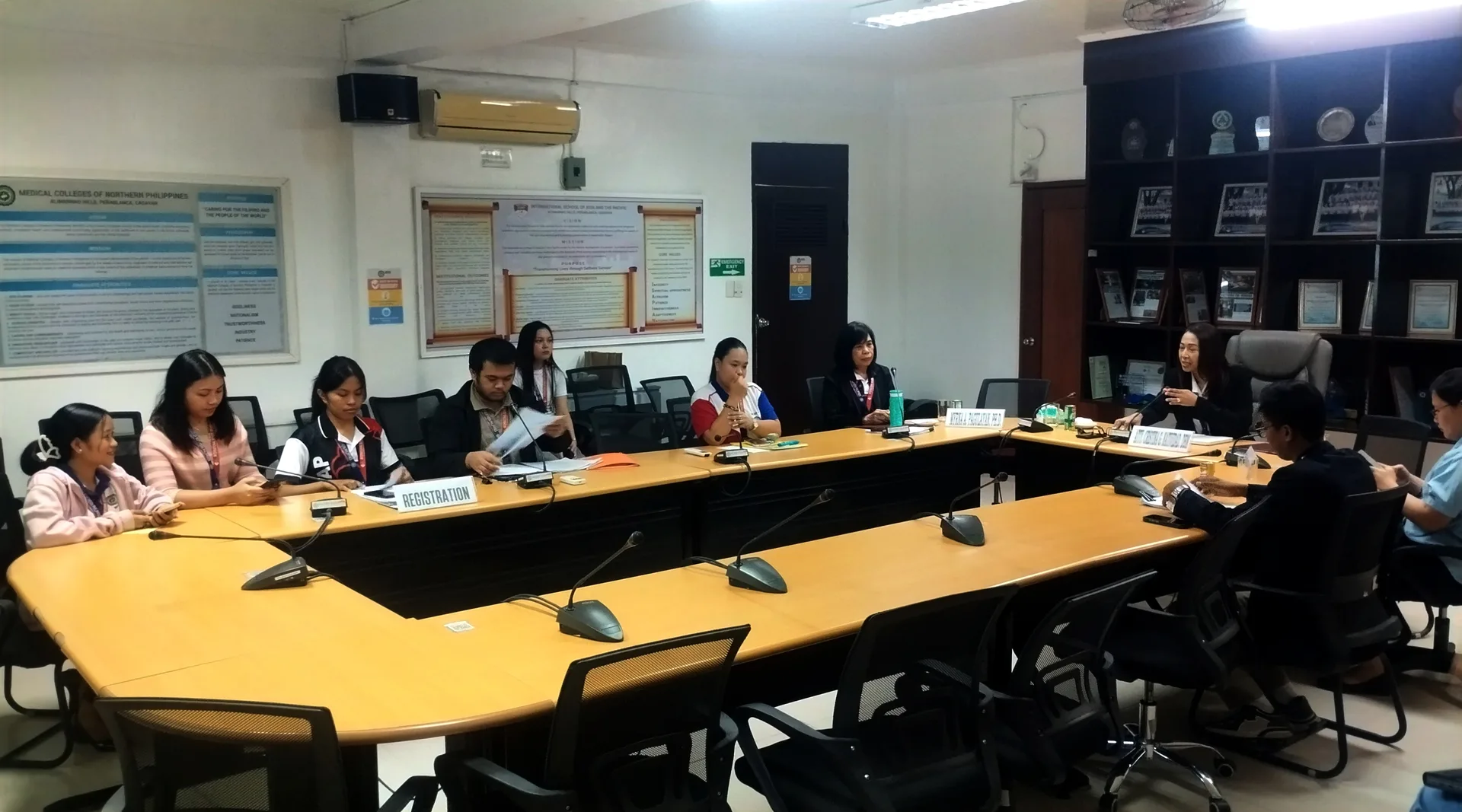
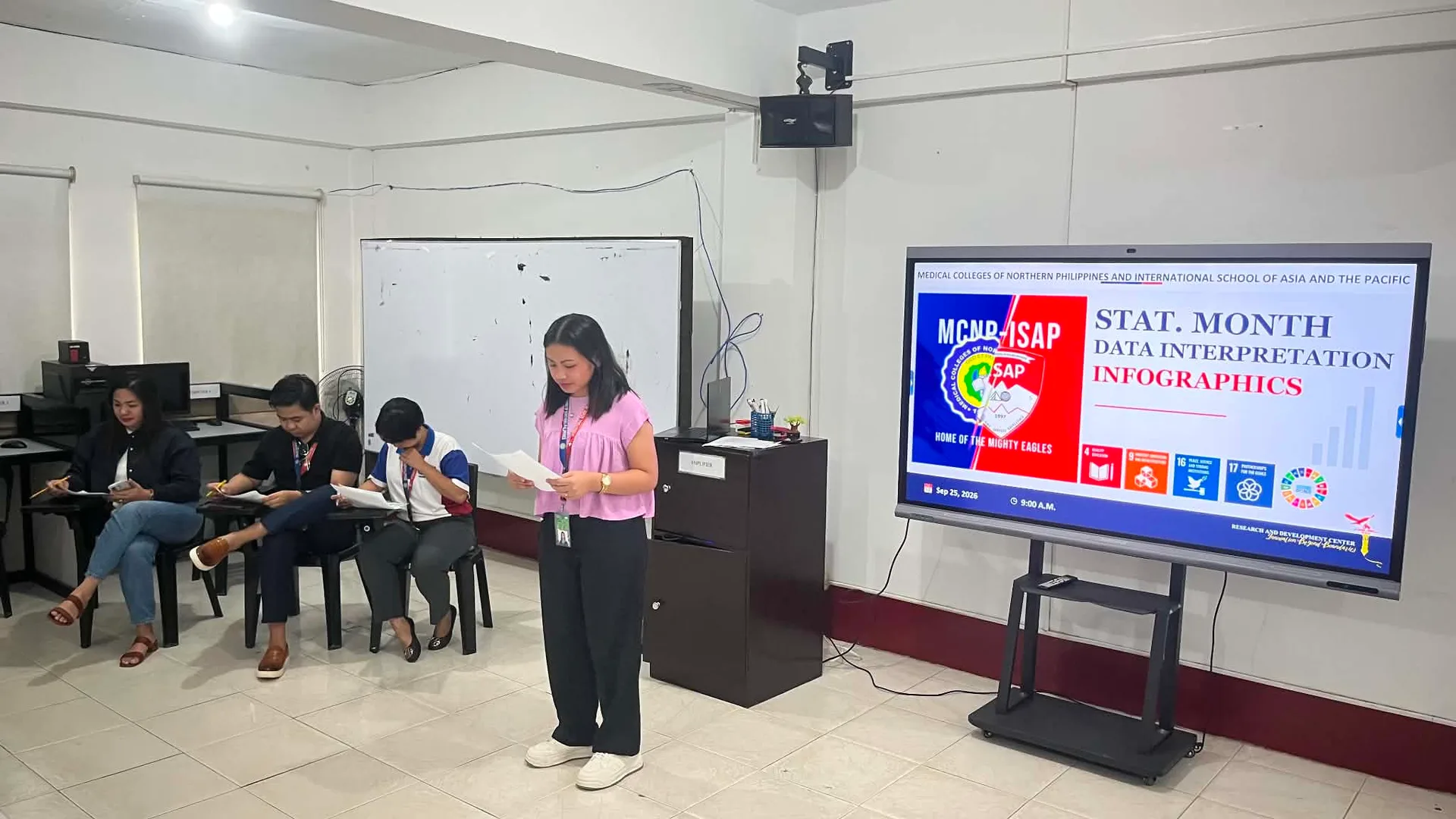
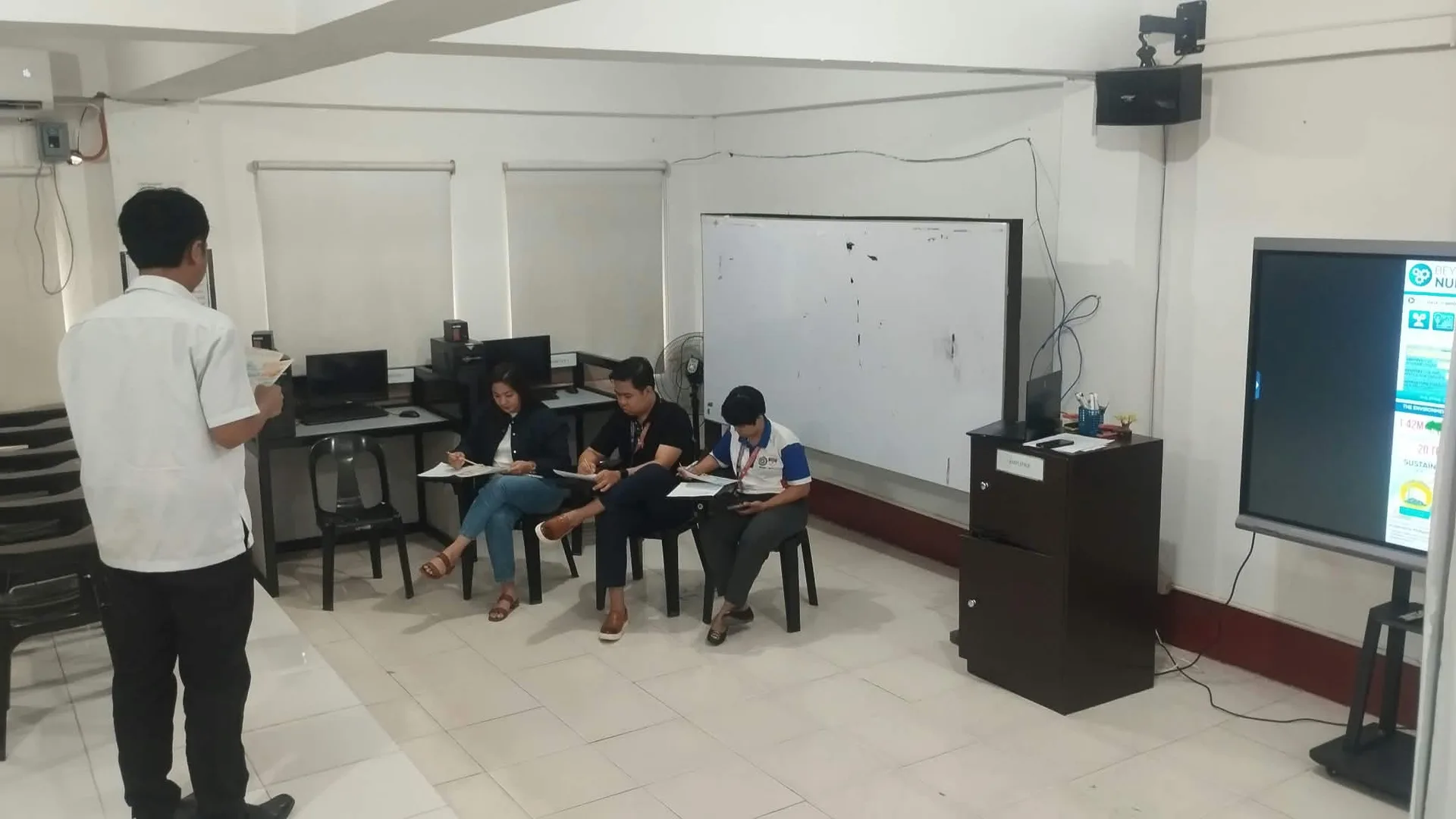
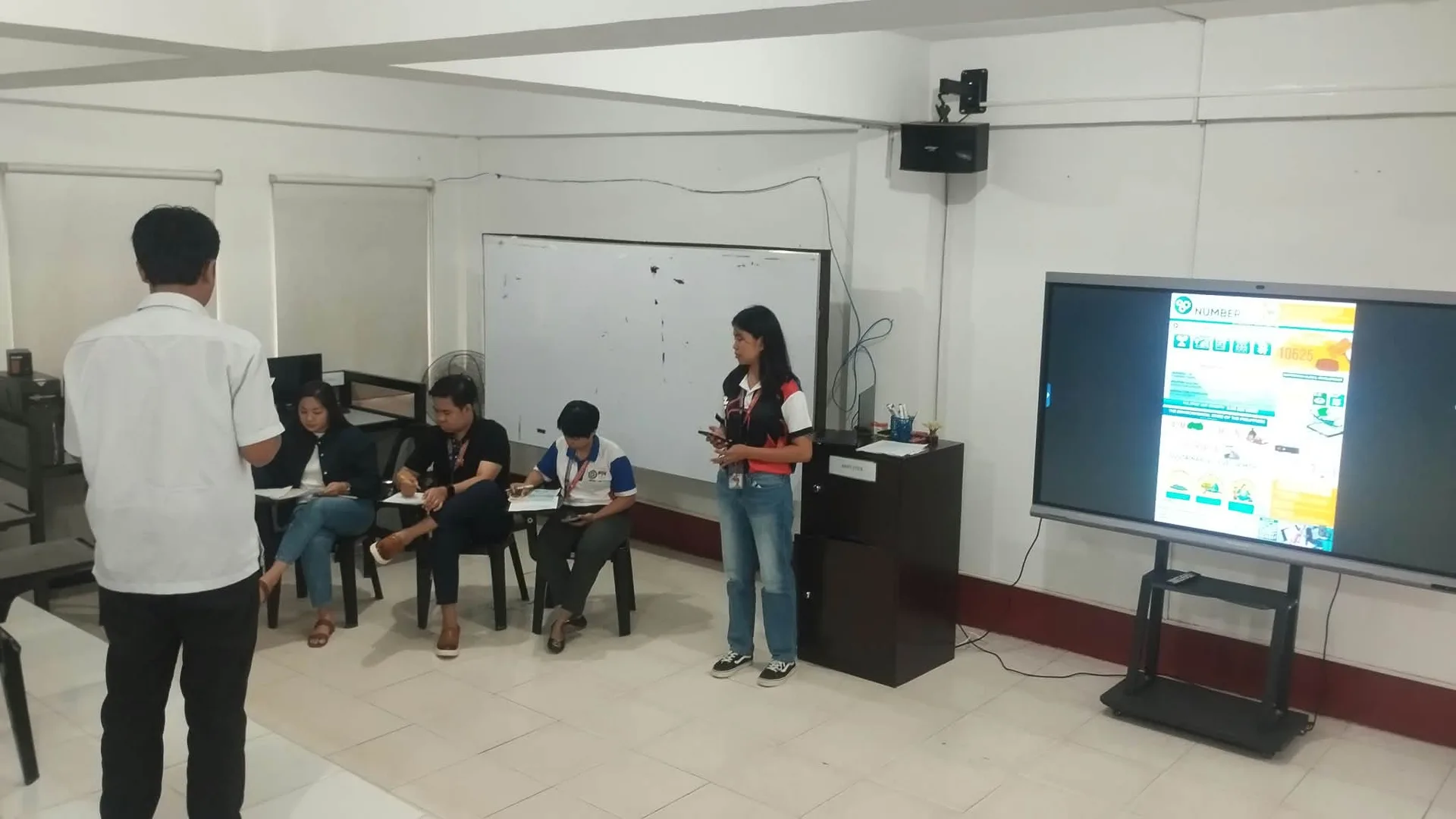
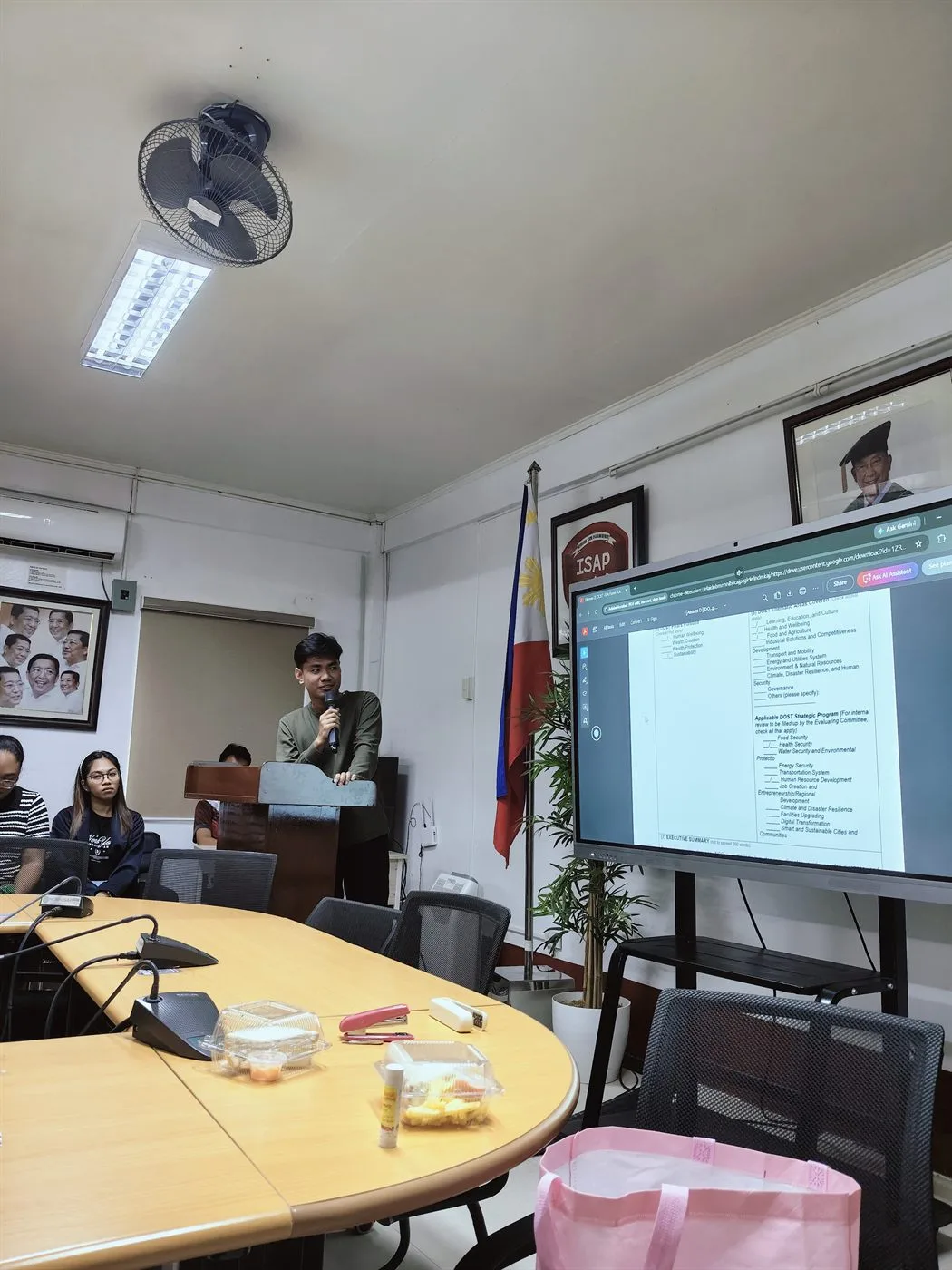
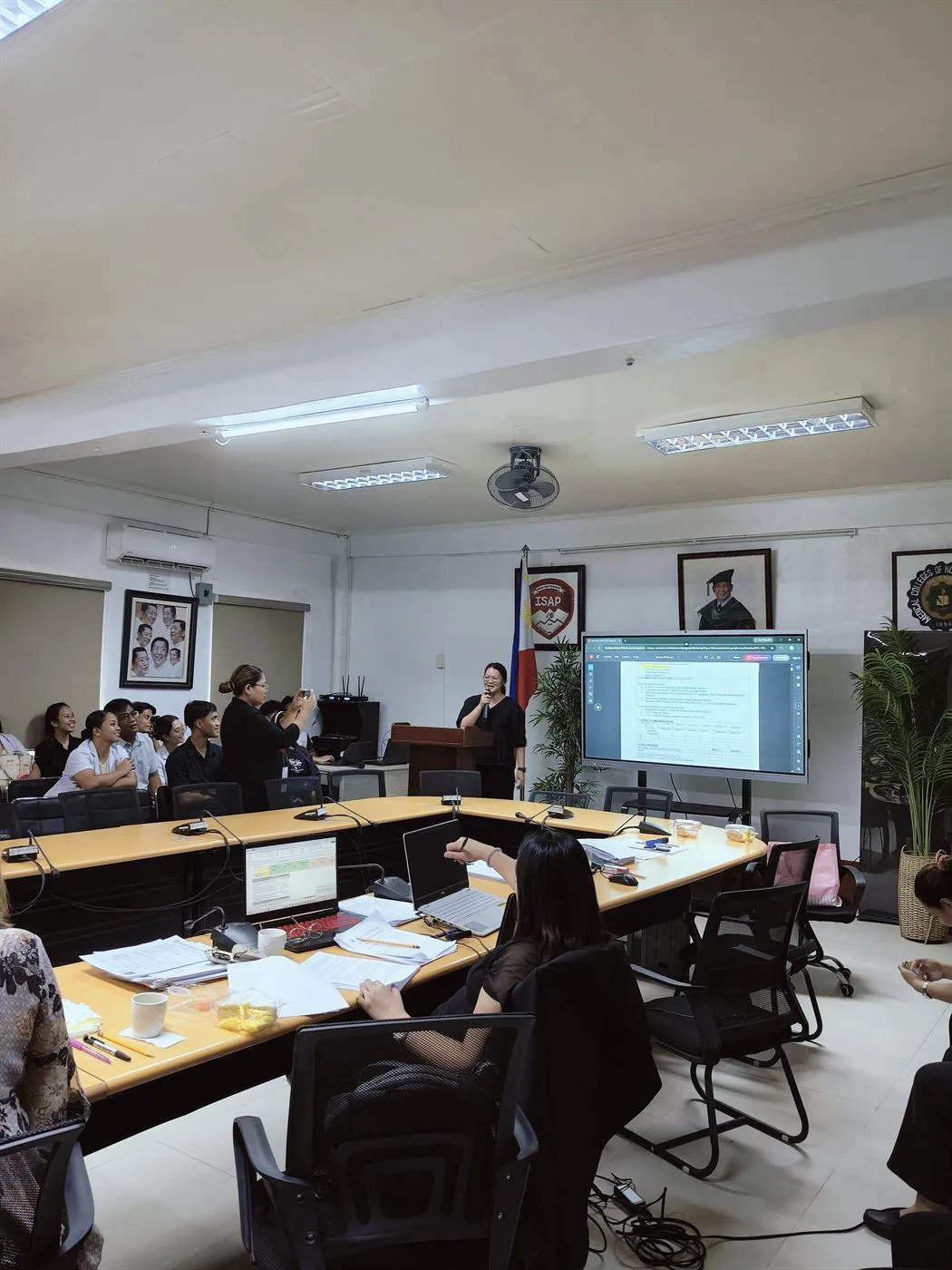
The International School of Asia and the Pacific (ISAP), in coordination with the Research and Development Center (RDC) of MCNP–ISAP, conducted the High School Faculty Research Proposal Defense on November 20, 2026, at the institutional boardroom. The activity provided an academic platform for high school faculty researchers to present their proposed studies, engage in scholarly discussions, and receive constructive feedback aimed at strengthening the quality, relevance, and feasibility of their research.

The proposal defense highlighted the institution's commitment to promoting a research-oriented academic environment where faculty members are encouraged to engage in scientific inquiry, critical thinking, and evidence-based educational practices. Through the presentation and evaluation of research proposals, the activity supported the development of research competencies and the continuous improvement of scholarly work among educators.

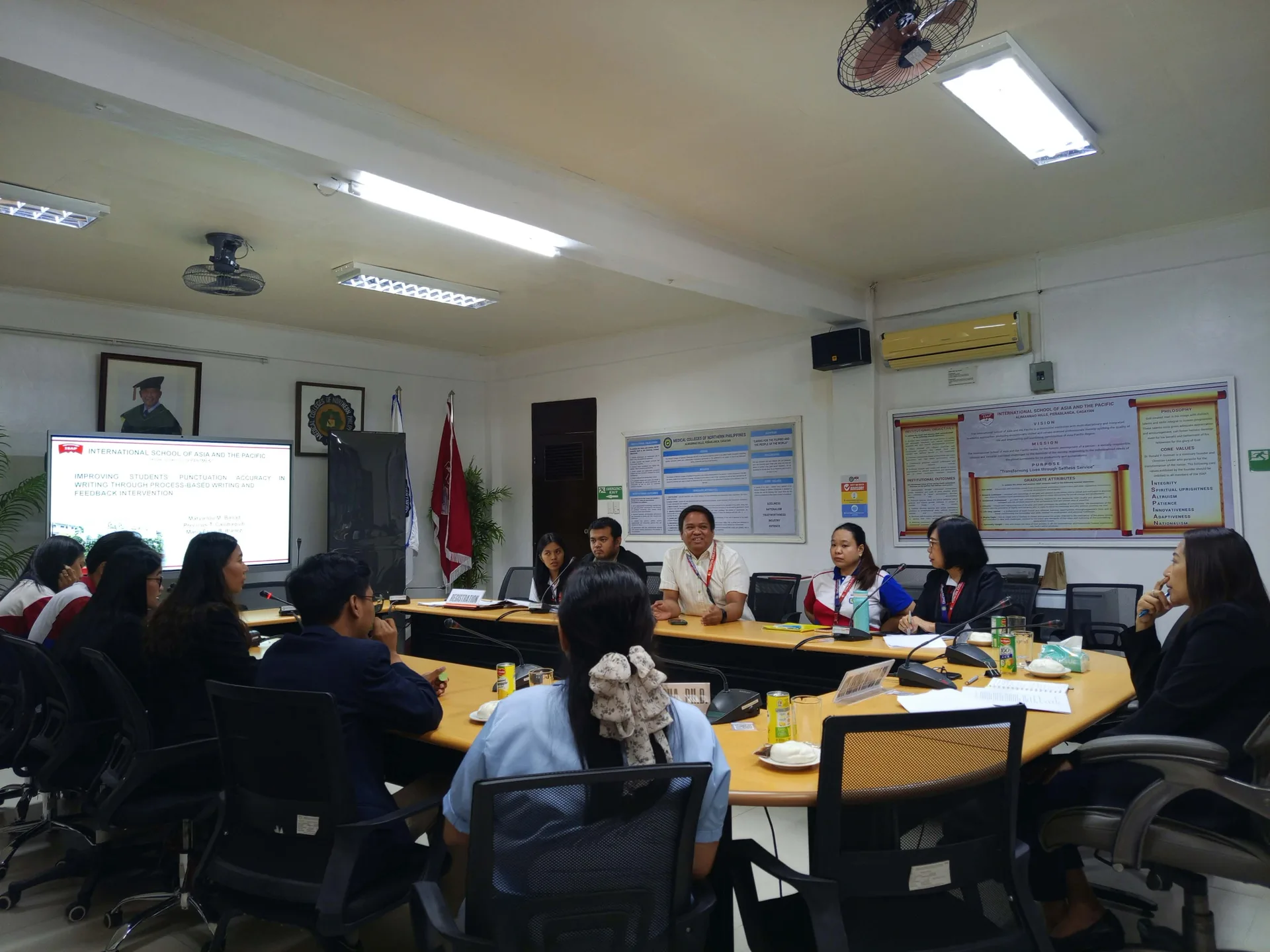
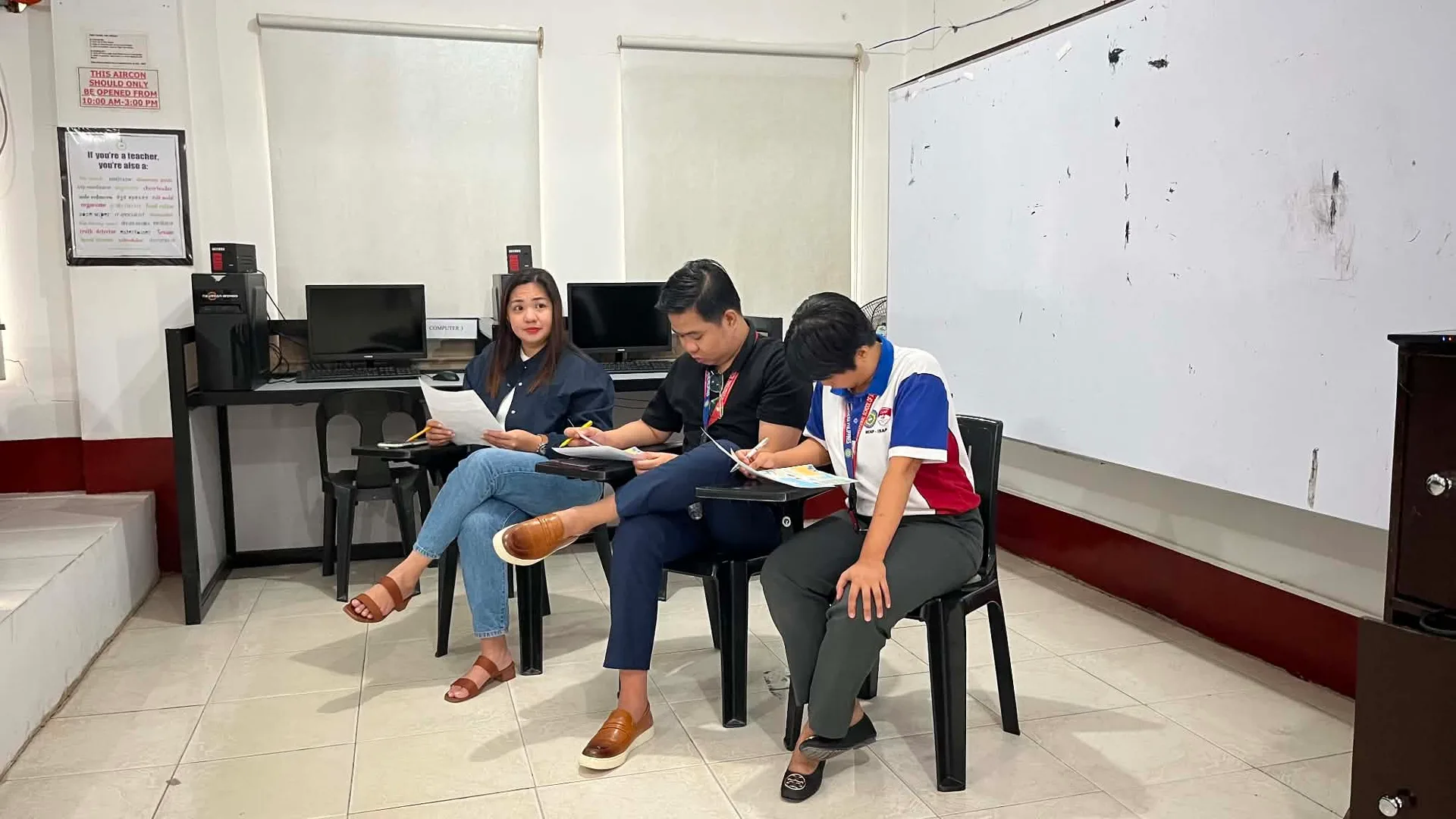
A central component of the activity was the presentation of proposed research studies before an evaluation panel. The defense provided an opportunity for faculty researchers to explain their research objectives, discuss their proposed methodologies, and respond to questions and recommendations intended to refine their studies before implementation.

The MCNP–ISAP Research and Development Center, under the leadership of Dr. Ryan C. Fontanilla, Research Director, played a coordinating role in the activity. The official program identified Dr. Fontanilla as responsible for presenting the rationale and objectives of the research defense, introducing the studies and their authors, acknowledging the panel members, and delivering the closing message. His involvement highlighted the RDC's role in supporting faculty research development and promoting academic research standards within the institution.

The activity also brought together faculty researchers, academic leaders, and research evaluators in a collaborative setting that encouraged constructive academic dialogue. The presentation of certificates of appreciation recognized participants' contributions to the research defense and the institution's continuing efforts to encourage scholarly engagement.

The research proposal defense primarily supports Sustainable Development Goal 4 – Quality Education, as it promotes faculty research capability, professional development, and the advancement of research-informed educational practices. It also demonstrates potential relevance to SDG 9 – Industry, Innovation and Infrastructure by encouraging systematic inquiry and the development of research proposals that may contribute to institutional innovation and improvement.

The activity also demonstrates WURI-relevant educational practices through faculty research proposal presentations, collaborative academic discussion, and constructive evaluation. These practices support research capability development and help faculty members refine studies addressing teaching, learning, and institutional needs.

The activity also aligns with the MCNP–ISAP RDC INNOVATES Research Agenda 2026–2030, particularly INSPIRE – Culture, Capability, and Engagement, by encouraging faculty participation in research and strengthening professional competencies; NURTURE – Ethics, Quality, and Accountability, through research evaluation and the promotion of academic standards; and OPERATIONALIZE – Knowledge Utilization, Innovation, and Improvement, through the potential application of research findings to educational practices and institutional development.

The conduct of the High School Faculty Research Proposal Defense reflects the institution's continuing efforts to strengthen faculty research participation and provide opportunities for professional and scholarly growth. By engaging educators in research proposal development and academic evaluation, the activity contributes to fostering a culture that values inquiry, collaboration, and evidence-informed decision-making.

Through this initiative, ISAP and the MCNP–ISAP Research and Development Center reaffirm their commitment to supporting faculty researchers, promoting quality research practices, and strengthening the role of research in educational excellence and institutional development.

RDC SDG Alignment

SDG 4 – Quality Education (Primary Alignment)

Promotes faculty research development, scholarly engagement, professional learning, and research-informed educational improvement.

SDG 9 – Industry, Innovation and Infrastructure (Potential Alignment)

Encourages the development of research proposals that may contribute to innovation and institutional improvement.

WURI Best Practices

The proposal defense supports an application-based approach to faculty development by providing opportunities to present research proposals, exchange ideas, and receive constructive feedback.

This process strengthens research planning and connects scholarly inquiry with educational and institutional concerns.

RDC Agenda Alignment

INSPIRE – Culture, Capability, and Engagement

Supports faculty research participation, professional growth, and the development of research-related competencies.

NURTURE – Ethics, Quality, and Accountability

Encourages academic evaluation, research quality, and accountability in the development of research proposals.

OPERATIONALIZE – Knowledge Utilization, Innovation, and Improvement

Highlights the potential for faculty research to inform future educational practices and institutional improvements.

Photo Documentation

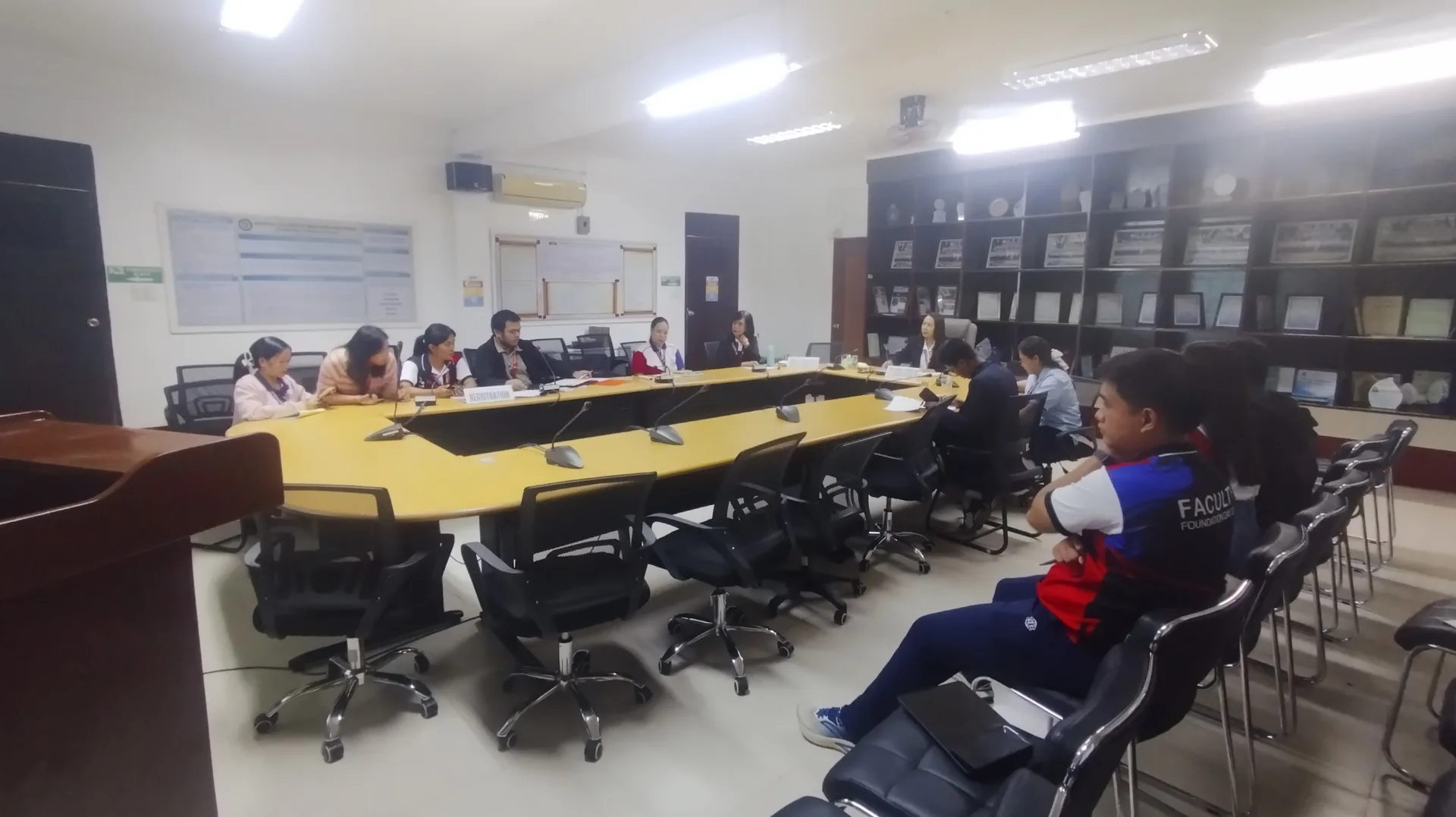
All 59 supplied images from the November 20 faculty proposal defense documentation. Select a photo to view it at full size.

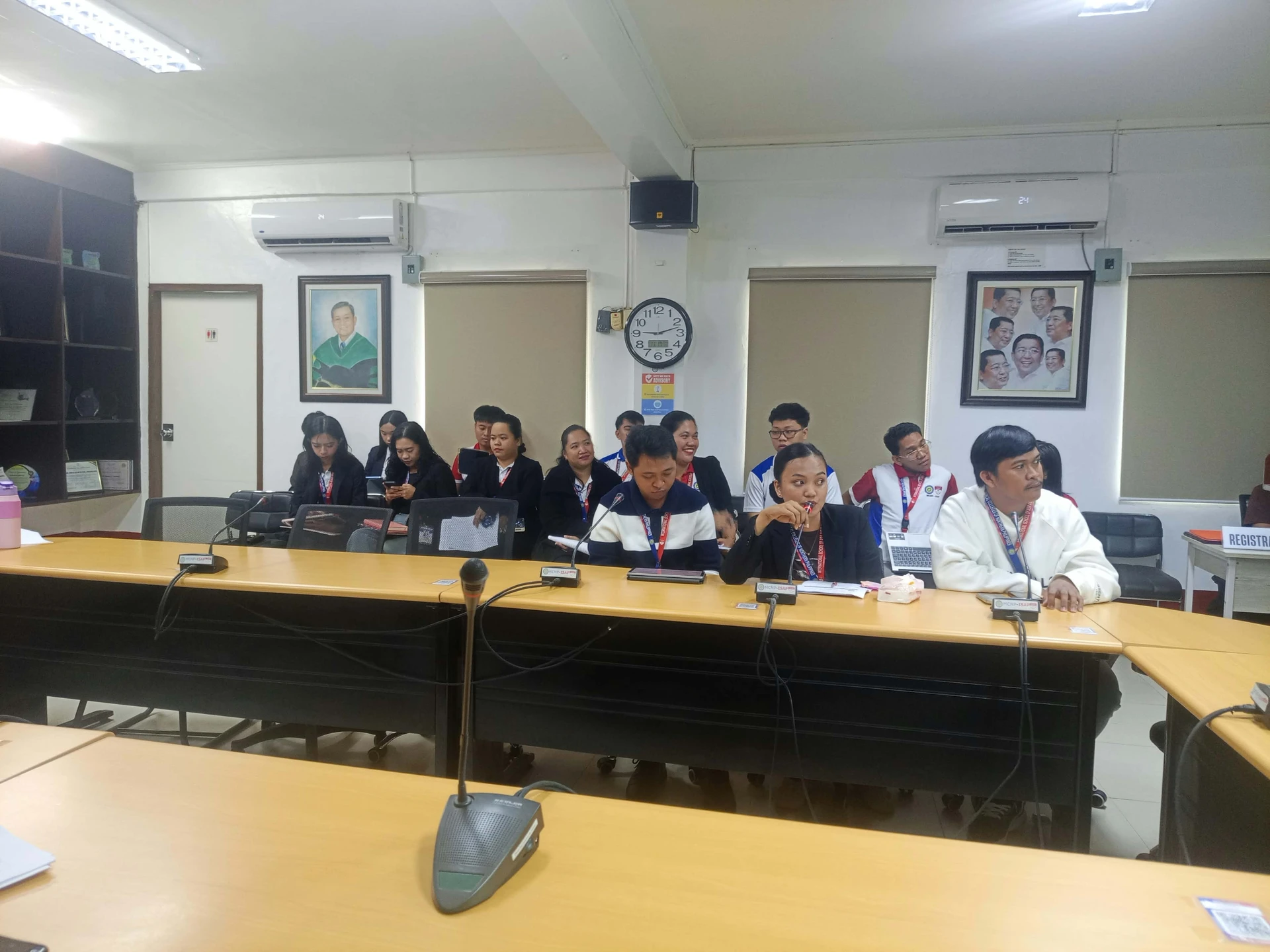
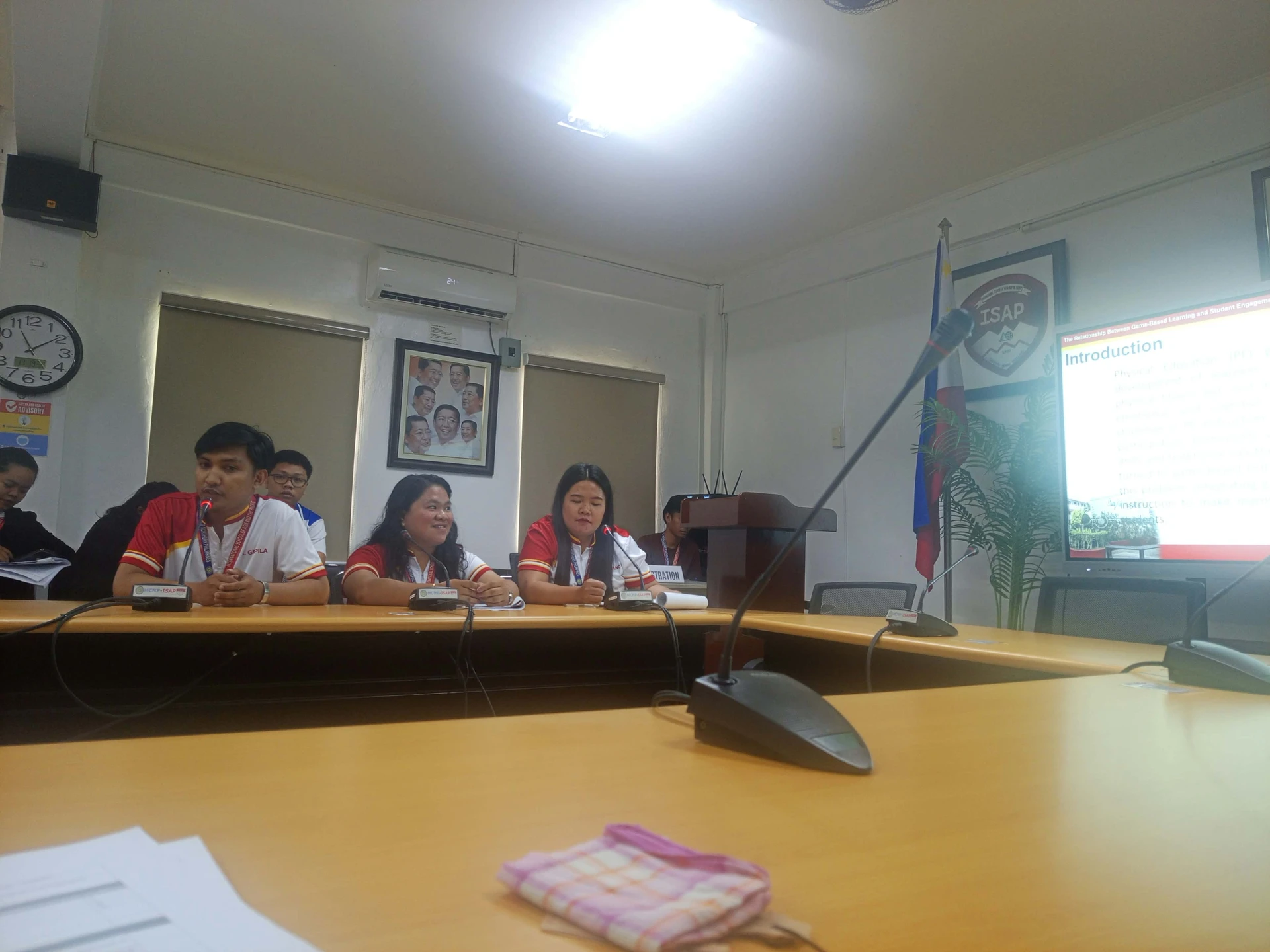
High School Faculty Research Proposal Defense at the institutional boardroom, November 20, 2026.
Faculty researchers and participants with their certificates following the proposal defense.
High School Faculty Research Proposal Defense at the institutional boardroom, November 20, 2026.
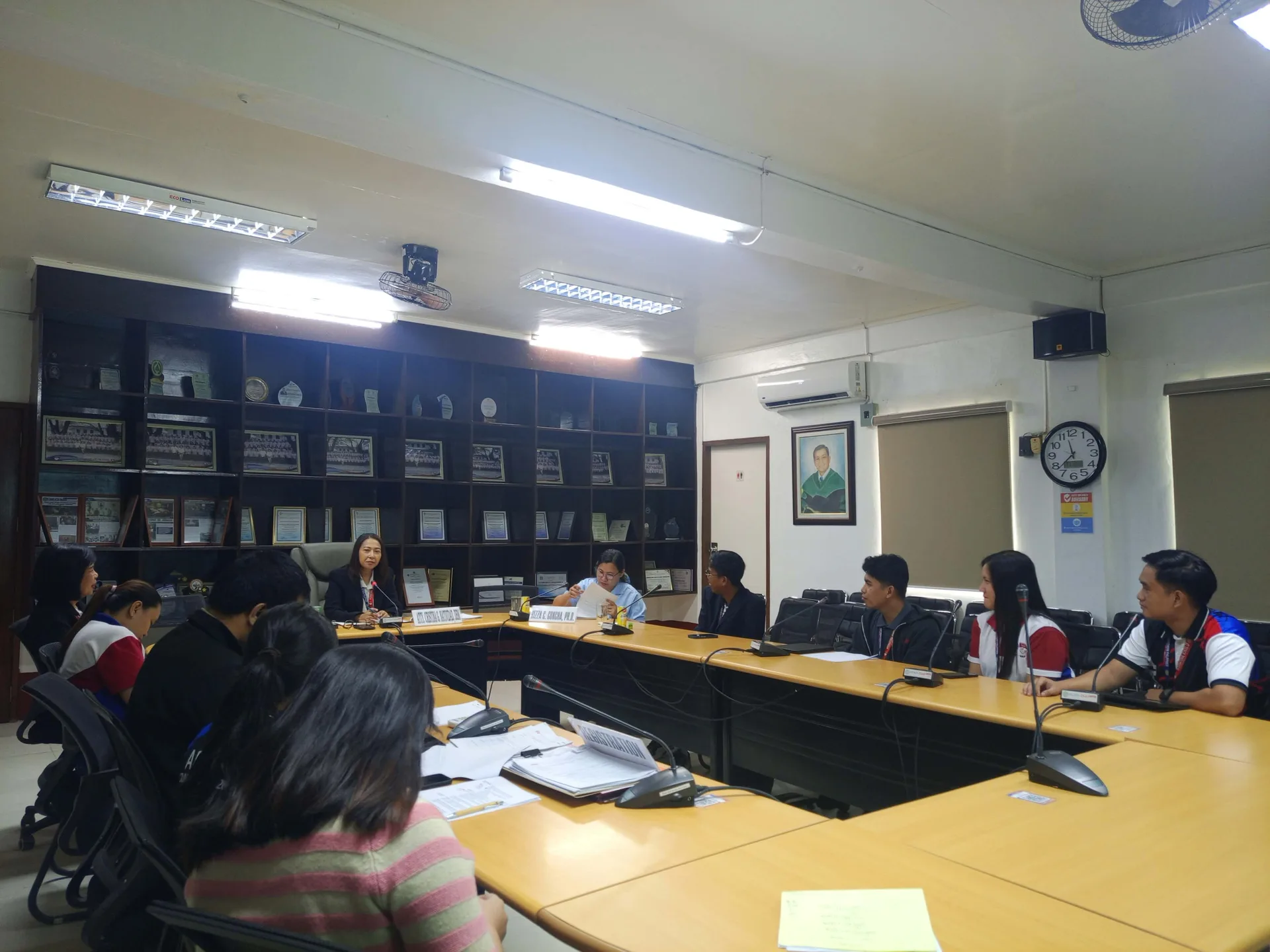
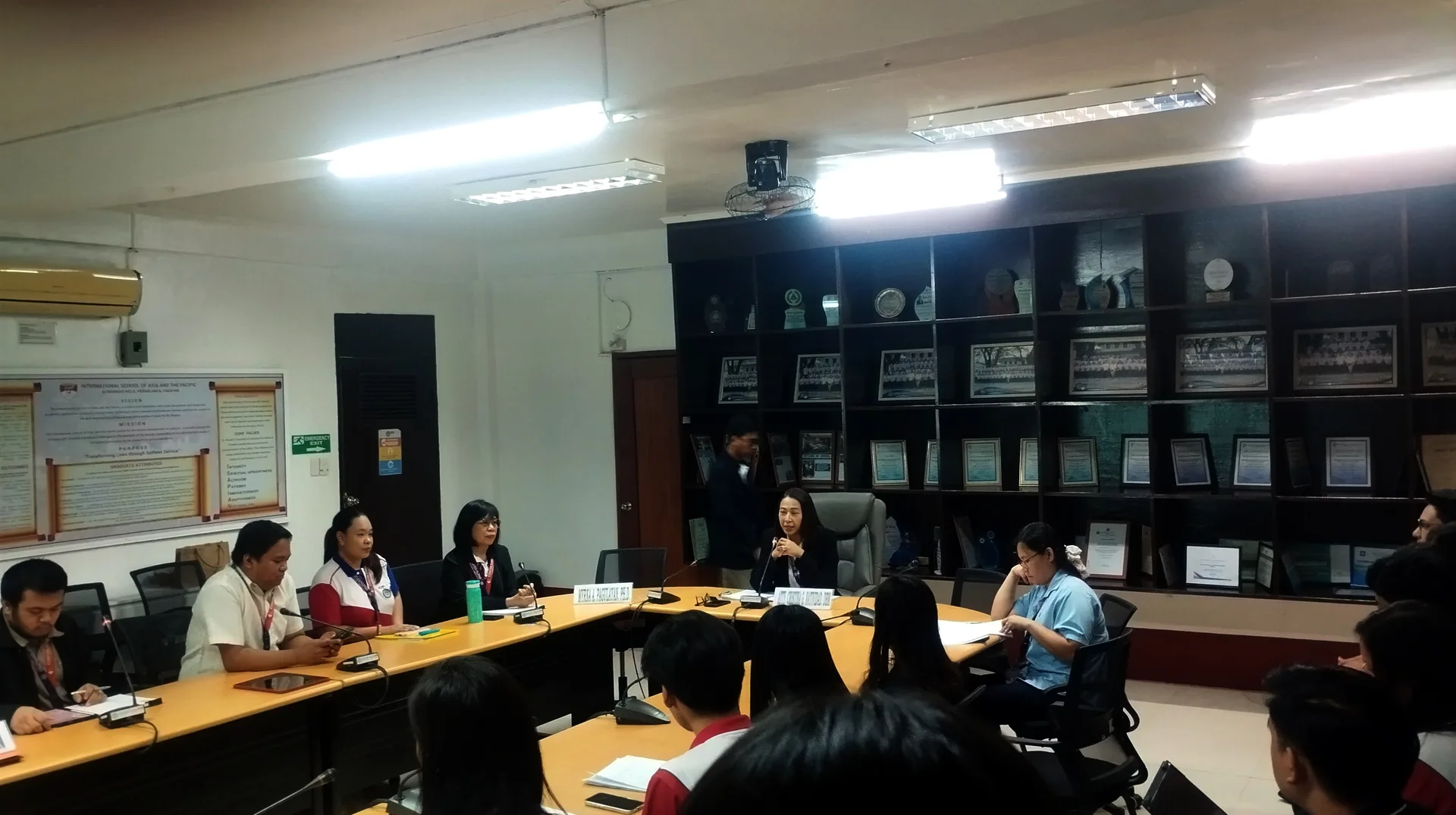
Panel members discuss a faculty research proposal.
High School Faculty Research Proposal Defense at the institutional boardroom, November 20, 2026.
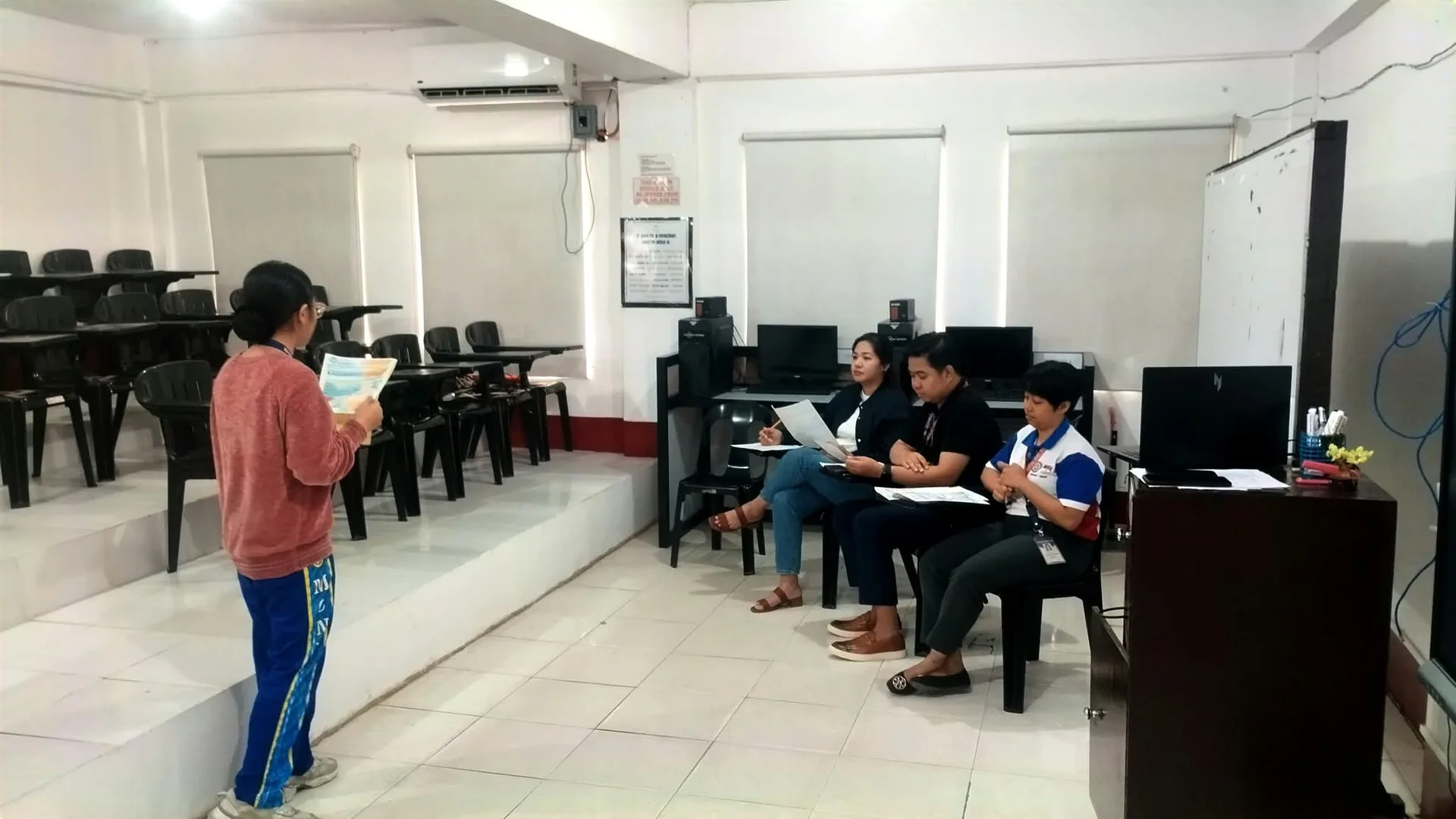
A faculty researcher presents a proposed study to the evaluation panel.
High School Faculty Research Proposal Defense at the institutional boardroom, November 20, 2026.
Research evaluators review proposal materials during the defense.
High School Faculty Research Proposal Defense at the institutional boardroom, November 20, 2026.
Faculty researchers take part in academic discussion at the institutional boardroom.
High School Faculty Research Proposal Defense at the institutional boardroom, November 20, 2026.
A presentation session brings together faculty researchers and evaluators.
High School Faculty Research Proposal Defense at the institutional boardroom, November 20, 2026.
Participants engage in the proposal defense and feedback session.
High School Faculty Research Proposal Defense at the institutional boardroom, November 20, 2026.
Faculty members continue their scholarly exchange during the research activity.
High School Faculty Research Proposal Defense at the institutional boardroom, November 20, 2026.
Faculty members and evaluators gather around the boardroom table.
Faculty researchers and participants with their certificates following the proposal defense.
Faculty researchers and participants display their certificates after the proposal defense.
Faculty researchers and participants with their certificates following the proposal defense.
MCNP BS Pharmacy final research defense, November 19, 2026 · Documentation photo 1
BS Pharmacy Final Research Defense · MCNP · November 19, 2026

The Medical Colleges of Northern Philippines (MCNP) conducted the Bachelor of Science in Pharmacy Final Research Defense on November 19, 2026, providing pharmacy students with an academic platform to present and defend their completed research studies as part of their scholarly development and professional preparation.

The activity highlighted the importance of research in pharmacy education, particularly in strengthening students' scientific inquiry, critical thinking, data interpretation, and understanding of evidence-based pharmaceutical practices. Through the final research defense, students engaged in scholarly discussions focused on the presentation and evaluation of their research findings.

As a culminating stage of the research process, the final defense provided an opportunity for pharmacy students to explain their research objectives, discuss the methodologies employed, present their findings, and communicate the significance of their completed investigations. The academic evaluation process emphasized the importance of research quality, scientific reasoning, and constructive feedback in strengthening scholarly work.

The activity also reinforced the role of research in preparing future pharmacy professionals who recognize the importance of scientific evidence in pharmaceutical sciences, medication-related knowledge, and healthcare practice. By presenting completed research studies, students participated in an academic exercise that connected theoretical knowledge with systematic investigation.

The MCNP–ISAP Research and Development Center (RDC) recognizes the significance of final research defenses in strengthening institutional research engagement and promoting a culture of scientific inquiry. Activities of this nature contribute to the institution's broader commitment to academic excellence, research development, and the preparation of future healthcare professionals.

The activity primarily supports Sustainable Development Goal 4 – Quality Education by providing opportunities for research-oriented learning, scientific communication, critical thinking, and academic development. It also demonstrates relevance to SDG 3 – Good Health and Well-Being, considering the relationship between pharmaceutical research, medication knowledge, and evidence-based healthcare practices.

From the perspective of the World University Rankings for Innovation (WURI), the activity demonstrates potential relevance through student research engagement, scientific problem-solving, and the presentation of completed research studies that may address concerns in pharmaceutical sciences and healthcare. The final defense provides a platform for scholarly knowledge exchange and the discussion of research findings that may contribute to future improvements in professional practice.

The activity also aligns with the MCNP–ISAP RDC INNOVATES Research Agenda 2026–2030, particularly INSPIRE – Culture, Capability, and Engagement, by encouraging student participation in research and strengthening scientific competencies; NURTURE – Ethics, Quality, and Accountability, through research evaluation and the promotion of academic standards; and OPERATIONALIZE – Knowledge Utilization, Innovation, and Improvement, through the potential application of completed pharmaceutical research findings to professional practice and institutional learning.

The Pharmacy Final Research Defense reflects MCNP's commitment to strengthening student research participation and providing opportunities for academic and professional growth. By engaging pharmacy students in the presentation and defense of completed studies, the activity supports a research-oriented learning environment that values scientific inquiry, academic accountability, and evidence-informed decision-making.

Through the Bachelor of Science in Pharmacy Final Research Defense, MCNP continues to promote research excellence and scholarly engagement, supporting the development of future pharmacy professionals equipped with research competencies and an appreciation of the role of scientific investigation in advancing pharmaceutical education and healthcare practice.

RDC SDG Alignment

SDG 4 – Quality Education (Primary)

Supports scientific inquiry, research communication, academic evaluation, and the development of research competencies among pharmacy students.

SDG 3 – Good Health and Well-Being (Supporting)

Reflects the relevance of pharmaceutical research to medication knowledge, healthcare services, and evidence-based professional practice.

WURI Best Practices

The activity demonstrates potential relevance to the World University Rankings for Innovation (WURI) through student research engagement, scientific problem-solving, and the presentation of completed research studies relevant to pharmaceutical sciences and healthcare.

The final defense provides an academic platform for knowledge exchange, scholarly evaluation, and discussion of research findings that may contribute to future improvements in pharmaceutical education and professional practice.

RDC Agenda Alignment

INSPIRE – Culture, Capability, and Engagement

Encourages student research participation, scientific communication, and the development of research-related competencies.

NURTURE – Ethics, Quality, and Accountability

Supports academic evaluation, responsible research practices, and the promotion of research quality.

OPERATIONALIZE – Knowledge Utilization, Innovation, and Improvement

Highlights the potential contribution of completed pharmaceutical research to future professional practice, healthcare knowledge, and institutional improvement.

Photo Documentation

BS Pharmacy Final Research Defense · November 19, 2026 · 18 documentation photos

MCNP BS Pharmacy final research defense, November 19, 2026 · Documentation photo 1
Pharmacy Final Research Defense · Photo 1
MCNP BS Pharmacy final research defense, November 19, 2026 · Documentation photo 2
Pharmacy Final Research Defense · Photo 2
MCNP BS Pharmacy final research defense, November 19, 2026 · Documentation photo 3
Pharmacy Final Research Defense · Photo 3
MCNP BS Pharmacy final research defense, November 19, 2026 · Documentation photo 4
Pharmacy Final Research Defense · Photo 4
MCNP BS Pharmacy final research defense, November 19, 2026 · Documentation photo 5
Pharmacy Final Research Defense · Photo 5
MCNP BS Pharmacy final research defense, November 19, 2026 · Documentation photo 6
Pharmacy Final Research Defense · Photo 6
MCNP BS Pharmacy final research defense, November 19, 2026 · Documentation photo 7
Pharmacy Final Research Defense · Photo 7
MCNP BS Pharmacy final research defense, November 19, 2026 · Documentation photo 8
Pharmacy Final Research Defense · Photo 8
MCNP BS Pharmacy final research defense, November 19, 2026 · Documentation photo 9
Pharmacy Final Research Defense · Photo 9
MCNP BS Pharmacy final research defense, November 19, 2026 · Documentation photo 10
Pharmacy Final Research Defense · Photo 10
MCNP BS Pharmacy final research defense, November 19, 2026 · Documentation photo 11
Pharmacy Final Research Defense · Photo 11
MCNP BS Pharmacy final research defense, November 19, 2026 · Documentation photo 12
Pharmacy Final Research Defense · Photo 12
MCNP BS Pharmacy final research defense, November 19, 2026 · Documentation photo 13
Pharmacy Final Research Defense · Photo 13
MCNP BS Pharmacy final research defense, November 19, 2026 · Documentation photo 14
Pharmacy Final Research Defense · Photo 14
MCNP BS Pharmacy final research defense, November 19, 2026 · Documentation photo 15
Pharmacy Final Research Defense · Photo 15
MCNP BS Pharmacy final research defense, November 19, 2026 · Documentation photo 16
Pharmacy Final Research Defense · Photo 16
MCNP BS Pharmacy final research defense, November 19, 2026 · Documentation photo 17
Pharmacy Final Research Defense · Photo 17
MCNP BS Pharmacy final research defense, November 19, 2026 · Documentation photo 18
Pharmacy Final Research Defense · Photo 18
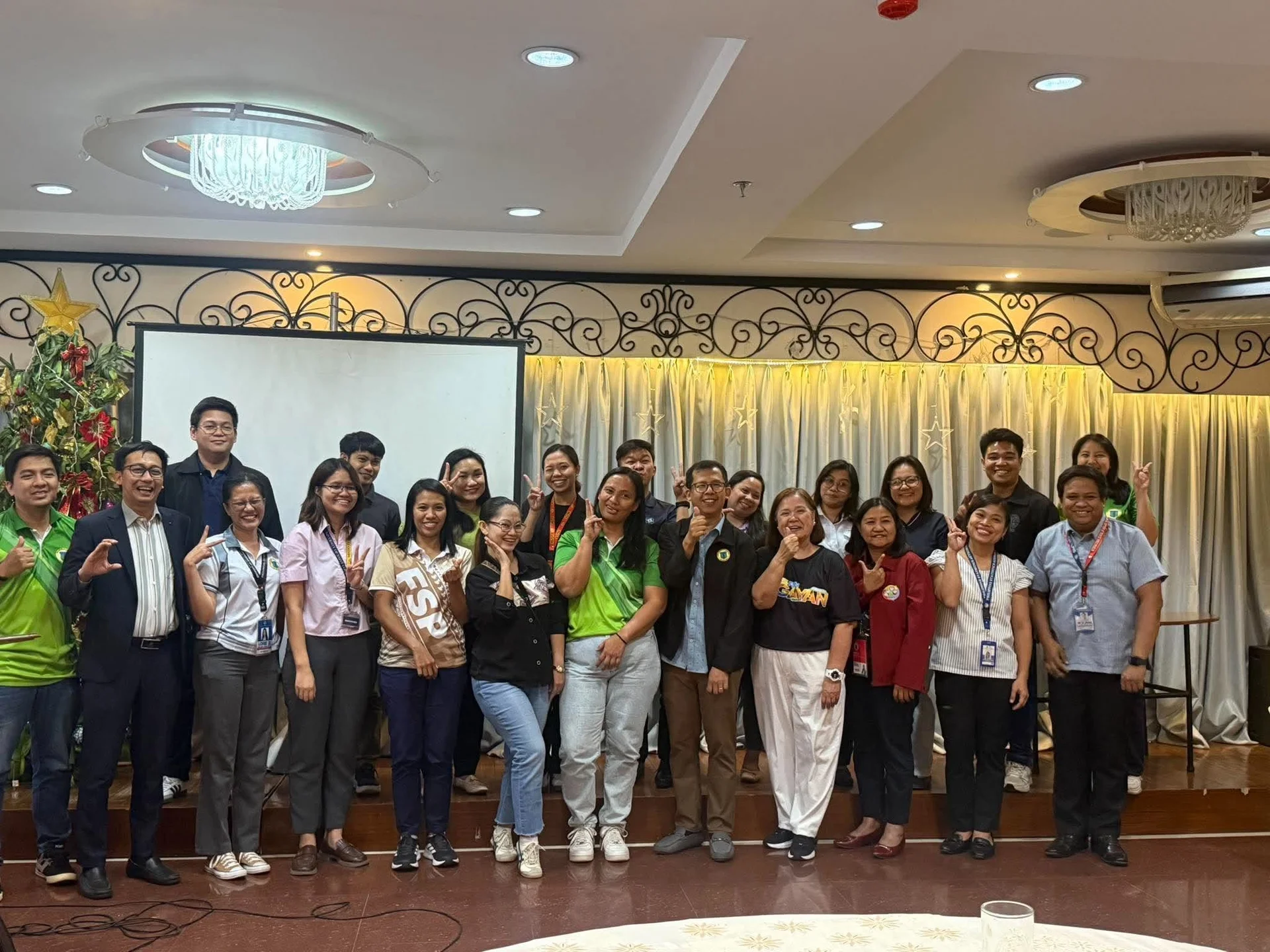
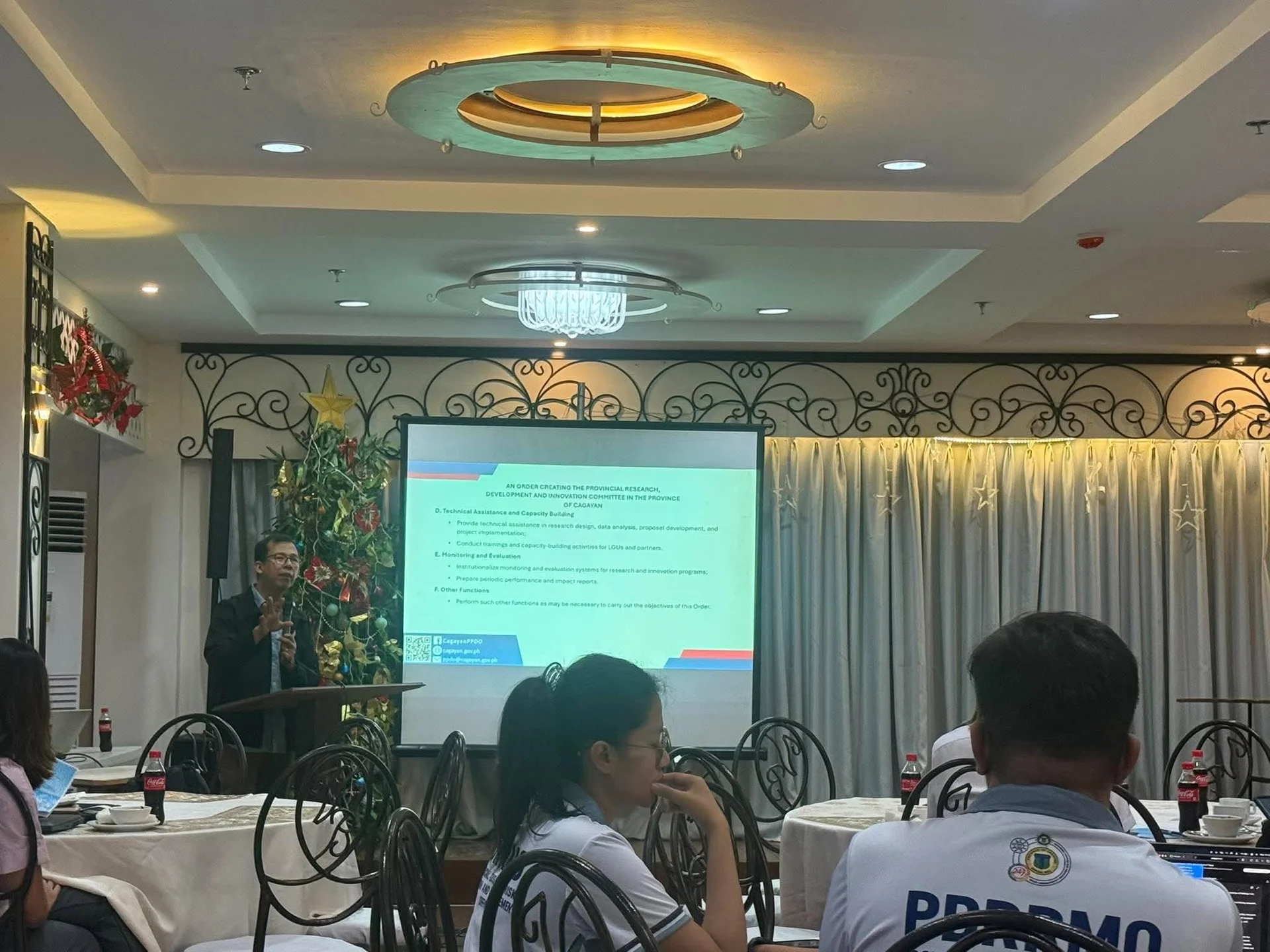
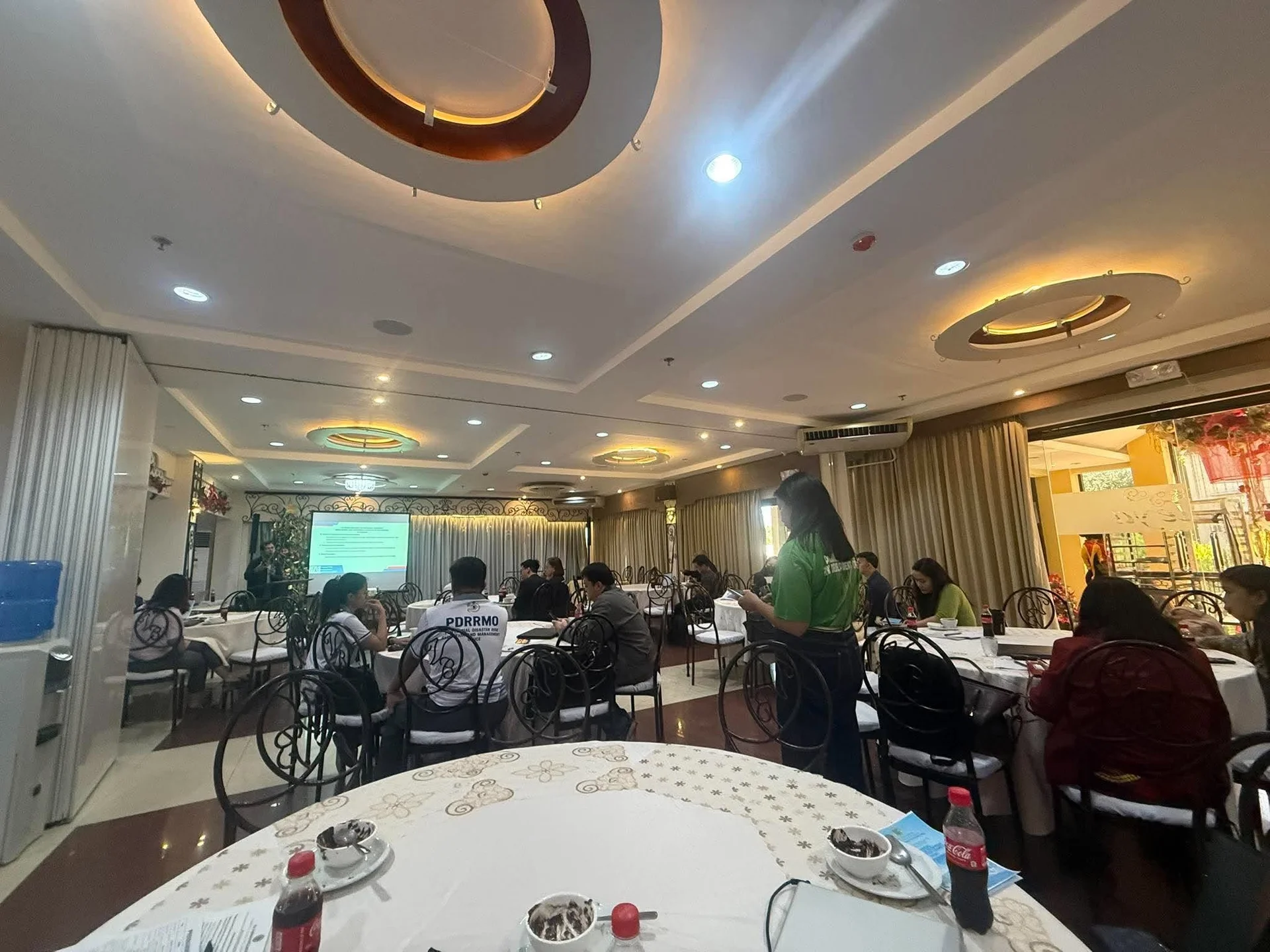
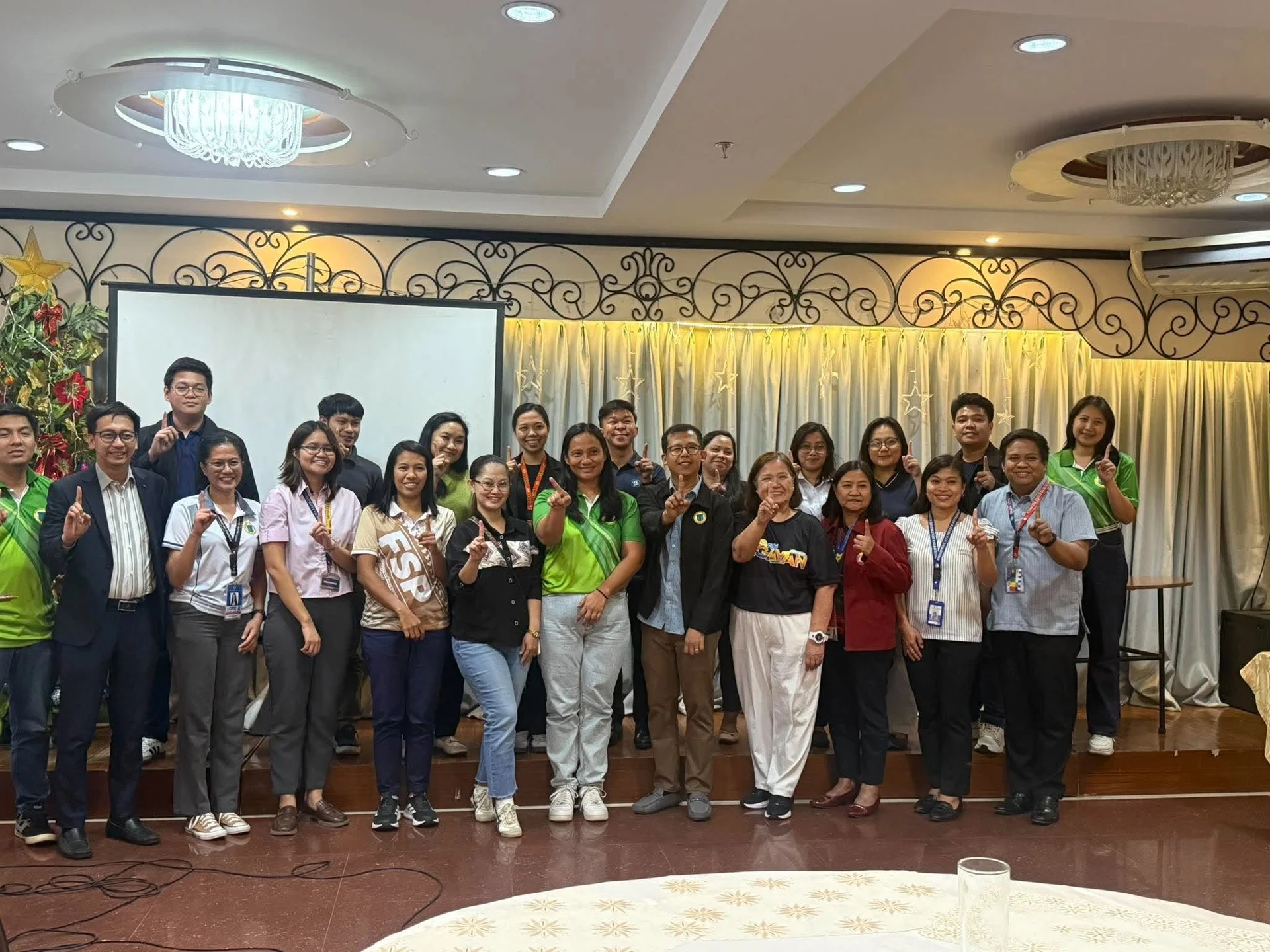
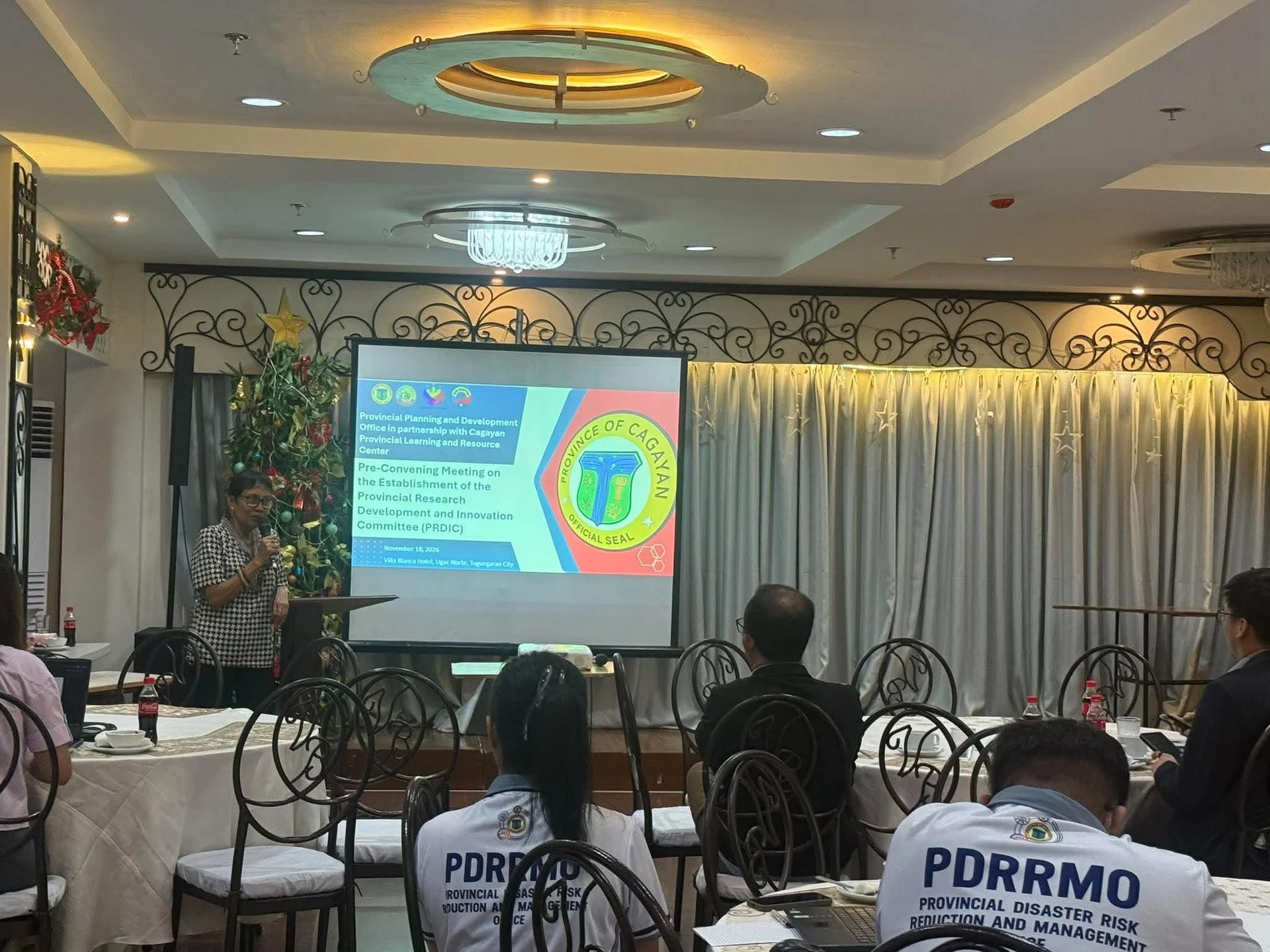
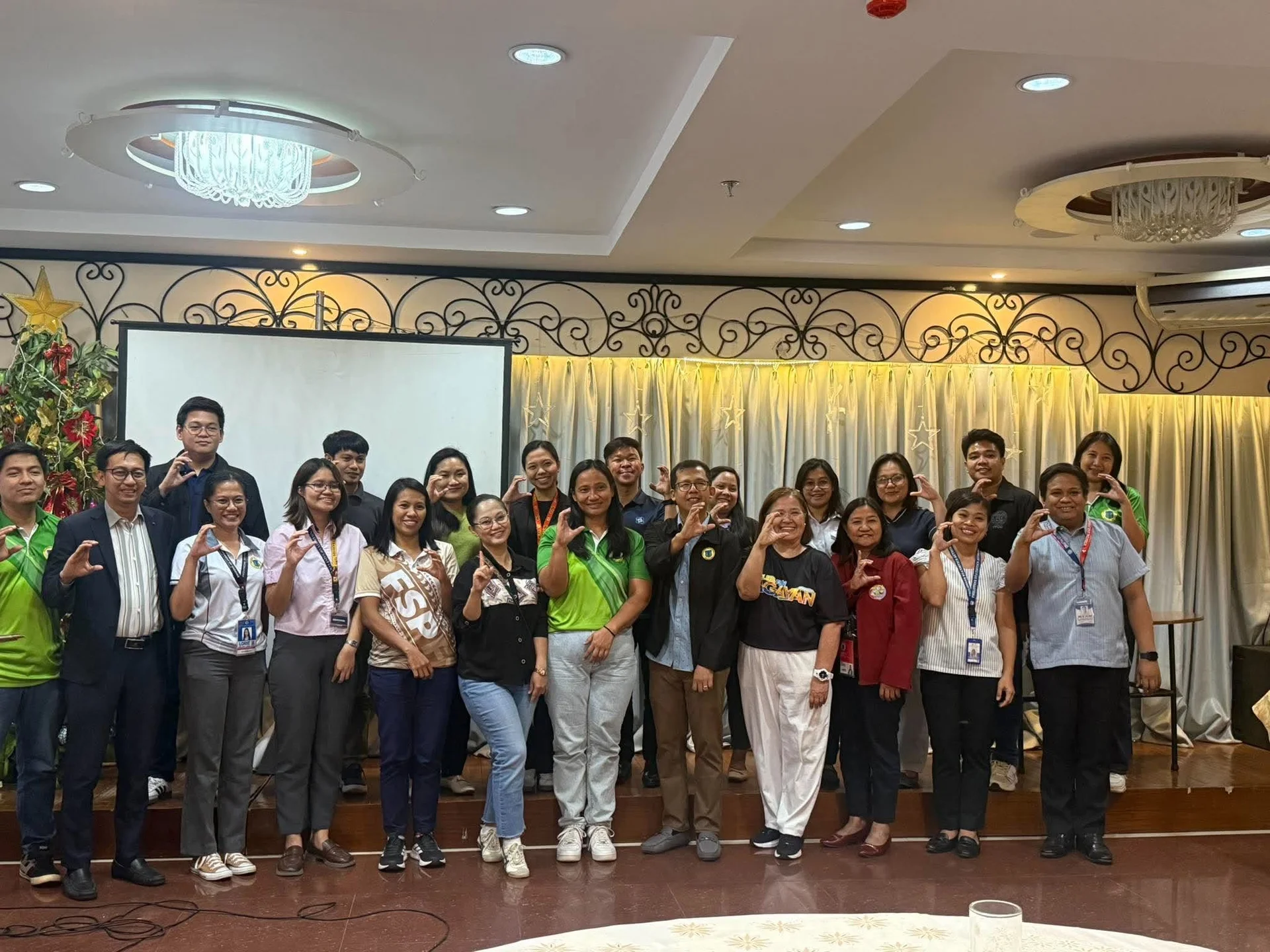
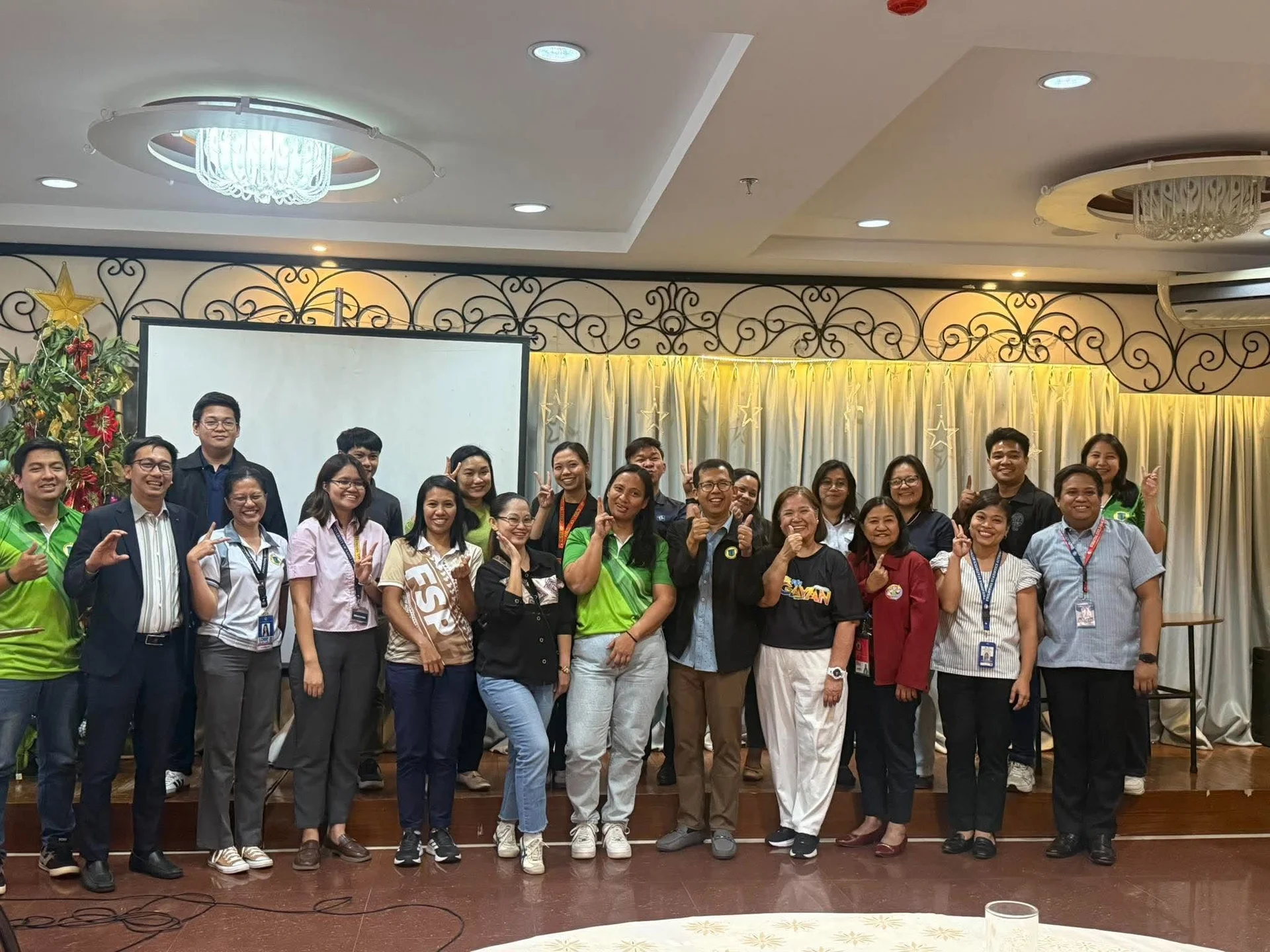
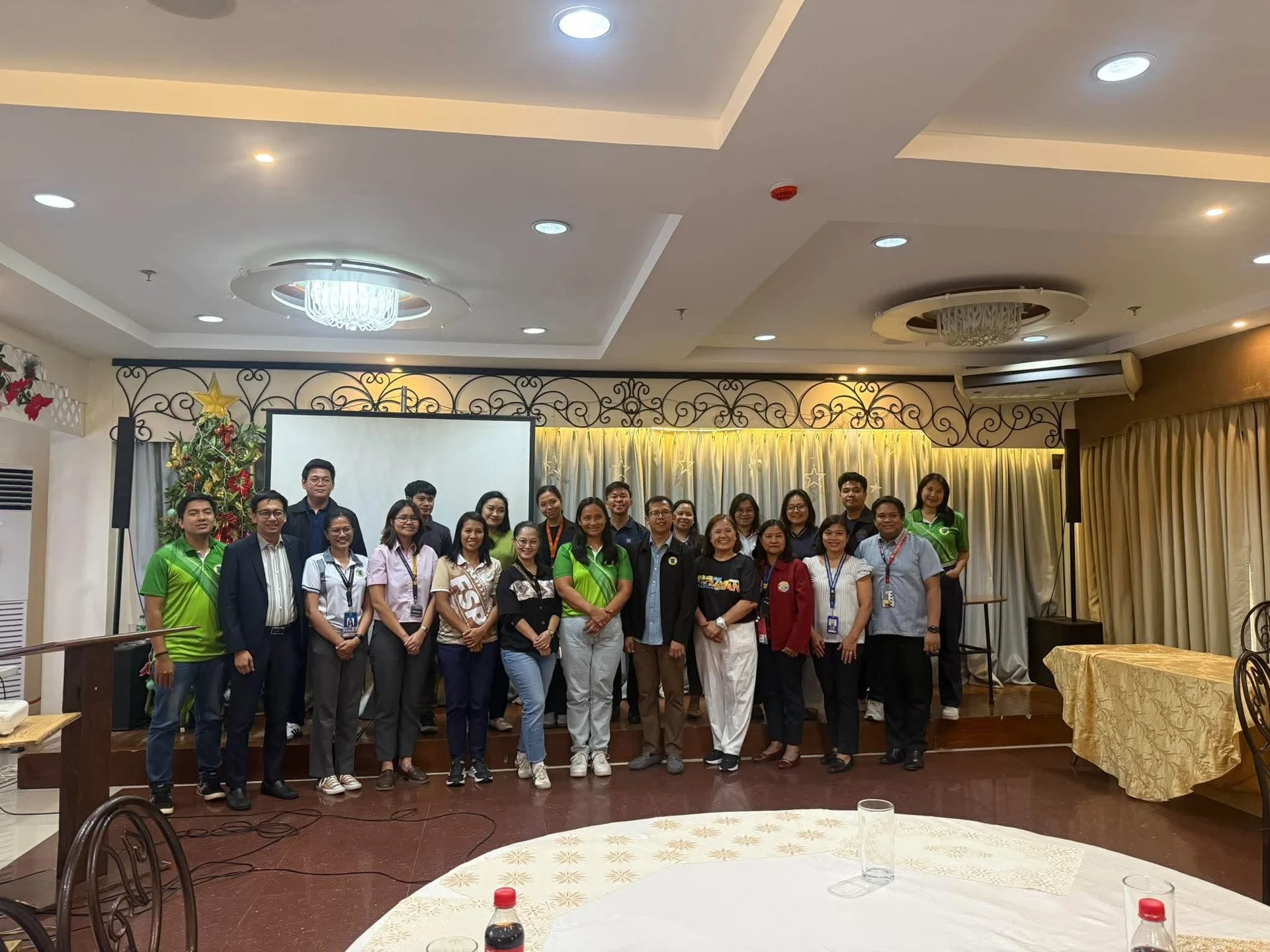
Cagayan PRDIC pre-convening meeting at Villa Blanca Hotel, November 18, 2026 – documentation photo 6
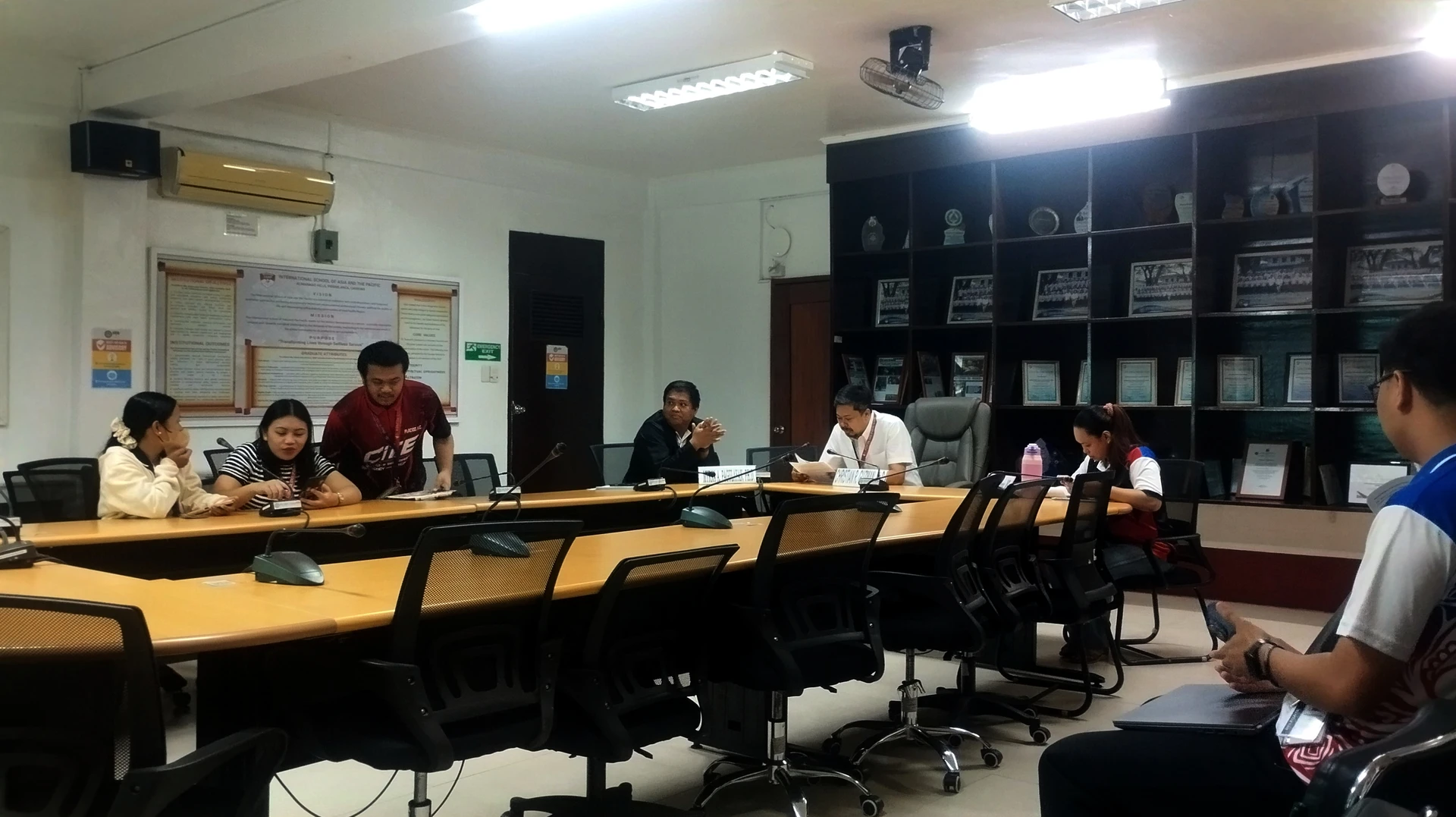
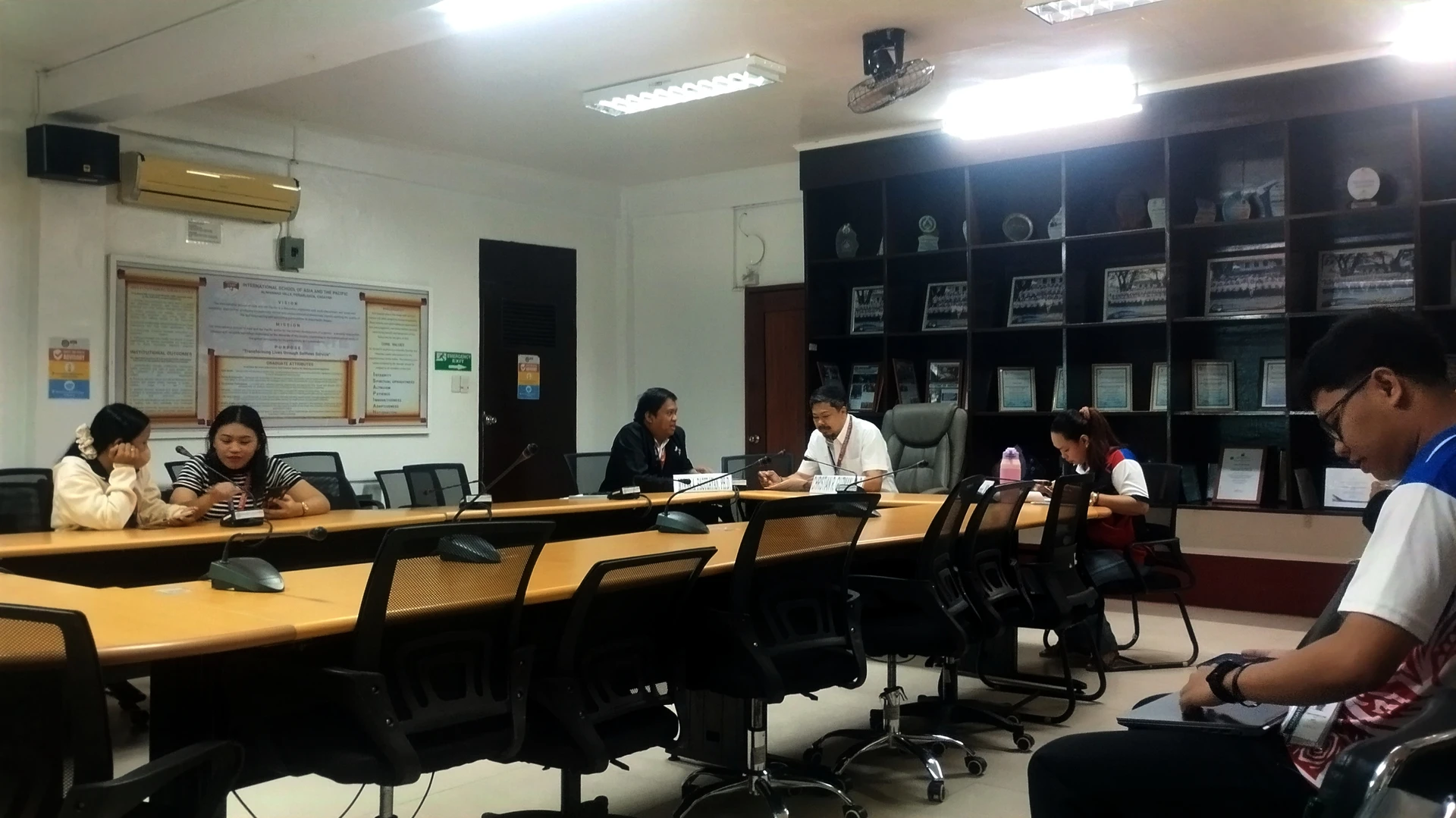
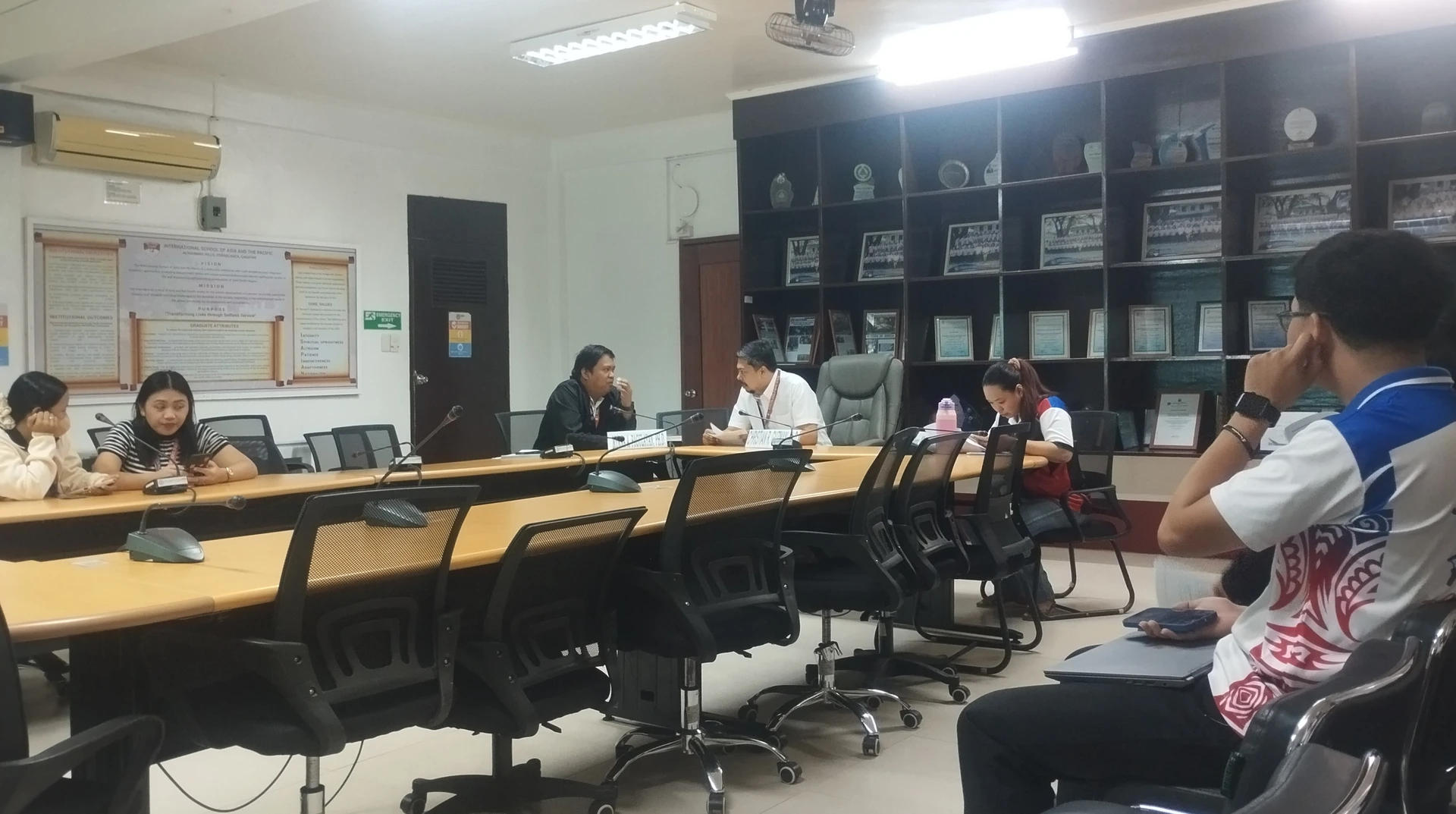
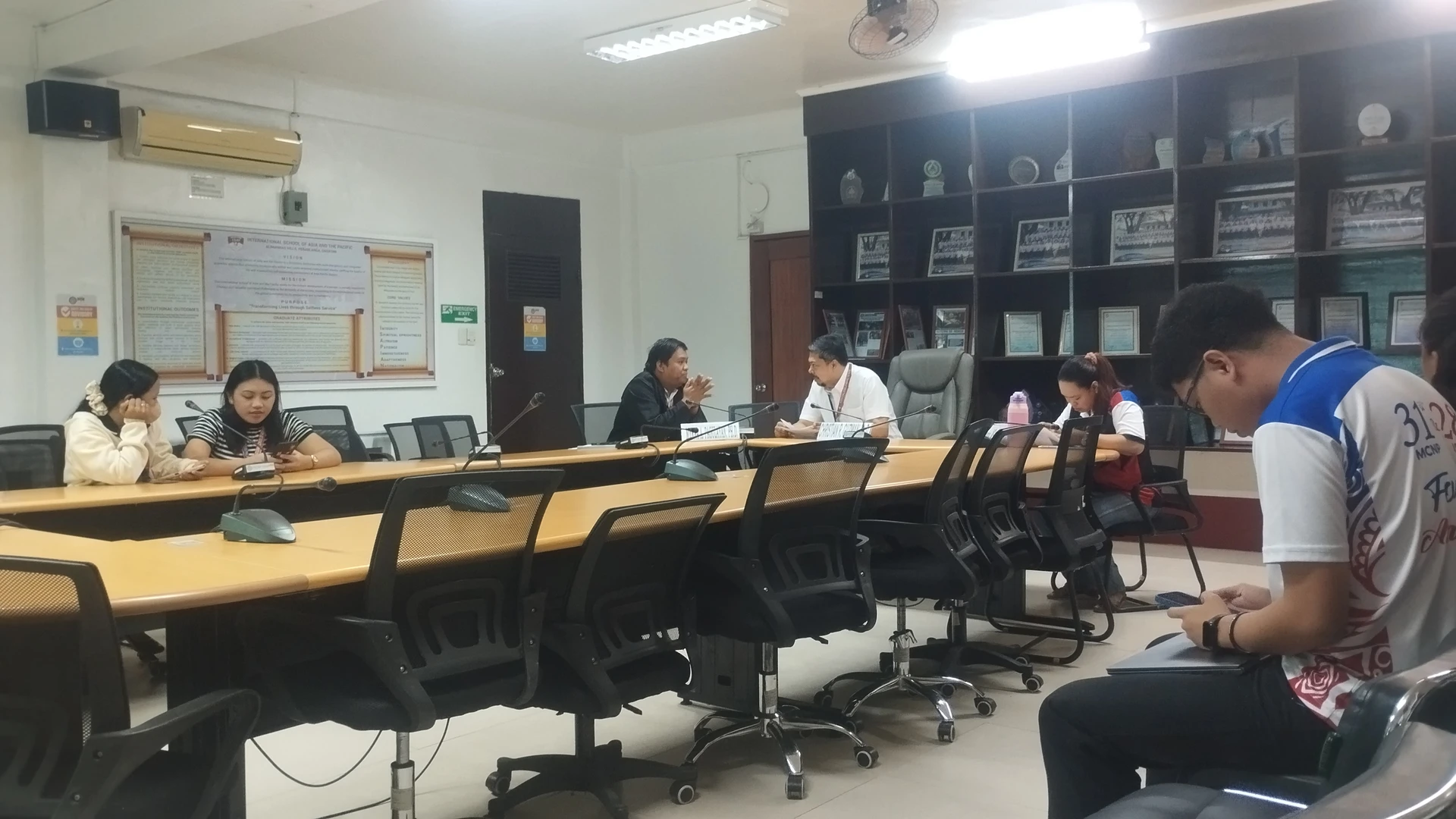
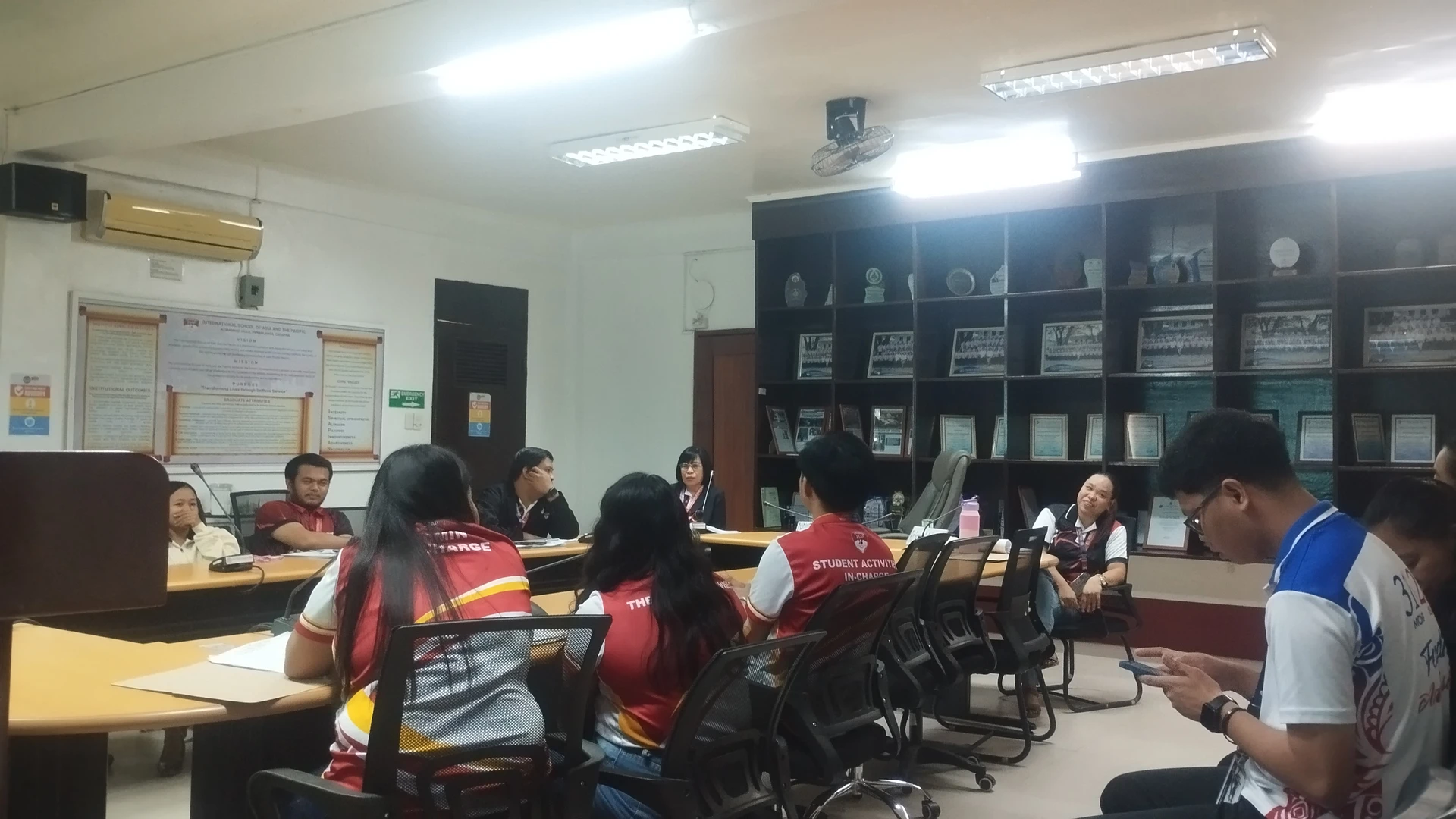
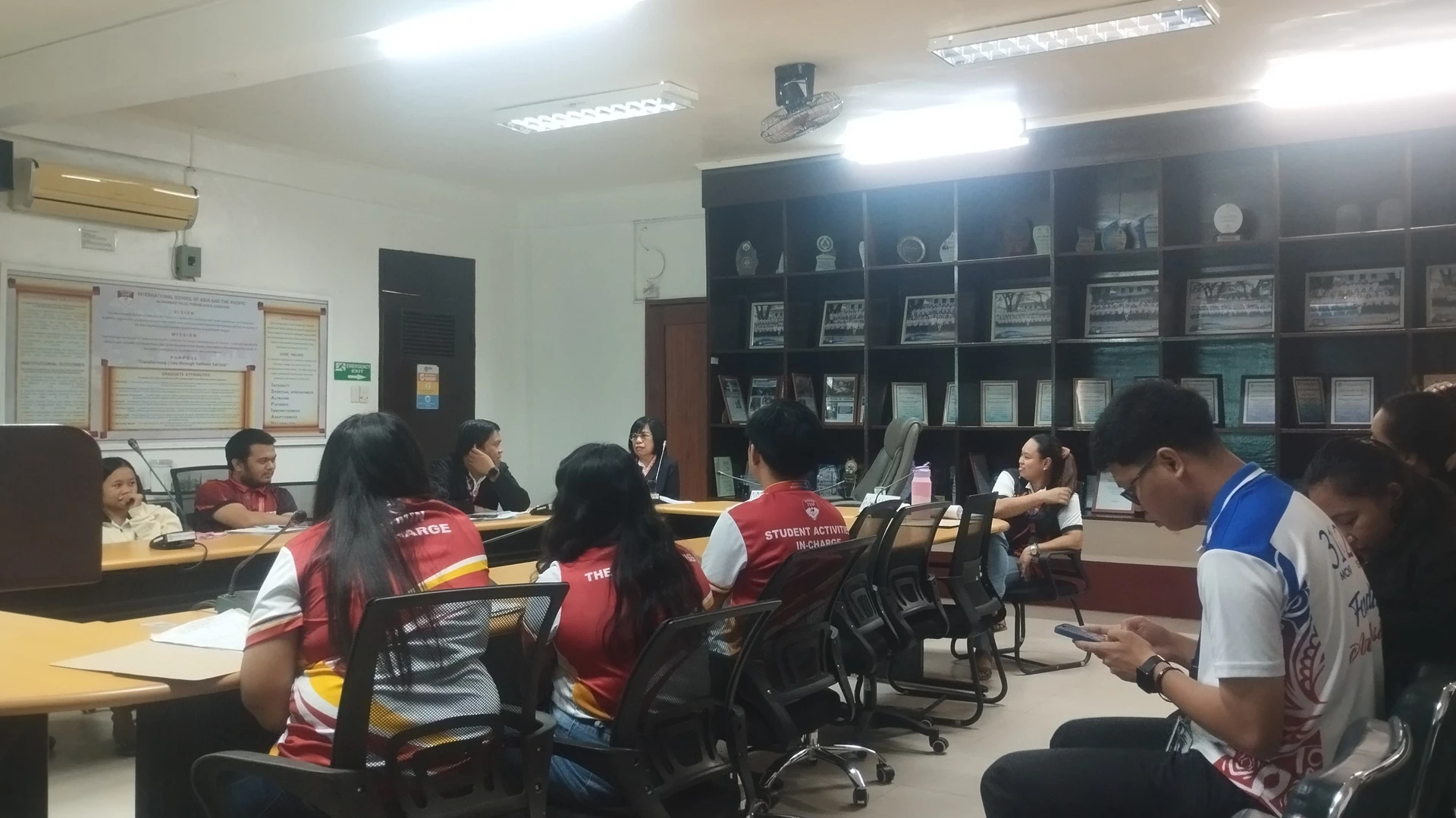
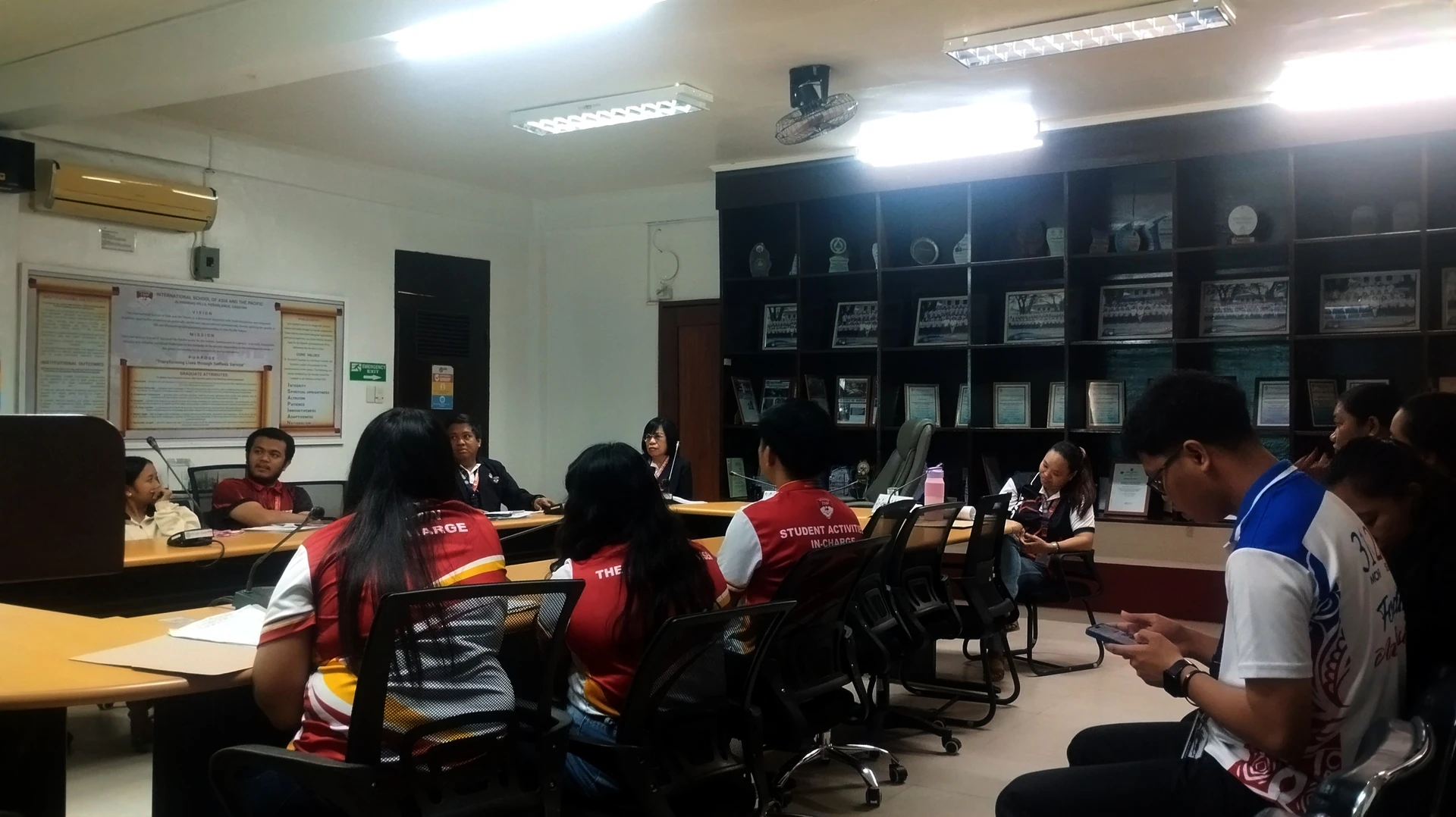
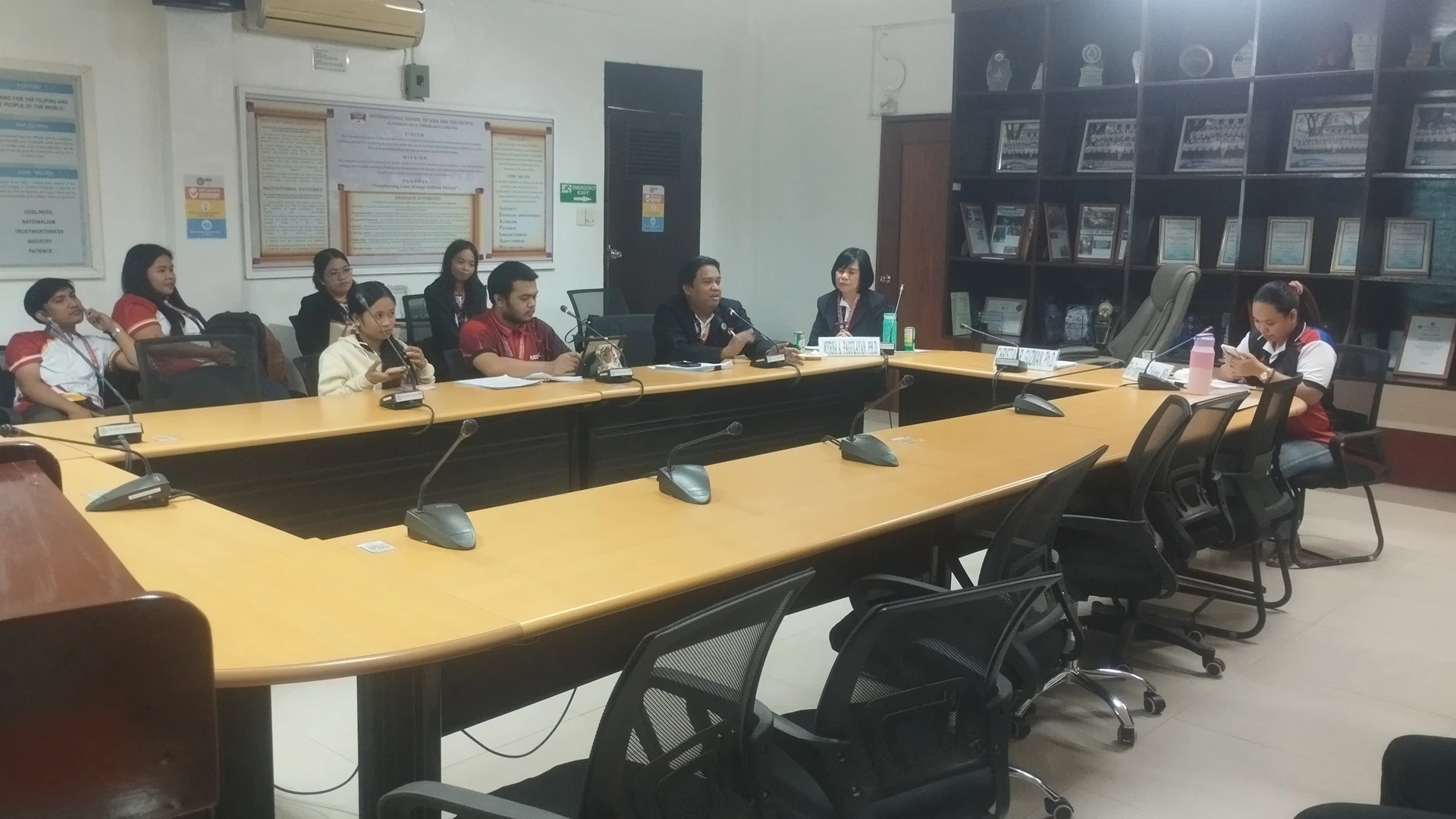
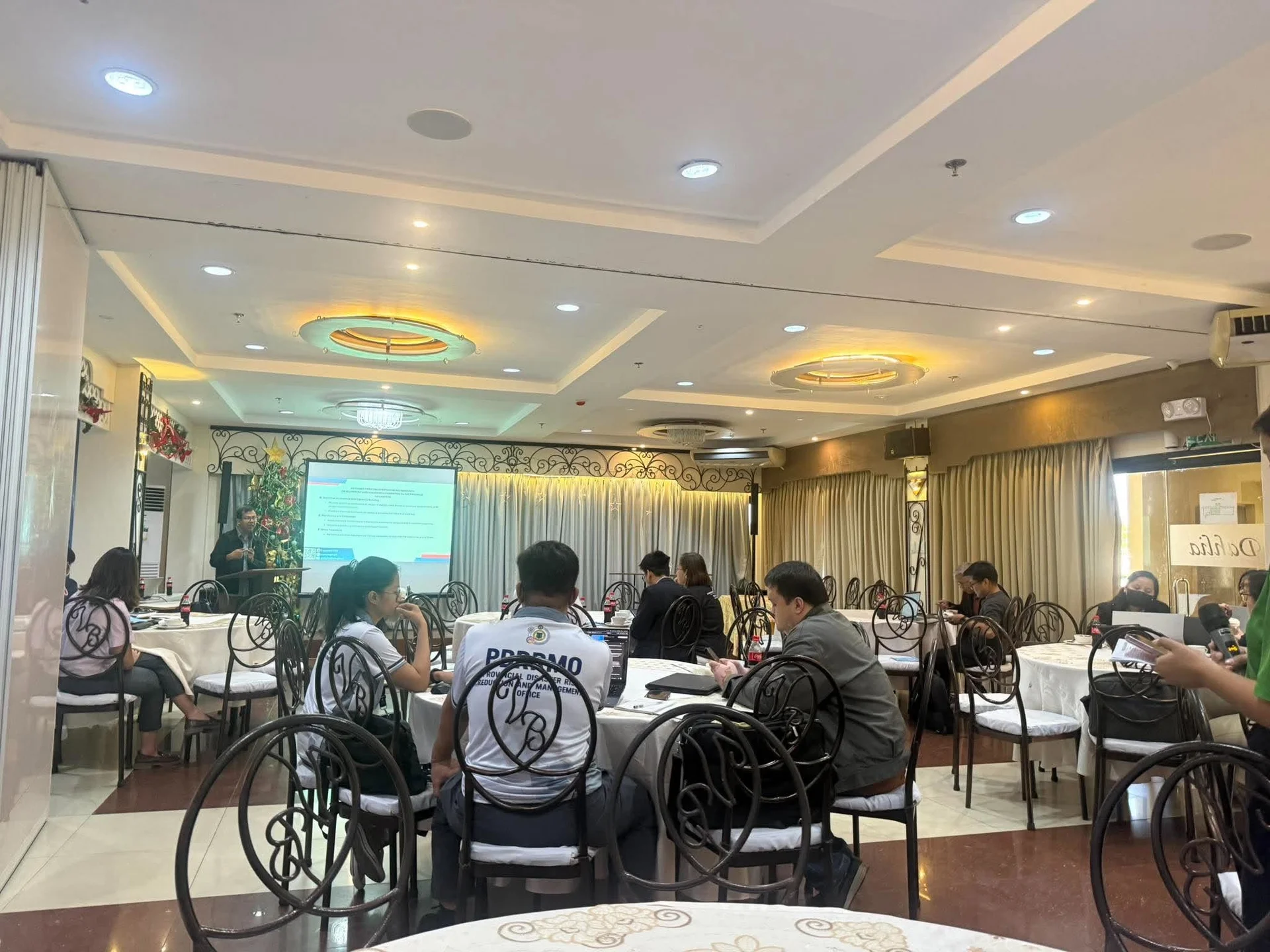
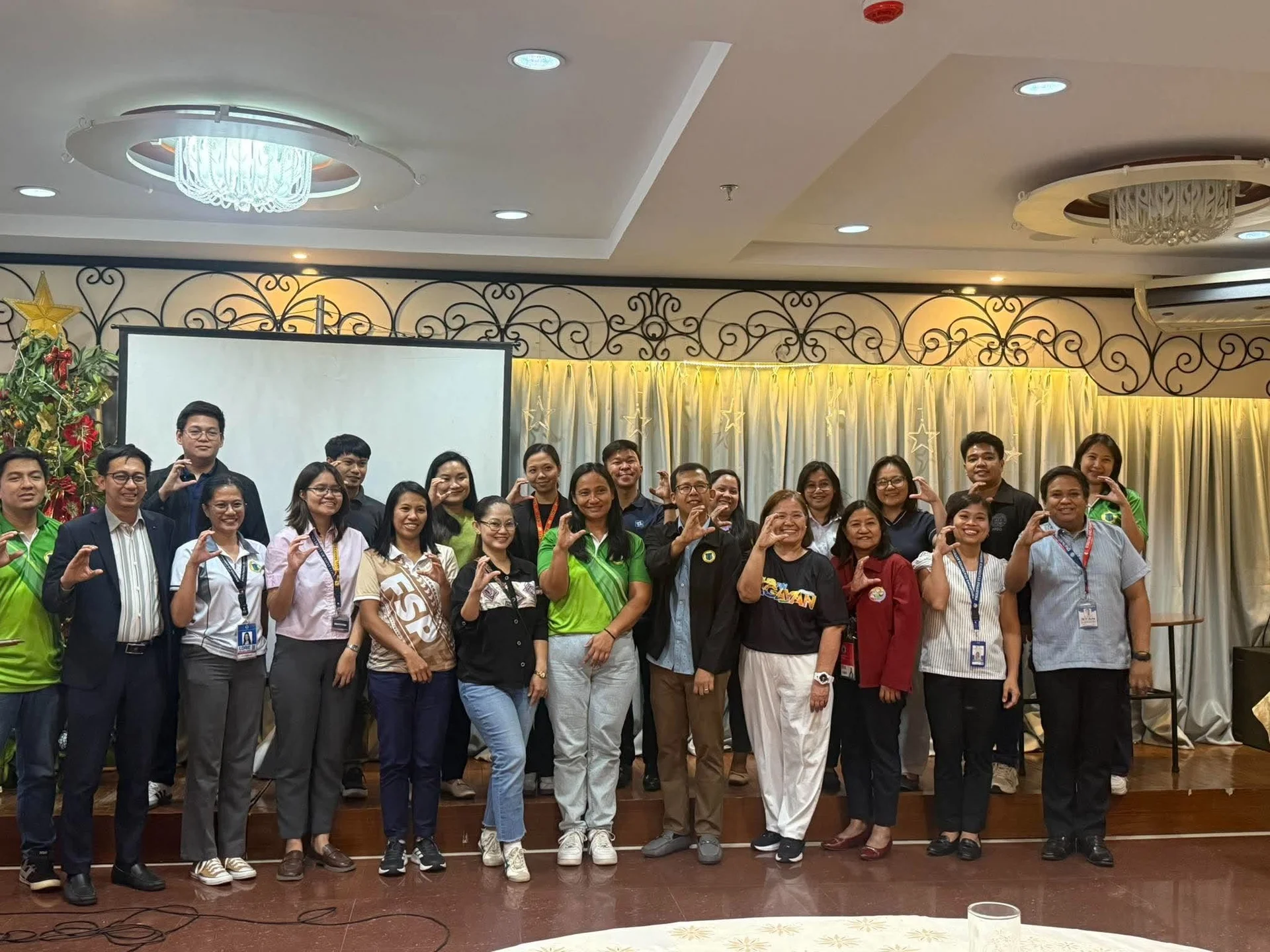
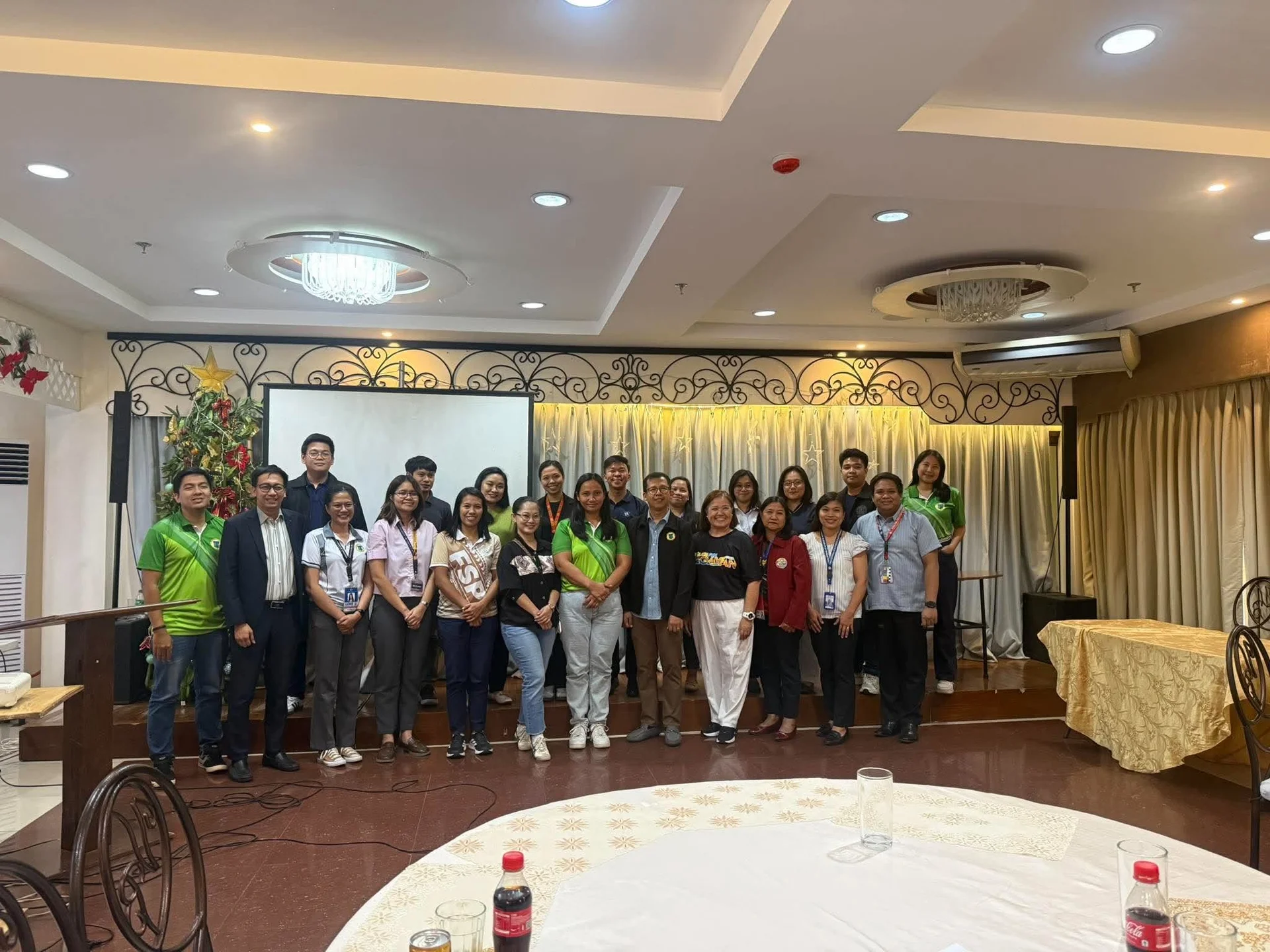
Participants at the Cagayan PRDIC pre-convening meeting, November 18, 2026.

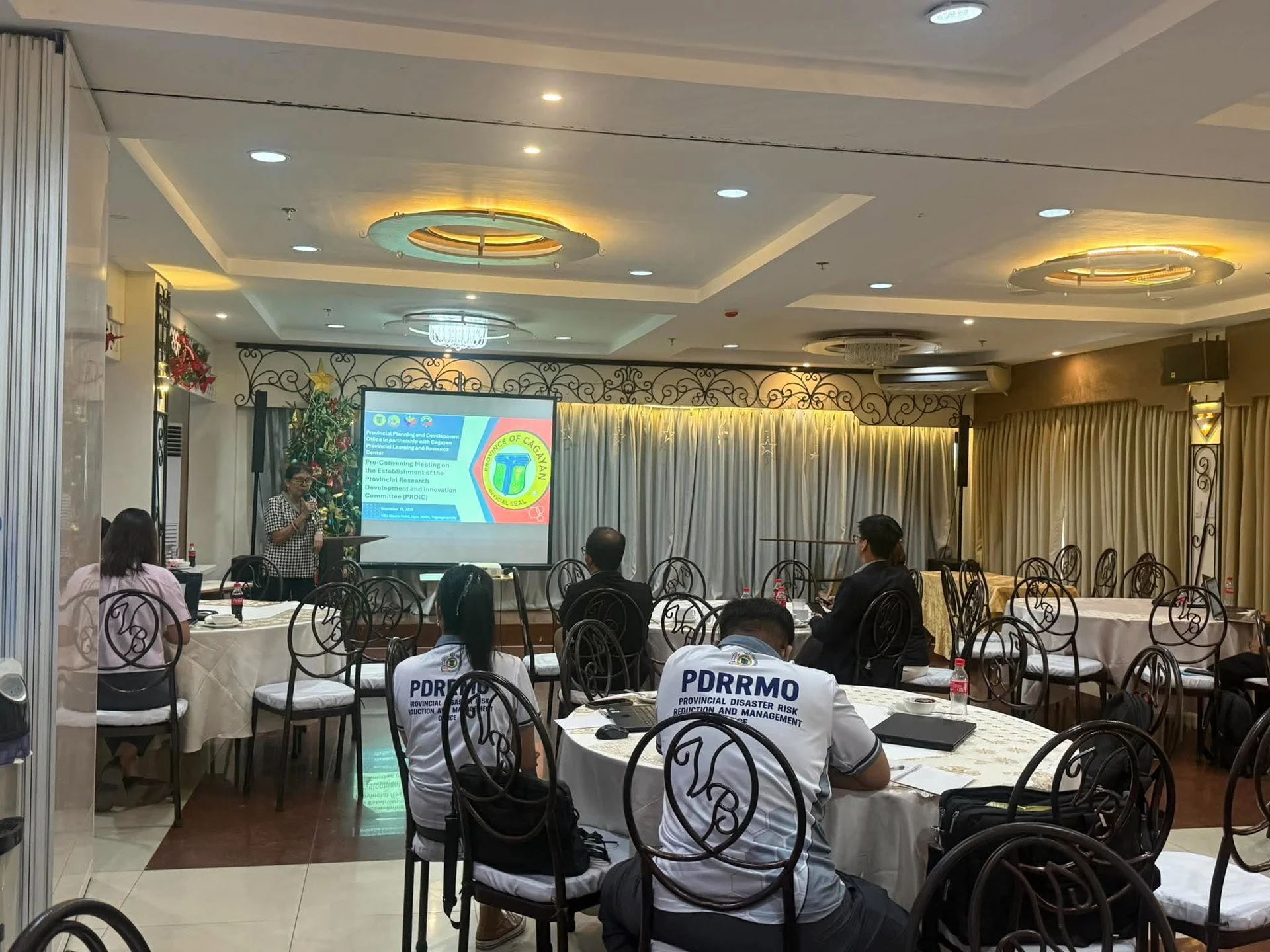
The Medical Colleges of Northern Philippines (MCNP) and the International School of Asia and the Pacific (ISAP), through their Research and Development Center (RDC), participated in the Pre-Convening Meeting on the Establishment of the Provincial Research Development and Innovation Committee (PRDIC) held on November 18, 2026, at Villa Blanca Hotel, Tuguegarao City, Cagayan.

Organized by the Provincial Planning and Development Office (PPDO) of the Provincial Government of Cagayan, the meeting brought together representatives from participating institutions and government agencies to discuss the proposed establishment of a provincial committee aimed at strengthening research coordination, innovation, and development-oriented collaboration.

Representing MCNP–ISAP, Dr. Ryan C. Fontanilla, Research Director, participated in the provincial research engagement activity, highlighting the institution's involvement in discussions concerning research development, innovation priorities, and opportunities for collaboration between higher education institutions and government agencies.

The meeting featured discussions on the proposed establishment of the PRDIC through an Executive Order, including its proposed membership, organizational structure, and operational framework. These discussions provided an opportunity for participating agencies and institutions to examine approaches to strengthening research coordination and aligning research initiatives with provincial development priorities.

The program also included presentations of existing research agendas and institutional research priorities, followed by discussions on seven proposed priority areas for the provincial research agenda. Workshop sessions were included to identify gaps, examine areas requiring further attention, and contribute inputs toward the development of a provincial research framework.

The participation of Dr. Fontanilla reflects the continuing engagement of the MCNP–ISAP Research and Development Center in research-related activities beyond the institution. His involvement underscores the importance of institutional representation in discussions that seek to strengthen research coordination, encourage knowledge exchange, and identify opportunities for research collaboration.

The activity aligns with Sustainable Development Goal 4 – Quality Education by supporting higher education participation in research development and knowledge exchange; SDG 9 – Industry, Innovation and Infrastructure through discussions on strengthening research and innovation systems; and SDG 17 – Partnerships for the Goals by encouraging engagement among government agencies, academic institutions, and other stakeholders in provincial research planning.

The activity also demonstrates WURI-relevant practices by connecting institutional research engagement with provincial development planning. Through government–academe dialogue, research agenda presentations, and workshop discussions, the meeting provides a platform for knowledge exchange, collaborative priority setting, and the identification of research needs that may inform future development initiatives.

The activity also supports the MCNP–ISAP RDC INNOVATES Research Agenda, particularly INSPIRE – Culture, Capability, and Engagement, by encouraging institutional research leadership participation and professional knowledge exchange, and OPERATIONALIZE – Knowledge Utilization, Innovation, and Improvement, through discussions on connecting research priorities with development planning and potential institutional applications.

The participation of the MCNP–ISAP Research Director represents an important opportunity for institutional engagement in the proposed provincial research and innovation framework. Through this involvement, the RDC contributes its presence and research perspective to discussions concerning coordinated research development and opportunities for future collaboration.

The meeting also provides a foundation for further dialogue among participating institutions and agencies regarding the proposed PRDIC, the identification of research priorities, and the potential development of coordinated research initiatives.

Through the participation of Dr. Ryan C. Fontanilla, MCNP–ISAP reinforces its commitment to research engagement, institutional collaboration, and the advancement of knowledge-driven development. The Research and Development Center continues to recognize the importance of connecting academic research with broader provincial priorities and contributing to initiatives that promote research, innovation, and sustainable development in Cagayan.

Institutional Alignment & Relevance

RDC SDG Alignment
SDG 17 – Partnerships for the Goals (Primary Alignment)

Promotes engagement and dialogue among government agencies, academic institutions, and other stakeholders concerning coordinated research initiatives.

SDG 9 – Industry, Innovation and Infrastructure

Supports discussions on establishing a provincial framework for research development, innovation, and the identification of priority research areas.

SDG 4 – Quality Education

Highlights higher education participation in research planning, institutional knowledge exchange, and research leadership engagement.

WURI Best Practices

The activity demonstrates potential WURI relevance through government–academe engagement, collaborative research planning, and knowledge exchange.

The participation of MCNP–ISAP in provincial research discussions highlights the institution's involvement in identifying opportunities for research collaboration and the alignment of academic research with regional development priorities.

RDC Agenda Alignment
INSPIRE – Culture, Capability, and Engagement

Encourages institutional research leadership participation, professional engagement, and knowledge exchange with external stakeholders.

OPERATIONALIZE – Knowledge Utilization, Innovation, and Improvement

Supports discussions on aligning institutional research priorities with provincial development concerns and identifying potential applications of research knowledge.

Photo Documentation

Cagayan PRDIC pre-convening meeting at Villa Blanca Hotel, November 18, 2026 – documentation photo 1
PRDIC Pre-Convening Meeting · Photo 1
Cagayan PRDIC pre-convening meeting at Villa Blanca Hotel, November 18, 2026 – documentation photo 2
PRDIC Pre-Convening Meeting · Photo 2
Cagayan PRDIC pre-convening meeting at Villa Blanca Hotel, November 18, 2026 – documentation photo 3
PRDIC Pre-Convening Meeting · Photo 3
Cagayan PRDIC pre-convening meeting at Villa Blanca Hotel, November 18, 2026 – documentation photo 4
PRDIC Pre-Convening Meeting · Photo 4
Cagayan PRDIC pre-convening meeting at Villa Blanca Hotel, November 18, 2026 – documentation photo 5
PRDIC Pre-Convening Meeting · Photo 5
Cagayan PRDIC pre-convening meeting at Villa Blanca Hotel, November 18, 2026 – documentation photo 7
PRDIC Pre-Convening Meeting · Photo 7
Cagayan PRDIC pre-convening meeting at Villa Blanca Hotel, November 18, 2026 – documentation photo 8
PRDIC Pre-Convening Meeting · Photo 8
Cagayan PRDIC pre-convening meeting at Villa Blanca Hotel, November 18, 2026 – documentation photo 9
PRDIC Pre-Convening Meeting · Photo 9
Cagayan PRDIC pre-convening meeting at Villa Blanca Hotel, November 18, 2026 – documentation photo 10
PRDIC Pre-Convening Meeting · Photo 10
Cagayan PRDIC pre-convening meeting at Villa Blanca Hotel, November 18, 2026 – documentation photo 11
PRDIC Pre-Convening Meeting · Photo 11
Cagayan PRDIC pre-convening meeting at Villa Blanca Hotel, November 18, 2026 – documentation photo 12
PRDIC Pre-Convening Meeting · Photo 12
Cagayan PRDIC pre-convening meeting at Villa Blanca Hotel, November 18, 2026 – documentation photo 13
PRDIC Pre-Convening Meeting · Photo 13
ISAP Grade 12 STEM Capstone Title Defense, November 17–18, 2026 · Documentation photo 1
High School Capstone Title Defense · ISAP Grade 12 STEM · November 17–18, 2026 · AVR 2

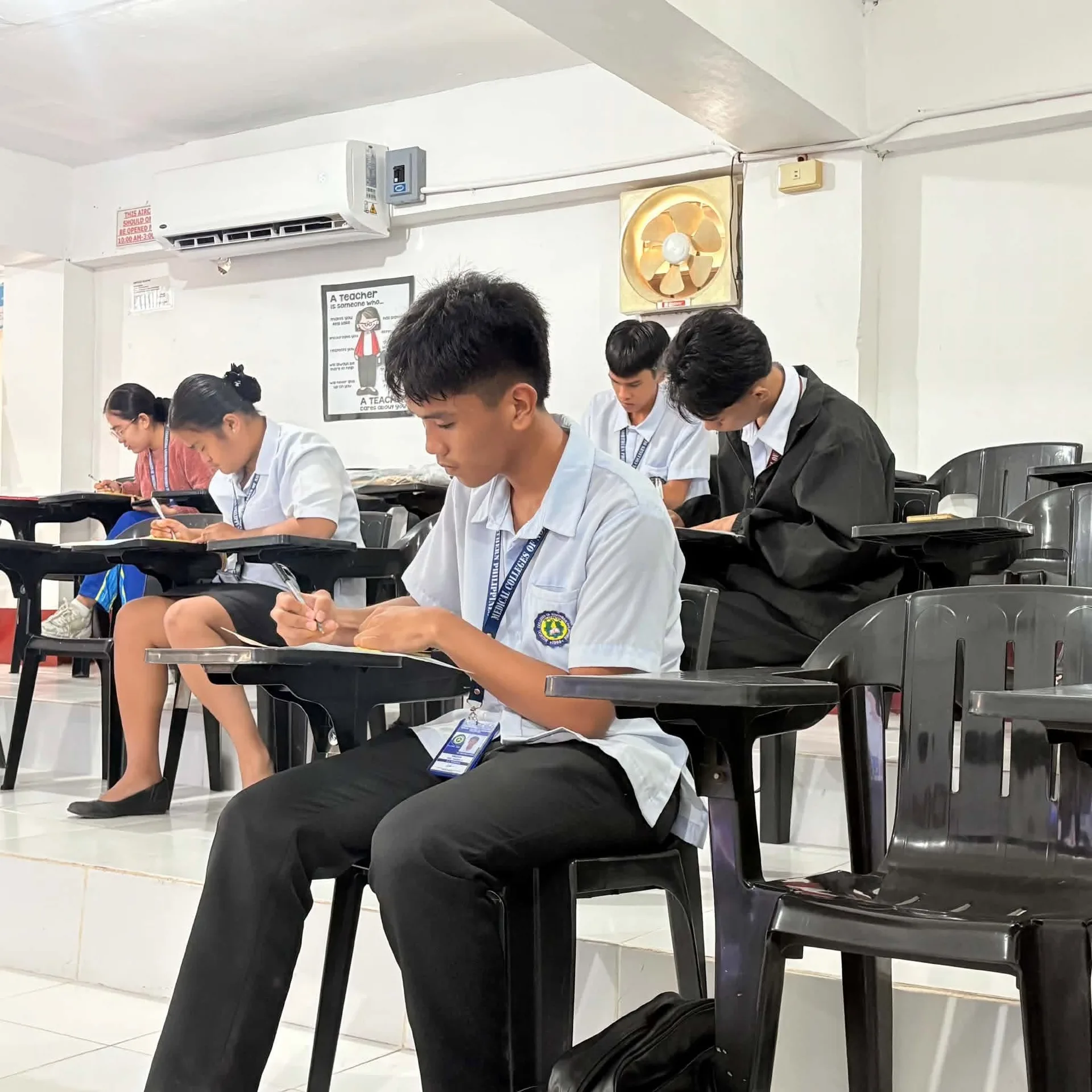
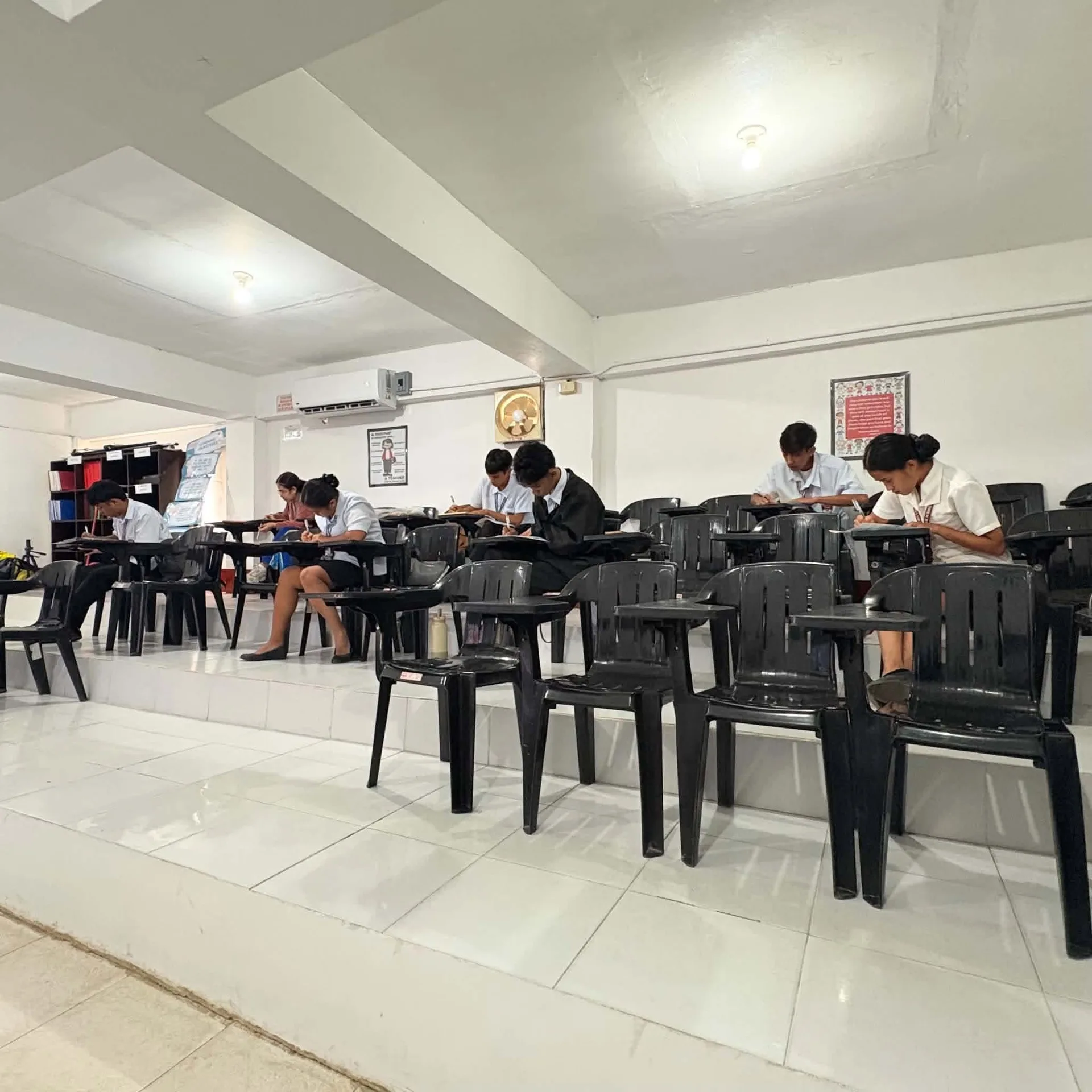
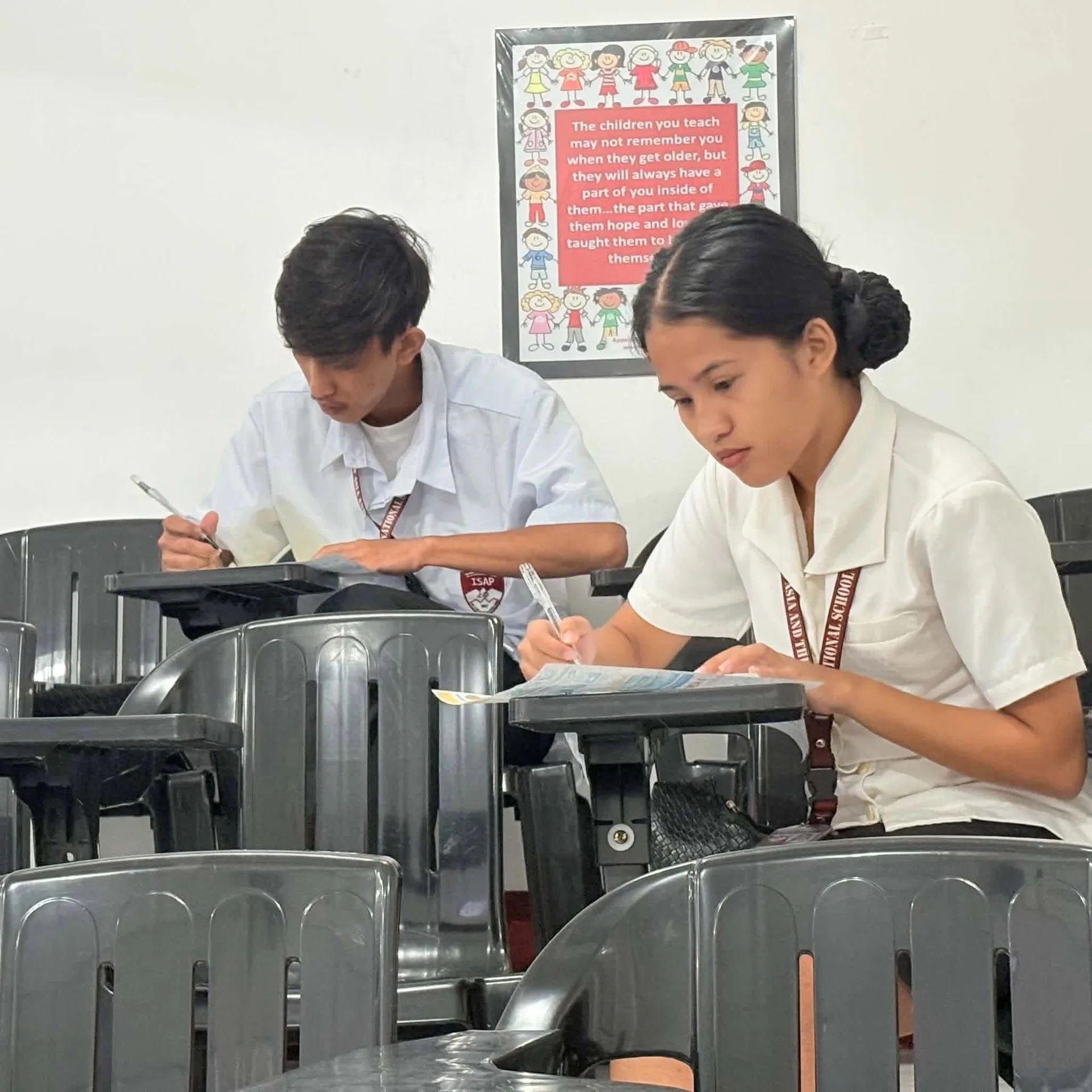
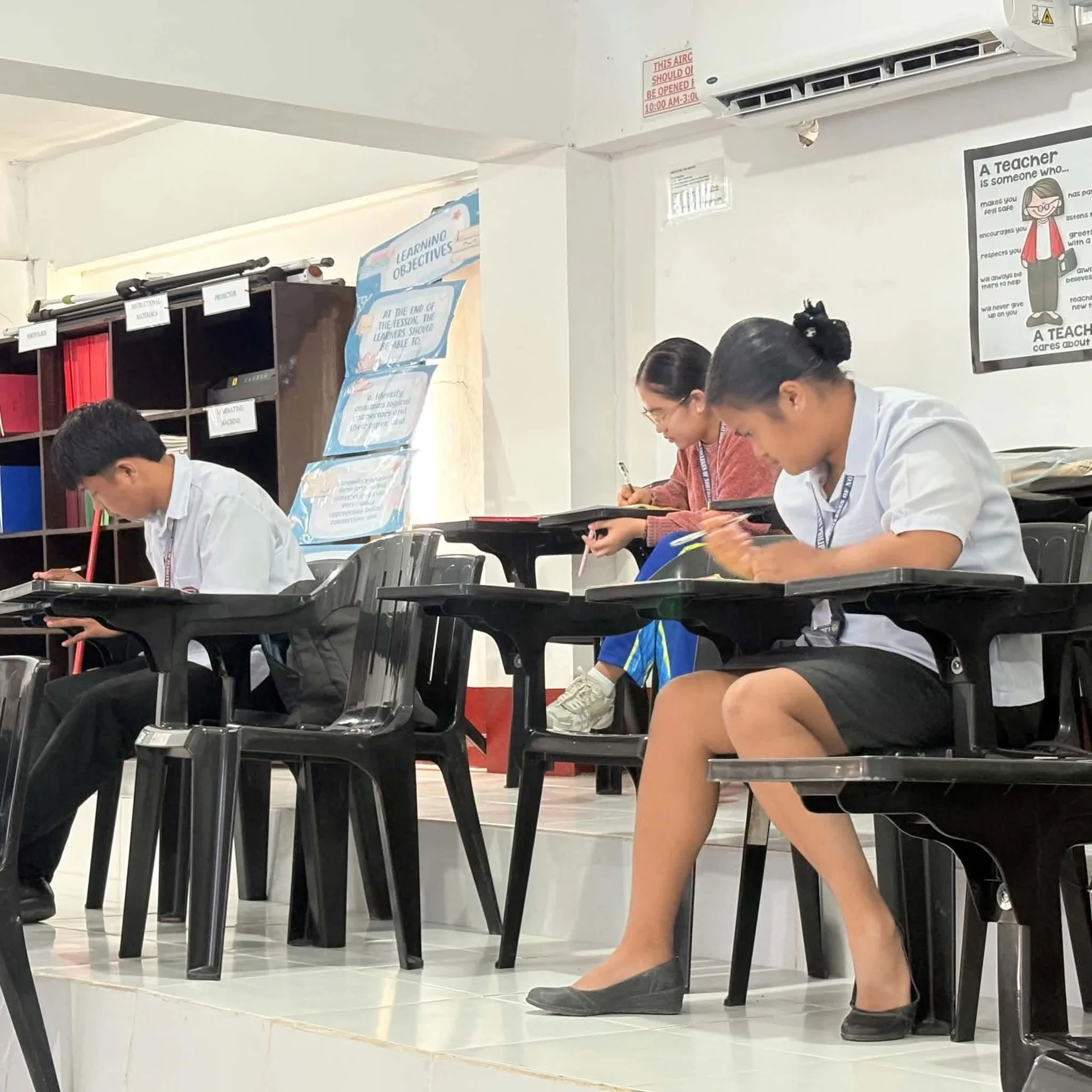
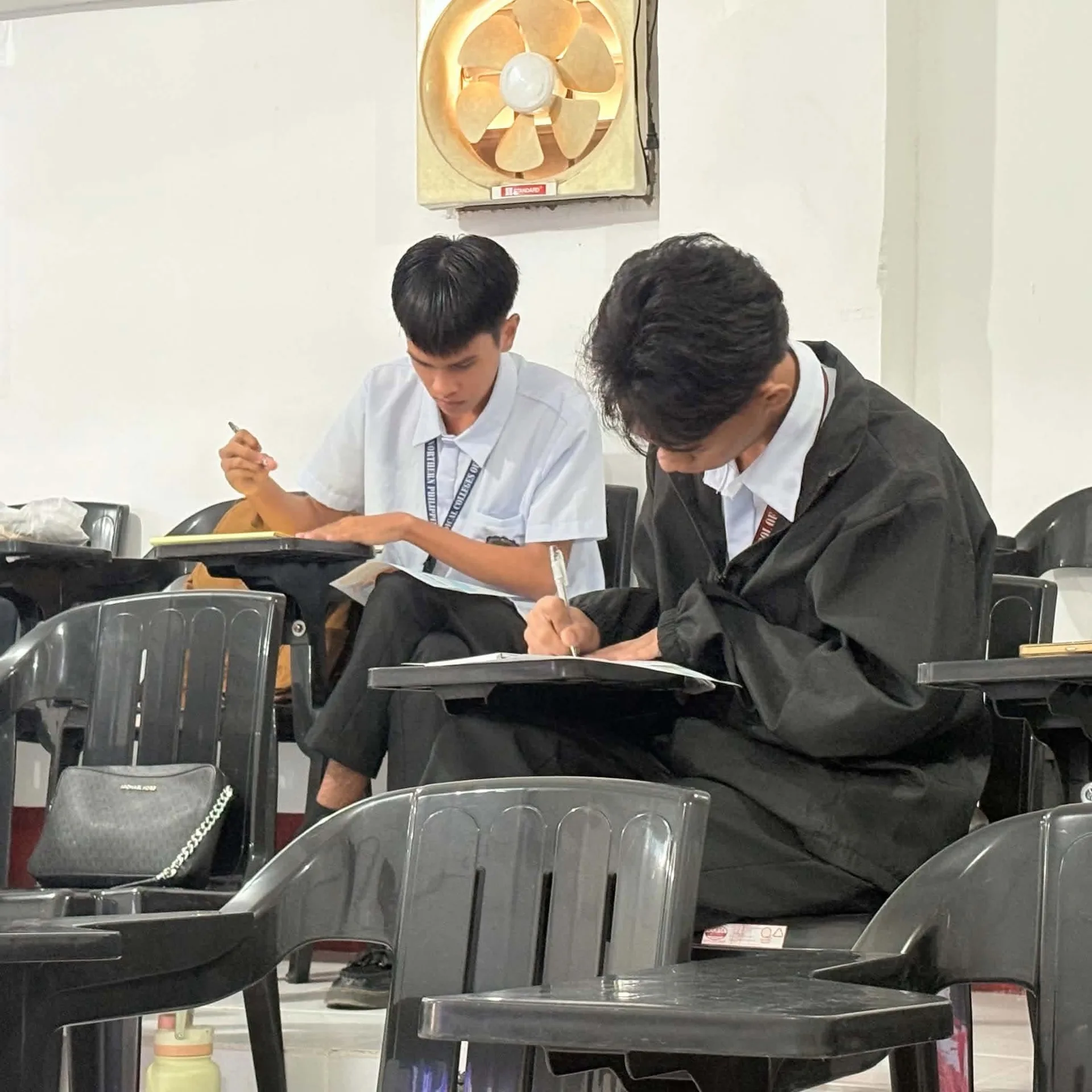
The International School of Asia and the Pacific (ISAP), through its High School Department, conducted the Capstone Title Defense for Grade 12 Science, Technology, Engineering, and Mathematics (STEM) learners on November 17–18, 2026, at AVR 2, providing students with an academic platform to present and refine their proposed capstone research titles.

The two-day activity highlighted the importance of research in STEM education, particularly in developing learners' critical thinking, scientific inquiry, creativity, and problem-solving abilities. As an initial stage of the capstone research process, the title defense emphasized the importance of identifying relevant research problems and establishing clear directions for scientific investigation.

The activity provided an opportunity for Grade 12 STEM learners to communicate their proposed research ideas, explain the relevance of their chosen topics, and consider the feasibility of their intended investigations. Through academic evaluation and constructive feedback, the defense aimed to guide students in refining their proposed capstone research titles before proceeding to the succeeding stages of research development.

The Capstone Title Defense also emphasized the importance of connecting classroom knowledge with practical scientific inquiry. By encouraging learners to explore research ideas relevant to science, technology, engineering, and mathematics, the activity supports the development of analytical thinking and innovative approaches to addressing real-world concerns.

The MCNP–ISAP Research and Development Center (RDC) recognizes the significance of early research engagement in cultivating a research-oriented academic environment. Activities such as capstone title defenses provide opportunities for young researchers to develop foundational research competencies and appreciate the value of systematic investigation and evidence-informed decision-making.

The activity primarily supports Sustainable Development Goal 4 – Quality Education by promoting research-oriented learning, critical thinking, and academic development among senior high school learners. It also demonstrates potential relevance to SDG 9 – Industry, Innovation and Infrastructure by encouraging scientific exploration, technological inquiry, and the development of research ideas that may contribute to future innovations.

From the perspective of the World University Rankings for Innovation (WURI), the activity demonstrates potential relevance through early research engagement, creative problem-solving, and the development of innovation-oriented research ideas. The capstone title defense provides a foundation for learners to explore practical research opportunities and translate academic knowledge into meaningful investigations.

The activity also aligns with the MCNP–ISAP RDC INNOVATES Research Agenda 2026–2030, particularly INSPIRE – Culture, Capability, and Engagement, by encouraging learner participation in research and developing foundational research competencies; NURTURE – Ethics, Quality, and Accountability, through academic evaluation and the refinement of proposed research topics; and OPERATIONALIZE – Knowledge Utilization, Innovation, and Improvement, through the potential development of research-based solutions and innovative ideas.

The High School Capstone Title Defense reflects ISAP's commitment to strengthening research engagement at the senior high school level. By providing learners with opportunities to develop and present their research ideas, the activity supports their academic preparation and encourages a culture of curiosity, creativity, and scientific exploration.

Through the Grade 12 STEM Capstone Title Defense, ISAP continues to foster a research-oriented learning environment that empowers learners to explore ideas, develop scientific competencies, and recognize the importance of research and innovation in addressing contemporary challenges.

RDC SDG Alignment

SDG 4 – Quality Education (Primary Alignment)

Promotes research-oriented learning, critical thinking, scientific inquiry, and the development of foundational research competencies among Grade 12 STEM learners.

SDG 9 – Industry, Innovation and Infrastructure (Potential Alignment)

Encourages scientific exploration, technological inquiry, creative problem-solving, and the development of research ideas with potential applications in science and technology.

WURI Best Practices

The activity demonstrates potential relevance to the World University Rankings for Innovation (WURI) through early research engagement, creative problem-solving, and innovation-oriented learning.

The Capstone Title Defense provides an academic foundation for learners to develop research ideas that may address practical concerns and contribute to future scientific and technological innovations.

RDC Agenda Alignment

INSPIRE – Culture, Capability, and Engagement

Encourages learner participation in research, academic engagement, and the development of scientific and research-related competencies.

NURTURE – Ethics, Quality, and Accountability

Supports academic evaluation, constructive feedback, research quality, and responsible research development.

OPERATIONALIZE – Knowledge Utilization, Innovation, and Improvement

Highlights the potential for capstone research ideas to develop into practical solutions, innovative projects, and meaningful scientific investigations.

Photo Documentation

High School Capstone Title Defense · November 17–18, 2026 · AVR 2 · 11 documentation photos. Select a photo to view it at full size.

ISAP Grade 12 STEM Capstone Title Defense, November 17–18, 2026 · Documentation photo 1
Grade 12 STEM Capstone Title Defense · Photo 1
ISAP Grade 12 STEM Capstone Title Defense, November 17–18, 2026 · Documentation photo 2
Grade 12 STEM Capstone Title Defense · Photo 2
ISAP Grade 12 STEM Capstone Title Defense, November 17–18, 2026 · Documentation photo 3
Grade 12 STEM Capstone Title Defense · Photo 3
ISAP Grade 12 STEM Capstone Title Defense, November 17–18, 2026 · Documentation photo 4
Grade 12 STEM Capstone Title Defense · Photo 4
ISAP Grade 12 STEM Capstone Title Defense, November 17–18, 2026 · Documentation photo 5
Grade 12 STEM Capstone Title Defense · Photo 5
ISAP Grade 12 STEM Capstone Title Defense, November 17–18, 2026 · Documentation photo 6
Grade 12 STEM Capstone Title Defense · Photo 6
ISAP Grade 12 STEM Capstone Title Defense, November 17–18, 2026 · Documentation photo 7
Grade 12 STEM Capstone Title Defense · Photo 7
ISAP Grade 12 STEM Capstone Title Defense, November 17–18, 2026 · Documentation photo 8
Grade 12 STEM Capstone Title Defense · Photo 8
ISAP Grade 12 STEM Capstone Title Defense, November 17–18, 2026 · Documentation photo 9
Grade 12 STEM Capstone Title Defense · Photo 9
ISAP Grade 12 STEM Capstone Title Defense, November 17–18, 2026 · Documentation photo 10
Grade 12 STEM Capstone Title Defense · Photo 10
ISAP Grade 12 STEM Capstone Title Defense, November 17–18, 2026 · Documentation photo 11
Grade 12 STEM Capstone Title Defense · Photo 11
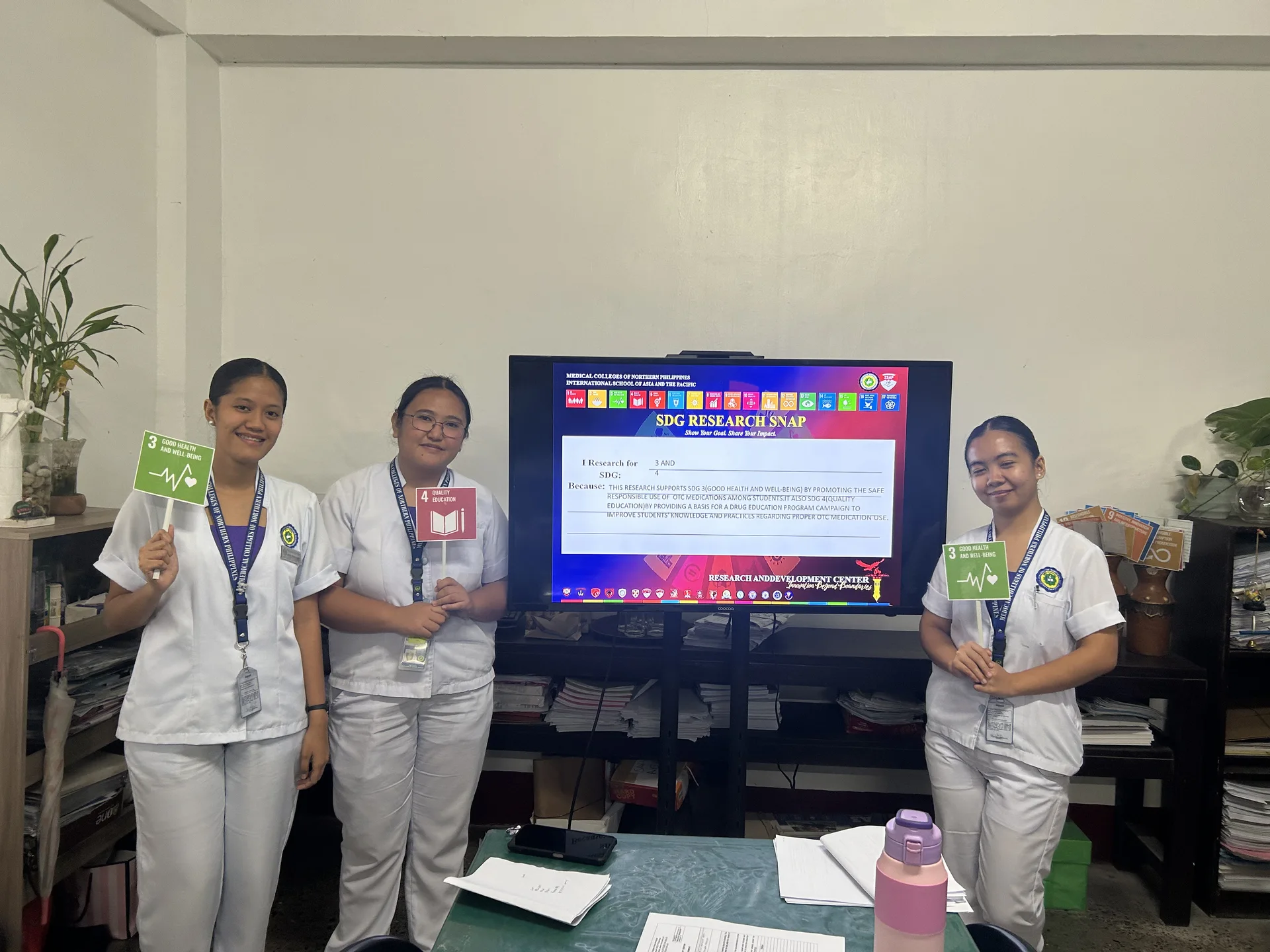
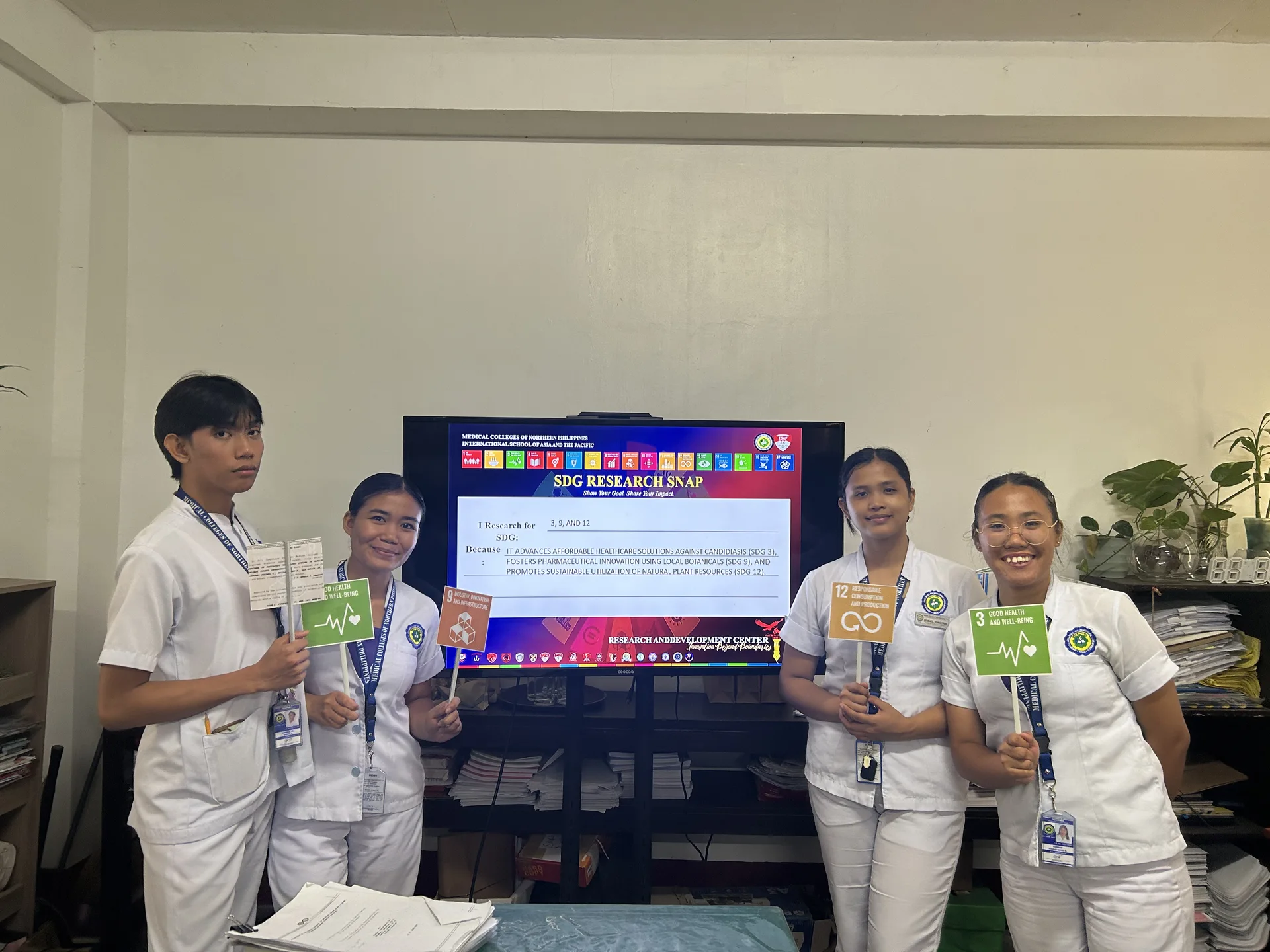
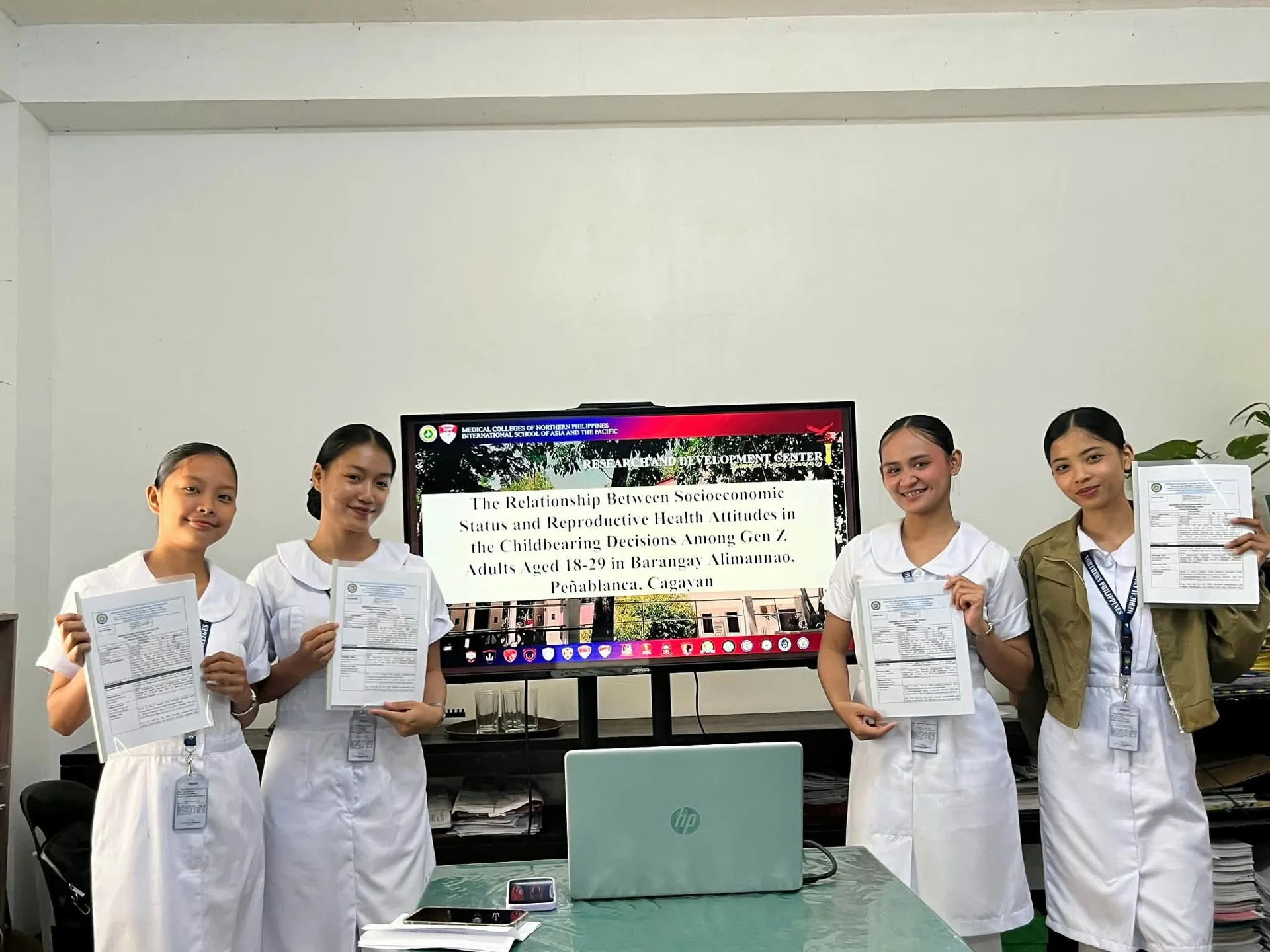
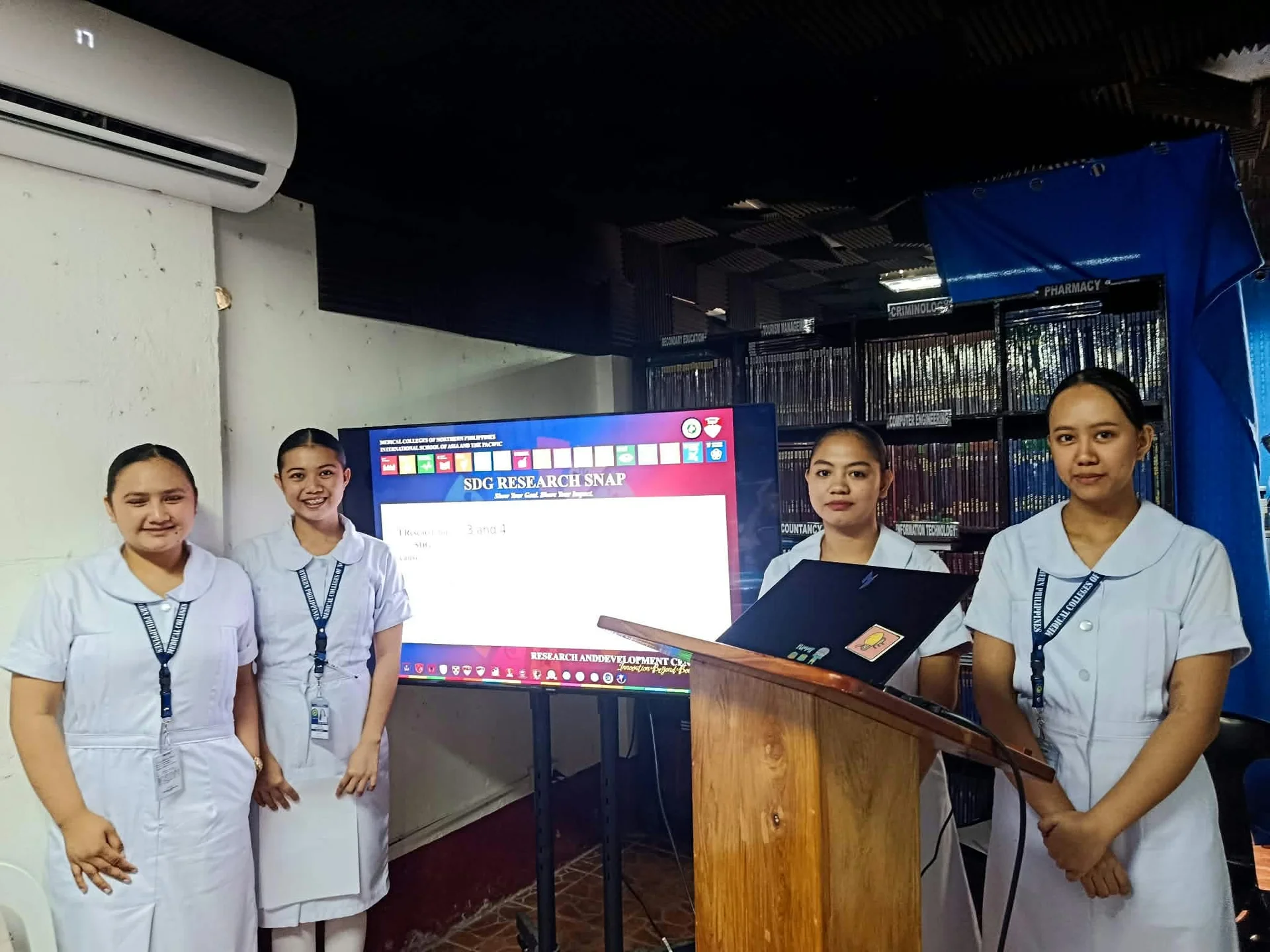
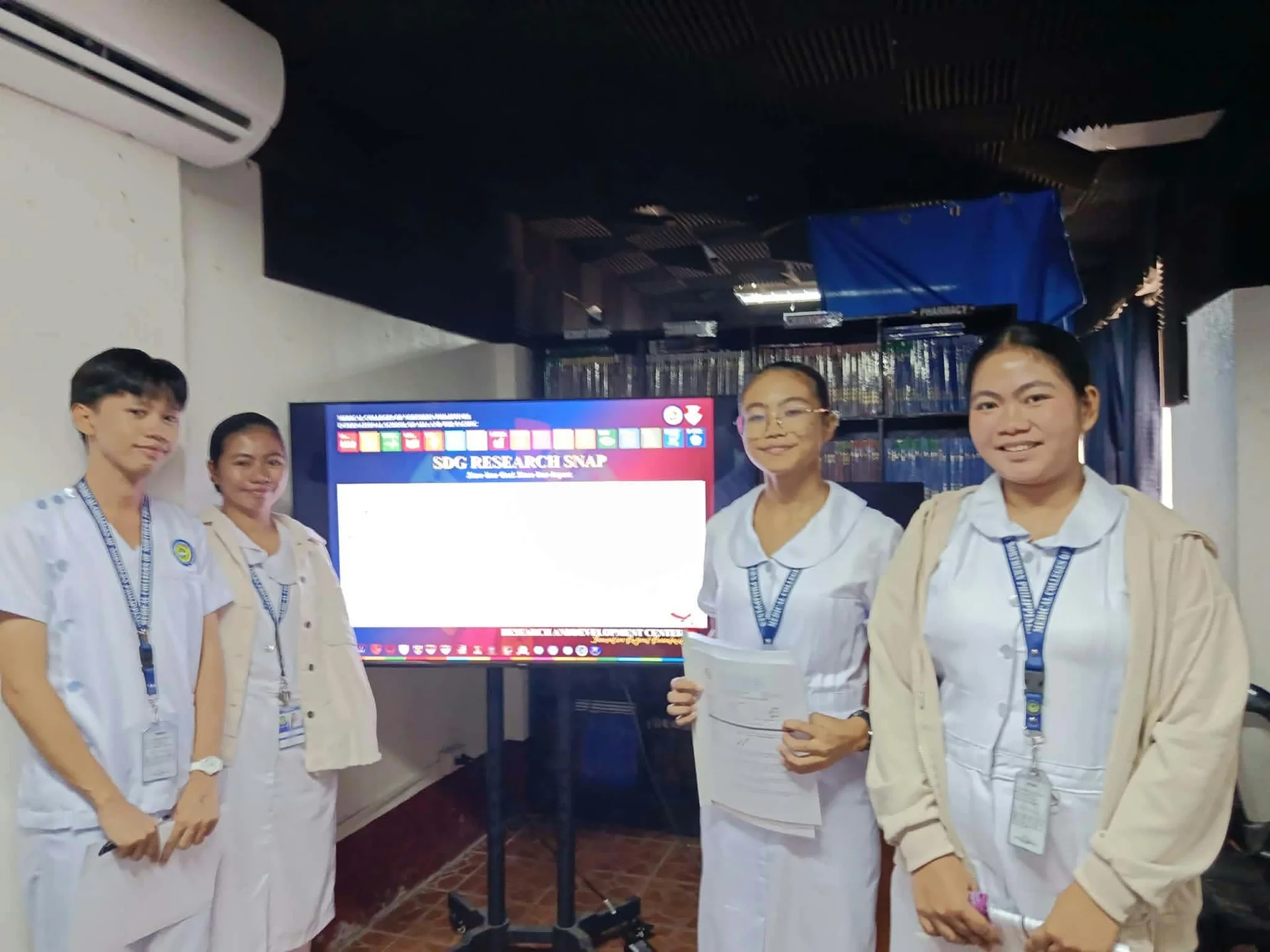
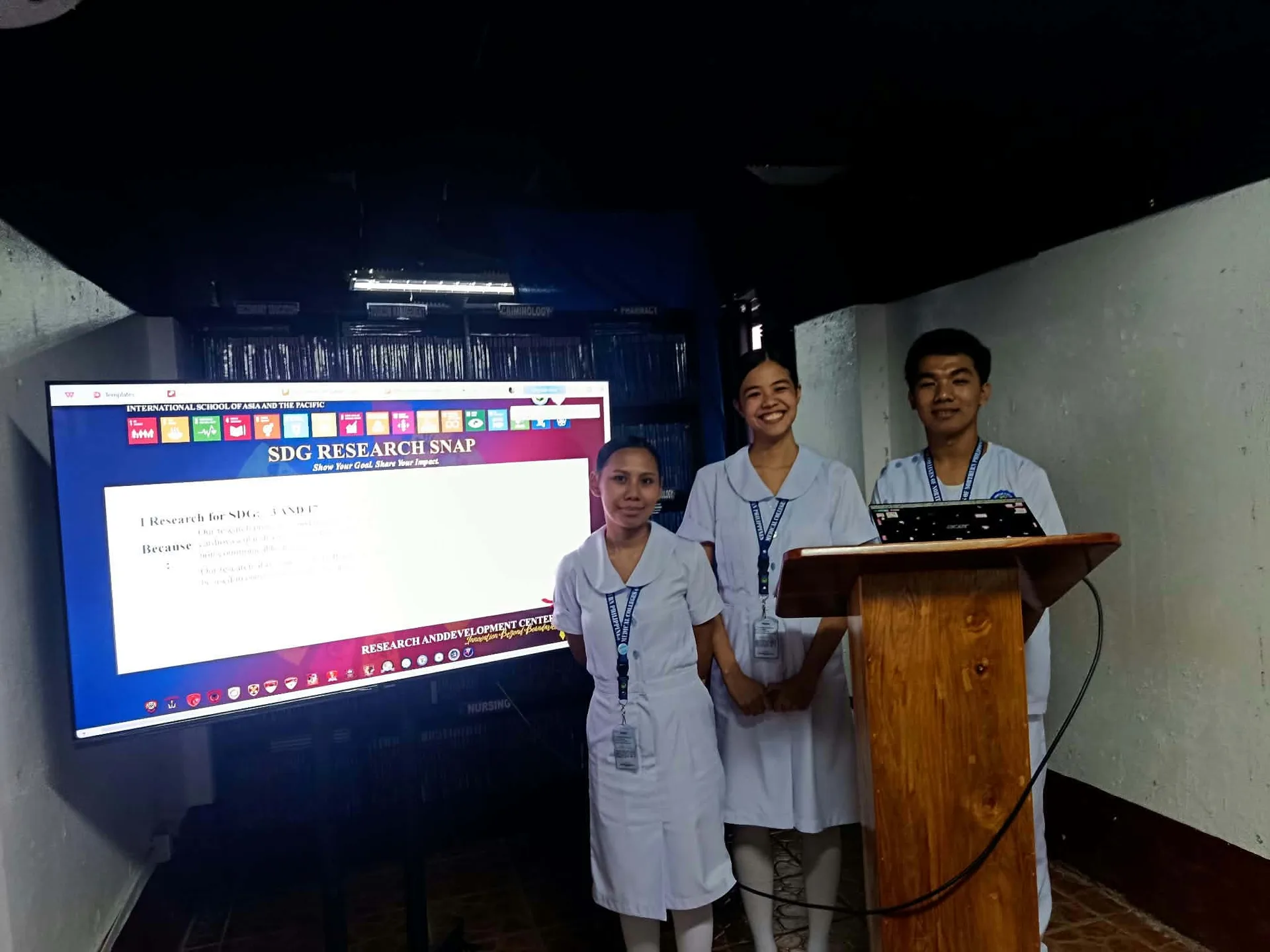
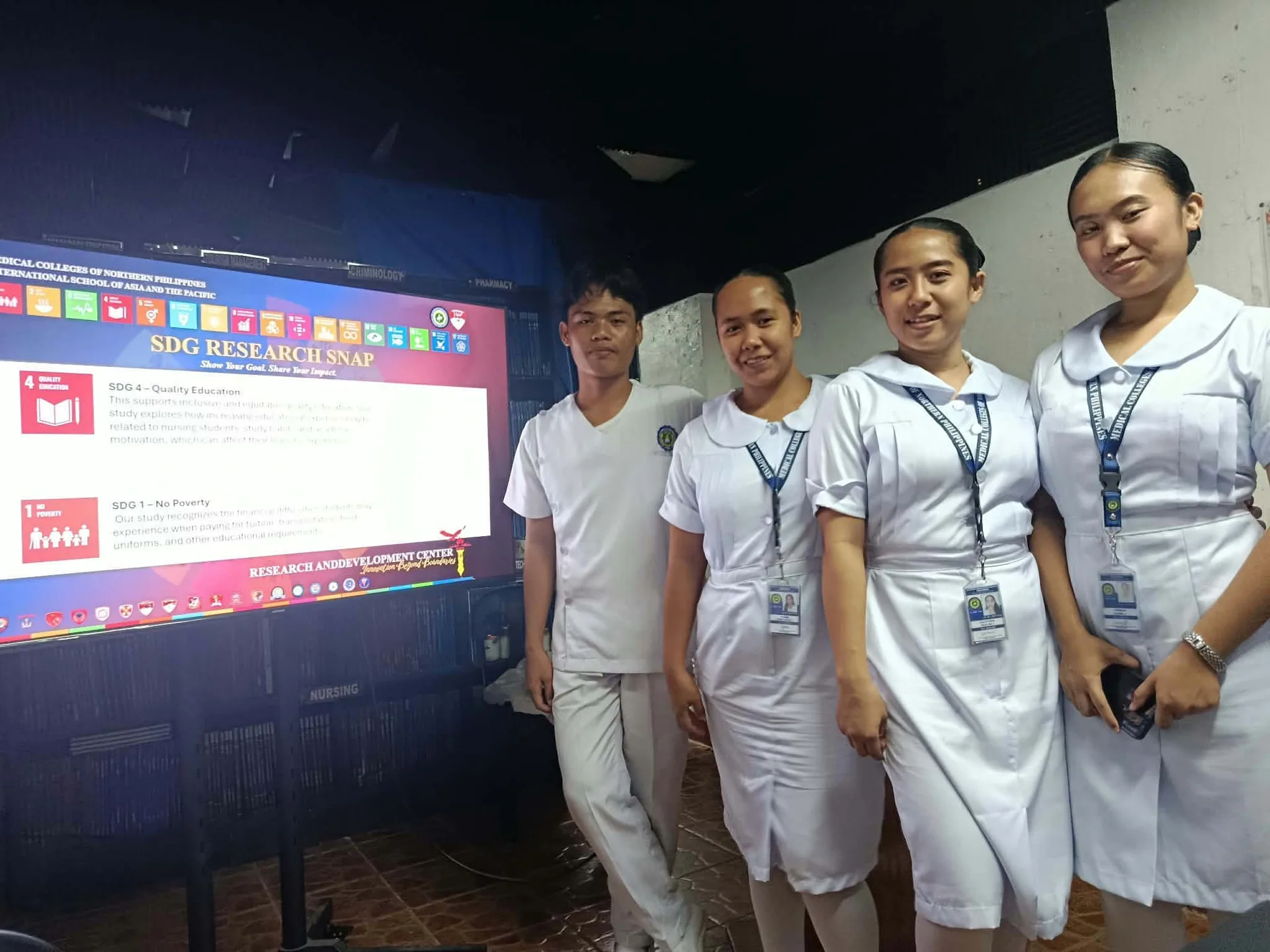
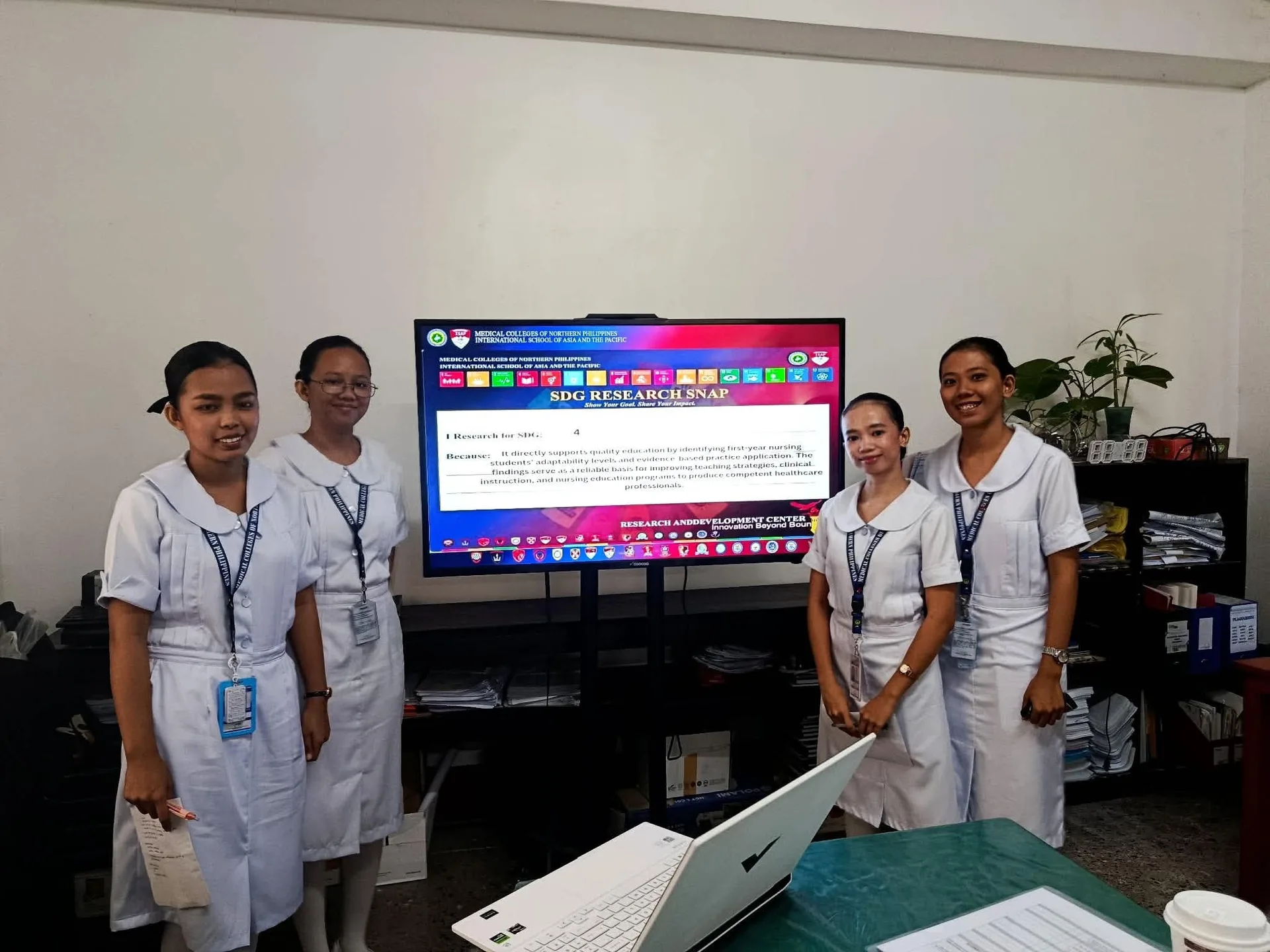
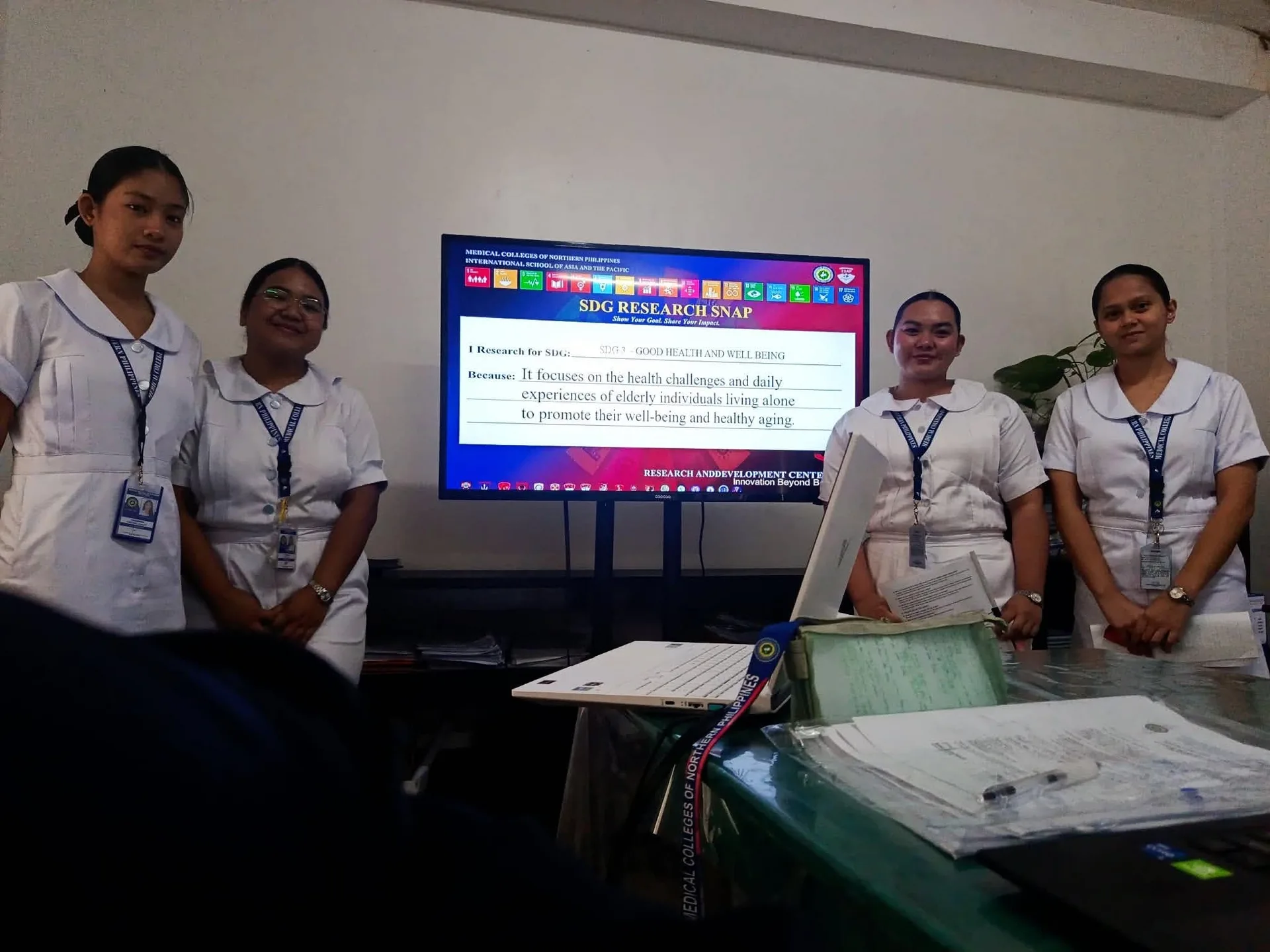
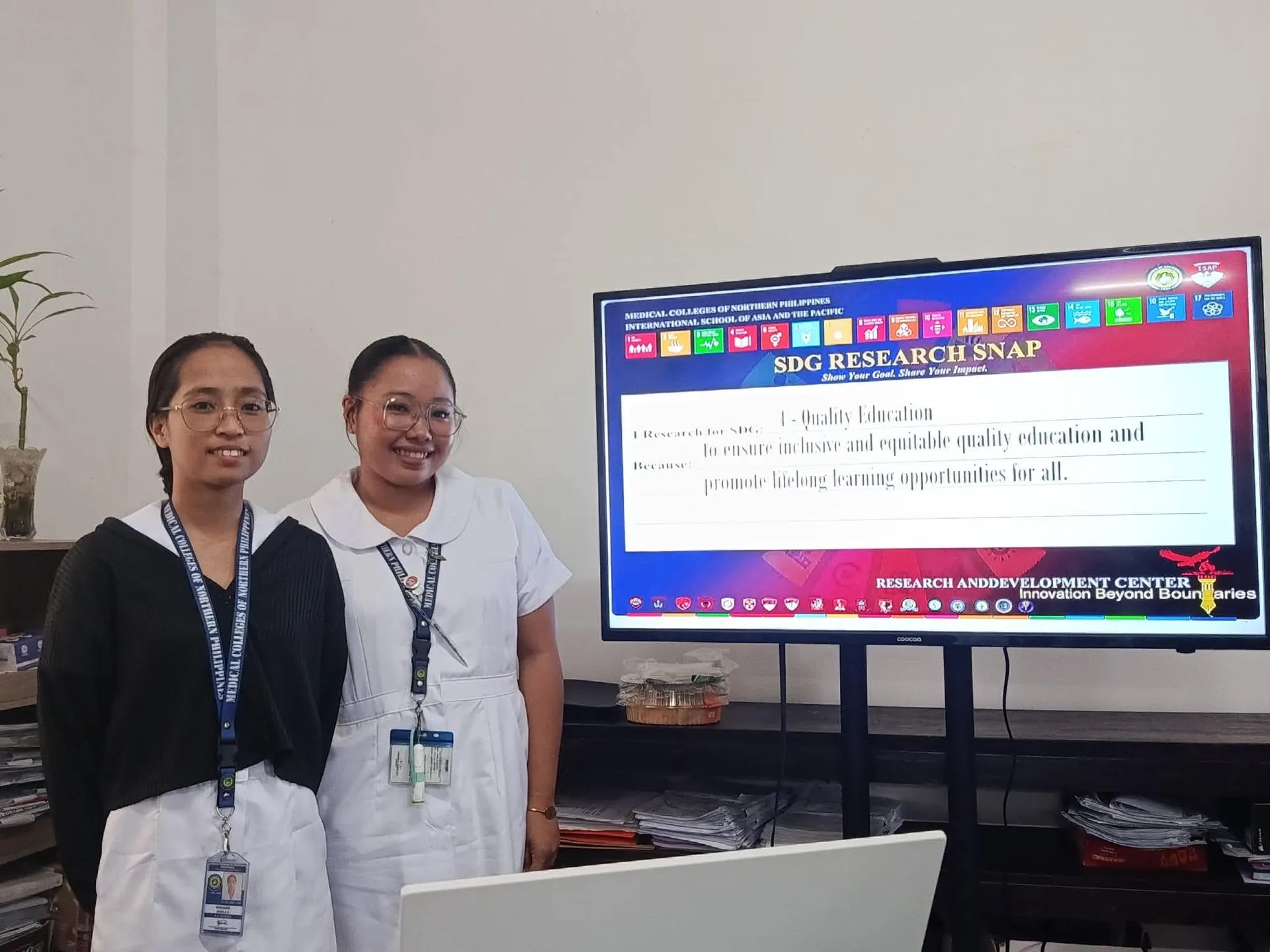
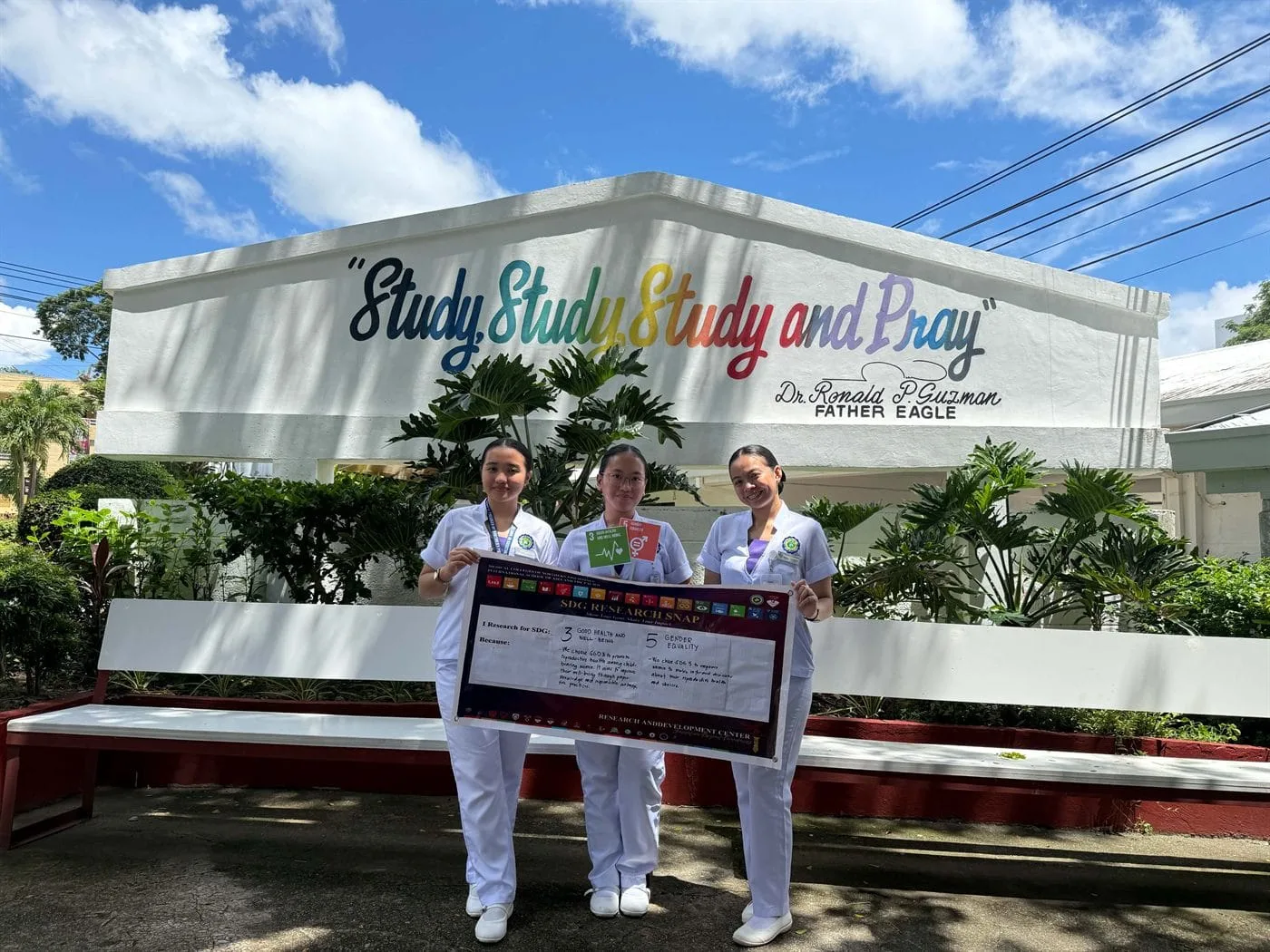
Nursing students holding certificates beside their research presentation
BS Nursing Research Proposal Defense · MCNP · November 16, 2026

The Medical Colleges of Northern Philippines (MCNP) conducted the Bachelor of Science in Nursing (BSN) Research Proposal Defense on November 16, 2026, providing nursing students with an academic platform to present and defend their proposed research studies as part of their academic development and professional preparation.

The activity highlighted the importance of research in nursing education, particularly in developing students' critical thinking, scientific inquiry, and understanding of evidence-based healthcare practices. Through the research proposal defense, students engaged in an academic process designed to strengthen their ability to formulate research problems, develop appropriate methodologies, and communicate their proposed investigations.

The proposal defense served as an opportunity for nursing students to present their research objectives, explain the significance of their studies, and discuss their proposed research methods. The academic evaluation process emphasized the importance of constructive feedback and scholarly discussion in refining research proposals before their implementation.

As research continues to play an important role in nursing education and professional practice, activities such as proposal defenses help students recognize the value of systematic investigation in understanding healthcare concerns and contributing to the development of nursing knowledge.

The MCNP–ISAP Research and Development Center (RDC) recognizes the significance of student research engagement in strengthening the institution's research culture. The conduct of research proposal defenses supports the broader institutional commitment to academic excellence, scholarly inquiry, and the development of research-related competencies among future healthcare professionals.

The activity primarily aligns with Sustainable Development Goal 4 – Quality Education, as it provides opportunities for research-oriented learning, critical thinking, and academic development. It also demonstrates relevance to SDG 3 – Good Health and Well-Being, considering the relationship between nursing research, healthcare knowledge, and evidence-based approaches to patient care.

From the perspective of the World University Rankings for Innovation (WURI), the activity demonstrates potential relevance through student research engagement, scientific problem-solving, and the development of research proposals that may address concerns in nursing education and healthcare practice. The defense provides an avenue for scholarly discussion and the refinement of research ideas that may contribute to future improvements in healthcare knowledge and professional practice.

The activity also aligns with the MCNP–ISAP RDC INNOVATES Research Agenda 2026–2030, particularly INSPIRE – Culture, Capability, and Engagement, by encouraging student participation in research and the development of academic competencies; NURTURE – Ethics, Quality, and Accountability, through research evaluation and the promotion of academic standards; and OPERATIONALIZE – Knowledge Utilization, Innovation, and Improvement, through the potential application of nursing research findings to healthcare practices and institutional learning.

The BS Nursing Research Proposal Defense reflects MCNP's commitment to strengthening student research participation and providing opportunities for academic and professional growth. By engaging nursing students in research proposal development and academic evaluation, the activity supports a learning environment that values scientific inquiry, research quality, and evidence-informed decision-making.

Through the BS Nursing Research Proposal Defense, MCNP continues to foster a research-oriented academic community that encourages nursing students to develop their research capabilities and recognize the importance of scholarly inquiry in advancing nursing education and healthcare practice.

RDC SDG Alignment

SDG 4 – Quality Education (Primary)

Supports research-oriented learning, critical thinking, academic evaluation, and the development of research competencies among nursing students.

SDG 3 – Good Health and Well-Being (Supporting)

Reflects the relevance of nursing research to healthcare knowledge, patient care, and evidence-based professional practice.

WURI Best Practices

The activity demonstrates potential relevance to the World University Rankings for Innovation (WURI) through student research engagement, scientific inquiry, and the development of research proposals addressing nursing and healthcare concerns.

The proposal defense provides an academic platform for strengthening research ideas through evaluation, scholarly discussion, and constructive feedback.

RDC Agenda Alignment

INSPIRE – Culture, Capability, and Engagement

Encourages student research participation, academic growth, and the development of research-related competencies.

NURTURE – Ethics, Quality, and Accountability

Supports research evaluation, academic standards, and the development of quality-oriented research practices.

OPERATIONALIZE – Knowledge Utilization, Innovation, and Improvement

Highlights the potential contribution of nursing research to future healthcare knowledge, professional practice, and institutional improvement.

Photo Documentation

BS Nursing Research Proposal Defense · November 16, 2026 · 11 documentation photos

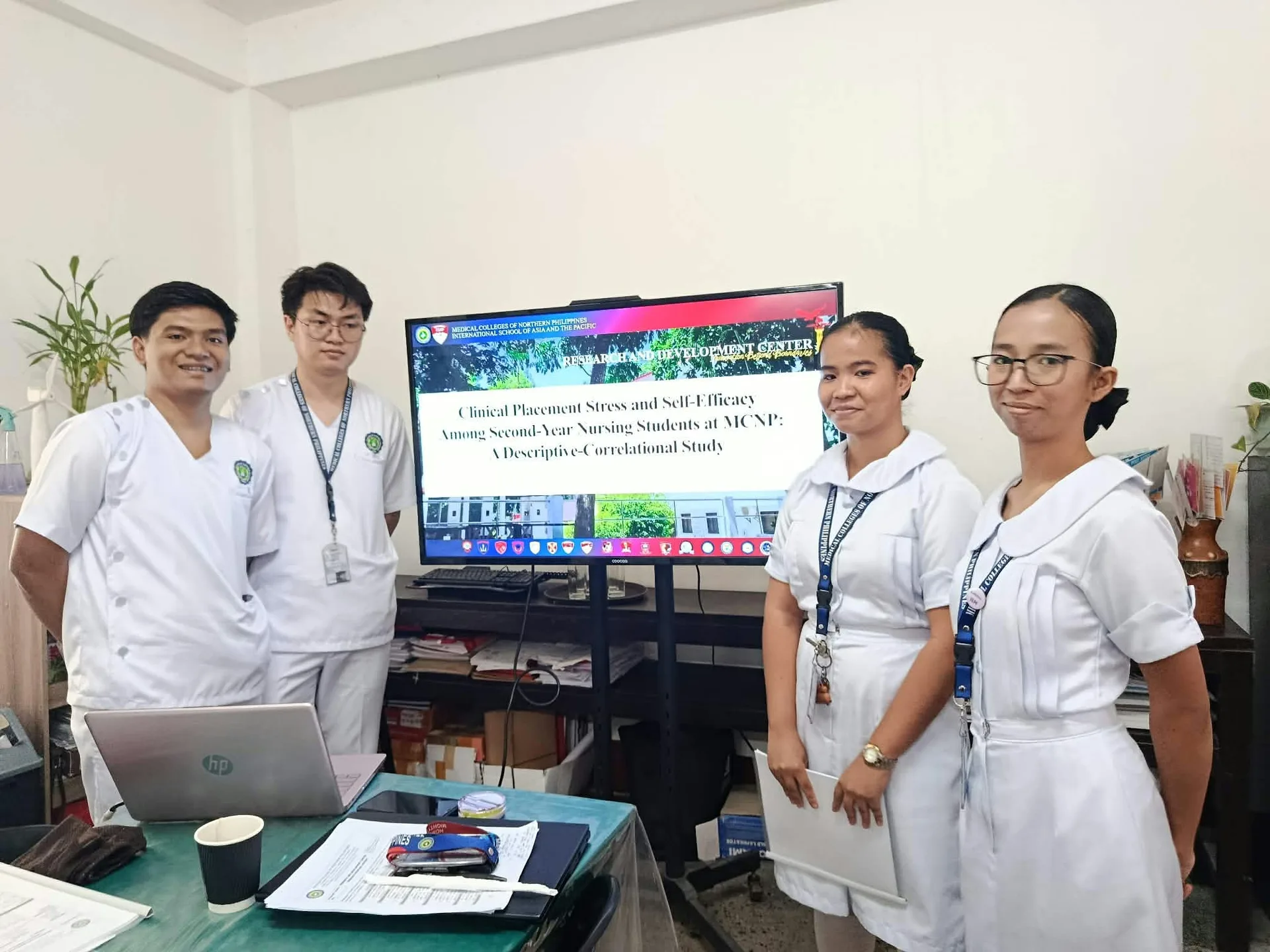
Nursing students holding certificates beside their research presentation
Nursing students holding certificates beside their research presentation · Photo 1
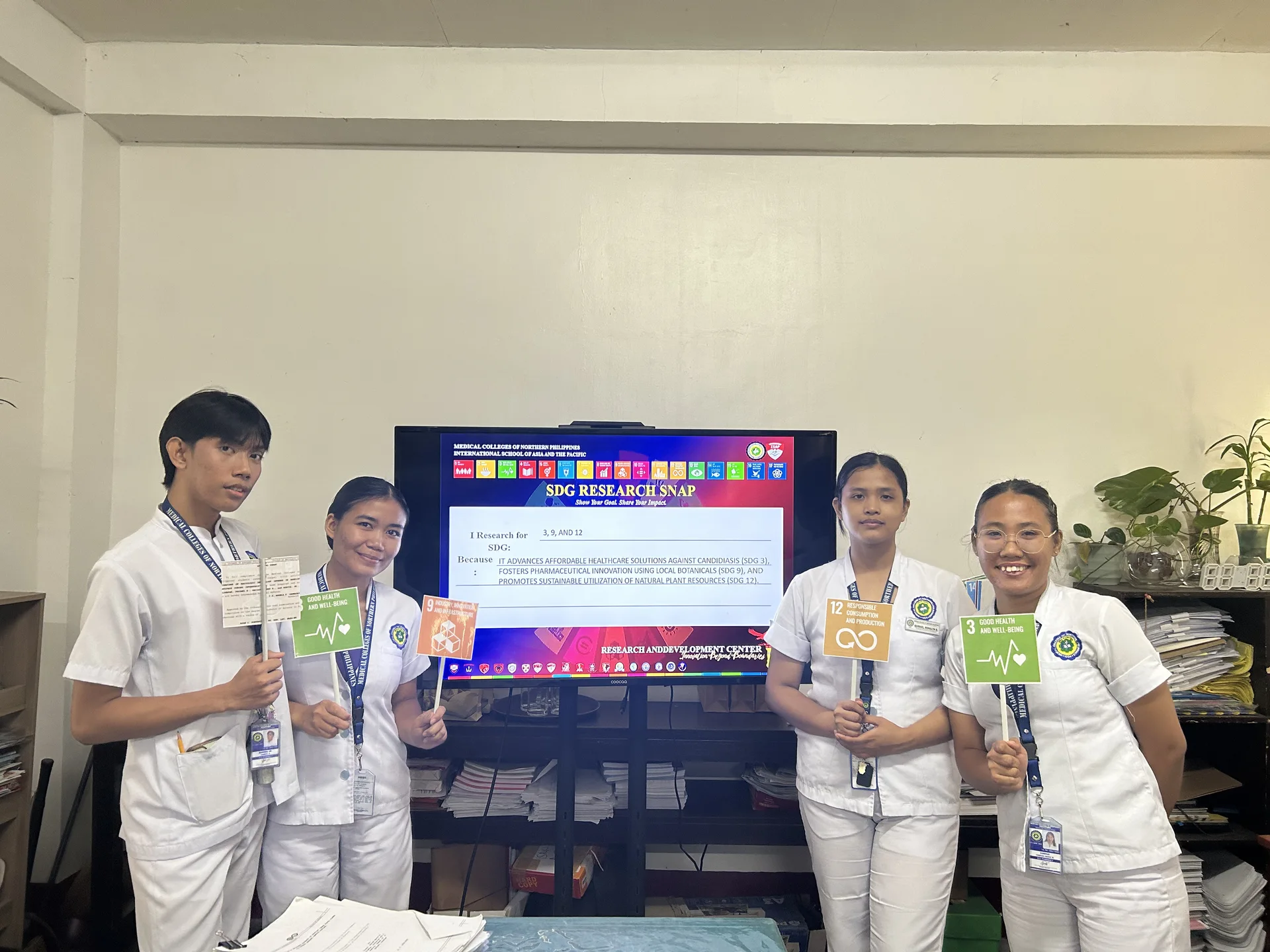
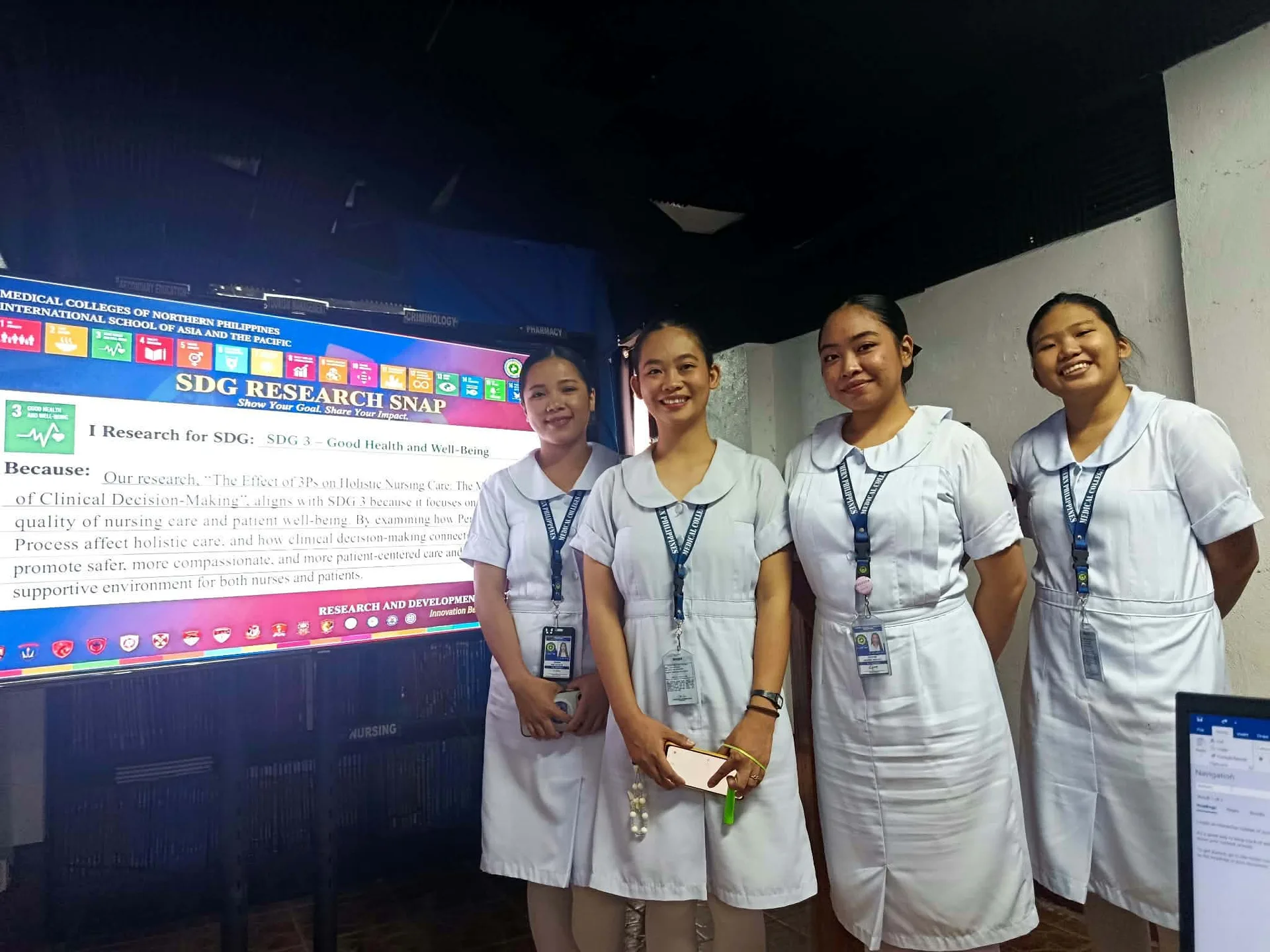
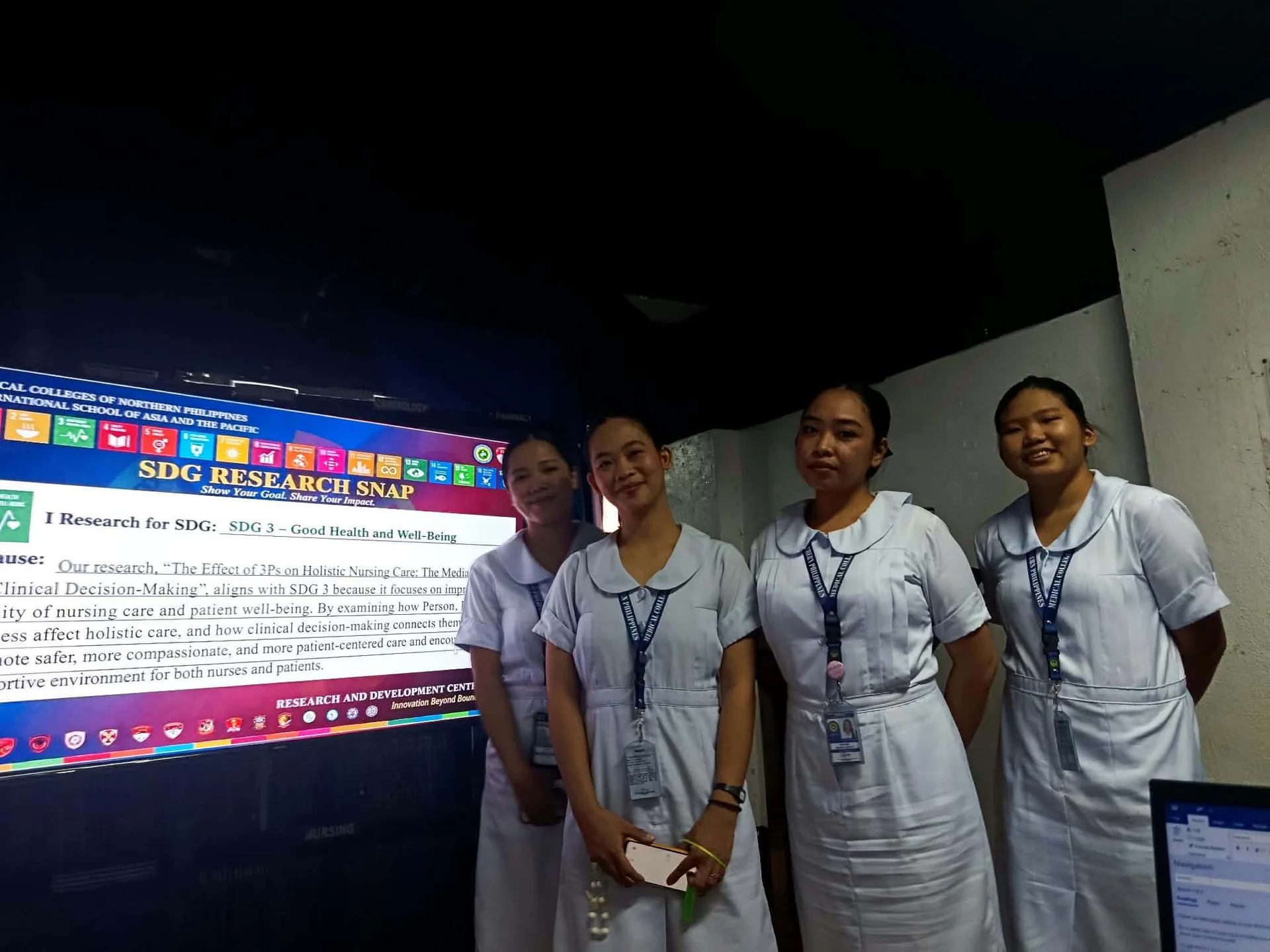
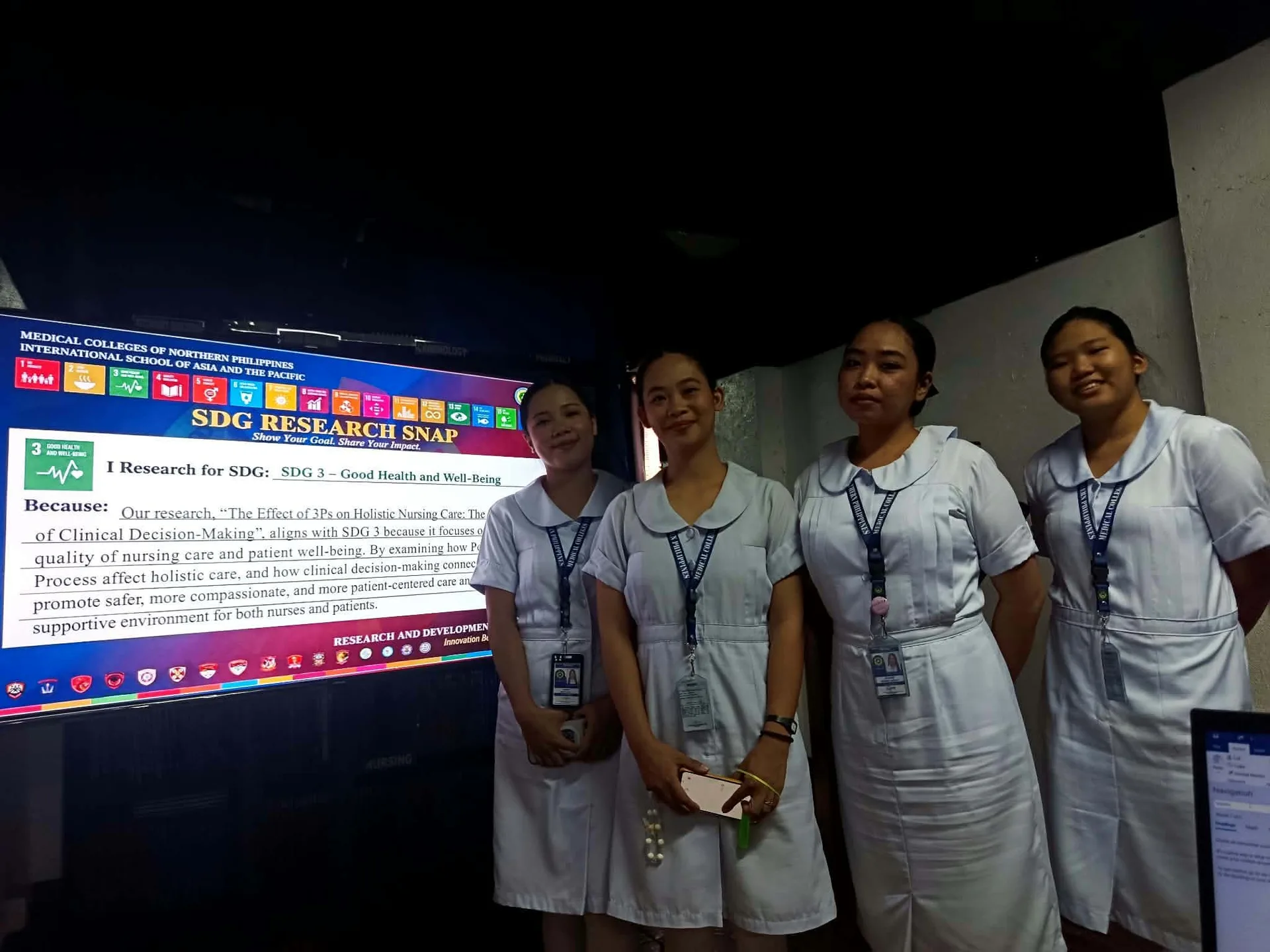
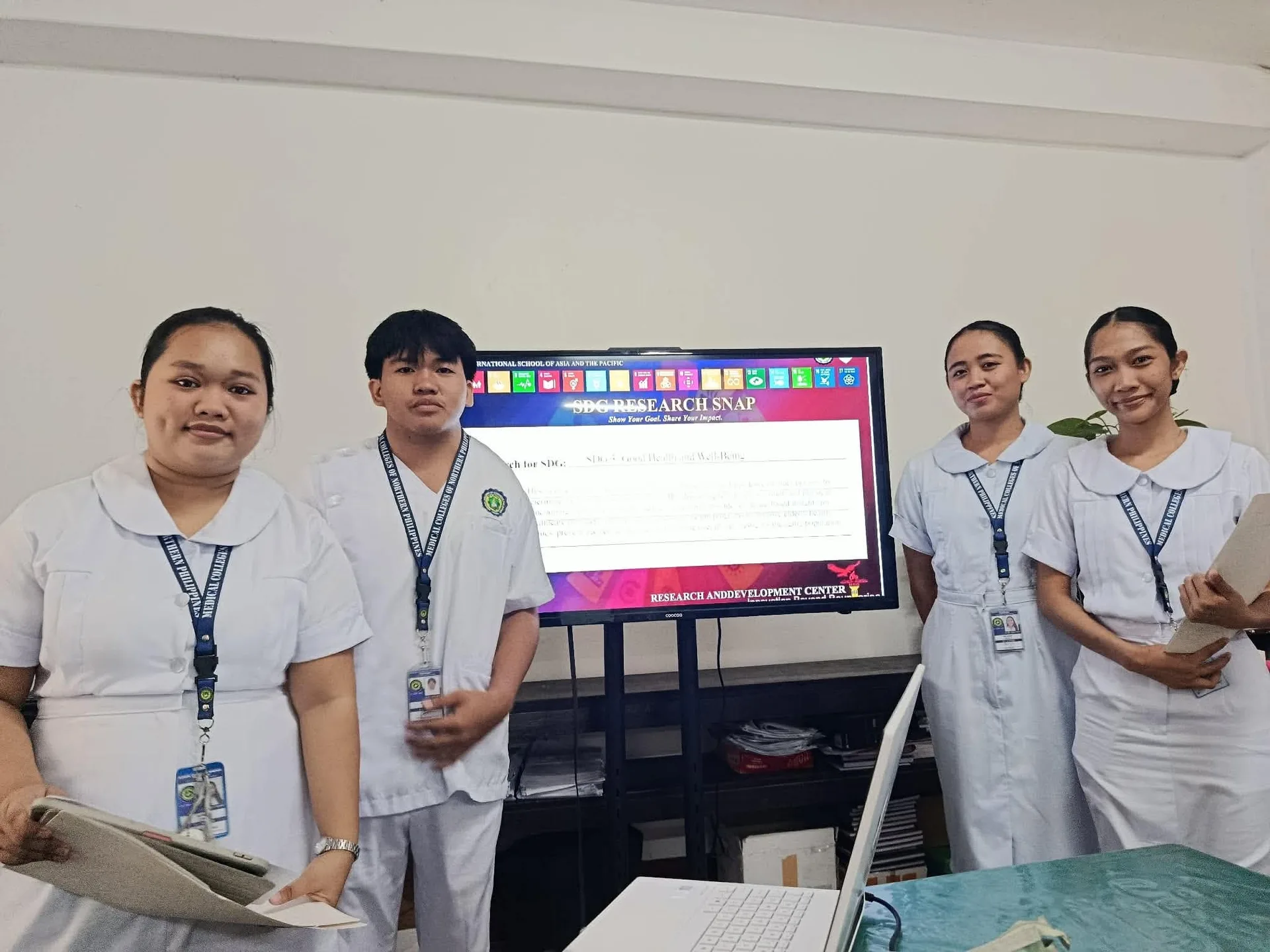
Nursing students beside their research proposal display
Nursing students beside their research proposal display · Photo 2
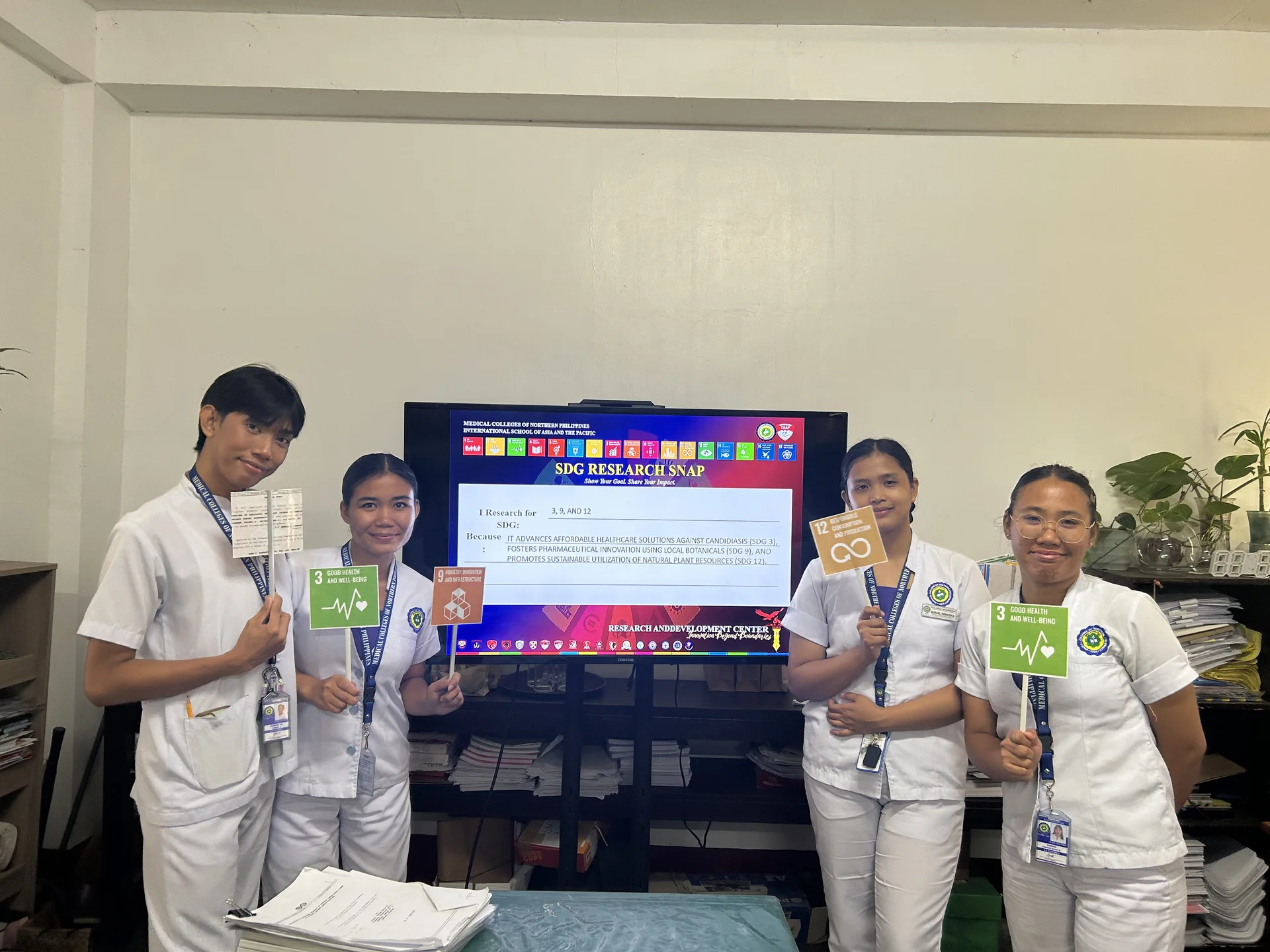
Nursing student researchers documenting their proposal defense
Nursing student researchers documenting their proposal defense · Photo 3
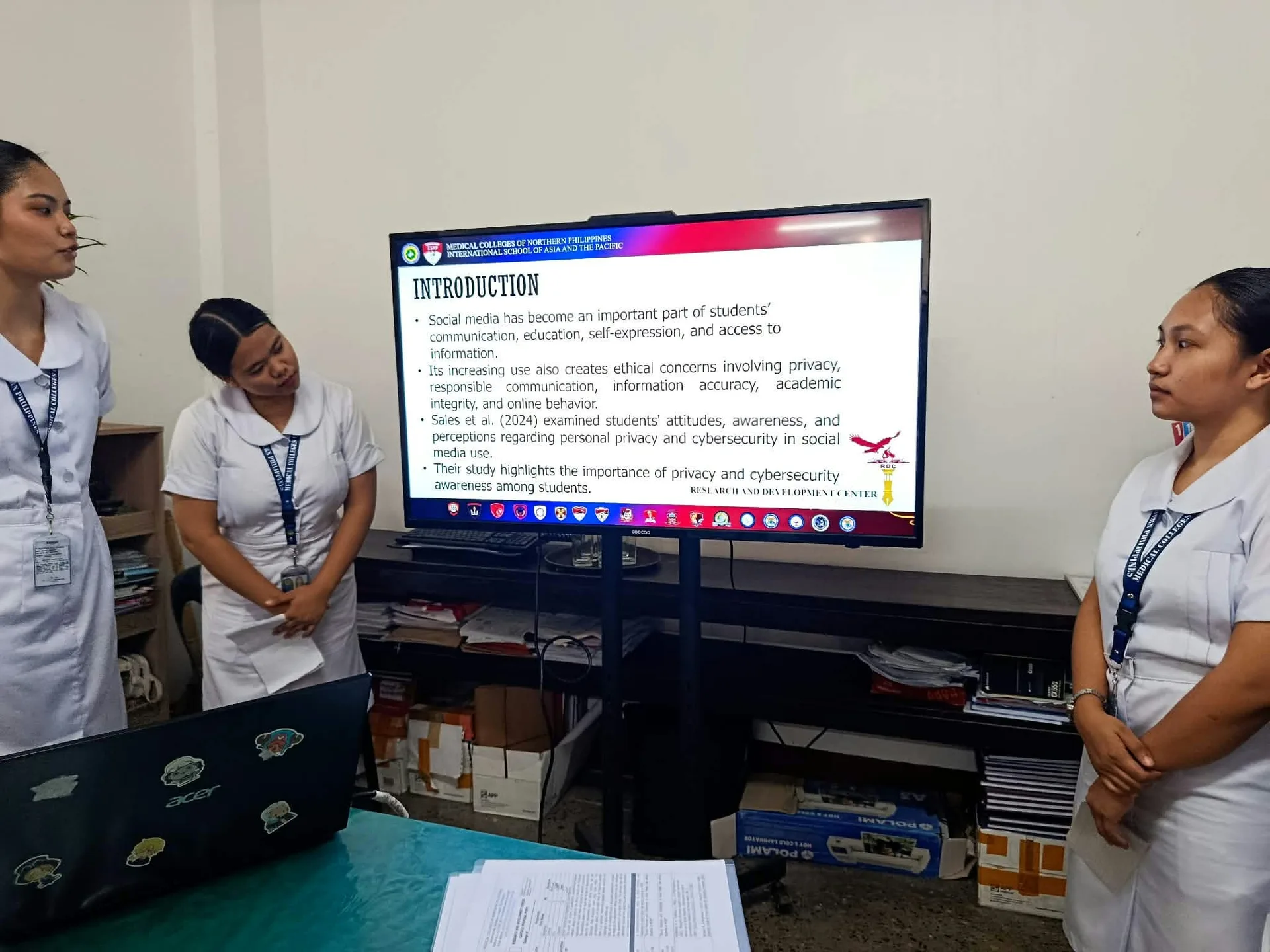
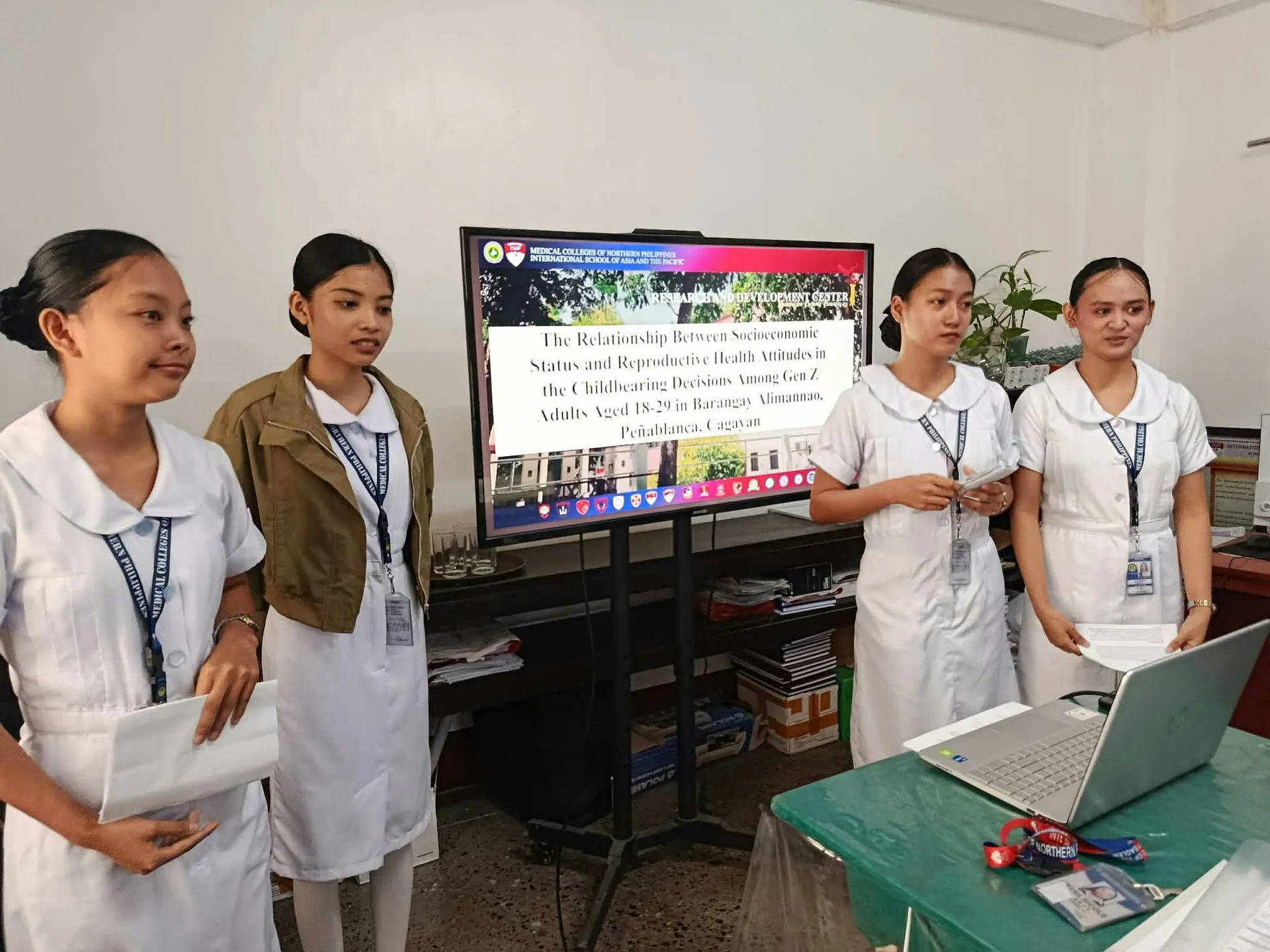
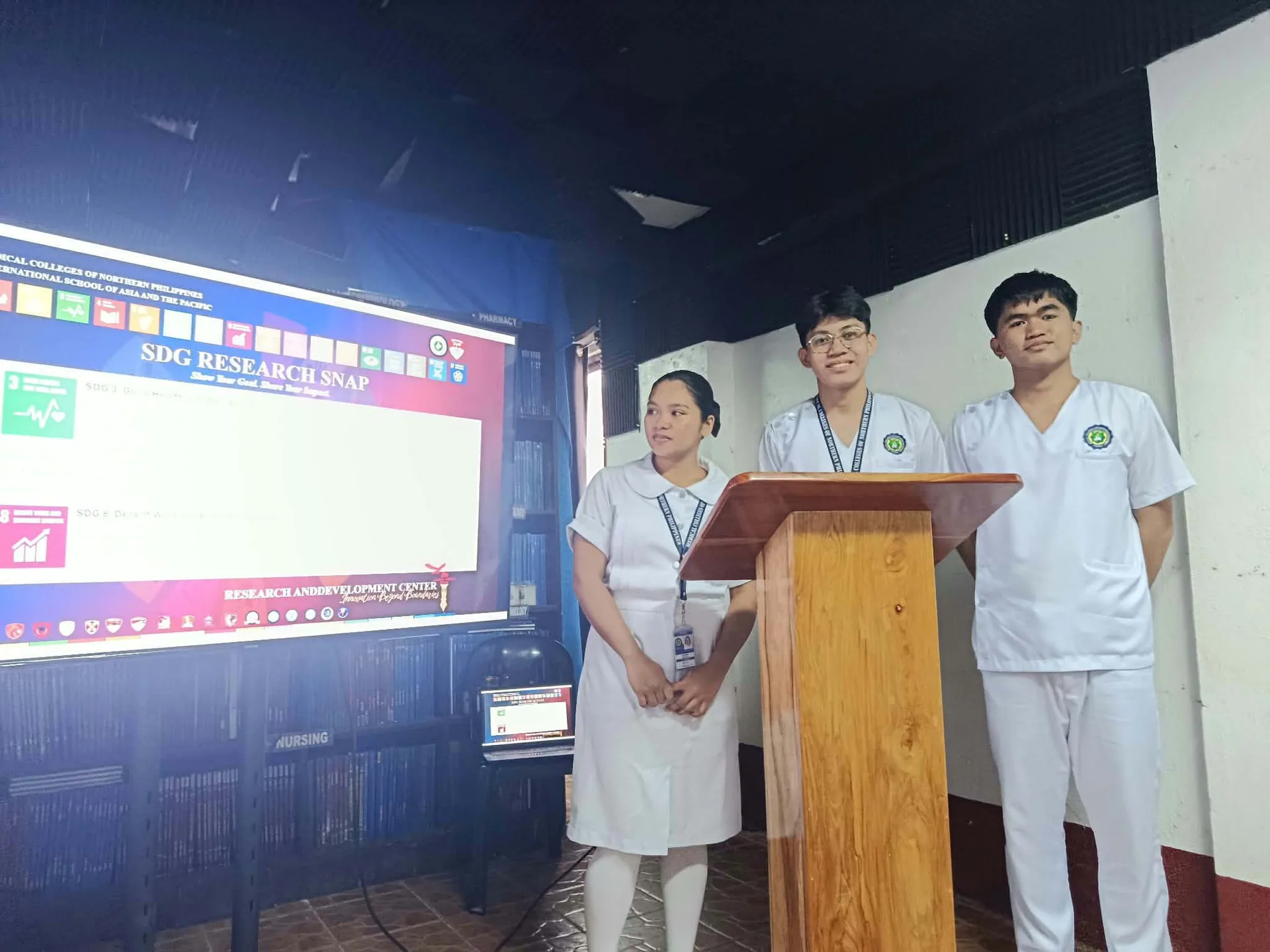
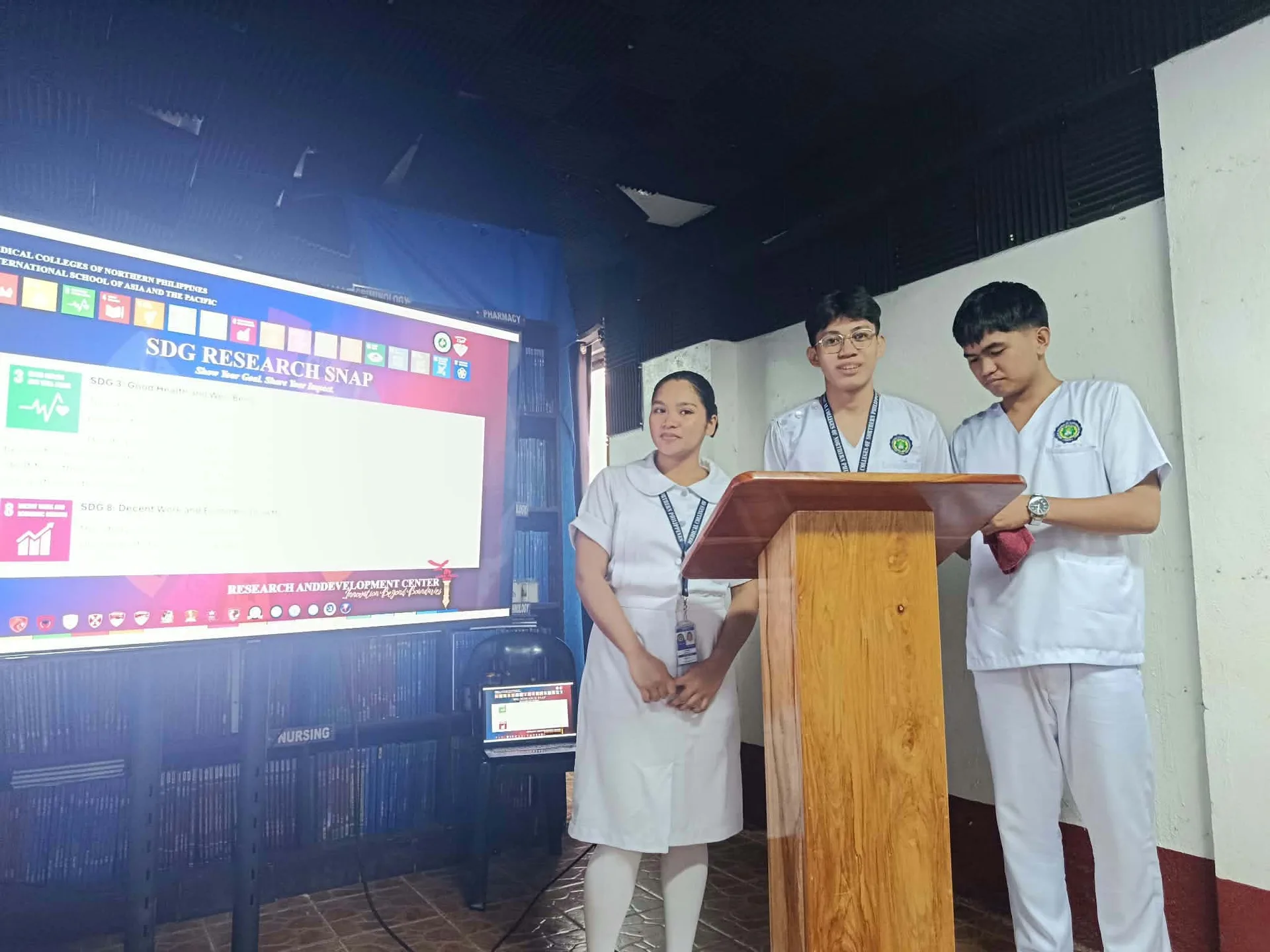
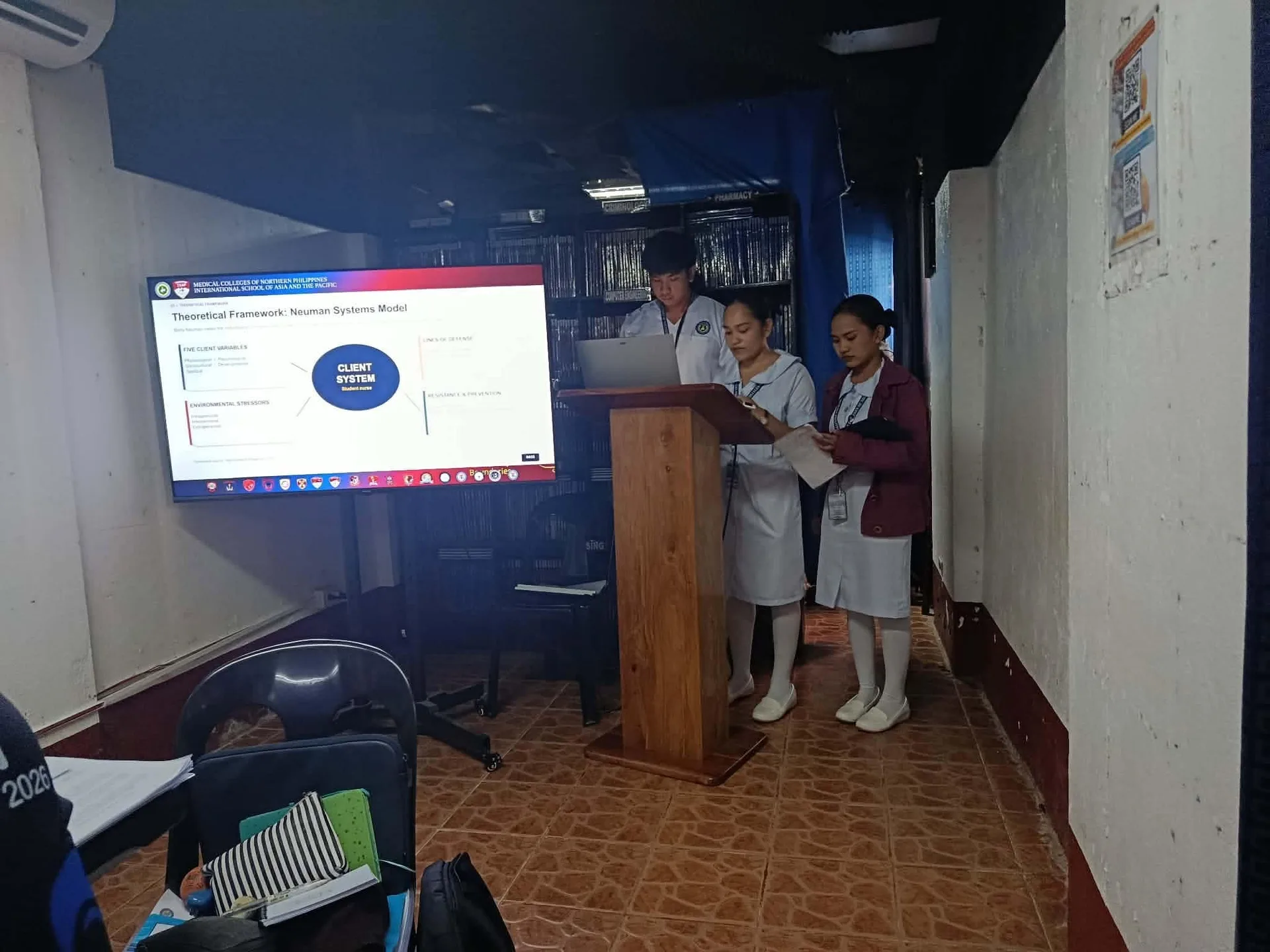
Nursing students presenting the introduction to their research proposal
Nursing students presenting the introduction to their research proposal · Photo 4
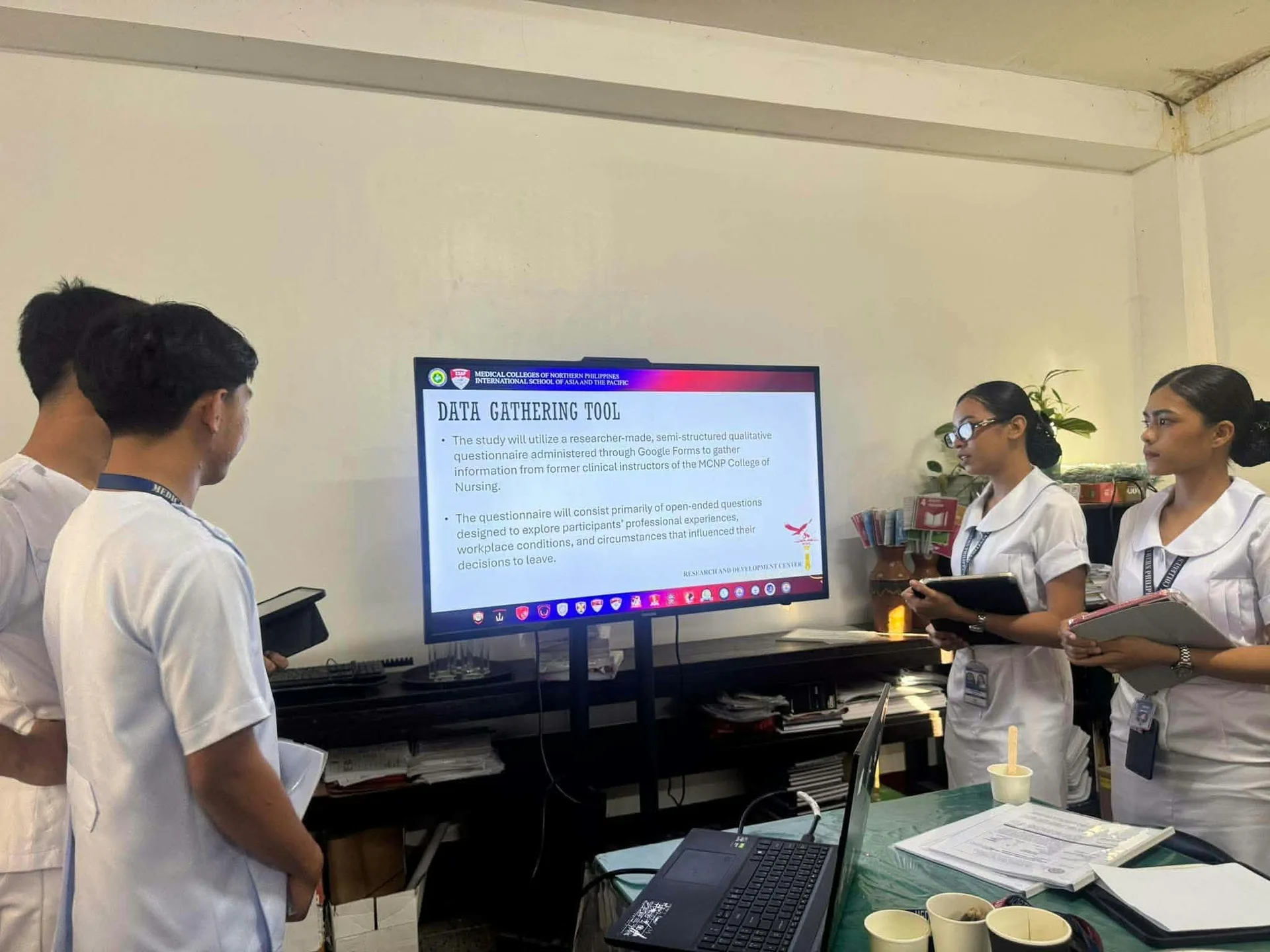
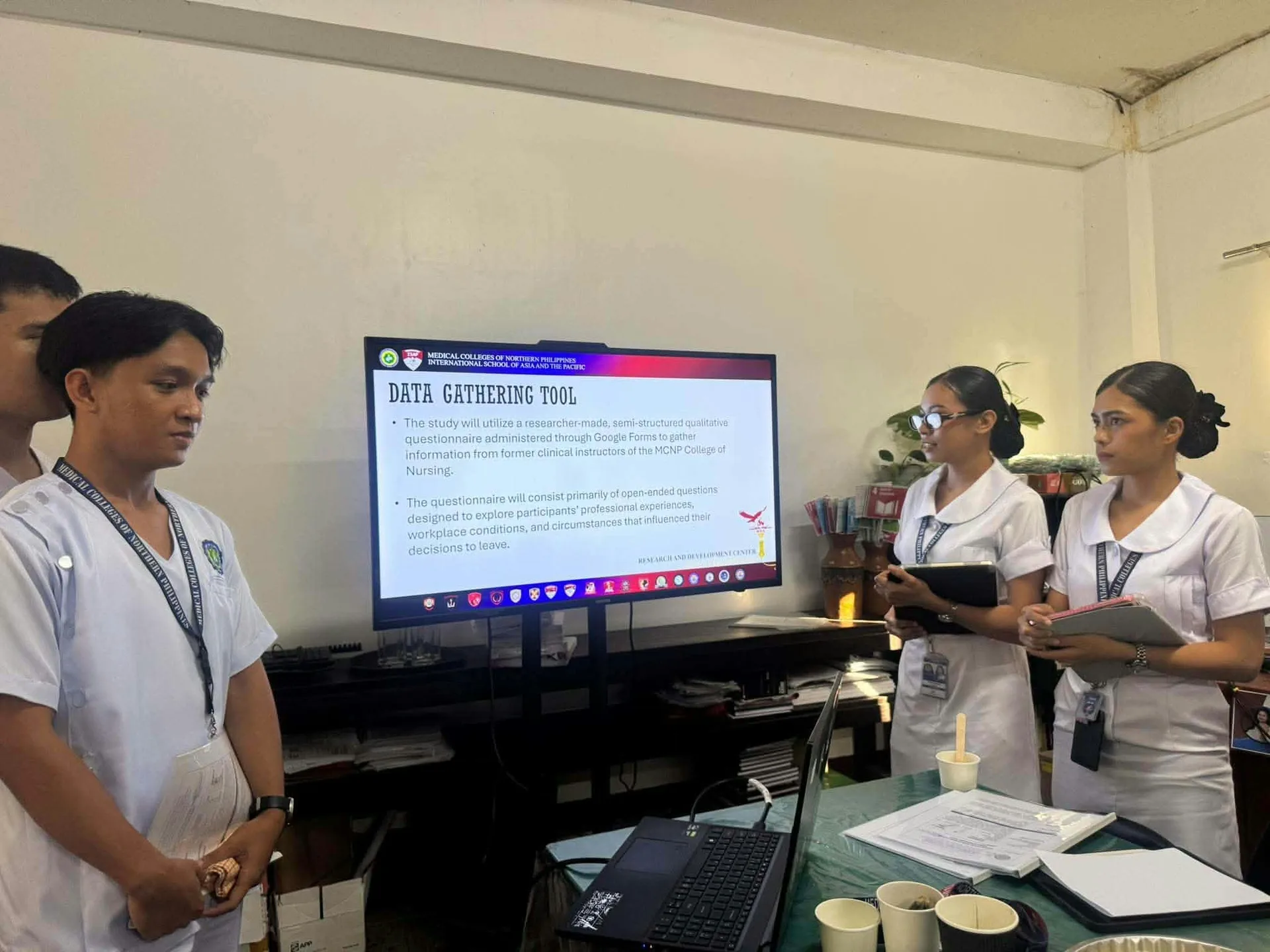
Nursing students discussing their proposed data gathering tools
Nursing students discussing their proposed data gathering tools · Photo 5
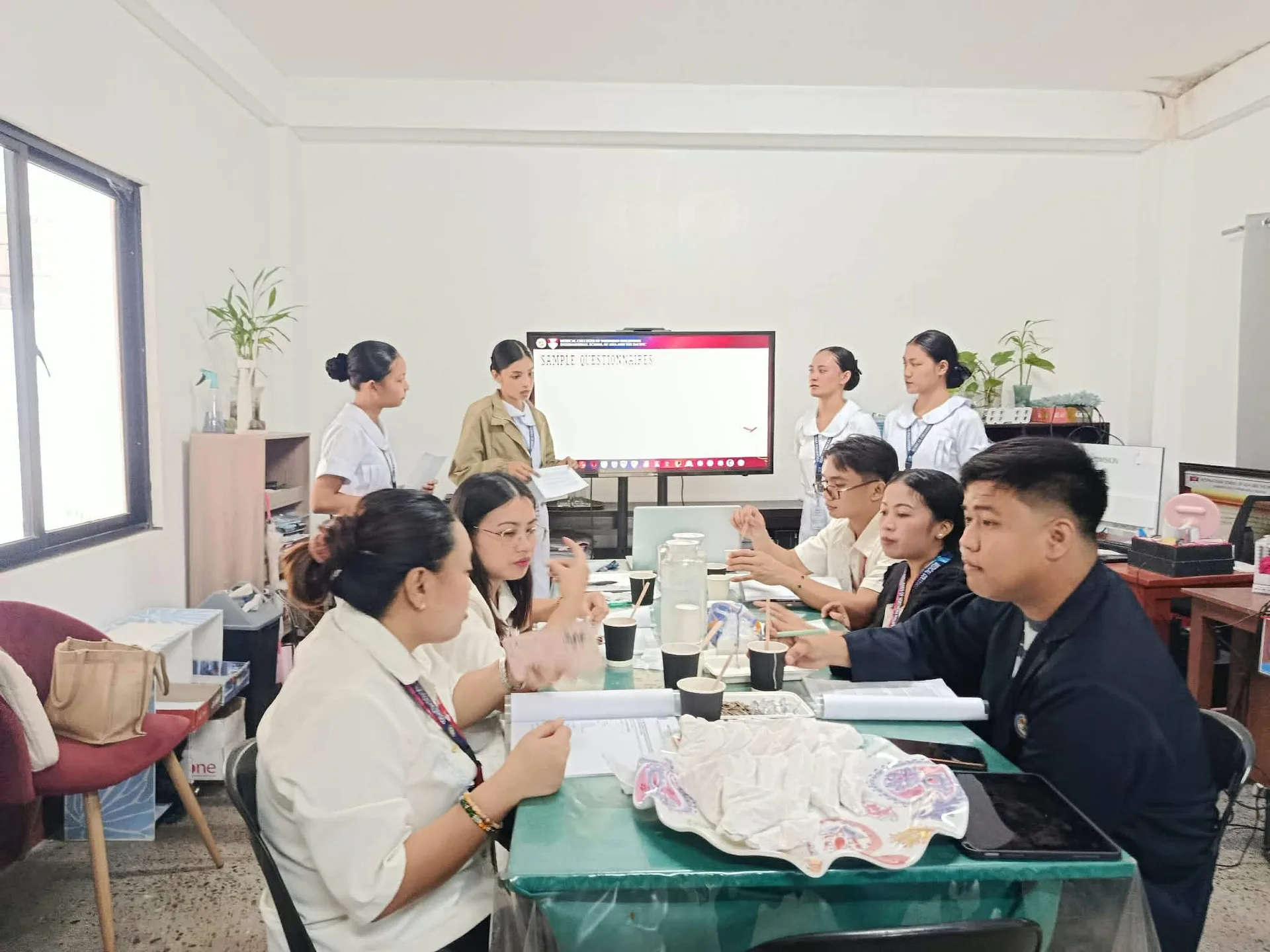
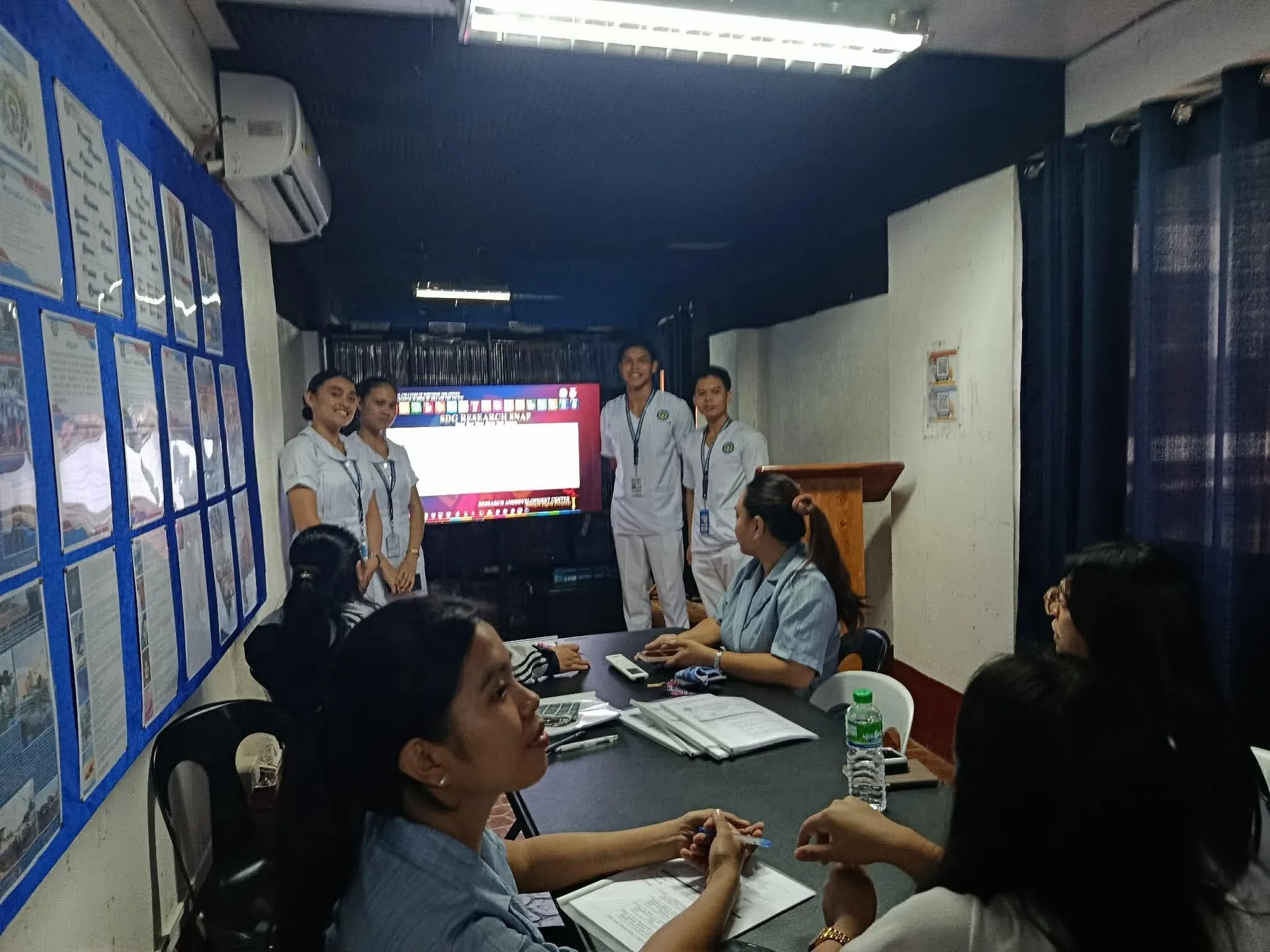
Nursing students and panelists during the research proposal defense
Nursing students and panelists during the research proposal defense · Photo 6
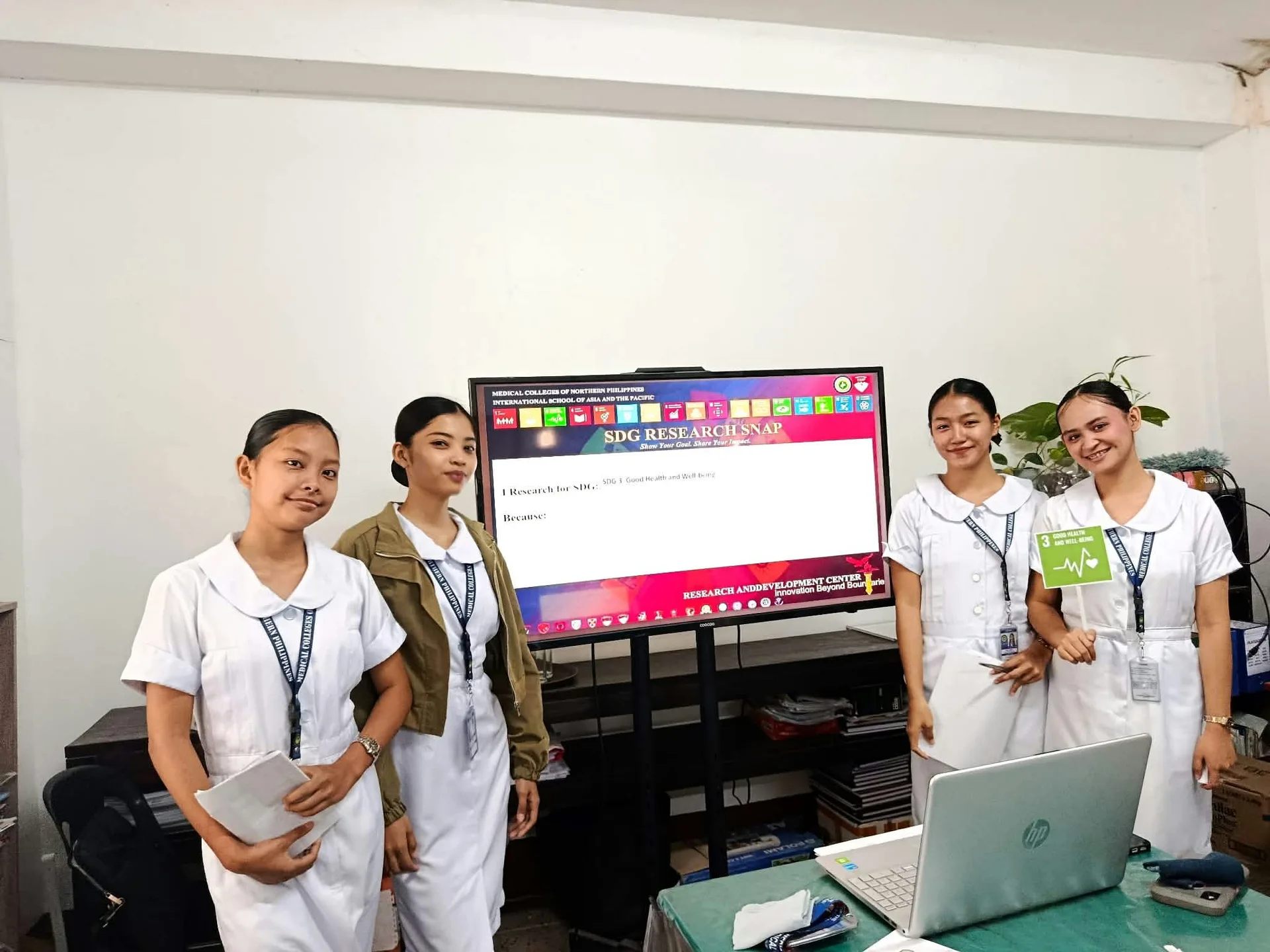
Nursing student presenters beside their research display
Nursing student presenters beside their research display · Photo 7
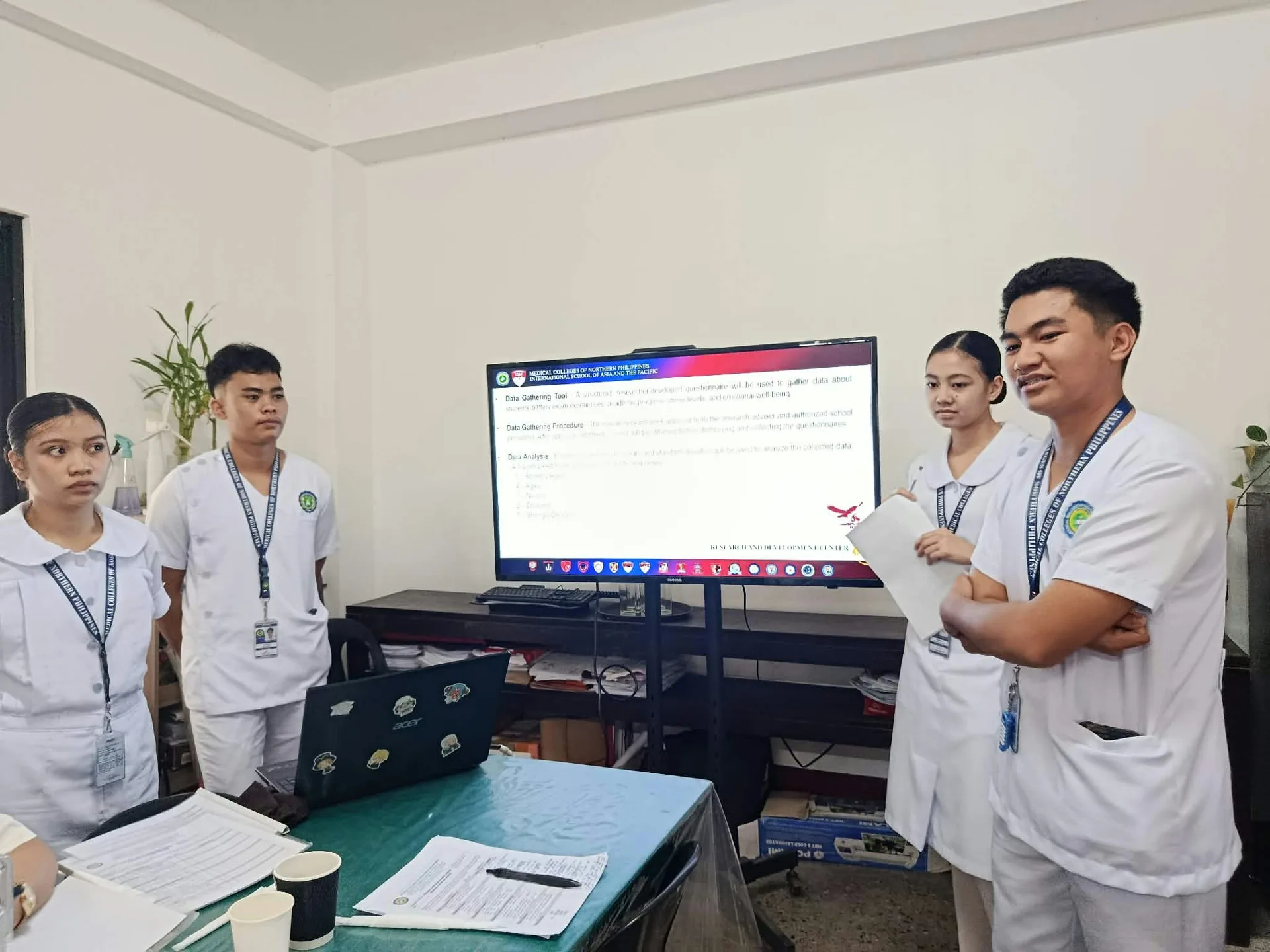
Nursing students presenting their proposed research methods
Nursing students presenting their proposed research methods · Photo 8
Nursing students discussing their research proposal
Nursing students discussing their research proposal · Photo 9
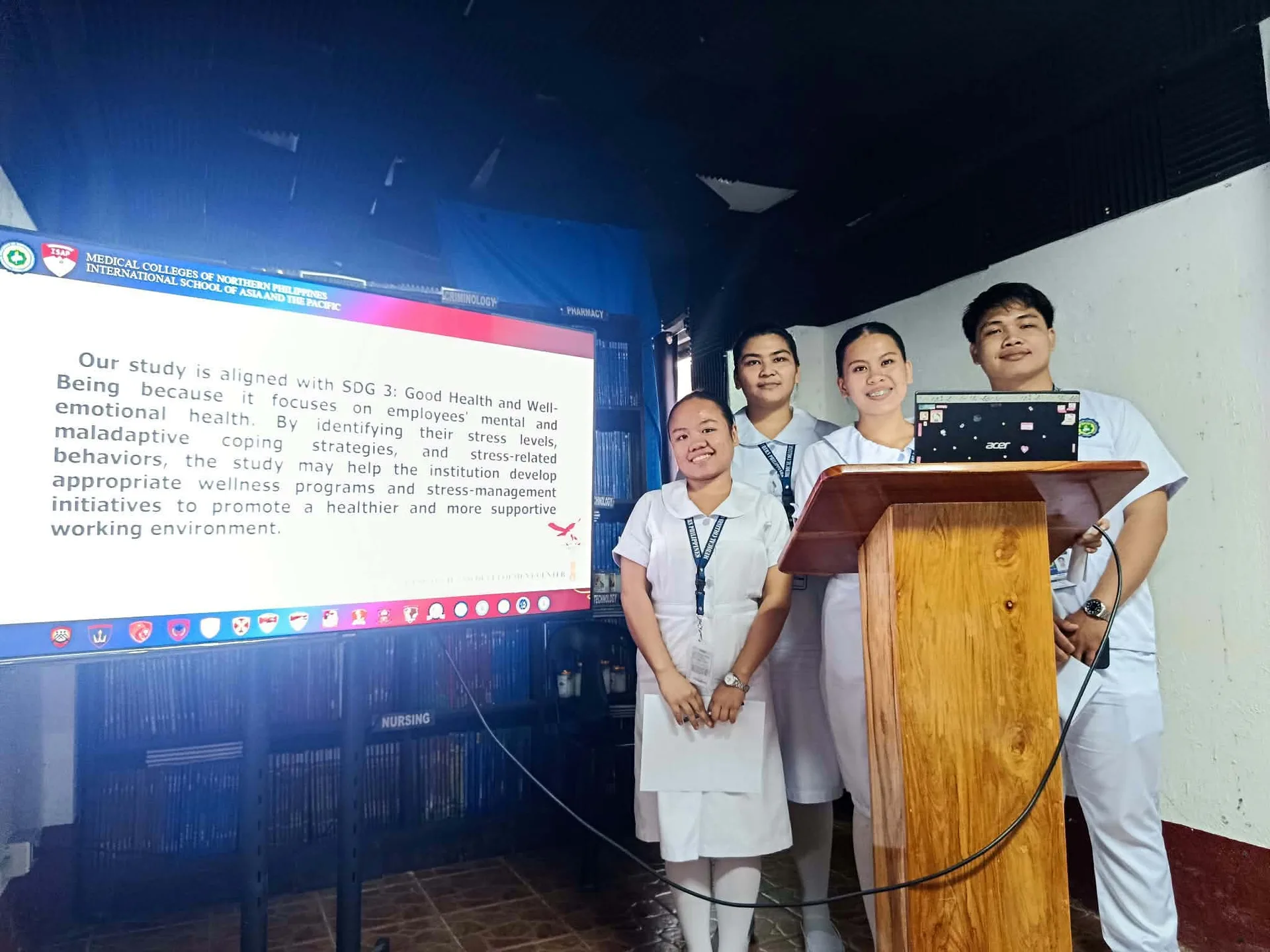
Nursing research presenters and participants beside the presentation screen
Nursing research presenters and participants beside the presentation screen · Photo 10
Nursing students documenting their research proposal presentation
Nursing students documenting their research proposal presentation · Photo 11
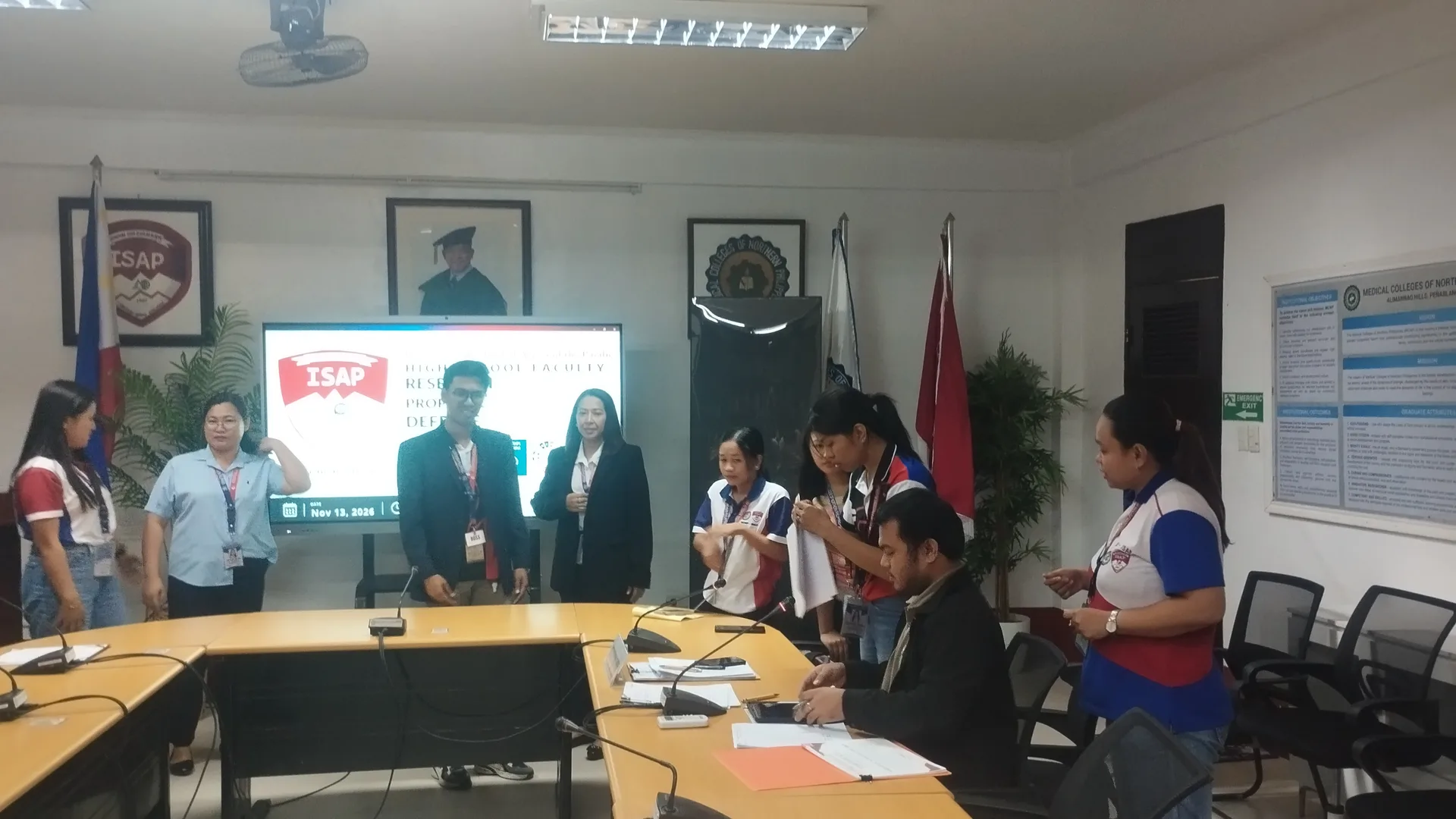
ISAP High School Faculty Research Proposal Defense, November 13, 2026 – documentation photo 34

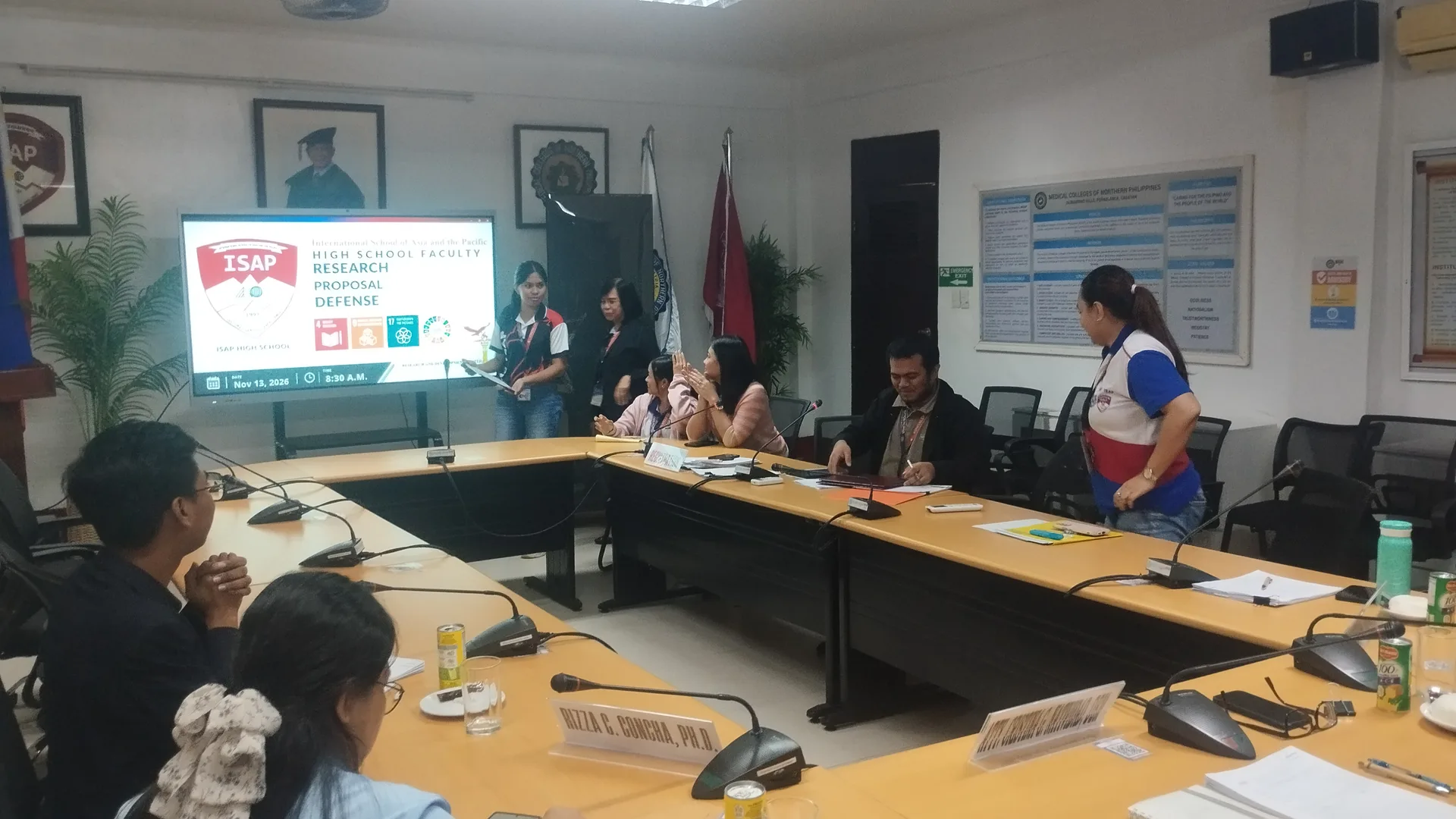
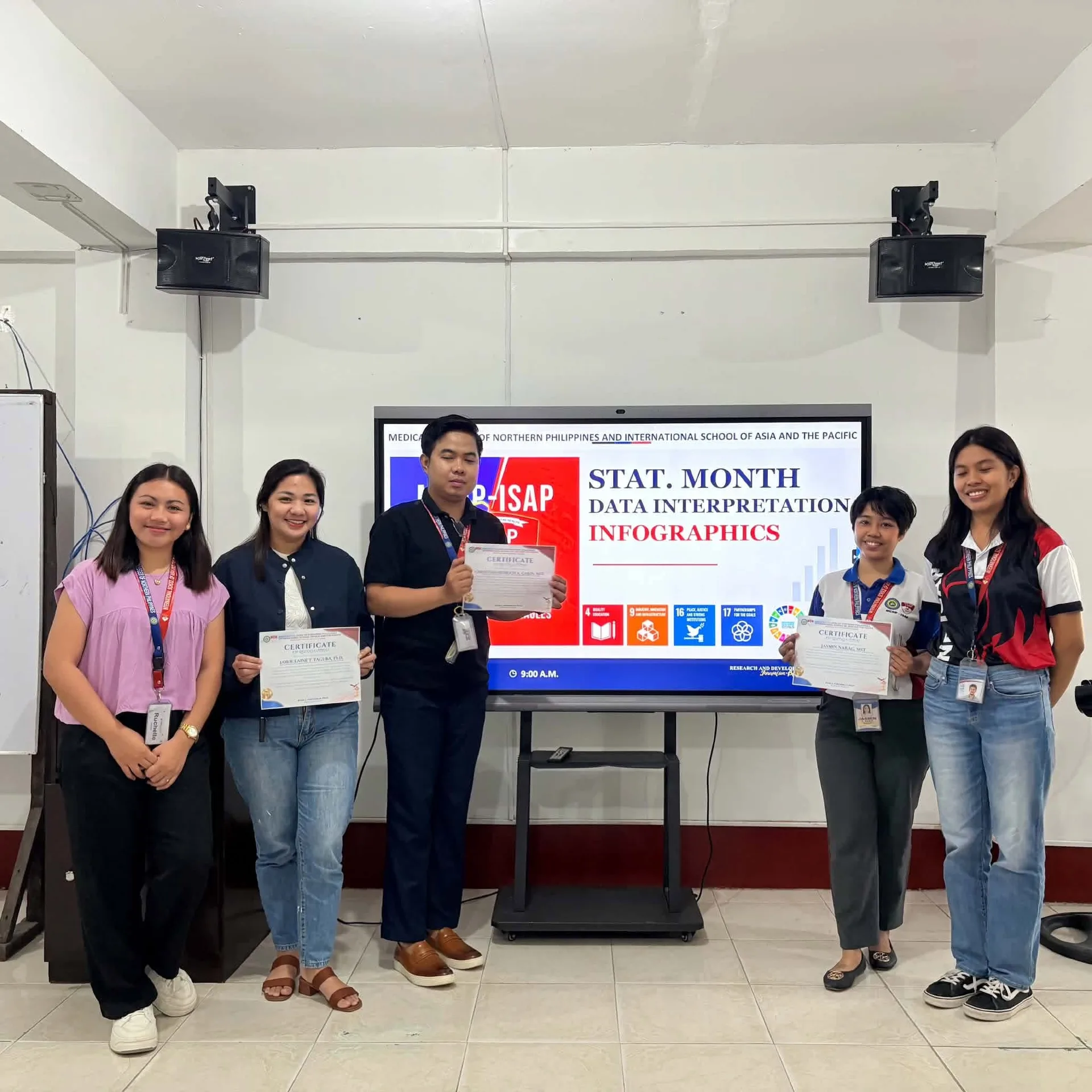
The International School of Asia and the Pacific (ISAP) scheduled its High School Faculty Research Proposal Defense for November 13, 2026, at 8:30 a.m., highlighting the institution's continuing commitment to faculty research engagement, scholarly inquiry, and the development of a research-oriented academic environment.

The activity provides an academic platform for high school faculty members to present their proposed research studies, discuss research objectives and methodologies, and engage in scholarly evaluation. As part of the institution's regularly conducted research activities, the proposal defense supports the continuous development of faculty research capabilities and encourages the integration of systematic inquiry into educational practice.

Through the research proposal defense, faculty researchers have an opportunity to examine educational concerns, formulate research-based approaches, and strengthen their understanding of research methodologies. The activity also emphasizes the importance of academic discussion and constructive evaluation in refining research proposals before subsequent stages of investigation.

Beyond research presentation, the initiative reflects ISAP's commitment to cultivating a professional learning environment where faculty members are encouraged to engage in scholarly work, contribute research ideas, and explore opportunities for improving teaching, learning, and institutional practices.

The activity supports Sustainable Development Goal 4 – Quality Education by promoting faculty professional development, research engagement, and continuous learning. It also features SDG 9 – Industry, Innovation and Infrastructure, recognizing the role of faculty research in exploring innovative educational approaches and institutional improvements, and SDG 17 – Partnerships for the Goals, reflecting the contribution of academic collaboration and knowledge exchange to research development. The specific contributions to SDGs 9 and 17 will depend on the proposed studies and any documented collaborative activities.

The activity also demonstrates WURI-relevant educational practices through faculty research proposal presentations, scholarly discussion, and constructive evaluation. These practices support research capability development and help faculty members refine studies addressing teaching, learning, and institutional needs.

The activity likewise aligns with the MCNP–ISAP RDC INNOVATES Research Agenda, particularly INSPIRE – Culture, Capability, and Engagement, by encouraging faculty participation in scholarly activities and research capability development. It also supports NURTURE – Ethics, Quality, and Accountability, through its emphasis on research evaluation and quality-oriented academic processes, and OPERATIONALIZE – Knowledge Utilization, Innovation, and Improvement, by encouraging the development of research ideas with potential applications to educational and institutional improvement.

The official event announcement identifies the activity's schedule and its featured Sustainable Development Goals. The number of faculty research proposals, participating researchers, evaluation results, and approved studies have not yet been documented in the available information.

As a regularly conducted academic research activity, the ISAP High School Faculty Research Proposal Defense contributes to the institution's continuing efforts to provide opportunities for faculty scholarly engagement. Its recurring implementation offers a structured avenue for faculty members to develop research proposals and participate in academic evaluation, while the outcomes of individual studies remain subject to subsequent research processes.

Through the High School Faculty Research Proposal Defense, ISAP continues to emphasize the importance of research in faculty professional development and institutional advancement. The activity reflects the institution's commitment to strengthening research participation, encouraging evidence-informed educational inquiry, and sustaining a culture of academic growth and continuous improvement.

RDC SDG Alignment

SDG 4 – Quality Education

Supports faculty research engagement, professional learning, and the development of research-oriented educational practices.

SDG 9 – Industry, Innovation and Infrastructure

Faculty research may explore innovative approaches, educational technologies, or institutional improvements. Specific innovations have not been documented.

SDG 17 – Partnerships for the Goals

Highlights opportunities for academic collaboration and knowledge exchange. No formal external partnership has been confirmed.

WURI Best Practices

The ISAP High School Faculty Research Proposal Defense supports an application-based approach to faculty development by providing opportunities to present research proposals, engage in academic discussion, and receive constructive feedback. The process strengthens research planning and connects scholarly inquiry with educational and institutional concerns.

RDC Agenda Alignment

INSPIRE – Culture, Capability, and Engagement

Encourages faculty research participation, professional capability development, and engagement in institutional scholarly activities.

NURTURE – Ethics, Quality, and Accountability

Supports quality-oriented research development through proposal review and academic evaluation, without implying verified compliance outcomes.

OPERATIONALIZE – Knowledge Utilization, Innovation, and Improvement

Encourages the development of faculty research ideas that may later inform improvements in teaching, learning, and institutional practice.

Photographic Documentation

50 photographs document the activity. Select a photograph to view it at full size.

ISAP High School Faculty Research Proposal Defense, November 13, 2026 – documentation photo 1
Faculty Proposal Defense · Photo 1
ISAP High School Faculty Research Proposal Defense, November 13, 2026 – documentation photo 2
Faculty Proposal Defense · Photo 2
ISAP High School Faculty Research Proposal Defense, November 13, 2026 – documentation photo 3
Faculty Proposal Defense · Photo 3
ISAP High School Faculty Research Proposal Defense, November 13, 2026 – documentation photo 4
Faculty Proposal Defense · Photo 4
ISAP High School Faculty Research Proposal Defense, November 13, 2026 – documentation photo 5
Faculty Proposal Defense · Photo 5
ISAP High School Faculty Research Proposal Defense, November 13, 2026 – documentation photo 6
Faculty Proposal Defense · Photo 6
ISAP High School Faculty Research Proposal Defense, November 13, 2026 – documentation photo 7
Faculty Proposal Defense · Photo 7
ISAP High School Faculty Research Proposal Defense, November 13, 2026 – documentation photo 8
Faculty Proposal Defense · Photo 8
ISAP High School Faculty Research Proposal Defense, November 13, 2026 – documentation photo 9
Faculty Proposal Defense · Photo 9
ISAP High School Faculty Research Proposal Defense, November 13, 2026 – documentation photo 10
Faculty Proposal Defense · Photo 10
ISAP High School Faculty Research Proposal Defense, November 13, 2026 – documentation photo 11
Faculty Proposal Defense · Photo 11
ISAP High School Faculty Research Proposal Defense, November 13, 2026 – documentation photo 12
Faculty Proposal Defense · Photo 12
ISAP High School Faculty Research Proposal Defense, November 13, 2026 – documentation photo 13
Faculty Proposal Defense · Photo 13
ISAP High School Faculty Research Proposal Defense, November 13, 2026 – documentation photo 14
Faculty Proposal Defense · Photo 14
ISAP High School Faculty Research Proposal Defense, November 13, 2026 – documentation photo 15
Faculty Proposal Defense · Photo 15
ISAP High School Faculty Research Proposal Defense, November 13, 2026 – documentation photo 16
Faculty Proposal Defense · Photo 16
ISAP High School Faculty Research Proposal Defense, November 13, 2026 – documentation photo 17
Faculty Proposal Defense · Photo 17
ISAP High School Faculty Research Proposal Defense, November 13, 2026 – documentation photo 18
Faculty Proposal Defense · Photo 18
ISAP High School Faculty Research Proposal Defense, November 13, 2026 – documentation photo 19
Faculty Proposal Defense · Photo 19
ISAP High School Faculty Research Proposal Defense, November 13, 2026 – documentation photo 20
Faculty Proposal Defense · Photo 20
ISAP High School Faculty Research Proposal Defense, November 13, 2026 – documentation photo 21
Faculty Proposal Defense · Photo 21
ISAP High School Faculty Research Proposal Defense, November 13, 2026 – documentation photo 22
Faculty Proposal Defense · Photo 22
ISAP High School Faculty Research Proposal Defense, November 13, 2026 – documentation photo 23
Faculty Proposal Defense · Photo 23
ISAP High School Faculty Research Proposal Defense, November 13, 2026 – documentation photo 24
Faculty Proposal Defense · Photo 24
ISAP High School Faculty Research Proposal Defense, November 13, 2026 – documentation photo 25
Faculty Proposal Defense · Photo 25
ISAP High School Faculty Research Proposal Defense, November 13, 2026 – documentation photo 26
Faculty Proposal Defense · Photo 26
ISAP High School Faculty Research Proposal Defense, November 13, 2026 – documentation photo 27
Faculty Proposal Defense · Photo 27
ISAP High School Faculty Research Proposal Defense, November 13, 2026 – documentation photo 28
Faculty Proposal Defense · Photo 28
ISAP High School Faculty Research Proposal Defense, November 13, 2026 – documentation photo 29
Faculty Proposal Defense · Photo 29
ISAP High School Faculty Research Proposal Defense, November 13, 2026 – documentation photo 30
Faculty Proposal Defense · Photo 30
ISAP High School Faculty Research Proposal Defense, November 13, 2026 – documentation photo 31
Faculty Proposal Defense · Photo 31
ISAP High School Faculty Research Proposal Defense, November 13, 2026 – documentation photo 32
Faculty Proposal Defense · Photo 32
ISAP High School Faculty Research Proposal Defense, November 13, 2026 – documentation photo 33
Faculty Proposal Defense · Photo 33
ISAP High School Faculty Research Proposal Defense, November 13, 2026 – documentation photo 34
Faculty Proposal Defense · Photo 34
ISAP High School Faculty Research Proposal Defense, November 13, 2026 – documentation photo 35
Faculty Proposal Defense · Photo 35
ISAP High School Faculty Research Proposal Defense, November 13, 2026 – documentation photo 36
Faculty Proposal Defense · Photo 36
ISAP High School Faculty Research Proposal Defense, November 13, 2026 – documentation photo 37
Faculty Proposal Defense · Photo 37
ISAP High School Faculty Research Proposal Defense, November 13, 2026 – documentation photo 38
Faculty Proposal Defense · Photo 38
ISAP High School Faculty Research Proposal Defense, November 13, 2026 – documentation photo 39
Faculty Proposal Defense · Photo 39
ISAP High School Faculty Research Proposal Defense, November 13, 2026 – documentation photo 40
Faculty Proposal Defense · Photo 40
ISAP High School Faculty Research Proposal Defense, November 13, 2026 – documentation photo 41
Faculty Proposal Defense · Photo 41
ISAP High School Faculty Research Proposal Defense, November 13, 2026 – documentation photo 42
Faculty Proposal Defense · Photo 42
ISAP High School Faculty Research Proposal Defense, November 13, 2026 – documentation photo 43
Faculty Proposal Defense · Photo 43
ISAP High School Faculty Research Proposal Defense, November 13, 2026 – documentation photo 44
Faculty Proposal Defense · Photo 44
ISAP High School Faculty Research Proposal Defense, November 13, 2026 – documentation photo 45
Faculty Proposal Defense · Photo 45
ISAP High School Faculty Research Proposal Defense, November 13, 2026 – documentation photo 46
Faculty Proposal Defense · Photo 46
ISAP High School Faculty Research Proposal Defense, November 13, 2026 - documentation photo 47
Faculty Proposal Defense • Photo 47
ISAP High School Faculty Research Proposal Defense, November 13, 2026 - documentation photo 48
Faculty Proposal Defense • Photo 48
ISAP High School Faculty Research Proposal Defense, November 13, 2026 - documentation photo 49
Faculty Proposal Defense • Photo 49
ISAP High School Faculty Research Proposal Defense, November 13, 2026 - documentation photo 50
Faculty Proposal Defense • Photo 50
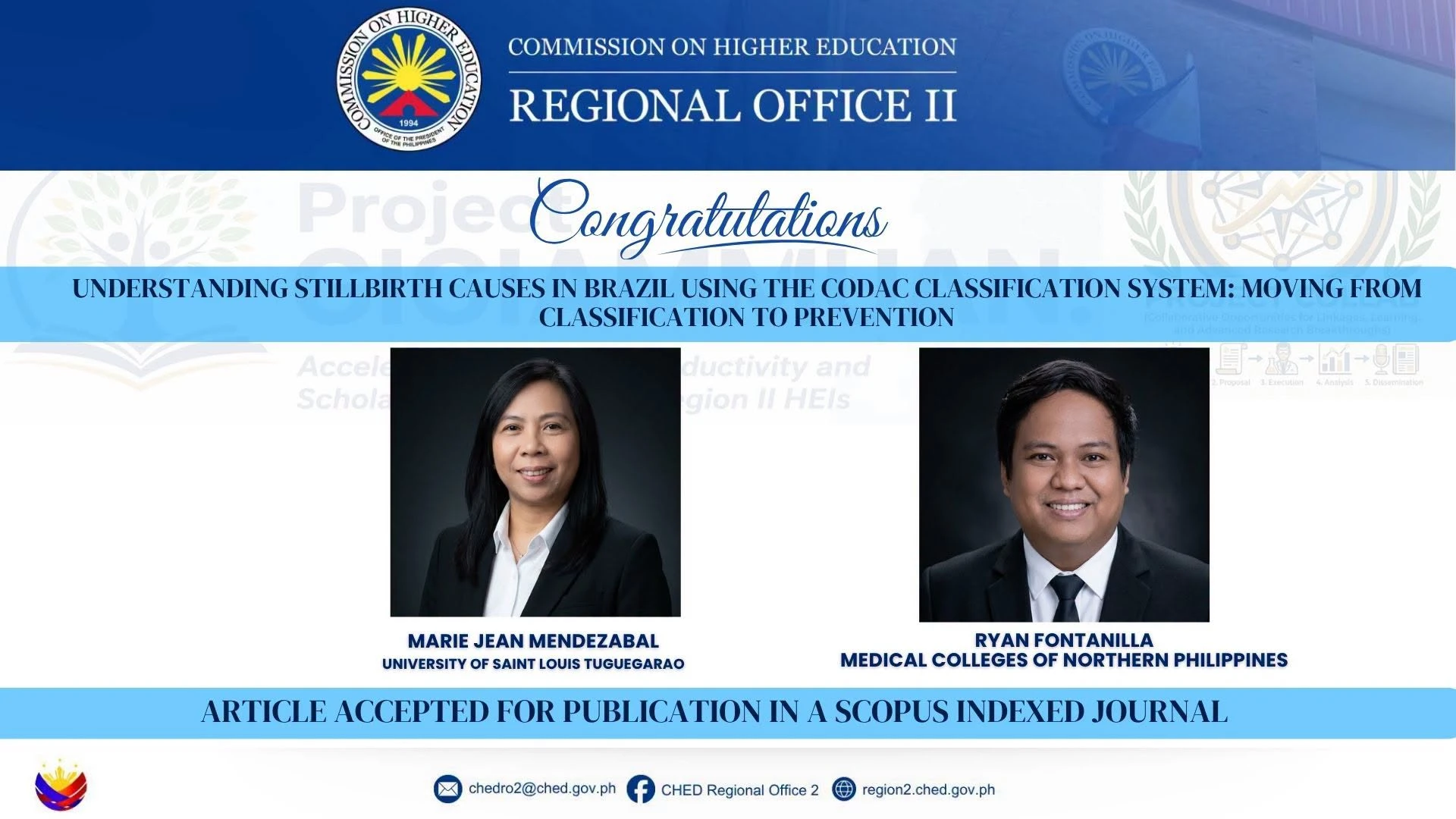
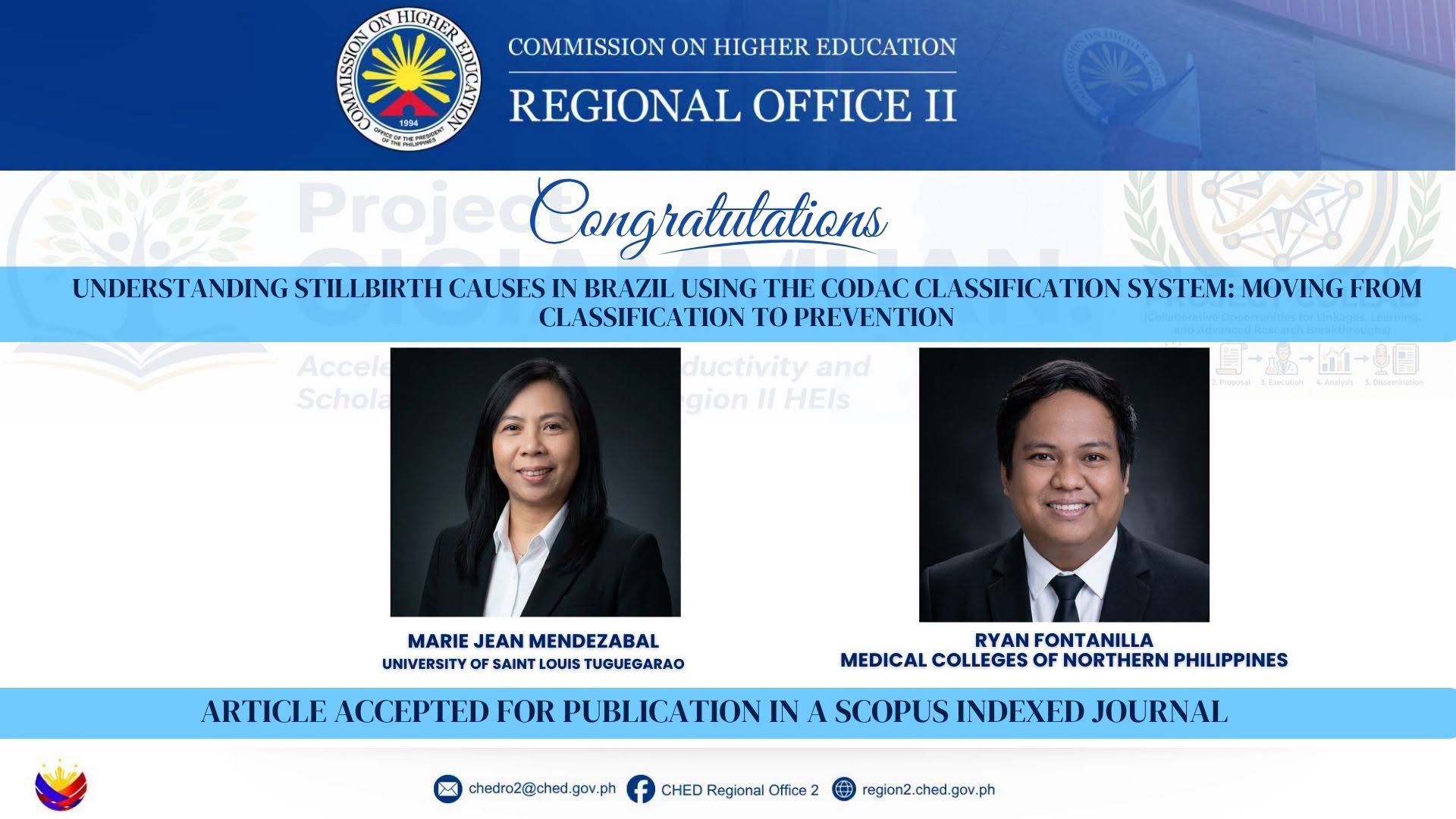
CHED Regional Office II congratulates Marie Jean Mendezabal and Ryan Fontanilla on their stillbirth research article accepted for publication in a Scopus-indexed journal
CHED Regional Office II congratulatory announcement recognizing Marie Jean Mendezabal and Ryan Fontanilla for their article accepted for publication in a Scopus-indexed journal.

The Medical Colleges of Northern Philippines (MCNP) marks another milestone in scholarly research as Dr. Ryan C. Fontanilla, MCNP–ISAP Research Director, and Marie Jean Mendezabal of the University of Saint Louis Tuguegarao received recognition from the Commission on Higher Education (CHED) Regional Office II for their research article accepted for publication in a Scopus-indexed journal.

The research article, titled “Understanding Stillbirth Causes in Brazil Using the CODAC Classification System: Moving from Classification to Prevention,” focuses on the classification of stillbirth causes and their relevance to prevention. Its subject highlights the importance of examining maternal and perinatal health concerns through systematic research and evidence-based approaches.

The recognition was featured in a congratulatory announcement issued by CHED Regional Office II, identifying the two researchers and their respective institutions. The announcement confirms the article's acceptance for publication, representing a significant scholarly accomplishment for the researchers and their institutions.

For the MCNP–ISAP Research and Development Center (RDC), this achievement highlights the involvement of its Research Director in scholarly work that addresses important health concerns and contributes to the broader field of health research. It also reflects the value of research engagement extending beyond institutional boundaries.

The article's focus on stillbirth causes and classification relates directly to Sustainable Development Goal 3 – Good Health and Well-Being, particularly the broader objective of improving maternal and newborn health. Its acceptance for publication also supports SDG 4 – Quality Education by contributing to scholarly knowledge production and research engagement in higher education. The participation of researchers affiliated with two higher education institutions suggests potential relevance to SDG 17 – Partnerships for the Goals through interinstitutional scholarly collaboration.

From the perspective of the World University Rankings for Innovation (WURI), the research demonstrates potential relevance through its focus on a real-world health concern and the production of scholarly knowledge that may inform further investigation and prevention-oriented discussions. However, the announcement does not establish whether the research findings have been implemented in healthcare practice or produced measurable improvements in health outcomes.

The achievement likewise relates to the MCNP–ISAP RDC INNOVATES Research Agenda. It supports INSPIRE – Research Culture and Capability by highlighting faculty and research leadership engagement in scholarly publication; EXPAND – Partnerships and Global Research through research co-authorship involving scholars affiliated with different higher education institutions; and STRENGTHEN – Education and Institutional Performance through the recognition of research work accepted for publication in a Scopus-indexed journal.

The confirmed outcome is the acceptance of one research article for publication, as recognized by CHED Regional Office II. While this represents a documented research milestone, the announcement does not identify the journal, publication date, citation performance, or subsequent utilization of the research findings.

The article's acceptance also provides a potential avenue for wider scholarly dissemination once publication is completed. Further academic engagement and practical applications may emerge from the research, although these have not been confirmed in the available announcement.

Through this research accomplishment, MCNP–ISAP continues to recognize the importance of scholarly inquiry, research collaboration, and knowledge generation in addressing health-related challenges. The recognition of Dr. Ryan C. Fontanilla and Marie Jean Mendezabal underscores the contribution of higher education researchers to the continuing advancement of health research and academic scholarship.

Research Publication Highlight

RESEARCH ARTICLE

Understanding Stillbirth Causes in Brazil Using the CODAC Classification System: Moving from Classification to Prevention

Researchers
Marie Jean Mendezabal – Co-author
University of Saint Louis Tuguegarao
Ryan Fontanilla – Author
Medical Colleges of Northern Philippines

Accepted for publication
Scopus-indexed journal • CHED Regional Office II congratulatory announcement

Research Alignment & Institutional Relevance

RDC SDG Alignment
SDG 3 – Good Health and Well-Being (Primary Alignment)

The research focuses on stillbirth causes and classification, a subject relevant to maternal and newborn health and prevention-oriented research.

SDG 4 – Quality Education

Supports scholarly knowledge generation, academic research productivity, and research engagement within higher education.

SDG 17 – Partnerships for the Goals (Potential Alignment)

Reflects research co-authorship involving scholars affiliated with MCNP and the University of Saint Louis Tuguegarao. No formal institutional partnership is established by the announcement.

WURI Best Practices

The research accomplishment demonstrates potential WURI relevance through its real-world health focus, scholarly knowledge production, and interinstitutional research engagement.

The article's prevention-oriented title suggests possible relevance to healthcare knowledge development.

RDC Agenda Alignment
INSPIRE – Research Culture and Capability

Highlights research leadership engagement in scholarly writing, research development, and publication.

EXPAND – Partnerships and Global Research

Reflects scholarly co-authorship involving researchers from two higher education institutions.

STRENGTHEN – Education and Institutional Performance

Highlights a documented research publication milestone contributing to the institution's scholarly profile.

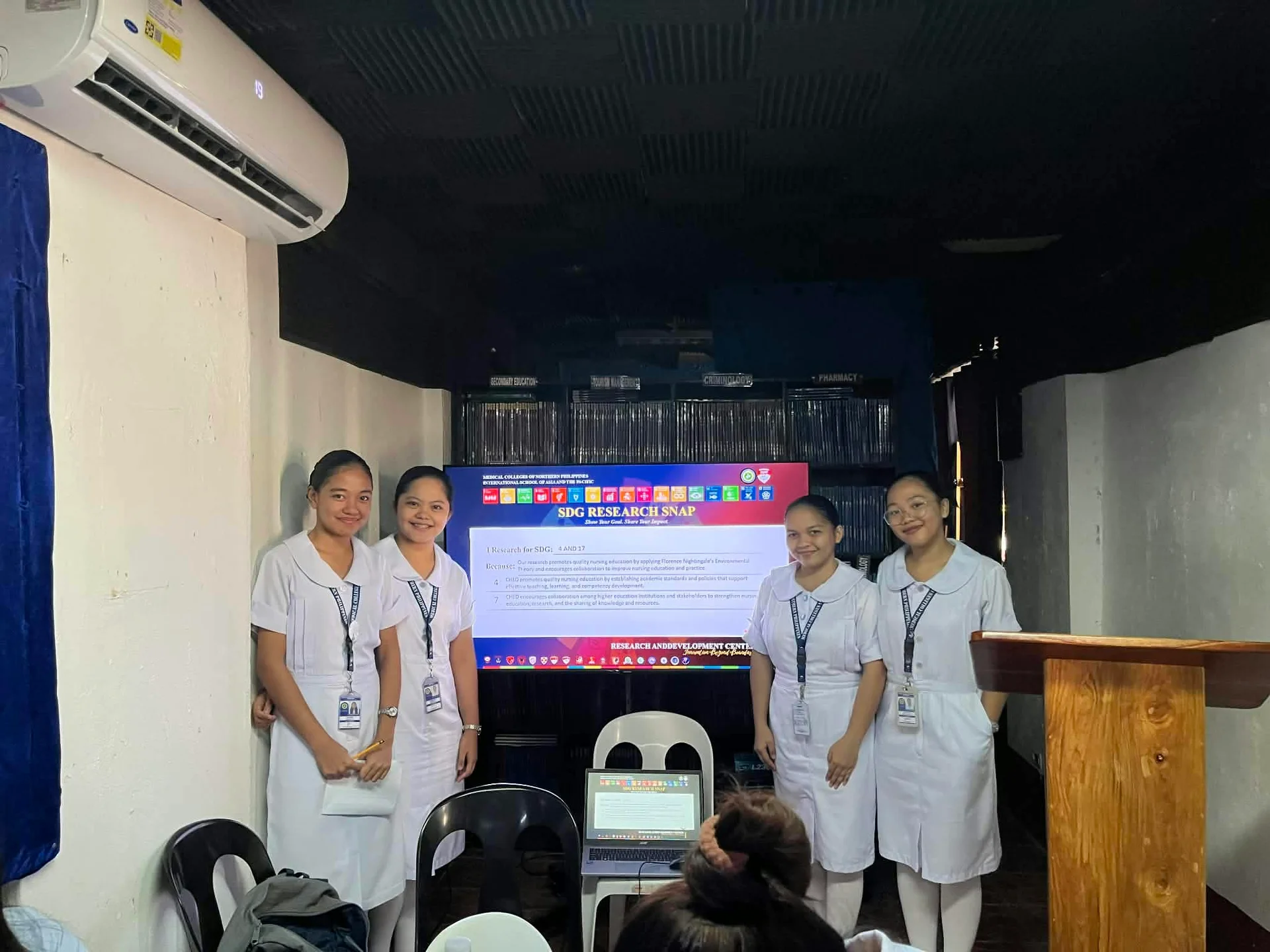
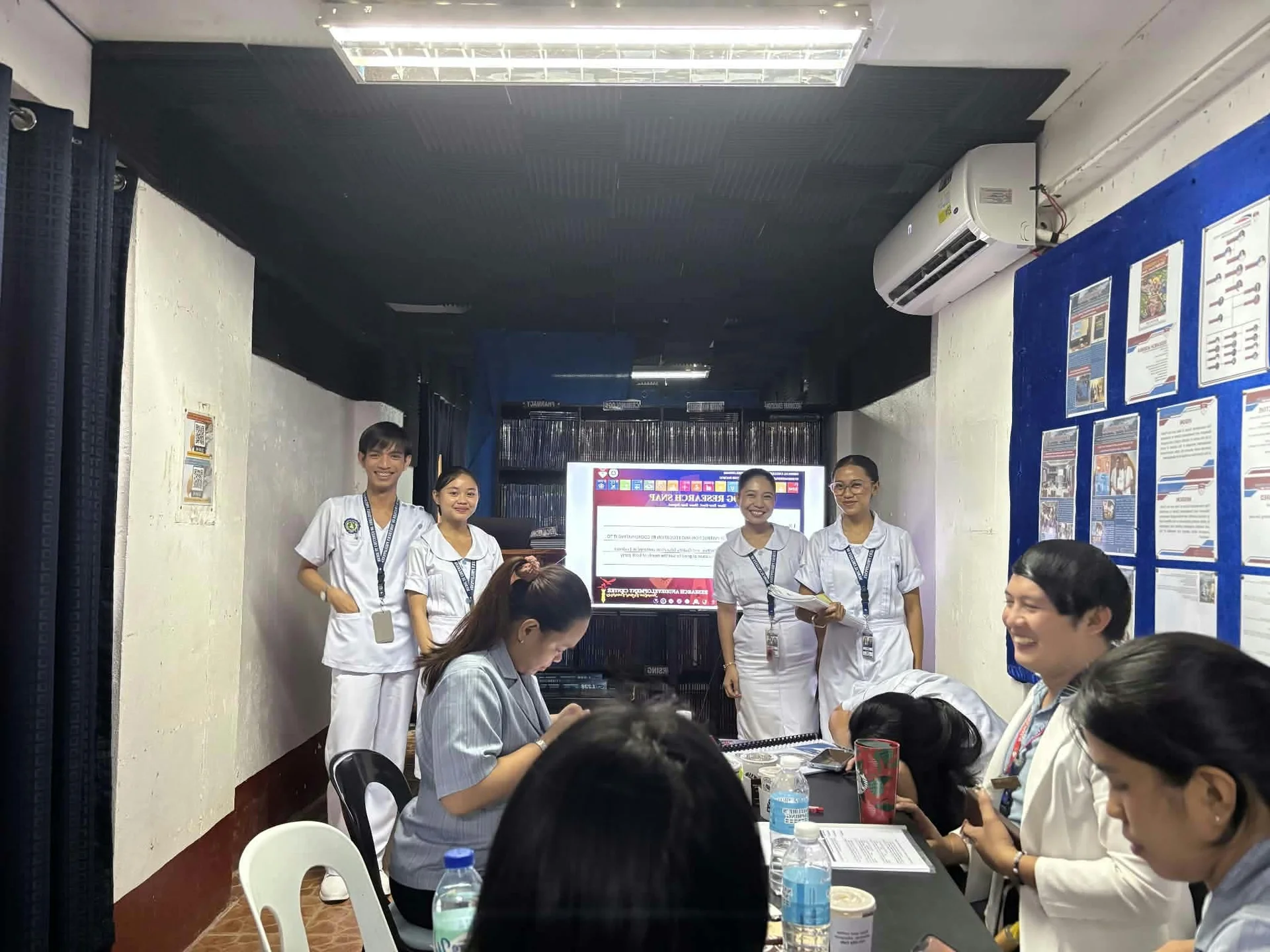
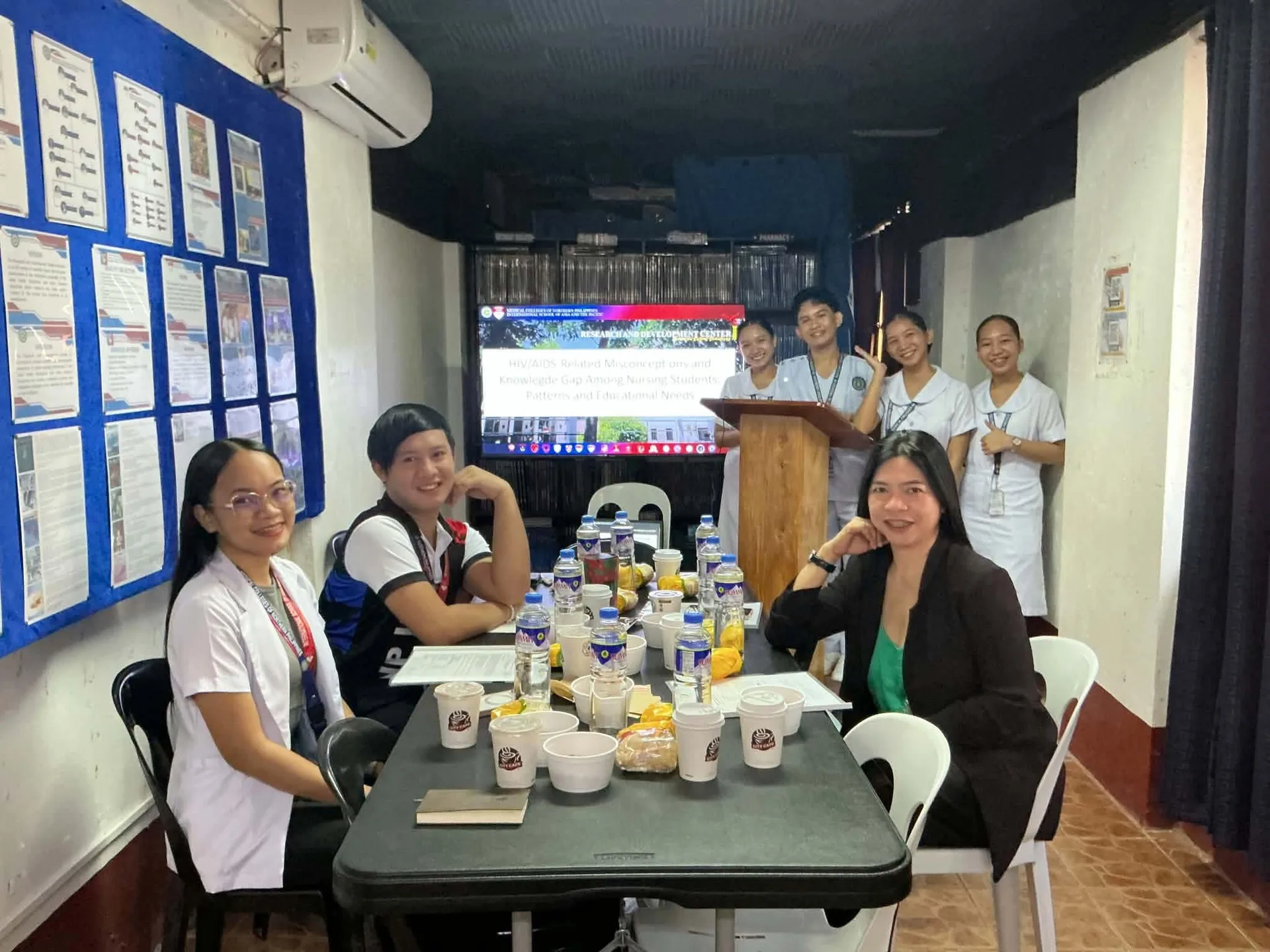
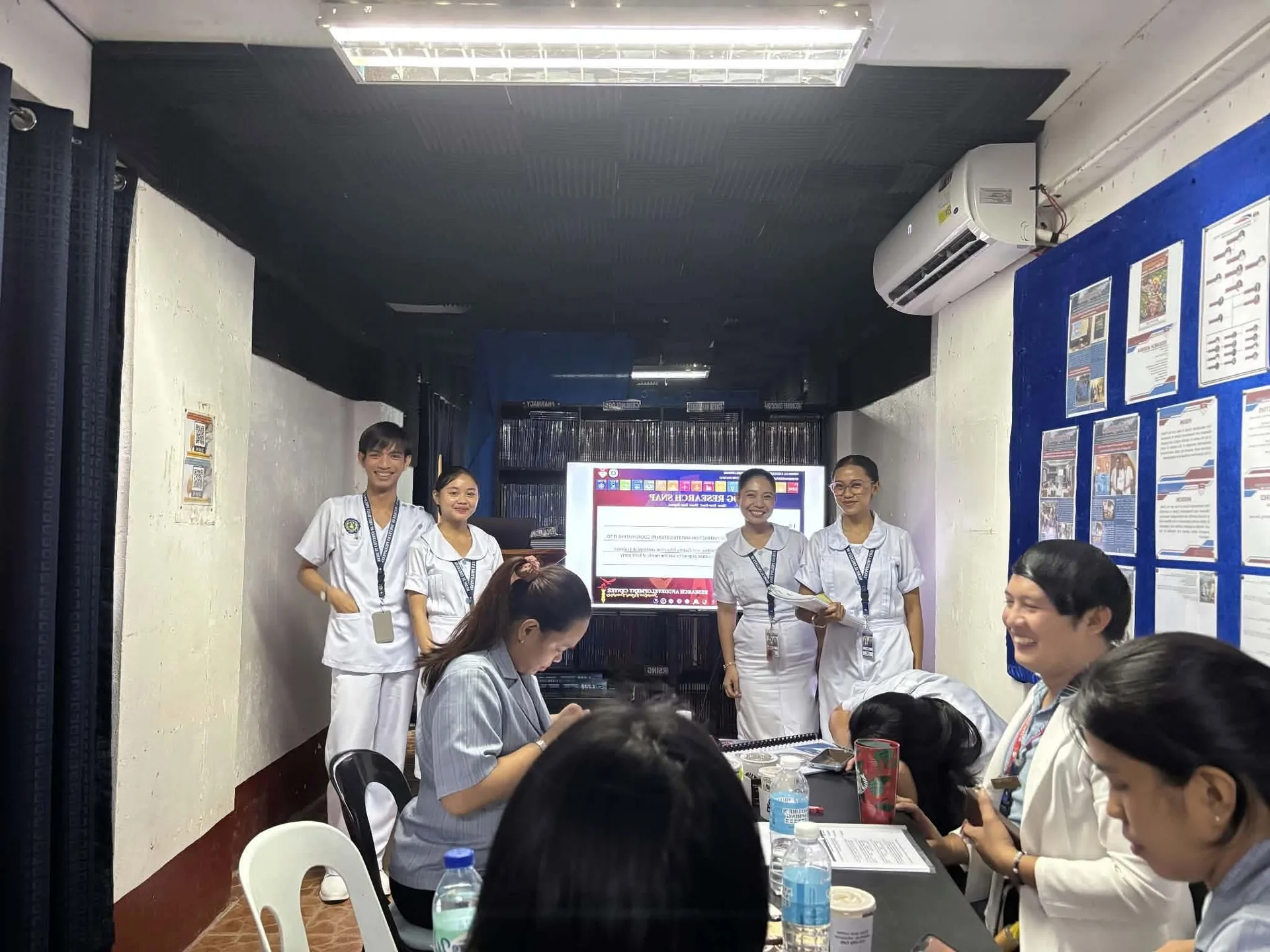
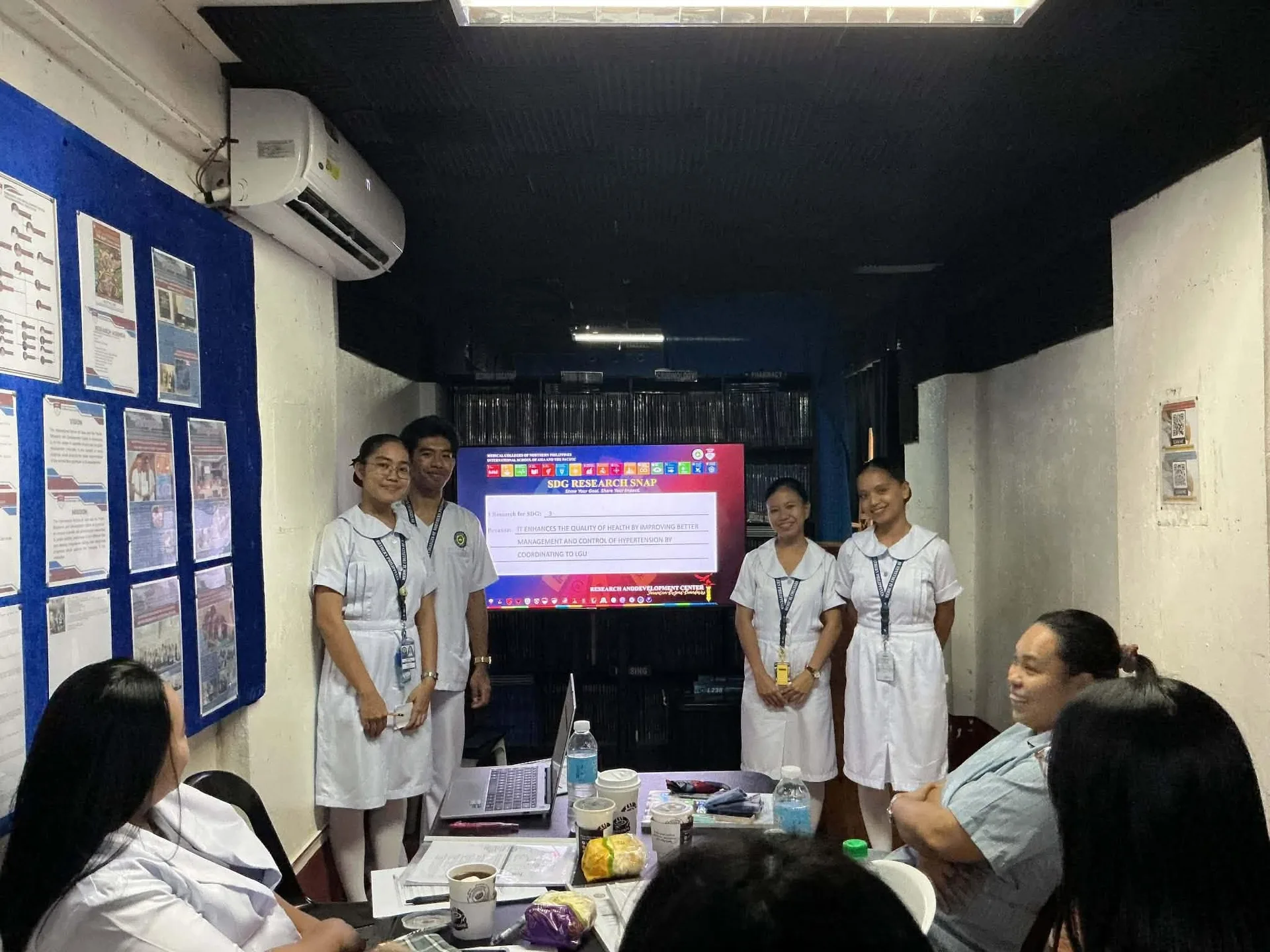
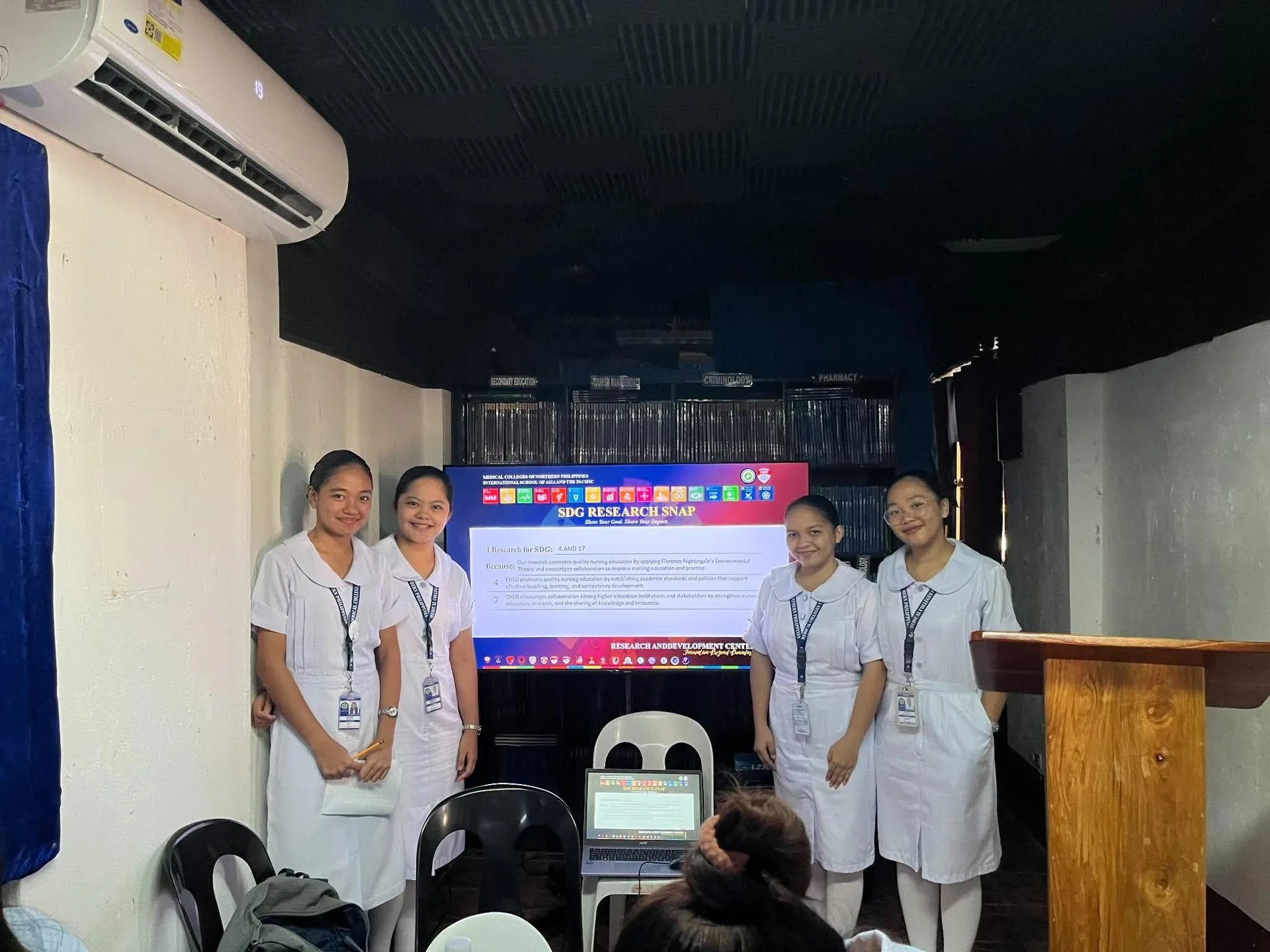
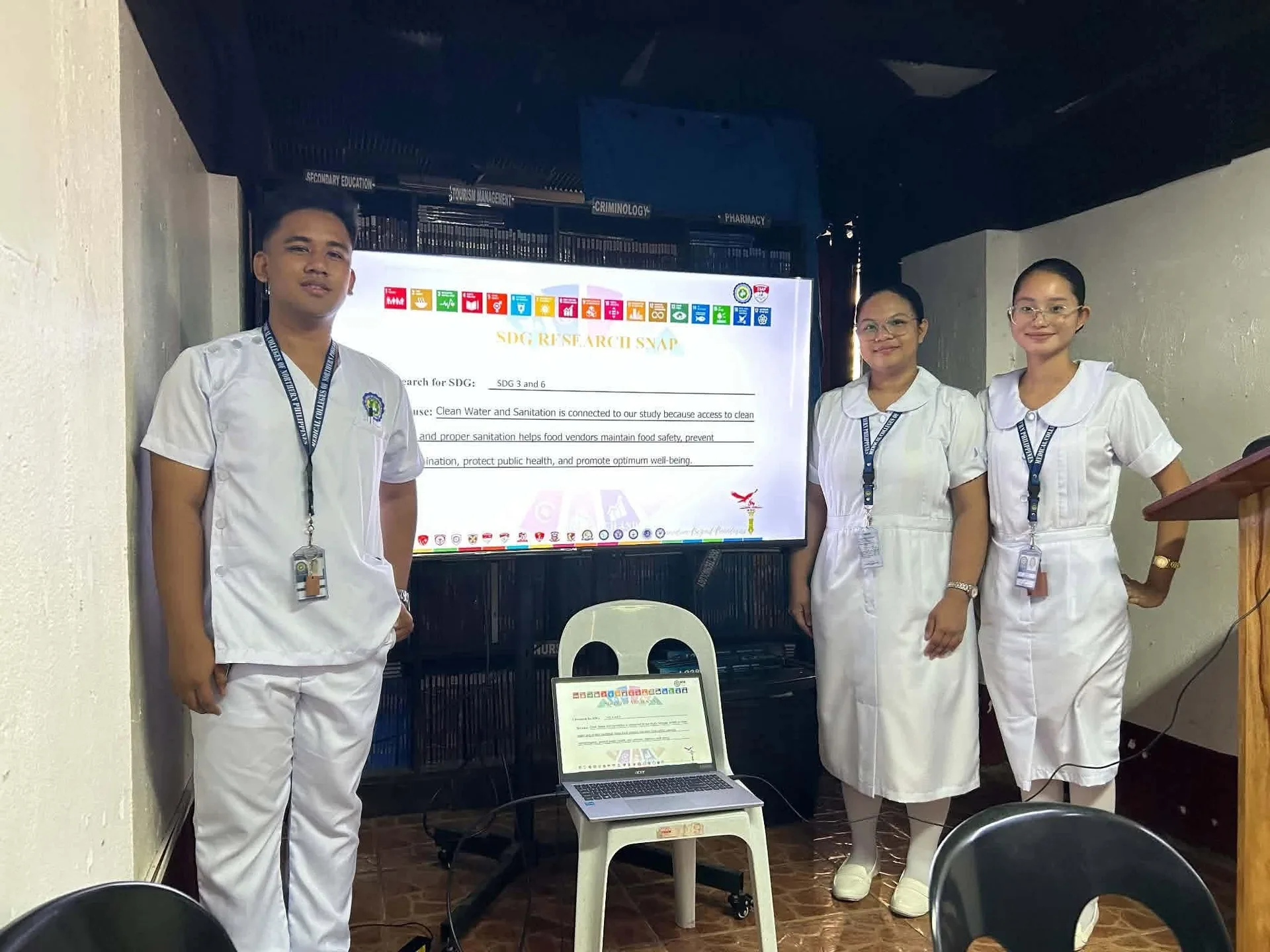
Nursing students beside their research proposal presentation
BS Nursing Research Proposal Defense · MCNP · November 11–12, 2026

The Medical Colleges of Northern Philippines (MCNP) conducted the Bachelor of Science in Nursing (BSN) Research Proposal Defense on November 11–12, 2026, providing nursing students with an academic platform to present and defend their proposed research studies as part of their research development and professional preparation.

The two-day activity highlighted the importance of research in nursing education, particularly in developing students' critical thinking, scientific inquiry, and understanding of evidence-based healthcare practices. Through the research proposal defense, students engaged in academic discussions focused on the development of research studies relevant to their field.

The proposal defense provided an opportunity for nursing students to explain their research objectives, present their proposed methodologies, and discuss the significance of their studies. As an important stage of the research process, the activity emphasized the value of systematic investigation, academic evaluation, and constructive feedback in strengthening the quality and feasibility of research proposals.

The activity also reflected the importance of preparing future nursing professionals who recognize the role of research in understanding healthcare concerns, improving nursing knowledge, and supporting evidence-informed professional practice.

The MCNP–ISAP Research and Development Center (RDC) recognizes the significance of research proposal defenses in promoting scholarly engagement and strengthening research competencies among students. Activities of this nature contribute to the institution's broader commitment to fostering a research-oriented academic environment.

The research proposal defense primarily supports Sustainable Development Goal 4 – Quality Education by providing opportunities for research-oriented learning, critical thinking, and academic development. It also demonstrates relevance to SDG 3 – Good Health and Well-Being, given the connection between nursing research, healthcare knowledge, and the development of evidence-based approaches to patient care.

From the perspective of the World University Rankings for Innovation (WURI), the activity demonstrates potential relevance through student research engagement, scientific problem-solving, and the development of research proposals that may address concerns related to nursing education and healthcare practice. The defense provided a platform for scholarly discussions and the refinement of research ideas that may contribute to future improvements in healthcare knowledge.

The activity also aligns with the MCNP–ISAP RDC INNOVATES Research Agenda 2026–2030, particularly INSPIRE – Culture, Capability, and Engagement, by encouraging student participation in research and developing academic competencies; NURTURE – Ethics, Quality, and Accountability, through research evaluation and the promotion of academic standards; and OPERATIONALIZE – Knowledge Utilization, Innovation, and Improvement, through the potential application of nursing research to future healthcare practices and institutional learning.

The conduct of the BS Nursing Research Proposal Defense reflects MCNP's commitment to strengthening student research participation and providing opportunities for academic and professional growth. By engaging nursing students in research proposal development and scholarly evaluation, the activity supports the cultivation of a research culture that values scientific inquiry, collaboration, and evidence-based learning.

Through the BS Nursing Research Proposal Defense, MCNP continues to promote research excellence and academic engagement, supporting the development of future nursing professionals who appreciate the importance of research in advancing nursing education and healthcare practice.

RDC SDG Alignment

SDG 4 – Quality Education (Primary)

Supports research-oriented learning, critical thinking, academic evaluation, and the development of research competencies among nursing students.

SDG 3 – Good Health and Well-Being (Supporting)

Reflects the relevance of nursing research to healthcare knowledge, patient care, and evidence-based professional practice.

WURI Best Practices

The activity demonstrates potential relevance to the World University Rankings for Innovation (WURI) through student research engagement, scientific inquiry, and the development of research proposals addressing nursing and healthcare concerns.

The proposal defense provides an opportunity for students to strengthen their research ideas through academic evaluation and scholarly discussion.

RDC Agenda Alignment

INSPIRE – Culture, Capability, and Engagement

Encourages student research participation, academic growth, and the development of research-related competencies.

NURTURE – Ethics, Quality, and Accountability

Supports research evaluation, academic standards, and the development of quality-oriented research practices.

OPERATIONALIZE – Knowledge Utilization, Innovation, and Improvement

Highlights the potential contribution of nursing research to future healthcare knowledge, professional practice, and institutional improvement.

Photo Documentation

BS Nursing Research Proposal Defense · November 11–12, 2026 · 5 documentation photos

Nursing students beside their research proposal presentation · November 11–12, 2026
Nursing students beside their research proposal presentation · Photo 1
Nursing student presenters in the proposal defense room · November 11–12, 2026
Nursing student presenters in the proposal defense room · Photo 2
Nursing students and panelists during the proposal defense · November 11–12, 2026
Nursing students and panelists during the proposal defense · Photo 3
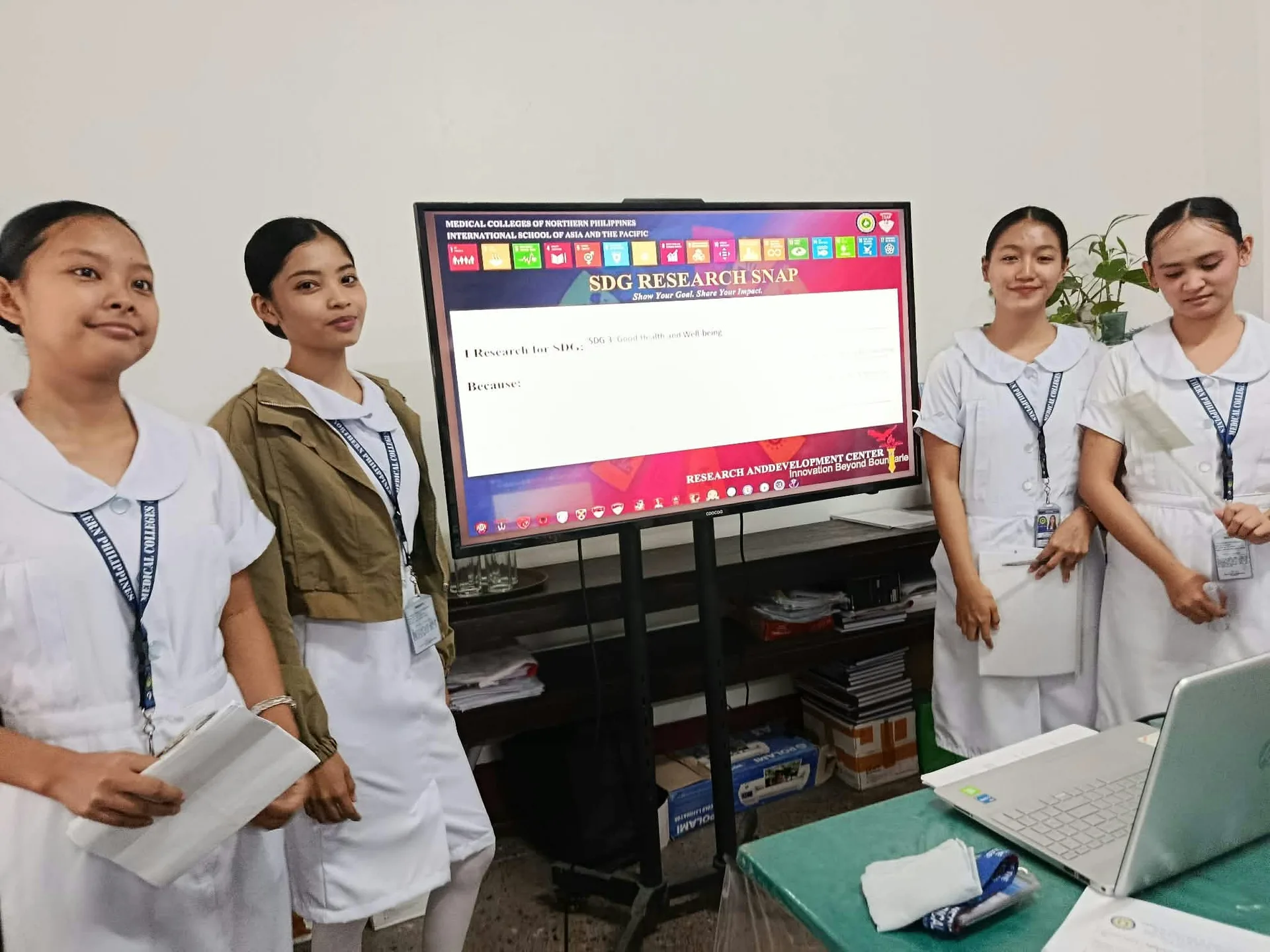
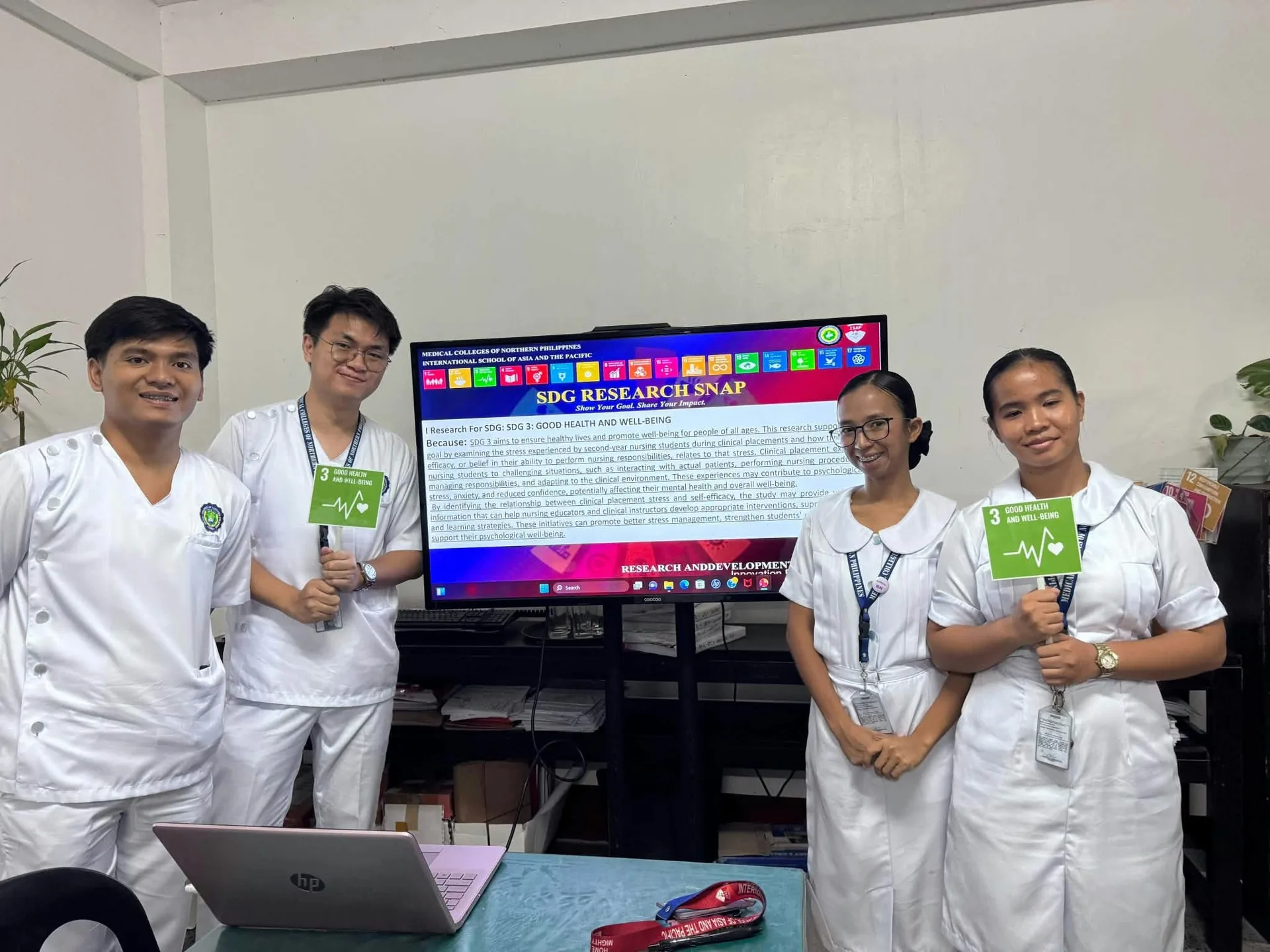
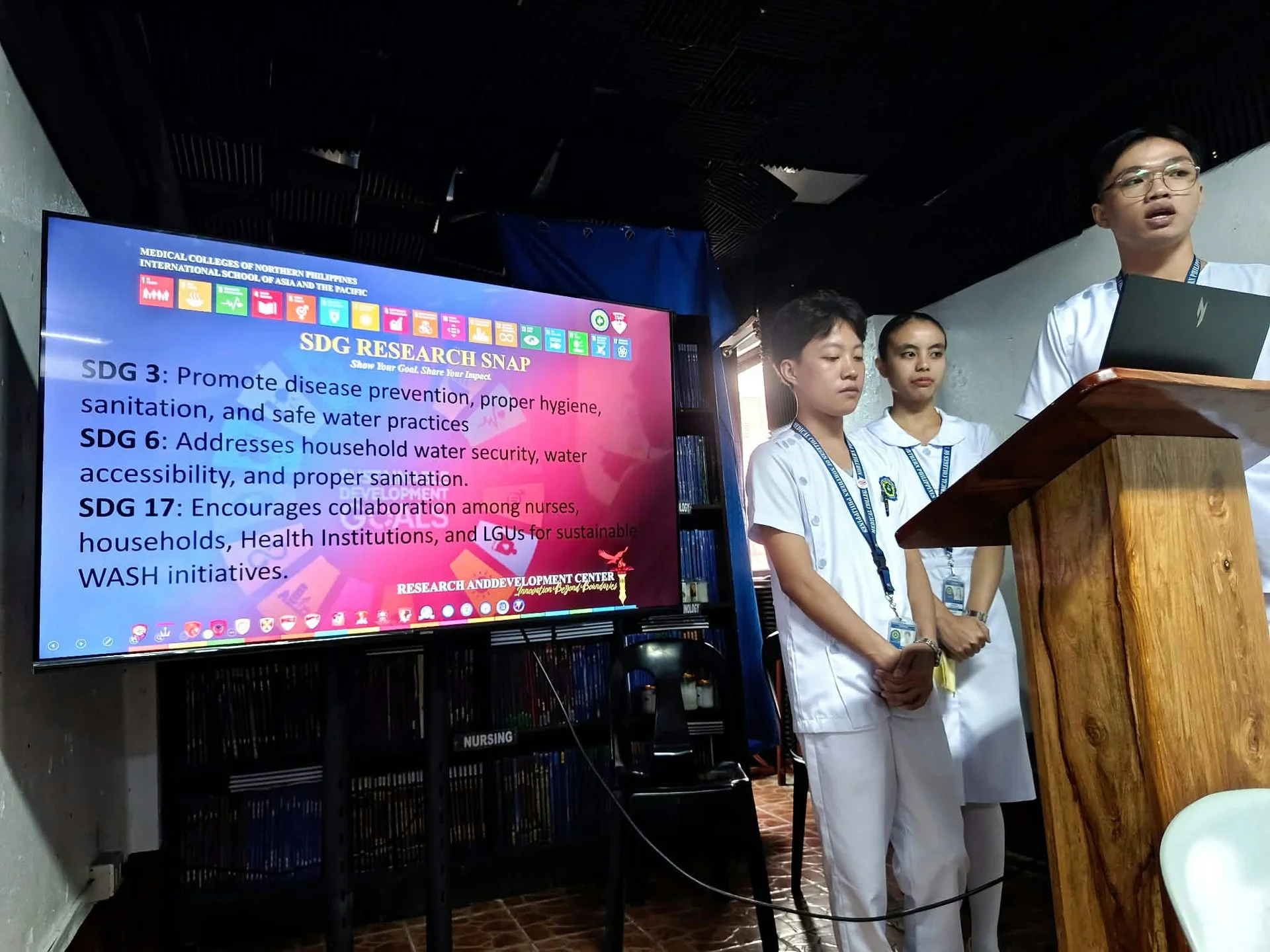
Nursing students presenting the SDG alignment of their research · November 11–12, 2026
Nursing students presenting the SDG alignment of their research · Photo 4
Nursing students documenting their research proposal defense · November 11–12, 2026
Nursing students documenting their research proposal defense · Photo 5
Photographic documentation of the MCNP BS Nursing research proposal defense
BS Nursing Research Proposal Defense · MCNP · November 9, 2026

The Medical Colleges of Northern Philippines (MCNP) conducted the Bachelor of Science in Nursing Research Proposal Defense on November 9, 2026, providing nursing students with an academic platform to present their proposed research studies and engage in scholarly discussions relevant to nursing education and healthcare.

The activity formed part of the students' academic research development, providing an opportunity to communicate research ideas, examine proposed research directions, and participate in discussions related to systematic inquiry and evidence-based nursing practice.

Through the research proposal defense, nursing students engaged in an academic process designed to strengthen research communication, critical thinking, and the ability to examine healthcare-related concerns through scholarly investigation. The activity also emphasized the importance of integrating research into nursing education as preparation for professional practice.

The activity primarily supports Sustainable Development Goal 4 – Quality Education by promoting research-oriented learning and academic engagement. It also relates to SDG 3 – Good Health and Well-Being, given the relevance of nursing research to healthcare knowledge and health-related concerns. Specific contributions to SDG 3 would depend on the topics and objectives of the individual proposals.

From the perspective of the World University Rankings for Innovation (WURI), the proposal defense offers potential relevance through research-based learning and the development of ideas that may address practical concerns in nursing education and healthcare. However, no implemented innovation, research utilization, or measurable health outcome has been established from the available information.

The activity also aligns with the MCNP–ISAP RDC INNOVATES Research Agenda, particularly INSPIRE – Research Culture and Capability, by encouraging students' participation in academic research and strengthening opportunities for scholarly inquiry, and STRENGTHEN – Education and Institutional Performance, by supporting research-oriented academic activities within nursing education.

The documented activity is the conduct of the BS Nursing Research Proposal Defense on November 9, 2026. The number of research proposals presented, evaluation results, and subsequent research implementation outcomes have not been provided.

The proposal defense represents a stage in the nursing students' research development. Although the activity may provide a foundation for subsequent research work, no specific continuation plans or approved research outputs have been confirmed.

Through the BS Nursing Research Proposal Defense, MCNP continues to support a research-oriented academic environment that encourages nursing students to explore healthcare-related issues, develop scholarly inquiry, and recognize the importance of research in advancing nursing education and professional practice.

RDC SDG Alignment

SDG 4 – Quality Education

Supports academic research development, scholarly inquiry, and research communication among nursing students.

SDG 3 – Good Health and Well-Being (Supporting alignment)

Reflects the relevance of nursing research to healthcare education and health-related concerns, subject to the specific topics presented.

WURI Best Practices

The activity demonstrates potential WURI relevance through student research engagement and the exploration of healthcare-related research ideas. Stronger WURI claims would require documented implementation, innovation, measurable outcomes, or practical research utilization.

RDC Agenda Alignment

INSPIRE – Research Culture and Capability

Promotes research engagement, critical inquiry, and scholarly participation among nursing students.

STRENGTHEN – Education and Institutional Performance

Supports the integration of research proposal presentations into nursing students' academic development.

Photographic Documentation

8 photographs document the activity. Select a photograph to view it at full size.

MCNP BS Nursing research proposal defense, November 9, 2026 – documentation photo 1
BS Nursing Proposal Defense · Photo 1
MCNP BS Nursing research proposal defense, November 9, 2026 – documentation photo 2
BS Nursing Proposal Defense · Photo 2
MCNP BS Nursing research proposal defense, November 9, 2026 – documentation photo 3
BS Nursing Proposal Defense · Photo 3
MCNP BS Nursing research proposal defense, November 9, 2026 – documentation photo 4
BS Nursing Proposal Defense · Photo 4
MCNP BS Nursing research proposal defense, November 9, 2026 – documentation photo 5
BS Nursing Proposal Defense · Photo 5
MCNP BS Nursing research proposal defense, November 9, 2026 – documentation photo 6
BS Nursing Proposal Defense · Photo 6
MCNP BS Nursing research proposal defense, November 9, 2026 – documentation photo 7
BS Nursing Proposal Defense · Photo 7
MCNP BS Nursing research proposal defense, November 9, 2026 – documentation photo 8
BS Nursing Proposal Defense · Photo 8
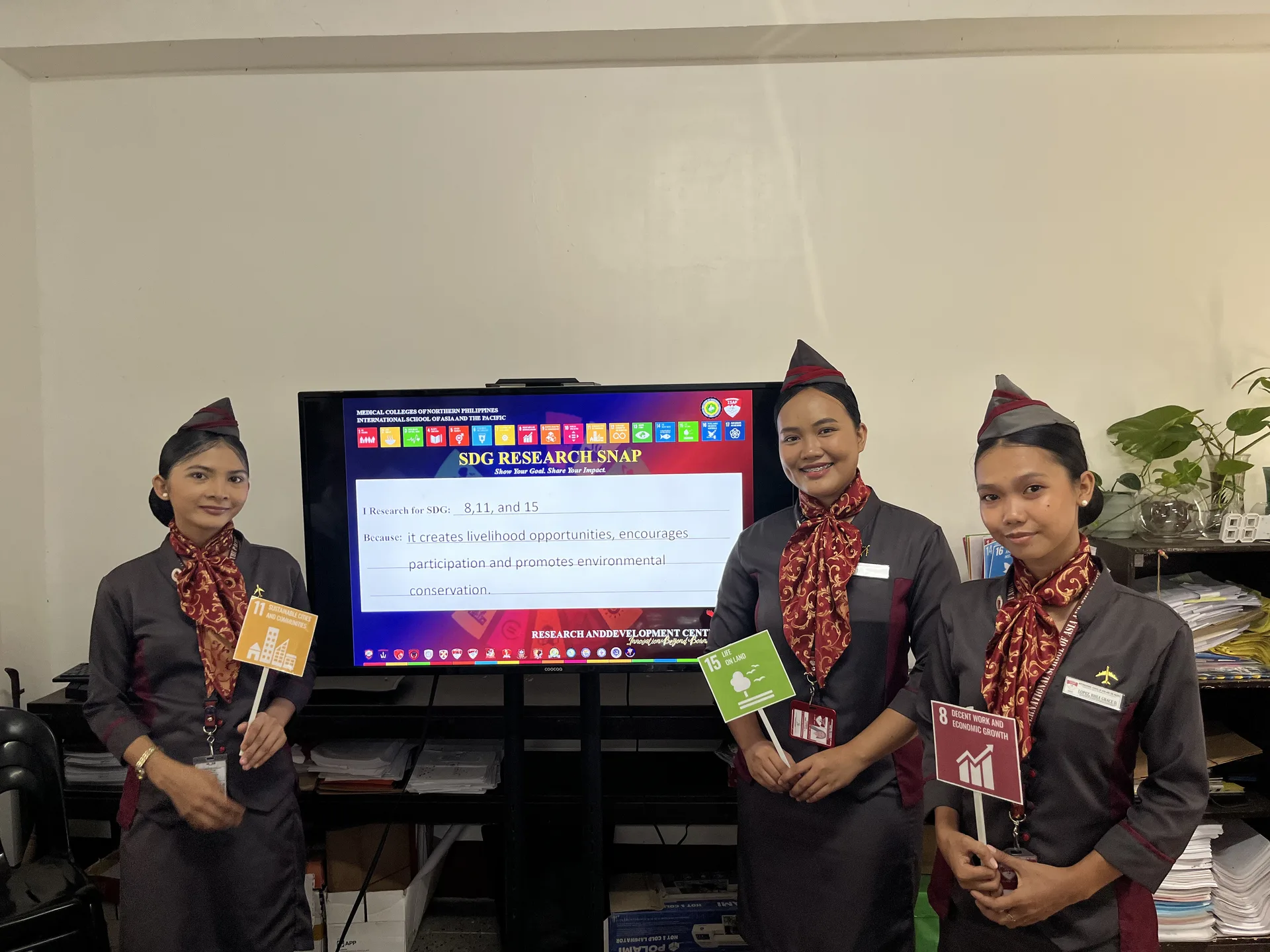
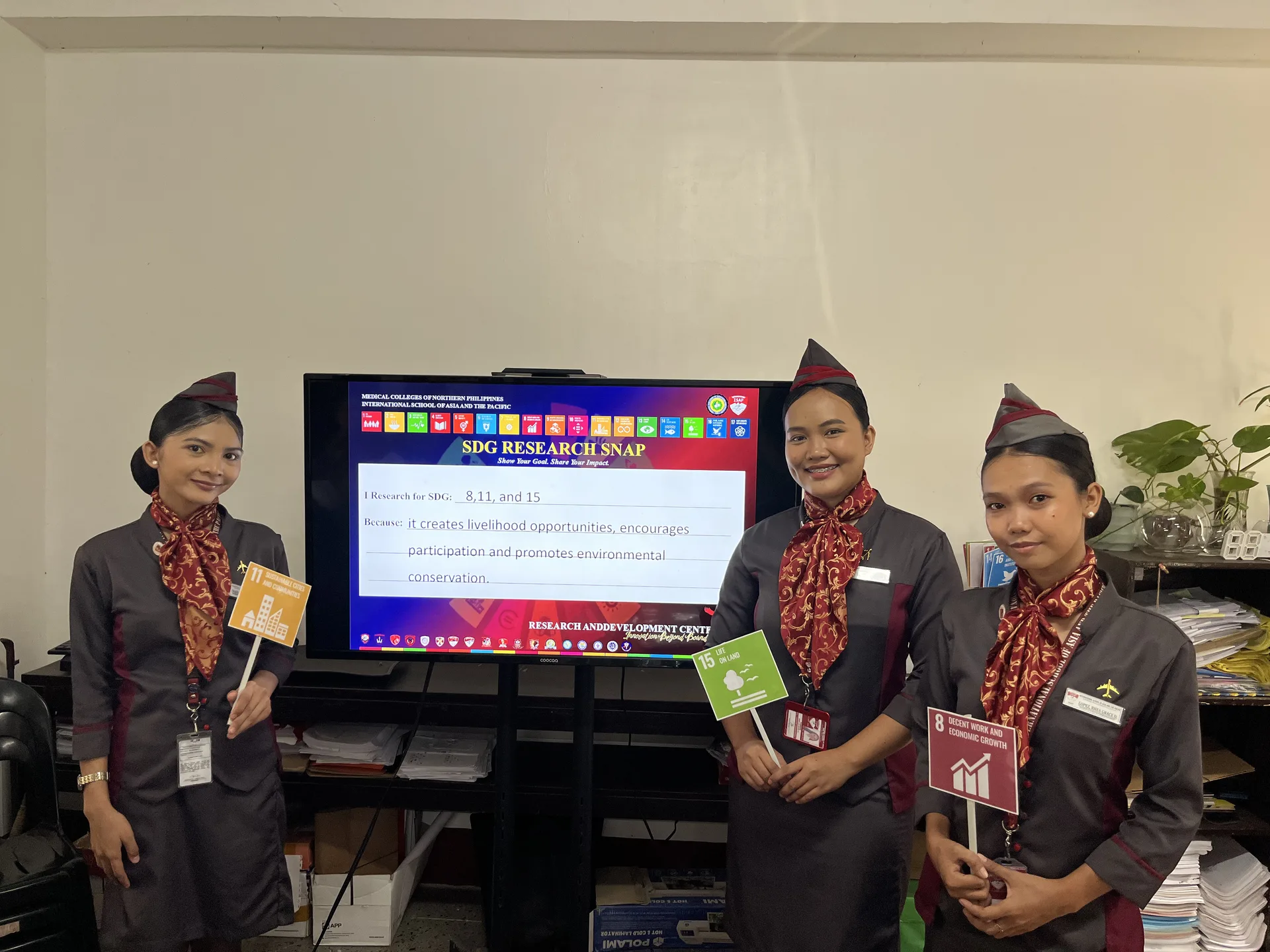
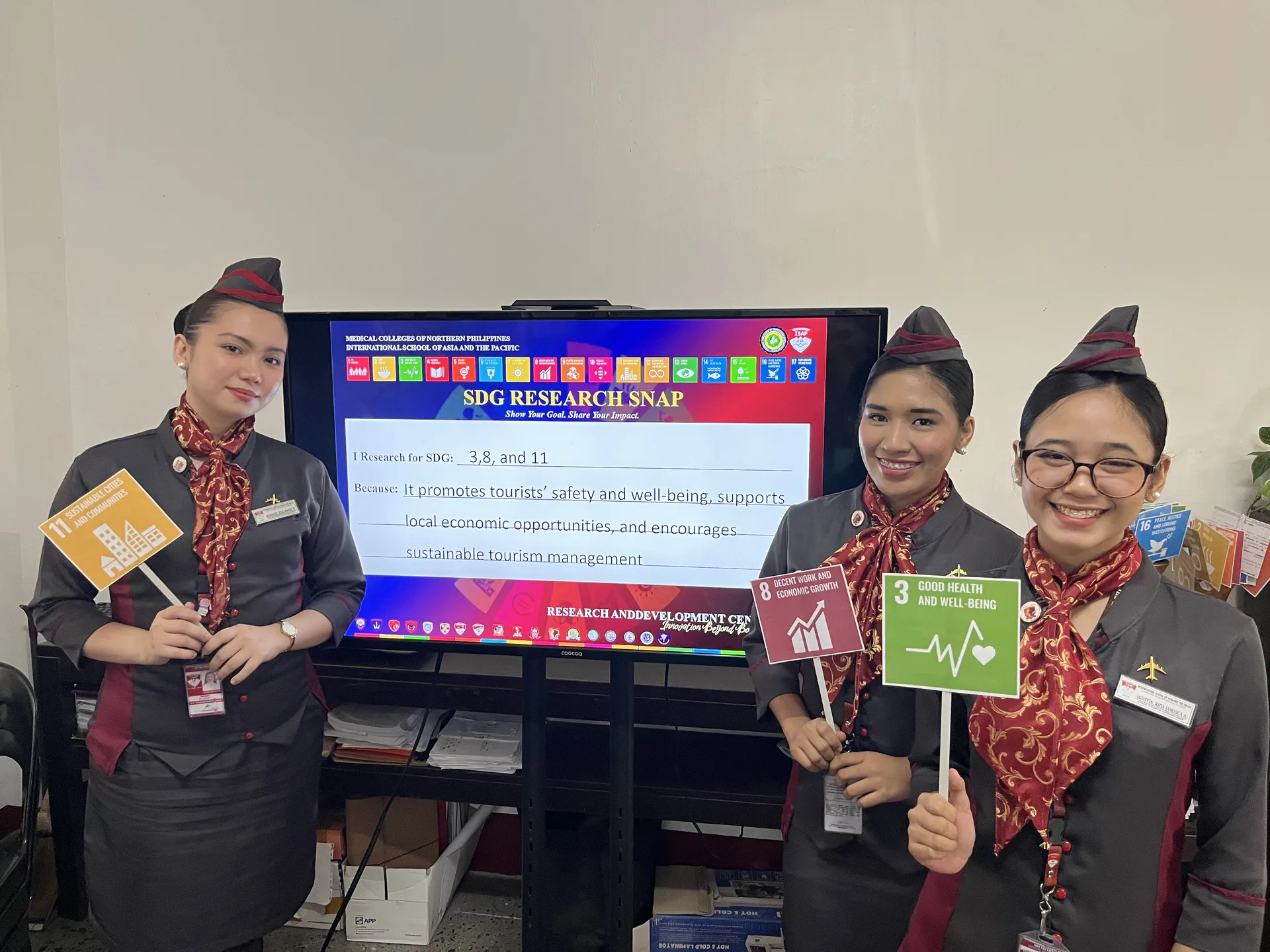
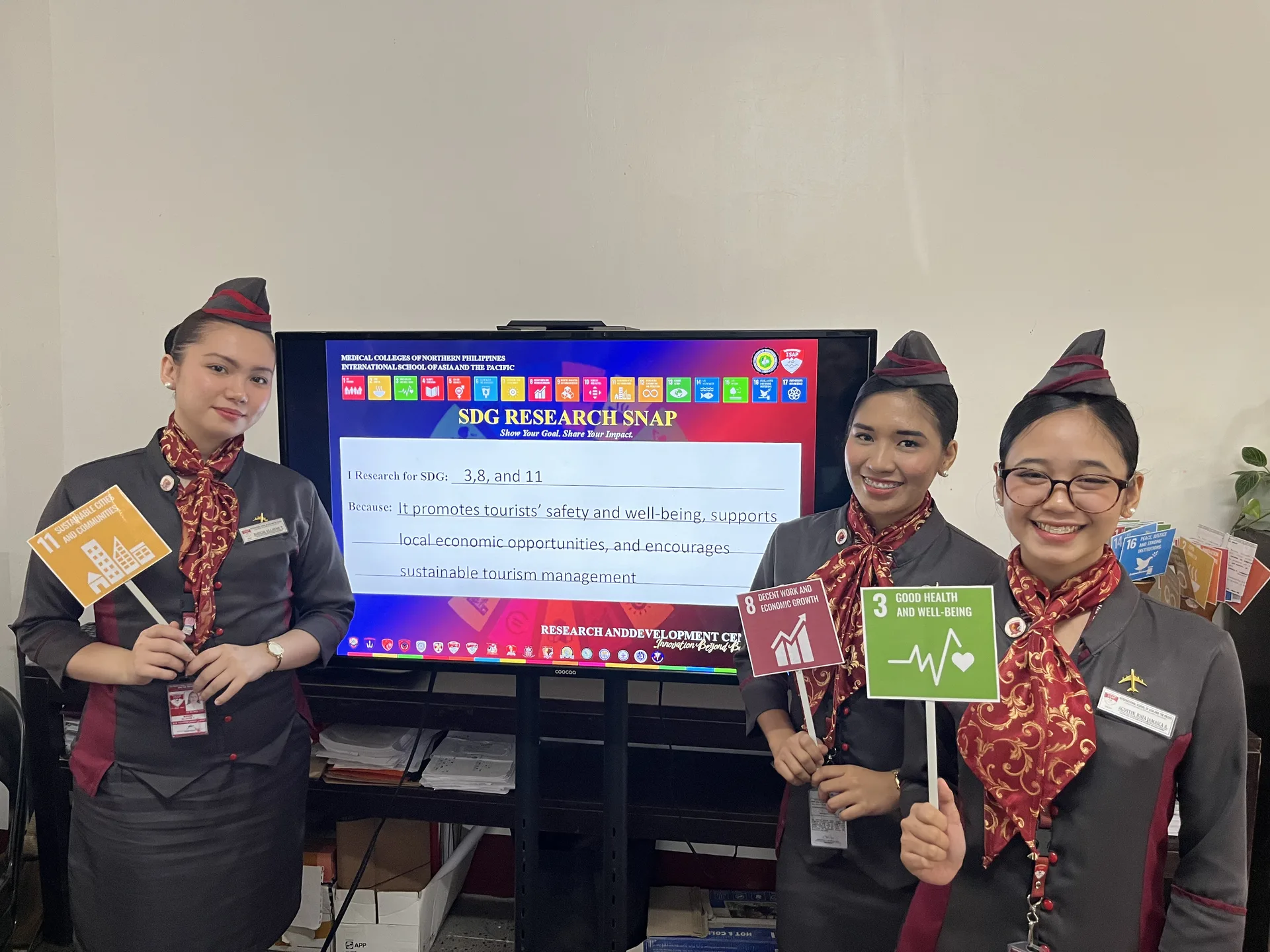
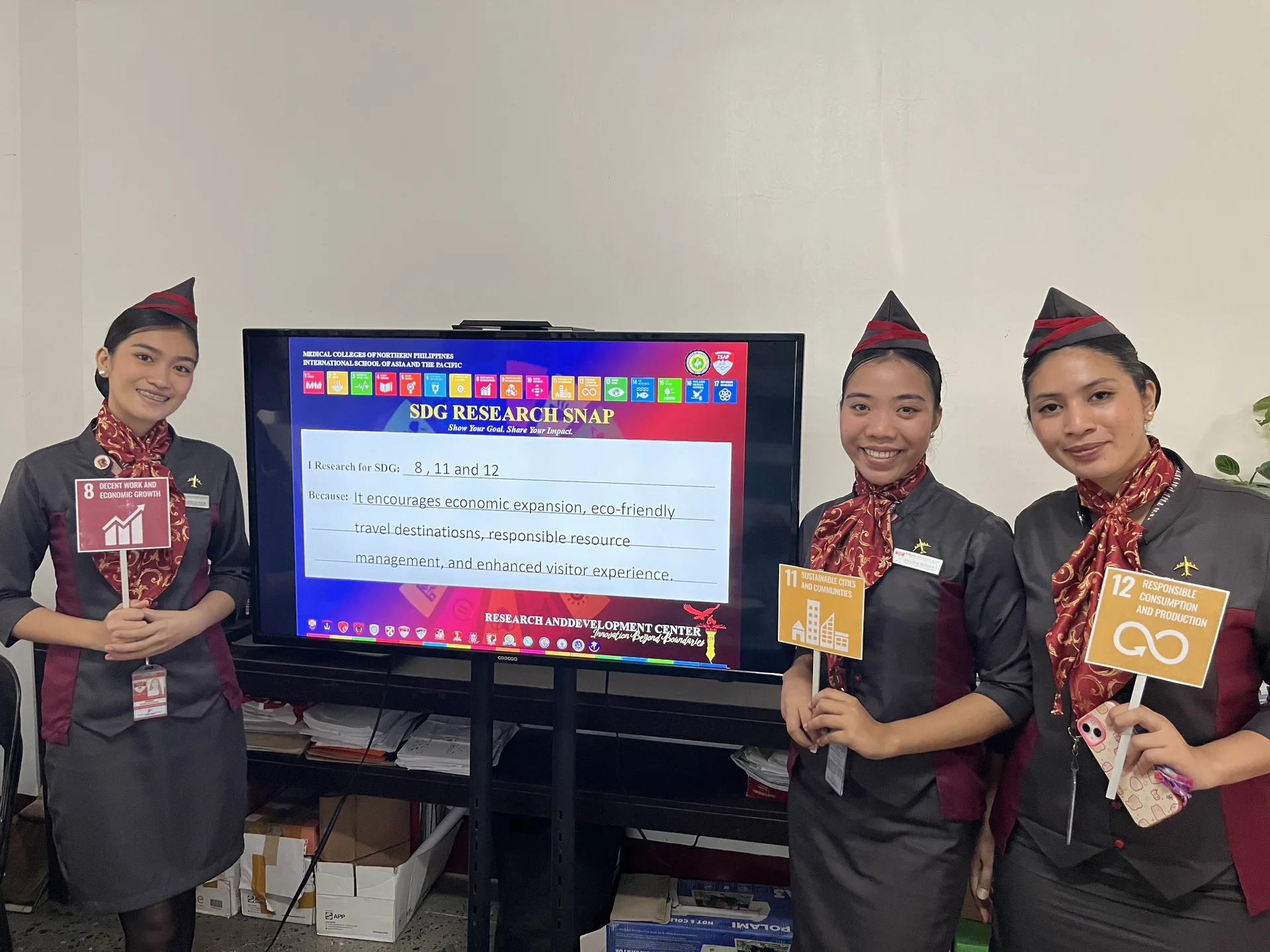
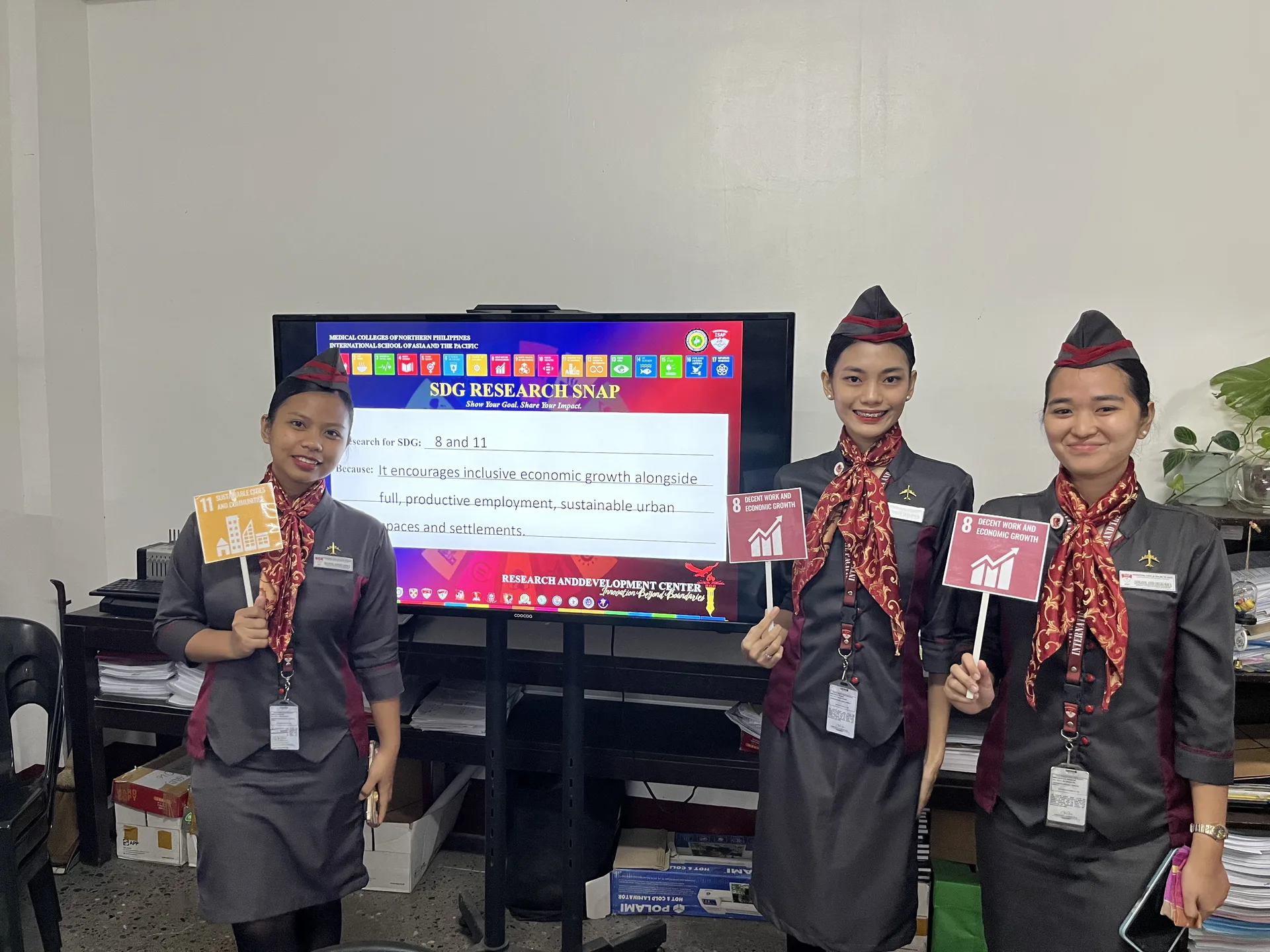
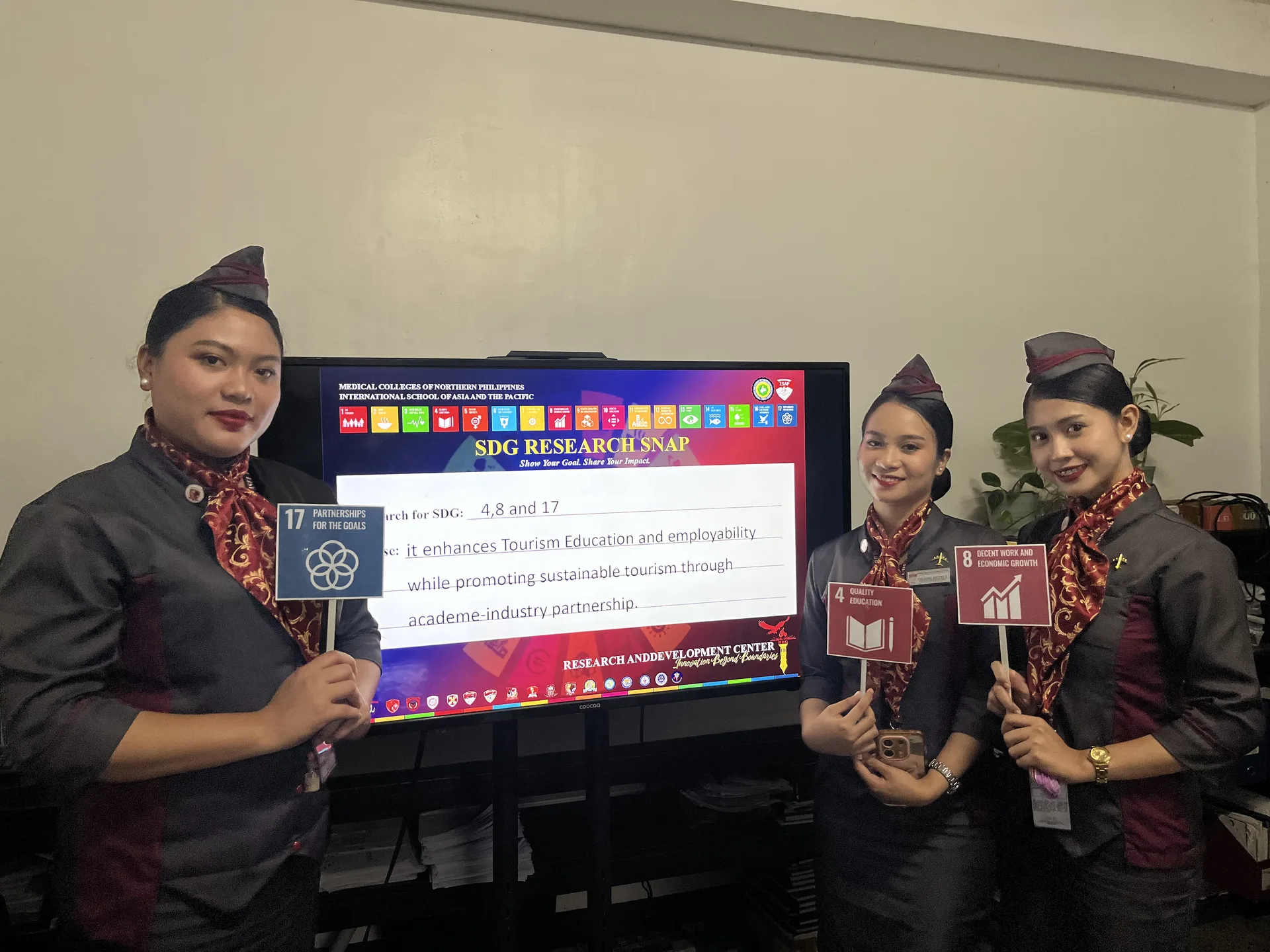
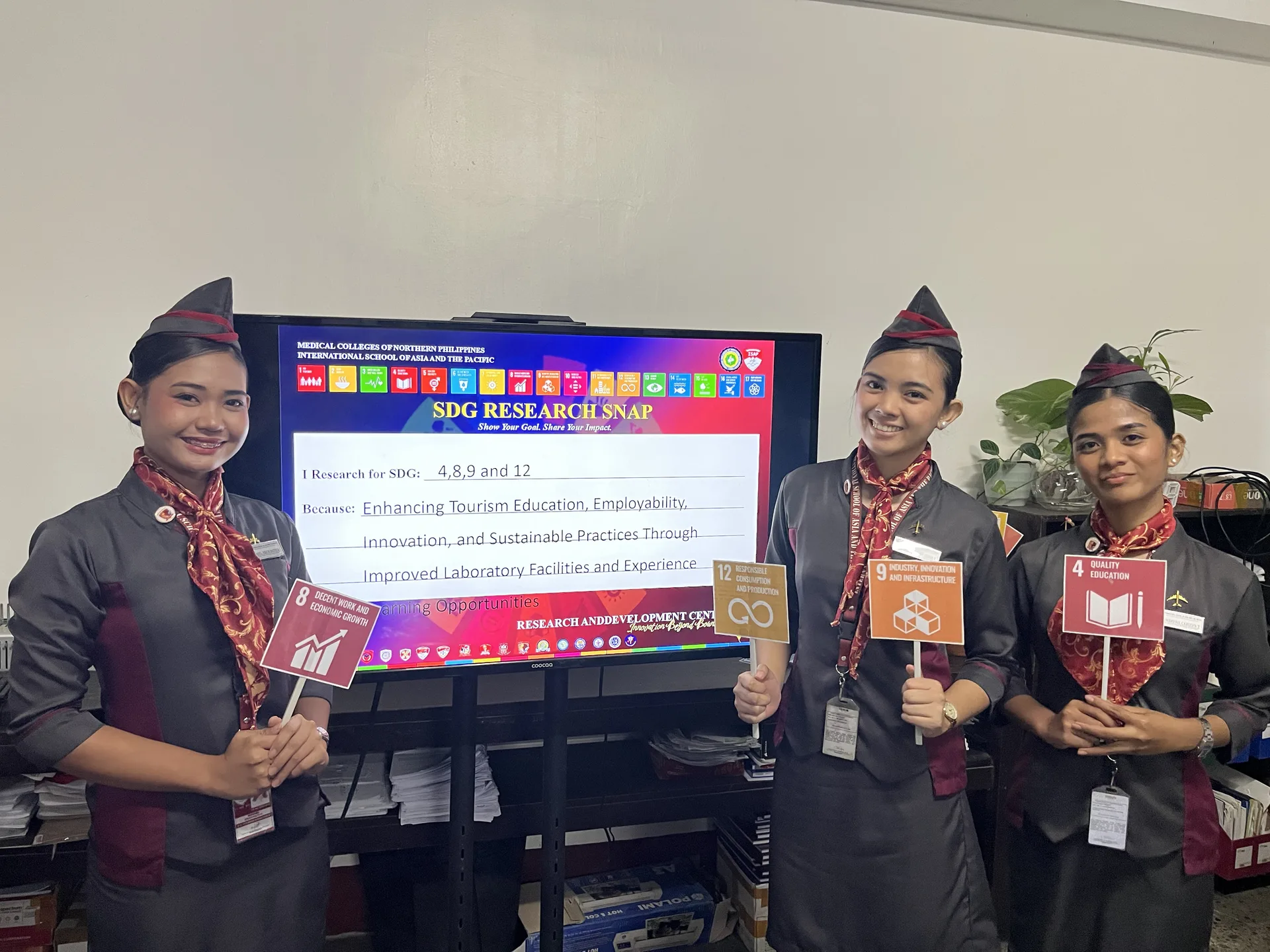
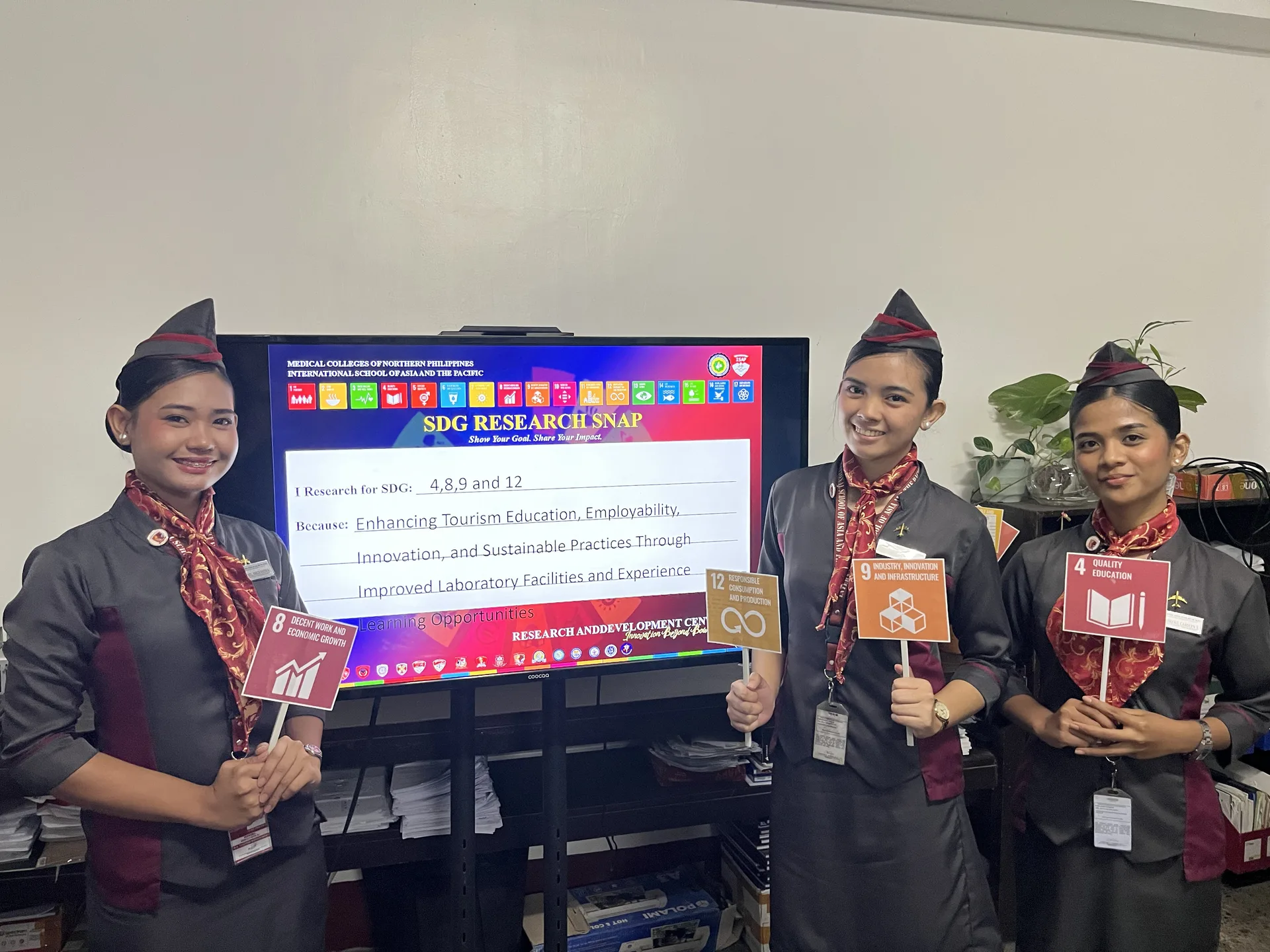
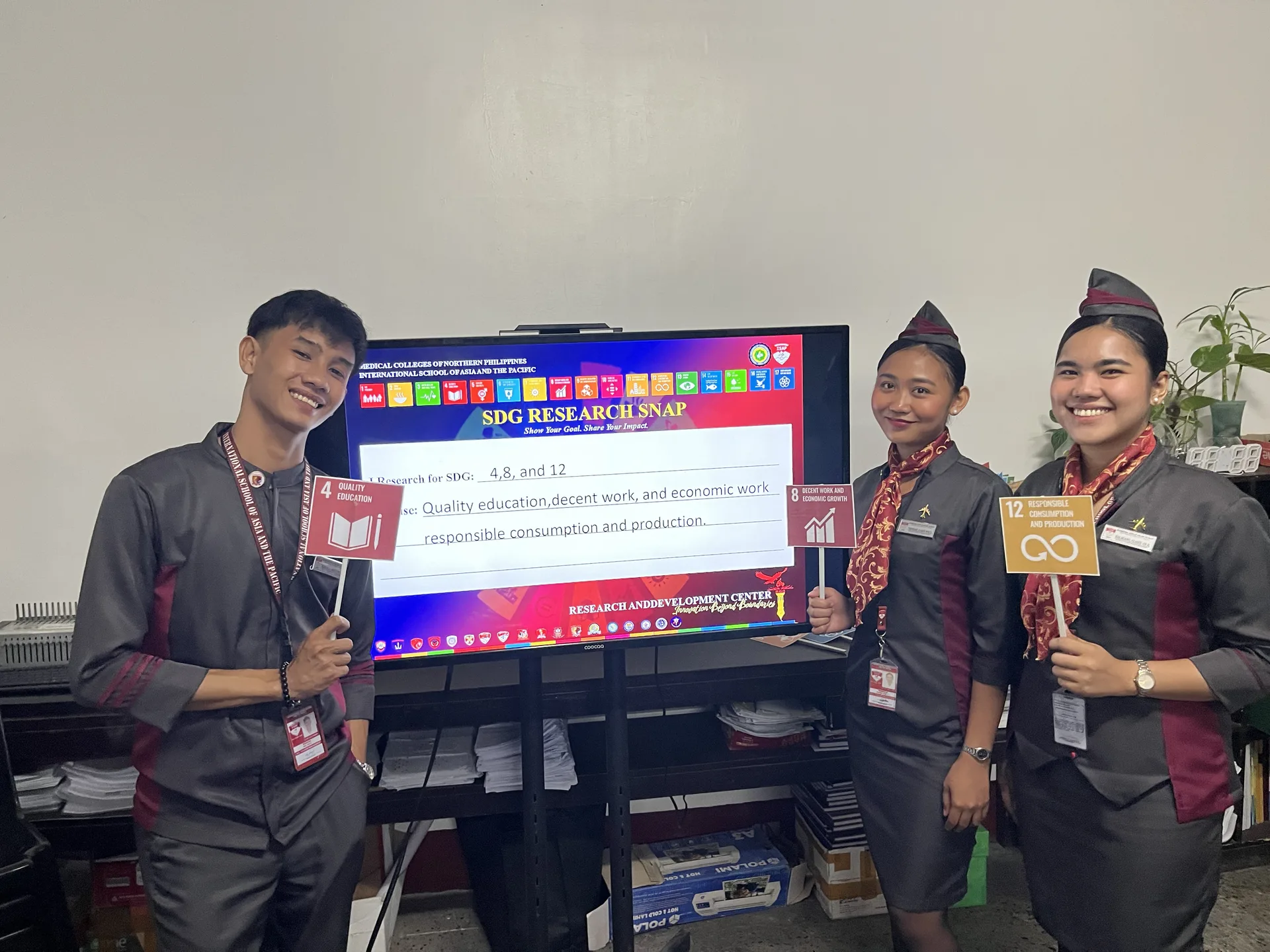
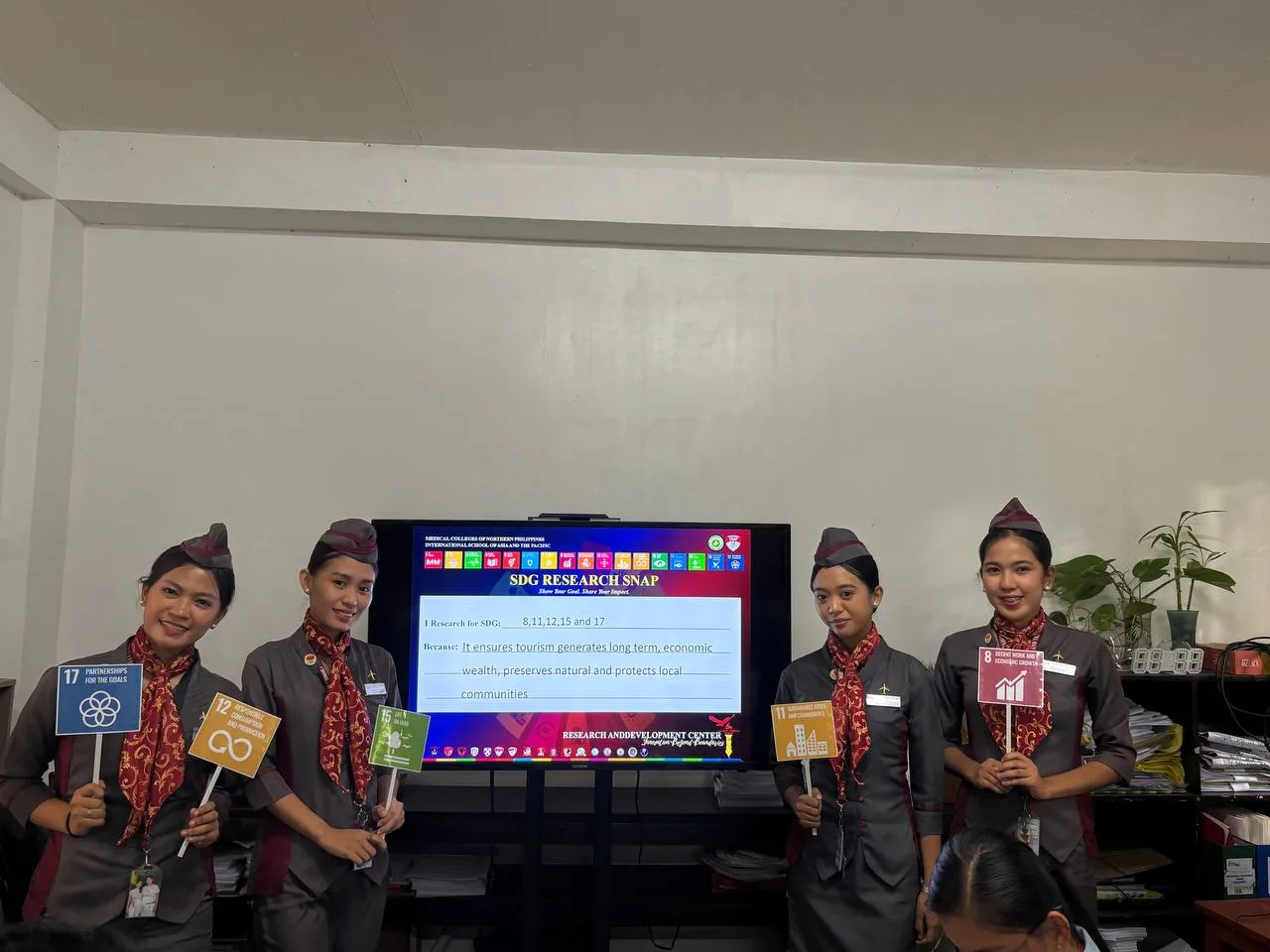
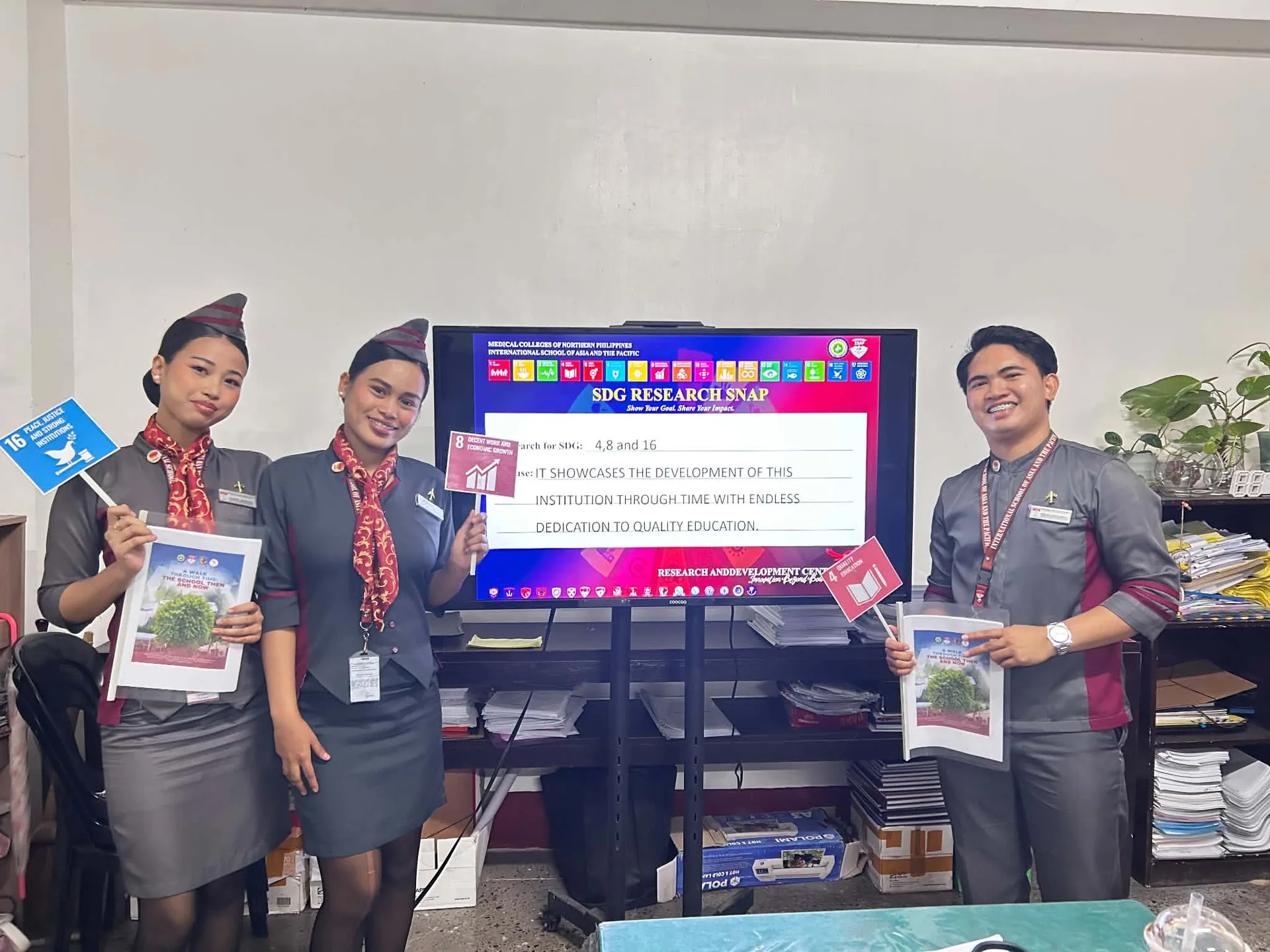
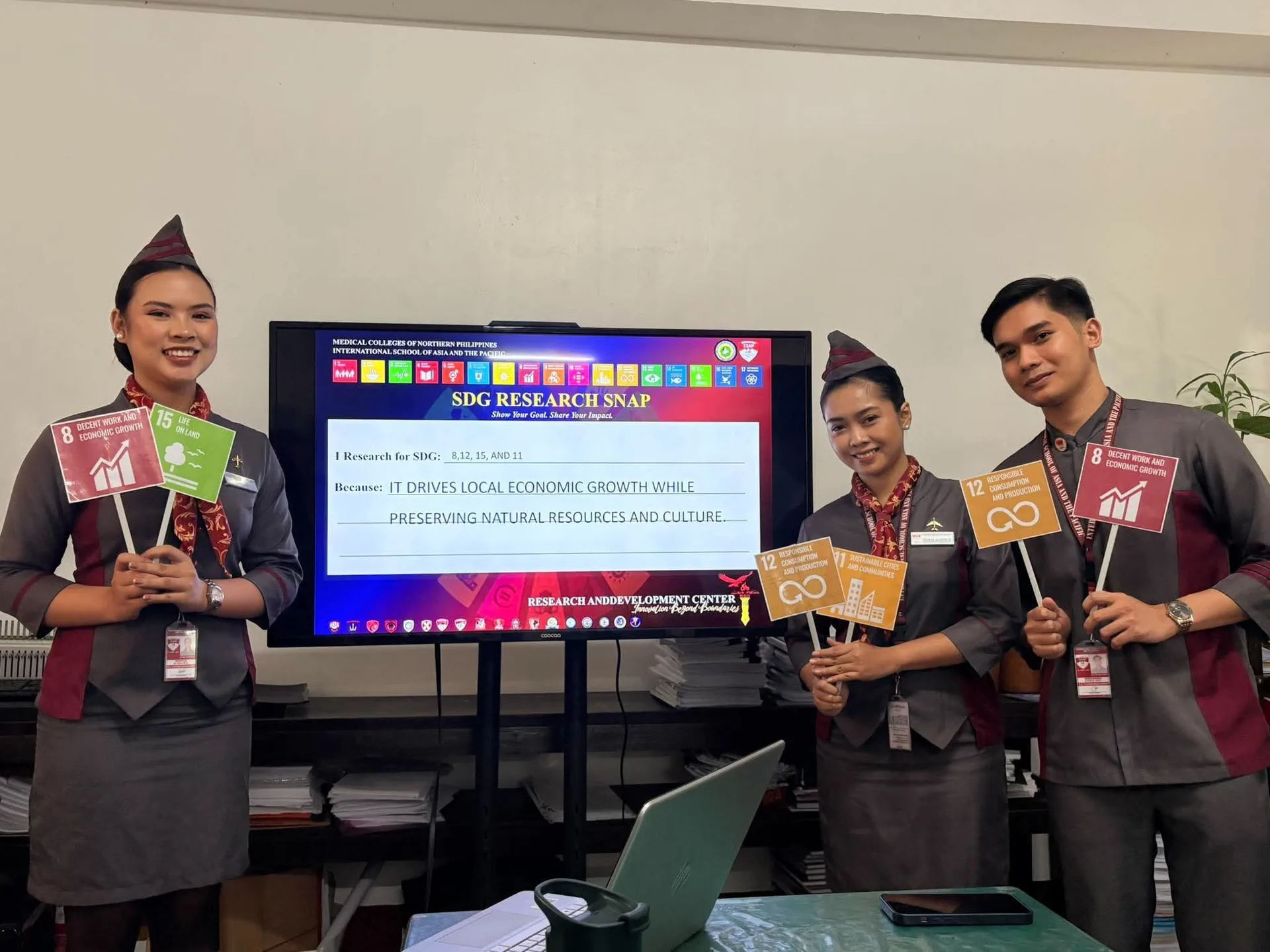
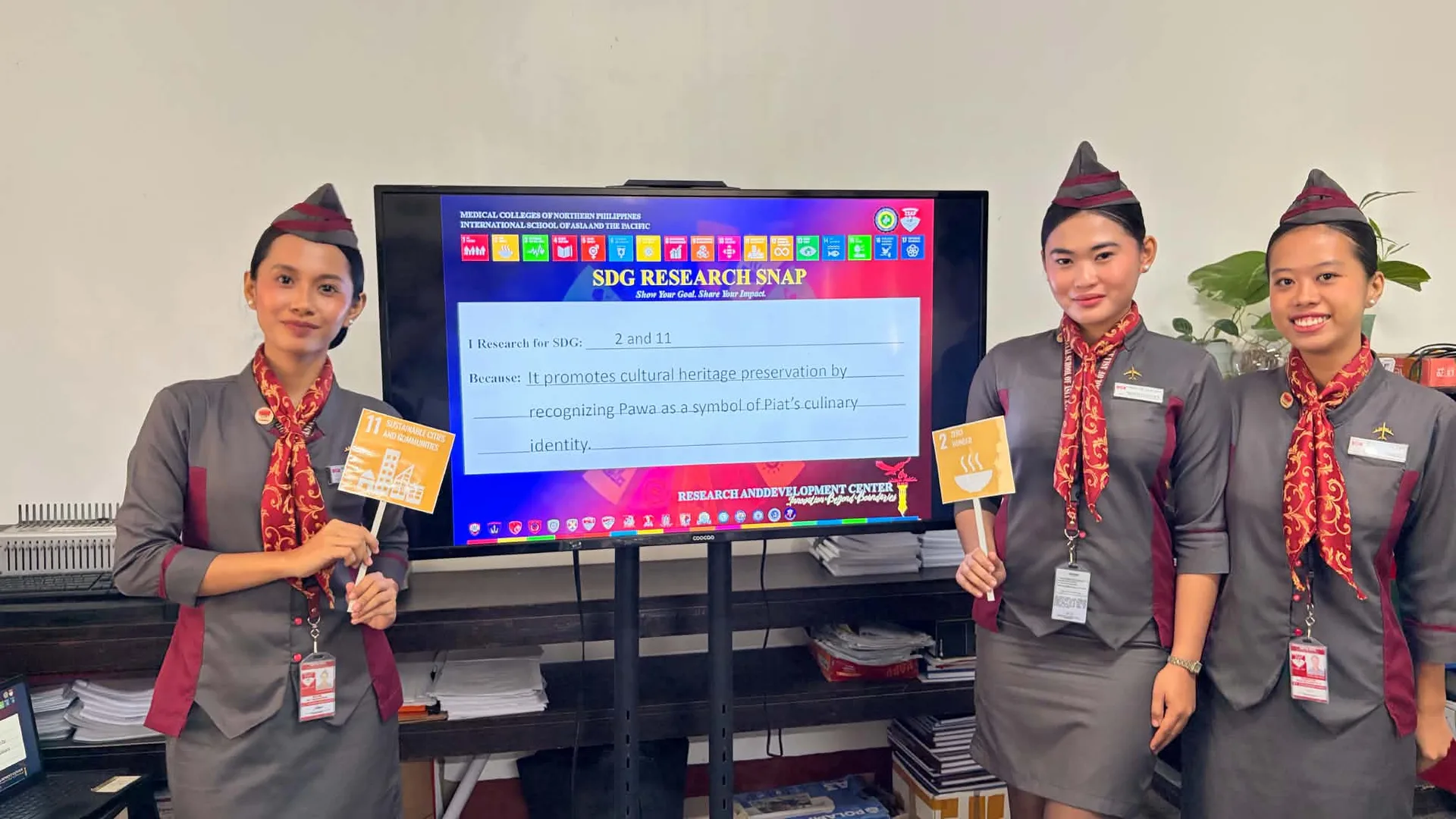
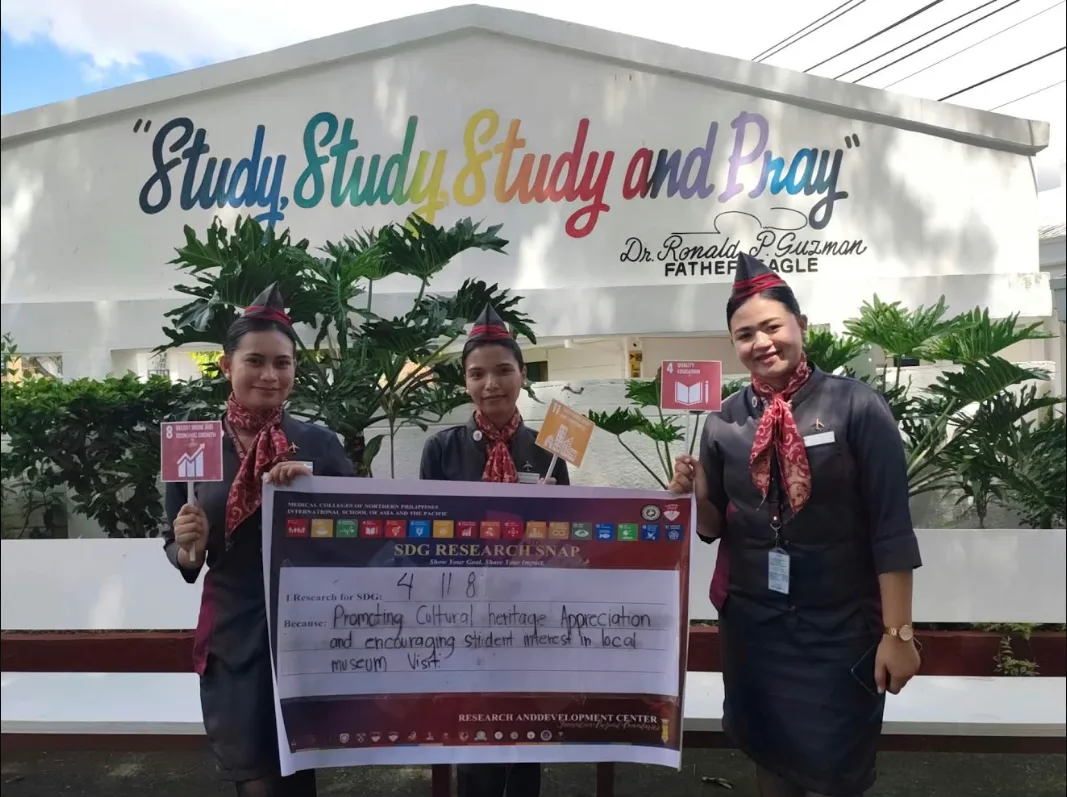
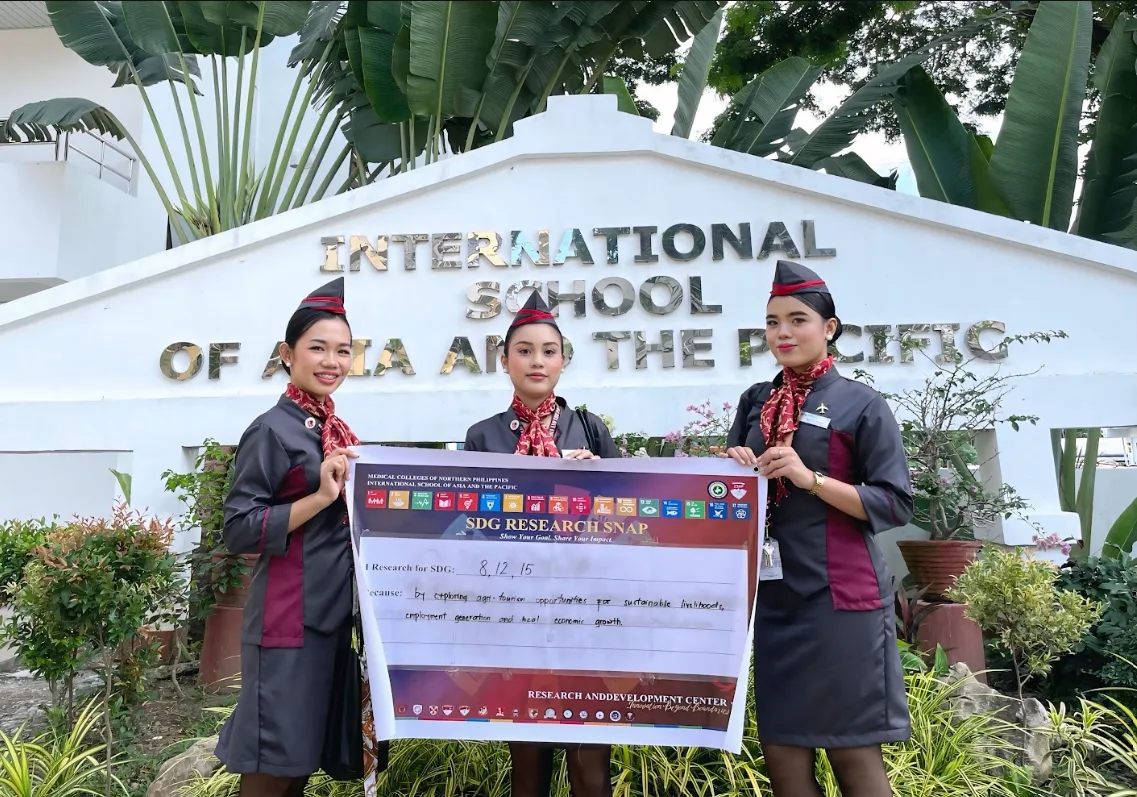
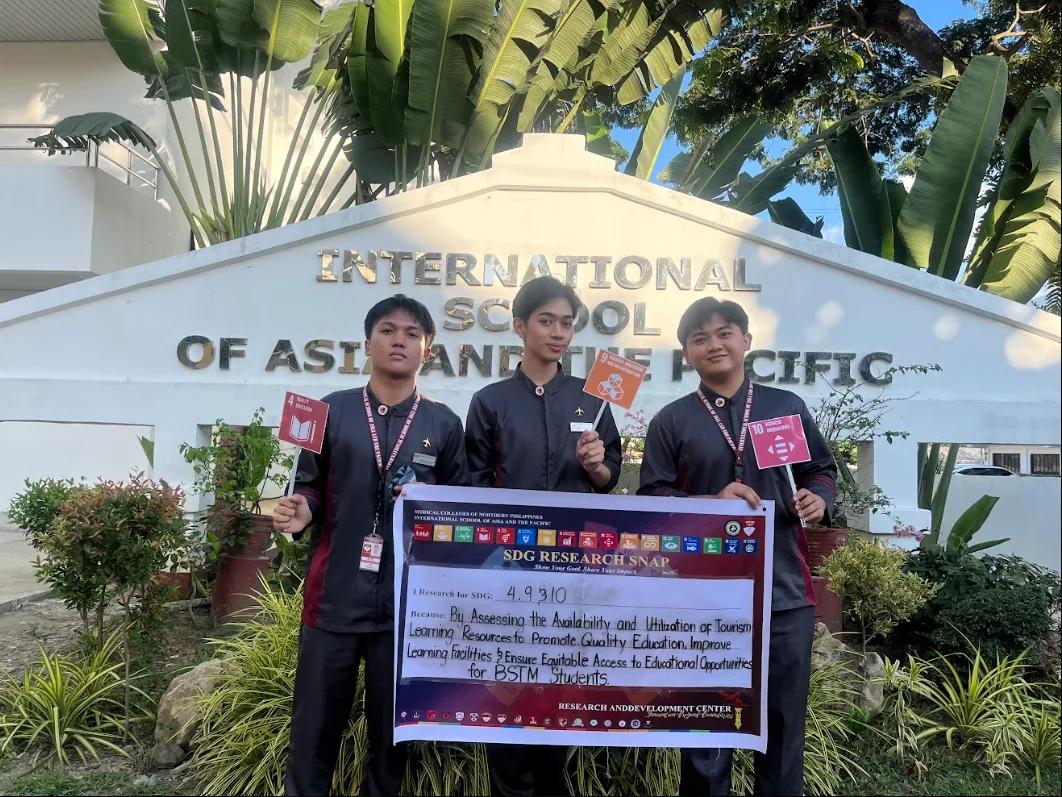
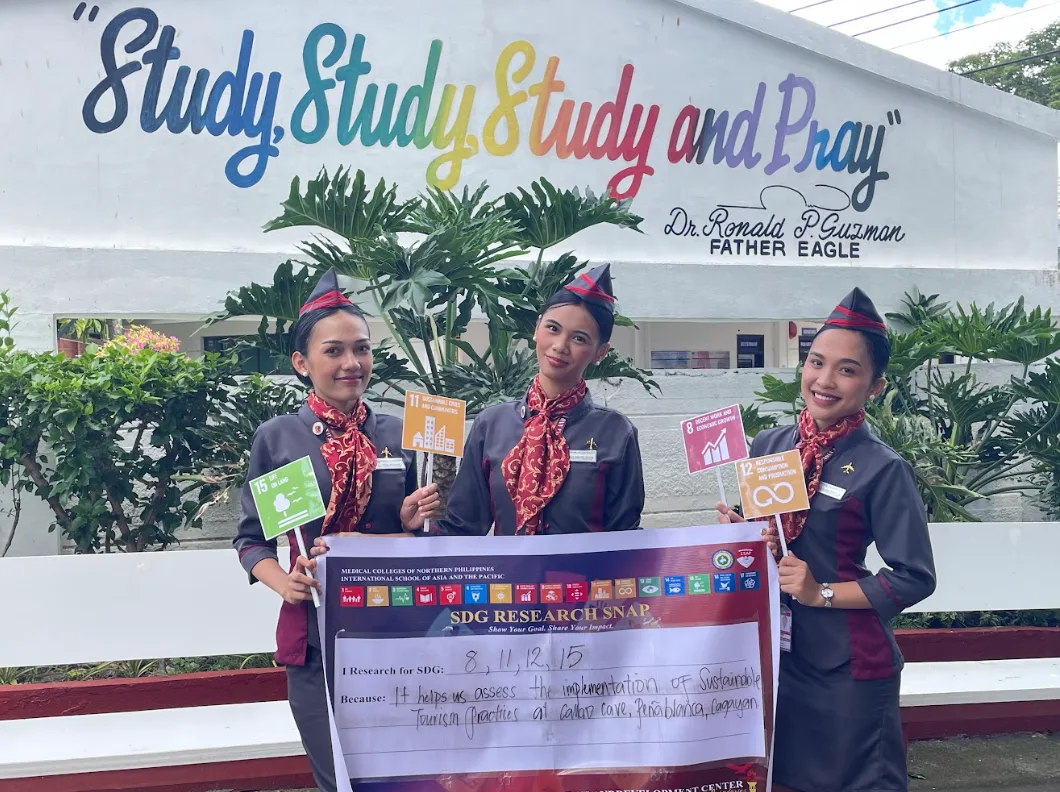
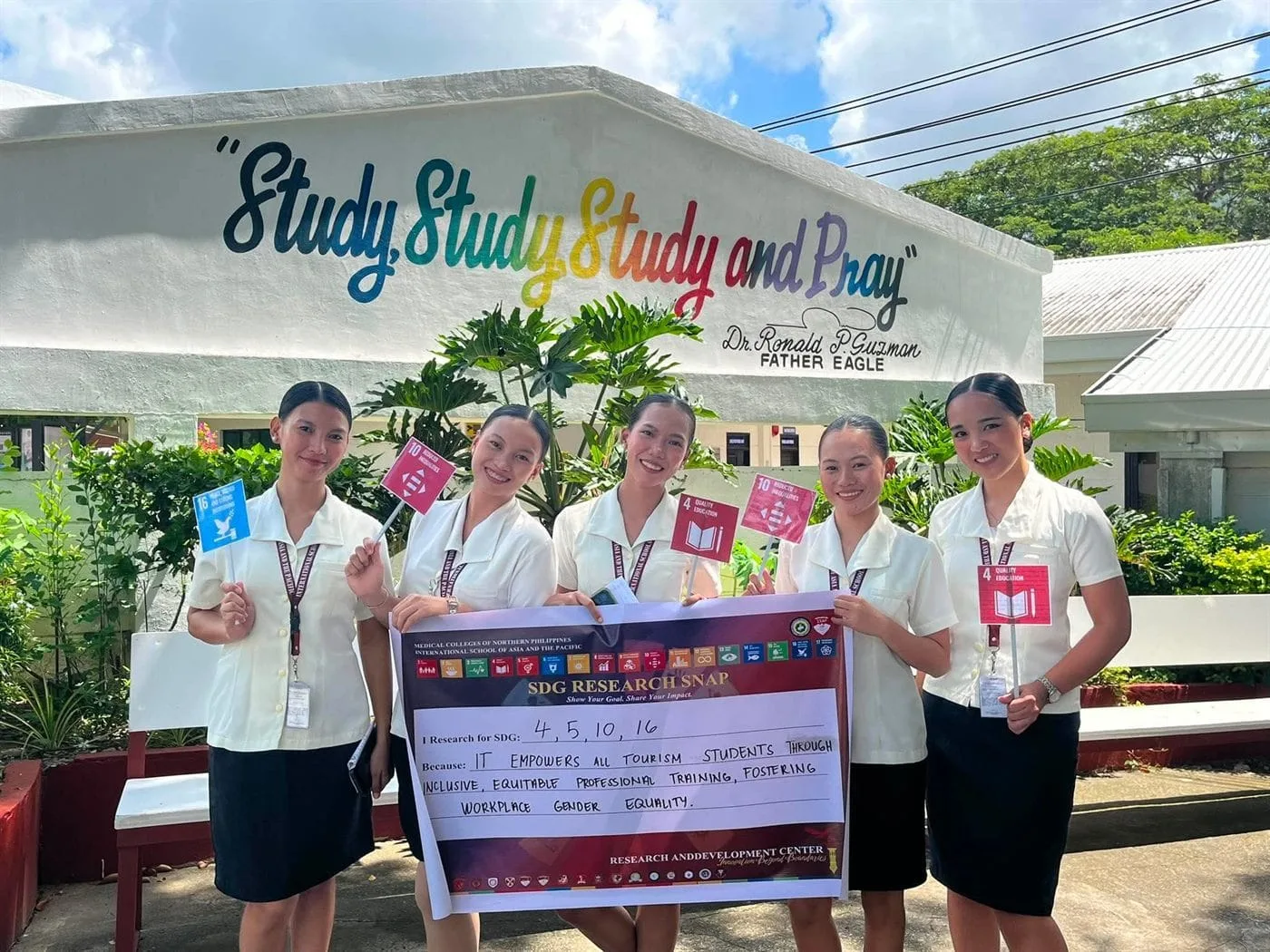
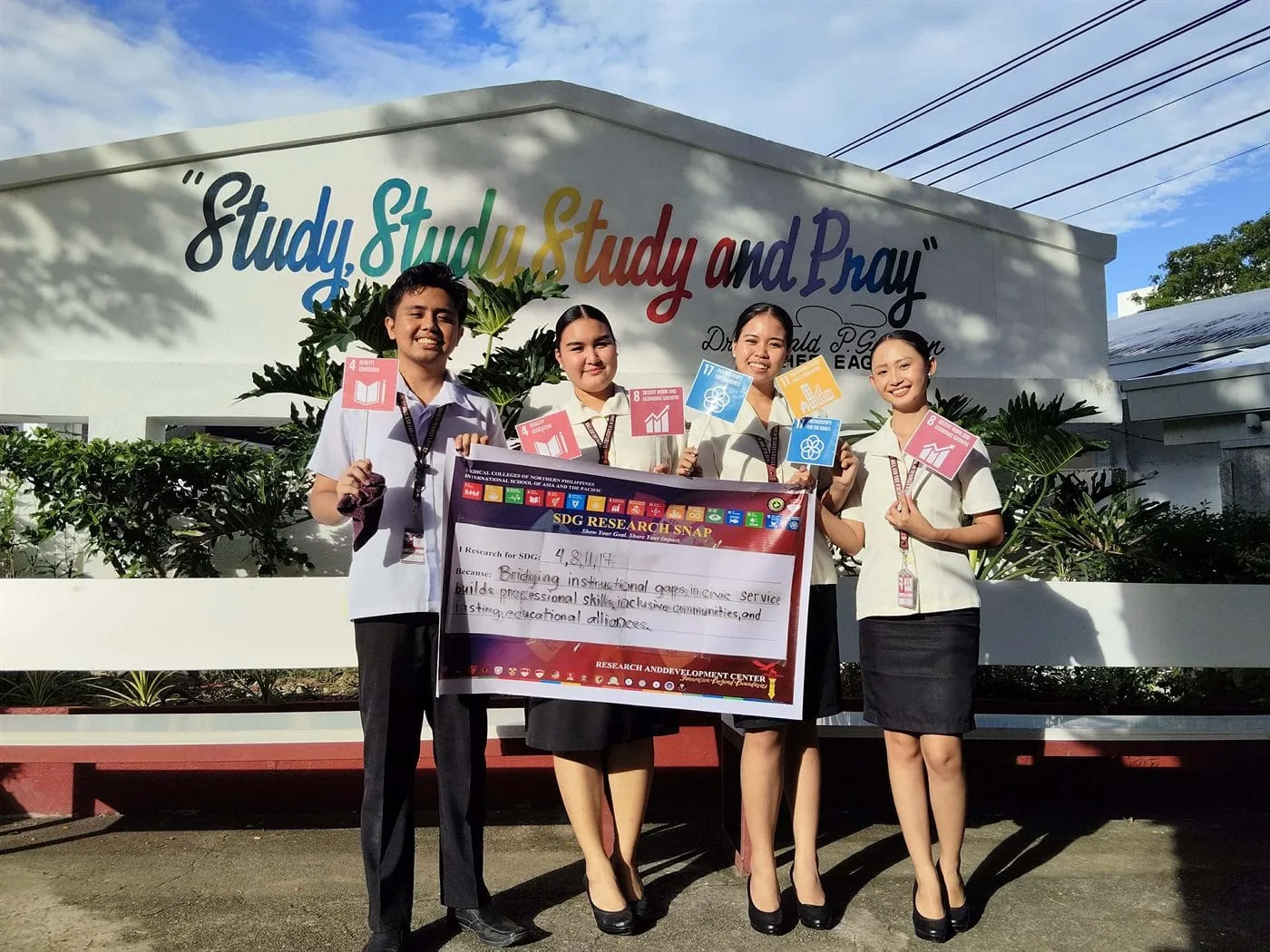
Photographic documentation of the ISAP BS Tourism Management fourth-batch proposal defense
BS Tourism Management Research Proposal Defense – 4th Batch · ISAP · November 9, 2026

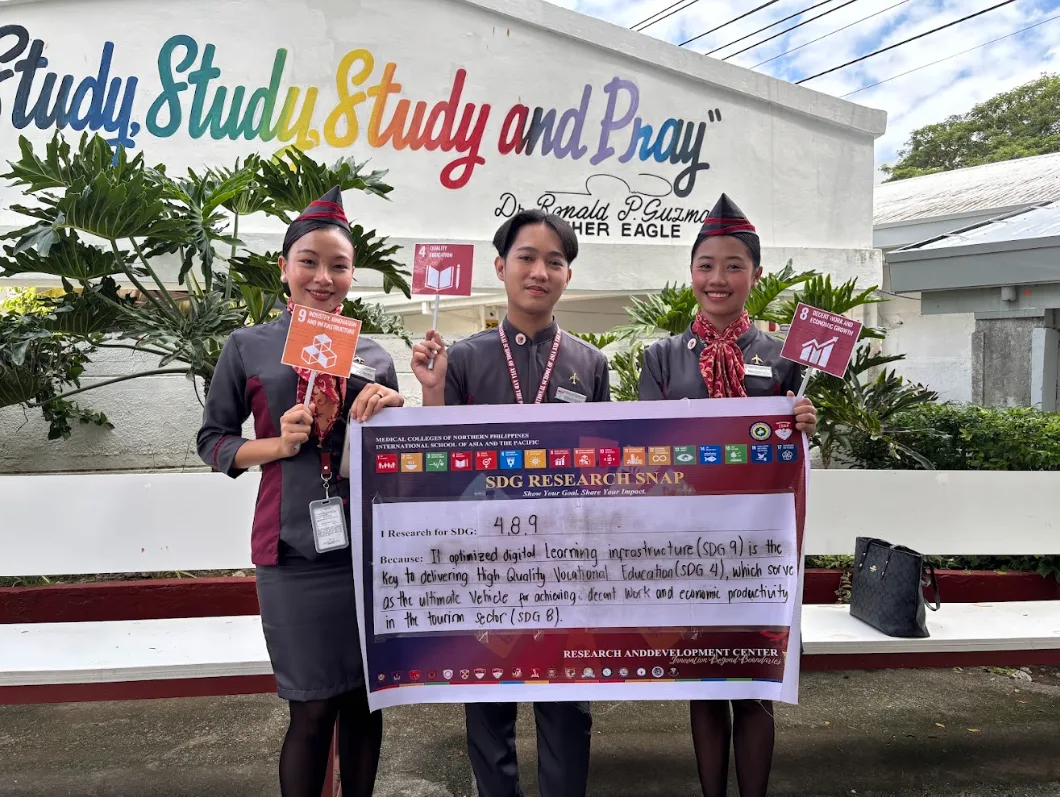
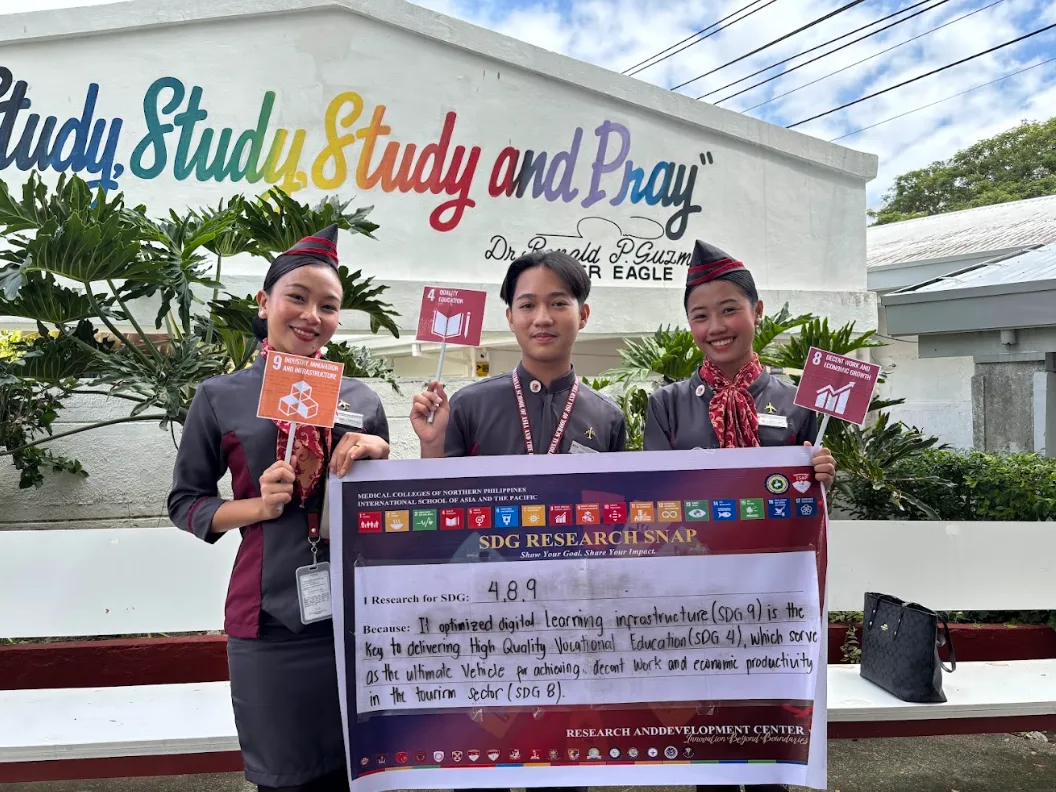
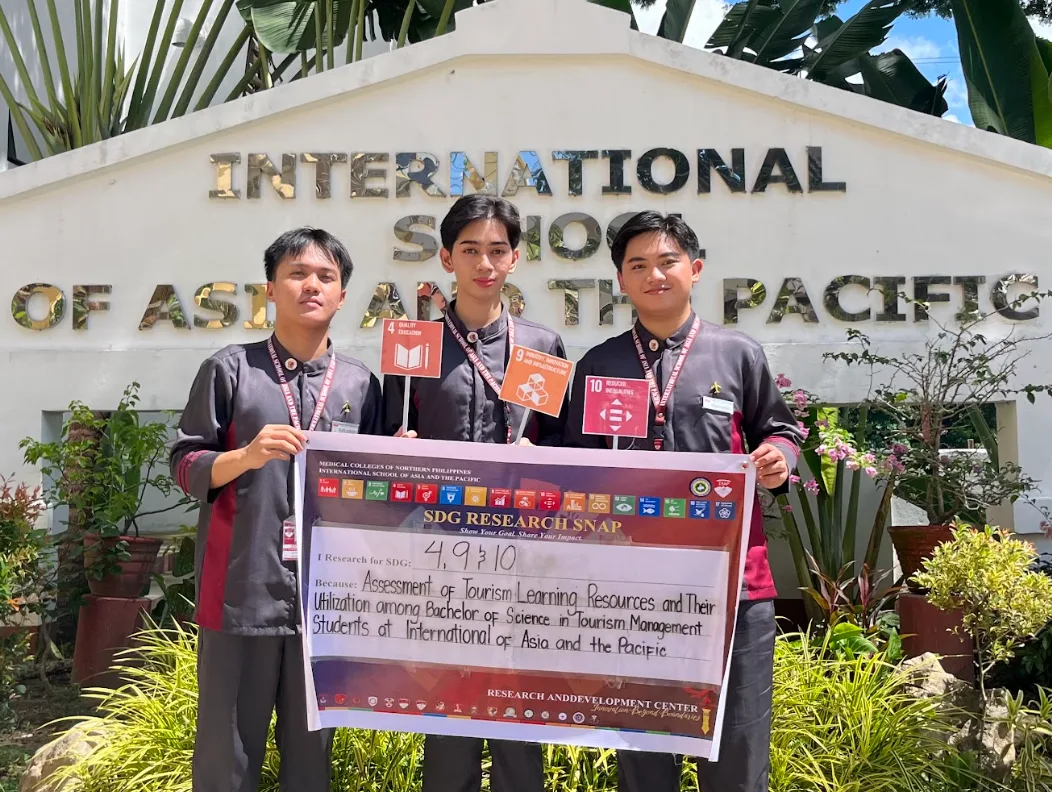
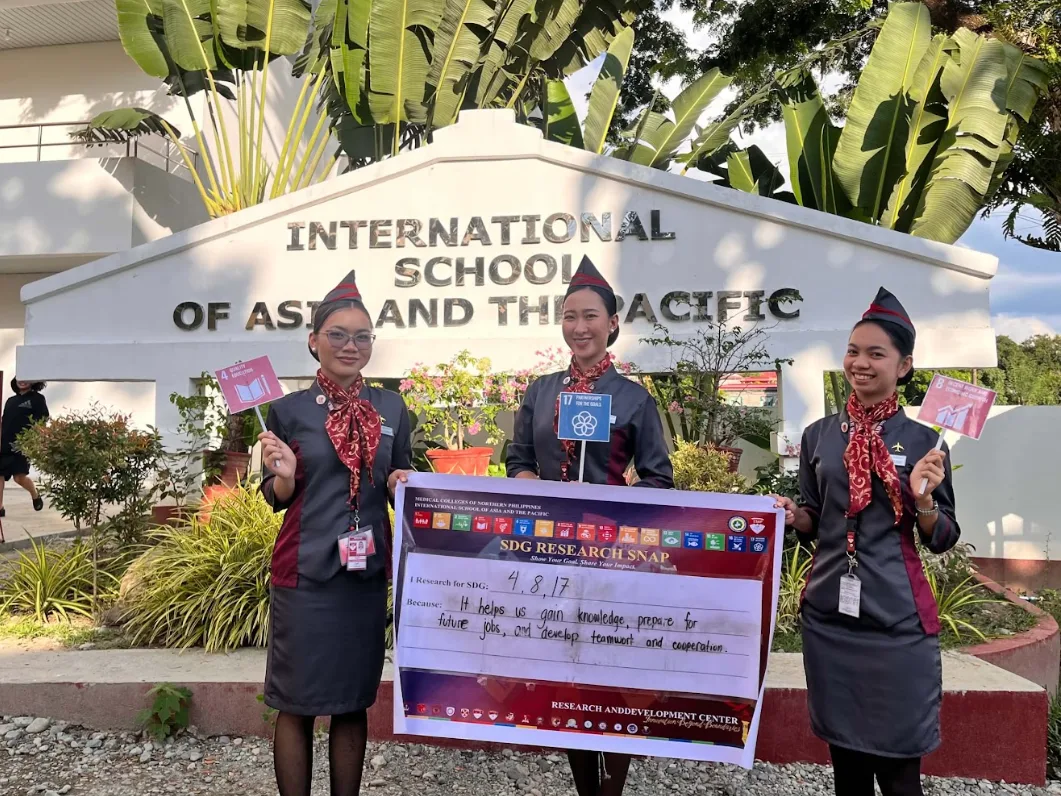
The International School of Asia and the Pacific (ISAP) conducted the 4th Batch of the Bachelor of Science in Tourism Management Research Proposal Defense on November 9, 2026, providing student researchers with an academic platform to present their proposed studies and engage in research-related discussions.

The activity formed part of the students' academic research development, offering an opportunity to communicate research ideas, examine proposed research directions, and engage in scholarly inquiry within the field of tourism management.

Through the research proposal defense, students were provided with an academic setting that supports research communication, critical thinking, and evidence-based approaches to examining concerns relevant to tourism education and professional practice.

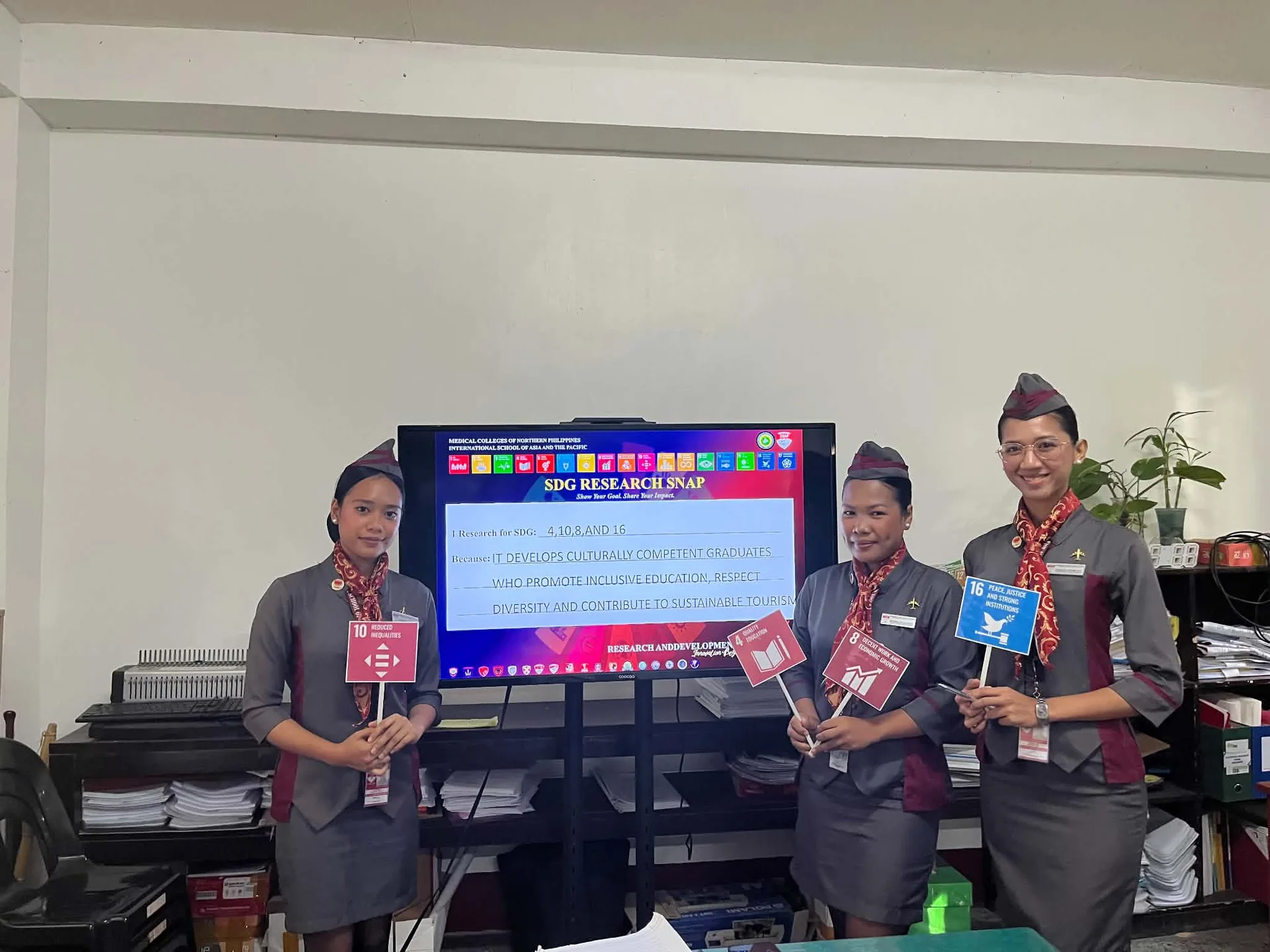
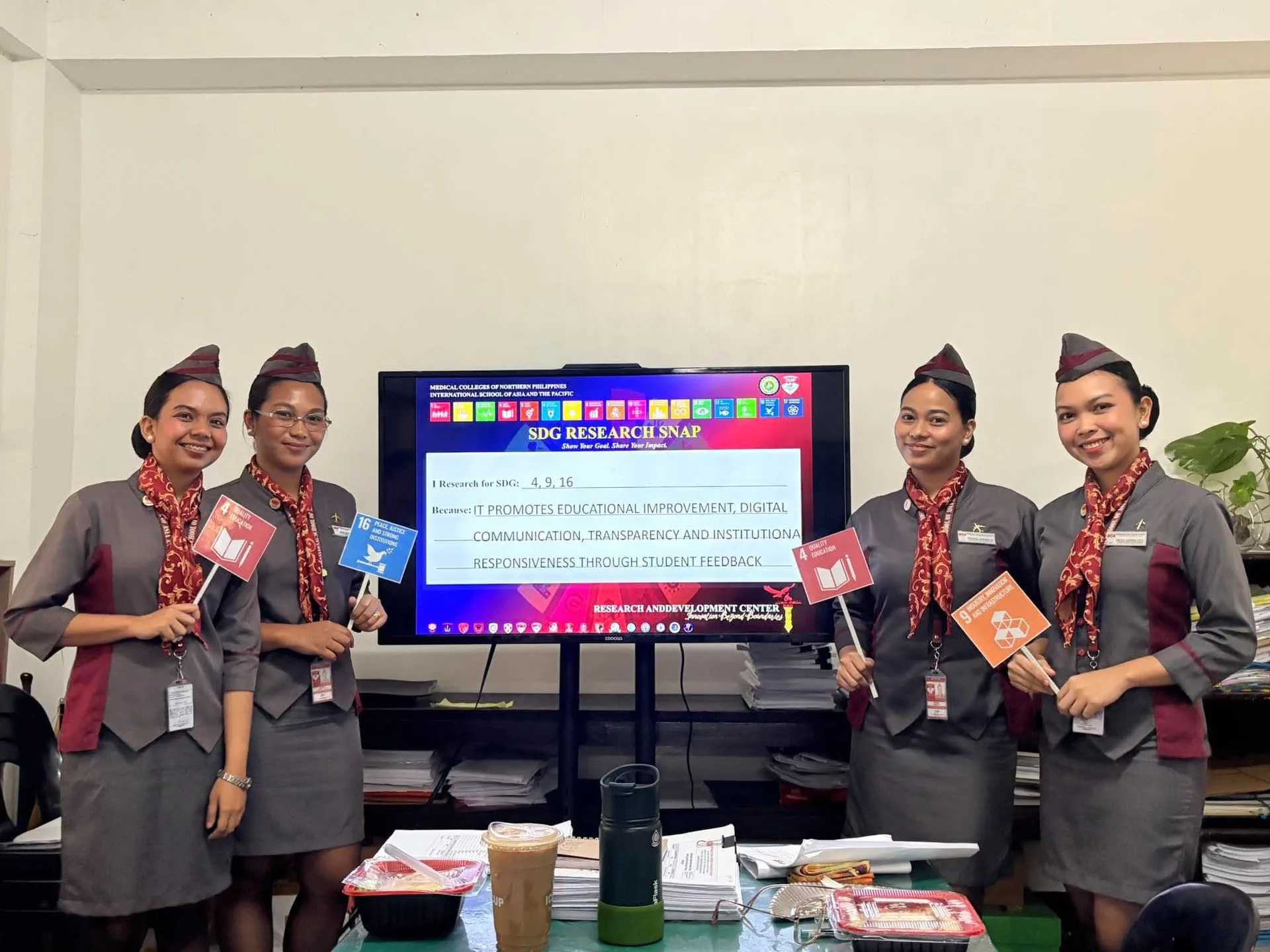
The activity primarily aligns with Sustainable Development Goal 4 – Quality Education by supporting research-oriented learning and academic engagement. Depending on the specific research topics, the proposals may also relate to SDG 9 – Industry, Innovation and Infrastructure through potential tourism-related innovations and SDG 17 – Partnerships for the Goals where collaboration with tourism stakeholders is explored. These additional alignments remain subject to confirmation through the actual research proposals.

From a World University Rankings for Innovation (WURI) perspective, the proposal defense offers potential relevance by encouraging students to explore research ideas that may address practical concerns within tourism management. However, no completed innovation, implemented research findings, or measurable industry outcomes have been documented.

The activity also supports the MCNP–ISAP RDC INNOVATES Research Agenda, particularly INSPIRE – Research Culture and Capability, by encouraging student participation in research-related academic activities, and STRENGTHEN – Education and Institutional Performance, by integrating research proposal presentations into students' academic development.

The documented activity is the conduct of the fourth batch of research proposal defenses. Information on the number of proposals presented, evaluation outcomes, and subsequent research implementation has not yet been provided.

Through the BS Tourism Management Research Proposal Defense, ISAP continues to provide opportunities for students to strengthen their engagement in academic inquiry and explore research directions relevant to tourism management and the broader development of their discipline.

RDC SDG Alignment

SDG 4 – Quality Education

Supports research proposal presentations and student academic development.

SDG 9 – Industry, Innovation and Infrastructure

Relates to tourism innovation, technology, or infrastructure where addressed by the proposed studies.

SDG 17 – Partnerships for the Goals

Relates to collaboration with tourism stakeholders or partner organizations where included in the proposed studies.

WURI Best Practices

The activity demonstrates potential relevance to research-based learning and practical problem identification. Evidence of implemented innovations, measurable outcomes, and stakeholder adoption would be needed to establish stronger WURI relevance.

RDC Agenda Alignment

INSPIRE – Research Culture and Capability

Encourages student research participation, critical inquiry, and research communication.

STRENGTHEN – Education and Institutional Performance

Supports the integration of scholarly activities into tourism management education.

Photographic Documentation

18 photographs document the activity. Select a photograph to view it at full size.

ISAP BS Tourism Management fourth-batch research proposal defense, November 9, 2026 – documentation photo 1
4th Batch Proposal Defense · Photo 1
ISAP BS Tourism Management fourth-batch research proposal defense, November 9, 2026 – documentation photo 2
4th Batch Proposal Defense · Photo 2
ISAP BS Tourism Management fourth-batch research proposal defense, November 9, 2026 – documentation photo 3
4th Batch Proposal Defense · Photo 3
ISAP BS Tourism Management fourth-batch research proposal defense, November 9, 2026 – documentation photo 4
4th Batch Proposal Defense · Photo 4
ISAP BS Tourism Management fourth-batch research proposal defense, November 9, 2026 – documentation photo 5
4th Batch Proposal Defense · Photo 5
ISAP BS Tourism Management fourth-batch research proposal defense, November 9, 2026 – documentation photo 6
4th Batch Proposal Defense · Photo 6
ISAP BS Tourism Management fourth-batch research proposal defense, November 9, 2026 – documentation photo 7
4th Batch Proposal Defense · Photo 7
ISAP BS Tourism Management fourth-batch research proposal defense, November 9, 2026 – documentation photo 8
4th Batch Proposal Defense · Photo 8
ISAP BS Tourism Management fourth-batch research proposal defense, November 9, 2026 – documentation photo 9
4th Batch Proposal Defense · Photo 9
ISAP BS Tourism Management fourth-batch research proposal defense, November 9, 2026 – documentation photo 10
4th Batch Proposal Defense · Photo 10
ISAP BS Tourism Management fourth-batch research proposal defense, November 9, 2026 – documentation photo 11
4th Batch Proposal Defense · Photo 11
ISAP BS Tourism Management fourth-batch research proposal defense, November 9, 2026 – documentation photo 12
4th Batch Proposal Defense · Photo 12
ISAP BS Tourism Management fourth-batch research proposal defense, November 9, 2026 – documentation photo 13
4th Batch Proposal Defense · Photo 13
ISAP BS Tourism Management fourth-batch research proposal defense, November 9, 2026 – documentation photo 14
4th Batch Proposal Defense · Photo 14
ISAP BS Tourism Management fourth-batch research proposal defense, November 9, 2026 – documentation photo 15
4th Batch Proposal Defense · Photo 15
ISAP BS Tourism Management fourth-batch research proposal defense, November 9, 2026 – documentation photo 16
4th Batch Proposal Defense · Photo 16
ISAP BS Tourism Management fourth-batch research proposal defense, November 9, 2026 – documentation photo 17
4th Batch Proposal Defense · Photo 17
ISAP BS Tourism Management fourth-batch research proposal defense, November 9, 2026 – documentation photo 18
4th Batch Proposal Defense · Photo 18
BS Nursing 3 students with their displayed research proposal
BS Nursing 3 Research Proposal Defense • November 6, 2026 • MCNP

The Medical Colleges of Northern Philippines (MCNP) conducted the BS Nursing 3 Research Proposal Defense on November 6, 2026, providing third-year Bachelor of Science in Nursing students with an academic platform to present their proposed research studies and engage in research-related discussions.

The activity served as an important component of nursing research education, allowing students to communicate their research ideas and participate in academic discussions concerning their proposed studies. Through the presentation of research proposals, the students engaged in a process that supports critical inquiry, research communication, and the development of evidence-based thinking.

The proposal defense highlighted the importance of integrating research into nursing education, particularly in preparing students to examine health-related concerns through systematic academic investigation. By presenting their proposed studies, the nursing students had an opportunity to explain their research direction and engage with questions relevant to the development of their research projects.

The activity primarily aligns with Sustainable Development Goal 4 – Quality Education, as it provides an academic learning experience focused on research engagement and scholarly development. It also has potential relevance to SDG 3 – Good Health and Well-Being, particularly where proposed nursing research addresses health knowledge, healthcare education, or other health-related concerns.

From a World University Rankings for Innovation (WURI) perspective, the activity reflects an opportunity to encourage research-oriented learning and the development of ideas that may address practical concerns in healthcare education. However, the available documentation establishes the presentation of research proposals rather than completed innovations, implemented research findings, or measurable community outcomes.

The activity also relates to the MCNP–ISAP RDC INNOVATES Research Agenda. It supports INSPIRE – Research Culture and Capability by encouraging students to participate in research-related academic activities and develop their research communication capabilities. It also supports STRENGTHEN – Education and Institutional Performance by integrating research proposal presentations into the academic development of nursing students.

The documented output of the activity was the presentation of proposed nursing research studies. Although the activity provided opportunities for academic engagement and research development, the available documentation does not specify the number of proposals presented, the results of the evaluations, or measured improvements in student competencies.

The research proposal defense represents a stage in the students’ academic research process. While the checklist does not confirm specific follow-up activities or implementation plans, the proposals may serve as a foundation for subsequent research development, subject to academic review and institutional requirements.

Through the BS Nursing 3 Research Proposal Defense, MCNP continued to provide opportunities for students to engage in scholarly inquiry, communicate research ideas, and explore health-related issues through academic research, supporting the institution’s commitment to quality nursing education and a research-oriented learning environment.

Research Alignment & Institutional Relevance

RDC SDG Alignment
SDG 4 – Quality Education (Primary Alignment)

Supports research engagement, scholarly inquiry, and academic development through student research proposal presentations.

SDG 3 – Good Health and Well-Being (Potential Alignment)

Relevant to nursing research proposals that address health-related issues. The checklist does not provide individual proposal titles or findings.

WURI Best Practices

The activity demonstrates potential relevance to WURI through research-oriented learning and student engagement in the development of proposed studies.

The proposal defense offers an academic setting for examining research ideas that may eventually contribute to improvements in healthcare education or professional practice.

RDC Agenda Alignment
INSPIRE – Research Culture and Capability

Encourages nursing students to participate in research activities, communicate research ideas, and engage in academic inquiry.

STRENGTHEN – Education and Institutional Performance

Supports research-related academic learning and the integration of scholarly activities into nursing education.

Photographic Documentation • BS Nursing 3 Research Proposal Defense

Nursing students beside their research proposal presentation
Nursing students beside their research proposal presentation • Photo 1
Nursing student group documenting their proposal defense
Nursing student group documenting their proposal defense • Photo 2
Nursing students presenting research proposals during the defense session
Nursing students presenting research proposals during the defense session • Photo 3
BS Nursing 3 students with their displayed research proposal
BS Nursing 3 students with their displayed research proposal • Photo 4
Nursing students presenting at the lectern during the proposal defense
Nursing students presenting at the lectern during the proposal defense • Photo 5
Participants documenting the nursing research proposal defense session
Participants documenting the nursing research proposal defense session • Photo 6
Nursing students and attendees during a research proposal presentation
Nursing students and attendees during a research proposal presentation • Photo 7
Nursing research presenters addressing the defense session
Nursing research presenters addressing the defense session • Photo 8
Nursing students beside the presentation screen in the defense room
Nursing students beside the presentation screen in the defense room • Photo 9
Nursing students documenting their research proposal presentation
Nursing students documenting their research proposal presentation • Photo 10
Participants beside a nursing research proposal presentation
Participants beside a nursing research proposal presentation • Photo 11
Nursing student presenters beside the research proposal display
Nursing student presenters beside the research proposal display • Photo 12
3rd Criminology Profession Week banner with the theme Strengthening the Criminology Profession in Addressing Contemporary Social Challenges
ISAP's 3rd Criminology Profession Week, November 4-7, 2026.

The International School of Asia and the Pacific (ISAP), through its College of Criminal Justice Education (CoCJE), conducted the 3rd Criminology Profession Week on November 5, 2026, under the theme “Strengthening the Criminology Profession in Addressing Contemporary Social Challenges.” The activity was held in collaboration with Isabela State University–Cabagan Campus and Research and Development Center (RDC). The activity brought together research presenters and academic participants for research dissemination and discussions addressing contemporary concerns in criminology education and professional practice.

Highlighting the participation of the Research and Development Center (RDC), Dr. Ryan C. Fontanilla, Research Director of MCNP–ISAP, served as a panel reactor during the research presentations. His involvement reflected the RDC's continuing role in supporting scholarly engagement and providing institutional research expertise to academic activities.

The research presentation component featured five studies and projects from the International School of Asia and the Pacific and Isabela State University–Cabagan Campus. These explored traffic rules and regulatory compliance, cyberbullying and coping mechanisms, course audit performance, ROTC graduates' satisfaction, and forensic learning activities.

Among the presentations was “Knowledge and Compliance of Tricycle Operators and Drivers Association Drivers on Traffic Rules and Regulations in Northern Isabel” by Crischelle Kae B. Padilla, with Rodel L. Asuncion, PhD, as adviser. The study addressed traffic regulations and driver compliance. Nicole T. Cuarteros presented research on “Cyberbullying: Impact and Coping Mechanisms of Victims,” while Kimberly H. Galap presented “The Satisfaction of ROTC Graduates on the ROTC Program of Isabela State University–Cabagan Campus.” All three researchers represented Isabela State University–Cabagan Campus.

ISAP presenters also contributed two academic projects. Mhariane B. Ruiz and Leiar V. Bravo presented “The Revival of Police CAP: A Program to Enhance Course Audit Performance,” while Darren Thadeus F. Dulin and Reymark R. Asuncion presented “Project FLASH (Forensic Learning and Structured Hands-On Activities).” These projects focused on educational approaches relevant to criminology learning and academic performance.

Through these presentations, the activity provided a venue for research communication and academic knowledge exchange among students, researchers, faculty members, and panel reactors. Dr. Fontanilla's participation emphasized the value of involving research leaders in scholarly discussions that connect academic inquiry with contemporary social and professional concerns.

In recognition of his contribution, Dr. Fontanilla received a Certificate of Appreciation acknowledging his time and expertise as a panel reactor during the celebration.

The activity primarily supports Sustainable Development Goal 4 – Quality Education by providing opportunities for research dissemination, scholarly engagement, and academic learning. It also relates to SDG 16 – Peace, Justice and Strong Institutions, particularly through research topics concerning traffic regulation compliance, cyberbullying, and criminology education. The participation of presenters from two institutions suggests potential relevance to SDG 17 – Partnerships for the Goals through interinstitutional knowledge exchange, although no formal partnership was documented.

The research presentations also demonstrate potential WURI-relevant practices through engagement with real-world concerns and the sharing of educational initiatives. In particular, the presentations on Police CAP and Project FLASH introduced academic projects addressing course audit performance and structured forensic learning. Their implementation, adoption, and measurable effectiveness, however, were not established in the available documentation.

The activity likewise aligns with selected directions of the RDC INNOVATES agenda. It supports INSPIRE – Research Culture and Capability by promoting research engagement and academic participation; OPERATIONALIZE – Knowledge Utilization, Innovation, and Improvement through the presentation of research and educational project concepts with potential practical applications; EXPAND – Partnerships and Global Research through academic participation involving ISAP and Isabela State University–Cabagan Campus; and STRENGTHEN – Education and Institutional Performance by providing opportunities for scholarly discussion and engagement with educational initiatives.

As the third edition of the Criminology Profession Week celebration, the activity reflects an established platform for professional and academic engagement. While future research follow-up activities have not been specified, the presentations offer opportunities for further scholarly discussion and possible development of the projects introduced.

Through its participation in the 3rd Criminology Profession Week, the MCNP–ISAP Research and Development Center reaffirmed its commitment to fostering research engagement, encouraging knowledge exchange, and supporting academic initiatives that connect research with professional practice and contemporary societal concerns.

Research Presentations and Presenters

Knowledge and Compliance of Tricycle Operators and Drivers Association Drivers on Traffic Rules and Regulations in Northern Isabel

Crischelle Kae B. Padilla · Adviser: Rodel L. Asuncion, PhD

Isabela State University–Cabagan Campus

Cyberbullying: Impact and Coping Mechanisms of Victims

Nicole T. Cuarteros

Isabela State University–Cabagan Campus

The Revival of Police CAP: A Program to Enhance Course Audit Performance

Mhariane B. Ruiz and Leiar V. Bravo

International School of Asia and the Pacific

The Satisfaction of ROTC Graduates on the ROTC Program of Isabela State University–Cabagan Campus

Kimberly H. Galap

Isabela State University–Cabagan Campus

Project FLASH (Forensic Learning and Structured Hands-On Activities)

Darren Thadeus F. Dulin and Reymark R. Asuncion

International School of Asia and the Pacific

Institutional Alignment & Relevance

RDC SDG Alignment
SDG 4 – Quality Education

Promotes research dissemination, academic learning, and scholarly engagement through research presentations and panel discussions.

SDG 16 – Peace, Justice and Strong Institutions

Connects criminology research with public safety, responsible institutions, and contemporary social challenges.

SDG 17 – Partnerships for the Goals (Potential)

Potential alignment through knowledge exchange involving researchers from ISAP and Isabela State University–Cabagan Campus.

WURI Best Practices

The activity demonstrates potential WURI relevance through research dissemination, real-world problem orientation, and academic knowledge exchange. The presentations addressed concerns related to public safety, online behavior, professional education, and forensic learning.

RDC Agenda Alignment
INSPIRE – Research Culture and Capability

Encourages student research participation, academic engagement, and research communication.

OPERATIONALIZE – Knowledge Utilization and Innovation

Highlights research and educational project concepts with potential practical applications.

EXPAND – Partnerships and Global Research

Supports academic knowledge exchange between presenters from two educational institutions.

STRENGTHEN – Education and Institutional Performance

Supports scholarly engagement and discussion of academic performance and educational approaches.

Photographic Documentation • 3rd Criminology Profession Week

Criminology Profession Week online research session documentation - screenshot 952
Criminology Profession Week online research session documentation - screenshot 953
Academic community participating in the online Criminology Profession Week activity
Criminology Profession Week online research session documentation - screenshot 955
Criminology Profession Week online research session documentation - screenshot 956
Criminology Profession Week online research session documentation - screenshot 957
Criminology Profession Week online research session documentation - screenshot 958
Criminology Profession Week online research session documentation - screenshot 959
Criminology Profession Week online research session documentation - screenshot 960
Criminology Profession Week online research session documentation - screenshot 961
Criminology Profession Week online research session documentation - screenshot 962
Criminology Profession Week online research session documentation - screenshot 963
Criminology Profession Week online research session documentation - screenshot 964
Criminology Profession Week online research session documentation - screenshot 965
Criminology Profession Week online research session documentation - screenshot 966
Criminology Profession Week online research session documentation - screenshot 967
Criminology Profession Week online research session documentation - screenshot 968
Criminology Profession Week online research session documentation - screenshot 969
Criminology Profession Week online research session documentation - screenshot 970
Criminology Profession Week online research session documentation - screenshot 971
Research presenter speaking during the online research session
Criminology Profession Week online research session documentation - screenshot 973
Criminology Profession Week online research session documentation - screenshot 974
Criminology Profession Week online research session documentation - screenshot 975
Criminology Profession Week online research session documentation - screenshot 976
Criminology Profession Week online research session documentation - screenshot 977
Criminology Profession Week online research session documentation - screenshot 978
Criminology Profession Week online research session documentation - screenshot 979
Criminology Profession Week online research session documentation - screenshot 980
Criminology Profession Week online research session documentation - screenshot 981
Criminology Profession Week online research session documentation - screenshot 982
Criminology Profession Week online research session documentation - screenshot 983
Criminology Profession Week online research session documentation - screenshot 984
Criminology Profession Week online research session documentation - screenshot 985
Criminology Profession Week online research session documentation - screenshot 986
Criminology Profession Week online research session documentation - screenshot 987
Criminology Profession Week online research session documentation - screenshot 988
Criminology Profession Week online research session documentation - screenshot 989
Criminology Profession Week online research session documentation - screenshot 990
Criminology Profession Week online research session documentation - screenshot 993
Online participants and panel members during Criminology Profession Week
Panel reactor introduction slide for Dr. Ryan C. Fontanilla
Introduction of the panel of reactors during the online activity
Criminology Profession Week online research session documentation - screenshot 2938
Research presentation on traffic rules and driver compliance in Northern Isabel
Criminology Profession Week online research session documentation - screenshot 2942
Criminology Profession Week online research session documentation - screenshot 2949
The Revival of Police CAP research project title slide
Criminology Profession Week online research session documentation - screenshot 2960
Research presentation on ROTC graduates satisfaction at ISU Cabagan
Project FLASH forensic learning and structured hands-on activities title slide
Criminology Profession Week online research session documentation - screenshot 2977
Criminology Profession Week online research session documentation - screenshot 2996
Cyberbullying impact and coping mechanisms research title slide
Certificate of Appreciation presented to Dr. Ryan C. Fontanilla
Participants gathered in the online meeting gallery
Criminology Profession Week online research session documentation - screenshot 3003
Criminology Profession Week online research session documentation - screenshot 3004
Criminology Profession Week online research session documentation - screenshot 3005
Research and Development Center | Innovation Beyond Boundaries
Wide view of the MCNP–ISAP community gathered outdoors during the earthquake drill
MCNP–ISAP Earthquake Drill and Emergency Preparedness Exercise • November 05, 2026

The Research and Development Center (RDC) of the Medical Colleges of Northern Philippines (MCNP) and the International School of Asia and the Pacific (ISAP) participated in the institution-wide Earthquake Drill and Emergency Preparedness Exercise conducted on November 05, 2026, in support of institutional efforts to strengthen disaster preparedness, promote safety awareness, and enhance emergency response readiness.

The activity brought together students, faculty, and personnel to practice essential earthquake safety procedures, including Duck, Cover, and Hold, and familiarize themselves with evacuation protocols. Through this practical exercise, participants were provided with opportunities to develop greater awareness of appropriate emergency responses and the importance of preparedness during unexpected disasters.

The RDC's participation reflects its support for institutional initiatives that promote safety, preparedness, and the well-being of the academic community. By taking part in the exercise, the Center demonstrated its commitment to contributing to a culture of shared responsibility, institutional resilience, and continuous improvement.

The activity aligns with Sustainable Development Goal (SDG) 11 – Sustainable Cities and Communities, particularly in promoting disaster risk reduction and preparedness. It also supports SDG 3 – Good Health and Well-Being by emphasizing safety and emergency response awareness, and SDG 4 – Quality Education through practical learning experiences that strengthen disaster preparedness knowledge among members of the academic community.

Additionally, the exercise has broader thematic relevance to SDG 13 – Climate Action through its emphasis on disaster resilience and preparedness education, although earthquake hazards are not directly caused by climate change.

From an institutional perspective, the RDC's participation highlights the importance of collaboration and shared responsibility among offices and departments in promoting a safe and prepared learning environment. The exercise provided an opportunity for members of the institution to become more familiar with safety procedures and evacuation protocols.

Through its involvement in the Institutional Earthquake Drill and Emergency Preparedness Exercise, the Research and Development Center reaffirms its support for MCNP–ISAP's commitment to institutional safety, disaster preparedness, and the promotion of a resilient academic community.

Documentation Assessment

Strongest News Angle

RDC Participation in Institutional Disaster Preparedness and Safety Awareness

The strongest news angle highlights the Research and Development Center's participation in the institution-wide earthquake drill as part of MCNP–ISAP's collective efforts to promote emergency readiness, disaster preparedness, and safety awareness.

SDG Alignment
SDG 11 – Sustainable Cities and Communities (Primary)

Supports disaster preparedness, risk reduction, and institutional resilience.

SDG 3 – Good Health and Well-Being

Promotes safety awareness and appropriate emergency response practices.

SDG 4 – Quality Education

Supports practical learning through earthquake response and evacuation exercises.

SDG 13 – Climate Action (Indirect Relevance): Has indirect relevance to broader disaster preparedness and resilience education, but not a direct connection to climate-related hazards.

WURI Relevance

Potential Relevance – Institutional Safety and Emergency Preparedness

The RDC's participation demonstrates institutional engagement in practical disaster preparedness activities and collective responsibility for campus safety.

RDC Agenda Alignment
STRENGTHEN: Education and Institutional Performance

The RDC's participation supports a safety-conscious educational environment through practical emergency preparedness learning, shared responsibility, and familiarity with institutional evacuation procedures.

Photographic Documentation • Earthquake Drill and Emergency Preparedness Exercise

Personnel practicing earthquake response inside an office
Participants gathered in the outdoor assembly area
Students practicing protective actions during the outdoor earthquake drill
Personnel guiding participants during the preparedness exercise
Participants crouching and protecting their heads during the drill
Students and personnel taking part in the outdoor preparedness exercise
Drill participants assembled beside campus buildings
Wide view of the campus community gathered outdoors during the earthquake drill
Participants protecting their heads in the campus assembly area
Campus community participating in the drill near academic buildings
Wide view of participants in the campus earthquake drill assembly area
Research and Development Center | Innovation Beyond Boundaries
ISAP BSTM students at the Final Research Defense, November 3–5, 2026
BS Tourism Management Final Research Defense · ISAP · November 3–5, 2026

The International School of Asia and the Pacific (ISAP) conducted the Bachelor of Science in Tourism Management (BSTM) Final Research Defense on November 3, 4, and 5, 2026, providing tourism students with an academic platform to present and defend their completed research studies as part of their scholarly development and professional preparation.

The three-day academic activity highlighted the importance of research in tourism and hospitality education, particularly in developing students’ analytical thinking, research competencies, and understanding of issues and opportunities within the tourism industry. Through the final defense, students demonstrated their engagement in systematic investigation and the application of academic knowledge to tourism-related research concerns.

As a culminating stage of the research process, the final defense provided an opportunity for students to present their research objectives, explain their methodologies, discuss their findings, and communicate the significance of their completed studies. The academic evaluation process also encouraged scholarly discussion, critical examination of research results, and the exchange of perspectives that contribute to strengthening the quality of student research.

The activity emphasized the role of research in preparing future tourism professionals who can examine industry developments, understand tourism-related challenges, and appreciate the importance of evidence-based approaches in tourism planning, management, and development. Through the presentation and defense of their completed studies, students demonstrated the value of research as an essential component of professional and academic preparation.

The MCNP–ISAP Research and Development Center (RDC) recognizes the importance of student research engagement in strengthening institutional research culture and promoting academic excellence. Activities such as final research defenses provide opportunities for students to demonstrate their research capabilities and contribute to the development of scholarly knowledge within their respective academic disciplines.

The activity primarily supports Sustainable Development Goal 4 – Quality Education by promoting research-oriented learning, critical thinking, scientific inquiry, and academic development. It also demonstrates relevance to SDG 8 – Decent Work and Economic Growth, considering the connection between tourism education, professional competencies, and the development of a skilled tourism workforce. Furthermore, it supports SDG 11 – Sustainable Cities and Communities through the potential relevance of tourism research to sustainable tourism development, destination management, and community-related concerns.

From the perspective of the World University Rankings for Innovation (WURI), the activity demonstrates potential relevance through student research engagement, knowledge development, and the presentation of studies that may address practical concerns in tourism management and industry development. The final defense provides a platform for scholarly evaluation and the discussion of research findings that may contribute to future improvements in tourism practices and services.

The activity also aligns with the MCNP–ISAP RDC INNOVATES Research Agenda 2026–2030, particularly INSPIRE – Culture, Capability, and Engagement, by encouraging student participation in research and strengthening academic competencies; NURTURE – Ethics, Quality, and Accountability, through research evaluation and the promotion of academic standards; and OPERATIONALIZE – Knowledge Utilization, Innovation, and Improvement, through the potential application of completed research findings to tourism management, industry practices, and community development.

The BSTM Final Research Defense reflects ISAP’s continuing commitment to strengthening student research participation and providing meaningful opportunities for academic and professional growth. By engaging tourism students in the presentation and evaluation of completed studies, the institution reinforces the importance of research in understanding industry concerns, exploring development opportunities, and promoting responsible tourism practices.

Through the Bachelor of Science in Tourism Management Final Research Defense, ISAP continues to foster a research-oriented academic environment that encourages scholarly engagement, critical inquiry, and the development of future tourism professionals who recognize the value of research in advancing tourism education and sustainable industry development.

RDC SDG Alignment

SDG 4 – Quality Education (Primary)

Promotes research-oriented learning, critical thinking, academic evaluation, and the development of research competencies among tourism students.

SDG 8 – Decent Work and Economic Growth (Potential Related)

Supports tourism-related professional development, industry knowledge, and preparation for employment in the tourism sector.

SDG 11 – Sustainable Cities and Communities (Potential Related)

Highlights the potential contribution of tourism research to sustainable destinations, responsible tourism, and community development.

WURI Best Practices

The activity demonstrates potential relevance to the World University Rankings for Innovation (WURI) through student research engagement, knowledge development, and the presentation of studies addressing tourism management and industry-related concerns.

The final defense provides an academic platform for evaluating research findings, exchanging scholarly perspectives, and exploring potential applications of research in tourism development.

RDC Agenda Alignment

INSPIRE – Culture, Capability, and Engagement

Encourages student research participation, academic growth, and the development of research competencies.

NURTURE – Ethics, Quality, and Accountability

Promotes research quality, academic evaluation, and responsible research practices.

OPERATIONALIZE – Knowledge Utilization, Innovation, and Improvement

Highlights the potential application of tourism research findings to industry practices, destination management, and community development.

Photo Documentation

BSTM Final Research Defense · November 3–5, 2026 · 11 documentation photos

ISAP BSTM Final Research Defense, November 3–5, 2026 · Documentation photo 1
BSTM Final Research Defense · Photo 1
ISAP BSTM Final Research Defense, November 3–5, 2026 · Documentation photo 2
BSTM Final Research Defense · Photo 2
ISAP BSTM Final Research Defense, November 3–5, 2026 · Documentation photo 3
BSTM Final Research Defense · Photo 3
ISAP BSTM Final Research Defense, November 3–5, 2026 · Documentation photo 4
BSTM Final Research Defense · Photo 4
ISAP BSTM Final Research Defense, November 3–5, 2026 · Documentation photo 5
BSTM Final Research Defense · Photo 5
ISAP BSTM Final Research Defense, November 3–5, 2026 · Documentation photo 6
BSTM Final Research Defense · Photo 6
ISAP BSTM Final Research Defense, November 3–5, 2026 · Documentation photo 7
BSTM Final Research Defense · Photo 7
ISAP BSTM Final Research Defense, November 3–5, 2026 · Documentation photo 8
BSTM Final Research Defense · Photo 8
ISAP BSTM Final Research Defense, November 3–5, 2026 · Documentation photo 9
BSTM Final Research Defense · Photo 9
ISAP BSTM Final Research Defense, November 3–5, 2026 · Documentation photo 10
BSTM Final Research Defense · Photo 10
ISAP BSTM Final Research Defense, November 3–5, 2026 · Documentation photo 11
BSTM Final Research Defense · Photo 11
MCNP–ISAP campus advisory on zero single-use plastic and plastic packaging, with reusable alternatives and prohibited items
MCNP–ISAP campus advisory on zero single-use plastic and plastic packaging.

The Research and Development Center (RDC) of MCNP–ISAP fully supports the institution’s Zero-Plastic Initiative beginning November 2026 as a concrete commitment to environmental responsibility, sustainability, and responsible consumption.

This initiative is more than a policy—it is a collective call to change everyday habits, reduce unnecessary plastic use, and strengthen a culture of accountability toward the environment. The RDC commits to aligning its office practices, programs, activities, and research engagements with this direction by minimizing single-use plastics and promoting sustainable alternatives whenever possible.

Through this commitment, we affirm that meaningful environmental action begins within our own institution. Every reusable container, every avoided plastic item, and every responsible choice contributes to a cleaner campus and a more sustainable future.

The RDC stands with MCNP–ISAP in making sustainability a shared responsibility and a daily practice.

Innovation Beyond Boundaries. Sustainability Through Action.

Beginning November 2026, the Research and Development Center calls on all RDC personnel, student researchers, faculty members, partners, and visitors to actively support the MCNP–ISAP Zero-Plastic Initiative by making sustainable choices part of everyday institutional practice. Reusable containers, reduced reliance on single-use plastics, responsible procurement, proper waste segregation, and plastic-conscious planning for meetings and activities should become standard—not optional—practices within the Center.

The RDC likewise encourages every office and academic unit to move beyond awareness and translate the policy into visible, measurable action. Compliance should be reflected not only in individual behavior but also in how activities are planned, supplies are purchased, food and beverages are served, and institutional events are organized. Where possible, units are encouraged to document their plastic-reduction practices and identify areas for continuous improvement.

The success of the initiative will depend on consistency. A zero-plastic policy becomes meaningful only when every member of the institution takes ownership of its implementation. The RDC therefore urges the MCNP–ISAP community to treat November not simply as the start of a policy, but as the beginning of a sustained behavioral shift toward responsible consumption and environmental stewardship.

From November onward, the call is clear: bring reusable, choose sustainable, reduce plastic, and make every institutional activity part of the solution.

Zero Plastic. Shared Responsibility. Sustained Action.

Institutional Alignment & Relevance

SDG Alignment
SDG 12 – Responsible Consumption and Production

Reducing single-use plastics, choosing reusable alternatives, planning plastic-conscious activities, and practicing responsible procurement directly support more sustainable consumption and waste prevention.

SDG 13 – Climate Action

The initiative supports environmental awareness and shared responsibility through everyday institutional practices. Its climate-related contribution can be assessed as implementation and documented resource-use improvements develop.

WURI Relevance

The initiative offers potential relevance to institutional innovation by translating an environmental commitment into changes in procurement, meetings, office operations, and campus activities. Shared participation and documentation of plastic-reduction practices create opportunities for continuous improvement and replication across academic and administrative units.

RDC Agenda Alignment
ADVANCE: Sustainability and Climate Resilience

Promotes sustainable alternatives, waste reduction, and environmental stewardship through plastic-conscious institutional practices.

Research and Development Center statement of support for the implementation of EOMS
RDC supports the implementation of the Educational Organizations Management System (EOMS).

The Research and Development Center (RDC) of the Medical Colleges of Northern Philippines (MCNP) and the International School of Asia and the Pacific (ISAP) formally affirmed its strong support for the institutions’ Educational Organizations Management System (EOMS) journey during the October 30, 2026, launching at the MCNP–ISAP Gymnasium.

The institution-wide activity gathered approximately 500 members of the academic community, including faculty members, teaching and non-teaching personnel, student leaders, institutional officials, members of the EOMS Core Team, and external quality-management representatives. It marked the formal start of the institutions’ transition toward a more systematic, learner-centered, and continuously improving educational management framework.

During the program, MCNP–ISAP presented its quality policy and objectives, clarified expectations for the academic community, and formally inducted and appointed the EOMS Core Team. These activities established a common direction for strengthening accountability, stakeholder engagement, quality assurance, and continuous improvement across academic and administrative operations.

The event emphasized that quality is a shared institutional responsibility. Approximately 50 student leaders representing councils and organizations joined personnel from across the institutions, reflecting the broad participation expected in sustaining the quality journey. Also, present were ISO EOMS Consultant Ms. Gemachita Telan and Bureau Veritas representative Mr. Bejamine Guzman III, whose participation complemented the institution’s internal commitment to strengthening its quality-management systems.

For the Research and Development Center, the activity carried particular significance. The RDC formally declared its commitment to support the implementation of EOMS through evidence-informed decision-making, institutional assessment, research utilization, documentation, evaluation, and continuous improvement. The presence of RDC personnel during the launch reinforced the Center’s position that quality improvement should be grounded in evidence and sustained through institutional learning.

The appointment of Dr. Ryan Fontanilla, Research Director, as Deputy EOMR further strengthened the RDC’s role in the initiative and highlighted the complementary relationship between research, quality assurance, and educational management. Through this involvement, the RDC is positioned to contribute to the monitoring, documentation, and evaluation of institutional processes and help translate evidence into practical improvements.

The significance of the initiative extends beyond compliance with a management standard. Educational quality is shaped by the interaction of academic delivery, student support, leadership, administrative processes, resources, communication, and stakeholder feedback. A unified EOMS framework provides MCNP and ISAP with a structure for aligning these functions with shared institutional objectives and for continuously reviewing how well they support learners and other stakeholders.

The initiative strongly supports Sustainable Development Goal 4 – Quality Education by strengthening the systems and processes that support effective educational delivery and continuous improvement. It also relates to SDG 16 – Peace, Justice and Strong Institutions through its emphasis on accountability, clearly defined responsibilities, and systematic institutional practices, while collaboration with external quality partners reflects elements of SDG 17 – Partnerships for the Goals.

From a World University Rankings for Innovation (WURI) perspective, the initiative reflects institutional innovation through system-level improvement. Its relevance lies in stakeholder participation, process enhancement, institutional adaptability, and the potential to generate sustainable improvements in educational and organizational practice. As implementation progresses, documented outcomes, stakeholder feedback, and measurable improvements will further demonstrate its impact.

The initiative likewise aligns with the RDC’s INNOVATES Research Agenda 2026–2030. It advances NURTURE – Ethics, Quality, and Accountability by reinforcing responsible institutional practice; OPERATIONALIZE – Knowledge Utilization, Innovation, and Improvement by promoting the use of evidence in process enhancement; INSPIRE – Culture, Capability, and Engagement by involving the academic community in a shared quality direction; and STRENGTHEN – Education and Institutional Performance by supporting systematic improvement in educational delivery and organizational effectiveness.

With approximately 500 members of the MCNP–ISAP community participating in the launch, the activity delivered a clear message: quality cannot be sustained by policies and documentation alone. It requires collective ownership, informed action, and continuous improvement across the institution.

As MCNP and ISAP move forward, the RDC stands firmly behind the initiative—supporting an institutional culture where quality is measured, evidence is used, improvement is continuous, and excellence is collectively owned.

Institutional Alignment & Relevance

SDG Alignment
SDG 4 – Quality Education

The EOMS journey strengthens the institutional systems that support learner-centered educational delivery, stakeholder feedback, and continuous improvement.

SDG 16 – Peace, Justice and Strong Institutions

Defined responsibilities, accountability, documentation, and evidence-informed decisions support transparent and effective institutional practices.

SDG 17 – Partnerships for the Goals

Engagement with external quality-management partners supports collaboration and knowledge exchange in strengthening institutional quality systems.

WURI Relevance

The EOMS initiative demonstrates potential relevance to institutional innovation through system-level improvement, stakeholder participation, and the use of evidence to review academic and administrative processes. The RDC’s involvement connects research, institutional assessment, documentation, and evaluation with practical quality improvements.

The launch brought together approximately 500 members of the academic community, including approximately 50 student leaders. These figures document participation; process indicators, stakeholder feedback, and sustained improvements will be needed to assess implementation outcomes, scalability, and long-term impact. No WURI recognition is claimed.

RDC Agenda Alignment
NURTURE: Ethics, Quality, and Accountability

Reinforces responsible institutional practice, clearly defined responsibilities, quality assurance, and accountability.

OPERATIONALIZE: Knowledge Utilization, Innovation, and Improvement

Connects research evidence, assessment, documentation, and evaluation with decisions that improve institutional processes.

INSPIRE: Culture, Capability, and Engagement

Involves personnel, student leaders, and institutional officials in a shared commitment to quality and continuous learning.

STRENGTHEN: Education and Institutional Performance

Supports systematic review and improvement of educational delivery and academic and administrative effectiveness.

Photographic Documentation · EOMS Launch 2026

12 photographs document the launch. Select a photograph to view it at full size.

MCNP–ISAP EOMS launch at the MCNP–ISAP Gymnasium, October 30, 2026 — photo 1
EOMS Launch 2026 · Photo 1
MCNP–ISAP EOMS launch at the MCNP–ISAP Gymnasium, October 30, 2026 — photo 2
EOMS Launch 2026 · Photo 2
MCNP–ISAP EOMS launch at the MCNP–ISAP Gymnasium, October 30, 2026 — photo 3
EOMS Launch 2026 · Photo 3
MCNP–ISAP EOMS launch at the MCNP–ISAP Gymnasium, October 30, 2026 — photo 4
EOMS Launch 2026 · Photo 4
MCNP–ISAP EOMS launch at the MCNP–ISAP Gymnasium, October 30, 2026 — photo 5
EOMS Launch 2026 · Photo 5
MCNP–ISAP EOMS launch at the MCNP–ISAP Gymnasium, October 30, 2026 — photo 6
EOMS Launch 2026 · Photo 6
MCNP–ISAP EOMS launch at the MCNP–ISAP Gymnasium, October 30, 2026 — photo 7
EOMS Launch 2026 · Photo 7
MCNP–ISAP EOMS launch at the MCNP–ISAP Gymnasium, October 30, 2026 — photo 8
EOMS Launch 2026 · Photo 8
MCNP–ISAP EOMS launch at the MCNP–ISAP Gymnasium, October 30, 2026 — photo 9
EOMS Launch 2026 · Photo 9
MCNP–ISAP EOMS launch at the MCNP–ISAP Gymnasium, October 30, 2026 — photo 10
EOMS Launch 2026 · Photo 10
MCNP–ISAP EOMS launch at the MCNP–ISAP Gymnasium, October 30, 2026 — photo 11
EOMS Launch 2026 · Photo 11
MCNP–ISAP EOMS launch at the MCNP–ISAP Gymnasium, October 30, 2026 — photo 12
EOMS Launch 2026 · Photo 12
Photographic documentation of the ISAP fourth-year BS Psychology research proposal defense
4th Year BS Psychology Research Proposal Defense · ISAP · October 28–29, 2026

The International School of Asia and the Pacific (ISAP) conducted the 4th Year Bachelor of Science in Psychology Research Proposal Defense on October 28–29, 2026, providing student researchers with an academic platform to present their proposed studies and engage in scholarly discussions relevant to psychology education and contemporary social concerns.

The two-day activity formed part of the students' academic research development, emphasizing the importance of critical thinking, scientific inquiry, and research communication in the field of psychology. Through the presentation of their research proposals, students had the opportunity to explain their research objectives, discuss their proposed methodologies, and engage in academic evaluation as part of the research process.

The proposal defense provided an avenue for strengthening research engagement among fourth-year BS Psychology students. It emphasized the importance of developing well-structured research proposals, identifying relevant research problems, and applying appropriate research approaches to the systematic investigation of psychological and behavioral concerns.

Beyond fulfilling an academic requirement, the activity highlighted the role of research in psychology education, particularly in developing students' understanding of evidence-based inquiry and the relationship between psychological research and real-world social concerns.

The activity directly supports Sustainable Development Goal 4 – Quality Education by providing research-oriented learning opportunities that encourage scholarly engagement, critical inquiry, and academic development. It also supports SDG 3 – Good Health and Well-Being through psychological research that explores mental health, human behavior, and well-being, including support for children’s well-being. Through the proposal defense process, students were given an opportunity to demonstrate their developing research competencies and engage in discussions that support the refinement of their proposed studies.

From the perspective of the World University Rankings for Innovation (WURI), the activity demonstrates potential relevance through research-based learning and the development of research ideas that may address psychological, educational, and social concerns. While the proposal defense encourages practical problem identification and scholarly inquiry, the available documentation does not establish completed innovations, implemented research findings, or measurable community outcomes.

The activity likewise aligns with the MCNP–ISAP RDC INNOVATES Research Agenda, particularly INSPIRE – Research Culture and Capability, by promoting student participation in research activities and encouraging the development of research-related competencies. It also supports STRENGTHEN – Education and Institutional Performance by integrating research proposal presentations and academic evaluation into the educational development of psychology students.

The documented activity was the conduct of the fourth-year BS Psychology Research Proposal Defense on October 28–29, 2026. The number of proposals presented, evaluation results, and subsequent research implementation outcomes have not been specified.

As an important stage in the academic research process, the proposal defense provides a foundation for further research development. The proposed studies may undergo refinement and subsequent investigation, subject to academic requirements and evaluation outcomes.

Through the 4th Year BS Psychology Research Proposal Defense, ISAP continues to foster a research-oriented academic environment that encourages students to develop their research capabilities, engage in scholarly inquiry, and recognize the importance of evidence-based approaches in understanding human behavior and addressing contemporary psychological and social concerns.

RDC SDG Alignment

SDG 4 – Quality Education

PRIMARY ALIGNMENT

Supports research-oriented education, critical thinking, scholarly inquiry, and research communication among psychology students.

SDG 3 – Good Health and Well-Being

SUPPORTING ALIGNMENT

Encourages research-based understanding of psychological and behavioral concerns relevant to mental health and well-being. The documented research topics include support for children’s well-being, connecting psychology education with health-related inquiry.

WURI Best Practices

The activity demonstrates potential WURI relevance by encouraging students to develop research proposals that may address real-world psychological and social concerns.

The proposal defense supports research-based learning and provides opportunities for academic evaluation and the refinement of research ideas.

RDC Agenda Alignment

INSPIRE – Research Culture and Capability

Encourages research participation, academic inquiry, and the development of research communication skills among psychology students.

STRENGTHEN – Education and Institutional Performance

Supports the integration of research proposal development and academic evaluation into psychology education.

Photographic Documentation

23 photographs document the activity. Select a photograph to view it at full size.

ISAP fourth-year BS Psychology research proposal defense, October 28–29, 2026 – documentation photo 1
BS Psychology Proposal Defense · Photo 1
ISAP fourth-year BS Psychology research proposal defense, October 28–29, 2026 – documentation photo 2
BS Psychology Proposal Defense · Photo 2
ISAP fourth-year BS Psychology research proposal defense, October 28–29, 2026 – documentation photo 3
BS Psychology Proposal Defense · Photo 3
ISAP fourth-year BS Psychology research proposal defense, October 28–29, 2026 – documentation photo 4
BS Psychology Proposal Defense · Photo 4
ISAP fourth-year BS Psychology research proposal defense, October 28–29, 2026 – documentation photo 5
BS Psychology Proposal Defense · Photo 5
ISAP fourth-year BS Psychology research proposal defense, October 28–29, 2026 – documentation photo 6
BS Psychology Proposal Defense · Photo 6
ISAP fourth-year BS Psychology research proposal defense, October 28–29, 2026 – documentation photo 7
BS Psychology Proposal Defense · Photo 7
ISAP fourth-year BS Psychology research proposal defense, October 28–29, 2026 – documentation photo 8
BS Psychology Proposal Defense · Photo 8
ISAP fourth-year BS Psychology research proposal defense, October 28–29, 2026 – documentation photo 9
BS Psychology Proposal Defense · Photo 9
ISAP fourth-year BS Psychology research proposal defense, October 28–29, 2026 – documentation photo 10
BS Psychology Proposal Defense · Photo 10
ISAP fourth-year BS Psychology research proposal defense, October 28–29, 2026 – documentation photo 11
BS Psychology Proposal Defense · Photo 11
ISAP fourth-year BS Psychology research proposal defense, October 28–29, 2026 – documentation photo 12
BS Psychology Proposal Defense · Photo 12
ISAP fourth-year BS Psychology research proposal defense, October 28–29, 2026 – documentation photo 13
BS Psychology Proposal Defense · Photo 13
ISAP fourth-year BS Psychology research proposal defense, October 28–29, 2026 – documentation photo 14
BS Psychology Proposal Defense · Photo 14
ISAP fourth-year BS Psychology research proposal defense, October 28–29, 2026 – documentation photo 15
BS Psychology Proposal Defense · Photo 15
ISAP fourth-year BS Psychology research proposal defense, October 28–29, 2026 – documentation photo 16
BS Psychology Proposal Defense · Photo 16
ISAP fourth-year BS Psychology research proposal defense, October 28–29, 2026 – documentation photo 17
BS Psychology Proposal Defense · Photo 17
ISAP fourth-year BS Psychology research proposal defense, October 28–29, 2026 – documentation photo 18
BS Psychology Proposal Defense · Photo 18
ISAP fourth-year BS Psychology research proposal defense, October 28–29, 2026 – documentation photo 19
BS Psychology Proposal Defense · Photo 19
ISAP fourth-year BS Psychology research proposal defense, October 28–29, 2026 – documentation photo 20
BS Psychology Proposal Defense · Photo 20
ISAP fourth-year BS Psychology research proposal defense, October 28–29, 2026 – documentation photo 21
BS Psychology Proposal Defense · Photo 21
ISAP fourth-year BS Psychology research proposal defense, October 28–29, 2026 – documentation photo 22
BS Psychology Proposal Defense · Photo 22
ISAP fourth-year BS Psychology research proposal defense, October 28–29, 2026 – documentation photo 23
BS Psychology Proposal Defense · Photo 23
Group photograph at the Annual Health Research Forum 2026
Annual Health Research Forum 2026 · October 26–27, 2026 · Highlander Hotel and Resort, Solano, Nueva Vizcaya

October 26–27, 2026 | Highlander Hotel and Resort, Solano, Nueva Vizcaya

The Medical Colleges of Northern Philippines (MCNP) and the International School of Asia and the Pacific (ISAP), through their engagement in research and development, participated in the Annual Health Research Forum 2026 held on October 26–27, 2026 at Highlander Hotel and Resort in Solano, Nueva Vizcaya.

Centered on the theme “Blending Research Innovation with Indigenous Knowledge, Culture and Resources for Sustainable Futures,” the forum provided a platform for research presentation, knowledge exchange, and engagement on health-related concerns and innovative approaches.

MCNP–ISAP participants contributed to the forum through a 3-Minute Pitch to Policymakers and digital poster presentations covering a range of health research topics.

John Carlo Suyu participated in the 3-Minute Pitch to Policymakers with “Rikna: Sa Mata Ng Mga Katutubo: Exploring Aeta's Concept About Mental Health.” The research brought attention to the concept of mental health from the perspective of the Aeta community.

Randolf Cabigas presented a digital poster on “The Social Stigma and Health Seeking Behavior of Community People Using Roy's Adaptation Theory,” addressing social stigma and health-seeking behavior within the community.

BS Pharmacy 4 students Irish Ann Almida and Kyle Angela Perucho presented “Formulation and Evaluation of Kalanchoe Pinnata (Kakataka) Young Leaves, Stems, and Roots Extract as a Cream for Antibacterial Properties.” The participation was highlighted by the recognition of Irish Ann Almida as 2nd Best Paper, Student Category, marking a documented achievement for MCNP–ISAP during the forum.

Rio Frances Callores also participated through a digital poster presentation on “Physical Hazard and Its Relation to Body Mechanics and Musculoskeletal Health,” contributing another health-focused research study to the institution's participation in the event. Roselyn Santillian is credited as an author of this study.

The forum strongly aligns with Sustainable Development Goal (SDG) 3 – Good Health and Well-Being, as the presented studies addressed mental health, health-seeking behavior, antibacterial properties, and musculoskeletal health. It also supports SDG 4 – Quality Education through research engagement and student participation and SDG 9 – Industry, Innovation and Infrastructure through research and innovation-oriented inquiry. SDG 17 – Partnerships for the Goals may also be relevant to the forum's collaborative research environment; however, no specific formal partnership involving MCNP–ISAP is claimed without additional documentation.

From a WURI perspective, the activity demonstrates potential relevance through research engagement addressing real-world health concerns, research innovation, and the presentation of research to broader audiences. The inclusion of a policymaker pitch also demonstrates an avenue for communicating research beyond conventional academic presentation. However, the available documentation does not establish adoption, implementation, scalability, or long-term outcomes of the presented research, so these should not yet be claimed as measurable WURI impacts.

The activity holds institutional significance by demonstrating MCNP–ISAP's participation in health research dissemination and providing opportunities for its researchers and students to present their work in a research forum. The recognition received in the student category further highlights the institution's engagement in developing and showcasing student research.

In terms of measurable results, the available documentation identifies one 3-Minute Pitch to Policymakers and three digital poster presentation entries, along with the documented 2nd Best Paper, Student Category recognition associated with Irish Ann Almida. No additional participant totals, evaluation results, research adoption data, or quantified community outcomes were provided.

While the Annual Health Research Forum is identified as a recurring event, the available information does not establish whether MCNP–ISAP's participation, the presented research projects, or related activities will continue or be expanded. Sustainability and longer-term research utilization therefore remain to be determined.

Through its participation in the Annual Health Research Forum 2026, MCNP–ISAP demonstrates its commitment to research engagement, knowledge exchange, and the advancement of health-related inquiry while providing avenues for researchers and students to contribute to discussions on health, innovation, indigenous knowledge, and sustainable development.

Research and Development Center | Innovation Beyond Boundaries

Research Presentations & Student Recognition

3-Minute Pitch to Policymakers
John Carlo Suyu

“Rikna: Sa Mata Ng Mga Katutubo: Exploring Aeta's Concept About Mental Health.”

Digital Poster Presentation
Randolf Cabigas

“The Social Stigma and Health Seeking Behavior of Community People Using Roy's Adaptation Theory.”

Digital Poster Presentation
Irish Ann Almida & Kyle Angela Perucho · BS Pharmacy 4

“Formulation and Evaluation of Kalanchoe Pinnata (Kakataka) Young Leaves, Stems, and Roots Extract as a Cream for Antibacterial Properties.”

Digital Poster Presentation
Rio Frances Callores · Presenter

“Physical Hazard and Its Relation to Body Mechanics and Musculoskeletal Health.”

Research author: Roselyn Santillian

2nd Best Paper, Student Category
Irish Ann Almida

Documented student-category recognition at the Annual Health Research Forum 2026.

Documentation Assessment

Strongest News Angle

Institutional Research Achievement and Student Recognition

The strongest angle is MCNP–ISAP's active participation through multiple health research presentations, strengthened by the documented 2nd Best Paper, Student Category recognition. This provides a more substantial institutional story than participation alone.

SDG Alignment

Primary:

SDG 3 – Good Health and Well-Being

Supporting:

SDG 4 – Quality Education SDG 9 – Industry, Innovation and Infrastructure SDG 17 – Partnerships for the Goals

SDG 3 has the strongest connection because the documented research topics concern mental health, health-seeking behavior, antibacterial properties, and musculoskeletal health. SDGs 4 and 9 are supported by research participation, student development, and innovation-oriented inquiry. SDG 17 is potentially relevant to the collaborative setting of the forum, although a formal MCNP–ISAP partnership is not established by the available information.

WURI Relevance

Potentially Relevant – Research Innovation and Real-World Health Concerns

The presented studies address practical health concerns, while the 3-Minute Pitch to Policymakers provides an avenue for communicating research in a policy-oriented format. These features strengthen potential WURI relevance.

Institutional Significance

The activity demonstrates MCNP–ISAP's engagement in health research dissemination through multiple research presentations. The student-category recognition adds a documented institutional achievement and highlights student participation in research.

RDC Agenda Alignment

The documented presentations and student recognition connect MCNP–ISAP’s health research dissemination with research culture, health and well-being, sustainability, and wider research engagement.

INSPIRE: Culture, Capability, and Engagement

The policymaker pitch and digital poster presentations provide opportunities for researchers and students to communicate their work. Student-category recognition highlights engagement in developing and showcasing health research.

VALUE: Health, Safety, and Well-Being

The forum’s health research focus connects institutional research engagement with discussions on good health and well-being. Participation alone does not establish a resulting health intervention or measurable health outcome.

ADVANCE: Sustainability and Climate Resilience

The theme connects research innovation with indigenous knowledge, culture, and resources for sustainable futures. This alignment reflects the forum’s sustainability focus; no specific MCNP–ISAP climate initiative is claimed.

EXPAND: Partnerships, Networks, and Global Engagement

The regional forum provides a setting for knowledge exchange and engagement with the wider research community. The available documentation does not establish a formal partnership involving MCNP–ISAP.

Photographic Documentation · Annual Health Research Forum 2026

30 photographs document the activity. Select a photograph to view it at full size.

Photographic documentation of the Annual Health Research Forum 2026 in Solano, Nueva Vizcaya — photo 1
Annual Health Research Forum 2026 · Photo 1
Photographic documentation of the Annual Health Research Forum 2026 in Solano, Nueva Vizcaya — photo 2
Annual Health Research Forum 2026 · Photo 2
Photographic documentation of the Annual Health Research Forum 2026 in Solano, Nueva Vizcaya — photo 3
Annual Health Research Forum 2026 · Photo 3
Photographic documentation of the Annual Health Research Forum 2026 in Solano, Nueva Vizcaya — photo 4
Annual Health Research Forum 2026 · Photo 4
Photographic documentation of the Annual Health Research Forum 2026 in Solano, Nueva Vizcaya — photo 5
Annual Health Research Forum 2026 · Photo 5
Photographic documentation of the Annual Health Research Forum 2026 in Solano, Nueva Vizcaya — photo 6
Annual Health Research Forum 2026 · Photo 6
View 24 more photographs
Photographic documentation of the Annual Health Research Forum 2026 in Solano, Nueva Vizcaya — photo 7
Annual Health Research Forum 2026 · Photo 7
Photographic documentation of the Annual Health Research Forum 2026 in Solano, Nueva Vizcaya — photo 8
Annual Health Research Forum 2026 · Photo 8
Photographic documentation of the Annual Health Research Forum 2026 in Solano, Nueva Vizcaya — photo 9
Annual Health Research Forum 2026 · Photo 9
Photographic documentation of the Annual Health Research Forum 2026 in Solano, Nueva Vizcaya — photo 10
Annual Health Research Forum 2026 · Photo 10
Photographic documentation of the Annual Health Research Forum 2026 in Solano, Nueva Vizcaya — photo 11
Annual Health Research Forum 2026 · Photo 11
Photographic documentation of the Annual Health Research Forum 2026 in Solano, Nueva Vizcaya — photo 12
Annual Health Research Forum 2026 · Photo 12
Photographic documentation of the Annual Health Research Forum 2026 in Solano, Nueva Vizcaya — photo 13
Annual Health Research Forum 2026 · Photo 13
Photographic documentation of the Annual Health Research Forum 2026 in Solano, Nueva Vizcaya — photo 14
Annual Health Research Forum 2026 · Photo 14
Photographic documentation of the Annual Health Research Forum 2026 in Solano, Nueva Vizcaya — photo 15
Annual Health Research Forum 2026 · Photo 15
Photographic documentation of the Annual Health Research Forum 2026 in Solano, Nueva Vizcaya — photo 16
Annual Health Research Forum 2026 · Photo 16
Photographic documentation of the Annual Health Research Forum 2026 in Solano, Nueva Vizcaya — photo 17
Annual Health Research Forum 2026 · Photo 17
Photographic documentation of the Annual Health Research Forum 2026 in Solano, Nueva Vizcaya — photo 18
Annual Health Research Forum 2026 · Photo 18
Photographic documentation of the Annual Health Research Forum 2026 in Solano, Nueva Vizcaya — photo 19
Annual Health Research Forum 2026 · Photo 19
Photographic documentation of the Annual Health Research Forum 2026 in Solano, Nueva Vizcaya — photo 20
Annual Health Research Forum 2026 · Photo 20
Photographic documentation of the Annual Health Research Forum 2026 in Solano, Nueva Vizcaya — photo 21
Annual Health Research Forum 2026 · Photo 21
Photographic documentation of the Annual Health Research Forum 2026 in Solano, Nueva Vizcaya — photo 22
Annual Health Research Forum 2026 · Photo 22
Photographic documentation of the Annual Health Research Forum 2026 in Solano, Nueva Vizcaya — photo 23
Annual Health Research Forum 2026 · Photo 23
Photographic documentation of the Annual Health Research Forum 2026 in Solano, Nueva Vizcaya — photo 24
Annual Health Research Forum 2026 · Photo 24
Photographic documentation of the Annual Health Research Forum 2026 in Solano, Nueva Vizcaya — photo 25
Annual Health Research Forum 2026 · Photo 25
Photographic documentation of the Annual Health Research Forum 2026 in Solano, Nueva Vizcaya — photo 26
Annual Health Research Forum 2026 · Photo 26
Photographic documentation of the Annual Health Research Forum 2026 in Solano, Nueva Vizcaya — photo 27
Annual Health Research Forum 2026 · Photo 27
Photographic documentation of the Annual Health Research Forum 2026 in Solano, Nueva Vizcaya — photo 28
Annual Health Research Forum 2026 · Photo 28
Photographic documentation of the Annual Health Research Forum 2026 in Solano, Nueva Vizcaya — photo 29
Annual Health Research Forum 2026 · Photo 29
Photographic documentation of the Annual Health Research Forum 2026 in Solano, Nueva Vizcaya — photo 30
Annual Health Research Forum 2026 · Photo 30
Published by the Research and Development Center (RDC) • Medical Colleges of Northern Philippines & International School of Asia and the Pacific
IT students presenting digital systems during the Final Defense, October 23, 2026 - photo 1
IT students showcase their digital systems during the Final Defense on October 23, 2026.

Information Technology (IT) students showcased their research, technical competencies, and system development skills during their Final Defense held on October 23, 2026.

As part of their academic requirements, the students presented and demonstrated a developed digital system, providing them with an opportunity to showcase the application of their knowledge and technical skills through an actual IT project. The activity served as an important academic platform for demonstrating their capabilities in research, system development, and project presentation.

The Final Defense highlighted student innovation and digital solutions as students moved beyond conceptual research to the presentation and demonstration of a developed system. Through the activity, they were able to communicate their project, demonstrate its functionality, and showcase competencies developed through their Information Technology studies.

The activity strongly aligns with Sustainable Development Goal (SDG) 4 – Quality Education, as it supports the development and demonstration of students’ research, technical, communication, and system development competencies. It also aligns with SDG 9 – Industry, Innovation and Infrastructure, particularly through the development and presentation of a technology-based system and the promotion of student innovation.

From a WURI perspective, the activity demonstrates potential relevance in the areas of student innovation and digital transformation. The development and demonstration of a digital system provides evidence of a technology-based student output. However, further documentation would be necessary to establish whether the system addresses a documented real-world problem, has been implemented or adopted, produces measurable results, or can be replicated or scaled.

Institutional Alignment & Relevance

UN Sustainable Development Goals
SDG 4 – Quality Education

The activity supports the development and demonstration of research, technical, communication, and system development competencies among IT students.

SDG 9 – Industry, Innovation and Infrastructure

The development and demonstration of a digital system supports technology-oriented innovation and provides students with an avenue to transform their technical knowledge into a tangible IT output.

WURI Relevance

Potential Relevance – Student Innovation and Digital Transformation

The activity has potential WURI relevance because students developed and demonstrated a digital system. This provides evidence of student-led technology development and innovation.

RDC Agenda Alignment
INSPIRE: Culture, Capability, and Engagement

Strengthens student research culture, technical capability, and communication through the presentation and demonstration of developed IT systems.

NAVIGATE: Digital Transformation and Infrastructure

Connects students with digital system development and technology-based solutions by providing an academic platform to demonstrate system functionality.

OPERATIONALIZE: Knowledge Utilization, Innovation, and Improvement

Translates research and technical knowledge into a working digital output. The defense demonstrates student innovation and provides a foundation for further project improvement.

STRENGTHEN: Education and Institutional Performance

Supports applied IT education by giving students opportunities to demonstrate research, system development, and project presentation competencies as part of their academic requirements.

Photographic Documentation · IT Final Defense 2026

13 photographs document the activity. Select a photograph to view it at full size.

IT students presenting digital systems during the Final Defense, October 23, 2026 - photo 1
IT Final Defense 2026 · Photo 1
IT students presenting digital systems during the Final Defense, October 23, 2026 - photo 2
IT Final Defense 2026 · Photo 2
IT students presenting digital systems during the Final Defense, October 23, 2026 - photo 3
IT Final Defense 2026 · Photo 3
IT students presenting digital systems during the Final Defense, October 23, 2026 - photo 4
IT Final Defense 2026 · Photo 4
IT students presenting digital systems during the Final Defense, October 23, 2026 - photo 5
IT Final Defense 2026 · Photo 5
IT students presenting digital systems during the Final Defense, October 23, 2026 - photo 6
IT Final Defense 2026 · Photo 6
IT students presenting digital systems during the Final Defense, October 23, 2026 - photo 7
IT Final Defense 2026 · Photo 7
IT students presenting digital systems during the Final Defense, October 23, 2026 - photo 8
IT Final Defense 2026 · Photo 8
IT students presenting digital systems during the Final Defense, October 23, 2026 - photo 9
IT Final Defense 2026 · Photo 9
IT students presenting digital systems during the Final Defense, October 23, 2026 - photo 10
IT Final Defense 2026 · Photo 10
IT students presenting digital systems during the Final Defense, October 23, 2026 - photo 11
IT Final Defense 2026 · Photo 11
IT students presenting digital systems during the Final Defense, October 23, 2026 - photo 12
IT Final Defense 2026 · Photo 12
IT students presenting digital systems during the Final Defense, October 23, 2026 - photo 13
IT Final Defense 2026 · Photo 13
Published by the Research and Development Center (RDC) • MCNP & ISAP • Innovation Beyond Boundaries
MCNP–ISAP Research and Development Center Digital Platform
Digital Platform Launch: Official institutional website of the MCNP–ISAP Research and Development Center (RDC) Visit Website

The Research and Development Center (RDC) of the Medical Colleges of Northern Philippines (MCNP) and the International School of Asia and the Pacific (ISAP) has developed an institutional website to centralize research-related information, publications, resources, announcements, and institutional activities in one accessible online platform.

The initiative represents a step toward digital innovation in the presentation and dissemination of institutional research information. Through the website, students, faculty members, and other stakeholders can access information about the RDC's research initiatives, research resources, publications, news, events, and research opportunities.

By bringing these resources together in a centralized digital platform, the website aims to make research information more accessible and visible while supporting the RDC's institutional functions. It also provides a foundation for the continued development of online research information.

The development of the RDC website demonstrates an effort to use digital technology to improve the organization and accessibility of institutional information. Its potential benefits include more convenient access to research-related resources, improved online visibility of research activities, and opportunities to expand digital services as institutional needs evolve.

The initiative is primarily aligned with Sustainable Development Goal (SDG) 9: Industry, Innovation and Infrastructure, through its use of digital infrastructure to support institutional research services. It may also contribute to SDG 16: Peace, Justice and Strong Institutions by supporting the public accessibility of institutional information.

In relation to the World University Rankings for Innovation (WURI), the website may be relevant to innovation in institutional practice and the potential scalability of digital services. Further documentation of implementation, actual utilization, and measurable outcomes would strengthen an assessment of its WURI relevance.

The RDC website can serve as a continuing digital resource for presenting research-related information and institutional activities. Regular updates, the addition of research outputs, and the gradual improvement of its features can help sustain its usefulness to the academic community and other stakeholders.

As the platform develops, monitoring website usage, gathering user feedback, and documenting the number of resources published may help the institution evaluate its effectiveness and identify opportunities for improvement.

The development of the website reflects MCNP–ISAP RDC's initiative to strengthen its digital presence and provide a centralized point of access to institutional research information.

RDC Strategic & Global Framework Alignment

UN Sustainable Development Goals
  • SDG 9SDG 9 (Industry, Innovation & Infrastructure): Leverages digital infrastructure to modernize institutional research services, digital repositories, and technical information management.
  • SDG 16SDG 16 (Peace, Justice & Strong Institutions): Strengthens institutional transparency, open dissemination of scholarly work, and public accessibility of institutional information.
  • SDG 4SDG 4 (Quality Education): Delivers comprehensive access to research agendas, student research opportunities, journal publication repositories, and academic development resources.
WURI Best Practices & Scalability

In relation to the World University Rankings for Innovation (WURI), the platform addresses innovation in institutional practice and the potential scalability of digital services. Further documentation of implementation, actual utilization, and measurable outcomes will continue to strengthen institutional assessment and evidence-based reporting.

RDC INNOVATES Agenda Alignment
NAVIGATE Digital Innovation

Serves as the primary digital infrastructure centralizing institutional publications, interactive research calendars, and resource downloads.

INSPIRE Research Culture

Promotes research visibility, inspiring students and faculty members to engage actively in research initiatives and academic writing.

OPERATIONALIZE Utilization

Enhances research utilization by providing a frictionless gateway for students, faculty, and industry partners to access research outputs.
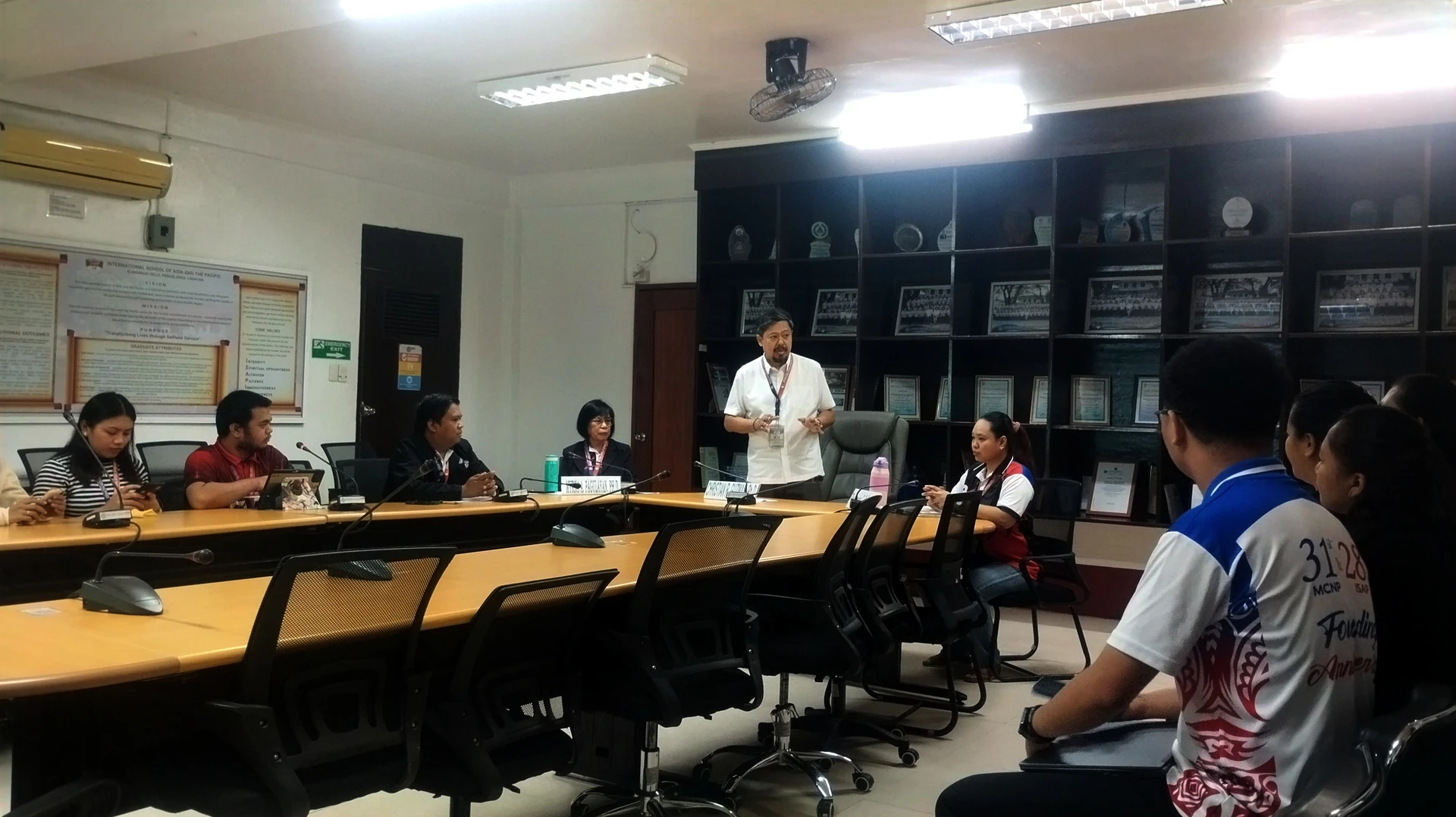
STRENGTHEN Performance

Strengthens institutional performance monitoring through transparent tracking of research metrics, announcements, and milestones.

Explore the Digital Platform

Explore the official MCNP–ISAP Research and Development Center website to access centralized publications, institutional agendas, research announcements, and digital resources:

https://mcnpisaprdc.org/
Institutional Note: The website's development and public availability are identifiable project outputs. Quantitative impact, user adoption, and long-term outcomes remain to be documented.
Published by the Research and Development Center (RDC) • Medical Colleges of Northern Philippines & International School of Asia and the Pacific
MCNP BSMLS Level 4 research final defense, October 12, 2026 – documentation screenshot 14
BSMLS Level 4 Research Final Defense · MCNP · October 12, 13 & 16, 2026

The Medical Colleges of Northern Philippines (MCNP) conducted the Bachelor of Science in Medical Laboratory Science (BSMLS) Level 4 Research Final Defense on October 12, 13, and 16, 2026, providing fourth-year students with an academic platform to present and defend their research studies as part of their scholarly development and professional preparation.

Held across three scheduled dates, the activity highlighted the importance of research in medical laboratory science education, particularly in developing students' ability to conduct systematic investigations, communicate research findings, and engage in evidence-based academic discussions.

The final defense provided an opportunity for BSMLS Level 4 students to present their research work for academic evaluation. As a culminating stage of the research process, the activity emphasized the significance of scientific inquiry, research methodology, data interpretation, and the communication of research outcomes.

Through this academic exercise, students had the opportunity to explain their research objectives, discuss their methodologies, and demonstrate their understanding of the scientific principles underlying their studies. The defense process also provided a setting for academic discussion and evaluation of research work.

The activity reflects the role of research in preparing future medical laboratory professionals to appreciate evidence-based approaches to laboratory science, healthcare, and scientific investigation. By engaging in research presentations and academic evaluation, students participated in scholarly activities relevant to their chosen profession.

The activity supports Sustainable Development Goal 4 – Quality Education by promoting student research engagement, critical thinking, and scientific communication. It also relates to SDG 3 – Good Health and Well-Being by connecting medical laboratory science education with diagnostic knowledge and healthcare-related inquiry.

The activity demonstrates WURI-relevant practices by integrating research-based learning, scientific problem-solving, and scholarly evaluation into medical laboratory science education. Through the final defense, students communicate research findings and examine issues relevant to laboratory science and healthcare.

The activity also aligns with the MCNP–ISAP RDC INNOVATES Research Agenda, particularly INSPIRE – Culture, Capability, and Engagement, by encouraging student participation in research and scientific communication; NURTURE – Ethics, Quality, and Accountability, through the emphasis on research evaluation and academic standards; and OPERATIONALIZE – Knowledge Utilization, Innovation, and Improvement, through the potential application of research findings to professional practice and institutional learning.

The BSMLS Level 4 Research Final Defense reflects MCNP's continuing commitment to strengthening academic research engagement and promoting the development of future medical laboratory professionals. The activity provided an opportunity for students to communicate their research work, participate in scholarly evaluation, and recognize the importance of research in addressing concerns relevant to laboratory science and healthcare.

As a culminating academic research activity, the final defense represents an important stage in students' scholarly preparation. The completed studies may provide opportunities for further dissemination, academic discussion, and possible application, subject to the nature of their findings and institutional research processes.

Through the BSMLS Level 4 Research Final Defense, MCNP continues to support a research-oriented learning environment that encourages scientific inquiry, academic engagement, and the development of future medical laboratory professionals equipped to appreciate the value of research in healthcare and laboratory science.

Research Alignment & Institutional Relevance

RDC SDG Alignment
SDG 4 – Quality Education

Supports research-oriented learning, scientific inquiry, critical thinking, and research communication among medical laboratory science students.

SDG 3 – Good Health and Well-Being

Reflects the relevance of medical laboratory science research to healthcare knowledge, diagnostic science, and health-related investigations.

WURI Best Practices

The activity demonstrates potential relevance to the World University Rankings for Innovation (WURI) through research-oriented education, scientific problem-solving, and the development of evidence-based research.

The final defense provides a platform for presenting scientific investigations that may contribute to laboratory science and healthcare knowledge.

RDC Agenda Alignment
INSPIRE – Culture, Capability, and Engagement

Encourages student research participation, scientific communication, and the development of research-related competencies.

NURTURE – Ethics, Quality, and Accountability

Supports academic evaluation and the promotion of quality-oriented research practices.

OPERATIONALIZE – Knowledge Utilization, Innovation, and Improvement

Highlights the potential for completed research studies to inform future scientific inquiry, laboratory practices, and institutional improvement.

Photographic Documentation

69 screenshots document the BSMLS Level 4 Research Final Defense on October 12, 13, and 16, 2026. Select an image to view it at full size.

MCNP BSMLS Level 4 research final defense, October 12, 2026 – documentation screenshot 1
October 12, 2026 · Screenshot 1
MCNP BSMLS Level 4 research final defense, October 12, 2026 – documentation screenshot 2
October 12, 2026 · Screenshot 2
MCNP BSMLS Level 4 research final defense, October 12, 2026 – documentation screenshot 3
October 12, 2026 · Screenshot 3
MCNP BSMLS Level 4 research final defense, October 12, 2026 – documentation screenshot 4
October 12, 2026 · Screenshot 4
MCNP BSMLS Level 4 research final defense, October 12, 2026 – documentation screenshot 5
October 12, 2026 · Screenshot 5
MCNP BSMLS Level 4 research final defense, October 12, 2026 – documentation screenshot 6
October 12, 2026 · Screenshot 6
MCNP BSMLS Level 4 research final defense, October 12, 2026 – documentation screenshot 7
October 12, 2026 · Screenshot 7
MCNP BSMLS Level 4 research final defense, October 12, 2026 – documentation screenshot 8
October 12, 2026 · Screenshot 8
MCNP BSMLS Level 4 research final defense, October 12, 2026 – documentation screenshot 9
October 12, 2026 · Screenshot 9
MCNP BSMLS Level 4 research final defense, October 12, 2026 – documentation screenshot 10
October 12, 2026 · Screenshot 10
MCNP BSMLS Level 4 research final defense, October 12, 2026 – documentation screenshot 11
October 12, 2026 · Screenshot 11
MCNP BSMLS Level 4 research final defense, October 12, 2026 – documentation screenshot 12
October 12, 2026 · Screenshot 12
MCNP BSMLS Level 4 research final defense, October 12, 2026 – documentation screenshot 13
October 12, 2026 · Screenshot 13
MCNP BSMLS Level 4 research final defense, October 12, 2026 – documentation screenshot 14
October 12, 2026 · Screenshot 14
MCNP BSMLS Level 4 research final defense, October 12, 2026 – documentation screenshot 15
October 12, 2026 · Screenshot 15
MCNP BSMLS Level 4 research final defense, October 12, 2026 – documentation screenshot 16
October 12, 2026 · Screenshot 16
MCNP BSMLS Level 4 research final defense, October 12, 2026 – documentation screenshot 17
October 12, 2026 · Screenshot 17
MCNP BSMLS Level 4 research final defense, October 12, 2026 – documentation screenshot 18
October 12, 2026 · Screenshot 18
MCNP BSMLS Level 4 research final defense, October 12, 2026 – documentation screenshot 19
October 12, 2026 · Screenshot 19
MCNP BSMLS Level 4 research final defense, October 12, 2026 – documentation screenshot 20
October 12, 2026 · Screenshot 20
MCNP BSMLS Level 4 research final defense, October 12, 2026 – documentation screenshot 21
October 12, 2026 · Screenshot 21
MCNP BSMLS Level 4 research final defense, October 12, 2026 – documentation screenshot 22
October 12, 2026 · Screenshot 22
MCNP BSMLS Level 4 research final defense, October 12, 2026 – documentation screenshot 23
October 12, 2026 · Screenshot 23
MCNP BSMLS Level 4 research final defense, October 12, 2026 – documentation screenshot 24
October 12, 2026 · Screenshot 24
MCNP BSMLS Level 4 research final defense, October 12, 2026 – documentation screenshot 25
October 12, 2026 · Screenshot 25
MCNP BSMLS Level 4 research final defense, October 12, 2026 – documentation screenshot 26
October 12, 2026 · Screenshot 26
MCNP BSMLS Level 4 research final defense, October 12, 2026 – documentation screenshot 27
October 12, 2026 · Screenshot 27
MCNP BSMLS Level 4 research final defense, October 12, 2026 – documentation screenshot 28
October 12, 2026 · Screenshot 28
MCNP BSMLS Level 4 research final defense, October 13, 2026 – documentation screenshot 29
October 13, 2026 · Screenshot 29
MCNP BSMLS Level 4 research final defense, October 13, 2026 – documentation screenshot 30
October 13, 2026 · Screenshot 30
MCNP BSMLS Level 4 research final defense, October 13, 2026 – documentation screenshot 31
October 13, 2026 · Screenshot 31
MCNP BSMLS Level 4 research final defense, October 13, 2026 – documentation screenshot 32
October 13, 2026 · Screenshot 32
MCNP BSMLS Level 4 research final defense, October 13, 2026 – documentation screenshot 33
October 13, 2026 · Screenshot 33
MCNP BSMLS Level 4 research final defense, October 13, 2026 – documentation screenshot 34
October 13, 2026 · Screenshot 34
MCNP BSMLS Level 4 research final defense, October 13, 2026 – documentation screenshot 35
October 13, 2026 · Screenshot 35
MCNP BSMLS Level 4 research final defense, October 13, 2026 – documentation screenshot 36
October 13, 2026 · Screenshot 36
MCNP BSMLS Level 4 research final defense, October 13, 2026 – documentation screenshot 37
October 13, 2026 · Screenshot 37
MCNP BSMLS Level 4 research final defense, October 13, 2026 – documentation screenshot 38
October 13, 2026 · Screenshot 38
MCNP BSMLS Level 4 research final defense, October 13, 2026 – documentation screenshot 39
October 13, 2026 · Screenshot 39
MCNP BSMLS Level 4 research final defense, October 13, 2026 – documentation screenshot 40
October 13, 2026 · Screenshot 40
MCNP BSMLS Level 4 research final defense, October 13, 2026 – documentation screenshot 41
October 13, 2026 · Screenshot 41
MCNP BSMLS Level 4 research final defense, October 13, 2026 – documentation screenshot 42
October 13, 2026 · Screenshot 42
MCNP BSMLS Level 4 research final defense, October 13, 2026 – documentation screenshot 43
October 13, 2026 · Screenshot 43
MCNP BSMLS Level 4 research final defense, October 13, 2026 – documentation screenshot 44
October 13, 2026 · Screenshot 44
MCNP BSMLS Level 4 research final defense, October 13, 2026 – documentation screenshot 45
October 13, 2026 · Screenshot 45
MCNP BSMLS Level 4 research final defense, October 13, 2026 – documentation screenshot 46
October 13, 2026 · Screenshot 46
MCNP BSMLS Level 4 research final defense, October 13, 2026 – documentation screenshot 47
October 13, 2026 · Screenshot 47
MCNP BSMLS Level 4 research final defense, October 13, 2026 – documentation screenshot 48
October 13, 2026 · Screenshot 48
MCNP BSMLS Level 4 research final defense, October 13, 2026 – documentation screenshot 49
October 13, 2026 · Screenshot 49
MCNP BSMLS Level 4 research final defense, October 13, 2026 – documentation screenshot 50
October 13, 2026 · Screenshot 50
MCNP BSMLS Level 4 research final defense, October 13, 2026 – documentation screenshot 51
October 13, 2026 · Screenshot 51
MCNP BSMLS Level 4 research final defense, October 13, 2026 – documentation screenshot 52
October 13, 2026 · Screenshot 52
MCNP BSMLS Level 4 research final defense, October 13, 2026 – documentation screenshot 53
October 13, 2026 · Screenshot 53
MCNP BSMLS Level 4 research final defense, October 13, 2026 – documentation screenshot 54
October 13, 2026 · Screenshot 54
MCNP BSMLS Level 4 research final defense, October 13, 2026 – documentation screenshot 55
October 13, 2026 · Screenshot 55
MCNP BSMLS Level 4 research final defense, October 13, 2026 – documentation screenshot 56
October 13, 2026 · Screenshot 56
MCNP BSMLS Level 4 research final defense, October 13, 2026 – documentation screenshot 57
October 13, 2026 · Screenshot 57
MCNP BSMLS Level 4 research final defense, October 13, 2026 – documentation screenshot 58
October 13, 2026 · Screenshot 58
MCNP BSMLS Level 4 research final defense, October 13, 2026 – documentation screenshot 59
October 13, 2026 · Screenshot 59
MCNP BSMLS Level 4 research final defense, October 16, 2026 – documentation screenshot 60
October 16, 2026 · Screenshot 60
MCNP BSMLS Level 4 research final defense, October 16, 2026 – documentation screenshot 61
October 16, 2026 · Screenshot 61
MCNP BSMLS Level 4 research final defense, October 16, 2026 – documentation screenshot 62
October 16, 2026 · Screenshot 62
MCNP BSMLS Level 4 research final defense, October 16, 2026 – documentation screenshot 63
October 16, 2026 · Screenshot 63
MCNP BSMLS Level 4 research final defense, October 16, 2026 – documentation screenshot 64
October 16, 2026 · Screenshot 64
MCNP BSMLS Level 4 research final defense, October 16, 2026 – documentation screenshot 65
October 16, 2026 · Screenshot 65
MCNP BSMLS Level 4 research final defense, October 16, 2026 – documentation screenshot 66
October 16, 2026 · Screenshot 66
MCNP BSMLS Level 4 research final defense, October 16, 2026 – documentation screenshot 67
October 16, 2026 · Screenshot 67
MCNP BSMLS Level 4 research final defense, October 16, 2026 – documentation screenshot 68
October 16, 2026 · Screenshot 68
MCNP BSMLS Level 4 research final defense, October 16, 2026 – documentation screenshot 69
October 16, 2026 · Screenshot 69
MCNP–ISAP 37th Statistics Month Provincial Delegation at Pulsar Hotel, Tuguegarao City
37th National Statistics Month: MCNP–ISAP student champions and institutional statistics coaches at the Provincial Competitions (Pulsar Hotel, Tuguegarao City)

The Medical Colleges of Northern Philippines (MCNP) and the International School of Asia and the Pacific (ISAP) brought statistics beyond the classroom through a month-long celebration that combined training, creative application, competition, and inter-school engagement as part of the 37th Statistics Month Celebration.

Led by the Research and Development Center (RDC), the series of activities engaged all 17 academic departments of MCNP–ISAP and culminated in participation in provincial-level competitions involving 17 schools across Cagayan. The initiative aimed to strengthen students’ statistical competencies, deepen their appreciation of data, and provide practical opportunities to apply analytical and interpretive skills.

The celebration opened on September 15 with a Webinar on Infographics and Data Interpretation conducted via Zoom in collaboration with the College of Information Technology and Engineering. Students enrolled in statistics classes participated in the session, which served as preparation for the development of infographics from September 19 to 22. The activity emphasized how data can be transformed into clear, meaningful, and visually engaging information.

On September 21, students from different academic programs competed in the Institutional Quiz Bee at Amphitheatre 4. For ISAP, Fritz Geosh M. Apilado of BS Information Technology emerged as Champion, followed by Jaymart M. Gammad of BS Computer Engineering as 1st Runner-Up and Rhealyn B. Bitagon of BS Tourism Management as 2nd Runner-Up. For MCNP, Anjanet D. Tabunan of BS Nursing claimed the championship, while Marc Rodney G. San Pedro of BS Medical Laboratory Science and Chloe Rhayne M. Santos of BS Radiologic Technology placed first and second runners-up, respectively.

The celebration continued on September 23 with the Poster-Making Contest at Amphitheatre 3, where students demonstrated their ability to communicate statistical concepts through creative visual expression. Rhed Dalangin of BS Radiologic Technology won first place for MCNP, followed by Jireh Jaf Villanueva of BS Nursing and Ma. Jesusa Batacan of BS Pharmacy. For ISAP, Vince Ryan O. Obispado of BS Customs Administration took first place, with Mitz Invierno of BS Accountancy and Lyca Jeanne O. Paycao of BS Information Technology completing the top three.

Students were further challenged to interpret and communicate information during the Data Interpretation Using Infographics activity held on September 25 at the Instructional Media Center. Levi Mae Afali of BS Nursing emerged as Champion, while Mark Anthony Balbutin of BSSW and Cadiente Rolando of BSAC were named 1st and 2nd runners-up, respectively.

The institutional winners later represented MCNP–ISAP in the Provincial Quiz Bee and Poster-Making activities held on October 5 at Pulsar Hotel in Buntun, Tuguegarao City. The event brought together participants from 17 schools in Cagayan and provided students with a wider venue to test their competencies and engage with peers from other institutions. The MCNP–ISAP participants were coached by institutional statisticians Ms. Tshaine Anne Labang and Ms. Mary Jane Agabin.

Beyond competition, the Statistics Month celebration underscored the importance of statistical literacy in research, academic work, professional practice, and evidence-based decision-making. By combining lectures, infographic development, data interpretation, and competitive activities, the initiative provided students with experiential learning opportunities that required them to analyze information, communicate findings, and apply statistical knowledge in practical contexts.

The initiative directly supports Sustainable Development Goal 4 – Quality Education by strengthening students’ analytical and data literacy competencies through meaningful learning experiences. It also reflects SDG 17 – Partnerships for the Goals through the institution’s engagement with the Philippine Statistics Authority, while its emphasis on data interpretation, visualization, and applied quantitative thinking relates to SDG 9 – Industry, Innovation and Infrastructure.

The celebration also demonstrates WURI-relevant practices by moving statistical learning from theory to application. Its institution-wide participation, practical learning activities, partnership engagement, measurable reach, and potential for annual implementation make the initiative replicable, scalable, and sustainable.

The celebration likewise aligns with key directions of the RDC’s INNOVATES agenda. It supports INSPIRE Research Culture and Capability by strengthening students’ statistical literacy, analytical thinking, and research-related competencies; NAVIGATE Digital Innovation and Infrastructure through the use of infographics, data visualization, and digital presentation of information; OPERATIONALIZE Research Utilization and Innovation by translating statistical knowledge into practical applications through quiz bees, poster-making, infographic development, and data interpretation; EXPAND Partnerships and Global Research through collaboration with the Philippine Statistics Authority and participation in provincial-level activities involving other schools in Cagayan; and STRENGTHEN Education and Institutional Performance by integrating experiential, competitive, and application-based learning across all 17 academic departments.

Through the 37th Statistics Month Celebration, MCNP–ISAP continues to foster a culture where data are not simply computed, but understood, communicated, and used meaningfully—equipping students with competencies increasingly essential in research, innovation, and informed decision-making.

Institutional Competitions & Awardees

Institutional Quiz Bee
Sep 21 • Amphitheatre 4
ISAP Awardees
  • Champion: Fritz Geosh M. Apilado (BS Information Technology)
  • 1st Runner-Up: Jaymart M. Gammad (BS Computer Engineering)
  • 2nd Runner-Up: Rhealyn B. Bitagon (BS Tourism Management)
MCNP Awardees
  • Champion: Anjanet D. Tabunan (BS Nursing)
  • 1st Runner-Up: Marc Rodney G. San Pedro (BS Medical Laboratory Science)
  • 2nd Runner-Up: Chloe Rhayne M. Santos (BS Radiologic Technology)
Poster-Making Contest
Sep 23 • Amphitheatre 3
MCNP Awardees
  • 1st Place: Rhed Dalangin (BS Radiologic Technology)
  • 2nd Place: Jireh Jaf Villanueva (BS Nursing)
  • 3rd Place: Ma. Jesusa Batacan (BS Pharmacy)
ISAP Awardees
  • 1st Place: Vince Ryan O. Obispado (BS Customs Administration)
  • 2nd Place: Mitz Invierno (BS Accountancy)
  • 3rd Place: Lyca Jeanne O. Paycao (BS Information Technology)
Data Interpretation Using Infographics
Sep 25 • Instructional Media Center
  • Champion: Levi Mae Afali (BS Nursing)
  • 1st Runner-Up: Mark Anthony Balbutin (Bachelor of Science in Social Work - BSSW)
  • 2nd Runner-Up: Cadiente Rolando (BS Accountancy - BSAC)

Student entrants demonstrated outstanding capability in translating complex data indicators into easily interpretable visual narratives.

RDC SDG Alignment

UN Sustainable Development Goals
  • SDG 4SDG 4 (Quality Education): Strengthens students’ analytical and data literacy competencies through meaningful learning experiences.
  • SDG 9SDG 9 (Industry, Innovation & Infrastructure): Promotes applied quantitative thinking, data visualization, and technological innovation.
  • SDG 17SDG 17 (Partnerships for the Goals): Institutional engagement with the Philippine Statistics Authority (PSA) and regional consortium colleges.
WURI Best Practices

Demonstrates WURI-relevant practices by moving statistical learning from theory to direct application. Its institution-wide participation across 17 departments, practical learning activities, partnership engagement, measurable reach, and potential for annual implementation make the initiative replicable, scalable, and sustainable.

RDC Agenda Alignment
INSPIRE Research Culture

Strengthens statistical literacy, analytical thinking, and foundational research competencies.

NAVIGATE Digital Innovation

Employs infographics, data visualization, and modern digital presentation of information.

OPERATIONALIZE Utilization

Translates statistical knowledge into practical applications through quiz bees, poster-making, and data interpretation.

EXPAND Partnerships
EXPAND Partnerships

Fosters collaboration with the Philippine Statistics Authority and 17 provincial schools in Cagayan.

STRENGTHEN Performance

Integrates experiential, competitive, and application-based learning across all 17 academic departments.

Official Coverage & Documentation Links

Explore original documentation albums, event announcements, and session materials on Facebook:

Webinar on Infographics & Data Interpretation Institutional Statistics Quiz Bee Poster Making Contest — Part 1 Poster Making Contest — Part 2 Data Interpretation Using Infographics
Published by the Research and Development Center (RDC) • Medical Colleges of Northern Philippines & International School of Asia and the Pacific
ISAP High School Research Defense Panel and Student Presentation
🎓 ISAP High School Research Defense: Students presenting and defending their chosen research topics before the evaluation panel

The International School of Asia and the Pacific (ISAP) provided high school students with an opportunity to demonstrate their research knowledge and develop essential academic competencies through its High School Research Defense, organized with the support of the Research and Development Center (RDC).

The activity gave students a platform to present and defend their research topics before a panel, explain their ideas, and receive feedback to help improve their work. Through this academic exercise, students were encouraged to engage critically with their research and communicate their ideas clearly and confidently.

The research defense served as a practical learning experience that allowed students to demonstrate their understanding of their chosen topics. By responding to questions and considering the panel’s feedback, students had opportunities to strengthen their critical thinking, communication, and research skills.

Beyond the presentation of research topics, the activity highlighted the importance of research as part of students’ academic development. The defense process encouraged learners to examine their ideas, explain their reasoning, and consider recommendations for improving their research.

The initiative directly supports Sustainable Development Goal 4 – Quality Education by providing students with opportunities to develop research-related competencies, critical thinking, and effective communication through an applied learning experience.

The activity also demonstrates WURI-relevant educational practices by incorporating research presentation, panel engagement, and feedback into student learning. These practices provide a foundation for experiential and application-based education. Further documentation of student participation, research outputs, and subsequent improvements would help establish measurable outcomes and assess the activity’s potential for sustained implementation.

RDC SDG Alignment

UN Sustainable Development Goals
  • SDG 4 SDG 4 – Quality Education: Supports students’ academic development by providing opportunities to demonstrate research knowledge, strengthen critical thinking, and develop communication and research skills through a structured defense activity.
WURI Best Practices

The ISAP High School Research Defense demonstrates an application-based approach to learning by giving students opportunities to present and defend their research topics before a panel. The process combines knowledge demonstration, academic discussion, and feedback to support student development.

RDC Agenda Alignment
INSPIRE
INSPIRE: Culture, Capability, & Engagement

Strengthens students’ research capabilities, critical thinking, and communication through opportunities to present and defend research topics and engage with panel feedback.

NURTURE
NURTURE: Ethics, Quality, & Accountability

Encourages academic responsibility by requiring students to explain their research ideas, respond to questions, and consider recommendations for improving their work.

OPERATIONALIZE
OPERATIONALIZE: Knowledge Utilization, Innovation, & Improvement

Provides a basis for research improvement by allowing students to receive feedback and refine their research. Evidence of subsequent revisions or practical application would help establish the activity’s longer-term contribution.

STRENGTHEN
STRENGTHEN: Education & Institutional Performance

Supports academic development by integrating research presentation, evaluation, and feedback into the students’ learning experience.

Sustainability and Future Impact

The ISAP High School Research Defense provides a foundation for strengthening research engagement among students. However, the available information does not confirm whether the activity will continue in future academic periods or establish measurable long-term outcomes.

Documenting student participation, panel feedback, research revisions, and subsequent research activities would help the institution assess the effectiveness of the defense and identify opportunities for continuous improvement.

Through this initiative, ISAP reinforces the value of research as a learning process—encouraging students to think critically, communicate ideas effectively, and develop the foundational skills needed for further academic inquiry.

Photographic Documentation • High School Research Defense

ISAP High School Defense Student Presentation
Research Defense Evaluation Panel and Deliberation
Student Responding to Panel Inquiries
Constructive Feedback and Research Recommendations
High School Research Defense Session
Student Researchers with Defense Panel
Published by the Research and Development Center (RDC) • International School of Asia and the Pacific • Innovation Beyond Boundaries
BS Tourism Management Research Proposal Defense and SDG Research Snap
✈️ BS Tourism Management Research Proposal Defense: Students defending sustainable tourism proposals before the academic panel (October 12–13, 2026)

The Medical Colleges of Northern Philippines (MCNP) and the International School of Asia and the Pacific (ISAP), through the Research and Development Center (RDC), supported the Research Proposal Defense of Bachelor of Science in Tourism Management students on October 12–13, 2026, providing an opportunity for students to present their proposed studies and strengthen their research capabilities.

The activity allowed students to present their proposed research, receive feedback from the panel, and consider recommendations that could help improve their studies. Through the proposal defense, students were encouraged to communicate their research ideas and develop proposals that are relevant and meaningful.

The activity highlighted the importance of research in higher education, particularly in developing students’ academic competencies and encouraging systematic inquiry. For Tourism Management students, the proposal defense provided an academic setting in which they could explain their proposed studies, respond to panel feedback, and strengthen their preparation for further research work.

The initiative also reflects the role of MCNP, ISAP, and the RDC in supporting research-oriented education. By providing students with a platform for research presentation and feedback, the institutions reinforce the importance of developing research capabilities as part of students’ academic preparation.

The activity directly supports Sustainable Development Goal 4 – Quality Education through its contribution to student learning and research skills development. The activity checklist also identifies SDG 9 – Industry, Innovation and Infrastructure and SDG 17 – Partnerships for the Goals as possible areas of alignment. However, further details about the proposed research topics, practical applications, or specific partnership arrangements would be needed to substantiate those additional alignments.

The proposal defense demonstrates WURI-relevant educational practices by connecting research preparation with practical learning. Students were given opportunities to present their ideas, receive feedback, and consider improvements to their proposed studies. Although specific participation figures, evaluation results, and documented research outcomes were not provided, the activity establishes a basis for assessing student research development through future documentation.

RDC SDG Alignment

UN Sustainable Development Goals
  • SDG 4 SDG 4 – Quality Education: Supports students’ research skills and academic development through proposal presentation, panel feedback, and opportunities to refine their proposed studies.
  • SDG 9 SDG 9 – Industry, Innovation & Infrastructure: Identified as an associated SDG; further documentation on sustainable hospitality, regional ecotourism models, and innovation will solidify alignment.
  • SDG 17 SDG 17 – Partnerships for the Goals: Identified as an associated SDG with potential multi-stakeholder and industry linkages across Cagayan Valley tourism networks.
WURI Best Practices

The BS Tourism Management Research Proposal Defense demonstrates an application-based approach to higher education by giving students opportunities to present proposed research and receive panel feedback. The activity supports research communication, academic inquiry, and the development of student research capabilities.

Its WURI relevance lies in integrating practical research preparation into the academic experience. To demonstrate measurable impact, future documentation could include the number of participating students, panel evaluation results, revisions to proposals, and completed research outputs. Evidence of recurring implementation would also help establish the activity’s sustainability and potential for replication.
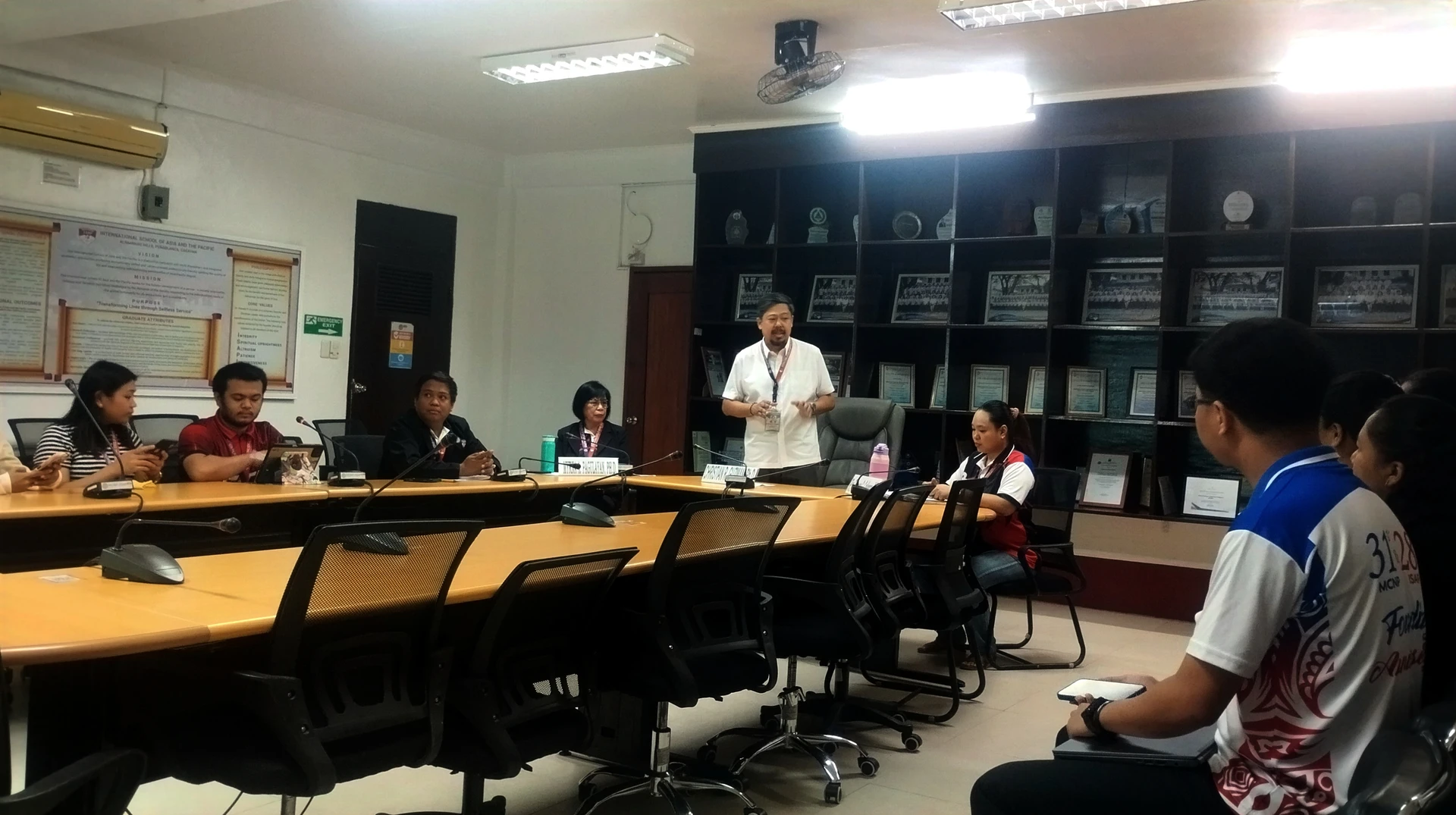
RDC Agenda Alignment
INSPIRE
INSPIRE: Culture, Capability, & Engagement

Strengthens students’ research capabilities and academic engagement through opportunities to present proposed studies, communicate research ideas, and receive feedback from a panel.

NURTURE
NURTURE: Ethics, Quality, & Accountability

Encourages students to consider panel recommendations and improve their proposals, supporting attention to research quality and responsibility throughout the proposal-development process.

OPERATIONALIZE
OPERATIONALIZE: Knowledge Utilization, Innovation, & Improvement

Provides an opportunity for students to refine their proposed studies using panel feedback. Documentation of subsequent revisions, completed research, or practical applications will demonstrate further contributions to knowledge utilization.

STRENGTHEN
STRENGTHEN: Education & Institutional Performance

Supports academic development by providing Tourism Management students with a structured opportunity to present research proposals, communicate ideas, and improve their research preparation.

Sustainability and Future Impact

The Research Proposal Defense provides a foundation for developing student research capabilities within the BS Tourism Management program. The available information does not confirm whether the activity will continue in future academic periods, and specific long-term outcomes have not been documented.

Recording participation figures, panel evaluations, proposal revisions, and subsequent research outputs would help MCNP–ISAP assess the activity’s effectiveness and identify opportunities for continuous improvement.

Through the Research Proposal Defense, MCNP–ISAP reinforces the importance of research in higher education and provides Tourism Management students with opportunities to strengthen the academic skills needed to develop relevant and meaningful studies.

Photographic Documentation • BS Tourism Proposal Defense & SDG Research Snap

BS Tourism Management Research Presentation and SDG Research Snap
Students Participating in Proposal Defense Panel Evaluation
Tourism Management Research Proposal Presentation
Student Researchers Defending Proposed Study
Panel Review and Constructive Feedback for Tourism Proposals
Students Answering Inquiries During Research Defense
Tourism Research Proposal Defense Group Documentation
Proposal Defense Deliberation and Panel Review
Tourism Proposal Presentation and SDG Research Snap
Panel of Evaluators Reviewing Research Methodology
Research Proposal Evaluation and Defense Session
BS Tourism Management Student Researchers with Panelists
Published by the Research and Development Center (RDC) • Medical Colleges of Northern Philippines & International School of Asia and the Pacific • Innovation Beyond Boundaries
BSEd and BPEd Students Strengthen Research Skills Through Proposal Defense
🎓 BSEd & BPEd Research Proposal Defense: Teacher education and physical education student researchers defending proposed studies before the academic evaluation panel (October 14, 2026)

The Medical Colleges of Northern Philippines (MCNP) and the International School of Asia and the Pacific (ISAP), through the Research and Development Center (RDC), supported the Research Proposal Defense of Bachelor of Secondary Education (BSEd) and Bachelor of Physical Education (BPEd) students, providing an academic platform for students to present their proposed studies and strengthen their research capabilities.

The activity gave students the opportunity to present their research proposals, receive feedback from the panel, and improve their understanding of developing relevant and impactful research. Through the defense process, students were encouraged to communicate their research ideas, explain their proposed studies, and consider recommendations that could help refine their work.

The proposal defense highlighted the importance of research in teacher education and physical education programs. By engaging in research presentation and panel feedback, students gained opportunities to practice systematic inquiry, communicate academic ideas, and develop competencies that support their continued academic growth.

Beyond the presentation of proposed studies, the activity reflects MCNP–ISAP’s commitment to research-oriented education. The involvement of the RDC underscores the importance of institutional support in creating opportunities for students to develop research skills and strengthen their capacity to undertake meaningful academic inquiry.

The initiative directly supports Sustainable Development Goal 4 – Quality Education by promoting research-related learning, critical thinking, and academic development. Through the proposal defense, students were given an opportunity to apply their knowledge and develop skills relevant to their educational programs.

The activity also demonstrates WURI-relevant educational practices by bringing research presentation and panel feedback into the student learning experience. Its emphasis on applied learning and research capability-building offers a foundation for continued development. Documentation of participant numbers, panel evaluations, proposal revisions, and subsequent research outputs would help establish measurable impact and assess opportunities for replication.

RDC SDG Alignment

Through institutional support for teacher education and physical education research defenses, the RDC directly advances global sustainable development objectives:

SDG 4: Quality Education

Strengthens students’ research-related competencies by providing opportunities to present proposed studies, communicate academic ideas, receive panel feedback, and develop skills that support continued learning.

WURI Best Practices

The BSEd and BPEd Research Proposal Defense demonstrates an application-based approach to education by allowing students to present their proposed research and engage with panel feedback. This process supports the development of research communication, critical thinking, and academic inquiry.

Its WURI relevance lies in connecting research preparation with practical student learning. While the activity provides a foundation for replicable research-oriented education, participant data, evaluation results, and documented research outputs would be needed to demonstrate measurable outcomes and long-term institutional impact.

RDC Agenda Alignment

INSPIRE
INSPIRE: Culture, Capability, and Engagement

Strengthens students’ research capabilities and academic engagement by providing opportunities to present proposed studies, communicate research ideas, and receive feedback from a panel.

NURTURE
NURTURE: Ethics, Quality, and Accountability

Encourages students to explain their research proposals, consider panel recommendations, and take responsibility for improving the quality and relevance of their proposed studies.

OPERATIONALIZE
OPERATIONALIZE: Knowledge Utilization, Innovation, and Improvement

Creates an opportunity for students to refine their proposed research based on panel feedback. Evidence of proposal revisions, completed studies, or practical application would help demonstrate the activity’s contribution to research utilization and improvement.

STRENGTHEN
STRENGTHEN: Education and Institutional Performance

Supports educational development by integrating research proposal presentation and feedback into students’ academic experience, while reinforcing institutional efforts to promote research-oriented learning.

Sustainability and Future Impact

The Research Proposal Defense provides a foundation for continued development of student research capabilities in the BSEd and BPEd programs. However, the available information does not confirm whether the activity will continue in future academic periods or establish measurable long-term outcomes.

Future documentation of student participation, panel evaluations, proposal revisions, and completed research outputs would help assess the activity’s effectiveness and identify opportunities for continuous improvement.

Through this initiative, MCNP–ISAP reinforces the role of research in higher education and supports students in developing the skills needed to pursue relevant, well-developed, and meaningful academic studies.

Photographic Documentation • BSEd and BPEd Research Proposal Defense

Teacher Education Students in Research Proposal Presentation
Physical Education Researchers Defending Proposal
Evaluation Panel Reviewing Research Methodology and Framework
Constructive Recommendations and Panel Inquiries
Student Researchers Explaining Study Objectives
BSEd and BPEd Student Researchers with Faculty Evaluation Panel
Published by the Research and Development Center (RDC) • Medical Colleges of Northern Philippines & International School of Asia and the Pacific • Innovation Beyond Boundaries
Commission on Population and Development Region II Research Institutions Meeting
🤝 CPD Region II Research Institutions Meeting: Institutional delegates convening at the CPD Region II Training Center in Tuguegarao City on the proposed 2027 youth cohabitation study (October 20, 2026)

October 20, 2026 | Tuguegarao City, Cagayan

The Commission on Population and Development (CPD) Region II convened a meeting with research institutions on October 20, 2026, in connection with the proposed 2027 research on cohabitation among the youth in Cagayan Valley.

The meeting was scheduled from 1:30 PM to 4:00 PM at the CPD Region II Training Center along Bagay Road, San Gabriel, Tuguegarao City. The initiative highlights the importance of research collaboration in examining social and population-related concerns affecting young people in the region.

The proposed research topic, which focuses on cohabitation among the youth in Cagayan Valley, presents an opportunity to generate evidence that may contribute to a better understanding of youth experiences and related social concerns. Research on such topics can help inform discussions and future initiatives when supported by reliable data and appropriate analysis.

For MCNP–ISAP and its Research and Development Center (RDC), engagement in research-related initiatives may provide opportunities to support research collaboration and contribute to the development of evidence-informed approaches to regional concerns. However, the available documentation does not yet confirm the specific participation or commitments of MCNP–ISAP in this meeting.

RDC SDG Alignment

The multi-institutional research consultation aligns with international sustainable development targets:

SDG 17: Partnerships for the Goals

The meeting’s focus on bringing research institutions together is relevant to research collaboration and partnership-building. Confirmation of participating institutions and agreed collaborative activities would help document the extent of this alignment.

SDG 3: Good Health and Well-Being

This may be relevant if the proposed research examines health, well-being, or related outcomes among young people. The specific research objectives and methodology would need to be reviewed before establishing this alignment.

WURI Best Practices

The meeting is potentially relevant to WURI through research collaboration and the development of evidence that may inform responses to regional social concerns. Its institutional significance will depend on the confirmed participation of MCNP–ISAP, the collaborative activities undertaken, and any resulting research outputs or applications.

RDC Agenda Alignment

EXPAND
EXPAND: Partnerships, Networks, and Global Engagement

The meeting’s research-institution focus is relevant to building partnerships and research networks. Confirmed participation and documented agreements would help establish MCNP–ISAP’s specific contribution.

INSPIRE
INSPIRE: Culture, Capability, and Engagement

The proposed research topic presents a potential opportunity to encourage research engagement and strengthen institutional interest in population and youth-related studies.

OPERATIONALIZE
OPERATIONALIZE: Knowledge Utilization, Innovation, and Improvement

If the proposed research generates findings that are subsequently used in planning, programs, or decision-making, it may contribute to knowledge utilization and evidence-informed improvement. Such outcomes have not yet been confirmed.

TRANSFORM
TRANSFORM: Community Engagement and Social Impact

Research on youth-related social concerns may provide a basis for understanding community needs and informing future initiatives. The actual community impact will depend on the study’s findings and how they are used.

Sustainability and Future Impact

The proposed 2027 research on cohabitation among the youth in Cagayan Valley may offer a foundation for continued research engagement and collaboration among institutions. At this stage, the available information does not establish the study’s final methodology, participating research institutions, confirmed outputs, or implementation plans.

Future documentation of research objectives, institutional roles, findings, and the use of results would help assess the initiative’s contribution to regional research and its potential for sustained impact.

Through research collaboration with regional government agencies and partner higher education institutions, MCNP–ISAP remains committed to supporting studies that address real community challenges across Cagayan Valley.

Photographic Documentation • CPD Region II Research Consultation

Research Institutions Meeting at CPD Region II Training Center
CPD Region II Research Proposal Consultation and Discussion
Regional Research Institutional Representatives in Tuguegarao City
Published by the Research and Development Center (RDC) • Medical Colleges of Northern Philippines & International School of Asia and the Pacific • Innovation Beyond Boundaries
Project RELIEF: Let It Out, Lift It Up! Flagship Research Utilization Program
Oct 03, 2026
Research Utilization

Project RELIEF

EVENT ISAP CoCJE • Project RELIEF

PROJECT RELIEF: Let It Out, Lift It Up! — Student Resilience & Mental Wellness Program

The College of Criminal Justice Education (CoCJE), in collaboration with the Research and Development Center (RDC) and the Office of Guidance Services, concluded Project RELIEF: a structured three-session research-utilization initiative that transformed student wellness concerns into actionable strategies for emotional awareness, cognitive reframing, and self-care.

Read full story

Conducted on September 12 and 26, and October 3, 2026, at ISAP AVR 1, the program engaged approximately 56 Level 3 and Level 4 BS Criminology students in a progressive mental wellness journey built around six core actions: Recognize Emotions, Express Feelings, Let Go of Stress, Improve Mindset, Engage in Self-Care, and Find Inner Peace.

The initiative featured resource speakers Ms. Jeline Flor T. Eugenio, RPm, and Mr. Jhony C. Benedicta, MAGC (Head of Guidance Services), along with opening and closing guidance from RDC Director Dr. Ryan C. Fontanilla and CoCJE Dean Atty. Karenina A. Turingan. Across all three sessions, the program achieved an outstanding overall evaluation score of 3.82 out of 4.00, peaking at 3.911 for long-term behavioral commitment to self-care.

This program directly advances SDG 3 (Good Health and Well-Being), SDG 4 (Quality Education), and SDG 16 (Peace, Justice and Strong Institutions), anchored on the RDC Agenda pillar VALUE: Health, Safety, and Well-Being.

📖 Read Certified Utilization Article

Statistical Month 2026: Data Interpretation and Infographics Activity Winners and Participants - Sep 25, 2026
Sep 25, 2026
Statistical Month 2026

Data Infographics

EVENT Statistical Month 2026

Turning Data into Meaningful Stories

The MCNP–ISAP Research and Development Center conducted the Statistical Month 2026: Data Interpretation and Infographics Activity on September 25, 2026. The activity challenged students to analyze information, draw meaningful conclusions, and communicate data through clear and creative visual presentations.

Read full story

Congratulations to the winners of the Data Interpretation Competition:
• Champion: Levi Mae Afali — BSN
• 1st Runner-Up: Mark Anthony Balbutin — BSSW
• 2nd Runner-Up: Cadiente Rolando — BSAC

The activity supports SDG 4: Quality Education through statistical literacy; SDG 9: Industry, Innovation and Infrastructure through creative data visualization; SDG 16: Peace, Justice and Strong Institutions through evidence-based decision-making; and SDG 17: Partnerships for the Goals through collaborative learning.

Congratulations to all participants for transforming numbers into knowledge and insights into meaningful action!

Innovation Beyond Boundaries.

Winning Entries Showcase: MCNP-ISAP Statistical Month Poster-Making Contest - Sep 24, 2026
Sep 24, 2026
Statistical Month 2026

Visual Analytics

EVENT Poster Art Showcase

When Data Finds Its Voice Through Art

The Sep 24 showcase featured winning entries from the Sep 23 MCNP–ISAP Statistical Month Poster-Making Contest. Through color and creativity, students transformed statistical concepts into meaningful visual stories of education, health, technology, and development.

Read full story

The activity advances SDG 4: Quality Education by strengthening statistical literacy and creative thinking, and SDG 9: Industry, Innovation and Infrastructure by inspiring students to use data and innovation in addressing real-world concerns.

Congratulations to the talented artists of MCNP and ISAP for showing us that every number can tell a story and every insight can create an impact!

Innovation Beyond Boundaries.

Contestants collaborating and drafting poster designs - Sep 23, 2026
Sep 23, 2026
Statistical Month 2026

Poster Making

EVENT Institutional Competition

Where Creativity Meets Statistics

The MCNP–ISAP Research and Development Center conducted the Statistical Month 2026 Poster-Making Activity on September 23, 2026. Participants transformed statistical concepts into creative visual stories that highlighted the value of data in research and informed decision-making.

Read full story

Congratulations to our winners!

MCNP Winners:
• 1st Place: Rhed Dalangin — BSRT
• 2nd Place: Jireh Jaf Villanueva — BSN
• 3rd Place: Ma. Jesusa Batacan — BS Pharmacy

ISAP Winners:
• 1st Place: Vince Ryan O. Obispado — BSCA
• 2nd Place: Mitz Invierno — BSAC
• 3rd Place: Lyca Jeanne O. Paycao — BSIT

The activity supports SDG 4: Quality Education by strengthening statistical literacy, SDG 9: Industry, Innovation and Infrastructure by encouraging data-driven creativity, and SDG 17: Partnerships for the Goals through institutional participation and collaboration.

Innovation Beyond Boundaries.

BS Tourism Management Research Proposal Defense and SDG Research Snap - Sep 22–23, 2026
Sep 22–23, 2026
BS Tourism Management

Proposal Defense

EVENT BS Tourism Management

BS Tourism Management Students Connect Research Proposals with Global Goals

BS Tourism Management students successfully presented and defended their research proposals on September 22–23, 2026, demonstrating their developing competence in research, critical inquiry, and evidence-based problem-solving. As part of the activity, the student researchers participated in the SDG Research Snap, an initiative under SDG SPOT @ RDC: Research for the Goals.

Read full story

Each group identified the Sustainable Development Goals addressed by its proposed study and explained how the research could contribute to meaningful change in the tourism sector and the wider community.

The activity supports SDG 4: Quality Education by strengthening students’ research knowledge and skills; SDG 9: Industry, Innovation and Infrastructure by encouraging innovative and research-based tourism solutions; SDG 16: Peace, Justice and Strong Institutions by promoting ethical, transparent, and responsible research practices; and SDG 17: Partnerships for the Goals by encouraging collaboration among students, faculty researchers, panel members, and the Research and Development Center.

Through the integration of the SDGs into the research process, students are encouraged to view research as more than an academic requirement. Every study has the potential to respond to real needs, support sustainable development, and create a lasting impact.

Every Study. A Goal. An Impact.

MCNP-ISAP Statistical Month Institutional Quiz Bee - Sep 21, 2026
Sep 21, 2026
Statistical Month 2026

Institutional Quiz Bee

EVENT Statistical Month Quiz Bee

Numbers, Knowledge, and a Winning Spirit!

The MCNP–ISAP Statistical Month Institutional Quiz Bee brought students together on September 21, 2026, to test their knowledge of statistics and celebrate the role of data in research and decision-making. Congratulations to all participants and to our winners!

Read full story

ISAP Winners:
• Champion: Fritz Geosh M. Apilado — BS Information Technology
• 1st Runner-Up: Jaymart M. Gammad — BS Computer Engineering
• 2nd Runner-Up: Rhealyn B. Bitagon — BS Tourism Management

MCNP Winners:
• Champion: Anjanet D. Tabunan — BS Nursing
• 1st Runner-Up: Marc Rodney G. San Pedro — BS Medical Laboratory Science
• 2nd Runner-Up: Chloe Rhayne M. Santos — BS Radiologic Technology

The activity supports SDG 4: Quality Education by strengthening statistical literacy, SDG 9: Industry, Innovation and Infrastructure by building skills for research and innovation, and SDG 17: Partnerships for the Goals by bringing students from both institutions together.

Innovation Beyond Boundaries.

BS Pharmacy Research Proposal Defense and SDG Research Snap - Sep 17–18, 2026
Sep 17–18, 2026
BS Pharmacy

Proposal Defense

EVENT BS Pharmacy

Pharmacy Research with Purpose: Every Study, a Goal and an Impact

BS Pharmacy students presented and defended their research proposals on September 17–18, 2026, at the Research Office. Beyond demonstrating their knowledge and research competence, the students identified how their proposed studies contribute to specific Sustainable Development Goals through the SDG Research Snap, one of the activities under SDG SPOT @ RDC.

Read full story

The activity supports SDG 4: Quality Education by strengthening students' research competencies; SDG 9: Industry, Innovation and Infrastructure by encouraging innovative pharmaceutical and health-related solutions; SDG 16: Peace, Justice and Strong Institutions by promoting ethical, transparent, and evidence-based research; and SDG 17: Partnerships for the Goals by fostering collaboration among students, faculty researchers, panel members, and the RDC.

Through research grounded in purpose, future pharmacists help transform scientific inquiry into meaningful solutions for health, society, and sustainable development.

Every Study. A Goal. An Impact.

SDG SPOT @ RDC: Research for the Goals - Pick a Goal. Raise Your Flag. Make Your Impact.
Aug 28, 2026
Research for the Goals

SDG SPOT @ RDC

EVENT Research for the Goals

Pick a Goal. Raise Your Flag. Make Your Impact.

The SDG SPOT @ RDC: Research for the Goals officially came to life through its soft opening on August 28, 2026, in front of the Research and Development Center. Students, employees, and alumni joined by choosing an SDG to support, raising its flaglet, and capturing their commitment at the SDG Corner.

Read full story

More than a physical corner, SDG SPOT @ RDC is a year-round initiative of the Research and Development Center designed to bring the 17 Sustainable Development Goals closer to the academic community. It creates an interactive space where SDG awareness is connected with research, campus participation, practical action, and institutional improvement. Through the project, the RDC hopes to demonstrate that the Global Goals are not distant aspirations—they can be advanced through the studies we conduct, the ideas we share, and the actions we take within our own community.

The initiative primarily advances SDG 4 – Quality Education by strengthening SDG literacy, research awareness, and experiential learning. It also contributes to SDG 9 – Industry, Innovation and Infrastructure by encouraging research, solutions, and innovation; SDG 16 – Peace, Justice and Strong Institutions by providing avenues for stakeholder participation, student and employee voices, and evidence-informed institutional improvement; and SDG 17 – Partnerships for the Goals by bringing together students, employees, alumni, researchers, institutional offices, and potential partners in a shared commitment to sustainable development. While these four SDGs represent the project's strongest direct contributions, SDG SPOT @ RDC promotes awareness and engagement across all 17 Global Goals.

At the heart of the project are three interconnected activities:

GOAL MATCH

Pick a Study. Find its Goal. Discover its Impact. Participants connect actual research studies with the SDG they primarily address. By examining the purpose and potential contribution of a study, they discover how research can respond to concerns in health, education, environment, innovation, equality, governance, partnerships, and other areas of sustainable development. The activity also provides the RDC with a way to assess and strengthen understanding of research-to-SDG alignment.

SDG RESEARCH SNAP

Show Your Goal. Share Your Impact. Designed especially for student researchers, this activity makes SDG integration visible during proposal and final research defenses. Research groups identify the primary SDG connected to their study, complete the statement "I Research for SDG ___ because ___," and capture their research commitment with the corresponding SDG flaglets. Over time, these connections can provide a clearer picture of which Global Goals are being addressed by institutional research and which areas may need greater research attention.
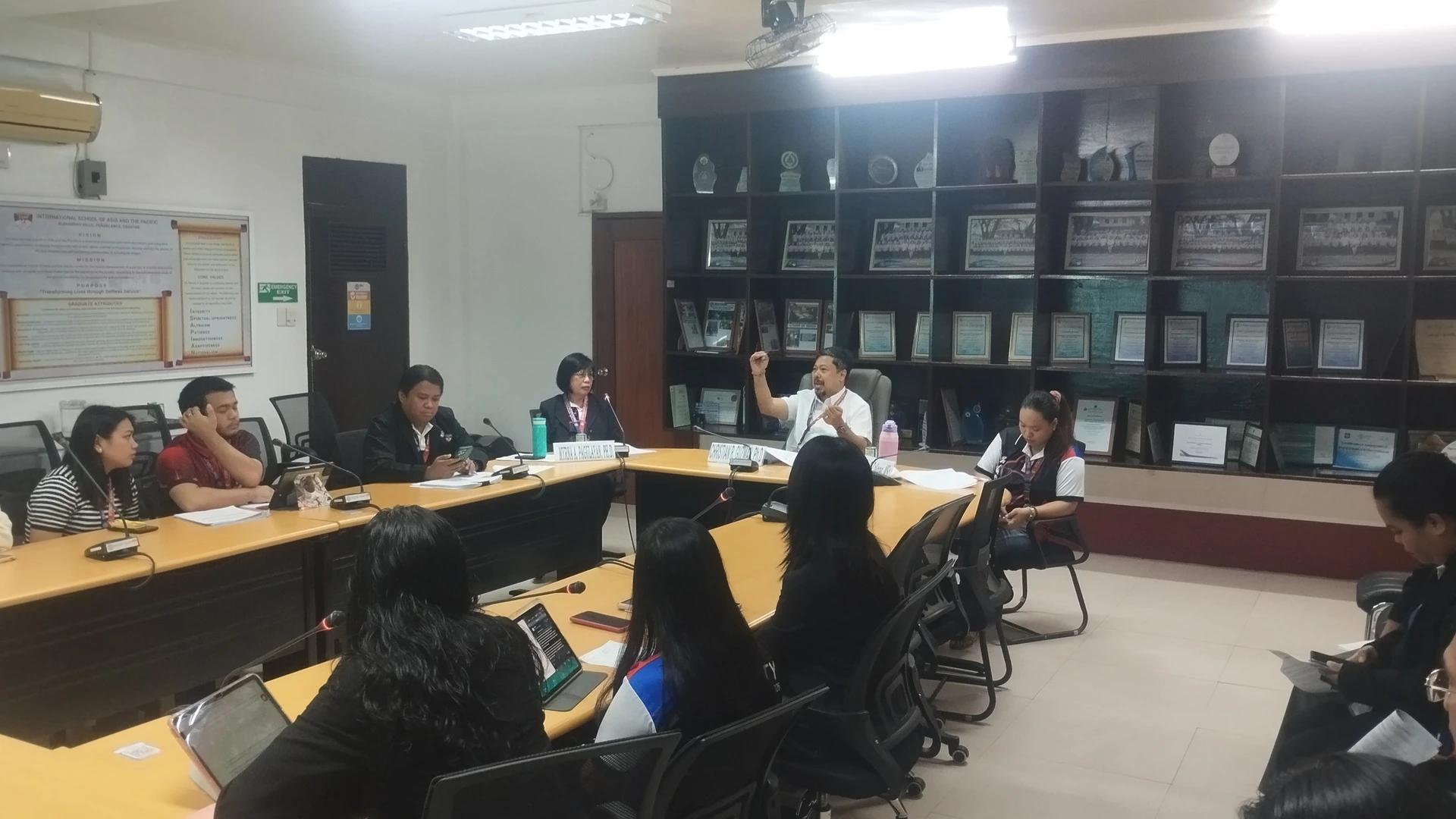
SDG MISSION CARD

17 Goals. 17 Campus Actions. One Impact. This activity brings the SDGs into everyday campus life. Participants complete simple actions inspired by the 17 Goals—from sharing solutions to campus concerns and suggesting sustainability initiatives to expressing appreciation, promoting inclusion, and proposing innovations or partnerships. Their ideas and responses provide the RDC with stakeholder inputs that may reveal opportunities for research, innovation, sustainability initiatives, partnerships, and institutional improvement.
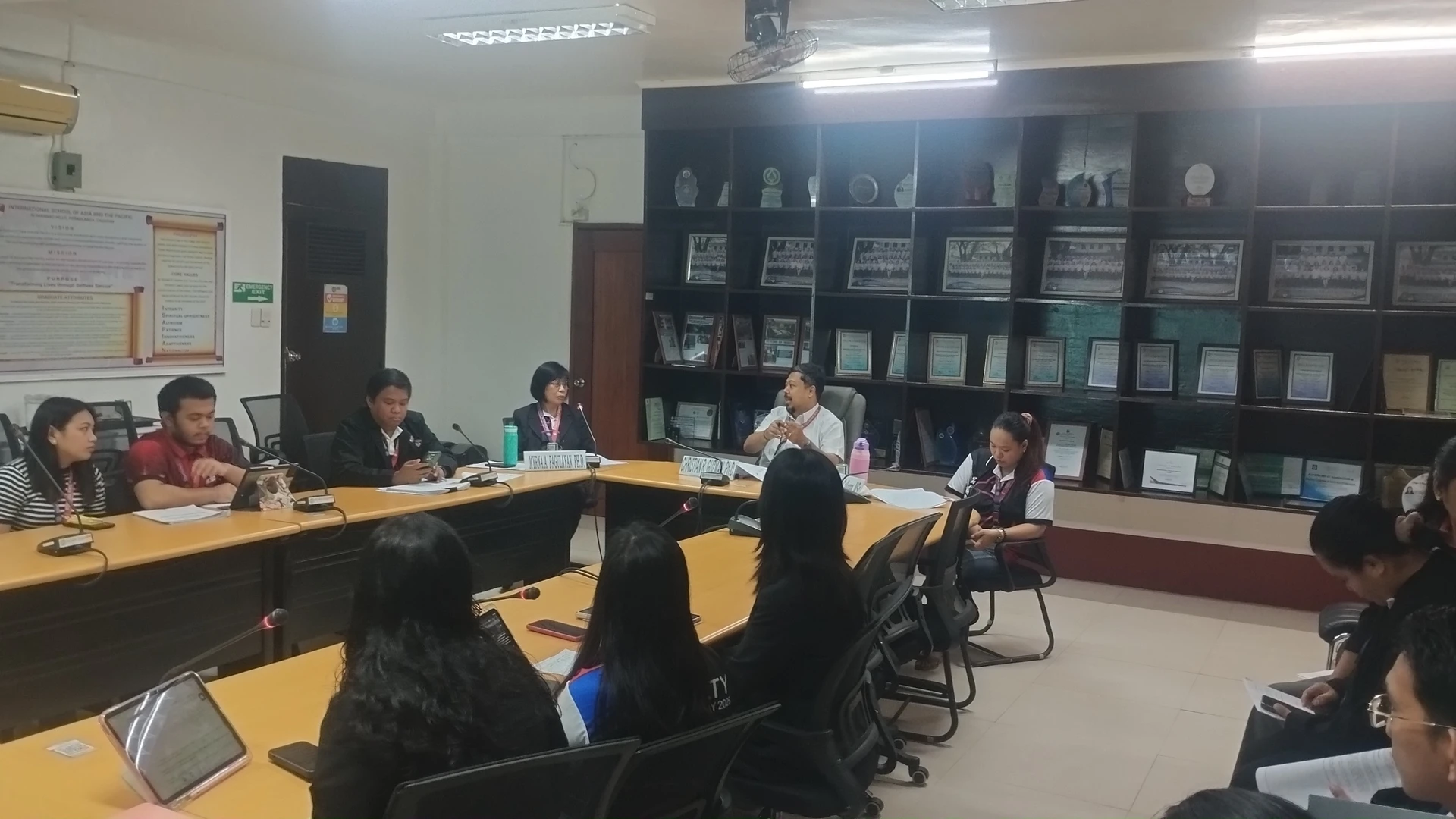
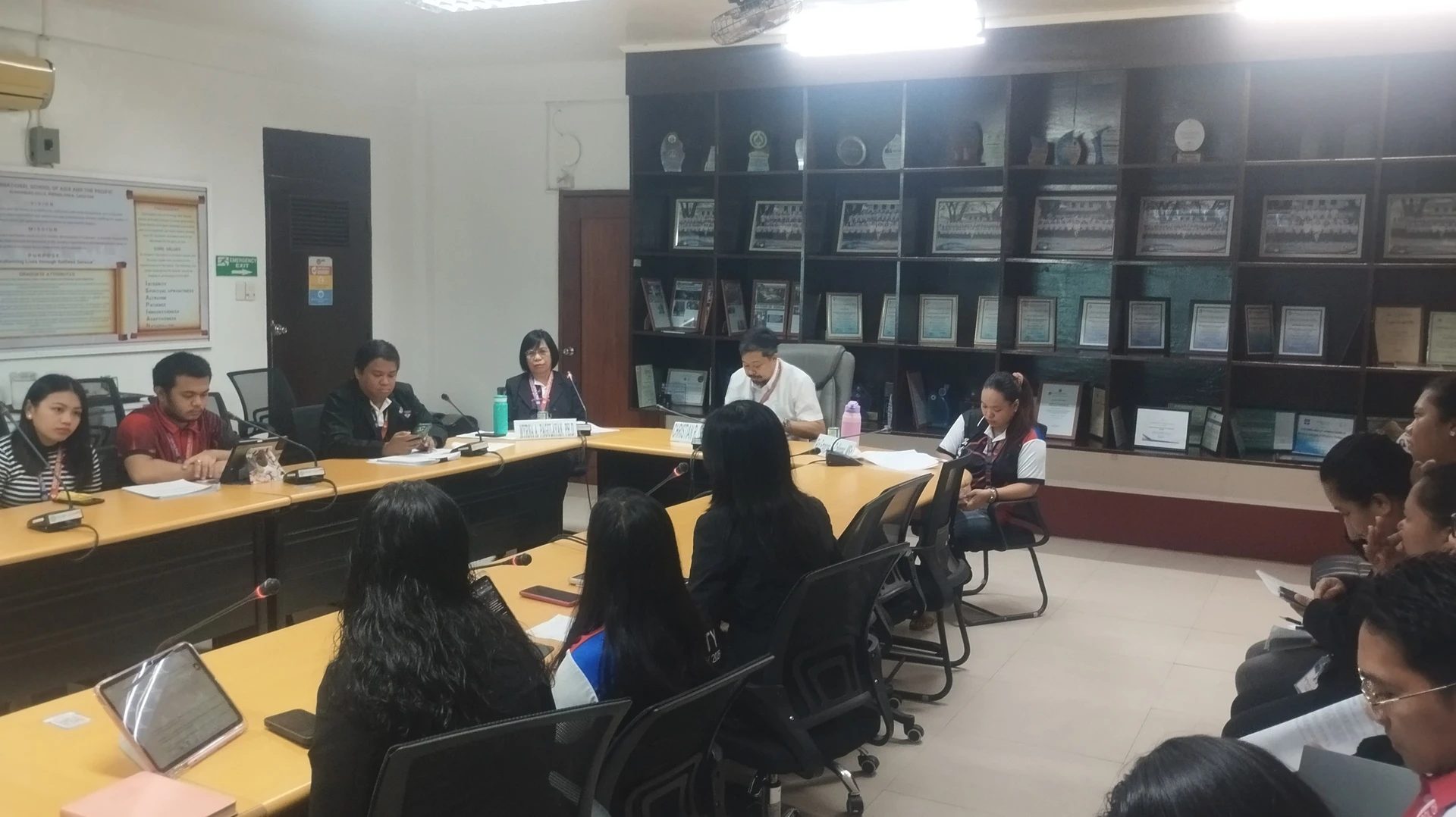
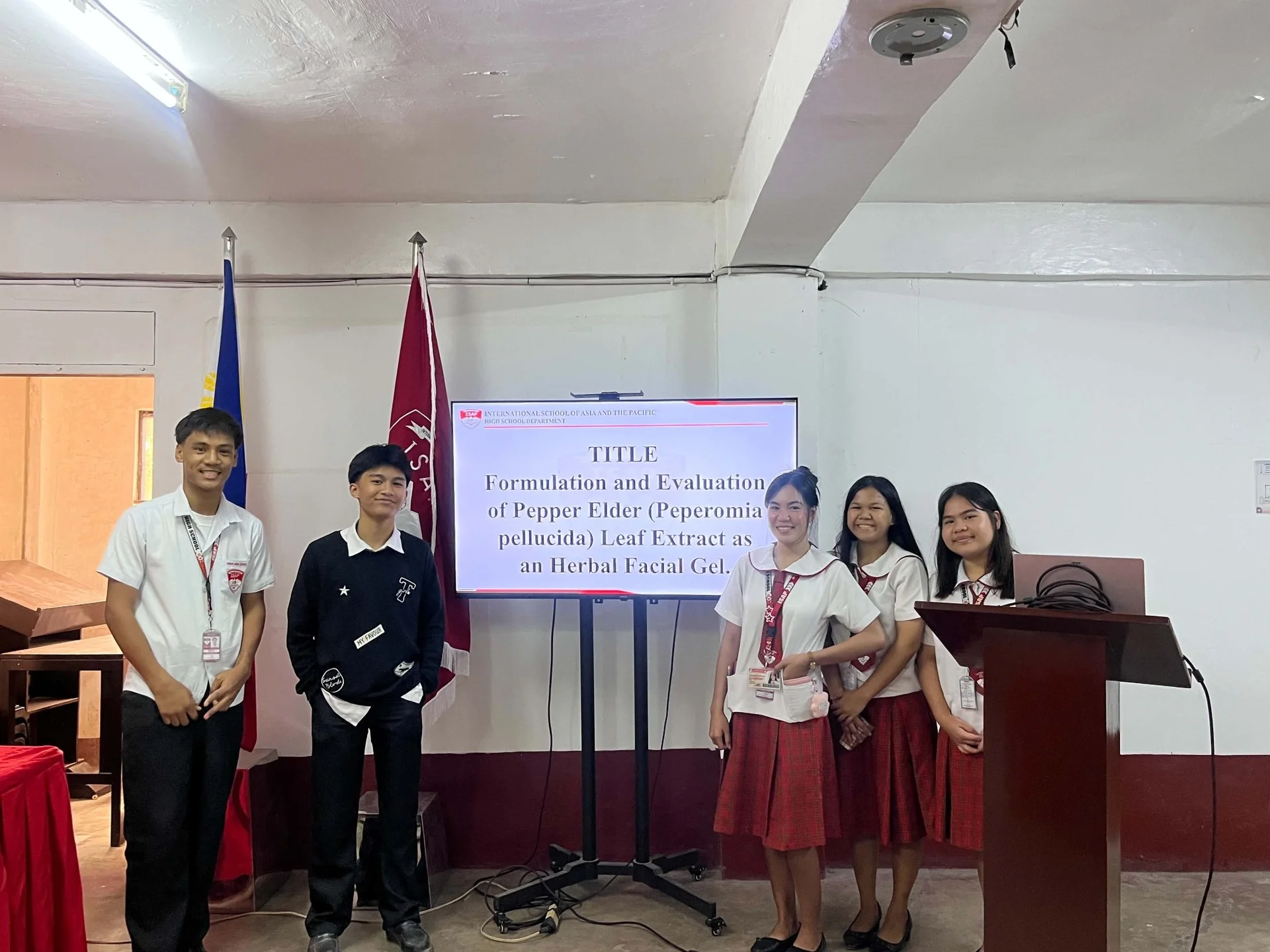
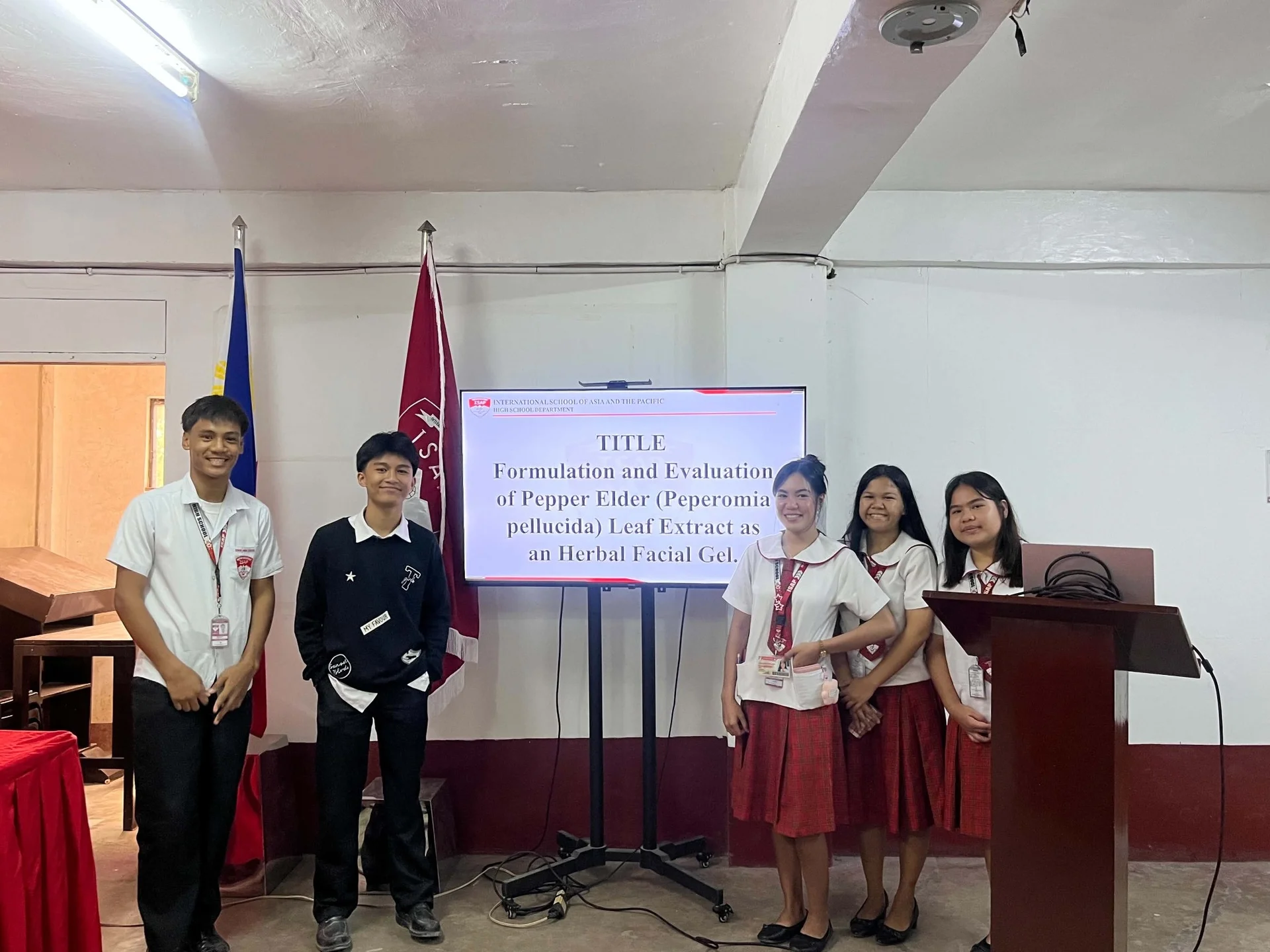
Together, these activities create one continuing journey:
UNDERSTAND the Goals
CONNECT them with Research
ACT within the Community
CREATE IMPACT.

The soft opening is only the beginning. As SDG SPOT @ RDC continues throughout the academic year, the initiative seeks to develop a community where students, employees, alumni, and researchers do not simply know the SDGs—they understand their role in advancing them.

Because the Global Goals become meaningful when they become our goals, our actions, and our shared impact.

Every Study. A Goal. An Impact.
SDG SPOT @ RDC | Research for the Goals
Pick a Goal. Raise Your Flag. Make Your Impact.

Advancing SDG 4 • SDG 9 • SDG 16 • SDG 17 | Engaging with all 17 Global Goals

CBCP-UST Collaborative Project
Nov 17, 2024
Catholic Christianity Study

Collaborative Research

EVENT MCNP-ISAP RDC

RDC Joins CBCP-UST Collaborative Project on Catholic Christianity

The MCNP-ISAP Research and Development Center, led by Research Director Ryan C. Fontanilla, participated in the CBCP and University of Santo Tomas project at the Archbishop's Residence in Tuguegarao City.

Read full story

The initiative assesses the current status of Catholic Christianity in the Philippines toward fostering a Synodal Church. Lay organizations across the Archdiocese of Tuguegarao answered the project survey, while respondents' privacy was protected by blurring faces in event photographs.

The collaborative study supports SDG 4: Quality Education by advancing research competencies in pastoral and community assessment, SDG 16: Peace, Justice and Strong Institutions by fostering transparent, ethical, and participatory synodal institutional processes, and SDG 17: Partnerships for the Goals through multi-institutional collaboration among CBCP, UST, and the MCNP-ISAP RDC.

28th Philippine Statistics Quiz Bee
2024
Statistics Quiz Bee

Student Achievement

EVENT Statistics Quiz Bee

MCNP and ISAP Students Excel in the 28th Philippine Statistics Quiz Bee

Nathaniel M. Acacio of ISAP won first place in the Quiz Bee. Ma. Julianne Tabbu of MCNP placed third and Althea Balanag of ISAP placed fifth in the Digital Poster Making Contest.

View participants

Other participants included Maxine Alipio, Sharmelyn Torres, Jenieva Catawe, Jasper Catulin, and Jaylord Victorio, with support from coaches Wendy Mae G. Lapuz and Christine Kae Aragon.

The competition advances SDG 4: Quality Education by fostering quantitative reasoning, statistical literacy, and academic excellence among students, SDG 9: Industry, Innovation and Infrastructure by developing analytical capabilities critical for data-driven innovation, and SDG 17: Partnerships for the Goals through institutional collaboration with the Philippine Statistics Authority (PSA).

Institutional Statistics Quiz Bee Winners
35th NSM
Quiz Bee Winners

Institutional Competition

EVENT Quiz Bee Winners

Congratulations to the Winners of the Institutional Statistics Quiz Bee

ISAP champion Jaylord S. Victorio was joined by Nathaniel Acacio and Jasper S. Catulin. MCNP champion Sharmelyn T. Torres was joined by Maxine Alipio and Jenieva M. Catawe.

Read full story

Held in celebration of the 35th National Statistics Month (NSM), the Institutional Statistics Quiz Bee brought together student leaders and academic departments across MCNP and ISAP to celebrate mathematical acumen and data science fundamentals.

The activity supports SDG 4: Quality Education by advancing statistical mastery and academic excellence, SDG 9: Industry, Innovation and Infrastructure by preparing students for data-oriented technological challenges, and SDG 17: Partnerships for the Goals through inter-departmental collaboration between MCNP and ISAP.

Research Director Ryan C. Fontanilla and IT Dean Engr. Myke Albert Tejada Participate in Collaborative Study
Oct 08, 2024
Catholic Christianity Study

Dr. Fontanilla & Engr. Tejada

EVENT Research Collaboration

Research Director Ryan C. Fontanilla and IT Dean Engr. Myke Albert Tejada Participate in Collaborative Study

Research Director Ryan C. Fontanilla and IT Dean Engr. Myke Albert Tejada represented MCNP and ISAP at the Archdiocese of Tuguegarao meeting for the CBCP-UST initiative, "Lights and Shadows on the Present State of Catholic Christianity in the Philippines toward Becoming a Synodal Church."

Read full story

Representing Medical Colleges of Northern Philippines (MCNP) and International School of Asia and the Pacific (ISAP), Research Director Ryan C. Fontanilla and IT Dean Engr. Myke Albert Tejada actively participated in the collaborative meeting with field researchers of the Archdiocese of Tuguegarao.

The study, spearheaded by the Catholic Bishops' Conference of the Philippines (CBCP) and the University of Santo Tomas (UST), entitled "Lights and Shadows on the Present State of Catholic Christianity in the Philippines toward Becoming a Synodal Church," aims to assess pastoral dynamics, community engagement, and synodal church initiatives across regional dioceses.

The collaborative undertaking supports SDG 4: Quality Education by engaging institutional academic leadership in regional research, SDG 16: Peace, Justice and Strong Institutions by enhancing participatory governance, synodal transparency, and community-level social cohesion, and SDG 17: Partnerships for the Goals through church, academe, and diocesan research coalitions.

Region 2 Emerges as Overall Champion - 2024 Regional Data Festival
Oct 03–04, 2024
RDaFest 2024

Overall Champion

EVENT RDaFest 2024

Region 2 Emerges as Overall Champion

Representing Cagayan Valley, delegates from USLT, MCNP, SFC, QSU Cabarroguis, and SMU secured the Overall Champion title at the 2024 Regional Data Festival for the North Luzon Cluster held at Subic Bay Travelers Hotel and Event Center in Subic, Zambales.

Source: Facebook post

Read full story

The multi-school Cagayan Valley delegation showcased stellar performance across data appreciation, analytics, and research presentations, demonstrating regional leadership in statistical excellence and evidence-based problem solving.

This achievement advances SDG 4: Quality Education through high-impact student training and data literacy, SDG 9: Industry, Innovation and Infrastructure by promoting data science and technological problem-solving skills, and SDG 17: Partnerships for the Goals through regional consortium synergy among North Luzon higher education institutions.

October 2024
Student Awards

Digital Poster Making

EVENT Student Awards

MCNP and ISAP Students Receive Statistics Month Awards

Bryan Marantan placed third, John Lloyd Angui placed second, and Peter John F. Bosi placed second in the Digital Poster Making Contest held at People's Gymnasium, Tuguegarao City.

Read full story

Student awardees were commended for their creative interpretations of data concepts into compelling visual artwork during the province-wide 35th National Statistics Month festivities.

The activity supports SDG 4: Quality Education by advancing creative and statistical communication skills, SDG 9: Industry, Innovation and Infrastructure through digital art and design innovation, and SDG 17: Partnerships for the Goals by partnering with local government units and statistical agencies.

Wendy Mae G. Lapus Represents ISAP at Regional Data Festival
Oct 03–04, 2024
RDaFest 2024

Research Presentation

EVENT RDaFest 2024

Wendy Mae G. Lapus Represents ISAP at Regional Data Festival

Ms. Lapus presented "A Relationship Study between Job Demands, Resources, and Personnel Motivation in HEIs: The Case of the International School of Asia and the Pacific" at the North Luzon Regional Data Festival held at Subic Bay Travelers Hotel and Event Center, Subic Bay Freeport Zone.

Read full story

The research presentation examined key organizational drivers of personnel motivation, institutional support mechanisms, and workplace well-being in higher education institutions.

The study advances SDG 4: Quality Education through empirical institutional research, SDG 8: Decent Work and Economic Growth by promoting favorable workplace conditions and personnel motivation, SDG 9: Industry, Innovation and Infrastructure by applying organizational research to improve institutional management, and SDG 17: Partnerships for the Goals through scholarly exchange across the North Luzon cluster.

MCNP and ISAP Digital Infographics Making Contest
September 2024
Infographics Contest

Digital Infographics Making Contest

EVENT Infographics Contest

MCNP and ISAP Conduct Digital Infographics Making Contest

During the 35th Statistics Month Celebration, John Lloyd Angui was named champion, Mark Lester Sandoval placed second, and Ma. Julianne Tabbu placed third at Computer Laboratory B in Peñablanca, Cagayan.

The awardees were recognized by Research Director Ryan C. Fontanilla.

Read full story

The contest empowered student designers to turn statistical indicators into engaging, accessible, and informative visual narratives, reinforcing the role of data in modern problem solving.

The event advances SDG 4: Quality Education by boosting digital literacy and data communication, SDG 9: Industry, Innovation and Infrastructure through innovative visual design methodologies, and SDG 17: Partnerships for the Goals by aligning campus initiatives with national statistical month celebrations.

Training on Data Analytics and Data Presentation for Health Research - Sep 17–18, 2026
Sep 17–18, 2026
Professional Development

Data Analytics

EVENT Professional Development

Strengthening Data Skills for Better Health Research

RDC staff from MCNP and ISAP participated in the Training on Data Analytics and Data Presentation for Health Research held on September 17–18, 2026, at Philippine Normal University–North Luzon. The training strengthened their skills in analyzing, interpreting, and effectively presenting health research findings.

Read full story

The activity supports SDG 3: Good Health and Well-Being through evidence-based health research, SDG 4: Quality Education through professional development, SDG 9: Industry, Innovation and Infrastructure through data-driven innovation, and SDG 17: Partnerships for the Goals through institutional collaboration.

Innovation Beyond Boundaries.

General Education Department & RDC: Research Colloquium & Capacity Building - Dr. Ryan C. Fontanilla and Ms. Rio Frances C. Callores
Sep 16, 2026
General Education

Research Colloquium

EVENT General Education Department

From Problems to Purpose: Strengthening Research Capacity

The General Education Department, in collaboration with the MCNP–ISAP Research and Development Center, conducted a Research Colloquium and Capacity-Building Program on September 16, 2026. The activity featured Dr. Ryan C. Fontanilla, who discussed A Practical Guide to Research Problem Formulation, and Ms. Rio Frances C. Callores, Research Coordinator, who facilitated the Orientation on the Institutional Research Process.

Read full story

The program equipped faculty researchers with practical guidance in transforming relevant concerns into clear and researchable problems while deepening their understanding of the institutional process—from proposal preparation and evaluation to implementation and research utilization. It also provided a venue for sharing ideas, clarifying procedures, and strengthening a collaborative culture of inquiry within the department.

The activity supports SDG 4: Quality Education through faculty research development; SDG 9: Industry, Innovation and Infrastructure by encouraging evidence-based innovation; SDG 16: Peace, Justice and Strong Institutions through transparent and standardized research processes; and SDG 17: Partnerships for the Goals through collaboration between the General Education Department and the RDC.

Innovation Beyond Boundaries.

MCNP-ISAP Academic Heads Research Proposal Defense - Sep 16, 2026
Sep 16, 2026
Academic Heads

Proposal Defense

EVENT Academic Heads

Leading Through Inquiry, Improving Through Evidence

The MCNP–ISAP Research and Development Center conducted the Academic Heads Research Proposal Defense on September 16, 2026, featuring research proposals from the College of Sciences and Teacher Education and the High School Department. The presenters received constructive feedback to strengthen their research designs and ensure that their studies respond to relevant educational and institutional concerns.

Read full story

More than a presentation of proposals, the activity empowers academic leaders and faculty researchers to transform classroom experiences and institutional challenges into evidence-based solutions. It also strengthens their role in guiding research, improving academic practices, and contributing to informed decision-making.

The activity supports SDG 4: Quality Education by advancing research-informed teaching and leadership; SDG 9: Industry, Innovation and Infrastructure by encouraging innovative solutions; and SDG 17: Partnerships for the Goals by promoting collaboration among academic units, researchers, evaluators, and the RDC.

Innovation Beyond Boundaries.

Stat. Month Data Appreciation Seminar - Sep 15, 2026
Sep 15, 2026
Data Appreciation

Stat. Month Seminar

EVENT Data Appreciation

From Numbers to Narratives: Making Data Meaningful

The MCNP–ISAP Research and Development Center conducted the Stat. Month Data Appreciation Seminar via Zoom on September 15, 2026, with first-year students and faculty researchers joining the webinar. The session focused on using infographics to present, interpret, and appreciate data, equipping participants with practical skills to transform complex research findings into clear, engaging, and meaningful visual stories.

Read full story

The activity supports SDG 4: Quality Education by strengthening students' and faculty members' data literacy and communication competencies; SDG 9: Industry, Innovation and Infrastructure by promoting innovative tools for presenting research; SDG 16: Peace, Justice and Strong Institutions by encouraging transparent and evidence-based decision-making; and SDG 17: Partnerships for the Goals by bringing learners, educators, and researchers together through shared learning.

Because data should not only be collected—it must be understood, communicated, and used to inspire informed action.

Innovation Beyond Boundaries.

MCNP-ISAP Academic Heads Research Proposal Defense - Sep 09, 2026
Sep 9, 2026
Academic Heads

Proposal Defense

EVENT Academic Heads

Research Leadership in Action

The MCNP–ISAP Research and Development Center conducted the Academic Heads Research Proposal Defense on September 9, 2026. Academic leaders presented and defended their research proposals, received constructive feedback, and refined their studies toward generating evidence-based solutions for institutional development.

Read full story

The program provides academic heads with a structured platform to transform institutional concerns, classroom experiences, and operational challenges into researchable problems and evidence-based solutions. More than a proposal defense, it strengthens their role as research leaders who can guide faculty members, improve academic practices, and contribute to informed decision-making across MCNP and ISAP.

The activity supports SDG 4: Quality Education by advancing research-informed academic leadership, SDG 9: Industry, Innovation and Infrastructure by encouraging innovative responses to institutional needs, and SDG 17: Partnerships for the Goals by strengthening collaboration among academic heads, research evaluators, and the RDC.

Through research, leadership moves beyond managing today—it creates knowledge that shapes a better tomorrow.

Innovation Beyond Boundaries.

2026 Cagayan Valley Regional Science, Technology, and Innovation Week - DOST Regional STI Week
Sep 9–11, 2026
Cagayan Valley STI Week

Regional STI Week

EVENT Cagayan Valley STI Week

From Innovation to Opportunity: Advancing Ideas for Possible Funding

Faculty delegates from MCNP and ISAP participated in the 2026 Cagayan Valley Regional Science, Technology, and Innovation Week, held on September 9–11, 2026, in Tuguegarao City. The event provided a valuable platform for learning, collaboration, and the exchange of science- and technology-driven solutions responsive to regional needs.

Read full story

As a significant output of their participation, the school delegates developed and presented a capsule proposal on an ICT application for health for technical review and possible funding support. This milestone demonstrates the institutions' commitment to moving research beyond ideas and toward practical, fundable, and community-responsive innovations.

The activity advances SDG 2: Zero Hunger and SDG 3: Good Health and Well-Being through science-based solutions for food, nutrition, and health; SDG 4: Quality Education through research and innovation capability-building; SDG 9: Industry, Innovation and Infrastructure by promoting technology-driven solutions; and SDG 17: Partnerships for the Goals through collaboration among academic institutions, government agencies, researchers, and other stakeholders.

Innovation Beyond Boundaries.

Research That Sees Everyone: Advancing Knowledge through a Gender-Responsive Lens - CSU Andrews Campus
Sep 9–10, 2026
Regional Seminar-Training

Gender Research

EVENT Regional Seminar-Training

Research That Sees Everyone: Advancing Knowledge through a Gender-Responsive Lens

MCNP–ISAP personnel participated in the Regional Seminar-Training on Gender Research, held on September 9–10, 2026, at CSU Andrews Campus, Tuguegarao City. The training strengthened their capacity to develop studies that recognize diverse experiences, examine gender-related concerns, and generate evidence for more inclusive programs, policies, and practices.

Read full story

The activity advances SDG 4: Quality Education by building researchers’ knowledge and competencies; SDG 5: Gender Equality by ensuring that different voices and experiences are represented in research; SDG 9: Industry, Innovation and Infrastructure by encouraging inclusive and evidence-based solutions; and SDG 17: Partnerships for the Goals by promoting collaboration, shared learning, and good practices among participating institutions.

Through gender-responsive research, we move beyond simply gathering data—we ensure that knowledge becomes a pathway toward fairness, inclusion, and sustainable development.

Innovation Beyond Boundaries.

ISAP High School Research Summit - Episode 2: From Samples to Statistics
Aug 28, 2026
Episode 2

High School Research Summit

EVENT Episode 2

From Samples to Statistics: Turning Data into Meaningful Discoveries

The ISAP High School Research Summit–Episode 2, held online on August 28, 2026, featured Dr. Ryan C. Fontanilla on Sampling Techniques and Research Designs and Ms. Tshaine Anne T. Labang, LPT on Data Processing and Analysis using Excel, SPSS, and jamovi.

Read full story

The activity supports SDG 4: Quality Education by strengthening students' research and data-analysis competencies; SDG 9: Industry, Innovation and Infrastructure by equipping them with digital tools for evidence-based inquiry and innovation; and SDG 17: Partnerships for the Goals by promoting collaboration among the RDC, High School Department, teachers, and student researchers.

Innovation Beyond Boundaries.

Listening to the Community: Qualitative Data Gathering for Community Needs Analysis - Dr. Ryan C. Fontanilla
Aug 24, 2026
Community Extension

Needs Assessment

EVENT Community Extension Services

Equipping Students for Meaningful Community Engagement

The MCNP–ISAP Community Extension Services Office conducted the seminar and field orientation titled “Listening to the Community: Qualitative Data Gathering for Community Needs Analysis: A Practical Approach” on August 24 at Amphitheater 3.

Read full story

Dr. Ryan C. Fontanilla shared practical approaches to focus group discussions and community-based qualitative inquiry, emphasizing the importance of listening to community voices in identifying genuine needs and developing responsive programs.

The activity supports SDG 4: Quality Education by developing students’ community research skills; SDG 16: Peace, Justice and Strong Institutions by promoting inclusive and participatory decision-making; and SDG 17: Partnerships for the Goals by strengthening collaboration between the institution, students, and communities.

Through informed listening, community needs become the foundation of meaningful and sustainable action.

Innovation Beyond Boundaries.

Photo credit: The Quill — The Official Student Publication of MCNP-ISAP

Strengthening Research Through Shared Direction - MCNP-ISAP RDC General Assembly 2026
Aug 24, 2026
MCNP–ISAP RDC

RDC General Assembly

EVENT MCNP–ISAP RDC

Strengthening Research Through Shared Direction

The MCNP–ISAP Research and Development Center convened its General Assembly 2026 on August 24, bringing together RDC personnel and research focal persons to revisit research processes and discuss the Institutional Research Agenda, RDC Strategic Plan 2026–2030, and Operational Plan for Academic Year 2026–2027.

Read full story

The activity supports SDG 4: Quality Education by strengthening research knowledge and capabilities; SDG 9: Industry, Innovation and Infrastructure by promoting research-driven innovation; SDG 16: Peace, Justice and Strong Institutions by establishing transparent, ethical, and standardized research procedures; and SDG 17: Partnerships for the Goals by strengthening collaboration among research personnel, academic units, and institutional leaders.

Through shared planning and collective action, the RDC continues to advance relevant, ethical, and impactful research across MCNP and ISAP.

Innovation Beyond Boundaries.

Advancing Health Research Through Collaboration - DOST CVHRDC RRF Technical Review
Aug 19–20, 2026
RRF Technical Review

Health Research Collaboration

EVENT RRF Technical Review

Advancing Health Research Through Collaboration

MCNP and ISAP proudly co-hosted the Regional Research Fund (RRF) Technical Review Board Evaluation on August 19–20, 2026, in partnership with DOST–Cagayan Valley Health Research and Development Consortium (CVHRDC).

Read full story

The activity supports SDG 4: Quality Education by strengthening the research capabilities of researchers through expert evaluation, technical guidance, and constructive feedback. It also advances SDG 17: Partnerships for the Goals by strengthening collaboration among academic institutions, government agencies, research experts, and health-sector partners in advancing relevant and high-quality health research.

Through this partnership, MCNP and ISAP reaffirm their commitment to research excellence, evidence-based innovation, and improved health outcomes for communities.

Innovation Beyond Boundaries.

1st ISAP-K Conference on Interdisciplinary Research (ICIR 2026) - Keynote Speaker Dr. Ryan C. Fontanilla
Aug 07, 2026
ISAP-K Conference

ICIR 2026

EVENT ISAP-K Conference

Research for Sustainable Impact

The 1st ISAP-K Conference on Interdisciplinary Research (ICIR 2026), themed "Unifying Perspectives: Empowering Student Investigators Across Disciplines to Advance the Sustainable Development Goals through Community-Driven Research," was held on August 7, 2026, at the ISAP-Kalinga Gymnasium. Research Director Ryan C. Fontanilla delivered the keynote address on leveraging student inquiry for lasting community transformation.

Read full story

The conference gathered students, faculty members, and academic leaders across diverse disciplines to foster collaborative, evidence-based, and community-responsive research. Through the IMPACT Framework, participants explored how interdisciplinary student inquiry serves as a catalyst for innovation, sustainable partnerships, and impactful social solutions.

The activity supports SDG 4: Quality Education by strengthening students' research knowledge, critical thinking, and problem-solving skills. It advances SDG 9: Industry, Innovation and Infrastructure by encouraging interdisciplinary studies that generate innovative and practical solutions. It contributes to SDG 11: Sustainable Cities and Communities by directing research toward genuine community needs and sustainable development. It also promotes SDG 17: Partnerships for the Goals by bringing together researchers from different disciplines and encouraging collaboration among academic institutions, communities, and other stakeholders.

Through the IMPACT Framework, participants were reminded that research should move beyond completing a manuscript—it must lead to meaningful action, lasting partnerships, and positive community transformation.

Innovation Beyond Boundaries.

Photo credit: Highlanders Torch — The Official Student Publication of ISAP-K

School Statisticians Join the 35th National Statistics Month Color Fun Run
Oct 04, 2024
Color Fun Run

National Statistics Month

EVENT Color Fun Run

School Statisticians Join the 35th National Statistics Month Color Fun Run

Ms. Cristine Kae Aragon and Ms. Guadalupe Agabin represented their institution in the Philippine Statistics Authority event in Tuguegarao City, promoting awareness and appreciation of statistics.

Read full story

The 35th National Statistics Month Color Fun Run blended health, wellness, and community advocacy, rallying statisticians, educators, and students in Tuguegarao City to champion public appreciation for statistics.

The activity supports SDG 3: Good Health and Well-Being by encouraging active and healthy lifestyles, SDG 4: Quality Education through public data literacy advocacy, and SDG 17: Partnerships for the Goals through collaboration with the Philippine Statistics Authority and civic stakeholders.